Revocation Trust Acknowledgment Without A Signature
Description
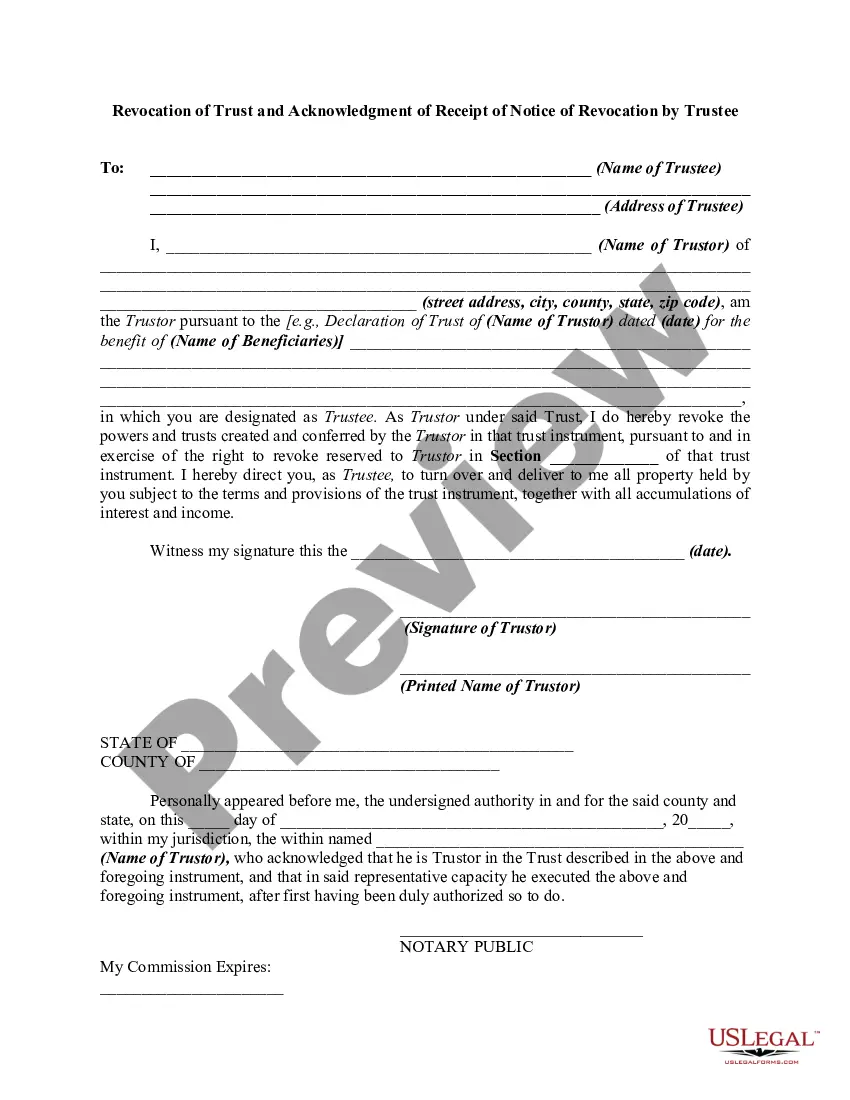
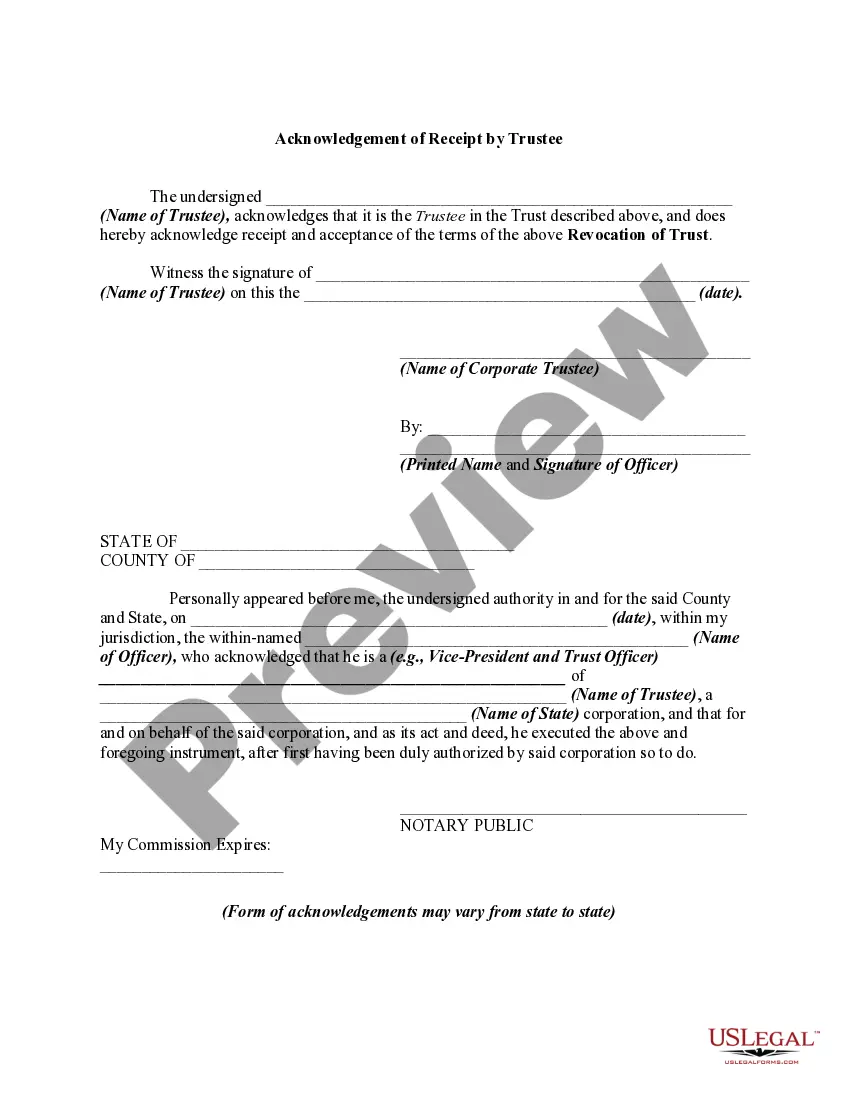
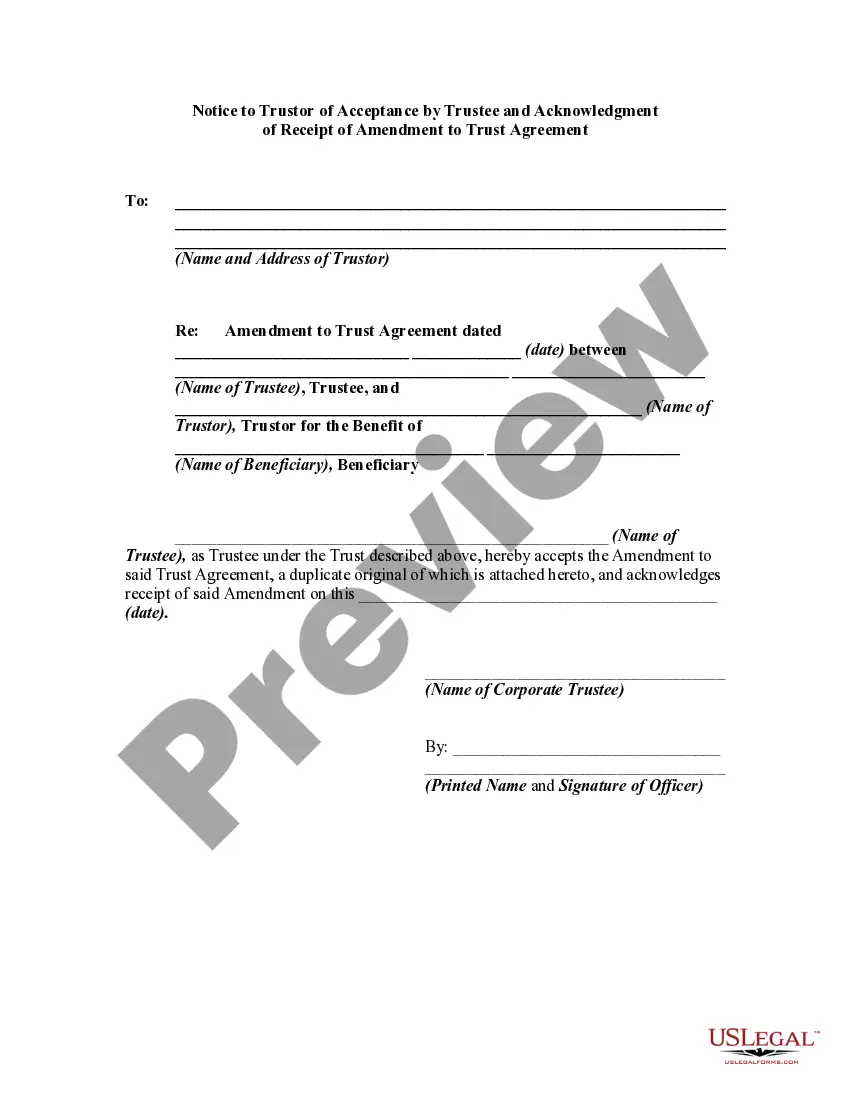
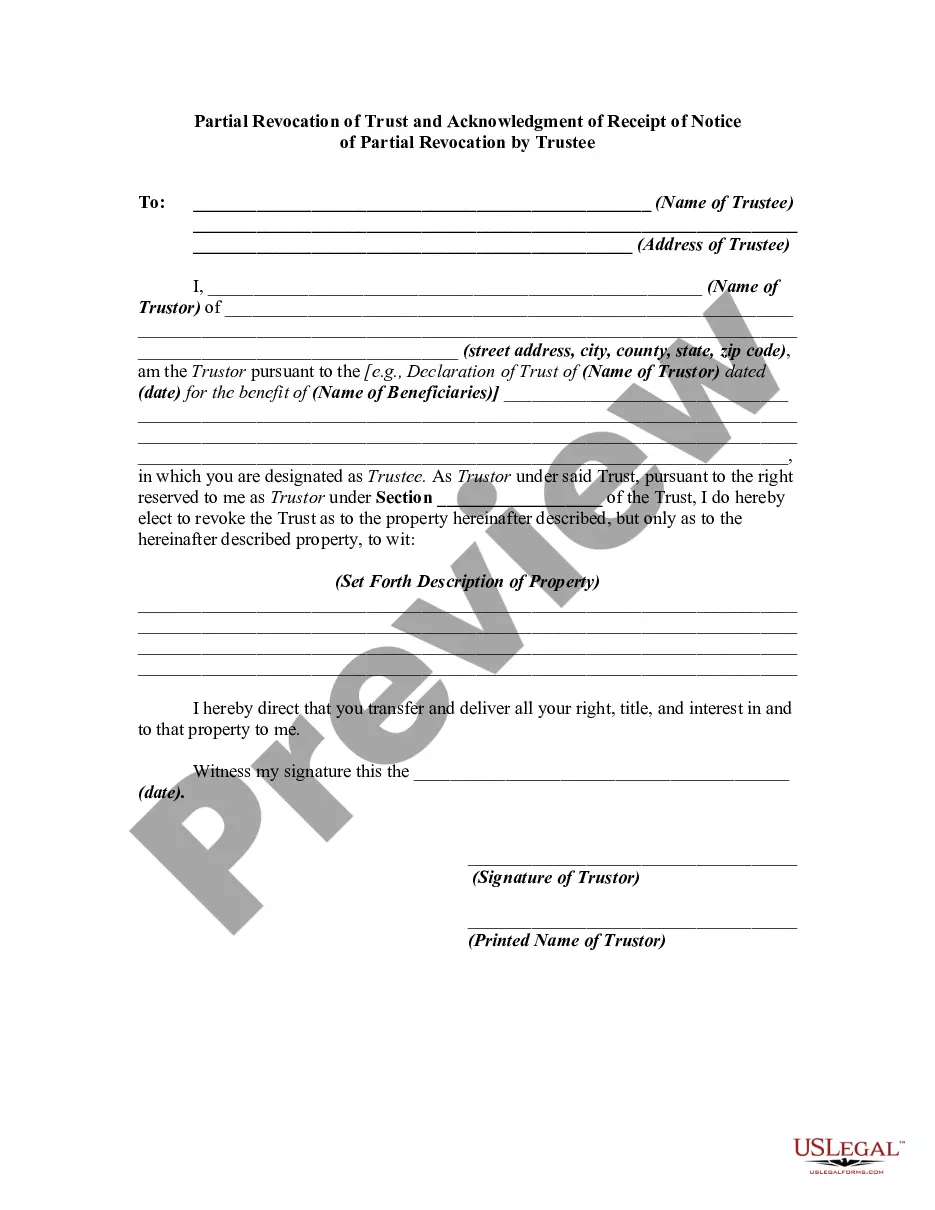
Get your form ready online
Our built-in tools help you complete, sign, share, and store your documents in one place.
Make edits, fill in missing information, and update formatting in US Legal Forms—just like you would in MS Word.
Download a copy, print it, send it by email, or mail it via USPS—whatever works best for your next step.
Sign and collect signatures with our SignNow integration. Send to multiple recipients, set reminders, and more. Go Premium to unlock E-Sign.
If this form requires notarization, complete it online through a secure video call—no need to meet a notary in person or wait for an appointment.
We protect your documents and personal data by following strict security and privacy standards.

Make edits, fill in missing information, and update formatting in US Legal Forms—just like you would in MS Word.

Download a copy, print it, send it by email, or mail it via USPS—whatever works best for your next step.

Sign and collect signatures with our SignNow integration. Send to multiple recipients, set reminders, and more. Go Premium to unlock E-Sign.

If this form requires notarization, complete it online through a secure video call—no need to meet a notary in person or wait for an appointment.

We protect your documents and personal data by following strict security and privacy standards.
Looking for another form?





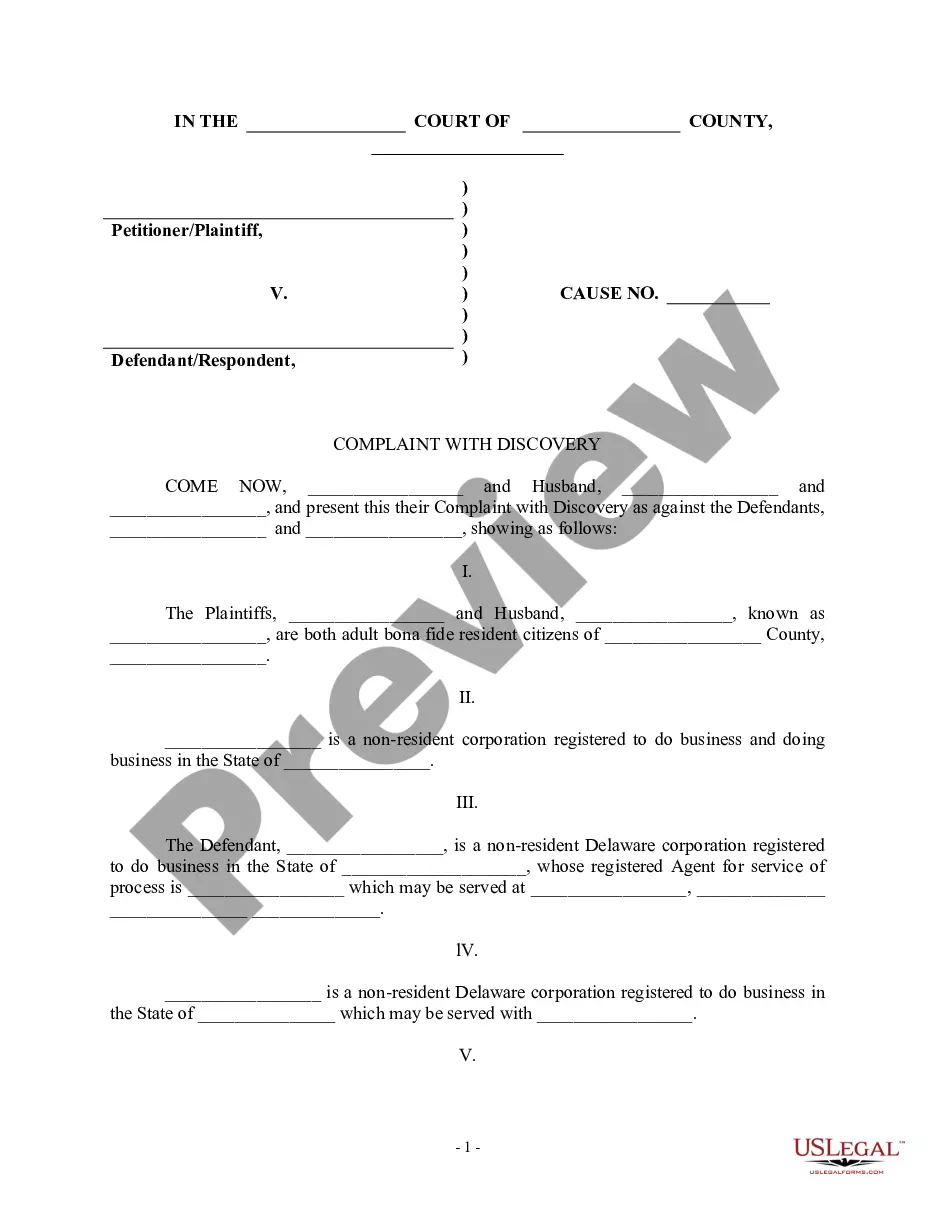
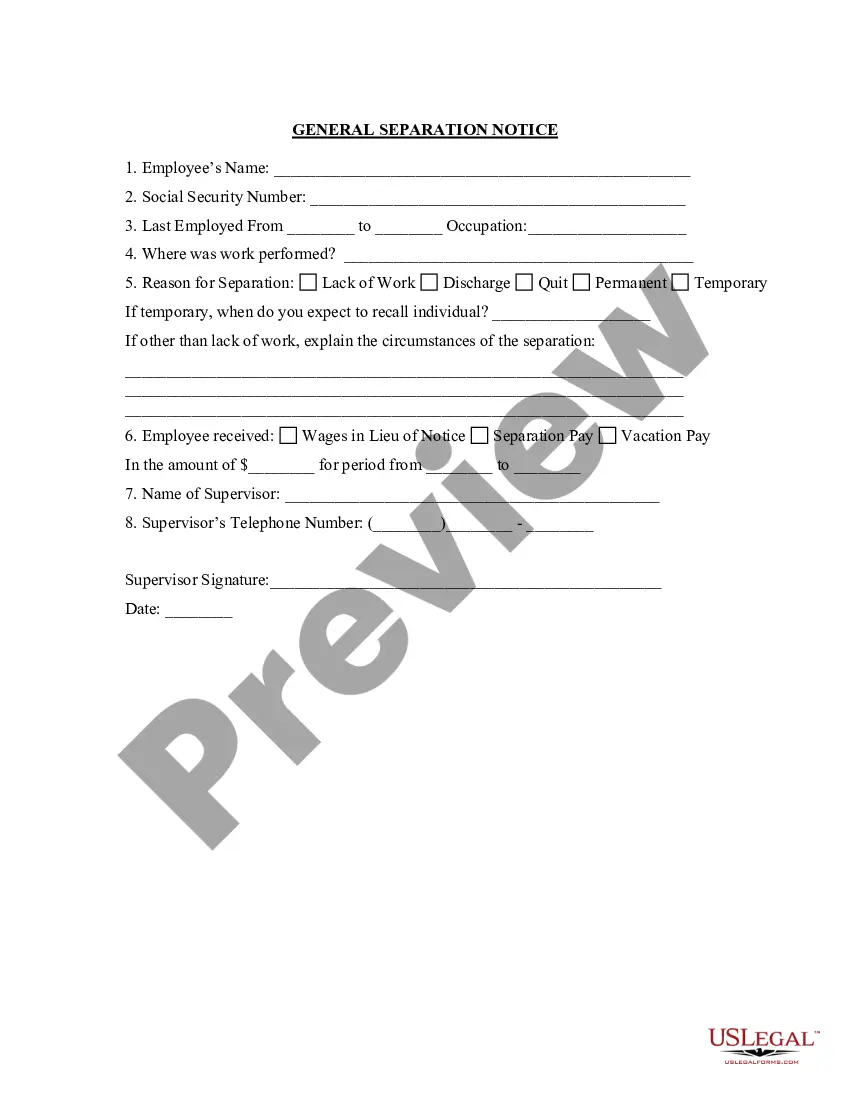
How to fill out Revocation Of Trust And Acknowledgment Of Receipt Of Notice Of Revocation By Trustee?
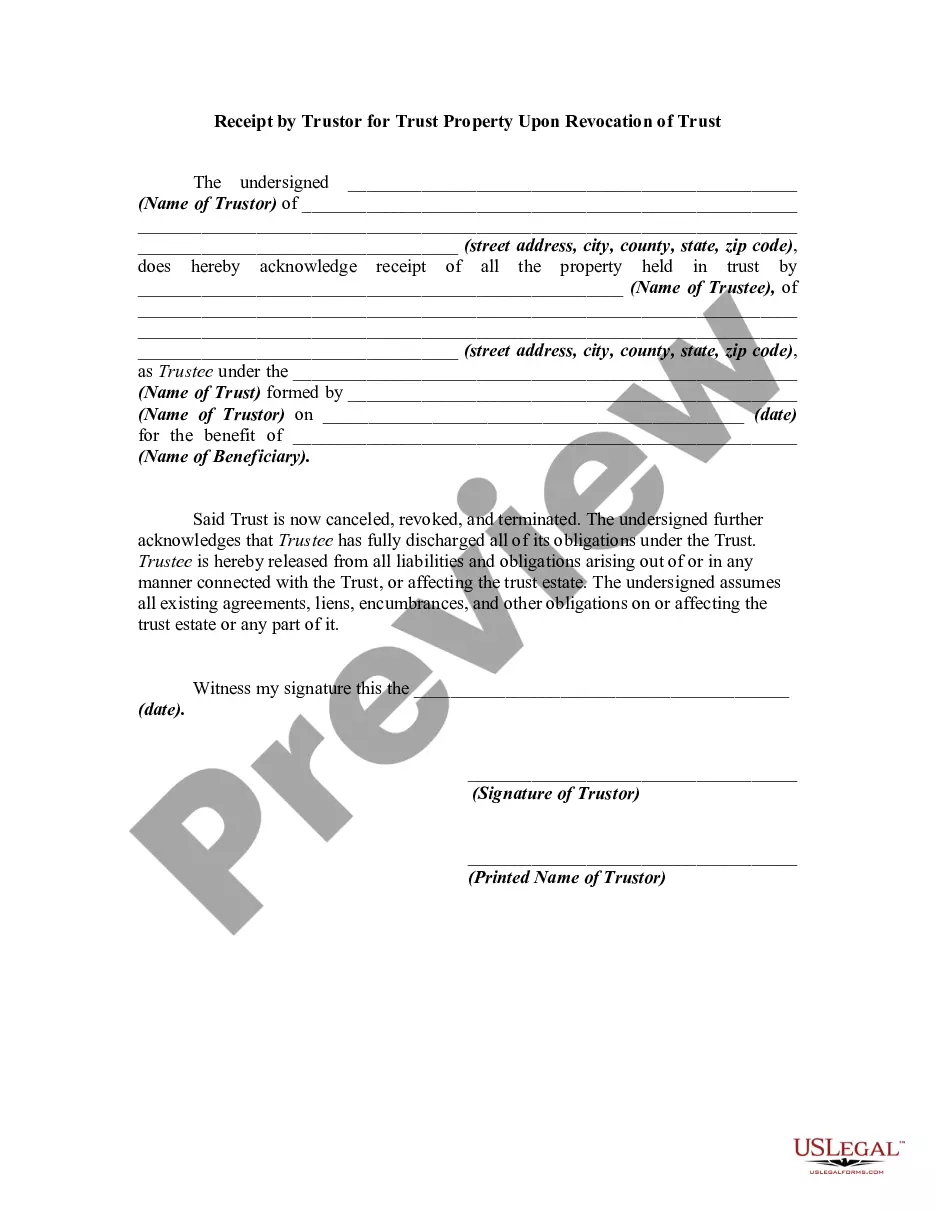
The Revocation Trust Acknowledgment Without A Signature that appears on this page is a reusable official format crafted by expert attorneys in adherence to national and regional laws.
For over 25 years, US Legal Forms has supplied individuals, organizations, and legal experts with over 85,000 validated, state-specific documents for various commercial and personal situations. It’s the quickest, simplest, and most dependable method to acquire the necessary paperwork, as the service assures the utmost level of data protection and anti-malware safeguards.
Register for US Legal Forms to have authenticated legal templates for every aspect of life readily available.
- Search for the document you require and review it.
- Inspect the example you found and preview it or read the form description to verify it meets your requirements. If it does not, utilize the search bar to find the appropriate one. Click Buy Now when you have identified the template you need.
- Register and Log In.
- Select the payment plan that fits you and create an account. Use PayPal or a credit card for a rapid transaction. If you already possess an account, Log In and verify your subscription to proceed.
- Obtain the fillable template.
- Choose the format you prefer for your Revocation Trust Acknowledgment Without A Signature (PDF, DOCX, RTF) and download the document onto your device.
- Complete and sign the document.
- Print the template to fill it out by hand. Alternatively, use an online versatile PDF editor to quickly and accurately complete and sign your form with an eSignature.
- Download your documents again.
- Utilize the same document again as necessary. Access the My documents tab in your profile to redownload any previously downloaded forms.
Form popularity
FAQ
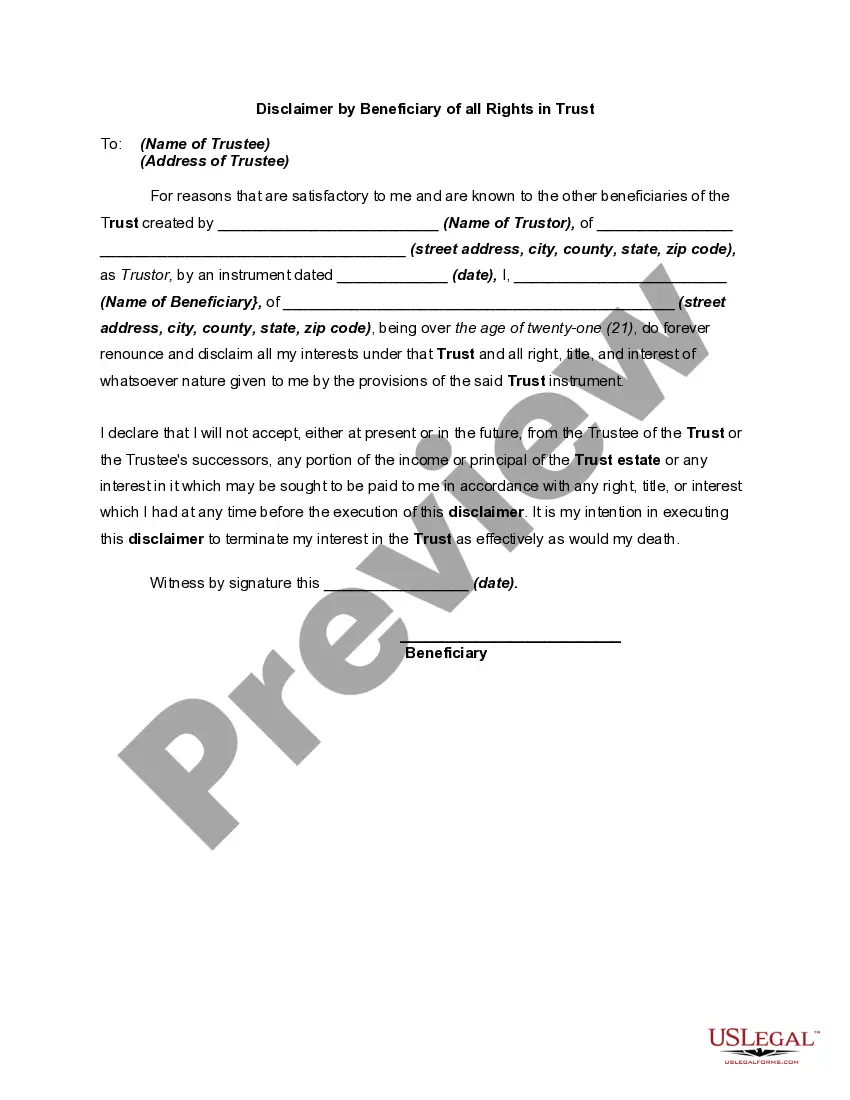
While notarization is not always required for a revocable trust, it can strengthen its validity. Notarizing a trust may help prevent future disputes, particularly when there is a revocation trust acknowledgment without a signature. Different states have various requirements regarding notarization, so check local laws. Consulting with a legal expert can clarify your specific needs.
While the revocable trust offers more flexibility, the irrevocable trust offers certain advantages such as creditor protection. If you want to manage the trust yourself and feel like you may want to modify your trust in the future, it would make sense to go for a revocable trust.
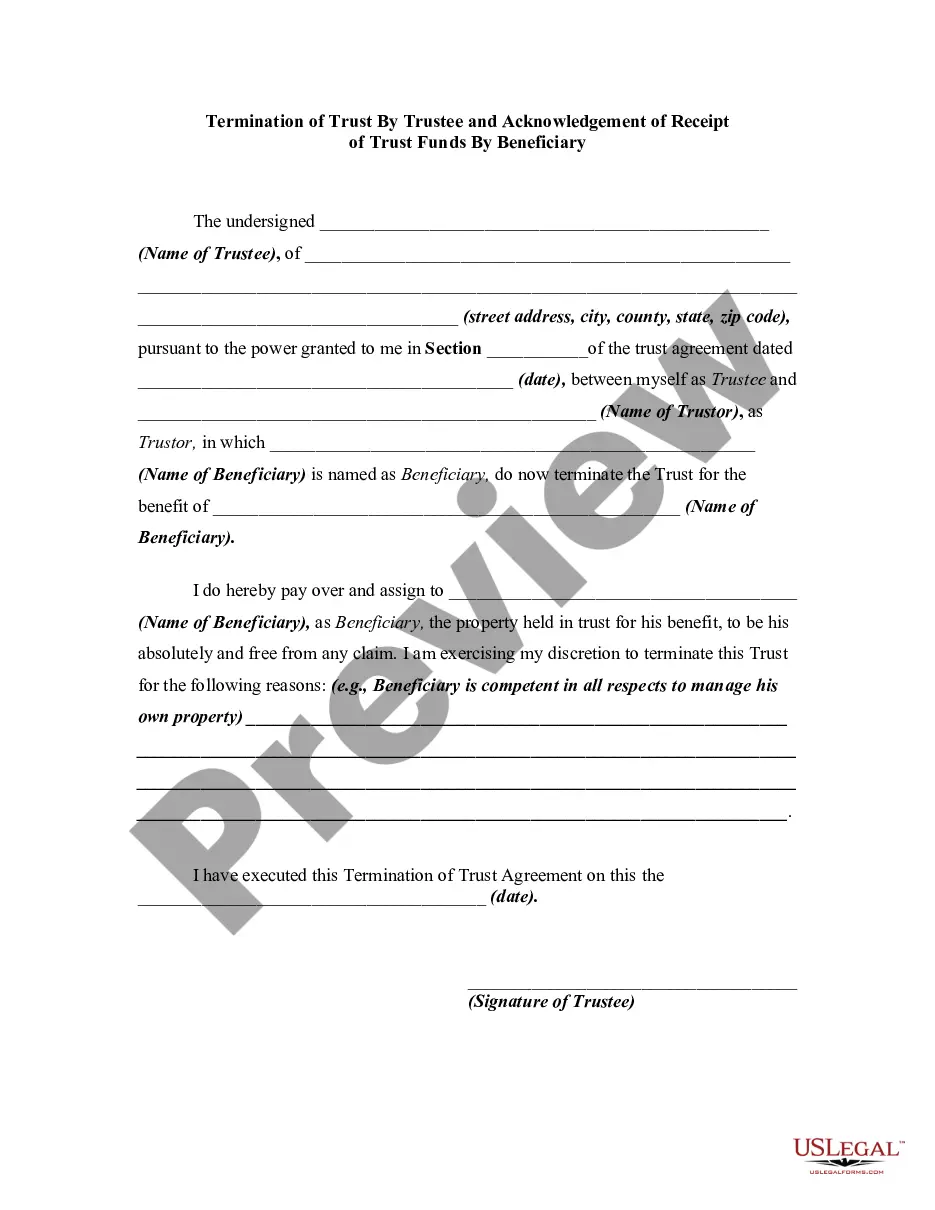
Dissolving a revocable trust typically involves the trust's founder taking the following steps: Plan for the Assets. Step One is making a plan for the assets that it holds. ... Draft a Declaration of Intent. Step Two is creating a declaration of intent. ... File the Document With a Court.
The settlor is the party that creates a trust, usually the donor. The settlor transfers legal title in some asset to the trustee. The settlor then provides in the trust instrument how that trust property is to be used for the beneficiaries. In the case of the inter vivos trust, the settlor can also be the beneficiary.
A revocable trust and living trust are separate terms that describe the same thing: a trust in which the terms can be changed at any time. An irrevocable trust describes a trust that cannot be modified after it is created without the beneficiaries' consent.
The first step in dissolving a revocable trust is to remove all the assets that have been transferred into it. The second step is to fill out a formal revocation form, stating the grantor's desire to dissolve the trust.