Trust Revocation Form For A Bank
Description
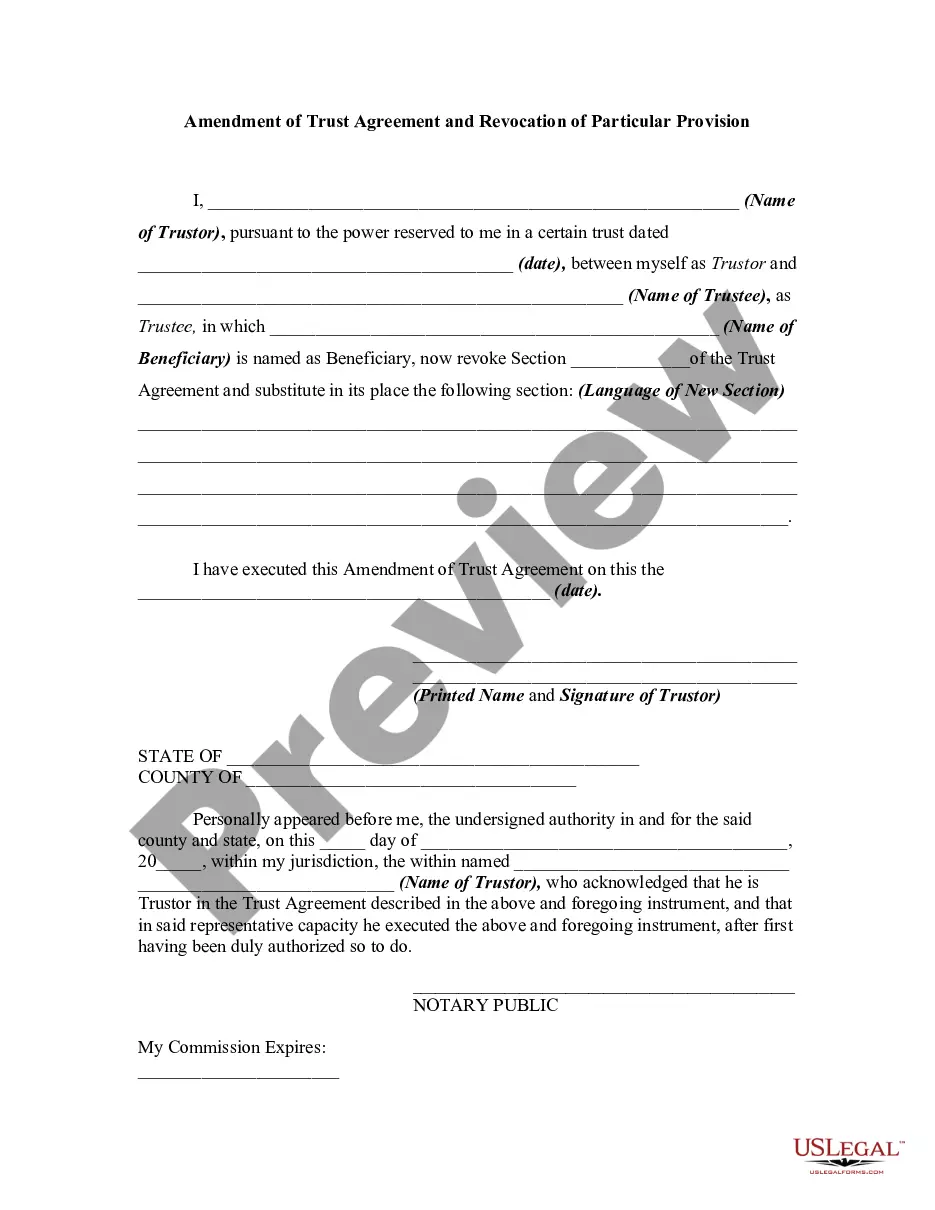
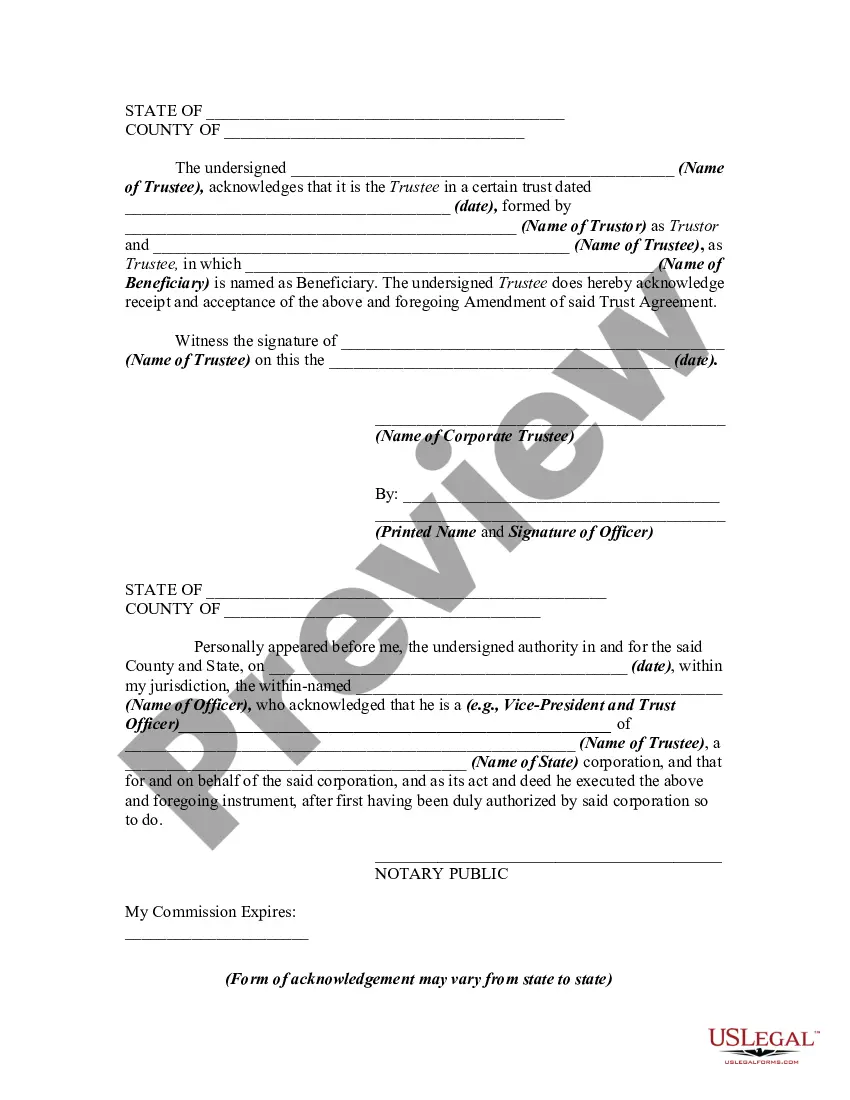
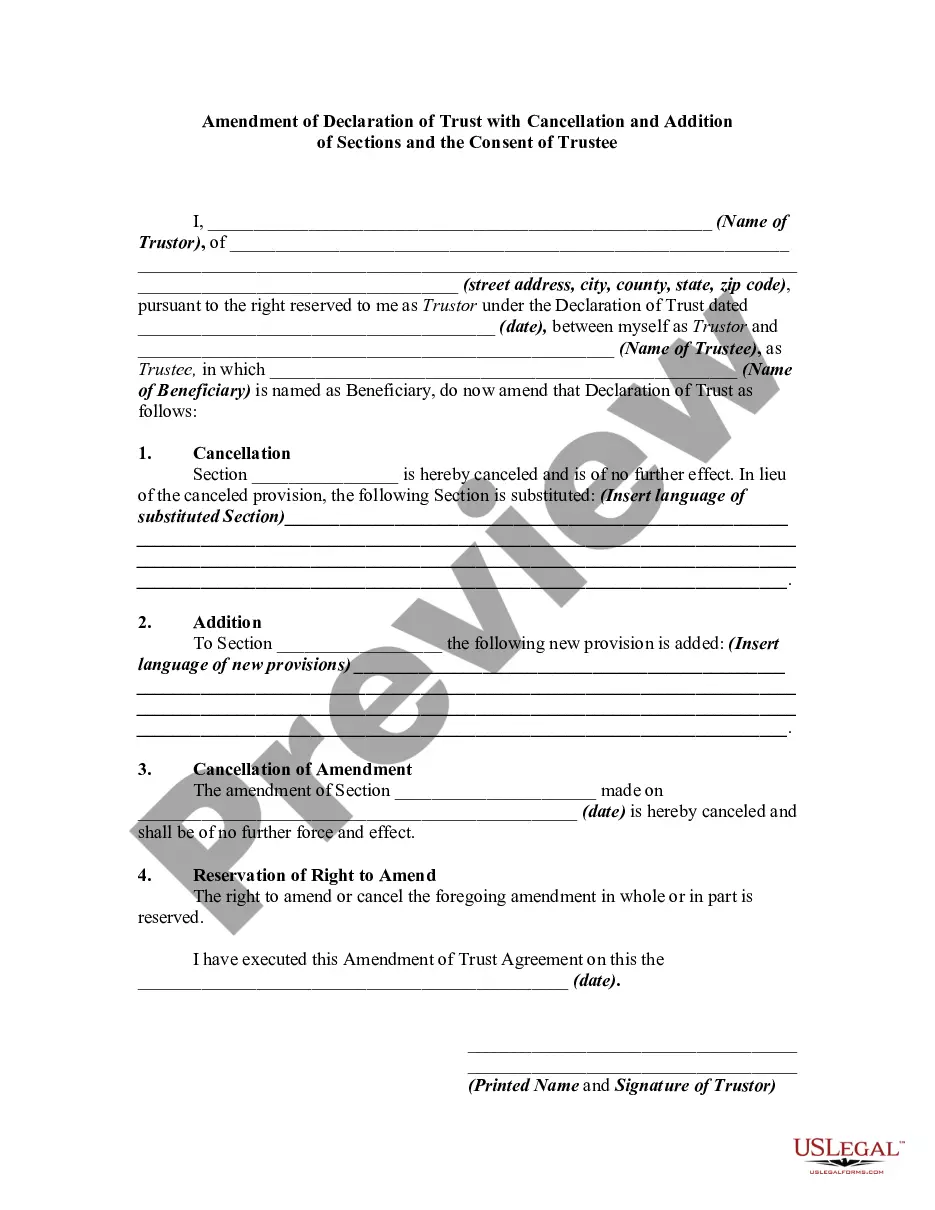
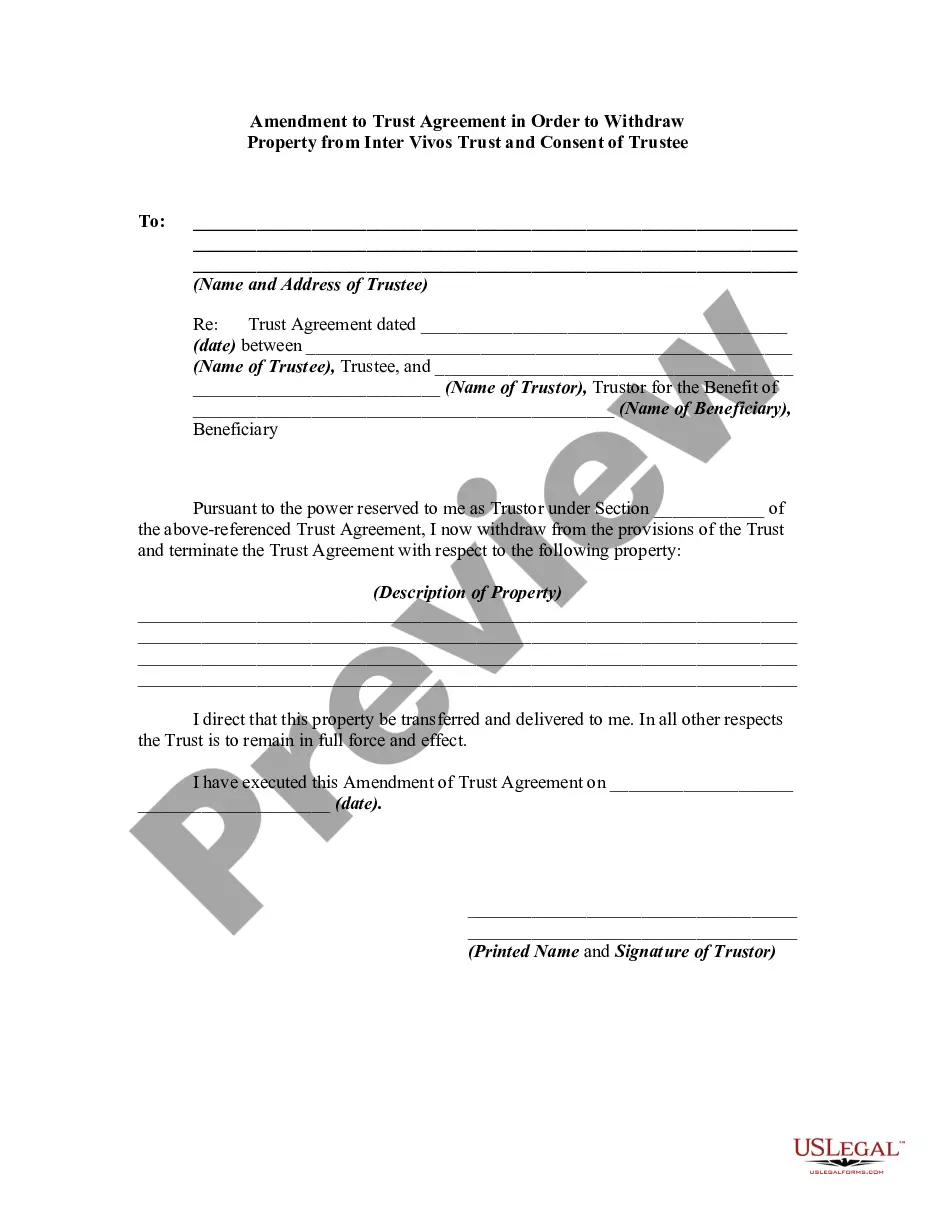
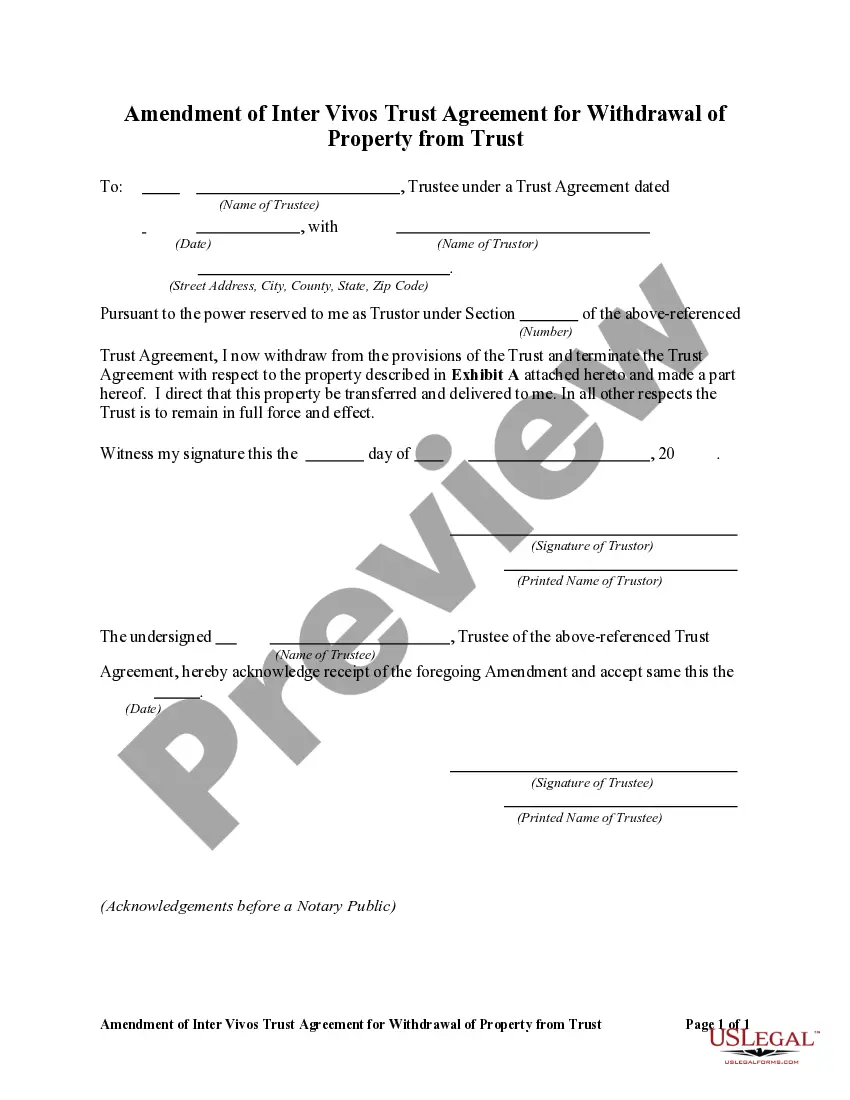
Get your form ready online
Our built-in tools help you complete, sign, share, and store your documents in one place.
Make edits, fill in missing information, and update formatting in US Legal Forms—just like you would in MS Word.
Download a copy, print it, send it by email, or mail it via USPS—whatever works best for your next step.
Sign and collect signatures with our SignNow integration. Send to multiple recipients, set reminders, and more. Go Premium to unlock E-Sign.
If this form requires notarization, complete it online through a secure video call—no need to meet a notary in person or wait for an appointment.
We protect your documents and personal data by following strict security and privacy standards.

Make edits, fill in missing information, and update formatting in US Legal Forms—just like you would in MS Word.

Download a copy, print it, send it by email, or mail it via USPS—whatever works best for your next step.

Sign and collect signatures with our SignNow integration. Send to multiple recipients, set reminders, and more. Go Premium to unlock E-Sign.

If this form requires notarization, complete it online through a secure video call—no need to meet a notary in person or wait for an appointment.

We protect your documents and personal data by following strict security and privacy standards.
Looking for another form?


How to fill out Amendment Of Trust Agreement And Revocation Of Particular Provision?
- Log in to your US Legal Forms account if you're a returning user. Confirm that your subscription is active, renewing if necessary.
- Preview the trust revocation form to ensure it meets your specific needs and complies with local laws.
- If the desired form isn't suitable, utilize the search feature to find the correct template that aligns with your requirements.
- Purchase the form by selecting the 'Buy Now' option and choosing a subscription plan that works for you. Account registration is required.
- Complete the payment using your credit card or PayPal, ensuring a secure transaction.
- Download the form to your device. Access it later through the 'My Forms' section in your account for future needs.
In conclusion, obtaining a trust revocation form for a bank through US Legal Forms is an efficient and convenient process. Their extensive library and support resources empower individuals and attorneys alike to create legally sound documents with ease.
Start familiarizing yourself with the simplicity of US Legal Forms today and ensure your documents are prepared correctly!
Form popularity
FAQ
Certain bank accounts may not be suitable for inclusion in a revocable trust, such as accounts that require ongoing management or specific beneficiary designations. Additionally, accounts you may need to access frequently for personal expenses could be cumbersome within the trust structure. It's crucial to analyze your financial situation and consult a trusted advisor to gauge the benefits of filing a trust revocation form for a bank if you decide to make changes to your account management.
Putting bank accounts in a revocable trust can simplify wealth transfer to your beneficiaries. This setup helps you manage your finances more efficiently while you are alive, allowing for easy access to funds. However, you should weigh the advantages against your specific situation, including how comfortable you are with the relevant documentation, such as trust revocation forms for a bank. Consulting with an estate planning expert can guide you through this decision.
It can be beneficial to place bank accounts in your revocable trust. By doing so, you can streamline the transfer of these assets after your passing and avoid probate. However, consider whether this aligns with your overall financial strategy. Be sure to review your options and possibly use a trust revocation form for a bank to make necessary changes as needed.
When considering what assets to exclude from a revocable trust, avoid personal items that lack significant value and are not necessary for your estate planning. Additionally, assets that may require special management, like certain business interests, might also be better handled outside of the trust. Keep in mind that real estate or valuable collectibles can complicate the trust setup. Consulting a legal expert can help you determine the best approach for your estate plan, particularly regarding the trust revocation form for a bank.
An example of a trust revocation occurs when a grantor completes and signs a trust revocation form for a bank, effectively terminating the trust. This process might involve notifying beneficiaries and failing any outstanding debts connected to the trust. It is vital to keep this documentation organized for future reference.
A trust revocation declaration is a written statement declaring that a previously created trust is no longer valid. This document should include details such as the trust's name, the date it was created, and a reference to the trust revocation form for a bank that was completed. This clarity helps eliminate any future confusion regarding the trust's status.
To place a bank account into a revocable trust, you generally need to retitle the account under the name of the trust. After preparing and completing a trust revocation form for a bank, you should present this along with identification to the bank. This action ensures that the trust will manage the account upon your passing.
A revocation clause in a trust document typically states that the trust is revocable and can be changed or terminated at any time by the grantor. An effective revocation clause may specify that upon signing a trust revocation form for a bank, all rights, and powers of the previously established trust are annulled. This legal clarity helps avoid confusion.
One significant mistake parents often make is not clearly outlining the terms of the trust fund. This can lead to misunderstandings and disputes among beneficiaries later on. To prevent this, it's essential to use a reliable trust revocation form for a bank to ensure that all details are clearly defined and communicated.
You can invalidate a trust by executing a Trust revocation form for a bank, among other steps. This form typically declares your intention to revoke the trust, which must be signed and dated. Additionally, it is wise to notify all relevant parties, including your bank and beneficiaries, about the revocation. Taking these actions ensures that the trust is officially invalidated and will no longer govern your assets.