Revoke A Trust For The Future
Description
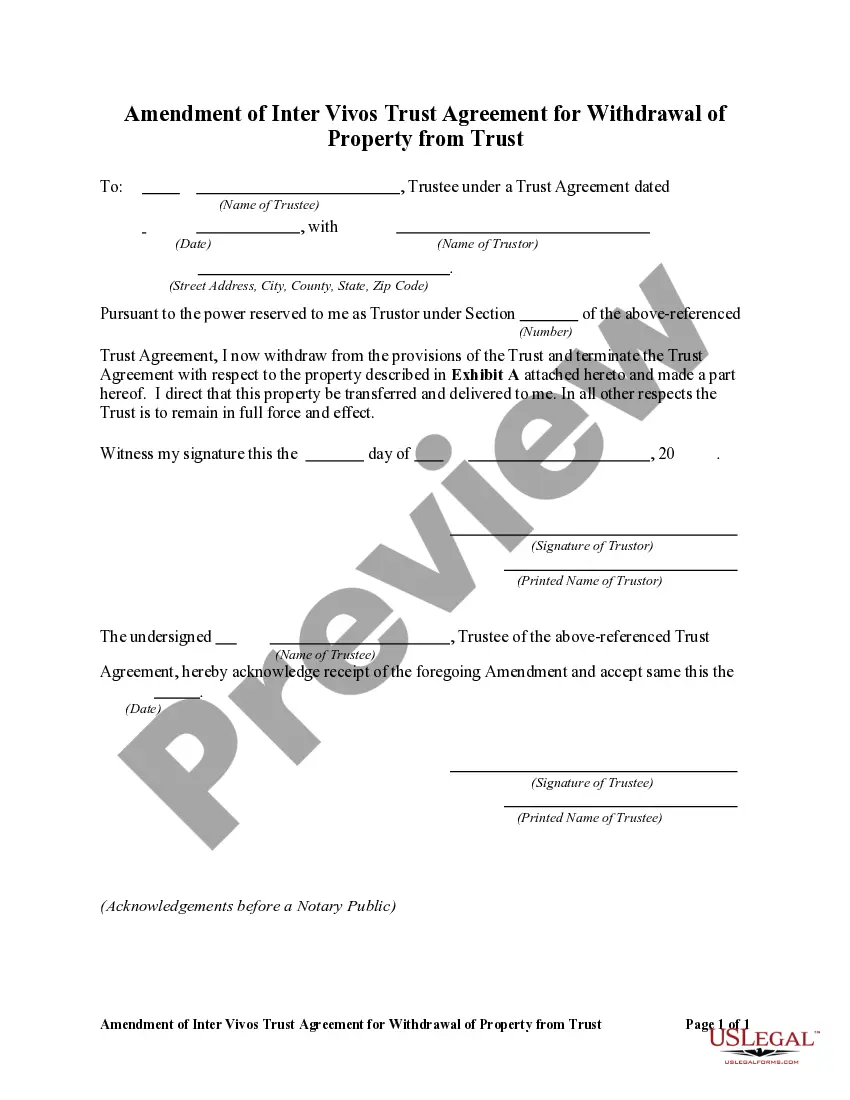
Get your form ready online
Our built-in tools help you complete, sign, share, and store your documents in one place.
Make edits, fill in missing information, and update formatting in US Legal Forms—just like you would in MS Word.
Download a copy, print it, send it by email, or mail it via USPS—whatever works best for your next step.
Sign and collect signatures with our SignNow integration. Send to multiple recipients, set reminders, and more. Go Premium to unlock E-Sign.
If this form requires notarization, complete it online through a secure video call—no need to meet a notary in person or wait for an appointment.
We protect your documents and personal data by following strict security and privacy standards.

Make edits, fill in missing information, and update formatting in US Legal Forms—just like you would in MS Word.

Download a copy, print it, send it by email, or mail it via USPS—whatever works best for your next step.

Sign and collect signatures with our SignNow integration. Send to multiple recipients, set reminders, and more. Go Premium to unlock E-Sign.

If this form requires notarization, complete it online through a secure video call—no need to meet a notary in person or wait for an appointment.

We protect your documents and personal data by following strict security and privacy standards.
Looking for another form?




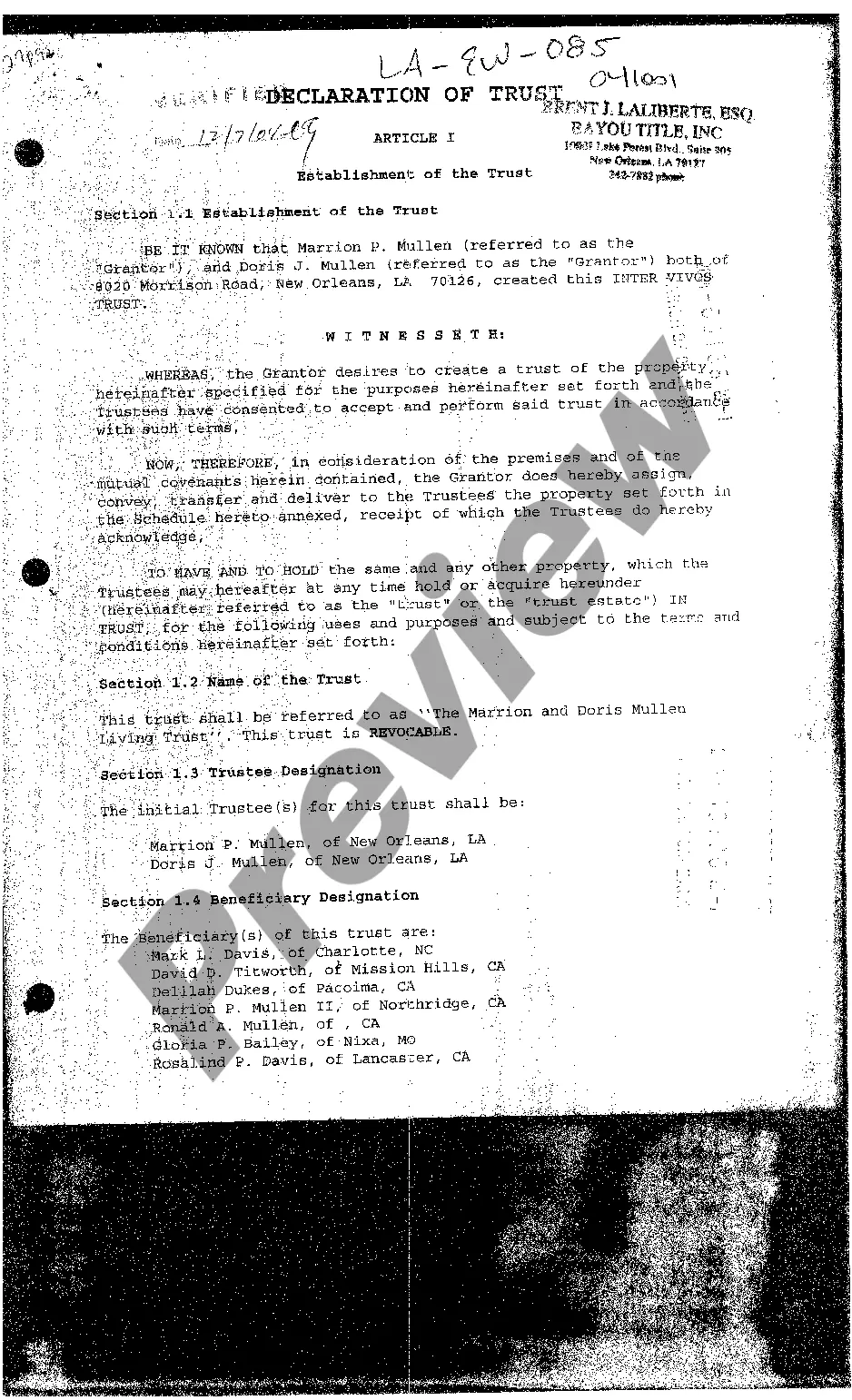




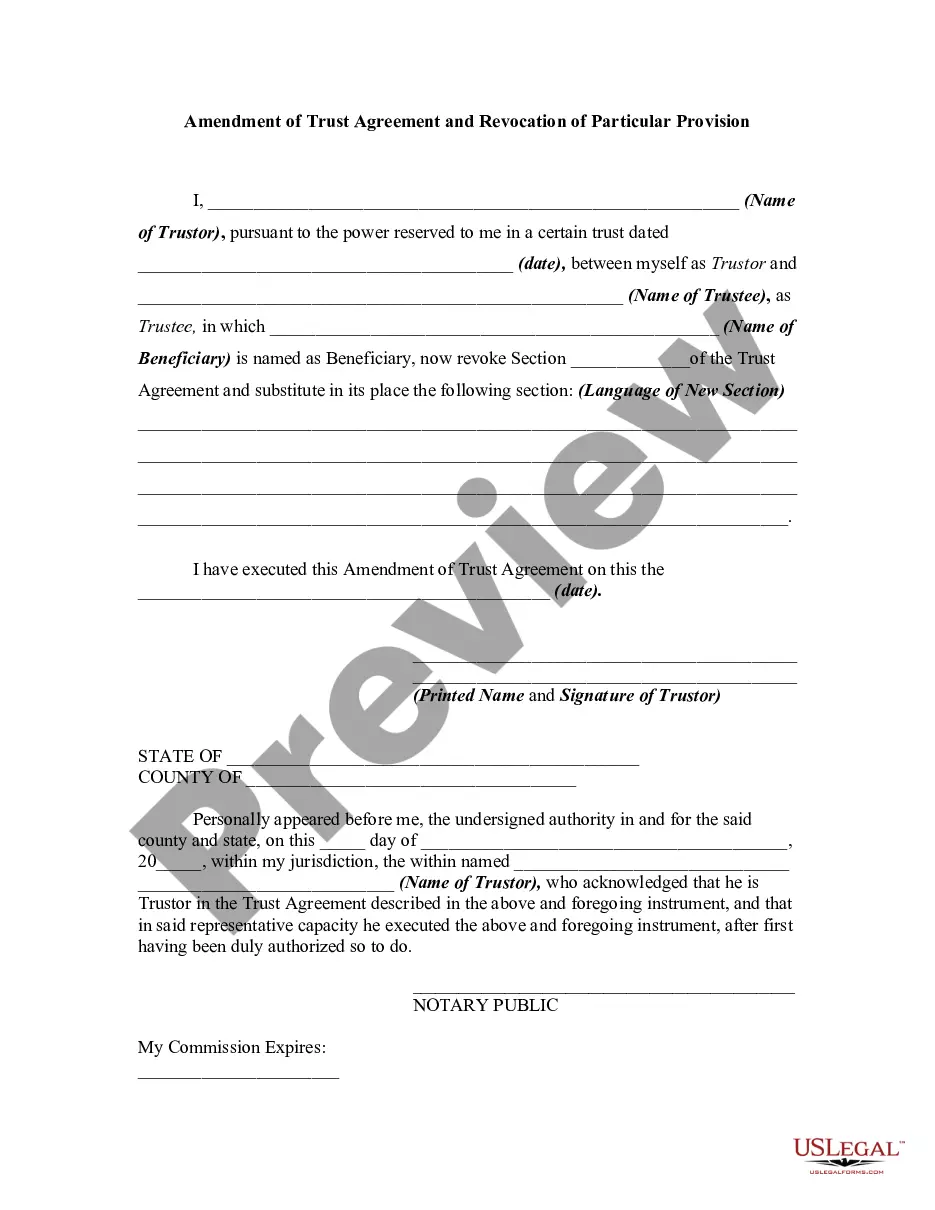
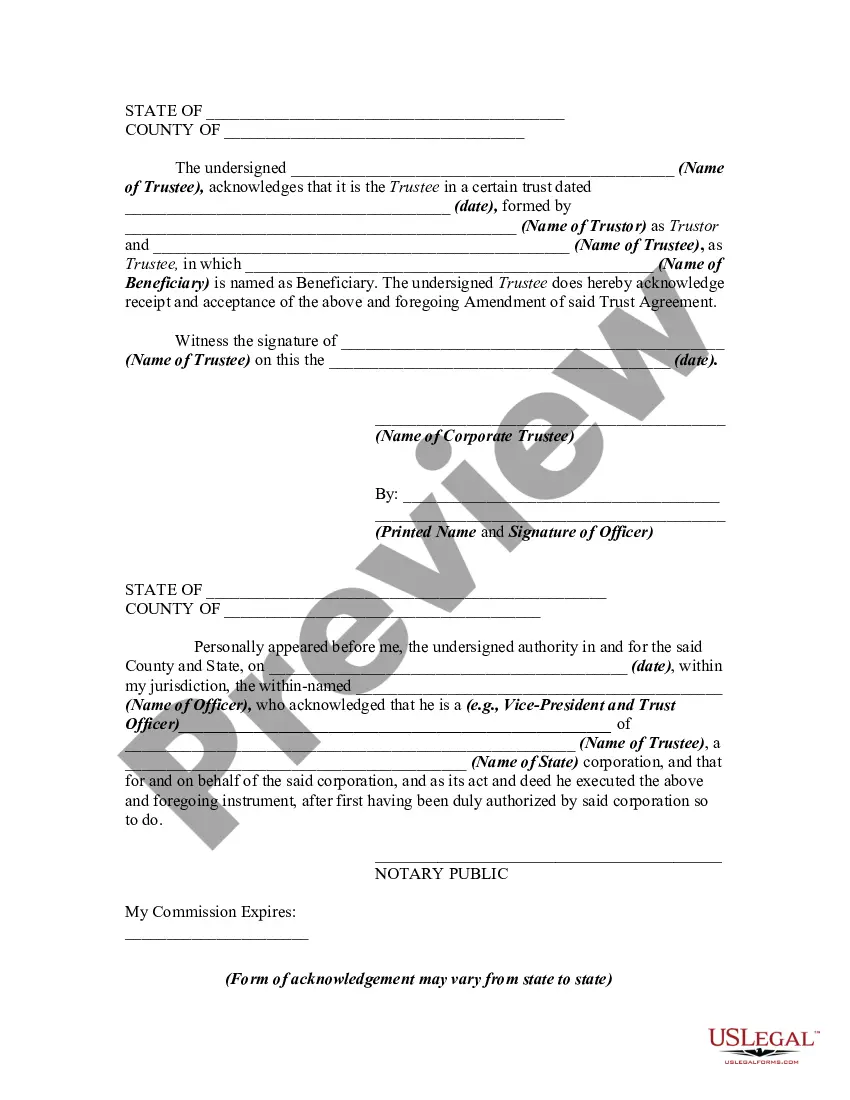
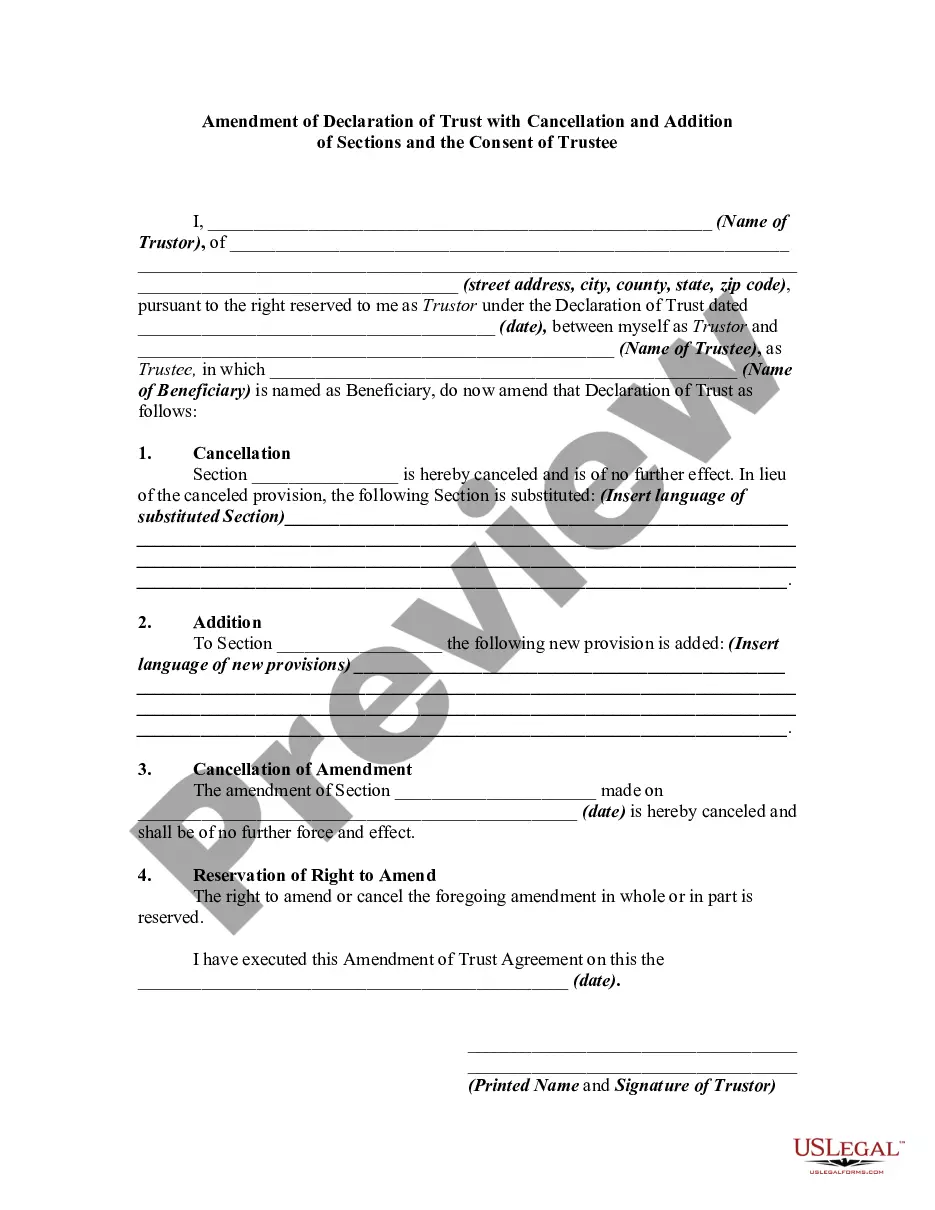
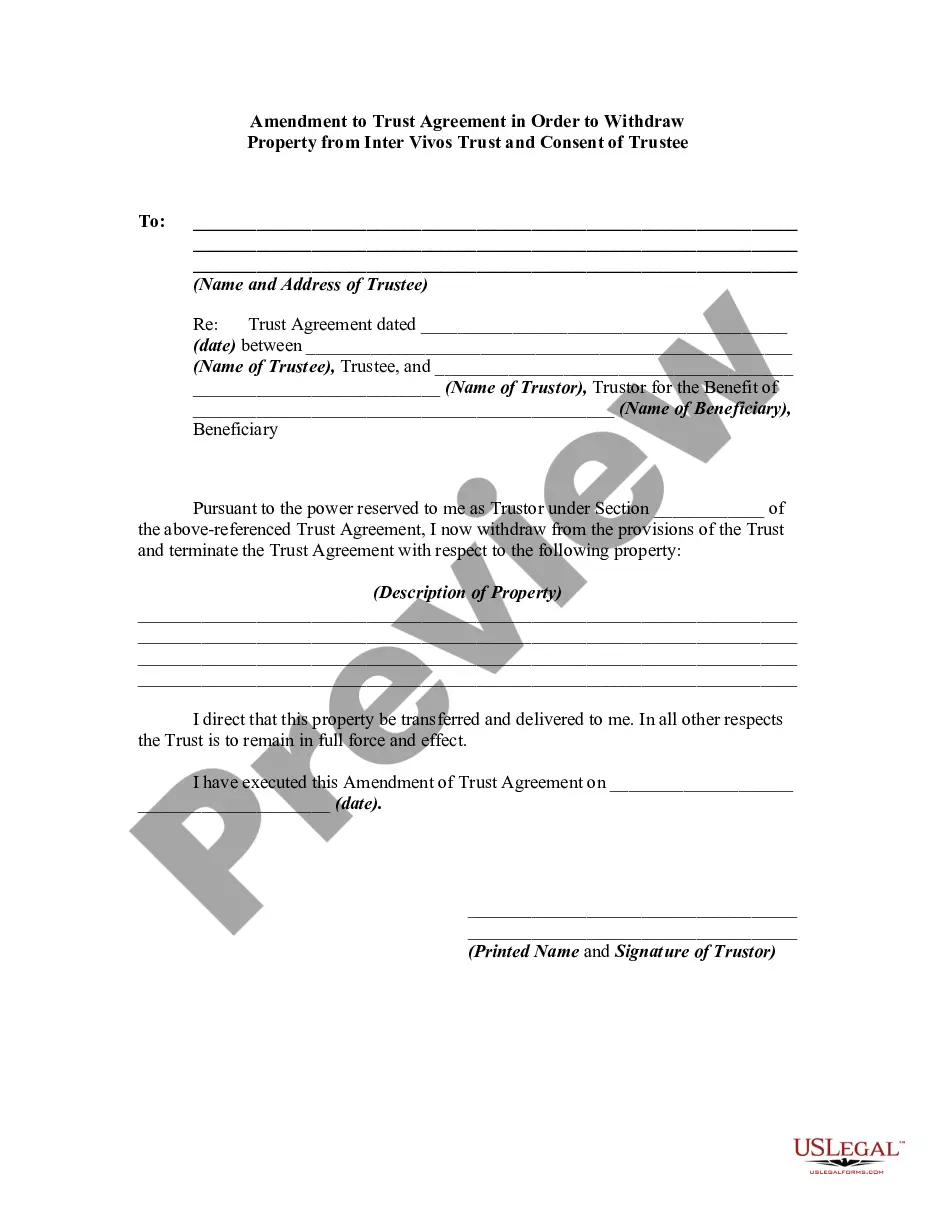
How to fill out Amendment Of Trust Agreement And Revocation Of Particular Provision?
- If you're a returning user, log in to your account and locate the appropriate form. Ensure your subscription is active; renew if needed.
- For first-time users, begin by reviewing the Preview mode and form descriptions. This step is crucial to select the right document that aligns with your local laws.
- If the selected form does not meet your needs, utilize the Search tab to find a more suitable template.
- Proceed to purchase the document by clicking the Buy Now button and selecting your subscription plan. Registration is required to access the full legal library.
- Complete your transaction using credit card information or PayPal for a seamless purchasing experience.
- Finally, download your form to your device. You can always access it again anytime via the My Forms menu in your account.
In conclusion, revoking a trust is a straightforward process when you use US Legal Forms. Their user-friendly platform and vast collection of legal forms ensure that you will find exactly what you need.
Start your journey towards effective estate management today and explore the benefits of US Legal Forms!
Form popularity
FAQ
An example of revoking a trust for the future could be a situation where a grantor decides to change their estate plan. Suppose the grantor initially created a trust to manage assets for their children but later decides to distribute assets directly to them. In that case, the grantor would formally revoke the existing trust with a written notice, ensuring that all beneficiaries are informed and the trustee's role is concluded.
To bring a trust to an end, start by reviewing the trust agreement for revocation procedures. Generally, you will need to prepare a revocation document, outlining your decision to revoke. Then, notify all parties involved, including the beneficiaries and trustees. You can use platforms like US Legal Forms to access templates and assistance in preparing your documents.
Dissolving a trust isn't as complicated as it may seem. If you understand the terms and follow the procedures outlined in the trust document, you can effectively revoke a trust for the future. That said, complexities can arise if disputes occur among beneficiaries or if the trust holds significant assets. In such cases, seeking legal assistance can simplify the process.
To revoke a trust for the future, you must usually follow specific steps outlined in the trust agreement. Typically, you would gather the necessary documentation, including the trust deed and any amendments. Next, you would provide written notice to all beneficiaries and trustees. This process ensures transparency and protects everyone involved.
To invalidate a trust, you typically must follow specific legal procedures, which may vary by state. This might involve drafting a formal document stating your intent to revoke the trust, often requiring witnesses. It is crucial to document your decision properly to ensure that you can revoke a trust for the future without legal complications. You can find comprehensive resources on uslegalforms to guide you through this process.
People often choose to revoke a trust for various reasons, such as changes in personal circumstances or intentions regarding their assets. Life events, like marriage, divorce, or the birth of children, can shift your priorities, prompting you to revoke a trust for the future. Additionally, you might want to update the terms of the trust to reflect current wishes. By utilizing uslegalforms, you can easily navigate the process to revoke a trust for the future.
To revoke a trust for the future, start by reviewing your trust document for specific instructions. You may choose to draft a revocation letter, clearly stating your intention to dissolve the trust. It's advisable to inform all relevant parties and update any estate planning documents to reflect this change. Platforms like US Legal Forms can guide you through the necessary steps to ensure a smooth revocation process.
When you revoke a trust for the future, consider the potential tax implications. Dissolving a trust may trigger capital gains taxes on any appreciated assets. Additionally, you may face other tax responsibilities based on how the trust managed income prior to revocation. Consulting with a tax professional ensures that you understand the financial consequences.
To revoke a trust for the future, you should follow the terms outlined in the trust document. Typically, the creator of the trust, known as the grantor, can provide a written notice of revocation. In some cases, you may need to formally dissolve the trust in court. It's essential to ensure that all assets are properly accounted for and redistributed according to your wishes.
A trust can become null and void for several reasons, including lack of clear intent from the trustor or failure to meet legal requirements for creation. If the trust document is not properly executed, or if it aims to accomplish an illegal purpose, it can also be deemed void. Understanding how to revoke a trust for the future can help ensure that your trust remains valid and reflects your current intentions.