Dissolving A Trust Formed
Description
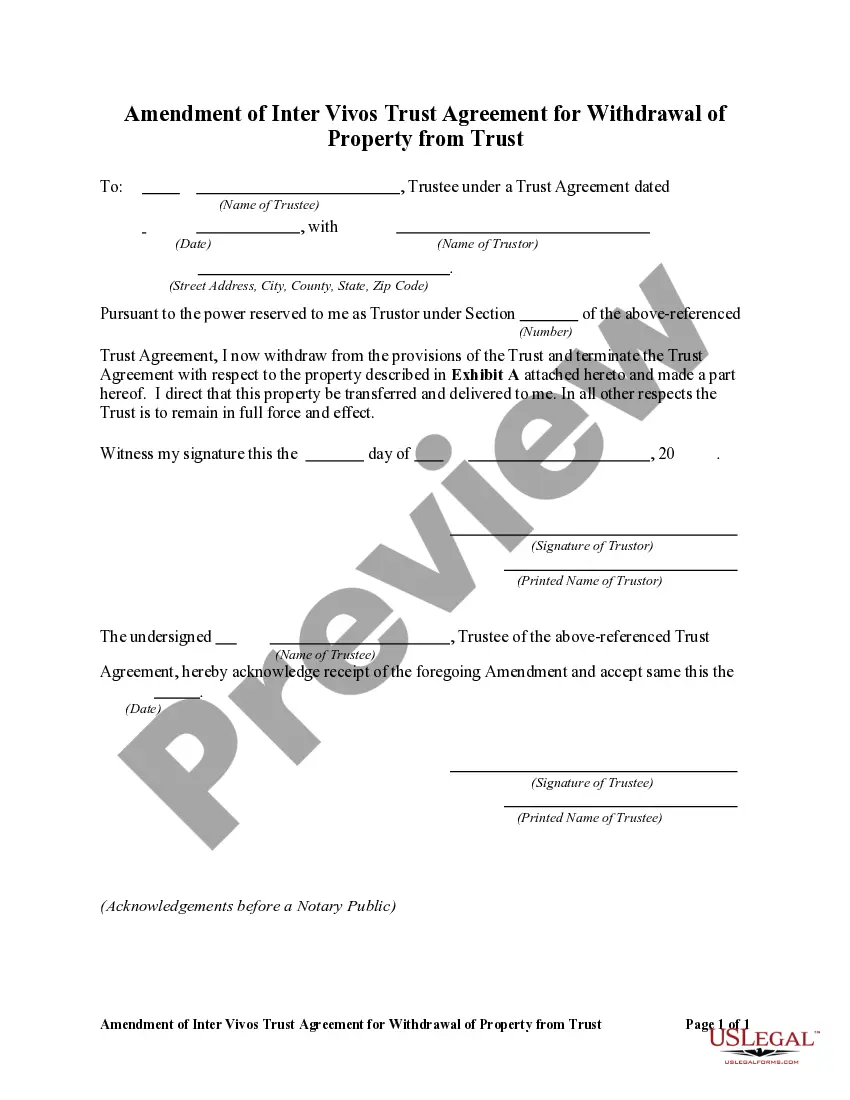
Get your form ready online
Our built-in tools help you complete, sign, share, and store your documents in one place.
Make edits, fill in missing information, and update formatting in US Legal Forms—just like you would in MS Word.
Download a copy, print it, send it by email, or mail it via USPS—whatever works best for your next step.
Sign and collect signatures with our SignNow integration. Send to multiple recipients, set reminders, and more. Go Premium to unlock E-Sign.
If this form requires notarization, complete it online through a secure video call—no need to meet a notary in person or wait for an appointment.
We protect your documents and personal data by following strict security and privacy standards.

Make edits, fill in missing information, and update formatting in US Legal Forms—just like you would in MS Word.

Download a copy, print it, send it by email, or mail it via USPS—whatever works best for your next step.

Sign and collect signatures with our SignNow integration. Send to multiple recipients, set reminders, and more. Go Premium to unlock E-Sign.

If this form requires notarization, complete it online through a secure video call—no need to meet a notary in person or wait for an appointment.

We protect your documents and personal data by following strict security and privacy standards.
Looking for another form?



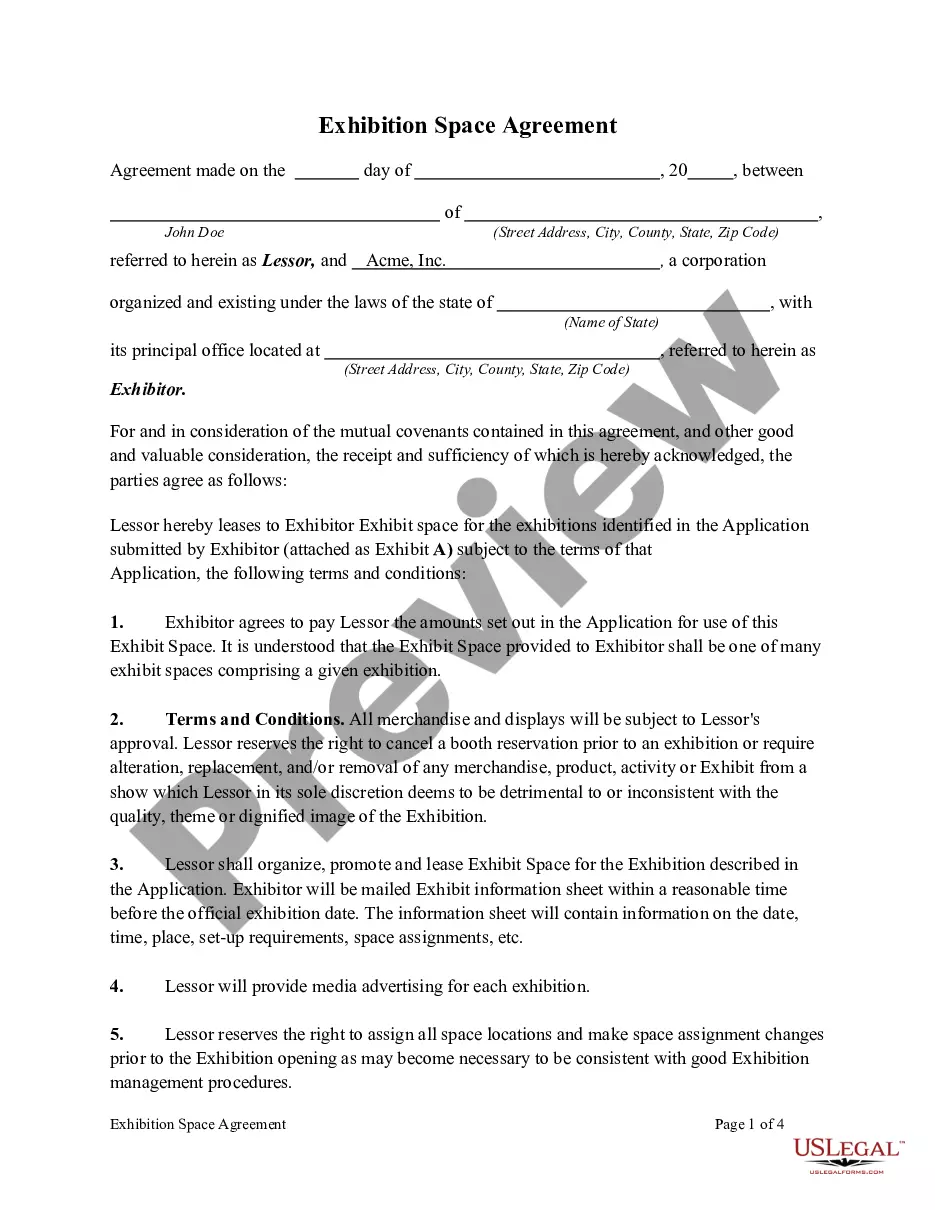
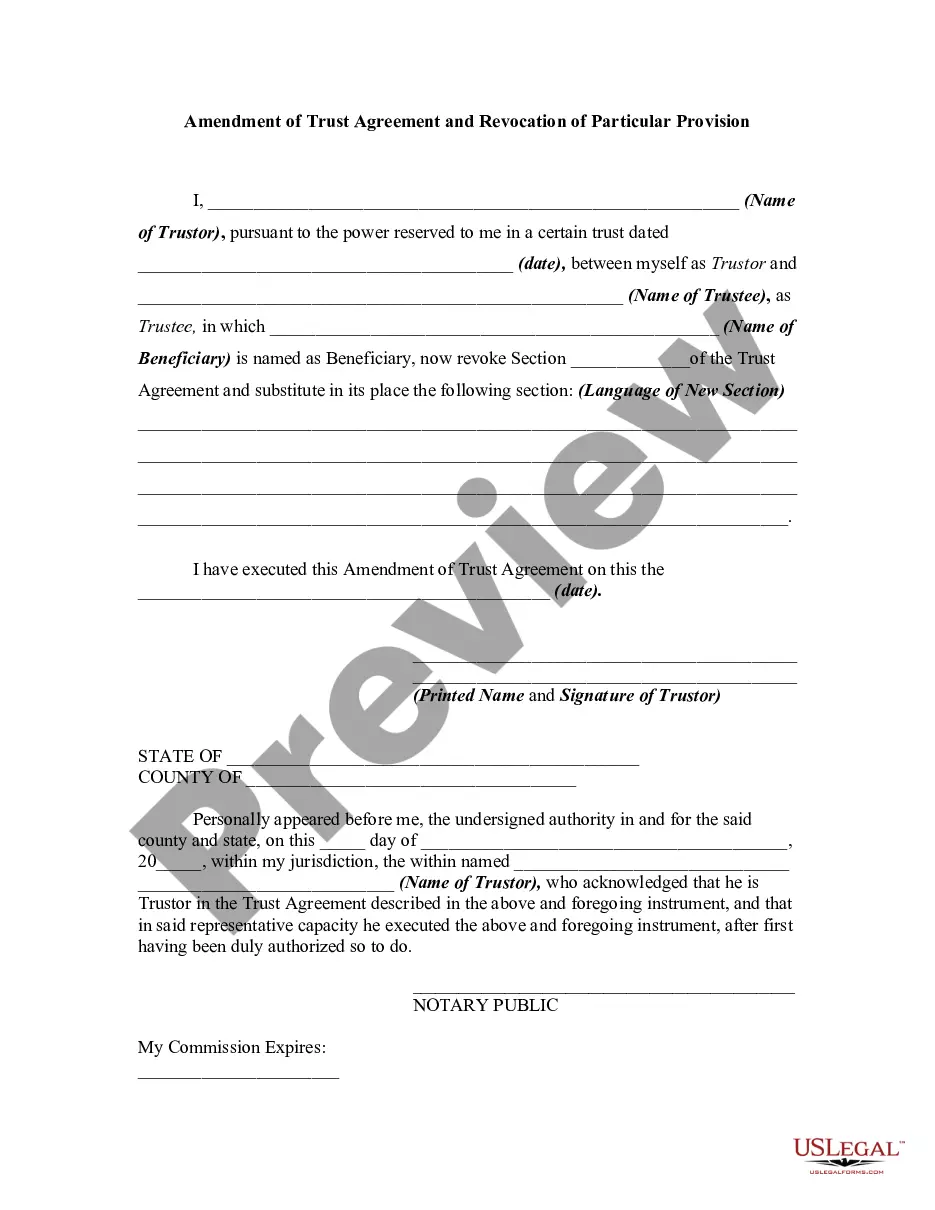
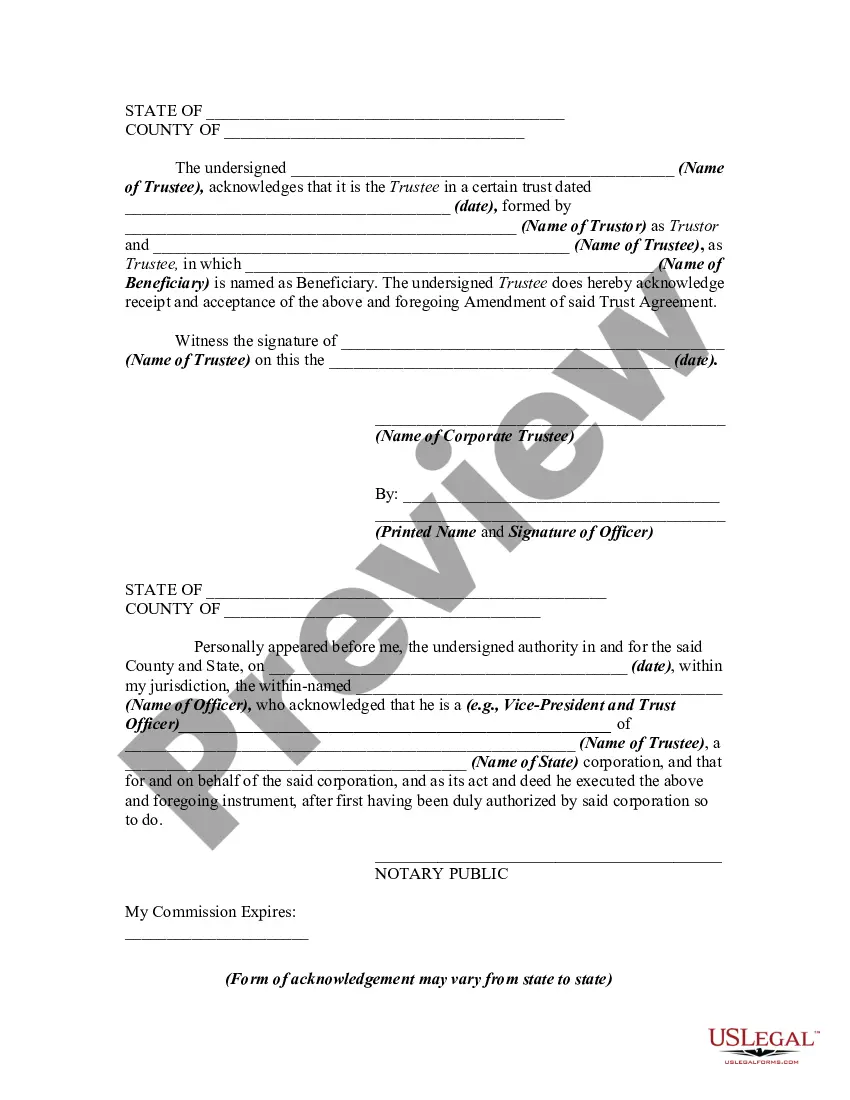
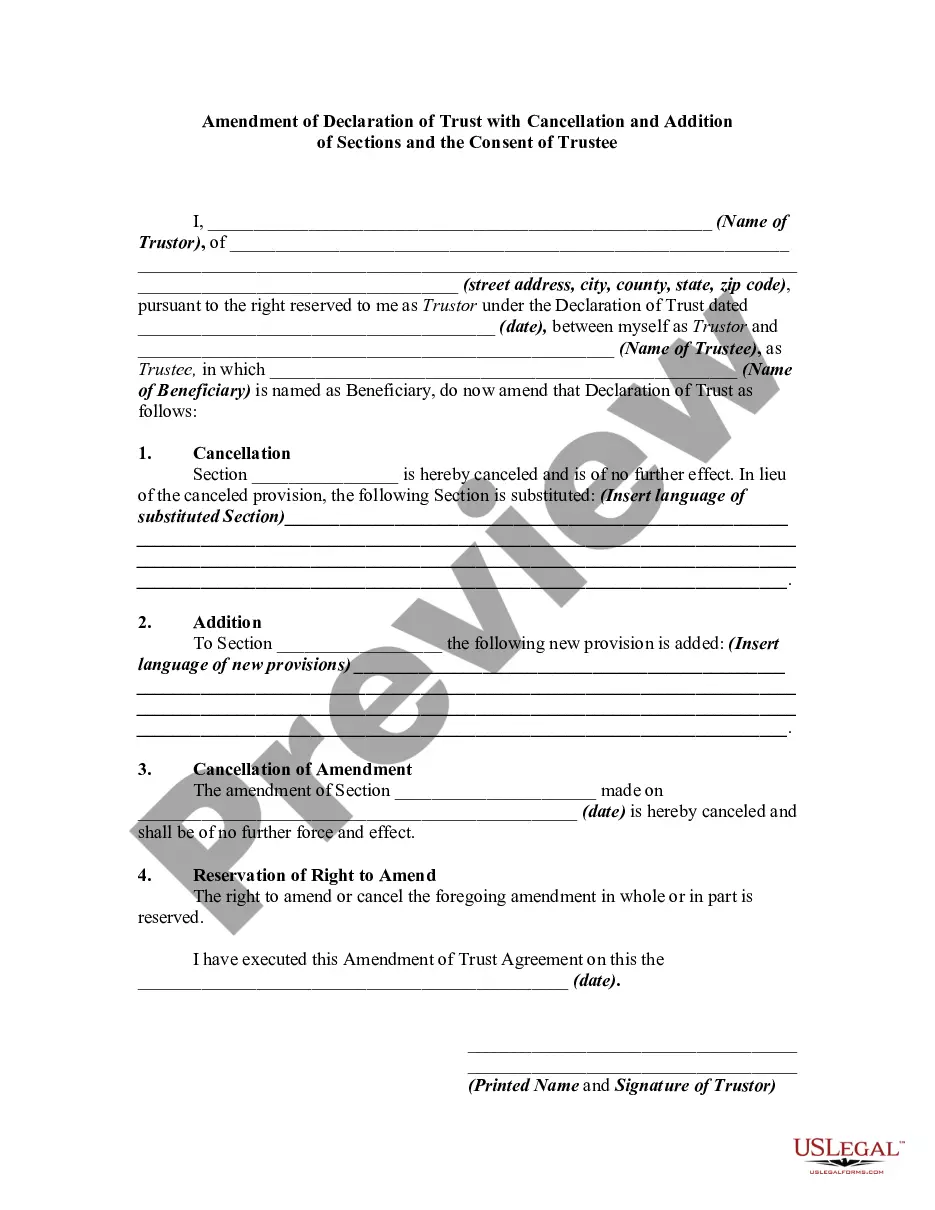
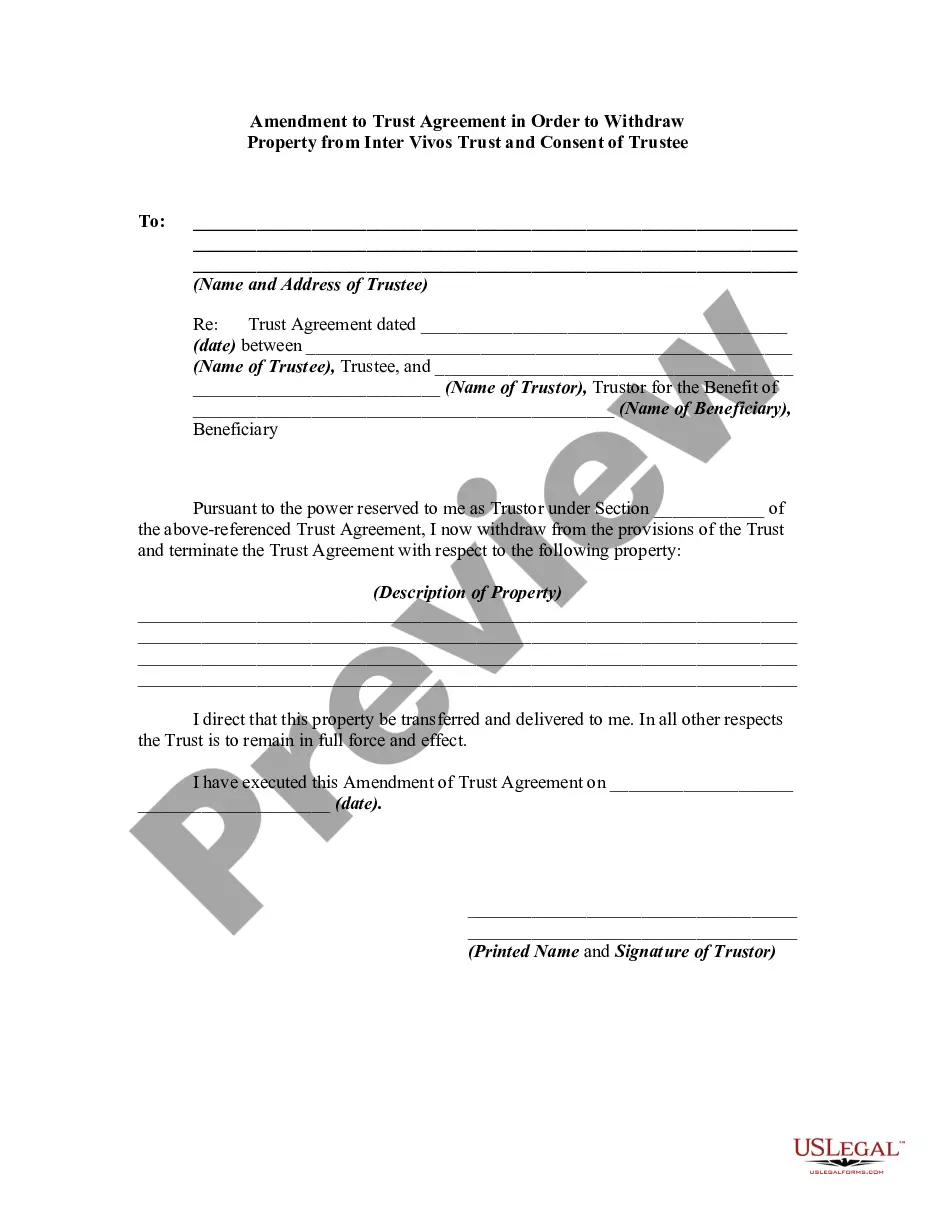
How to fill out Amendment Of Trust Agreement And Revocation Of Particular Provision?
Whether for commercial reasons or personal affairs, everyone must deal with legal matters at some stage in their life.
Filling out legal documents necessitates meticulous attention, starting from selecting the correct form template.
Select your payment method: use a credit card or PayPal account. Choose the file format you prefer and download the Dissolving A Trust Formed. Once saved, you can complete the form using editing software or print it and fill it out by hand. With an extensive US Legal Forms catalog available, you never have to waste time searching for the correct template online. Utilize the library's user-friendly navigation to find the appropriate form for any scenario.
- For instance, if you select an incorrect version of a Dissolving A Trust Formed, it will be rejected when submitted.
- It is thus crucial to obtain a trustworthy source of legal documents like US Legal Forms.
- If you need to acquire a Dissolving A Trust Formed template, follow these straightforward steps.
- Obtain the required template by utilizing the search bar or catalog navigation.
- Examine the form’s description to confirm it suits your circumstances, state, and area.
- Click on the form’s preview to view it.
- If it's the incorrect document, return to the search function to find the Dissolving A Trust Formed sample you require.
- Download the file if it meets your specifications.
- If you already possess a US Legal Forms account, simply click Log in to access previously saved templates in My documents.
- If you don’t have an account yet, you can obtain the form by clicking Buy now.
- Choose the correct pricing option.
- Complete the profile registration form.
Form popularity
FAQ
Termination of a trust can result in tax consequences, such as the recognition of capital gains on the sale of trust assets. Beneficiaries may also face tax responsibilities on distributions received from the trust's final liquidation. For detailed help navigating the tax consequences of dissolving a trust formed, consider resources available on uslegalforms.
When you close a trust, it essentially becomes inactive, and its assets are distributed according to the terms laid out in the trust document. The trustee must settle all debts, complete a final tax return, and inform beneficiaries. Understanding these aspects can facilitate a smooth process when dissolving a trust formed.
Discharging a trust involves settling its outstanding obligations and distributing its assets. Typically, you will need to file necessary tax returns, notify beneficiaries, and formally terminate the trust agreement. By understanding these steps, you can efficiently handle the process of dissolving a trust formed.
Dissolving a trust can lead to various tax implications, including potential capital gains tax and income tax on trust distributions. If the trust has appreciated assets, expect tax responsibilities for any gains realized during the dissolution process. To navigate these complexities, consider utilizing uslegalforms for comprehensive guidance on the implications of dissolving a trust formed.
Closing out a trust with the IRS requires thorough preparation. You must file the final tax return, settle any outstanding tax liabilities, and distribute the trust’s remaining assets to beneficiaries. Following these steps will aid in effectively dissolving a trust formed and ensure all obligations are met.
To dissolve a trust with the IRS, you need to complete a few key steps. First, ensure all debts and taxes are settled, then file a final tax return for the trust. Finally, provide documentation to terminate the trust legally, which can streamline the process of dissolving a trust formed.
Yes, a trust typically must be filed with the IRS if it generates taxable income. If the trust is irrevocable, it must file Form 1041 annually. When dissolving a trust formed, ensure that all required filings are submitted to avoid any penalties.
To file a final tax return for a trust, gather all relevant financial documents for the trust. Use Form 1041 to report income, deductions, and distributions made during the final year. It's important to mark the return as final to signal the end of the trust's tax obligations, especially when dissolving a trust formed.
The timeline for the IRS to close an estate varies, but it typically takes several months. This process involves reviewing all necessary tax returns and ensuring compliance with tax obligations. As you proceed with dissolving a trust formed, be prepared for potential delays based on the estate's complexity and any outstanding issues.
Filling out a certification of trust form requires attention to detail and specific information about the trust. Start by providing the name and date of the trust, along with its purpose and the names of the trustees. You will also need to include any relevant details such as how the trust can be amended or terminated. If you find the form daunting, resources from US Legal Forms can guide you with tailored instructions and templates.