Successor Trustee Form For Bank
Description
Get your form ready online
Our built-in tools help you complete, sign, share, and store your documents in one place.
Make edits, fill in missing information, and update formatting in US Legal Forms—just like you would in MS Word.
Download a copy, print it, send it by email, or mail it via USPS—whatever works best for your next step.
Sign and collect signatures with our SignNow integration. Send to multiple recipients, set reminders, and more. Go Premium to unlock E-Sign.
If this form requires notarization, complete it online through a secure video call—no need to meet a notary in person or wait for an appointment.
We protect your documents and personal data by following strict security and privacy standards.

Make edits, fill in missing information, and update formatting in US Legal Forms—just like you would in MS Word.

Download a copy, print it, send it by email, or mail it via USPS—whatever works best for your next step.

Sign and collect signatures with our SignNow integration. Send to multiple recipients, set reminders, and more. Go Premium to unlock E-Sign.

If this form requires notarization, complete it online through a secure video call—no need to meet a notary in person or wait for an appointment.

We protect your documents and personal data by following strict security and privacy standards.
Looking for another form?

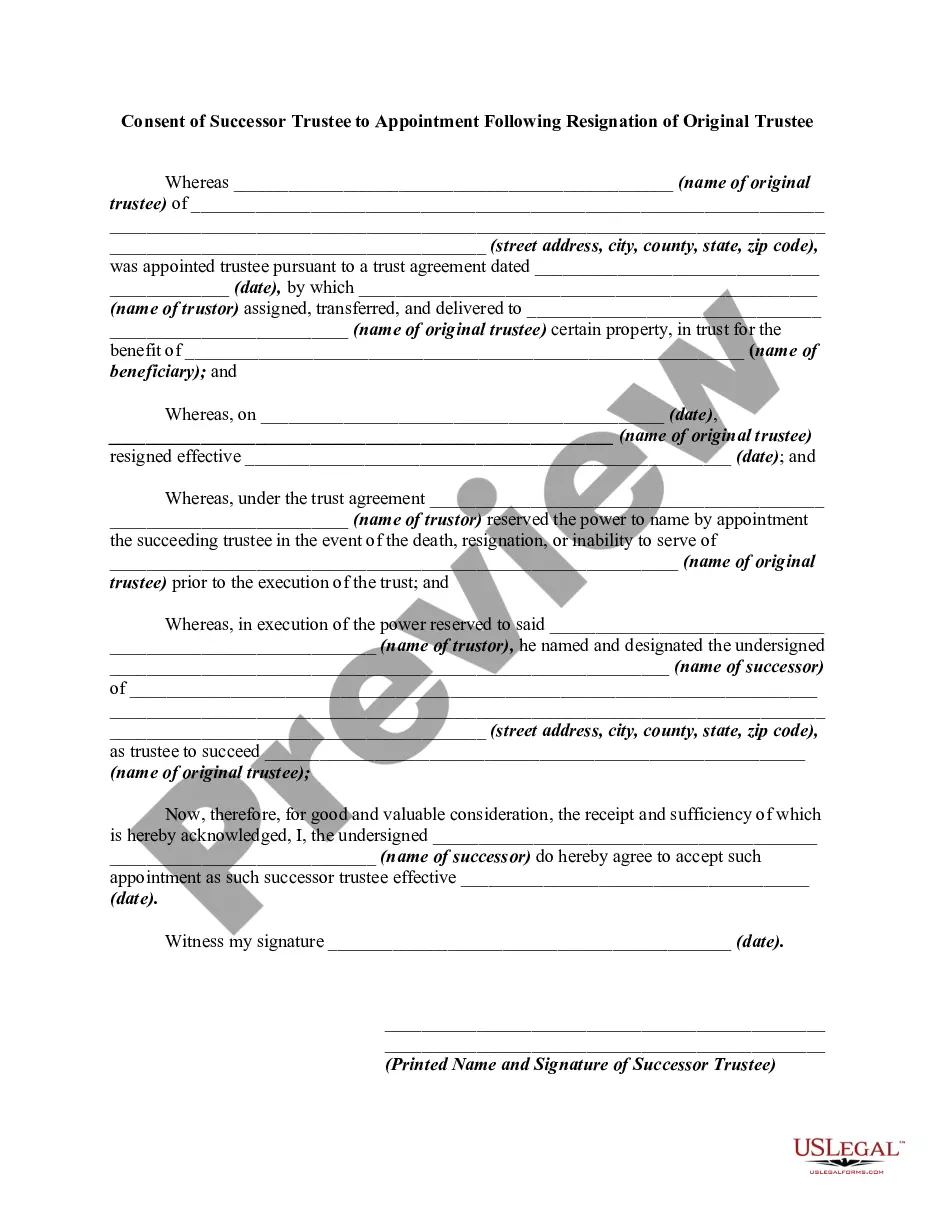
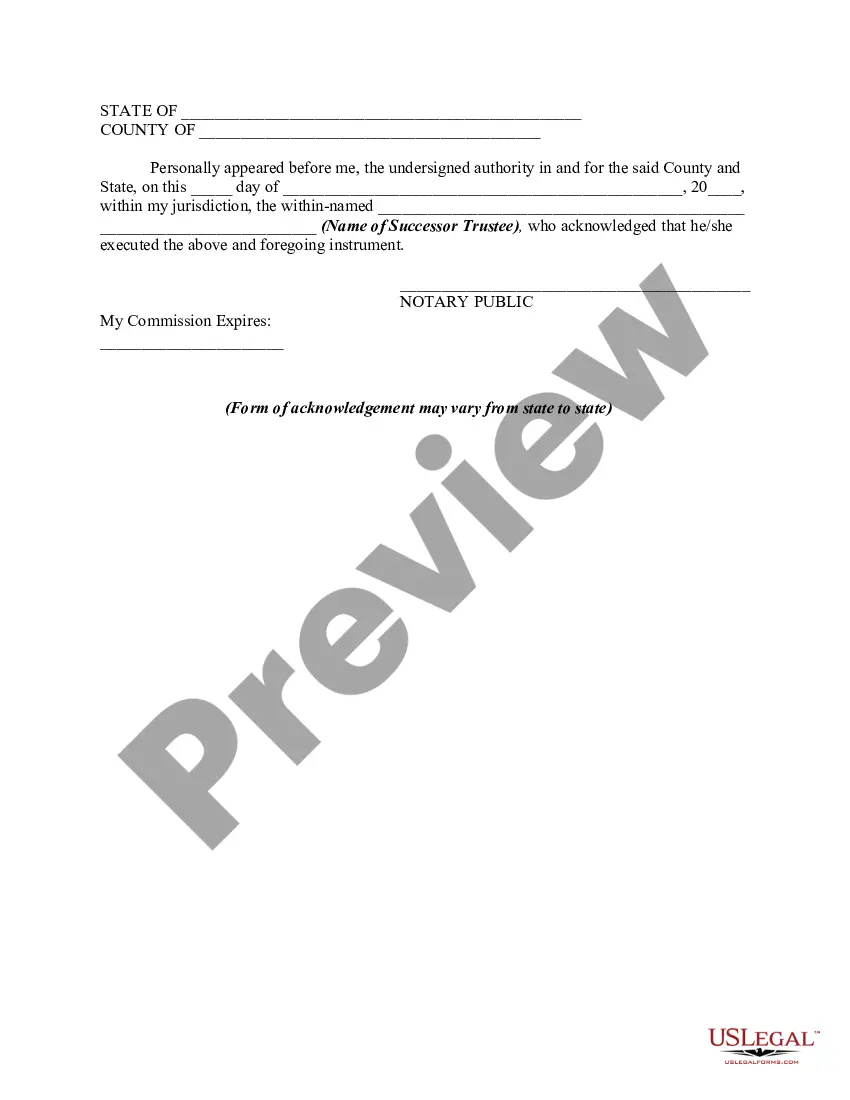
How to fill out Consent Of Successor Trustee To Appointment Following Resignation Of Original Trustee?
Creating legal documents from the ground up can occasionally feel a bit daunting. Certain situations may require extensive research and significant financial investment.
If you seek a more direct and budget-friendly method to generate the Successor Trustee Form For Bank or any other documentation without unnecessary hurdles, US Legal Forms is readily available to assist you.
Our online library of over 85,000 current legal forms encompasses almost all aspects of your financial, legal, and personal affairs. With merely a few clicks, you can swiftly access state- and county-specific templates meticulously crafted by our legal professionals.
Utilize our service whenever you require a dependable and trustworthy platform to effortlessly locate and obtain the Successor Trustee Form For Bank. If you're already familiar with our offerings and have previously registered with us, simply Log In to your account, find the template, and download it or retrieve it again anytime from the My documents section.
Ensure the form you select meets your state and county's criteria. Choose the appropriate subscription option to acquire the Successor Trustee Form For Bank. Download the file, then fill it out, verify, and print it. US Legal Forms enjoys an impeccable reputation and over 25 years of expertise. Join us today and turn document processing into a straightforward and efficient process!
- Not a member yet? No problem.
- It takes minimal time to register and browse the collection.
- Before downloading the Successor Trustee Form For Bank, follow these tips.
- Review the document preview and descriptions to confirm you have located the correct document.
Form popularity
FAQ
The fiduciary duty of a successor trustee is to act in the best interests of the beneficiaries while managing the trust assets. This includes making prudent investment decisions, ensuring fair distributions, and maintaining transparency throughout the process. The trustee must prioritize the beneficiaries' needs over personal interests. For assistance in fulfilling these responsibilities, consider utilizing a successor trustee form for bank management available on US Legal Forms.
The first action a successor trustee should take is to review the trust document thoroughly. This review will help them understand their duties, the assets involved, and the specific instructions left by the trust maker. Following that, they should notify the beneficiaries and begin organizing the trust assets. Using a successor trustee form for bank processes can help streamline this initial setup.
An example of a successor trustee could be a trusted family member, such as an adult child or a sibling, designated by the person who created the trust. This individual takes on the responsibility to manage the trust according to the creator's wishes after their passing. In many cases, individuals choose someone with financial knowledge to ensure effective management. US Legal Forms provides templates for creating a successor trustee form for banks, making this selection clearer and more formal.
A successor trustee must follow the terms set out in the trust document, ensuring they act in accordance with the law. They need to manage and protect the trust assets responsibly, acting in the best interest of the beneficiaries. Additionally, the successor trustee should keep clear records and communicate regularly with the beneficiaries. To simplify this process, you can use a successor trustee form for bank transactions from US Legal Forms.
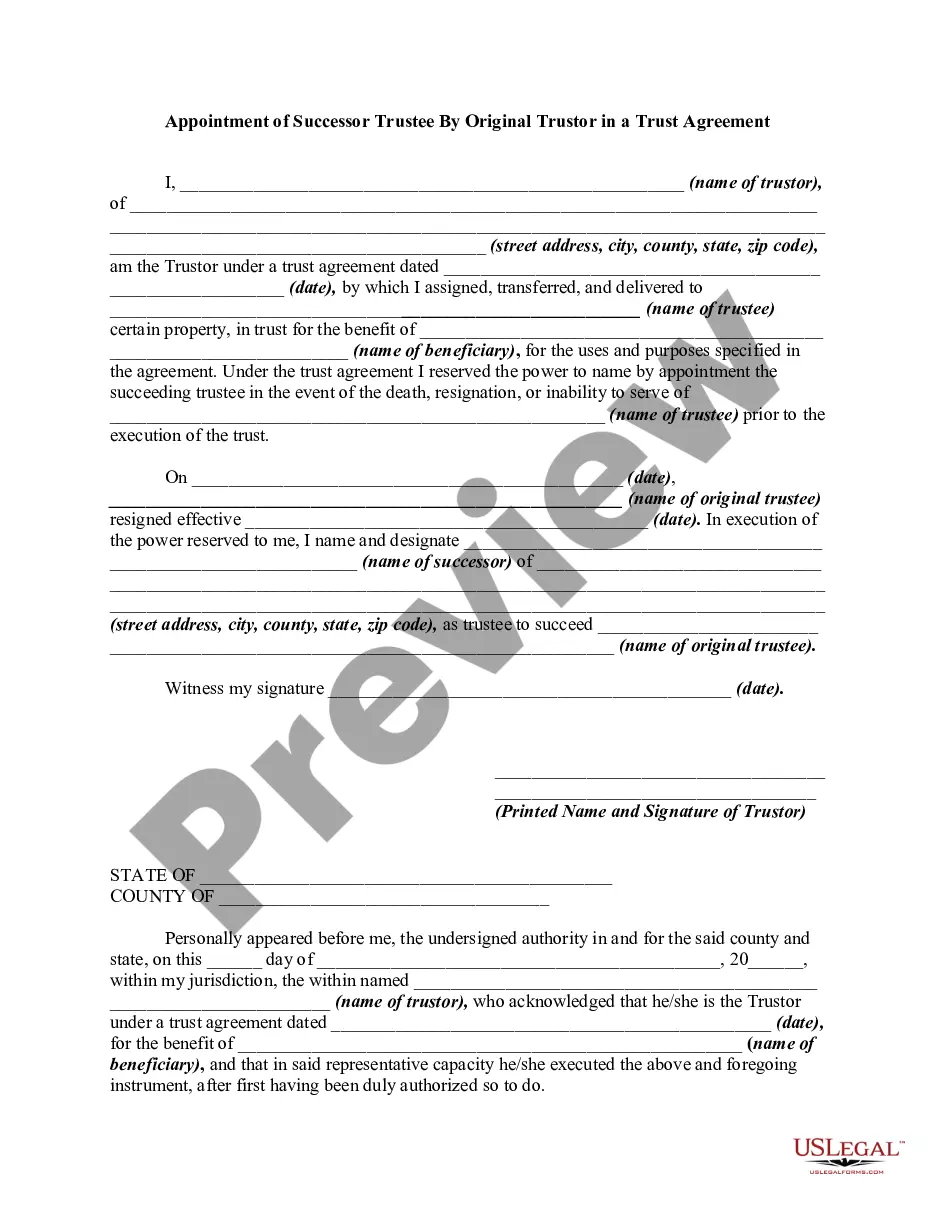
To appoint a successor trustee, begin by creating a successor trustee form for bank. This form outlines your wishes and designates the individual or entity you trust to manage your assets when you can no longer do so. Ensure that all relevant details, such as the name and contact information of the successor, are accurately filled out. After completing the form, it is essential to sign it and have it witnessed, following your state's legal requirements to make it valid.
Yes, a trustee can access your bank account if they are acting in their official capacity. This includes reviewing financial statements and transaction histories to fulfill their duties efficiently. However, it's important to have a clear understanding of the powers granted in the trust document. If you need a straightforward way to outline these powers, consider using a Successor trustee form for bank to streamline the process.
A successor trustee has several rights, including the authority to manage trust assets, make distributions, and settle debts. These rights ensure they can fulfill their obligations effectively. However, they must act in the best interest of the trust and its beneficiaries. For clarity in exercising these rights, a successor trustee form for bank can be a valuable resource.
Access to a trust bank account is usually reserved for authorized individuals, primarily the successor trustee. The trustee has the responsibility to manage the account according to the terms of the trust. Beneficiaries may receive distributions from the trust, but they do not have direct access to the bank account unless specified. Using a successor trustee form for bank can clarify who is entitled to access the account.
Yes, indeed, a successor trustee typically has access to the bank account associated with the trust. This role enables them to oversee financial transactions, ensuring that the trust's assets are managed appropriately. Access is crucial for fulfilling their duties like paying bills and distributing funds. A successor trustee form for bank will support the process of gaining proper access.
Instructions for a successor trustee vary based on the trust's terms. Typically, a successor trustee should review the trust document to understand their responsibilities. They should also manage trust assets responsibly and distribute them as specified in the trust. Utilizing a successor trustee form for bank can help to clarify your duties and simplify the management of bank accounts.