Successor Trust
Description

Get your form ready online
Our built-in tools help you complete, sign, share, and store your documents in one place.
Make edits, fill in missing information, and update formatting in US Legal Forms—just like you would in MS Word.
Download a copy, print it, send it by email, or mail it via USPS—whatever works best for your next step.
Sign and collect signatures with our SignNow integration. Send to multiple recipients, set reminders, and more. Go Premium to unlock E-Sign.
If this form requires notarization, complete it online through a secure video call—no need to meet a notary in person or wait for an appointment.
We protect your documents and personal data by following strict security and privacy standards.

Make edits, fill in missing information, and update formatting in US Legal Forms—just like you would in MS Word.

Download a copy, print it, send it by email, or mail it via USPS—whatever works best for your next step.

Sign and collect signatures with our SignNow integration. Send to multiple recipients, set reminders, and more. Go Premium to unlock E-Sign.

If this form requires notarization, complete it online through a secure video call—no need to meet a notary in person or wait for an appointment.

We protect your documents and personal data by following strict security and privacy standards.
Looking for another form?
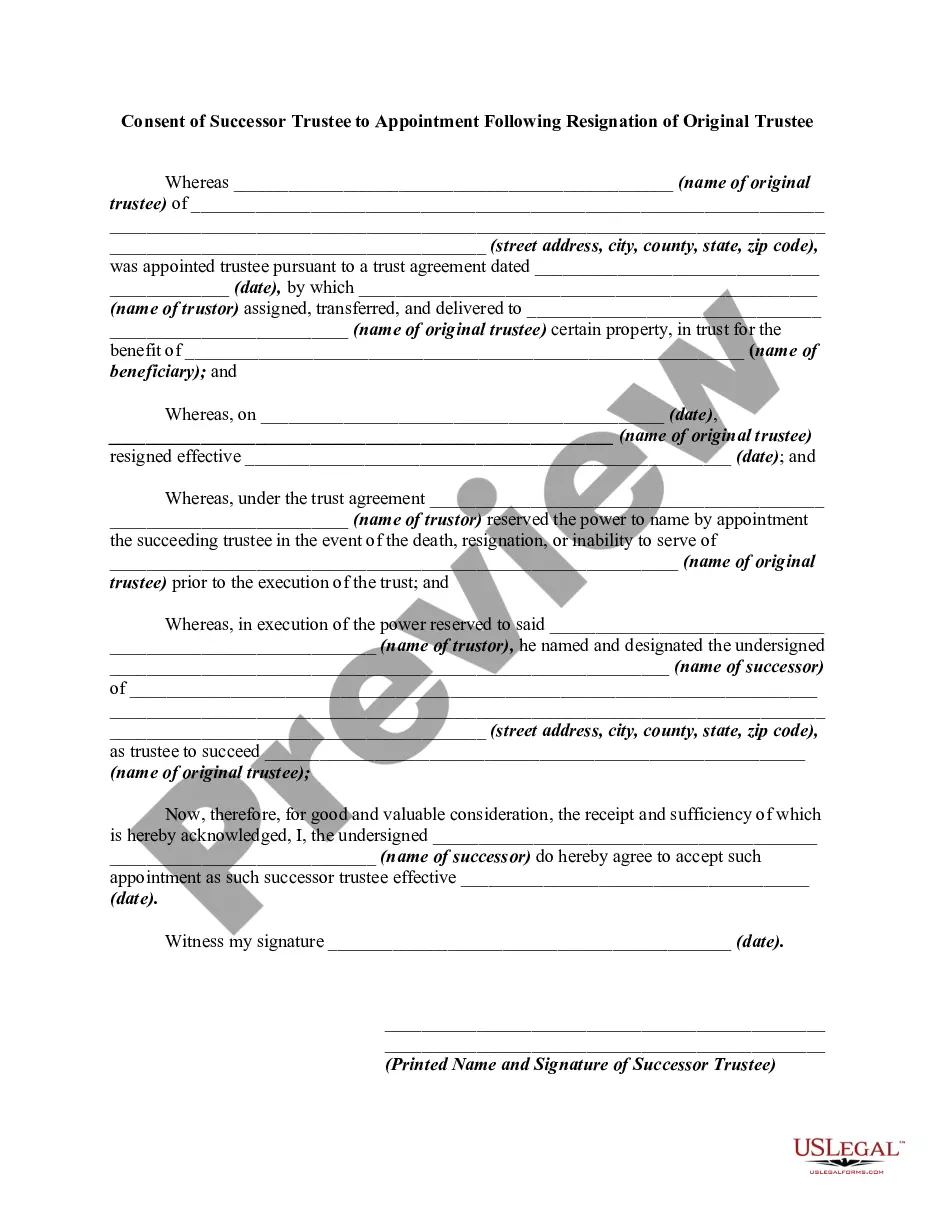
How to fill out Consent Of Successor Trustee To Appointment Following Resignation Of Original Trustee?
- Visit the US Legal Forms website and log in to your account if you have previously registered. Ensure your subscription is active to access the necessary templates.
- Explore the available forms in the Preview mode. Carefully review descriptions and confirm you select one that aligns with your requirements and local jurisdiction.
- Utilize the search function to find additional templates if the initial choice does not fully meet your needs.
- Select the form you wish to purchase by clicking the Buy Now button. Choose a suitable subscription plan and create an account if you're a new user.
- Complete the payment process by providing your credit card or PayPal information.
- Download the completed form to your device. Access it anytime through the My Forms section in your account for future reference.
Once you've followed these steps, you can efficiently manage your successor trust with confidence. The wealth of resources available to you ensures that your documents remain accurate and legally binding.
Start your journey toward effective estate planning today with US Legal Forms and take control of your legal documents!
Form popularity
FAQ
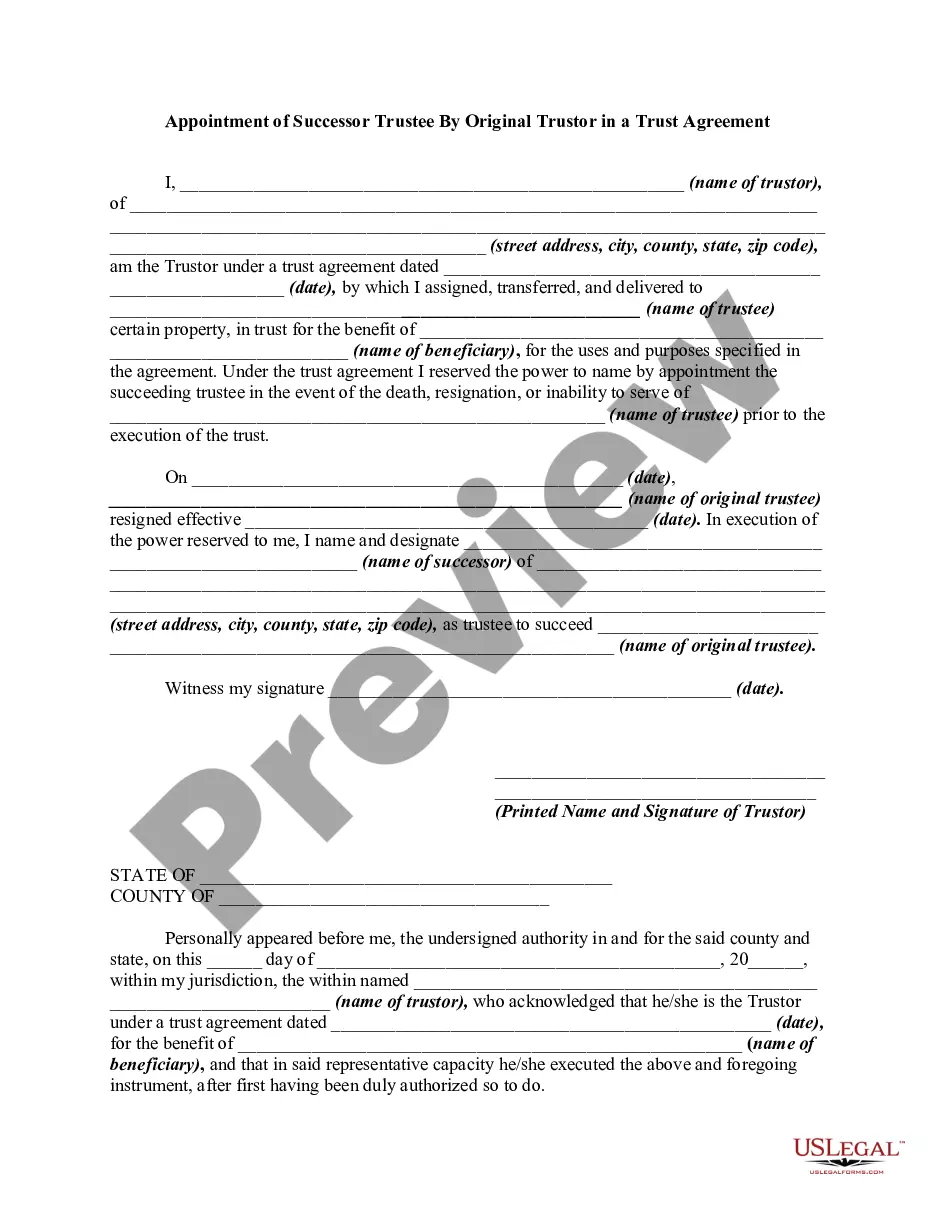
To appoint a successor in a successor trust, you’ll need to follow specific steps outlined in your trust document. Start by identifying a reliable individual who meets the qualifications to serve as your successor. Then, clearly state their name and role in the trust documents, ensuring all legal requirements are met. If you're unsure about the process, platforms like USLegalForms offer templates and guidance to facilitate your appointment effectively.
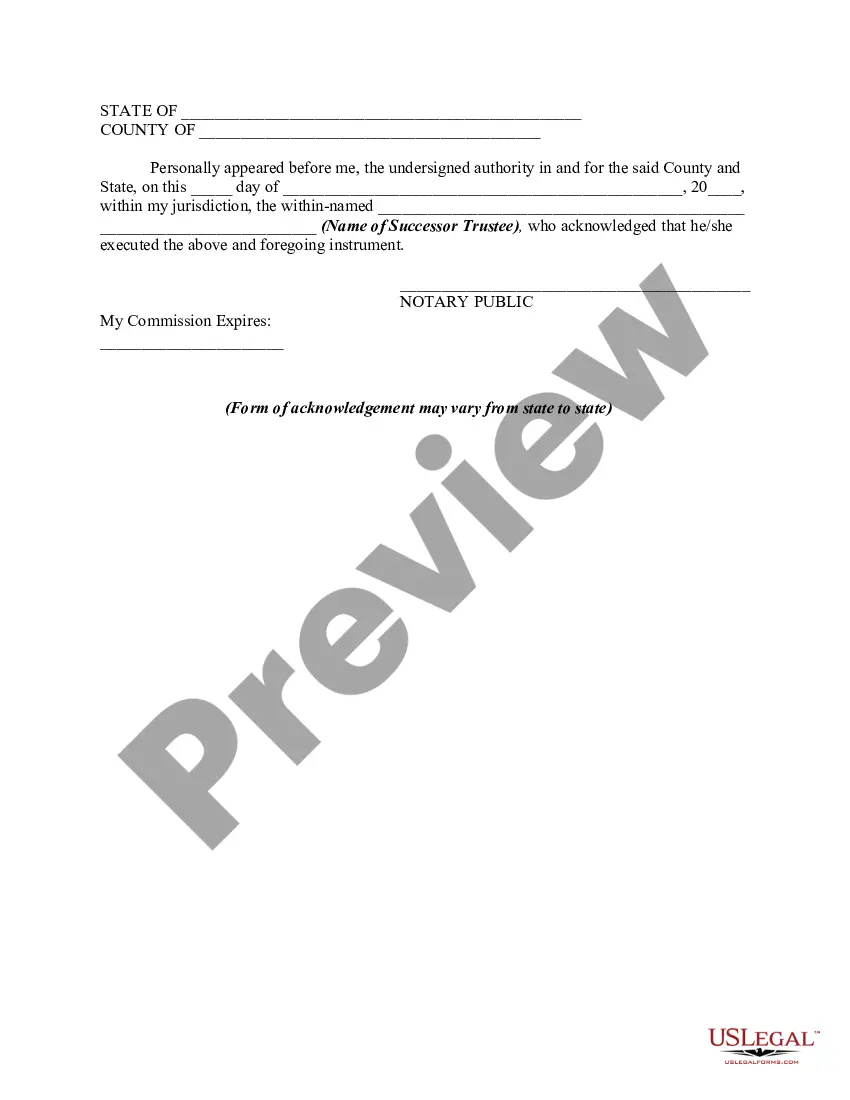
In most cases, the appointment of a successor trustee in a successor trust does not require notarization, but it varies by state. Some states might recommend or require notarization to ensure the document’s validity and to protect against future disputes. This added layer of verification provides peace of mind for both you and your beneficiaries. Always check local laws or consult with a legal expert to ensure compliance.
To add a successor trustee to your successor trust, you typically need to amend the trust document. This process involves creating an amendment that specifies the new successor trustee and details their responsibilities. After drafting the amendment, be sure to sign it according to your state’s legal requirements. It’s also a good idea to notify your existing trustee and beneficiaries about this change to maintain transparency.
If no successor trustee is named in a successor trust, the court may appoint a trustee to manage the trust after the original trustee's passing or inability to serve. This could lead to delays in administering the trust and possible disputes among beneficiaries. To avoid such complications, it's wise to name a successor trustee in your trust document. Consulting with a legal professional can help ensure your successor trust operates smoothly.
Yes, trustees are generally required to file tax returns if the trust earns income or has tax obligations. The specifics depend on the type of successor trust and the amount of income generated. It's important for trustees to stay informed about their filing responsibilities to ensure compliance and avoid penalties.
A successor trustee must manage the trust according to its terms, act in the best interest of the beneficiaries, and maintain transparency. They should keep accurate records and provide required information to the beneficiaries. These rules ensure that a successor trust operates effectively and fulfills its intended purpose.
Beneficiaries generally cannot override a trustee's authority; however, they can raise concerns if they believe the trustee is not following the trust terms. In such cases, beneficiaries may have the option to seek legal advice or modify the trust if needed. Ensuring adherence to the successor trust's rules helps maintain harmony among all parties.
The primary difference between a trustee and a successor is their role within the life of the trust. A trustee actively manages the trust until they can no longer perform their duties, at which point a successor takes over. Understanding the distinction helps in selecting the right individuals for these key positions in a successor trust.
A succession trust is a legal arrangement designed to manage and distribute assets among beneficiaries over time. This type of trust allows for a clear line of succession, ensuring the proper handling of assets after the original trustee's departure. Promoting a smooth transition ensures that beneficiaries receive their intended benefits.
A successor is not the same as a trustee, although they may take on similar responsibilities. A successor takes over when the original trustee can no longer serve. In a successor trust, having the right person in this role ensures that the trust operates smoothly and meets the needs of the beneficiaries.