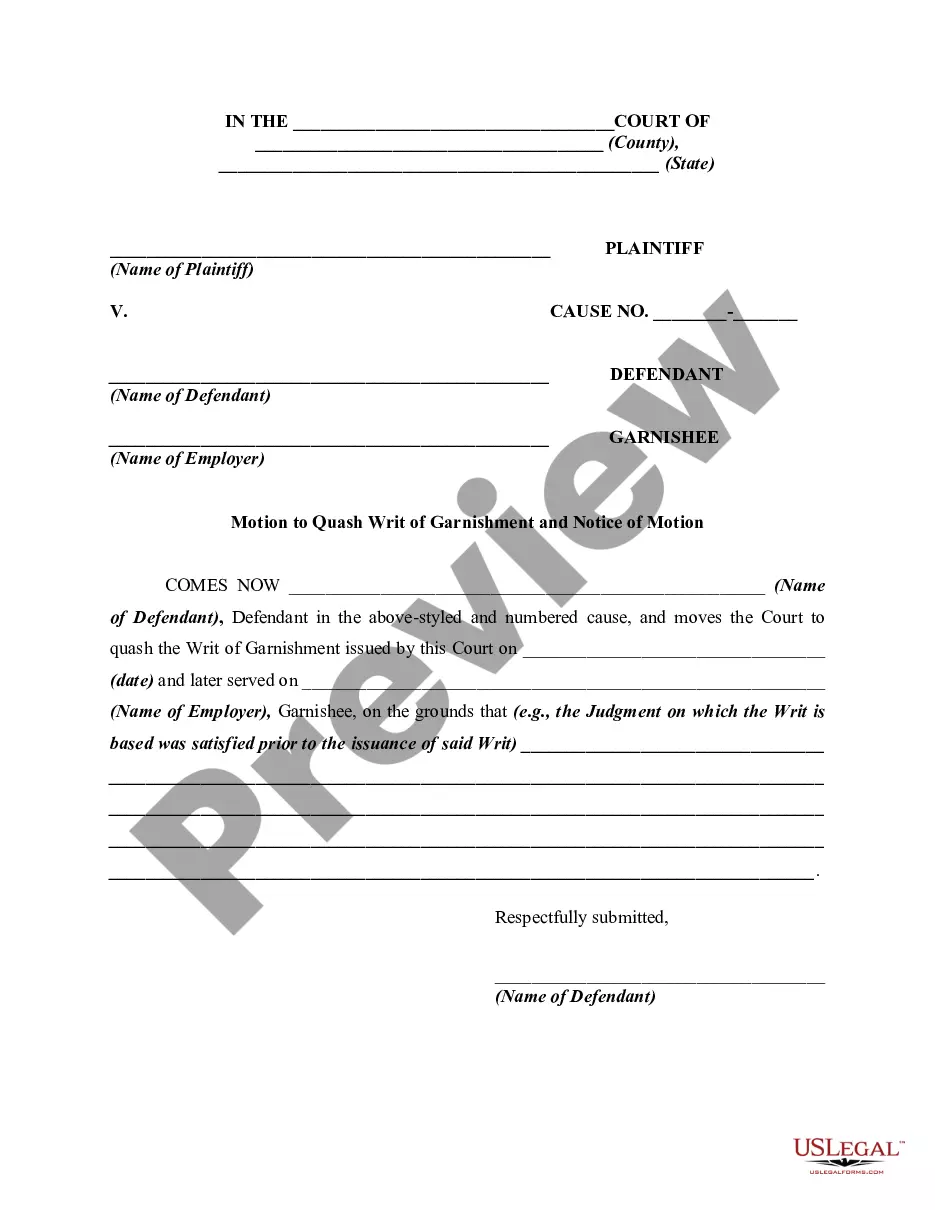
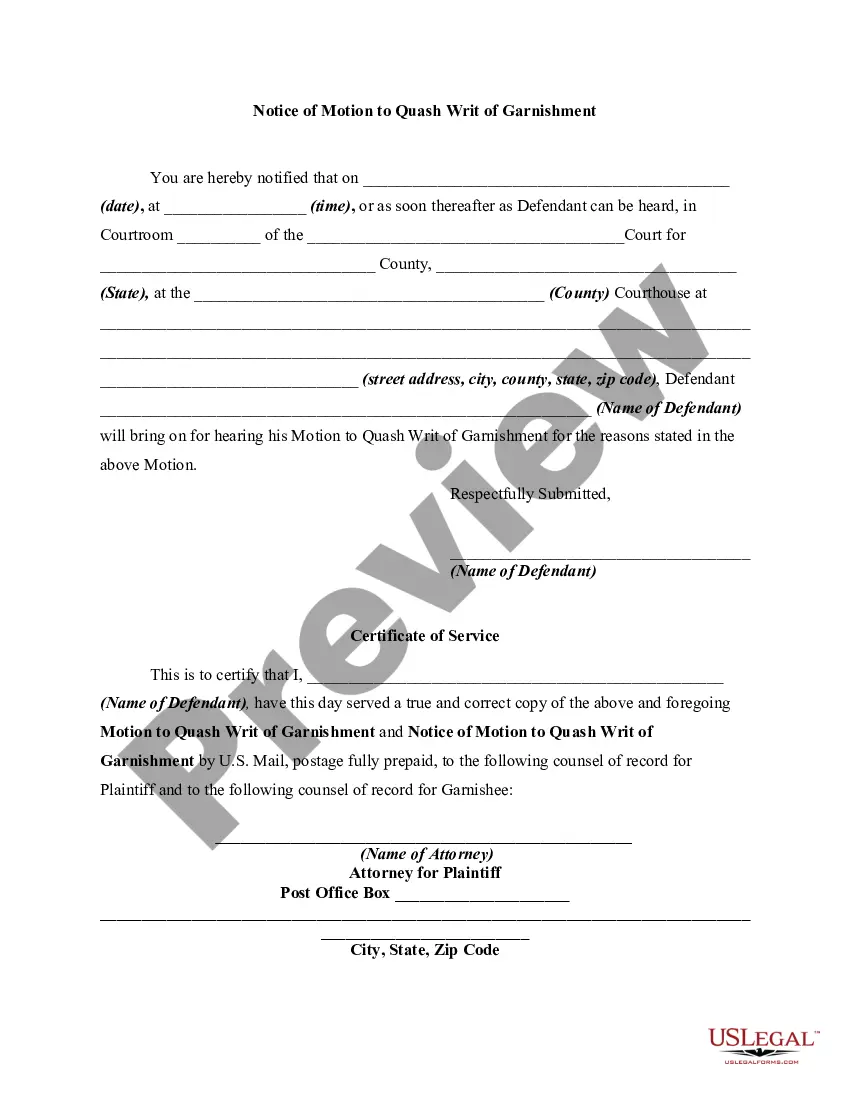
Writ States Garnishments Without
Description
Get your form ready online
Our built-in tools help you complete, sign, share, and store your documents in one place.
Make edits, fill in missing information, and update formatting in US Legal Forms—just like you would in MS Word.
Download a copy, print it, send it by email, or mail it via USPS—whatever works best for your next step.
Sign and collect signatures with our SignNow integration. Send to multiple recipients, set reminders, and more. Go Premium to unlock E-Sign.
If this form requires notarization, complete it online through a secure video call—no need to meet a notary in person or wait for an appointment.
We protect your documents and personal data by following strict security and privacy standards.

Make edits, fill in missing information, and update formatting in US Legal Forms—just like you would in MS Word.

Download a copy, print it, send it by email, or mail it via USPS—whatever works best for your next step.

Sign and collect signatures with our SignNow integration. Send to multiple recipients, set reminders, and more. Go Premium to unlock E-Sign.

If this form requires notarization, complete it online through a secure video call—no need to meet a notary in person or wait for an appointment.

We protect your documents and personal data by following strict security and privacy standards.
Looking for another form?






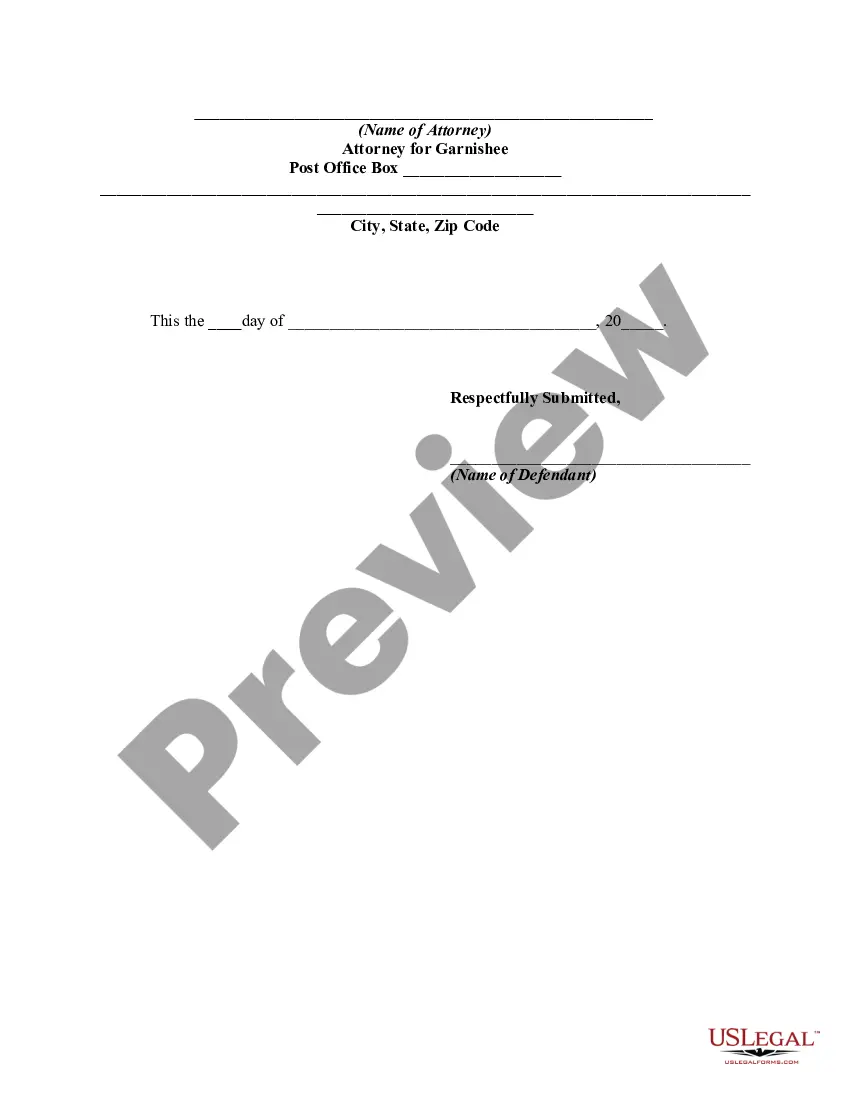
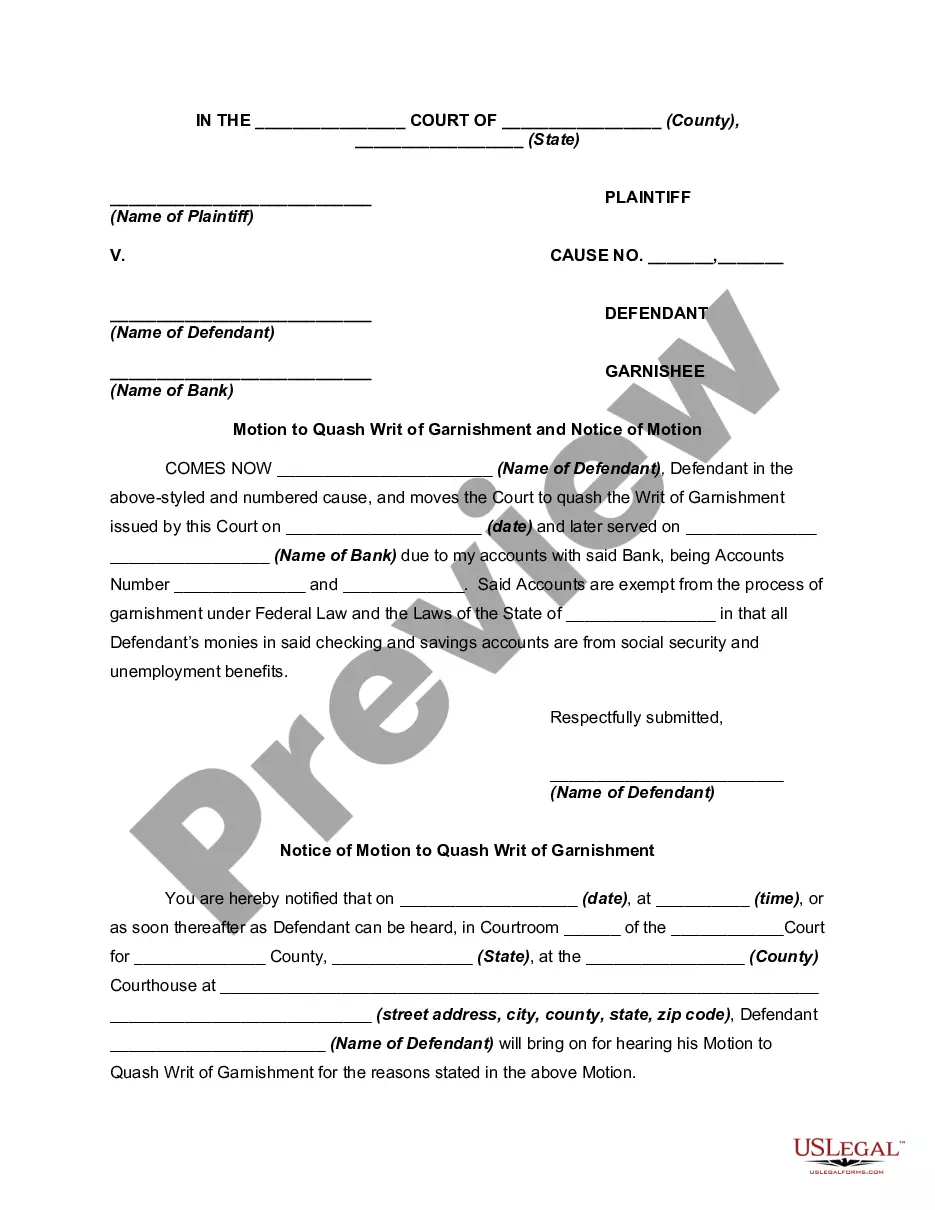
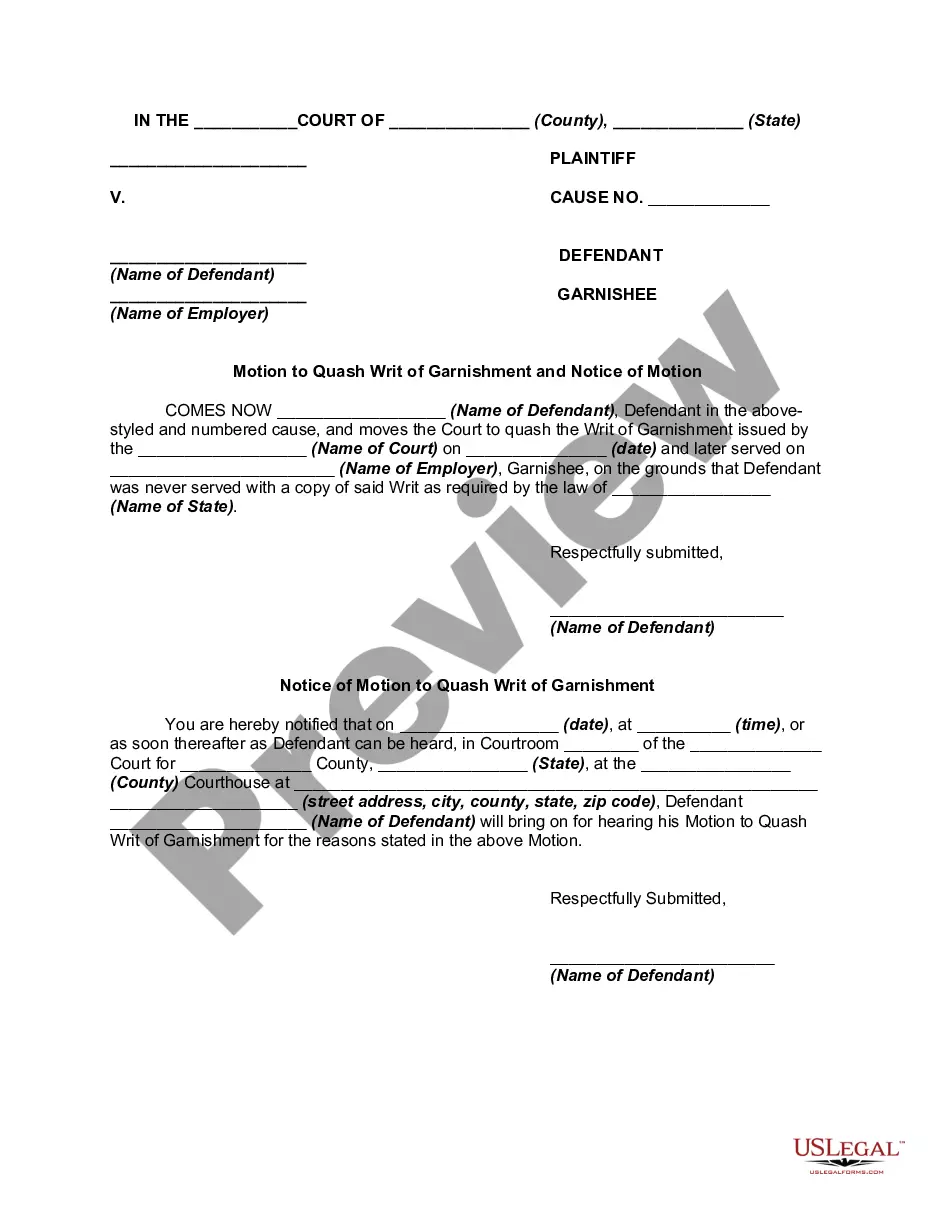
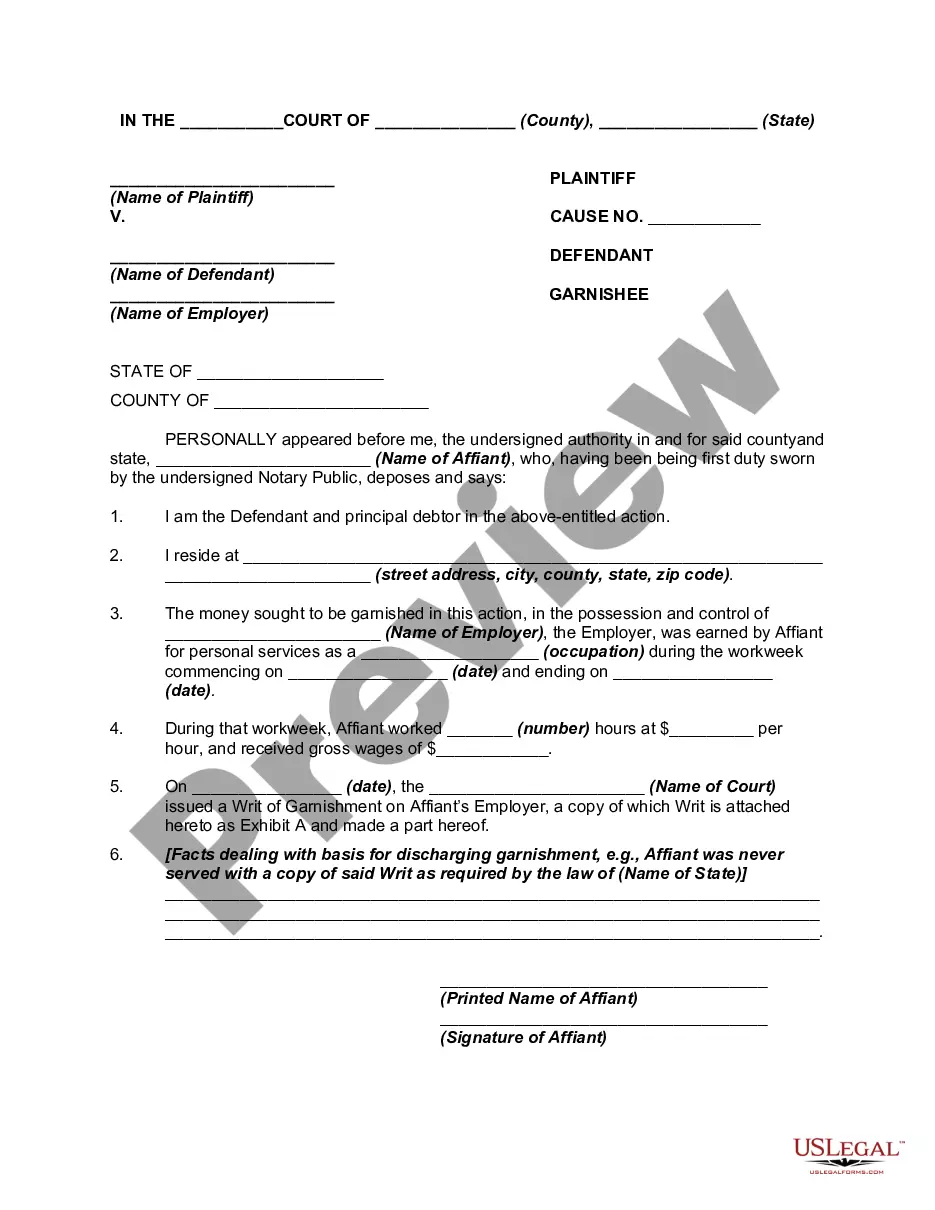
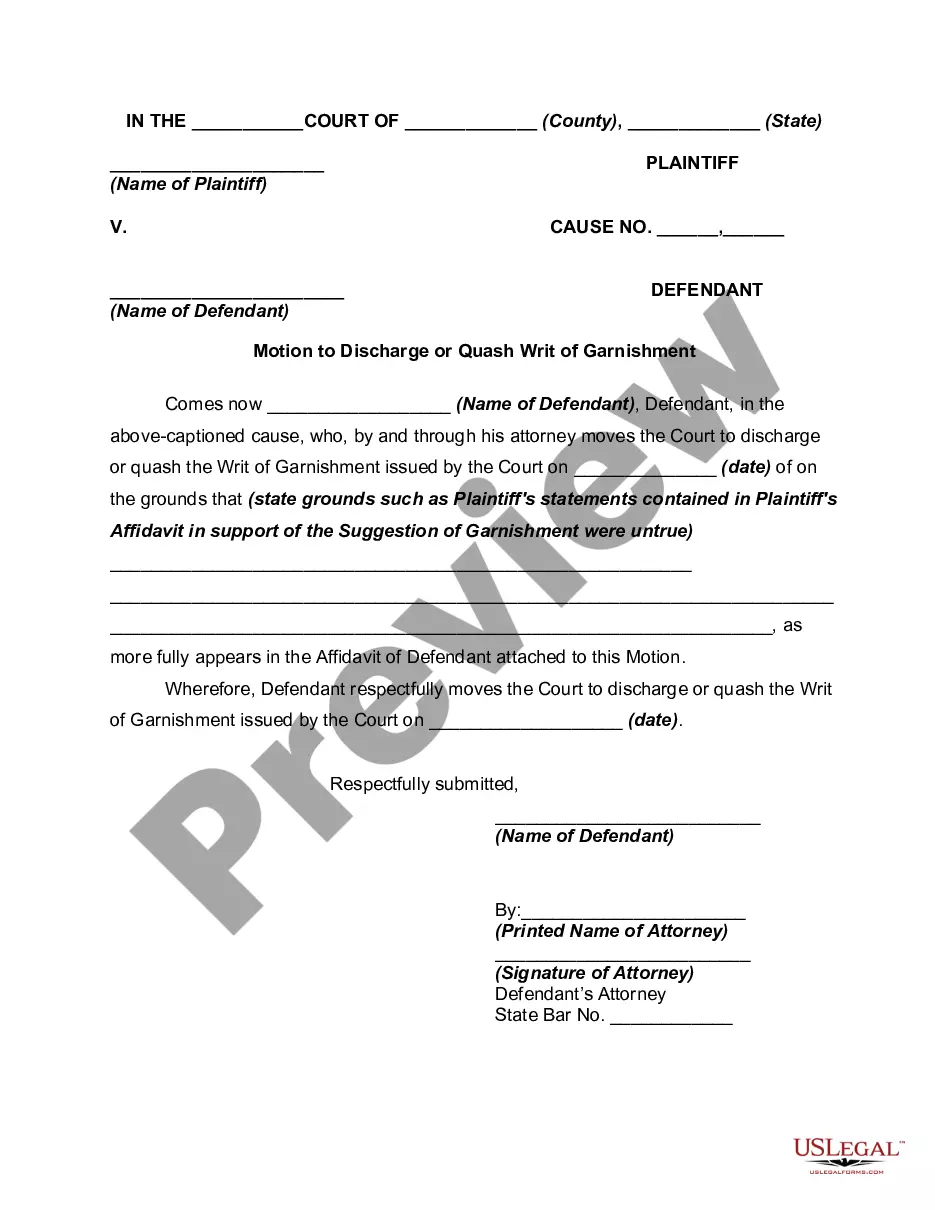
How to fill out Motion Of Defendant To Discharge Or Quash Writ Of Garnishment And Notice Of Motion?
Legal documents handling can be daunting, even for the most seasoned professionals.
When you are looking for a Writ States Garnishments Without and lack the time to invest in finding the correct and updated version, the processes can be overwhelming.
US Legal Forms addresses any needs you may have, from personal to business paperwork, all in one place.
Utilize advanced tools to complete and manage your Writ States Garnishments Without.
Here are the steps to follow after downloading the desired form: Validate it is the correct form by previewing it and reviewing its details. Ensure that the sample is accepted in your state or county. Choose Buy Now when you are ready. Select a monthly subscription plan. Find the format you need, and Download, complete, eSign, print, and send your document. Take advantage of the US Legal Forms online library, backed by 25 years of expertise and trustworthiness. Transform your everyday document management into a seamless and user-friendly process today.
- Access a valuable resource base of articles, tutorials, and guides relevant to your situation and needs.
- Save time and energy searching for the documents you require, and use US Legal Forms’ advanced search and Review feature to find Writ States Garnishments Without and download it.
- For those with a monthly subscription, Log In to the US Legal Forms account, search for the form, and download it.
- Visit the My documents tab to view the documents you have previously downloaded and manage your folders as necessary.
- If it's your first time with US Legal Forms, create an account and gain unlimited access to all the benefits of the library.
- An effective online form library can be a breakthrough for anyone aiming to handle these matters efficiently.
- US Legal Forms is a leader in digital legal documents, offering over 85,000 state-specific legal forms accessible at any time.
- With US Legal Forms, you can access state- or county-specific legal and business documents.
Form popularity
FAQ
To stop wage garnishment in Florida, a judgment debtor must (1) review the writ for procedural mistakes, (2) file a claim of exemption, (3) gather all documents in support of the claimed exemption, and (4) attend the final hearing on the exemption. The most common exemption is the head of household exemption.
After you obtain a judgment, you file a Request for Writ of Garnishment of Wages (DC-CV-065). To complete the form, you need to know the name and address of the debtor's employer, the amount of the judgment and any additional money owed (such as court costs and interest.)
Complete the Garnishee order for debts form ???Your case number. Date of the judgment. Name and address of the other party. Name and address of the garnishee (the bank or third party who owes the other party money). Total amount of the judgment. Your contact details including address, telephone, fax and email.
In order to file a Writ of Garnishment, the creditor must have an existing final judgment against the debtor and then must file for the writ in the court which rendered the original judgment against the debtor. It is the third party, the bank or financial institution, which receives the Writ of Garnishment. Tex.
?The writ shall require the garnishee to serve an answer on the plaintiff within 20 days after service of the writ stating whether the garnishee is indebted to the defendant at the time of the answer, or was indebted at the time of service of the writ, plus up to 1 business day for the garnishee to act expeditiously on ...