Garnishment Employer Served With
Description
Get your form ready online
Our built-in tools help you complete, sign, share, and store your documents in one place.
Make edits, fill in missing information, and update formatting in US Legal Forms—just like you would in MS Word.
Download a copy, print it, send it by email, or mail it via USPS—whatever works best for your next step.
Sign and collect signatures with our SignNow integration. Send to multiple recipients, set reminders, and more. Go Premium to unlock E-Sign.
If this form requires notarization, complete it online through a secure video call—no need to meet a notary in person or wait for an appointment.
We protect your documents and personal data by following strict security and privacy standards.

Make edits, fill in missing information, and update formatting in US Legal Forms—just like you would in MS Word.

Download a copy, print it, send it by email, or mail it via USPS—whatever works best for your next step.

Sign and collect signatures with our SignNow integration. Send to multiple recipients, set reminders, and more. Go Premium to unlock E-Sign.

If this form requires notarization, complete it online through a secure video call—no need to meet a notary in person or wait for an appointment.

We protect your documents and personal data by following strict security and privacy standards.
Looking for another form?

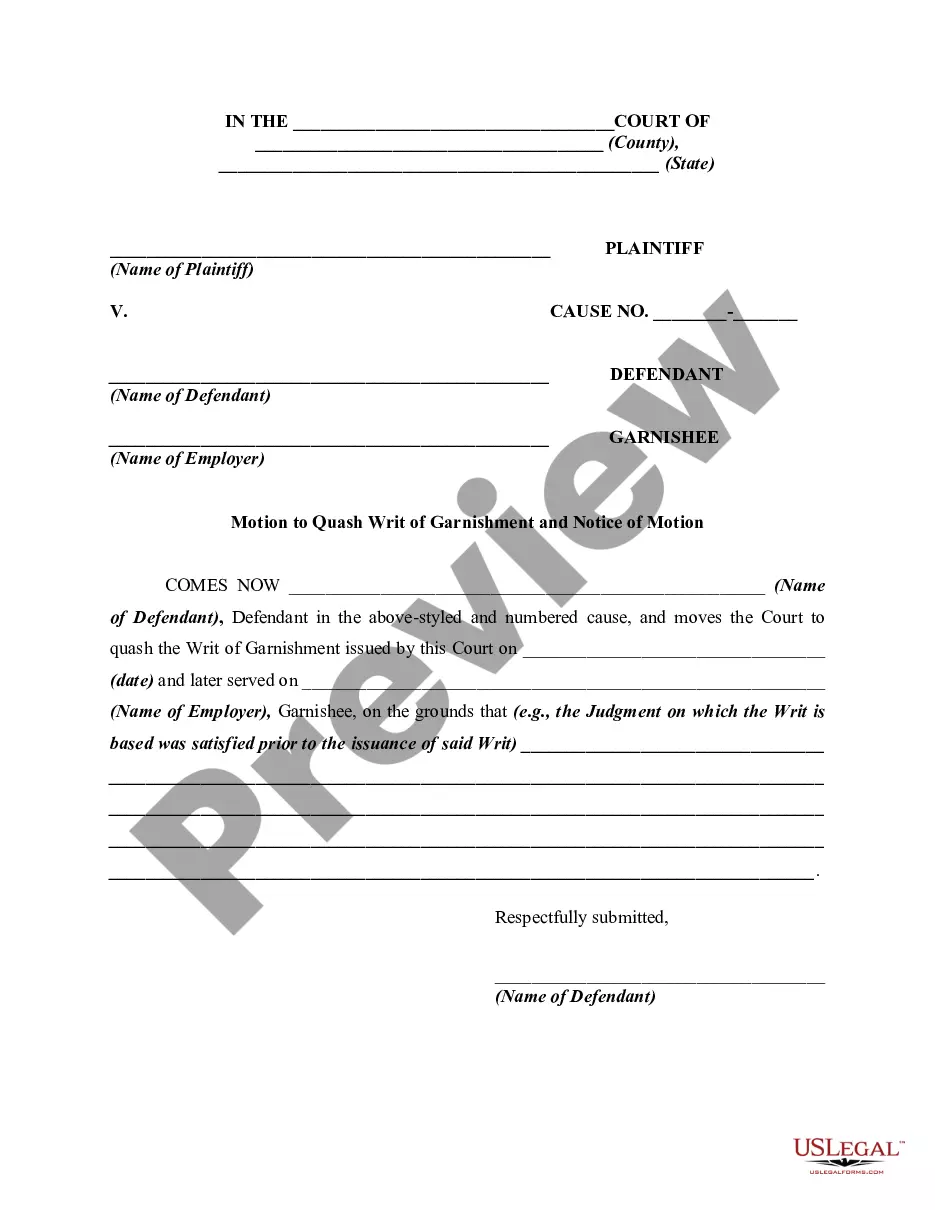
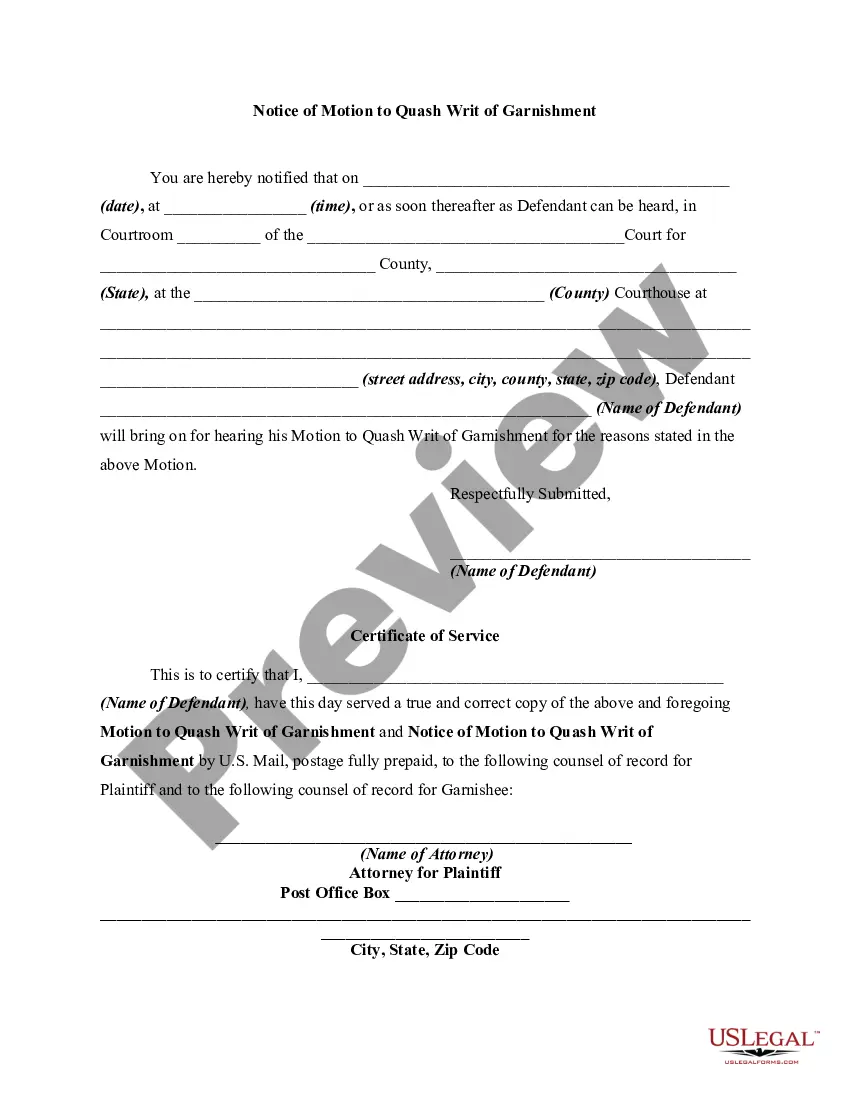
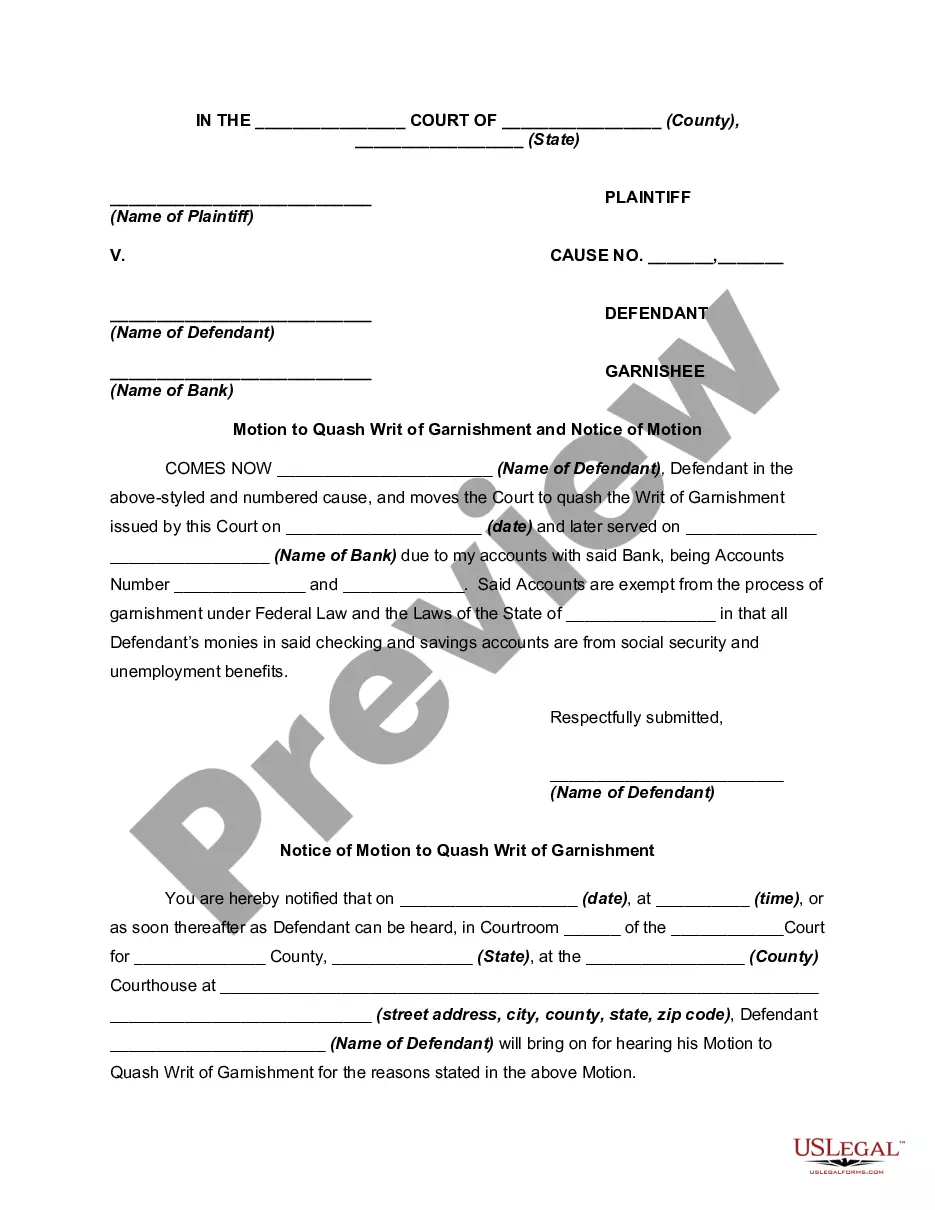
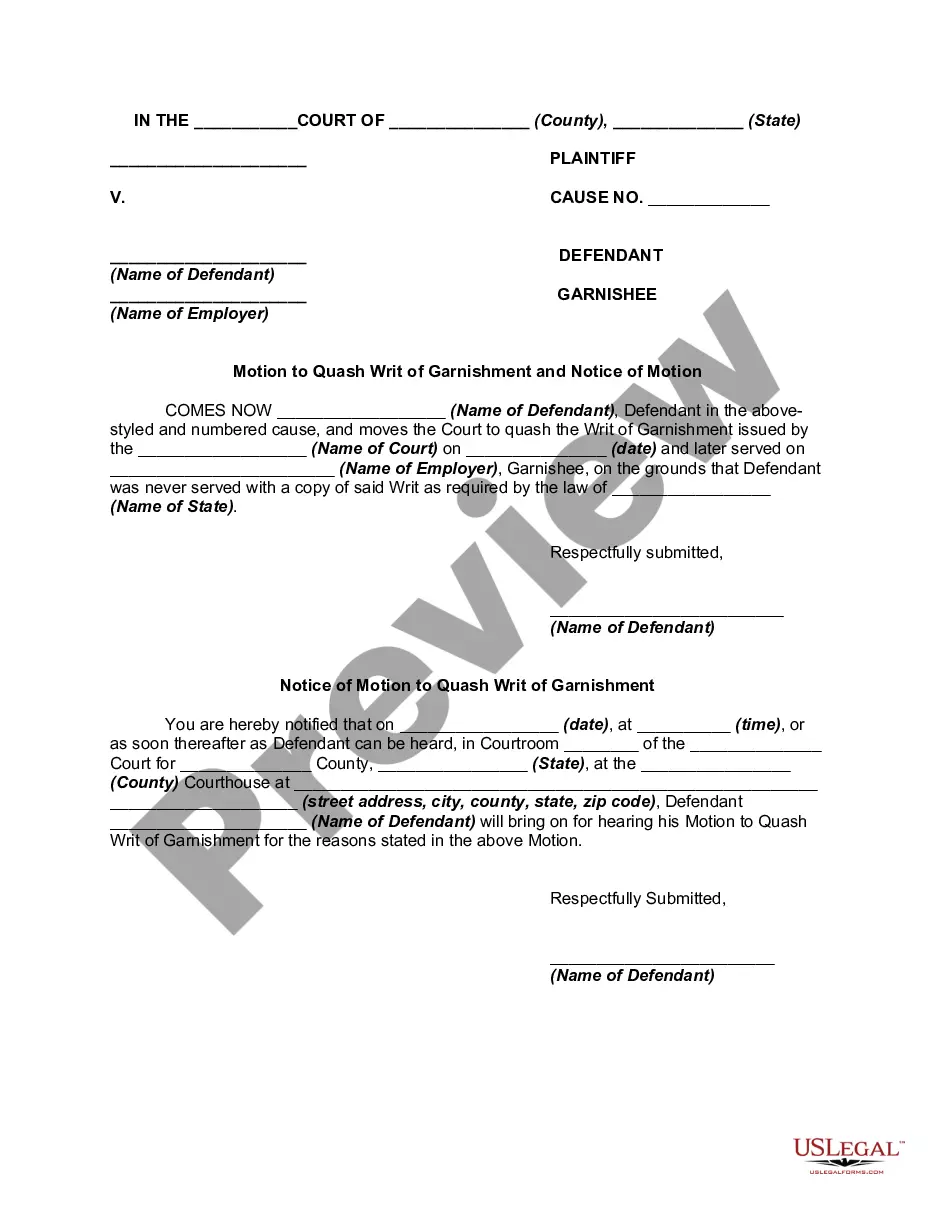
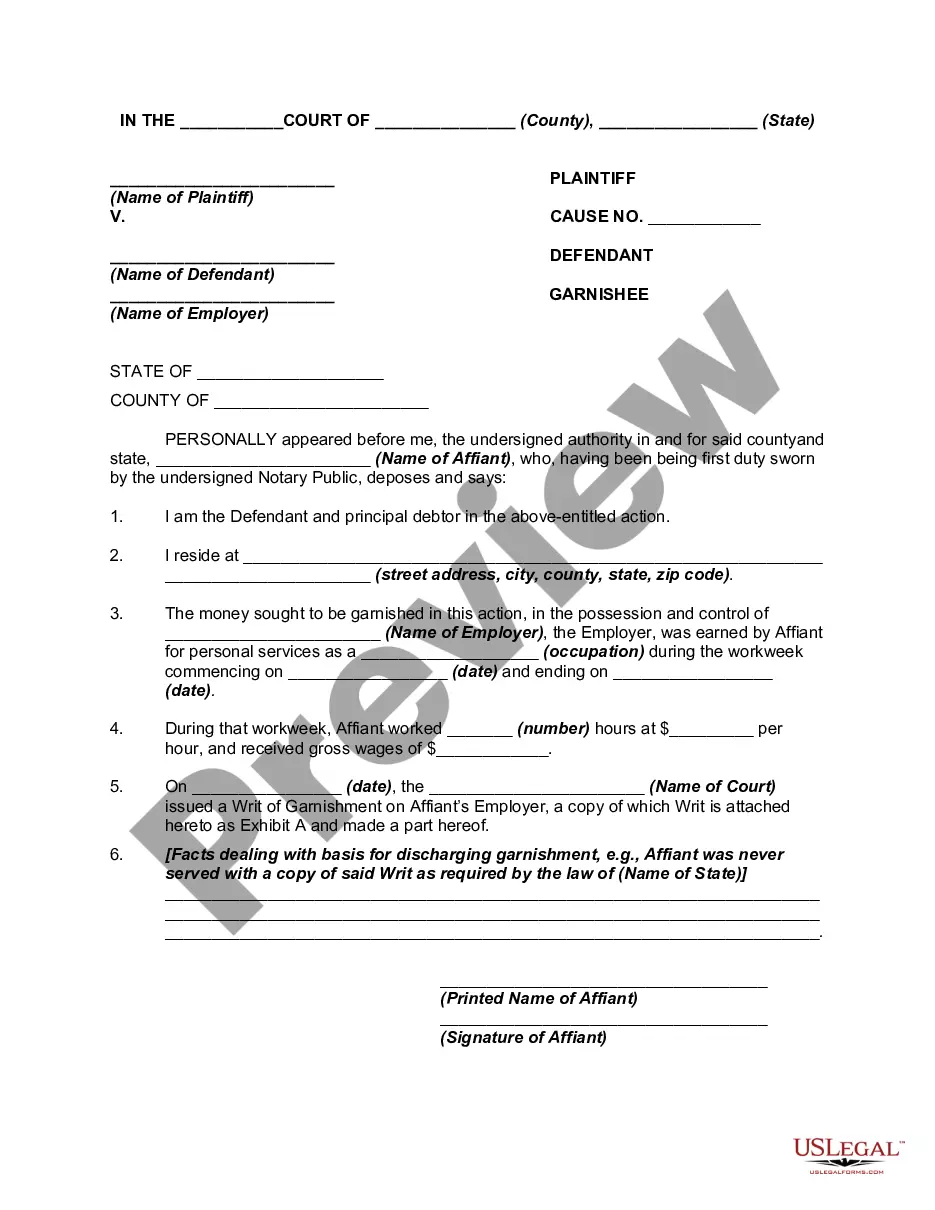
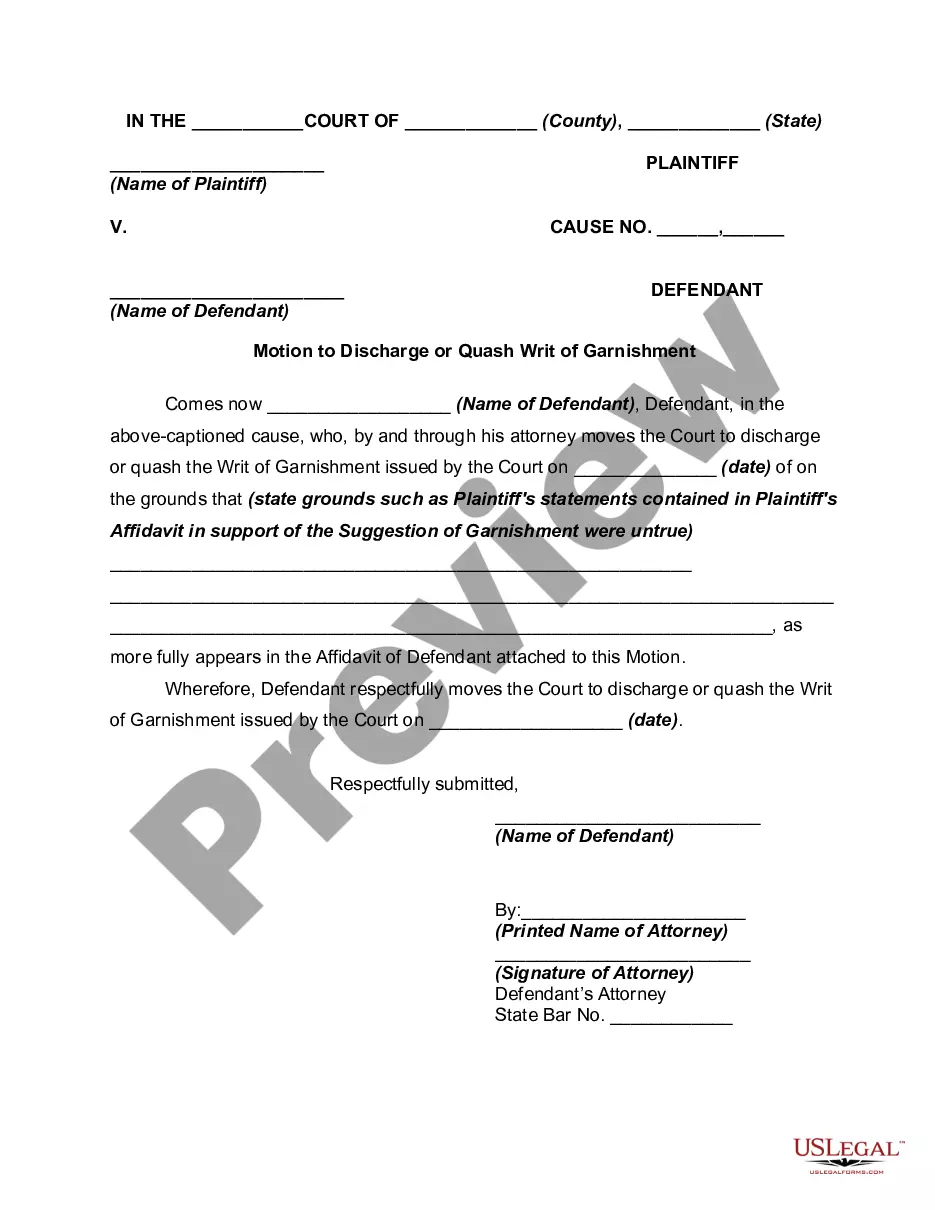
How to fill out Motion Of Defendant To Discharge Or Quash Writ Of Garnishment And Notice Of Motion?
Managing legal documents can be daunting, even for the most experienced professionals. When you are in need of a Garnishment Employer Served With and lack the time to search for the correct and current version, the procedures can be stressful. A robust online form collection could be a gamechanger for anyone aiming to address these matters efficiently. US Legal Forms is a frontrunner in online legal documents, with over 85,000 state-specific legal forms accessible whenever needed.
With US Legal Forms, you can.
Save time and energy searching for the documents you need, and leverage US Legal Forms’ sophisticated search and Preview feature to locate Garnishment Employer Served With and obtain it. If you have a subscription, Log In to your US Legal Forms account, search for the form, and download it. Check the My documents tab to view the documents you have previously downloaded and manage your folders as you see fit.
If this is your first time with US Legal Forms, create a free account and gain unlimited access to all the benefits of the library. Below are the steps to follow after downloading the form you need.
Take advantage of the US Legal Forms online catalog, supported by 25 years of experience and reliability. Transform your daily document management into a seamless and user-friendly process today.
- Verify that this is the correct form by previewing it and reviewing its description.
- Ensure that the template is valid in your state or county.
- Select Buy Now when you are ready.
- Choose a subscription plan.
- Select the format you prefer, and Download, complete, sign, print, and send your document.
- Access state- or county-specific legal and business forms. US Legal Forms meets any requirements you may have, from personal to business documents, all in one place.
- Use advanced tools to complete and manage your Garnishment Employer Served With.
- Access a valuable resource library of articles, tutorials, and guides relevant to your situation and requirements.
Form popularity
FAQ
Employers typically have a specific time frame to respond to a writ of garnishment, usually within a few days of receiving the order. This response includes confirming whether the employee's wages can be garnished and the amount that will be withheld. Timely responses are crucial to avoid legal complications. Understanding the garnishment employer served with can help employers meet these deadlines efficiently.
In Oregon, garnishment rules dictate that an employer can withhold a portion of an employee's wages to satisfy a debt. The maximum amount that can be garnished is set by law, ensuring that employees retain enough income to cover basic living expenses. Employers must adhere to these regulations and respond appropriately to garnishment orders. Familiarizing yourself with the garnishment employer served with can help both employees and employers navigate these rules effectively.
Yes, employers must inform employees when their wages are being garnished. This notification typically happens after the employer receives the garnishment order. It's vital for employers to provide details about the garnishment and how it will affect the employee's paycheck. Understanding garnishment employer served with can help ensure transparent communication.
When an employee's wages are garnished, employers must follow the legal guidelines outlined in the garnishment order. This includes withholding the specified amount from the employee's paycheck and submitting it to the appropriate agency. Employers should also communicate openly with the affected employee to provide support and information about the process. For comprehensive assistance, platforms like USLegalForms can guide employers through the garnishment employer served with process.
No, your employer cannot legally fire you solely because your wages are being garnished. The law protects employees from discrimination based on wage garnishment. However, if other factors are involved, such as poor performance, that could lead to termination. It's important to understand your rights and consult resources that explain garnishment employer served with.
Complete the Garnishee order for debts form ???Your case number. Date of the judgment. Name and address of the other party. Name and address of the garnishee (the bank or third party who owes the other party money). Total amount of the judgment. Your contact details including address, telephone, fax and email.
Wage Garnishment Isn't Included on Your Credit Report From a credit perspective, the damage has more or less been done. Since your wages are likely being garnished as a result of having missed payments on one or more debts, your credit may have been dinged, but it was the missed payments that hurt your score.
?The writ shall require the garnishee to serve an answer on the plaintiff within 20 days after service of the writ stating whether the garnishee is indebted to the defendant at the time of the answer, or was indebted at the time of service of the writ, plus up to 1 business day for the garnishee to act expeditiously on ...
You may claim your exemptions from garnishment by filing an affidavit with the court describing the exemption and your claim to it. Your affidavit also must be sent to the judgment creditor and any attorney for the judgment creditor.
Garnishment, or wage garnishment, is when money is legally withheld from your paycheck and sent to another party. It refers to a legal process that instructs a third party to deduct payments directly from a debtor's wage or bank account. Typically, the third party is the debtor's employer and is known as the garnishee.