Parent Affidavit Form For Drivers License
Description
Get your form ready online
Our built-in tools help you complete, sign, share, and store your documents in one place.
Make edits, fill in missing information, and update formatting in US Legal Forms—just like you would in MS Word.
Download a copy, print it, send it by email, or mail it via USPS—whatever works best for your next step.
Sign and collect signatures with our SignNow integration. Send to multiple recipients, set reminders, and more. Go Premium to unlock E-Sign.
If this form requires notarization, complete it online through a secure video call—no need to meet a notary in person or wait for an appointment.
We protect your documents and personal data by following strict security and privacy standards.

Make edits, fill in missing information, and update formatting in US Legal Forms—just like you would in MS Word.

Download a copy, print it, send it by email, or mail it via USPS—whatever works best for your next step.

Sign and collect signatures with our SignNow integration. Send to multiple recipients, set reminders, and more. Go Premium to unlock E-Sign.

If this form requires notarization, complete it online through a secure video call—no need to meet a notary in person or wait for an appointment.

We protect your documents and personal data by following strict security and privacy standards.
Looking for another form?


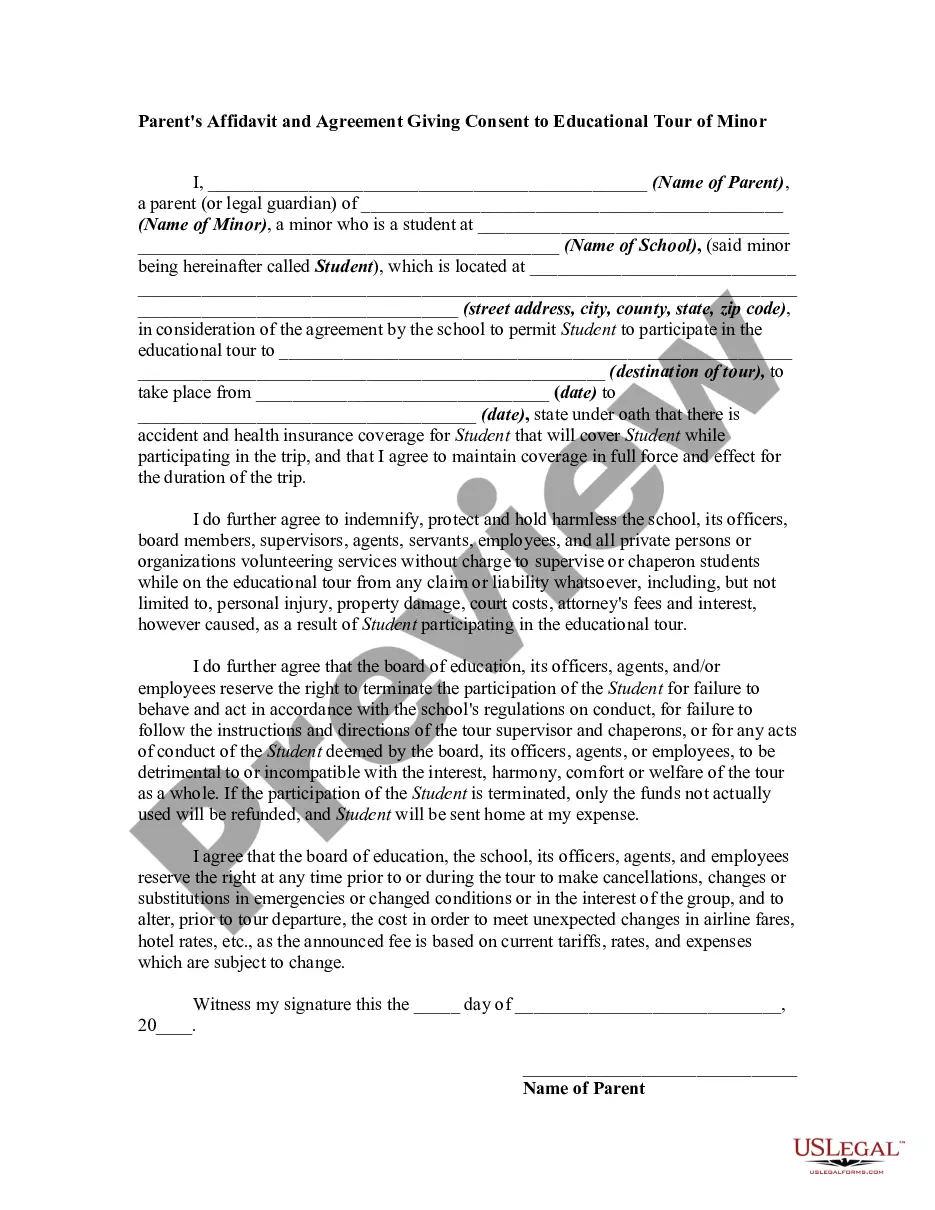
How to fill out Parent's Affidavit And Agreement Giving Consent To Educational Tour Of Minor?
Managing legal documents and procedures can be a lengthy addition to your overall day.
Parent Affidavit Form For Drivers License and similar forms usually necessitate that you look for them and understand how to fill them out correctly.
For this reason, whether you are addressing financial, legal, or personal issues, utilizing a thorough and user-friendly online library of forms will be very beneficial.
US Legal Forms is the leading online platform for legal templates, providing over 85,000 state-specific forms and various resources to help you complete your documents effortlessly.
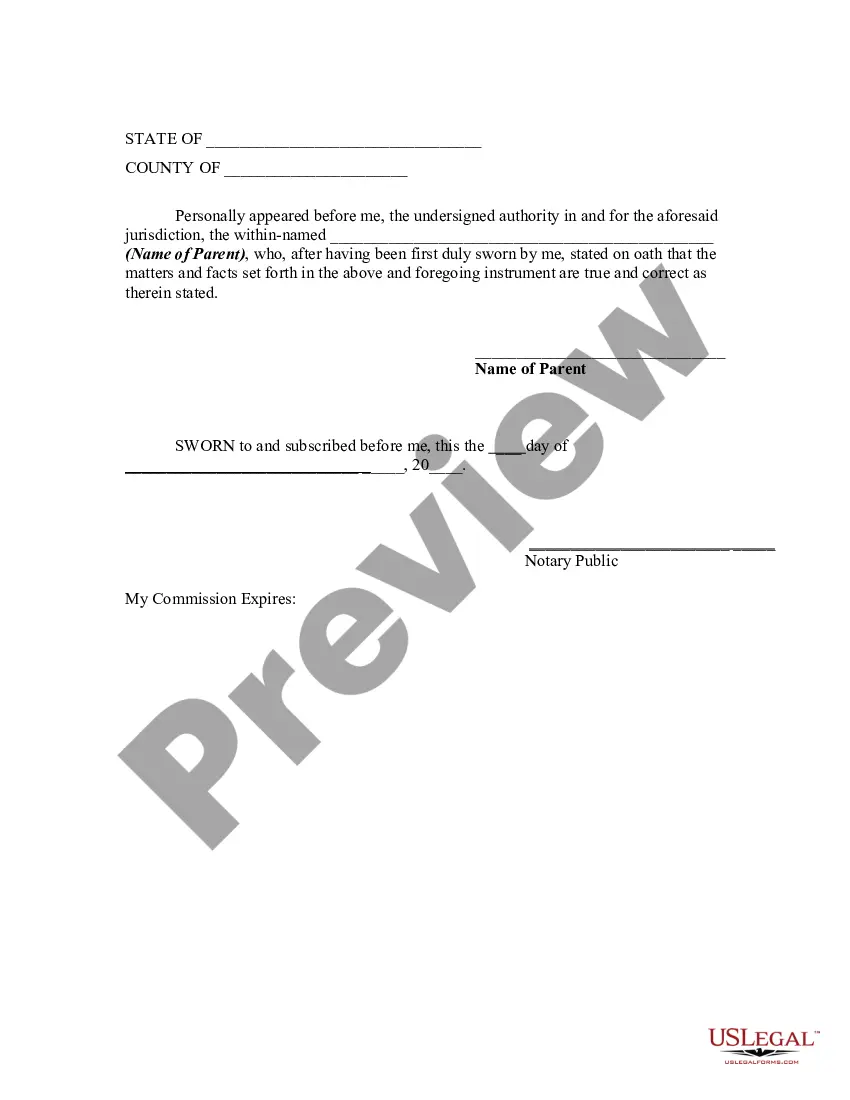
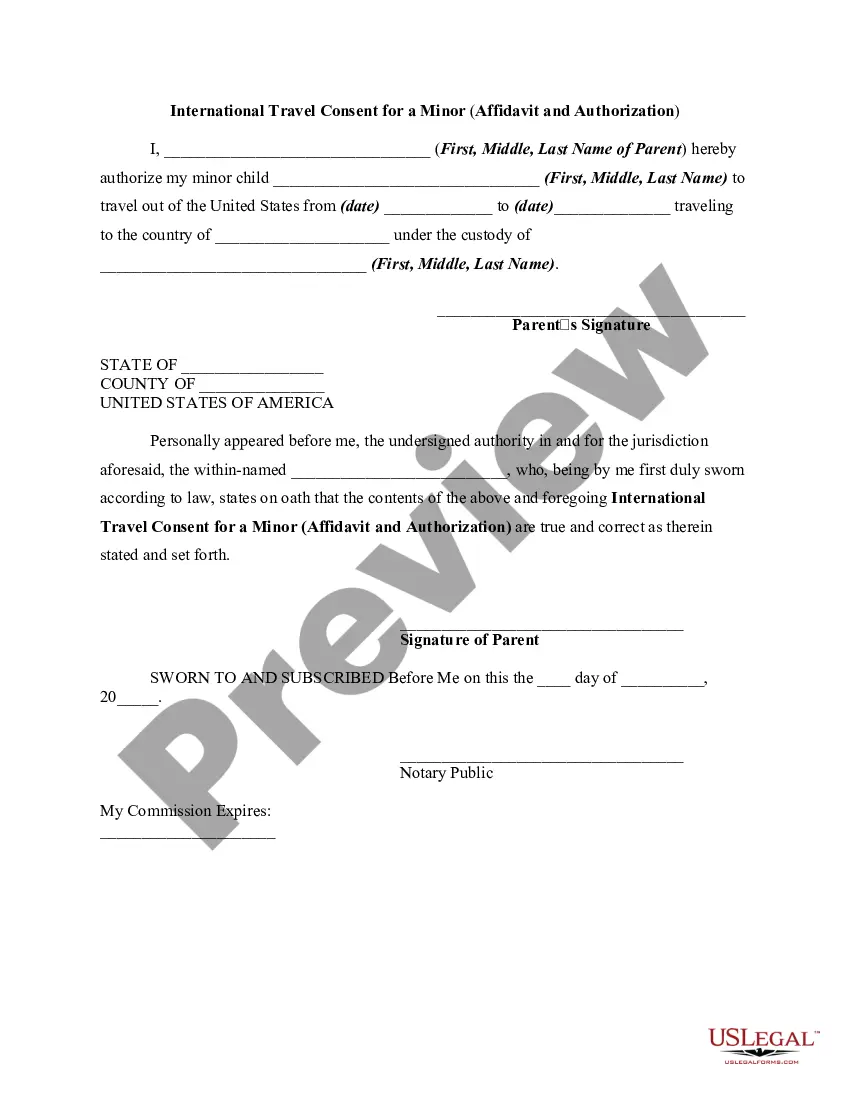
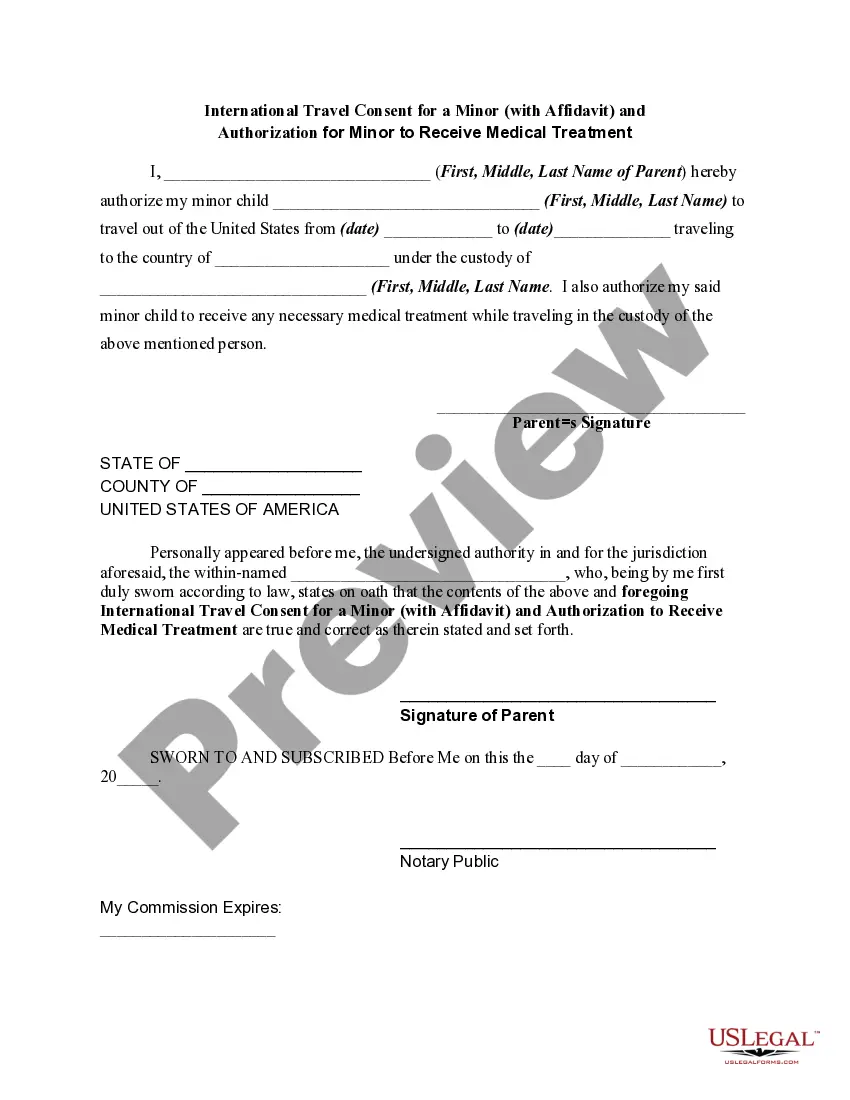
Simply Log In to your account, find the Parent Affidavit Form For Drivers License, and obtain it immediately in the My documents section. You can also access previously saved forms.
- Browse the collection of relevant documents available to you with just one click.
- US Legal Forms provides you state- and county-specific forms accessible anytime for downloading.
- Protect your document management processes with excellent support that enables you to create any form within minutes without additional or hidden fees.
Form popularity
FAQ
To get your learner's permit in Florida, you must complete a traffic law and substance abuse education course. After that, schedule an appointment at the DMV, and bring the required documents, including identification and residency proof. Don’t forget the parent affidavit form for drivers license, as it shows your parent or guardian supports your application.
To establish Florida residency at the DMV, bring proof of your identity and social security number. Additionally, you will need two documents proving your Florida address, such as a utility bill or lease agreement. If you are a minor applying for a license, make sure to include the parent affidavit form for drivers license as well.
Advance directives have limitations. For example, an older adult may not fully understand treatment options or recognize the consequences of certain choices in the future. Sometimes, people change their minds after expressing advance directives and forget to inform others.
An attending physician or other health care provider who is unwilling to comply with the Oklahoma Advance Directive Act shall as promptly as practicable take all reasonable steps to arrange care of the declarant by another physician or health care provider when the declarant becomes a qualified patient.
The most common types of advance directives are the living will and the durable power of attorney for health care (sometimes known as the medical power of attorney). There are many advance directive formats.
Advance Directive for Health Care (Living Will)
A: An Advance Directive must be signed before two witnesses who are 18 or older. The witnesses cannot be beneficiaries under your will, nor may they be persons who would inherit your property if you died without a will. An Advance Directive is not required to be notarized.
Usually these rights include: The right to keep your medical records private. The right to know what medical care your doctor recommends if you are sick or hurt. The right to refuse all or part of any medical care you do not want.
An individual of sound mind and eighteen (18) years of age or older may execute at any time an advance directive for health care governing the provision, withholding, or withdrawal of life-sustaining treatment.