Claim For Adverse Possession
Description
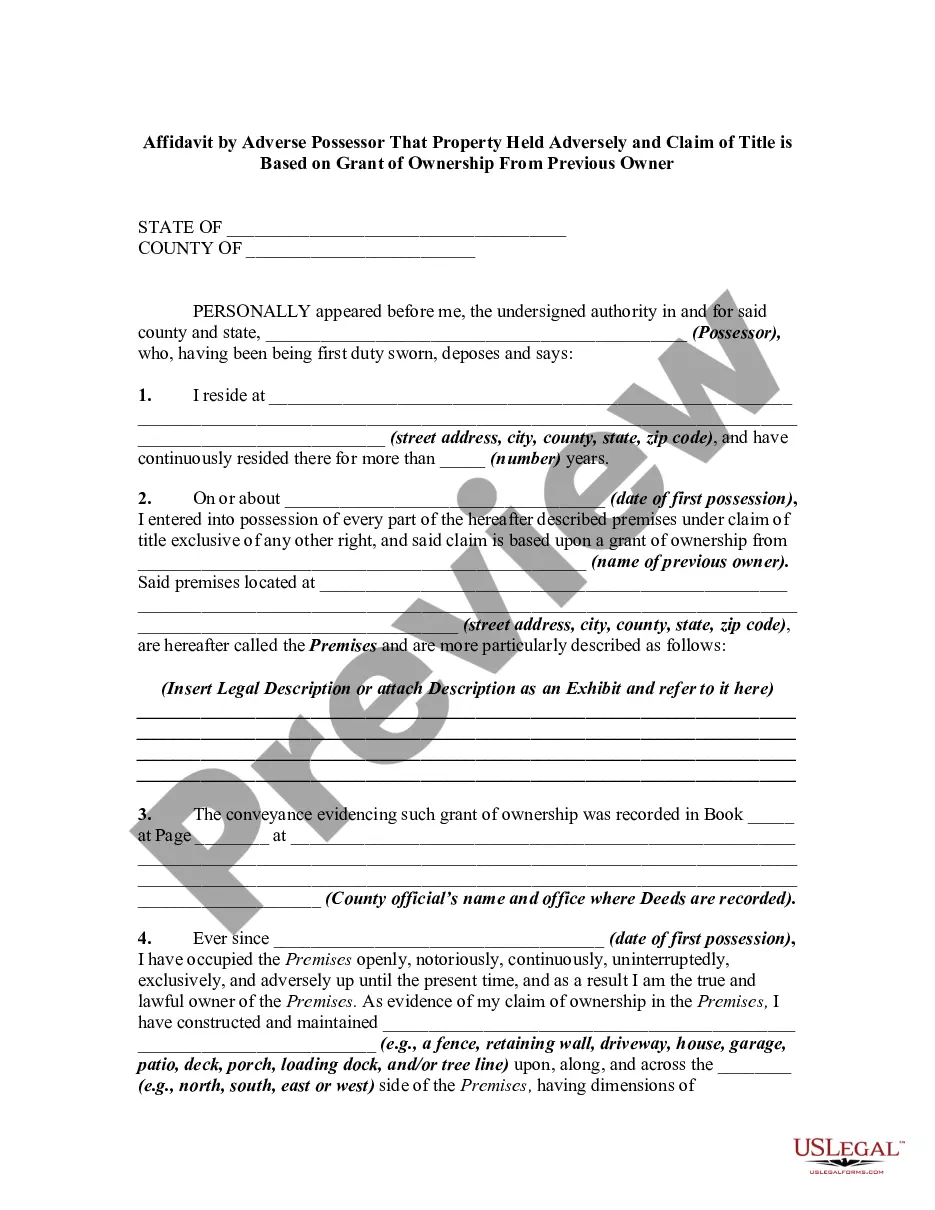
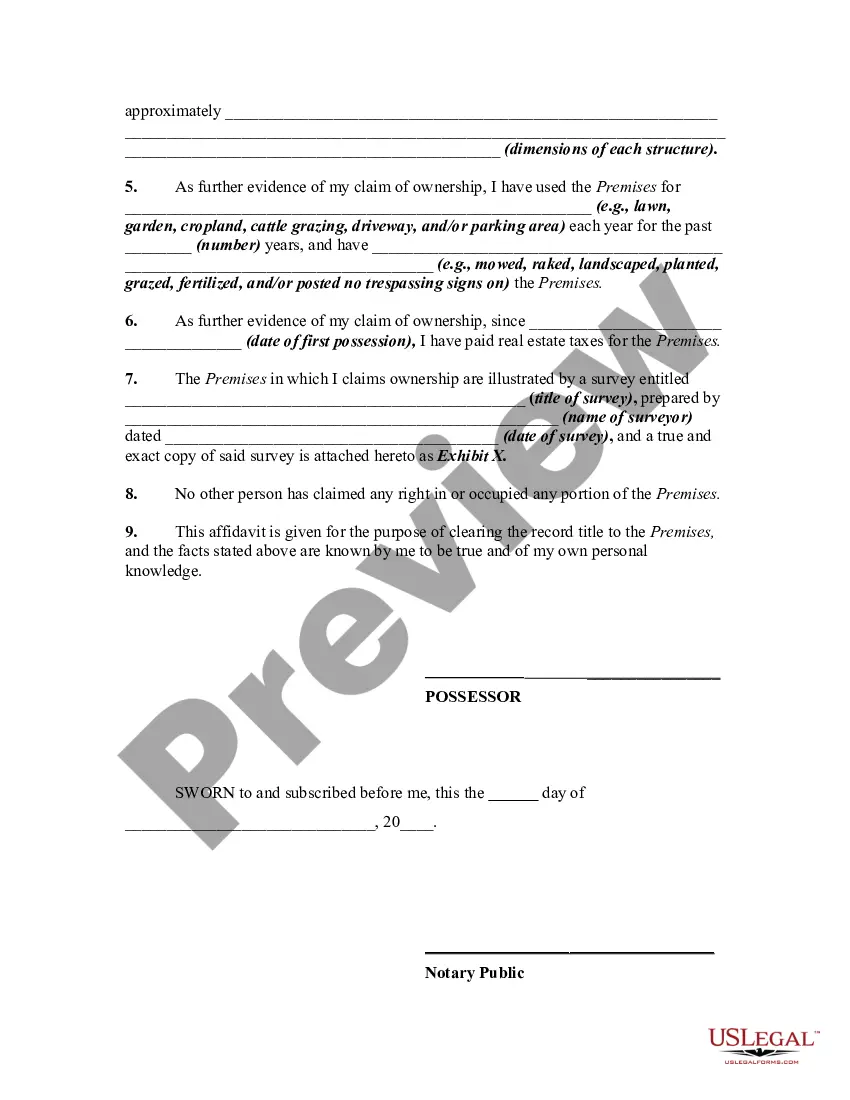

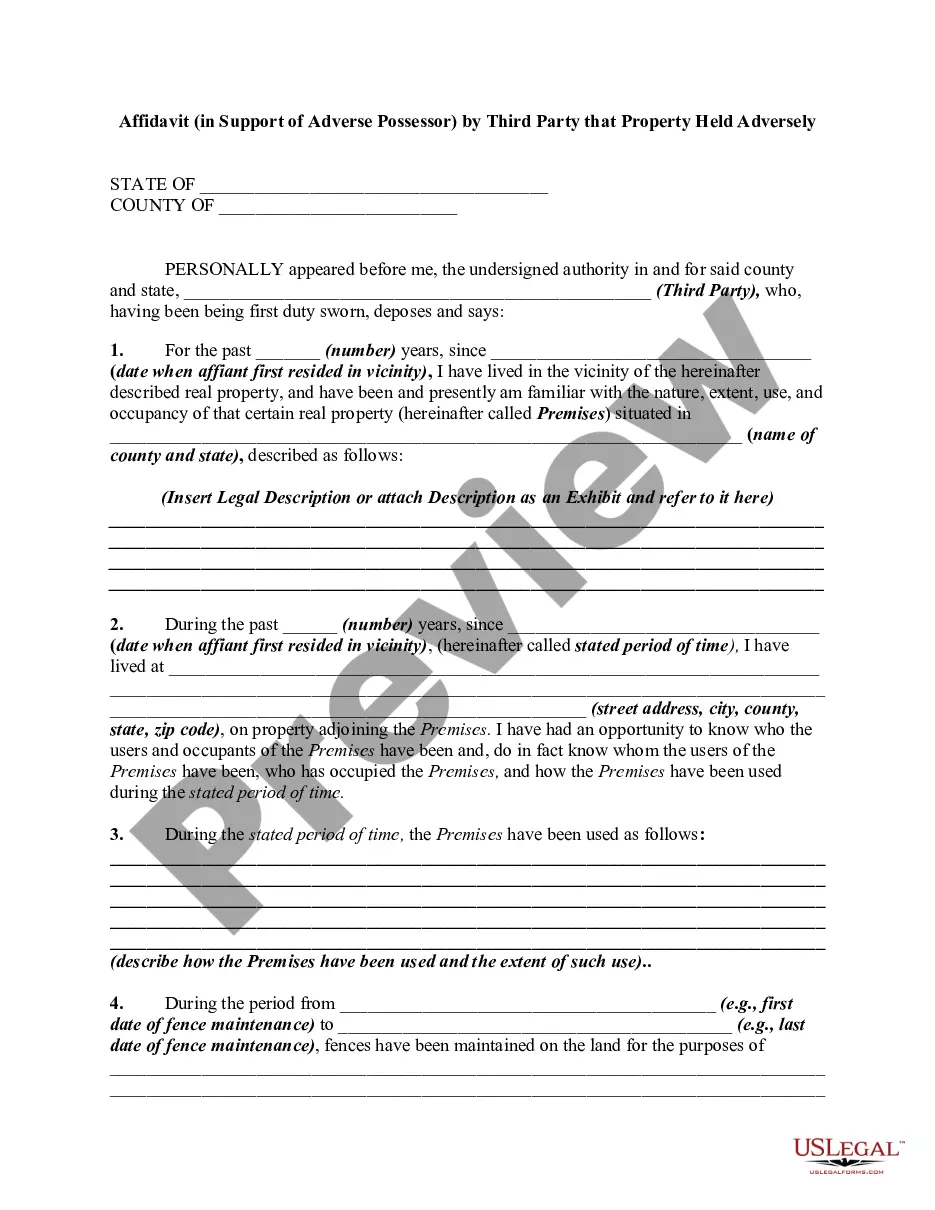
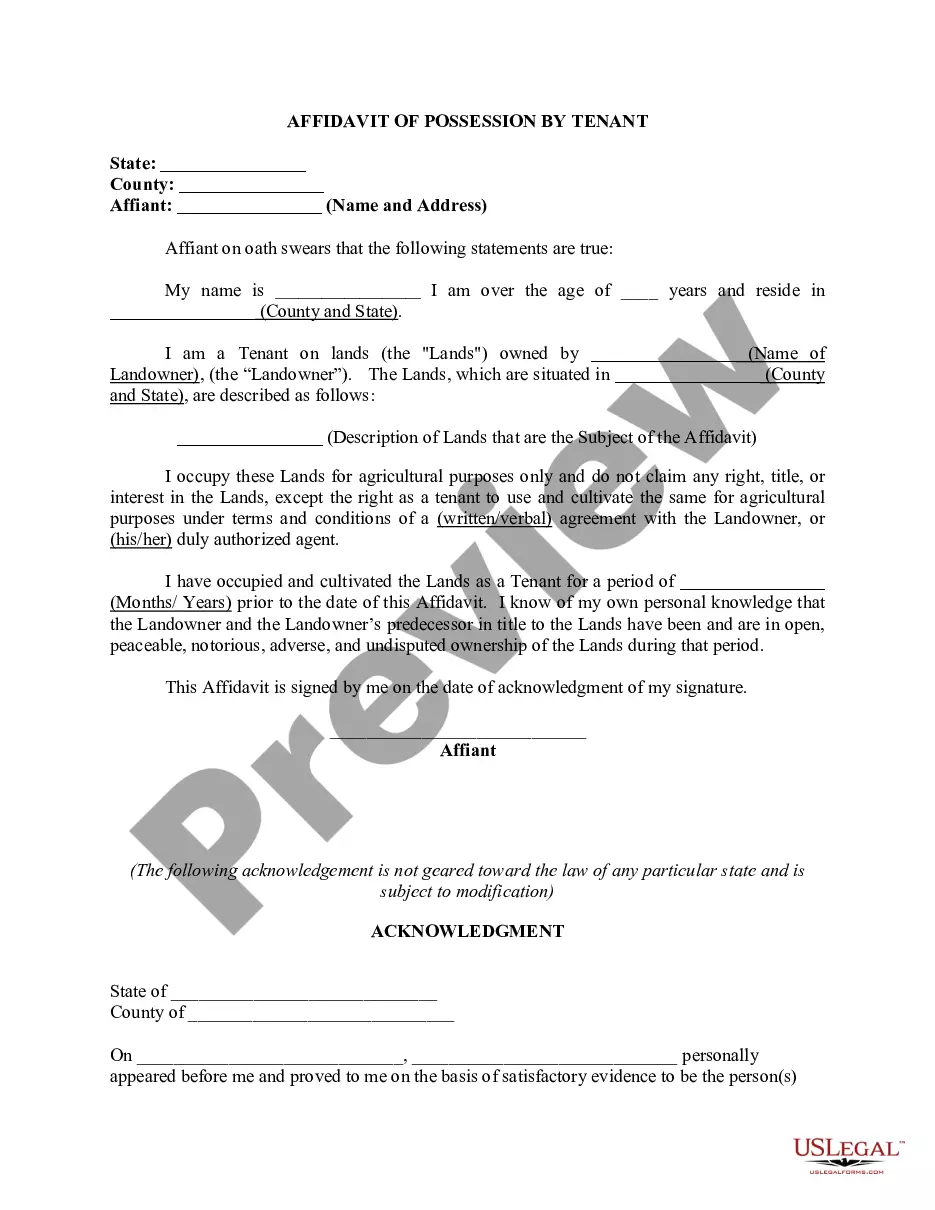




How to fill out Affidavit By Adverse Possessor That Property Held Adversely And Claim Of Title Is Based On Grant Of Ownership From Previous Owner - Squatters Rights?
It’s well known that you can’t become a legal authority instantly, nor can you determine how to swiftly prepare a Claim For Adverse Possession without possessing a specialized set of expertise.
Drafting legal documents is a lengthy endeavor necessitating particular training and abilities. So why not entrust the preparation of the Claim For Adverse Possession to the professionals.
With US Legal Forms, one of the most extensive legal document collections, you can discover anything from court forms to templates for in-office correspondence.
You can regain access to your forms from the My documents tab at any time. If you’re a current customer, you can simply Log In, and find and download the template from the same tab.
Regardless of the intention behind your forms—be it for financial, legal, or personal use—our platform has you covered. Try US Legal Forms today!
- Locate the document you require by utilizing the search bar at the top of the page.
- View it (if this option is available) and review the accompanying description to ascertain if Claim For Adverse Possession meets your needs.
- Restart your search if you need a different template.
- Create a free account and select a subscription plan to acquire the template.
- Select Buy now. Once the transaction is completed, you can download the Claim For Adverse Possession, fill it out, print it, and send it or mail it to the relevant individuals or organizations.
Form popularity
FAQ
To successfully file a claim for adverse possession, you need to meet five key elements. First, your possession must be actual, meaning you physically occupy the property. Second, your possession must be open and notorious, which means it's obvious to anyone that you are using the property. Third, your possession must be hostile; this indicates that you do not have consent from the original owner. Additionally, your occupation must be continuous for a statutory period, commonly ranging from 5 to 20 years, depending on the state. Lastly, your possession must be exclusive, ensuring no one else is using the property during this time. Understanding these elements can help you navigate your claim for adverse possession more effectively.
Adverse possession refers to a legal doctrine allowing a person to claim ownership of land under certain conditions. Typically, it involves someone taking possession of a property and using it openly and continuously for a designated period. This process can lead to legal rights being transferred, making it essential for anyone considering such a claim to understand the implications involved.
When filing a claim for adverse possession, it is crucial to meet certain conditions, including actual, open, and notorious possession of the land. The possession must occur without the permission of the landowner, and it typically must be continuous for a specified time period defined by state law. Documentation of this use can strengthen the claim and prove beneficial.
In New York, the claim for adverse possession requires five key elements: actual possession of the property, which must be open and notorious. The possession must be hostile, meaning it infringes on the rights of the true owner. Additionally, it must be continuous for at least 10 years, and the claimant must have exclusive control over the land.
When making a claim for adverse possession, the requirements generally include continuous possession for a specific period, which varies by state. The use of the property must be exclusive and hostile, indicating it is without permission. Moreover, the possession should be actual and visible, ensuring that the true owner has notice of this usage.
To make a successful claim for adverse possession, the claimant must demonstrate actual possession of the property, meaning they physically occupy it. Additionally, the possession must be open and notorious, indicating that it's obvious to others. Furthermore, the possession must be adverse to the true owner's interests, meaning the claimant is using the land without permission.
To defeat a claim for adverse possession, it is important to demonstrate that the claimant did not have continuous and exclusive possession of the property. You may also present evidence that proves your permission for their use or that you continued to use the land actively. Legal experts can help you navigate the complexities of these claims and defend your property rights effectively.
The primary elements of a claim for adverse possession include actual possession, open and notorious use, exclusive use, and continuous possession for the statutory period. These factors are critical in establishing your claim. Each state may have specific nuances, so understanding these elements can protect your rights.
An example of a claim for adverse possession could involve a neighbor who builds a fence that encroaches on the adjacent property. If this fence remains in place and is maintained for more than 20 years, the neighbor may potentially claim ownership of that portion of land. This illustrates how long-term occupancy can lead to ownership rights under adverse possession laws.
Generally, any type of real property can be subject to a claim for adverse possession. This includes residential, commercial, and agricultural properties. However, the entire parcel must be occupied, meaning that partial claims may not qualify. Consulting an expert can clarify these details for your specific situation.