Adverse Interest In Property Law
Description
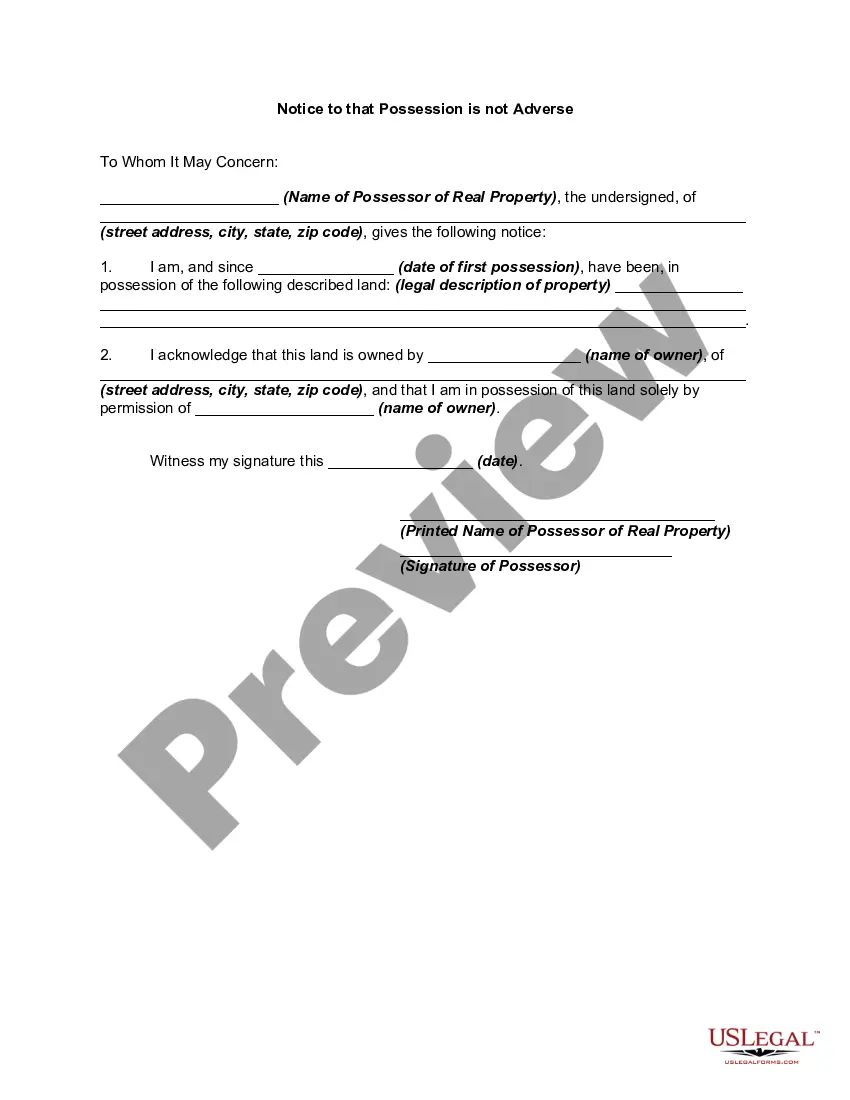
Get your form ready online
Our built-in tools help you complete, sign, share, and store your documents in one place.
Make edits, fill in missing information, and update formatting in US Legal Forms—just like you would in MS Word.
Download a copy, print it, send it by email, or mail it via USPS—whatever works best for your next step.
Sign and collect signatures with our SignNow integration. Send to multiple recipients, set reminders, and more. Go Premium to unlock E-Sign.
If this form requires notarization, complete it online through a secure video call—no need to meet a notary in person or wait for an appointment.
We protect your documents and personal data by following strict security and privacy standards.

Make edits, fill in missing information, and update formatting in US Legal Forms—just like you would in MS Word.

Download a copy, print it, send it by email, or mail it via USPS—whatever works best for your next step.

Sign and collect signatures with our SignNow integration. Send to multiple recipients, set reminders, and more. Go Premium to unlock E-Sign.

If this form requires notarization, complete it online through a secure video call—no need to meet a notary in person or wait for an appointment.

We protect your documents and personal data by following strict security and privacy standards.
Looking for another form?



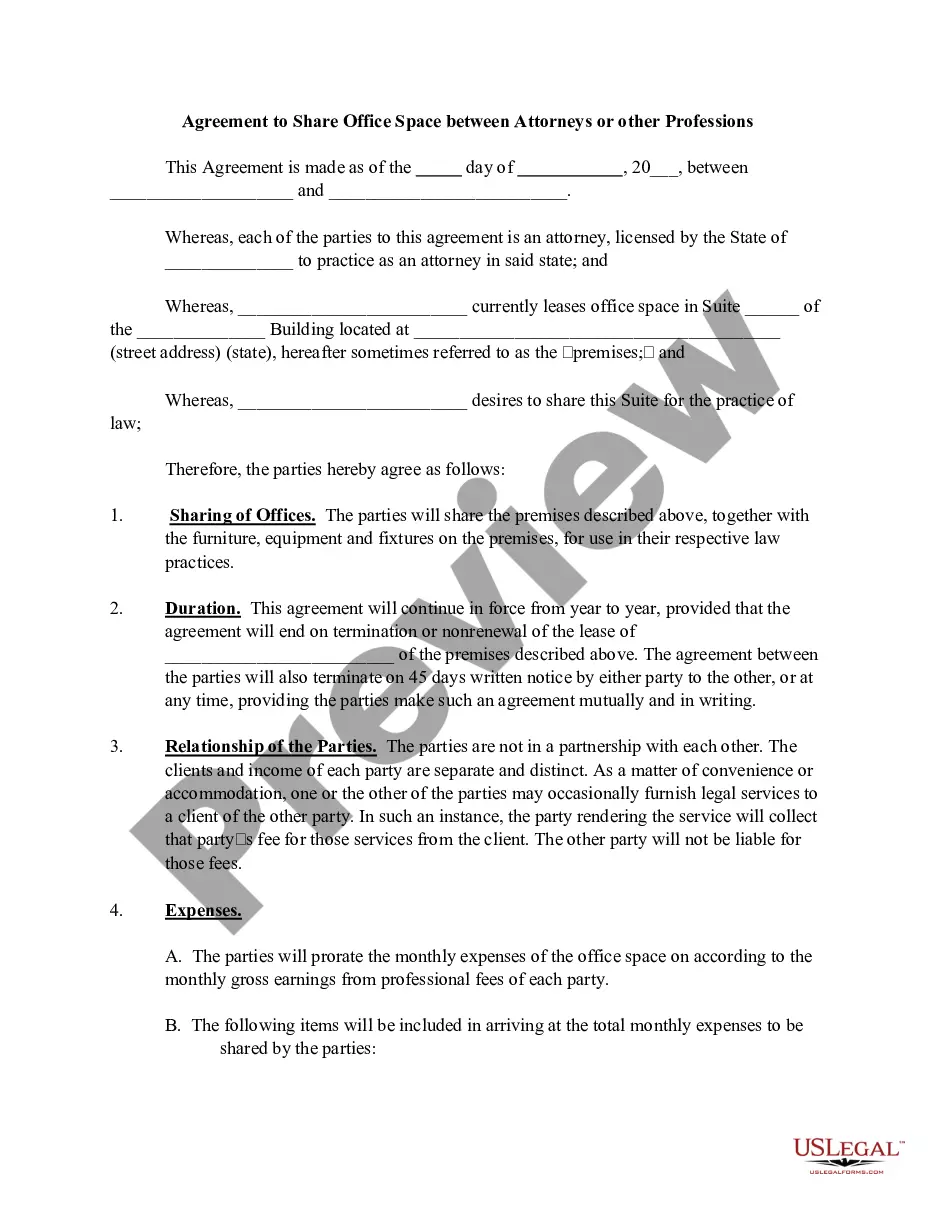




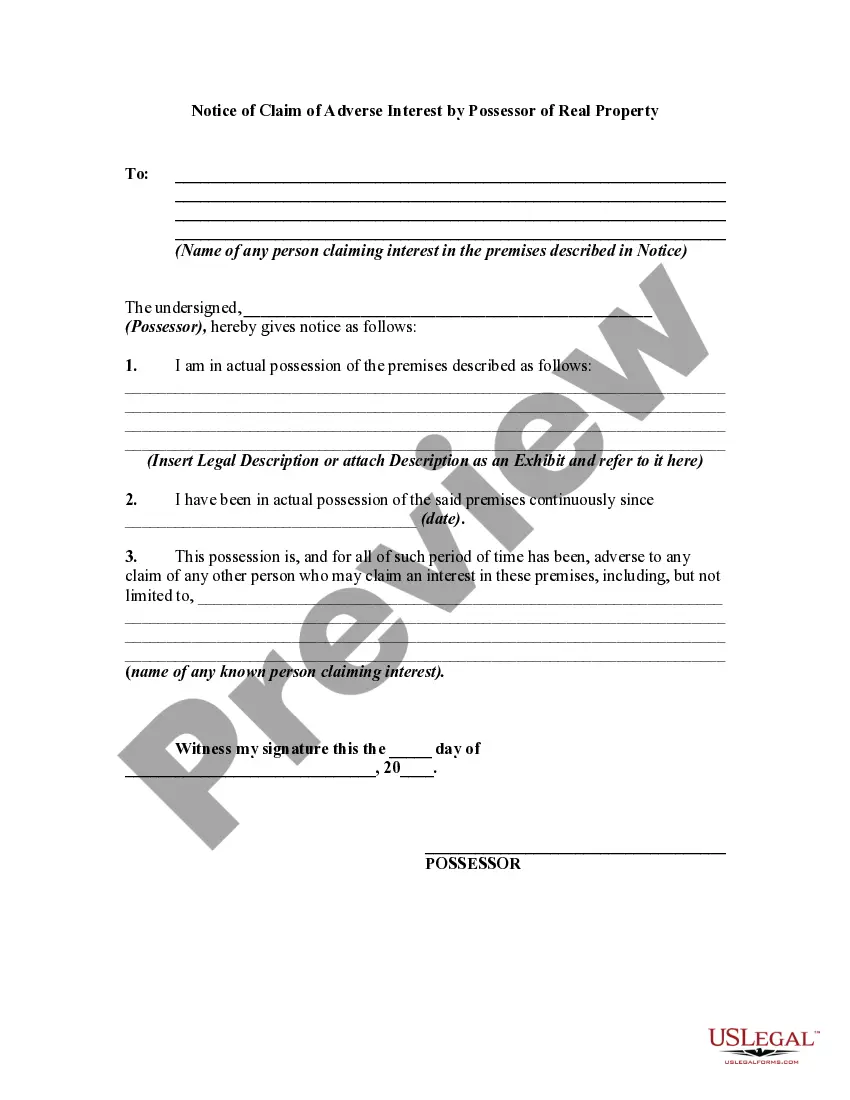
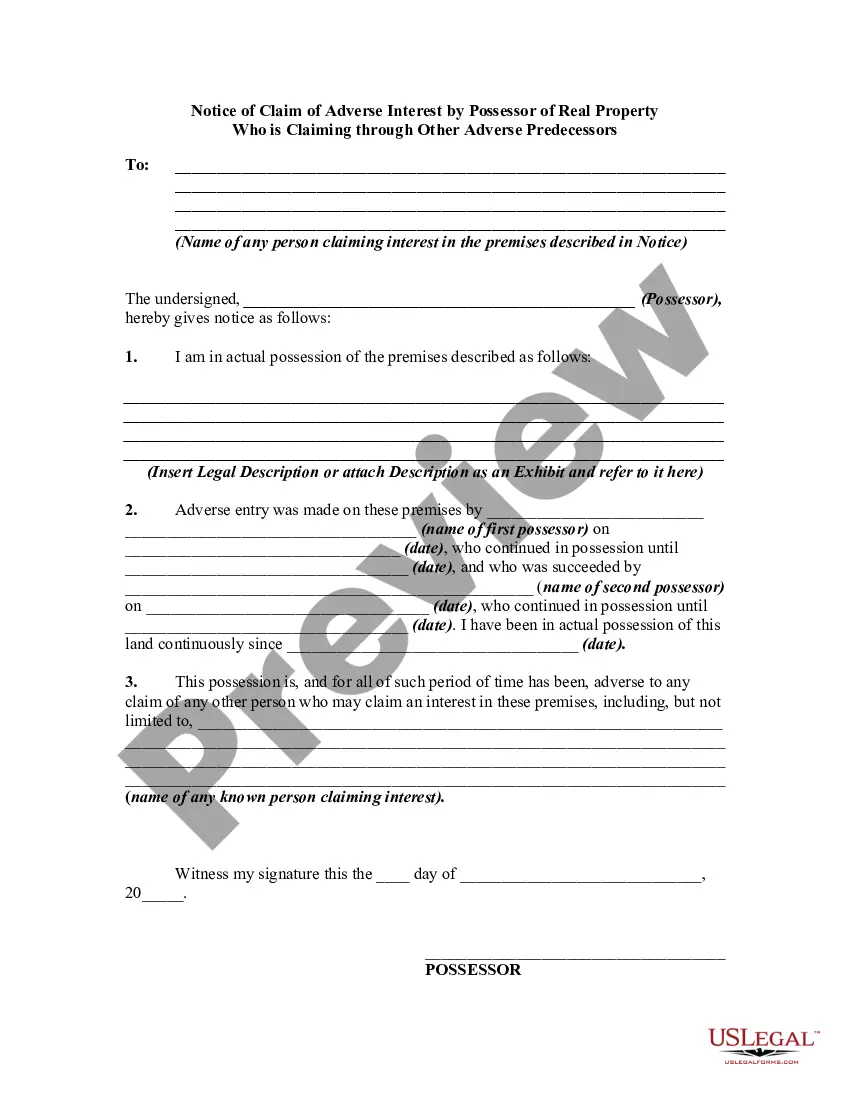
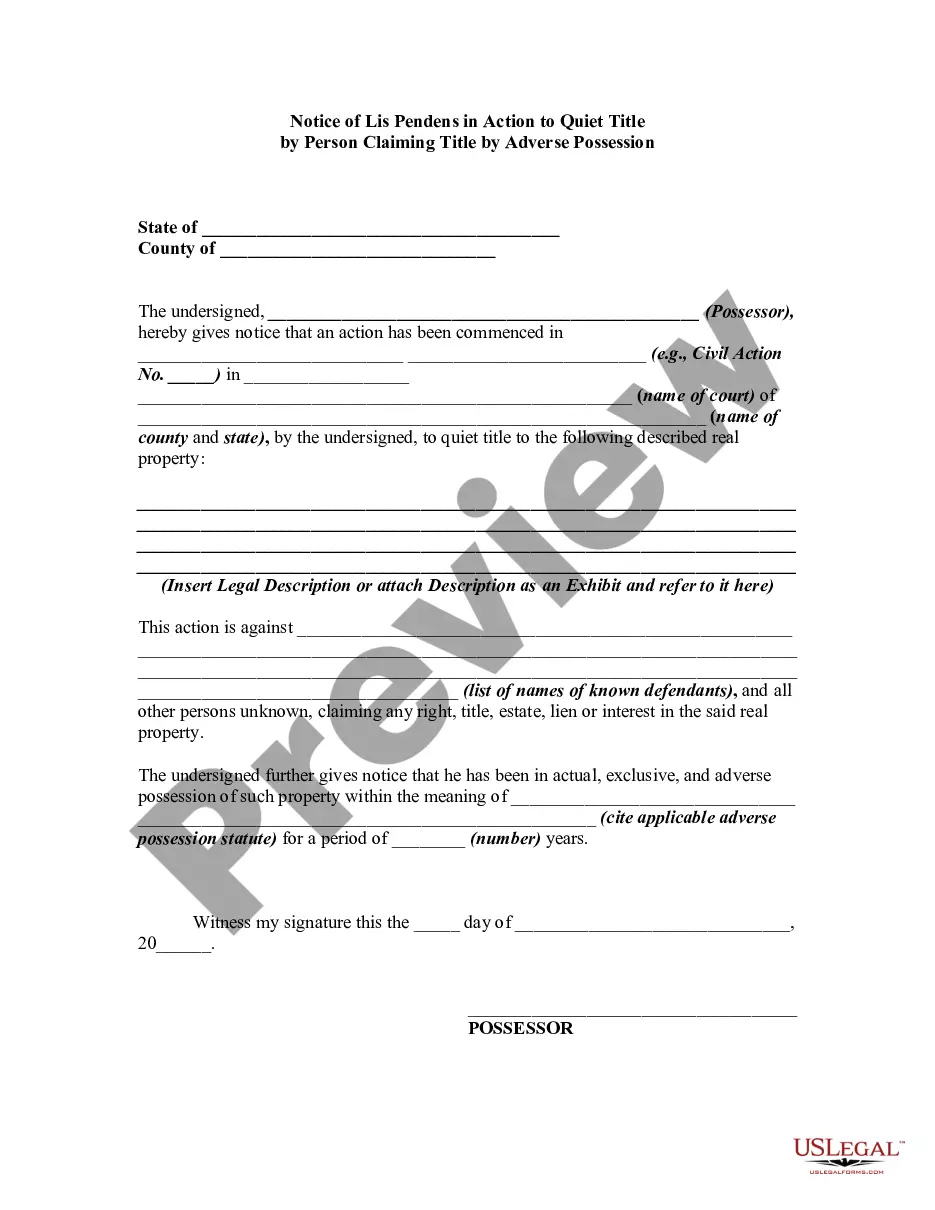
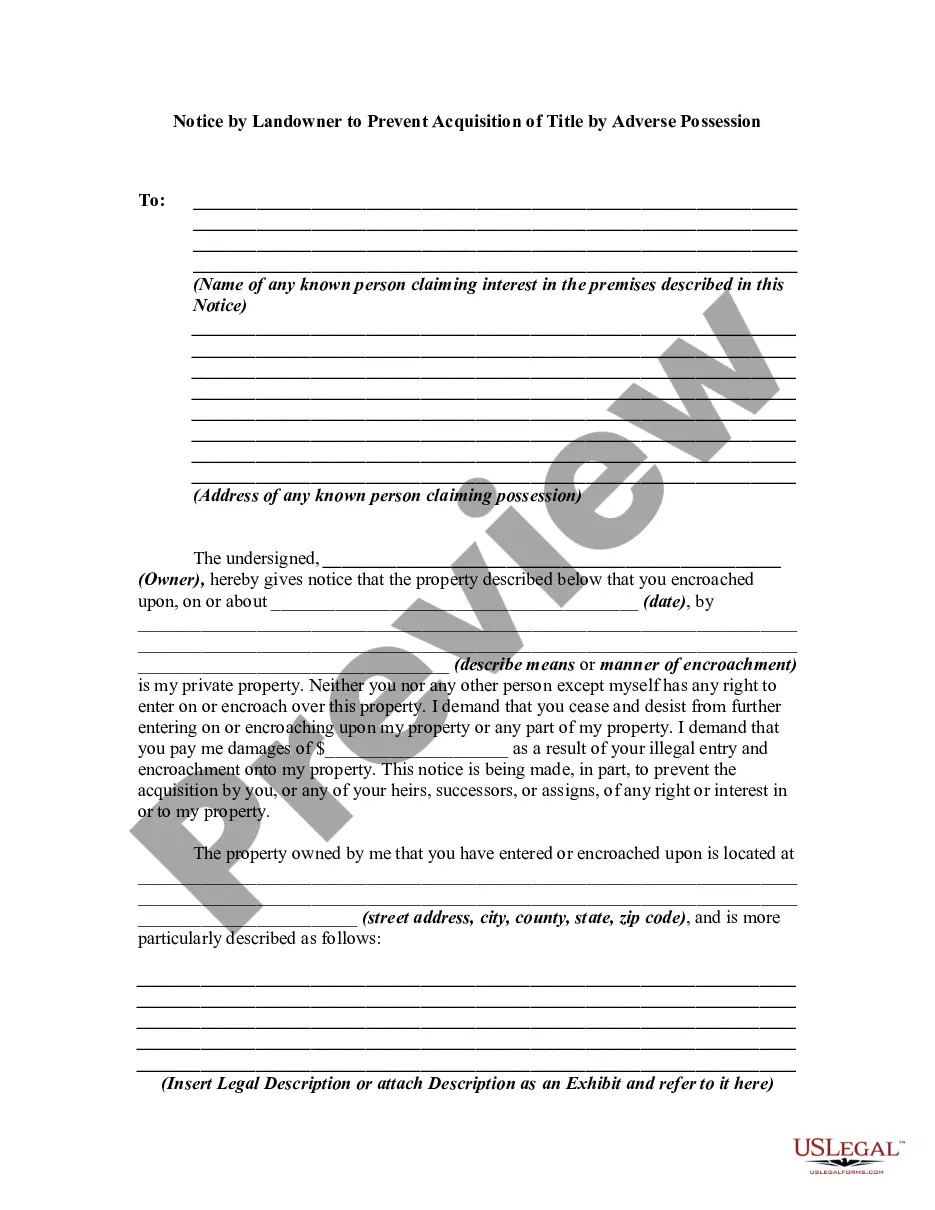
How to fill out Notice Of Claim Of Adverse Interest By Possessor Of Real Property - Squatters Rights?
Getting a go-to place to take the most current and relevant legal templates is half the struggle of dealing with bureaucracy. Discovering the right legal documents demands accuracy and attention to detail, which explains why it is crucial to take samples of Adverse Interest In Property Law only from trustworthy sources, like US Legal Forms. An improper template will waste your time and delay the situation you are in. With US Legal Forms, you have little to worry about. You can access and see all the information about the document’s use and relevance for your situation and in your state or region.
Take the following steps to complete your Adverse Interest In Property Law:
- Utilize the library navigation or search field to locate your sample.
- View the form’s information to check if it fits the requirements of your state and area.
- View the form preview, if there is one, to make sure the form is definitely the one you are looking for.
- Get back to the search and look for the appropriate template if the Adverse Interest In Property Law does not suit your requirements.
- If you are positive regarding the form’s relevance, download it.
- When you are a registered customer, click Log in to authenticate and gain access to your picked forms in My Forms.
- If you do not have a profile yet, click Buy now to get the template.
- Pick the pricing plan that suits your needs.
- Proceed to the registration to complete your purchase.
- Complete your purchase by selecting a transaction method (bank card or PayPal).
- Pick the file format for downloading Adverse Interest In Property Law.
- When you have the form on your device, you may alter it with the editor or print it and complete it manually.
Eliminate the inconvenience that comes with your legal documentation. Check out the extensive US Legal Forms collection to find legal templates, examine their relevance to your situation, and download them on the spot.
Form popularity
FAQ
You can file for adverse possession in Texas by filing a lawsuit in county court. Successful adverse possession claims are rare, and the evidentiary requirements are substantial, because adverse possession involves a court taking someone's property and giving it to someone else.
The possessor must either possess a legitimate title, such as a deed that is part of a valid chain of title, or have a reasonable basis for their claim to title, referred to as ?color of title.? In order to successfully assert their claim under this statute, the possessor must provide documentation, such as conveyance ...
In real property, adverse interest means a person, who's not the owner of the land or house, owns an interest of the property. For example, neighbor A owns an easement, which gives A the right to pass B's land to access public road, on the land of owner B. In this case, A has an adverse interest on B's land.
Common examples of adverse possession include continuous use of a private road or driveway or agricultural development of an unused parcel of land.
One who seeks to assert title in land by adverse possession must prove each of the following for a period of more than ten years: that he has held the land adversely and that the possession has been actual, open and notorious, exclusive, continuous, and under a claim of title or color of title.