Bankruptcy Which Have Forgiven
Description
Get your form ready online
Our built-in tools help you complete, sign, share, and store your documents in one place.
Make edits, fill in missing information, and update formatting in US Legal Forms—just like you would in MS Word.
Download a copy, print it, send it by email, or mail it via USPS—whatever works best for your next step.
Sign and collect signatures with our SignNow integration. Send to multiple recipients, set reminders, and more. Go Premium to unlock E-Sign.
If this form requires notarization, complete it online through a secure video call—no need to meet a notary in person or wait for an appointment.
We protect your documents and personal data by following strict security and privacy standards.

Make edits, fill in missing information, and update formatting in US Legal Forms—just like you would in MS Word.

Download a copy, print it, send it by email, or mail it via USPS—whatever works best for your next step.

Sign and collect signatures with our SignNow integration. Send to multiple recipients, set reminders, and more. Go Premium to unlock E-Sign.

If this form requires notarization, complete it online through a secure video call—no need to meet a notary in person or wait for an appointment.

We protect your documents and personal data by following strict security and privacy standards.
Looking for another form?









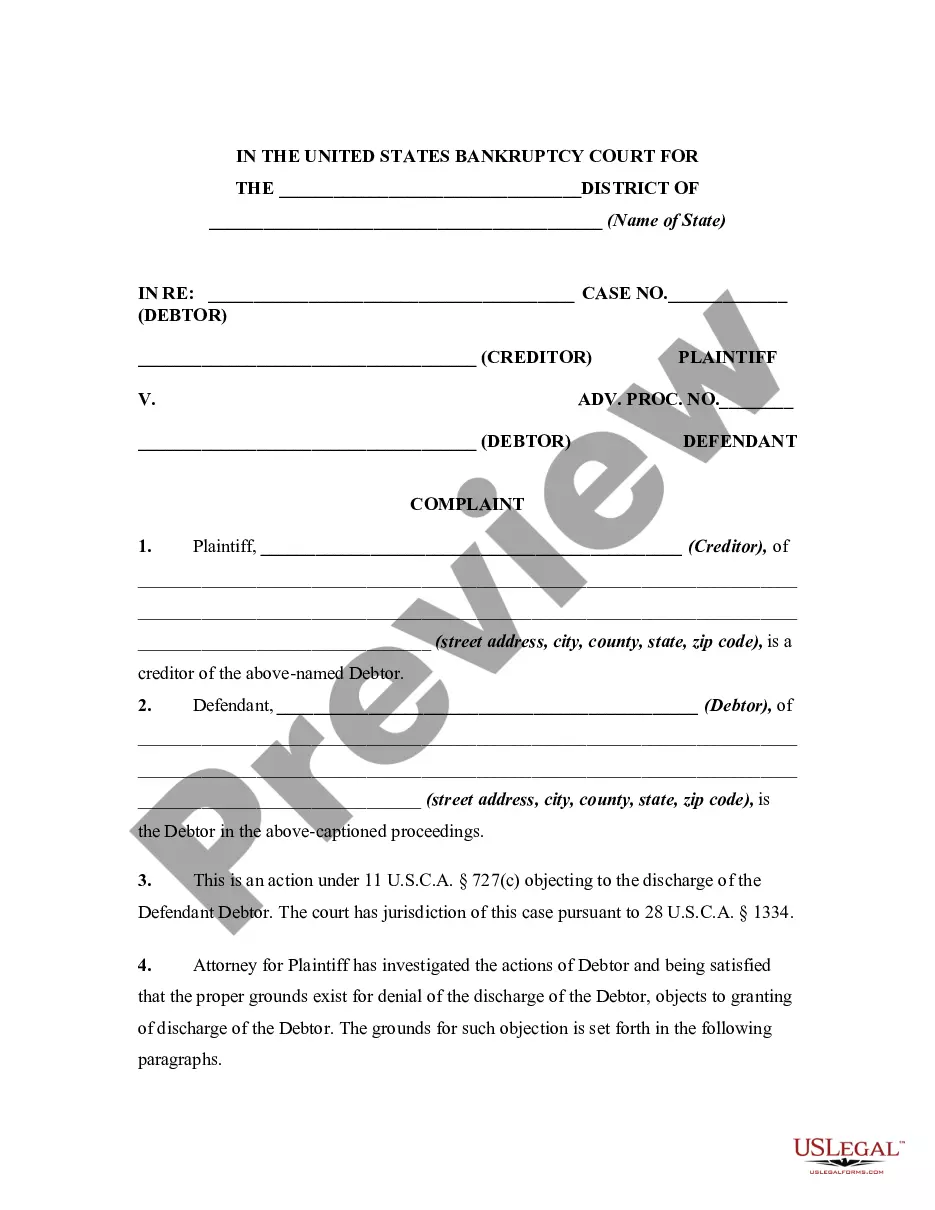
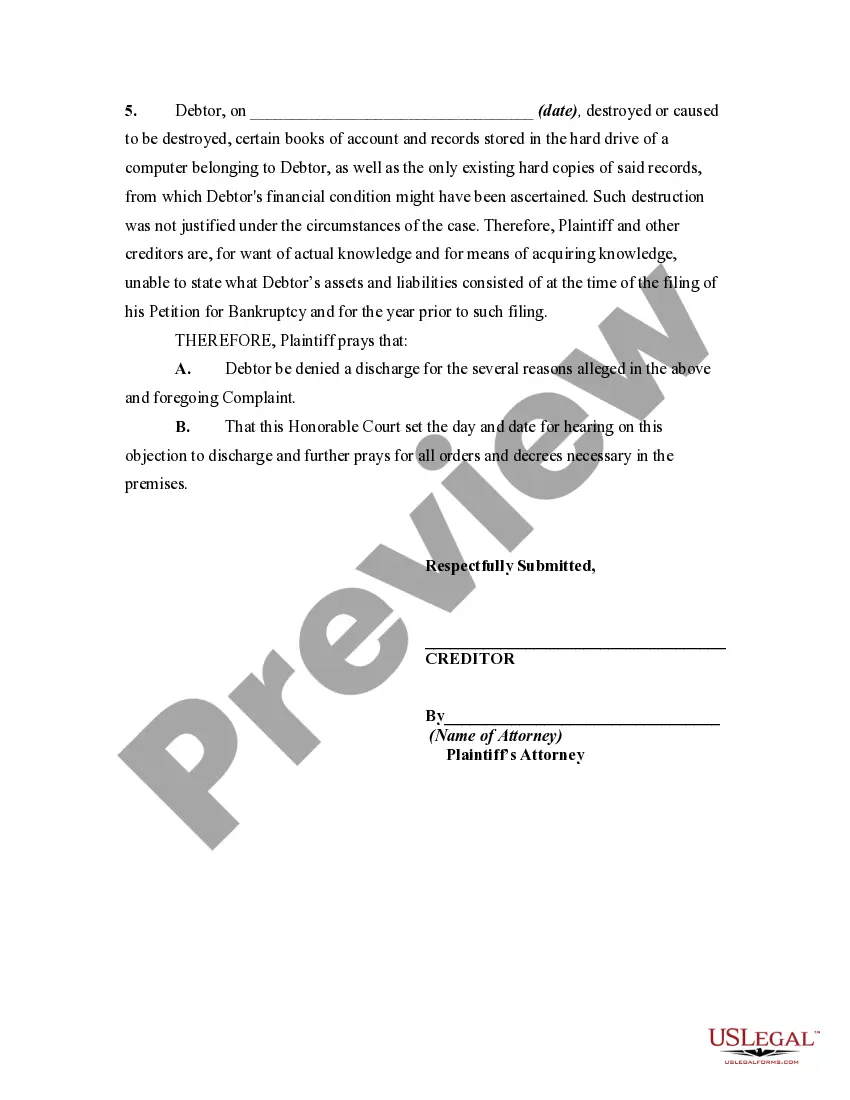
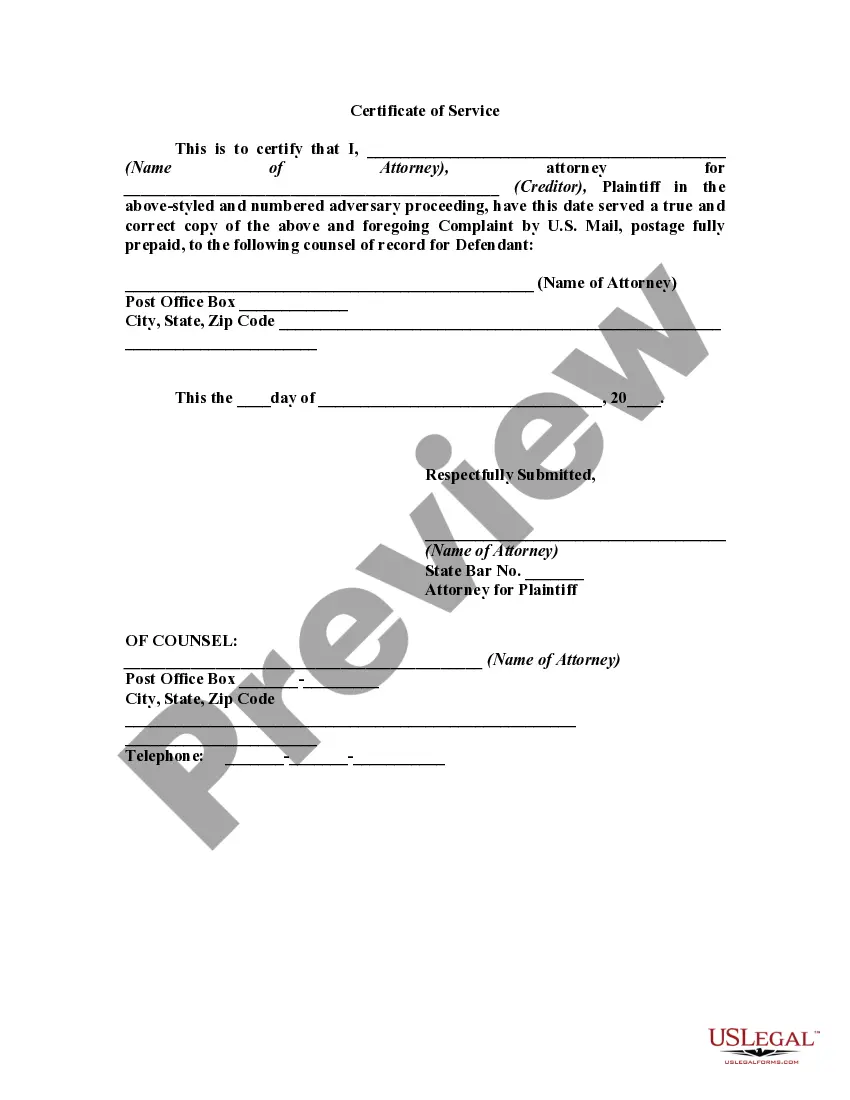
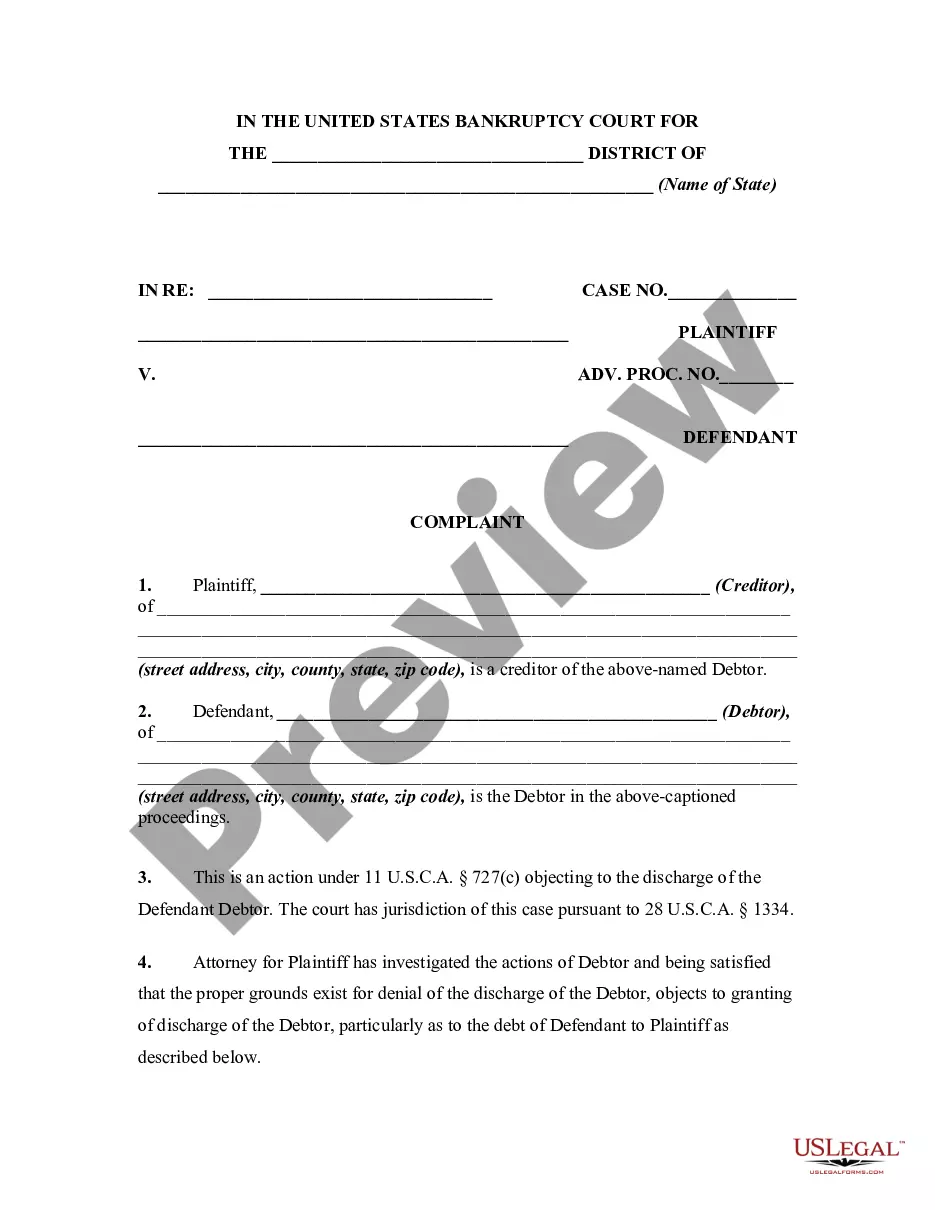
How to fill out Complaint Objecting To Discharge Of Debtor In Bankruptcy Proceeding Due To Destruction Of Books From Which Financial Condition Might Have Been?
Utilizing legal document examples that adhere to federal and state statutes is vital, and the web provides countless choices available.
However, what is the purpose of spending time searching for the properly crafted Bankruptcy Which Have Forgiven template online when the US Legal Forms digital library already contains such documents gathered in one location.
US Legal Forms represents the largest online legal repository with more than 85,000 fillable documents created by attorneys for any commercial and personal circumstance.
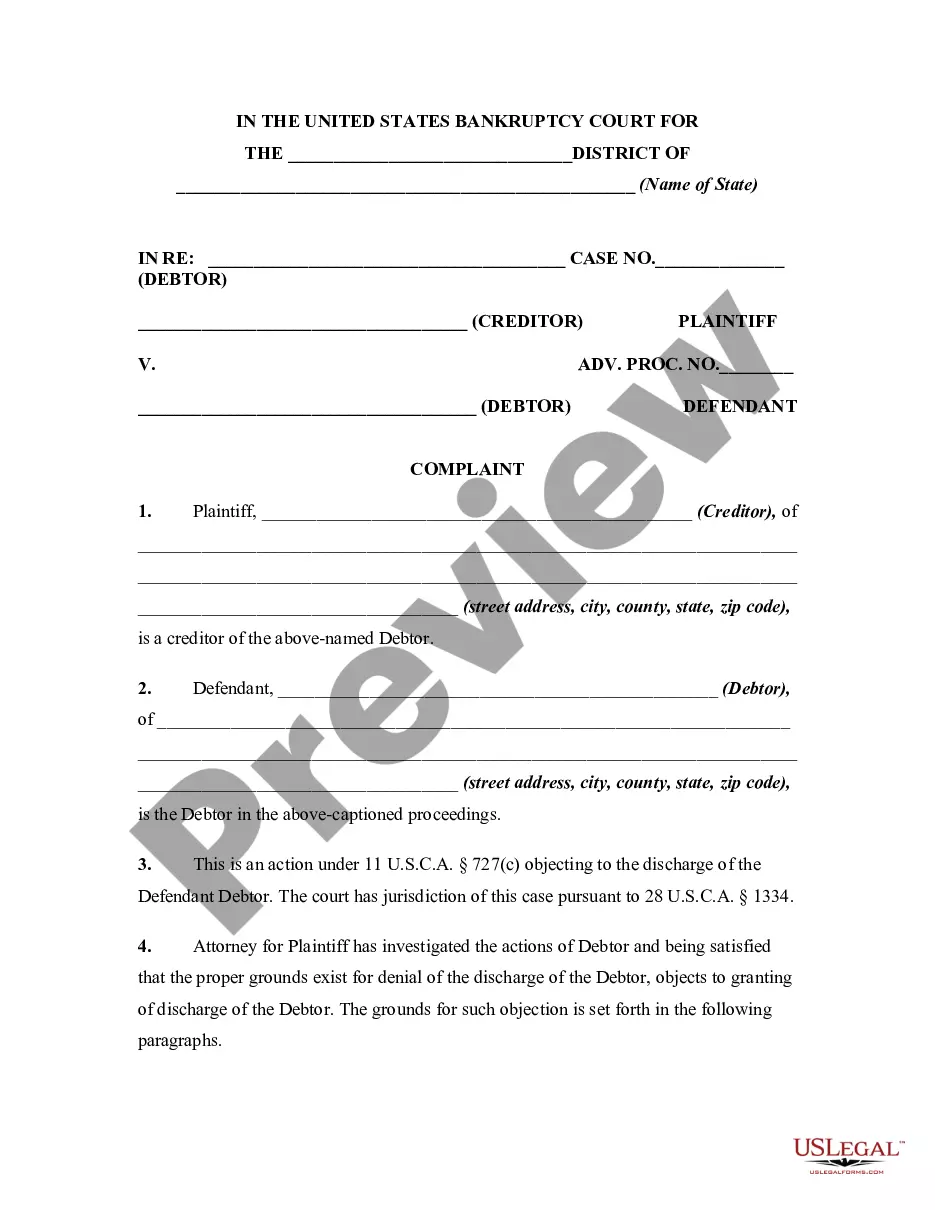
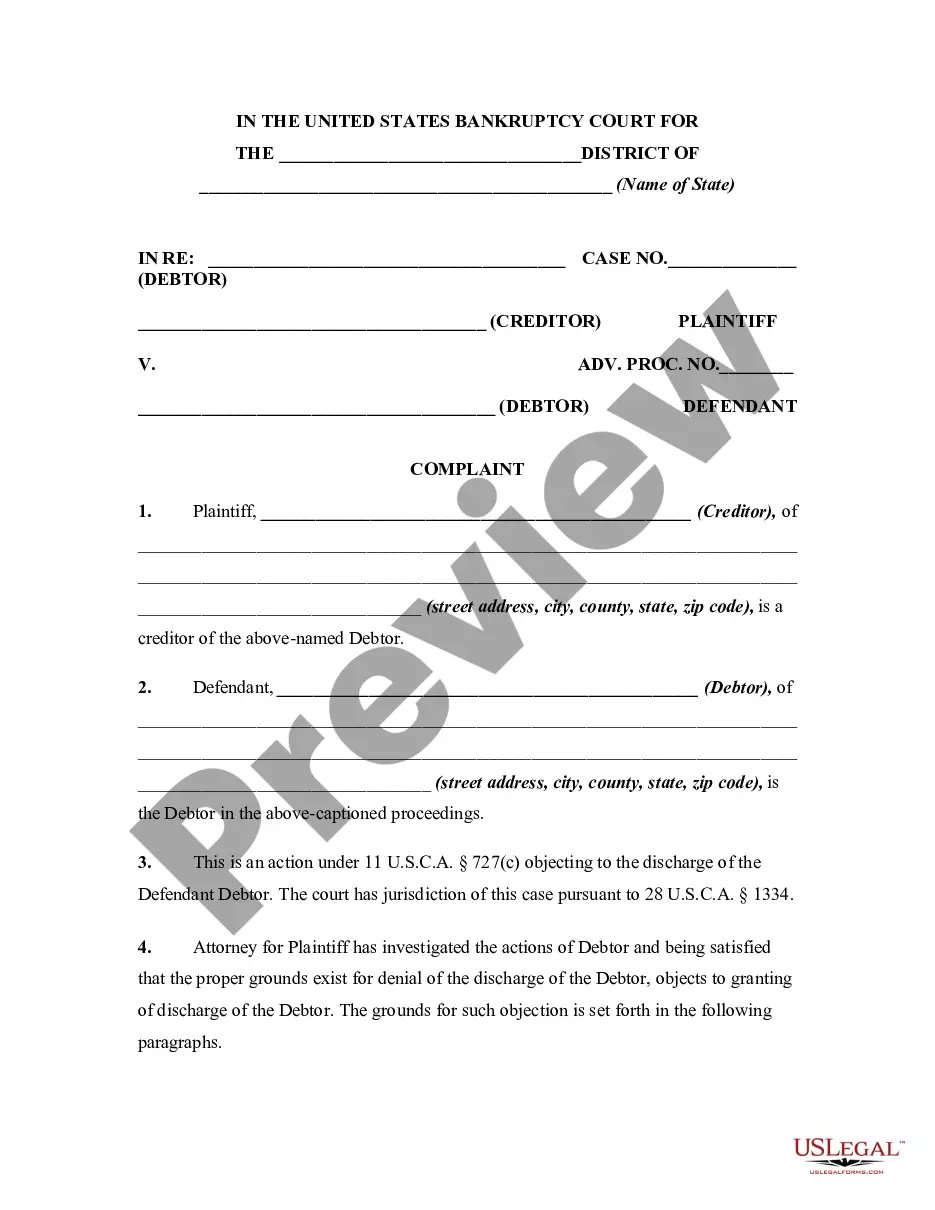
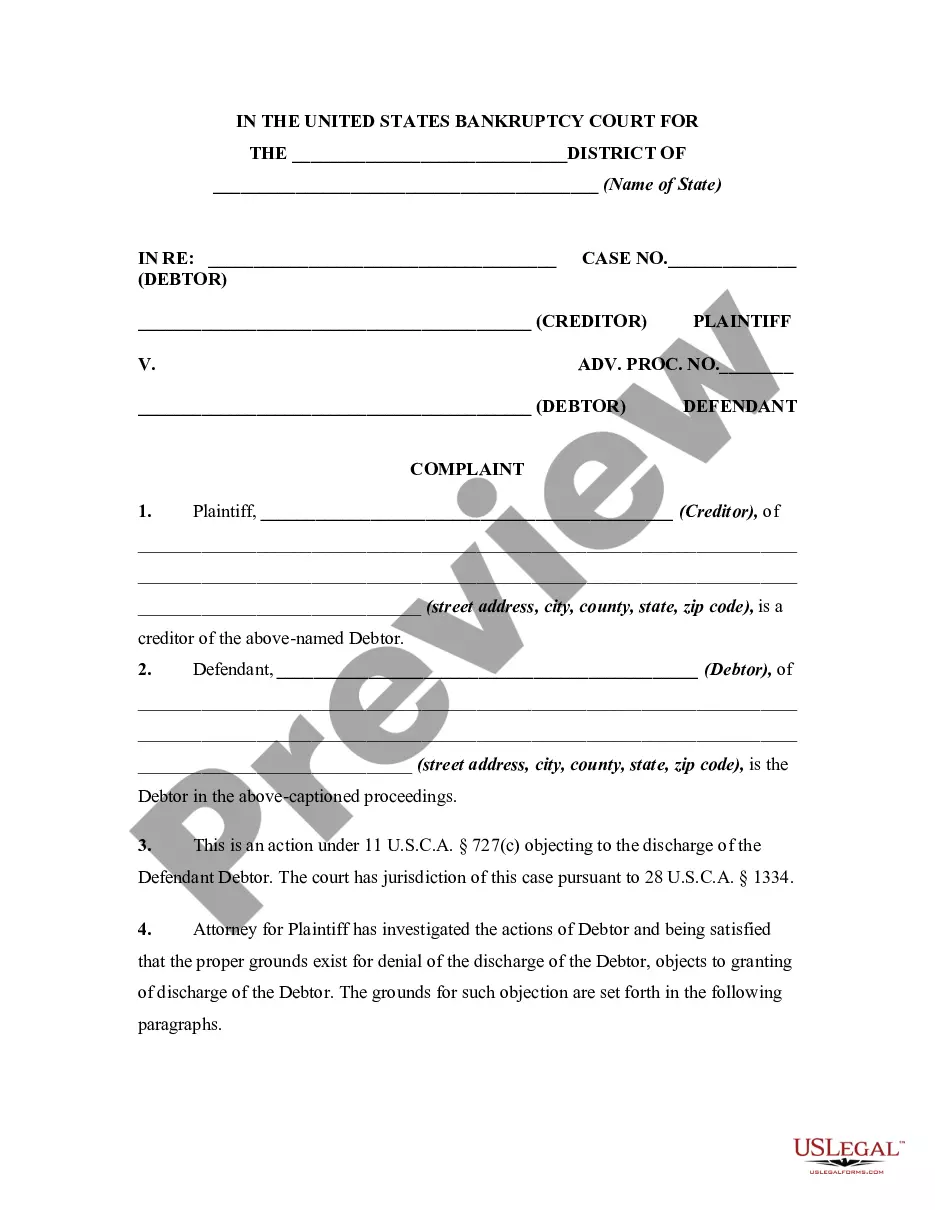
Review the template using the Preview feature or through the text description to confirm it aligns with your needs.
- They are straightforward to navigate with all forms categorized by state and intended use.
- Our experts keep updated with legislative modifications, ensuring your documentation is always current and compliant when acquiring a Bankruptcy Which Have Forgiven from our site.
- Obtaining a Bankruptcy Which Have Forgiven is quick and easy for both existing and new users.
- If you possess an account with an active subscription, Log In and store the document sample you require in the appropriate format.
- If you are new to our portal, follow the instructions below.
Form popularity
FAQ
When you declare bankruptcy, many debts can indeed be forgiven. However, not all debts qualify for discharge; for example, certain taxes and student loans typically remain your responsibility. Therefore, while bankruptcy offers significant relief by eliminating various debts, it is essential to understand which debts remain in place after the process.
Yes, Microsoft Word has a free lease agreement template that you can customize to create your own contract and minimize any potential problems between tenant and landlord.
Tenants are entitled to have access to the property at the beginning of their lease and can sue the landlord for up to three months of rent and attorney's fees if the landlord's failure to deliver the property is willful and in bad faith.
Rent increase; written notice. Each tenant shall be notified in writing of any rent increase by actual notice or by United States mail at least sixty days prior to the effective date of the increase. Laws 1984, LB 916, § 41.
With the approval of the landlord, recover the actual rent agreement as well as duplicates and make a name correction. You should acquire both the landlord's and tenant's signatures certified as a reason for the correction. You can even terminate the previous rent agreement and create a new one.
Landlords cannot raise rent more than 10% total or 5% plus the percentage change in the cost of living ? whichever is lower ? over a 12-month period.
A landlord cannot evict a tenant without first going to court and getting a court-ordered eviction. The legal term for an eviction is ?restitution of premises?.
In general, we recommend raising rents annually at the rate of inflation. In the United States, that means around 2% or 3% per year. However, if you live in an area with a particularly hot rental market, you may be able to charge more than that.
Rent ? Nebraska has no legal maximum for what a landlord may charge for rent. There is also no limit on the amount a landlord may raise the rent, and they are not required to give any notice.