Civil Appeal To Supreme Court
Description
Get your form ready online
Our built-in tools help you complete, sign, share, and store your documents in one place.
Make edits, fill in missing information, and update formatting in US Legal Forms—just like you would in MS Word.
Download a copy, print it, send it by email, or mail it via USPS—whatever works best for your next step.
Sign and collect signatures with our SignNow integration. Send to multiple recipients, set reminders, and more. Go Premium to unlock E-Sign.
If this form requires notarization, complete it online through a secure video call—no need to meet a notary in person or wait for an appointment.
We protect your documents and personal data by following strict security and privacy standards.

Make edits, fill in missing information, and update formatting in US Legal Forms—just like you would in MS Word.

Download a copy, print it, send it by email, or mail it via USPS—whatever works best for your next step.

Sign and collect signatures with our SignNow integration. Send to multiple recipients, set reminders, and more. Go Premium to unlock E-Sign.

If this form requires notarization, complete it online through a secure video call—no need to meet a notary in person or wait for an appointment.

We protect your documents and personal data by following strict security and privacy standards.
Looking for another form?
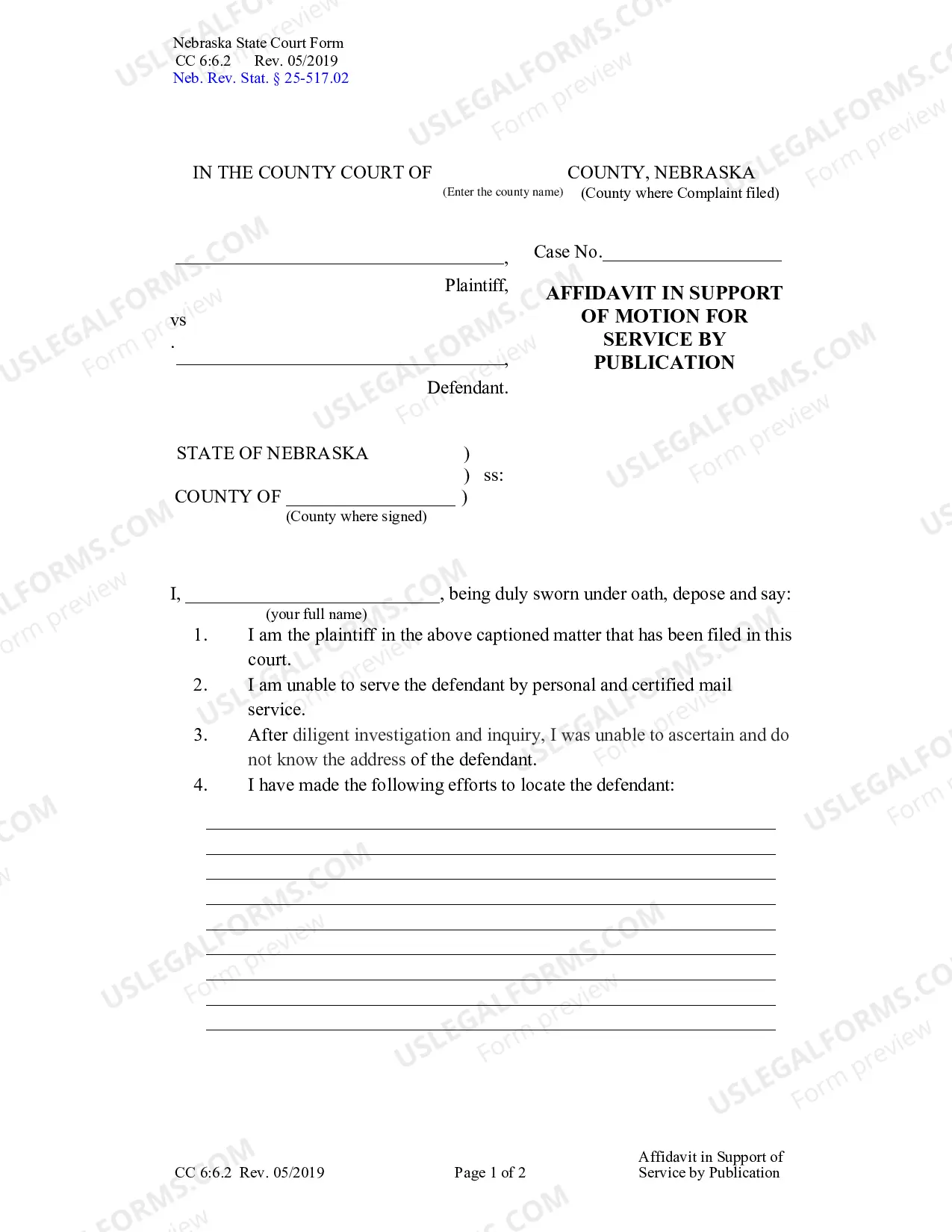
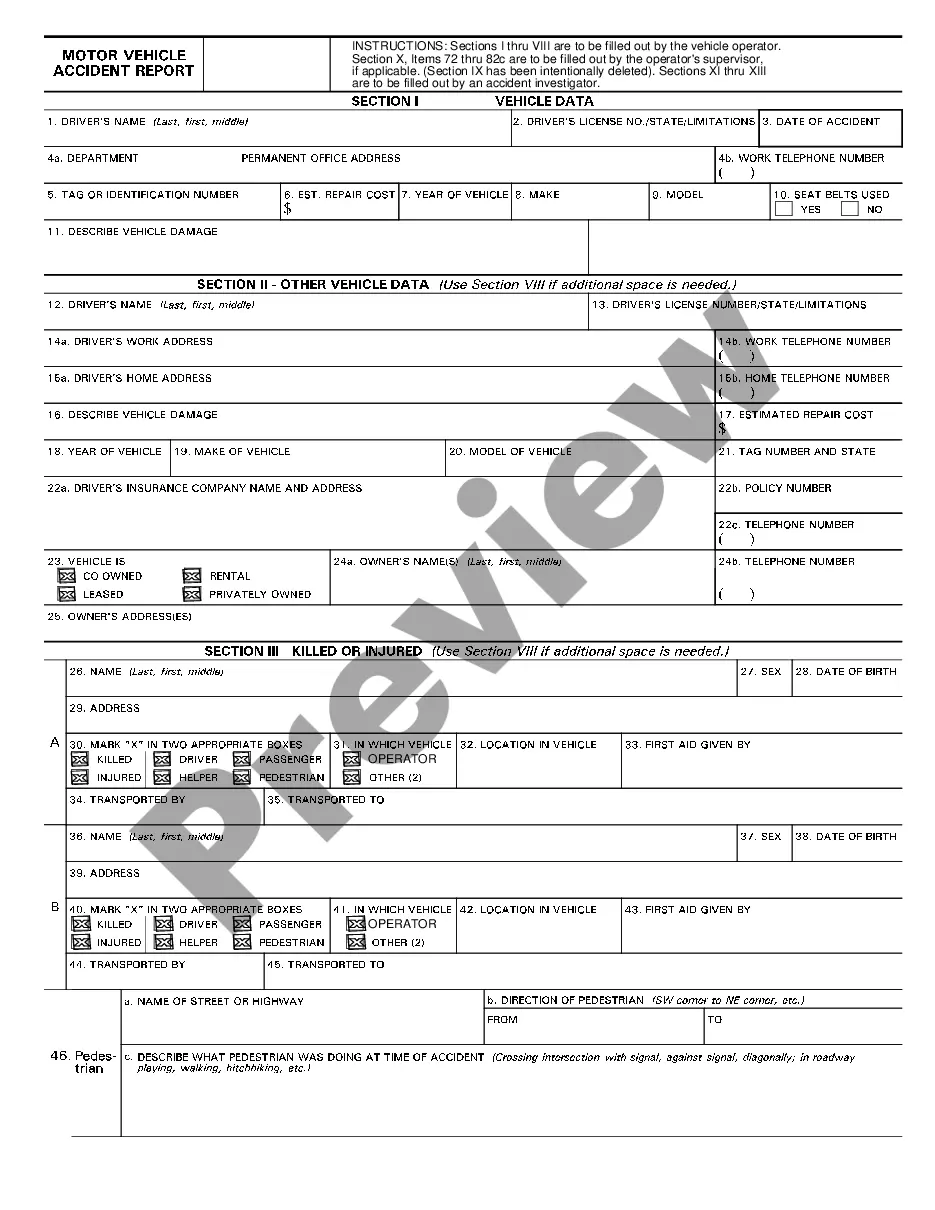
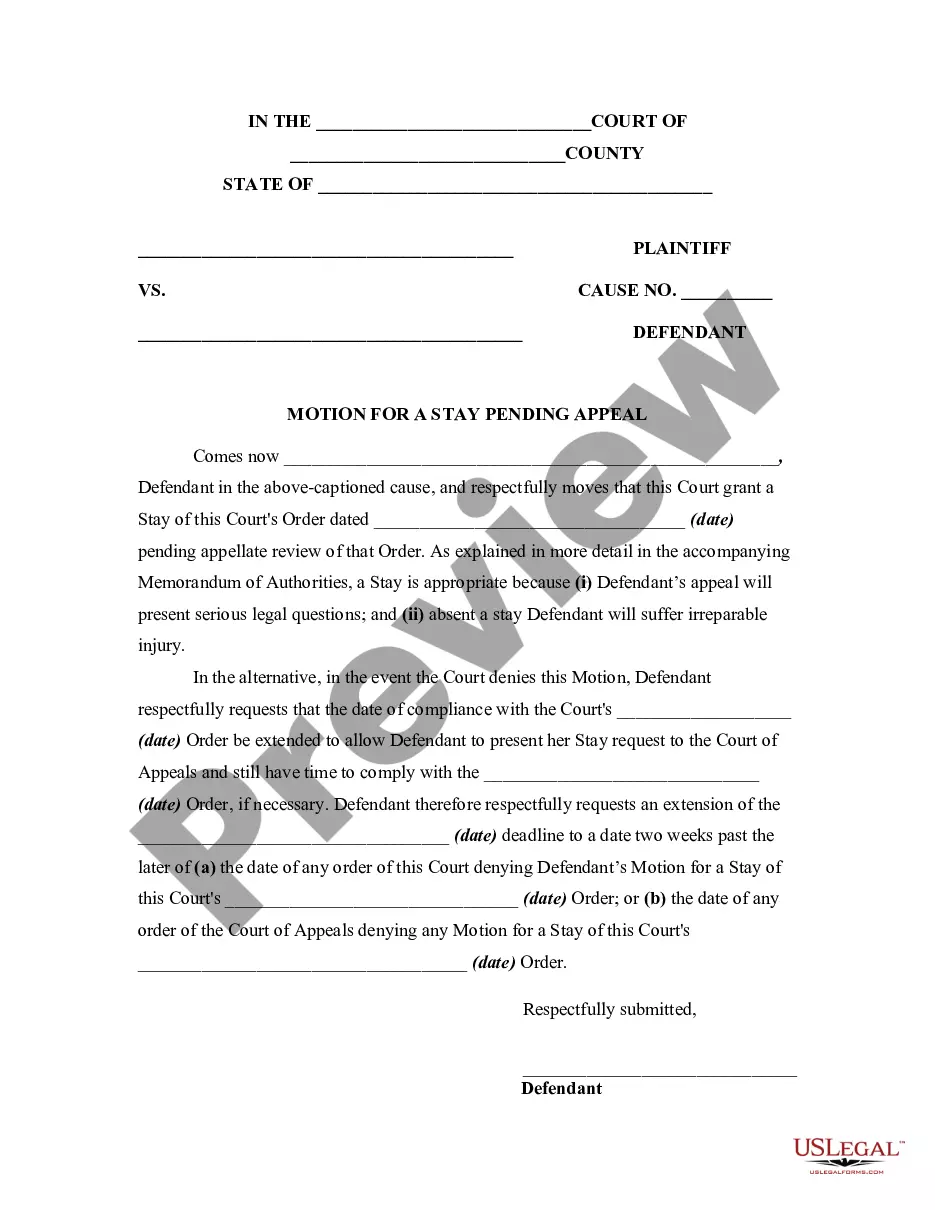
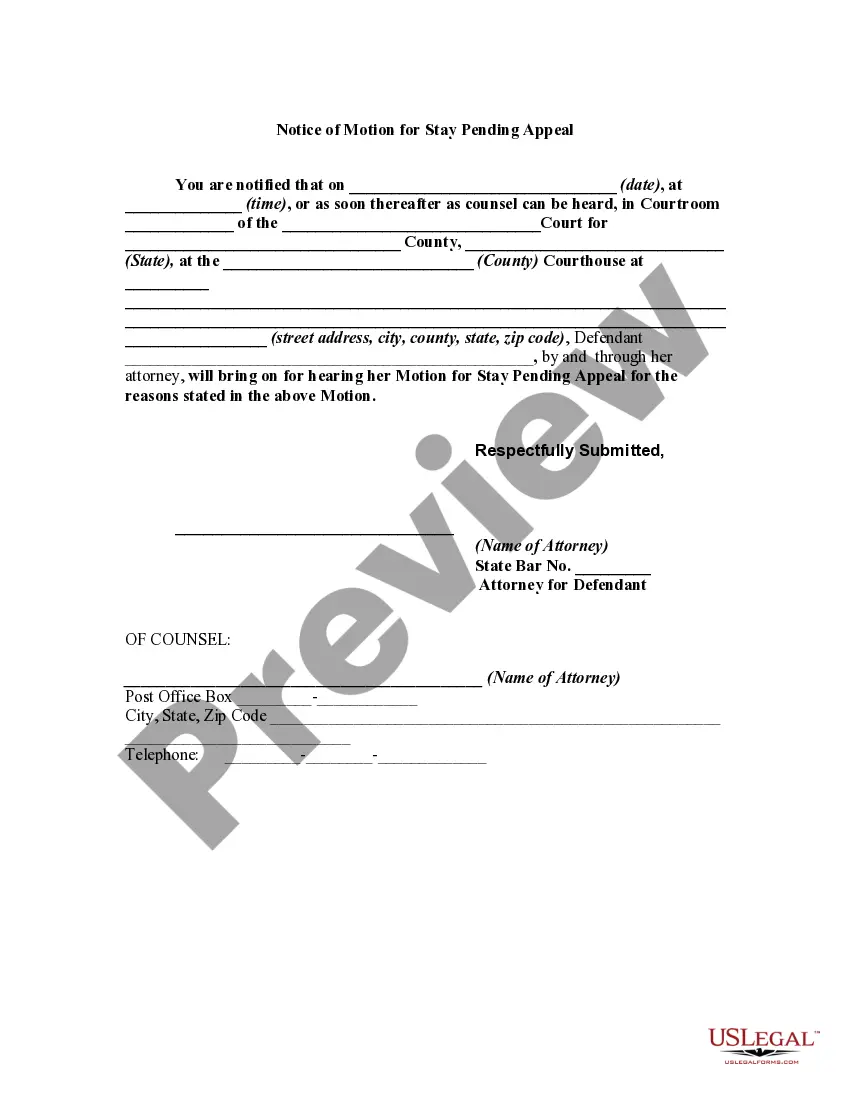
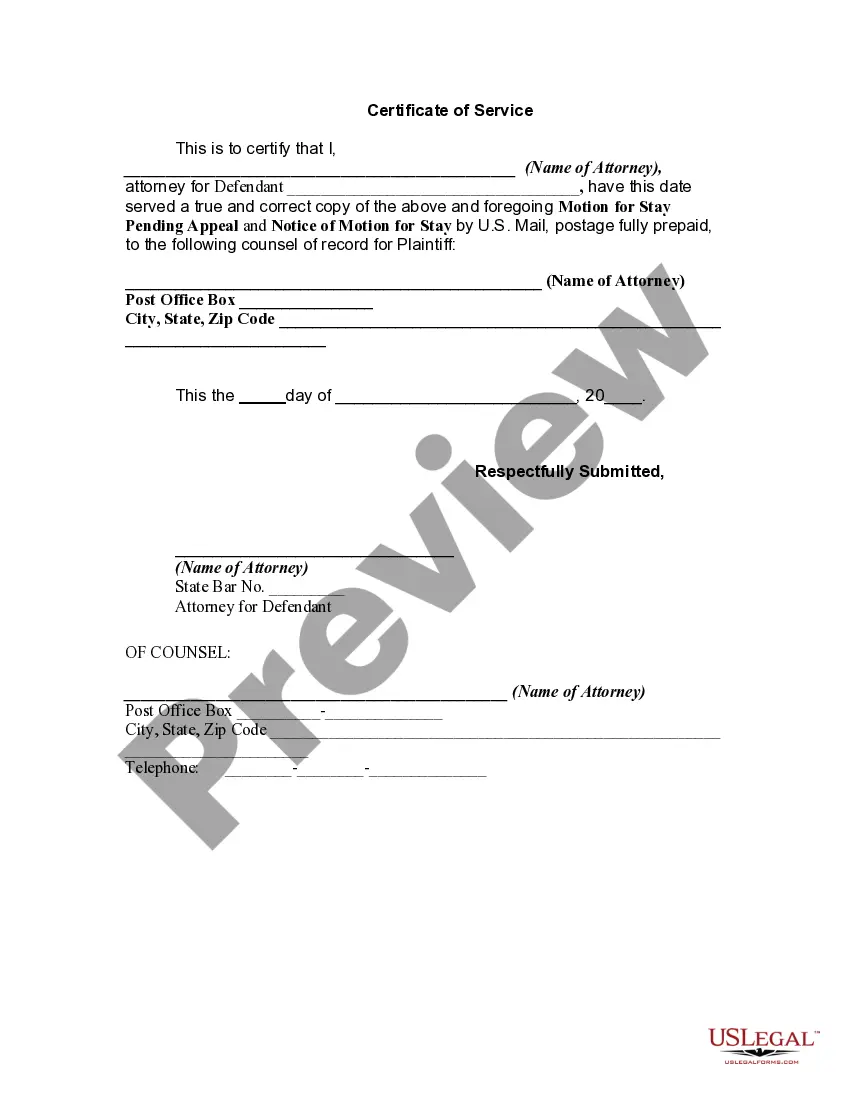
How to fill out Motion For Stay Pending Appeal And Notice Of Motion?
Managing legal documentation and processes can be a lengthy addition to the day.
Civil Appeal To Supreme Court and similar forms generally necessitate that you search for them and comprehend how to fill them out correctly.
Thus, whether you are handling monetary, legal, or personal issues, having an all-encompassing and accessible online archive of forms at your disposal will be extremely beneficial.
US Legal Forms is the leading online platform for legal templates, boasting over 85,000 state-specific forms and a range of tools to help you finish your documentation swiftly.
Is this your first time using US Legal Forms? Sign up and create an account in a few minutes, and you’ll gain access to the form library and Civil Appeal To Supreme Court. Then, follow the instructions outlined below to finalize your form.
- Explore the collection of relevant documents available to you with a single click.
- US Legal Forms provides state- and county-specific forms ready for download at any moment.
- Protect your document management processes by utilizing a premium service that enables you to create any form within minutes without additional or hidden fees.
- Simply Log In to your account, locate Civil Appeal To Supreme Court, and download it instantly from the My documents section.
- You can also access previously saved forms.
Form popularity
FAQ
Absolutely, civil cases can indeed reach the U.S. Supreme Court. However, important legal issues, significant implications, or controversies must be present to warrant such an appeal. If you are considering a civil appeal to the Supreme Court, utilizing a platform like USLegalForms can assist you in navigating the legal complexities involved.
Yes, you can appeal a civil case to the U.S. Supreme Court, but it requires a specific procedure. It is important to exhaust all lower court options, including state supreme courts, before submitting a civil appeal to the Supreme Court. Consulting with a legal expert can help clarify the procedure and increase your chances of success.
Direct appeals to the Supreme Court typically involve cases that have significant constitutional implications or where federal laws are at stake. Additionally, disputes between states often qualify for direct appeal. However, most civil cases require a civil appeal to the Supreme Court through the usual channels.
Yes, taking a case to the Supreme Court can be challenging. The court receives thousands of petitions each year, yet only hears a select number. Therefore, having a solid legal argument and a compelling reason for a civil appeal to the Supreme Court is vital.
Generally, cases that involve disputes between states, issues of national importance, or constitutional questions can go directly to the Supreme Court. These cases usually come from lower courts but can skip the appellate process if they meet certain criteria. It is essential to understand that most cases require a civil appeal to the Supreme Court to be heard.
Civil cases can indeed be appealed to the Supreme Court under specific conditions. After navigating through lower courts, parties involved in civil disputes may seek Supreme Court review if substantial legal questions arise. This process requires careful consideration and a thorough understanding of the implications involved. Engaging with the US Legal Forms platform can provide essential resources for those exploring a civil appeal to the Supreme Court.
Yes, the US Supreme Court does hear civil cases, among other types. However, not all civil cases receive attention, as the Court selects cases that address significant issues affecting the law or society. Therefore, understanding the criteria for selection is vital. For anyone pursuing a civil appeal to the Supreme Court, ensuring your case meets these critical benchmarks is essential.
The US Supreme Court can hear cases that involve federal law, constitutional issues, and disputes between states. This includes cases that have significant legal implications or when lower courts have reached different conclusions on important matters. Additionally, cases that raise questions about constitutional rights often catch the Court's attention. Knowing the types of cases that qualify can help you prepare if you're considering a civil appeal to the Supreme Court.
You can appeal a civil case to the US Supreme Court, subject to specific requirements. Generally, you must first go through lower courts and exhaust all other legal options before asking the Supreme Court to review your case. The Court grants a limited number of appeals, primarily focusing on cases that have broader implications. It's wise to partner with a knowledgeable attorney for guidance in a civil appeal to the Supreme Court.
Yes, a civil case can go to the Supreme Court under certain circumstances. Typically, cases that involve significant legal questions, such as those affecting civil rights or federal regulations, may rise to this level. The Supreme Court’s role is to resolve these important issues and ensure uniform interpretation of law across the country. If you're dealing with a civil case, knowing how it can potentially reach this high court is crucial.