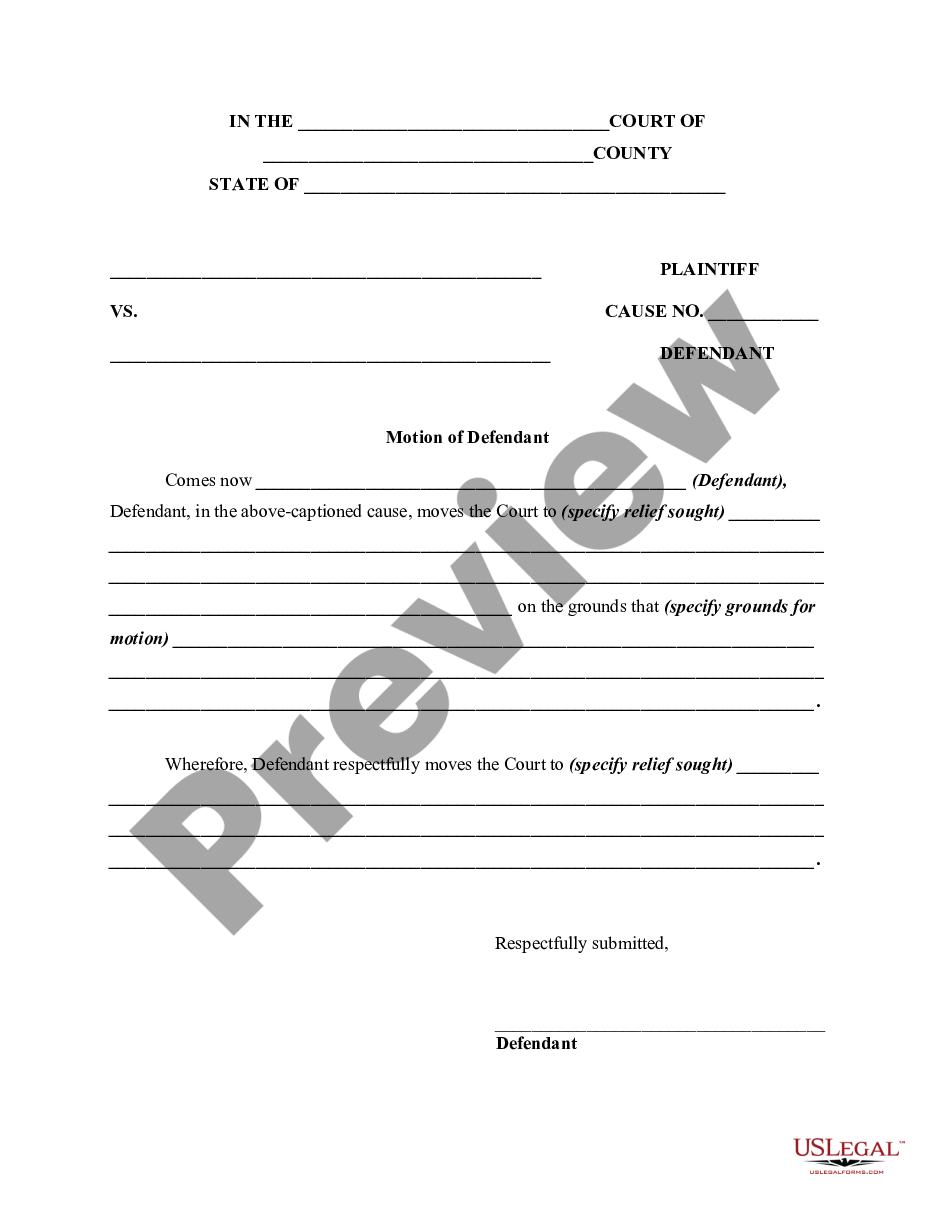
Defendant Motion To Dismiss Template
Description

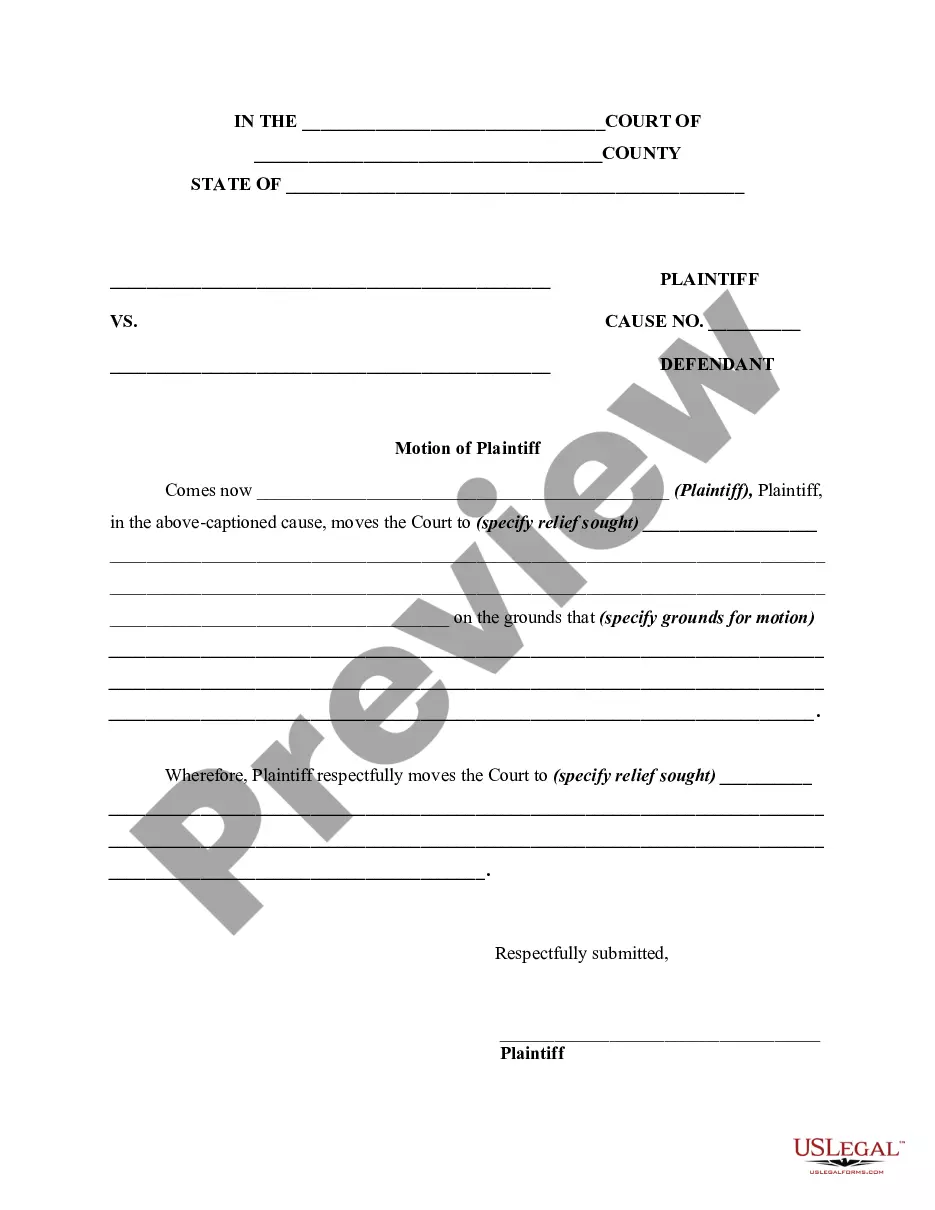

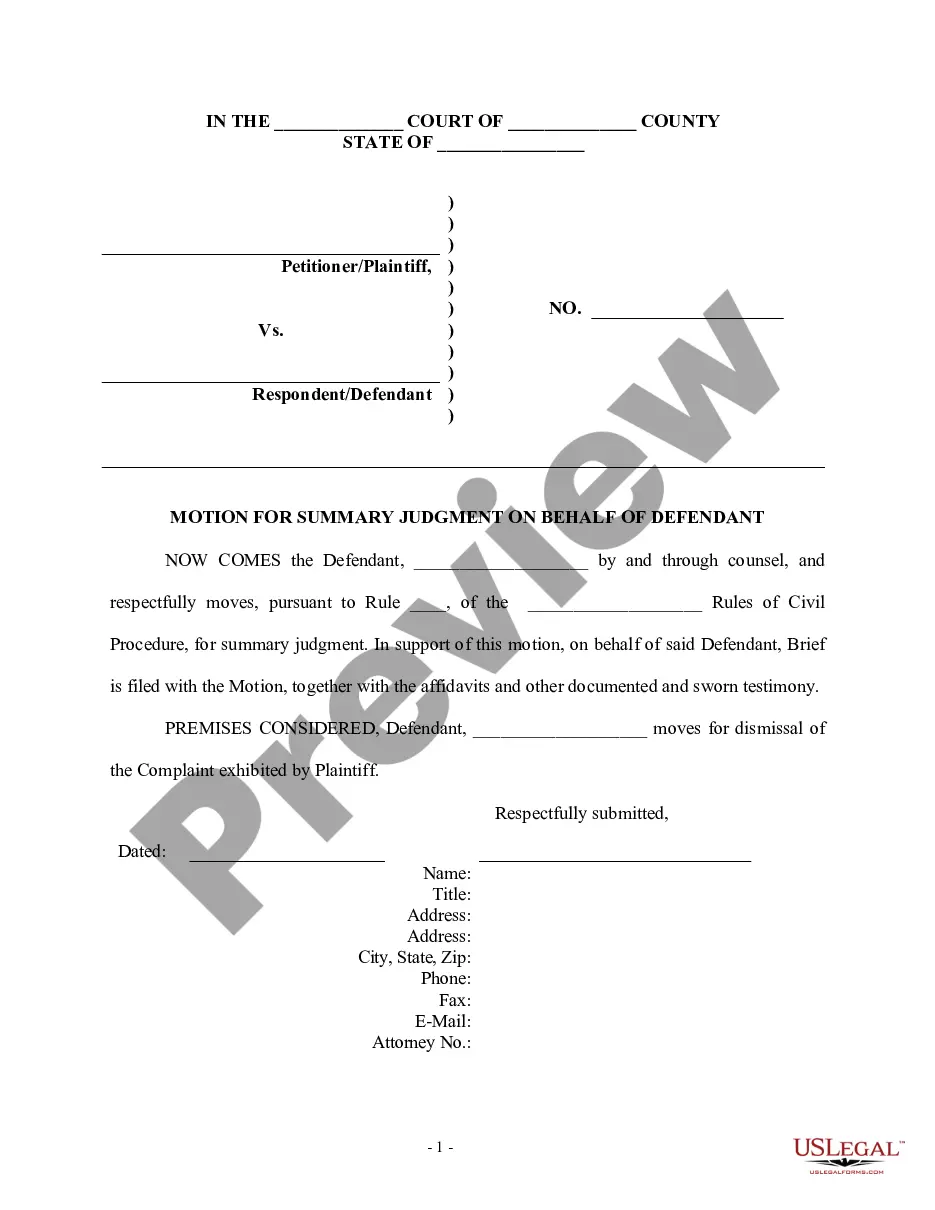
Get your form ready online
Our built-in tools help you complete, sign, share, and store your documents in one place.
Make edits, fill in missing information, and update formatting in US Legal Forms—just like you would in MS Word.
Download a copy, print it, send it by email, or mail it via USPS—whatever works best for your next step.
Sign and collect signatures with our SignNow integration. Send to multiple recipients, set reminders, and more. Go Premium to unlock E-Sign.
If this form requires notarization, complete it online through a secure video call—no need to meet a notary in person or wait for an appointment.
We protect your documents and personal data by following strict security and privacy standards.

Make edits, fill in missing information, and update formatting in US Legal Forms—just like you would in MS Word.

Download a copy, print it, send it by email, or mail it via USPS—whatever works best for your next step.

Sign and collect signatures with our SignNow integration. Send to multiple recipients, set reminders, and more. Go Premium to unlock E-Sign.

If this form requires notarization, complete it online through a secure video call—no need to meet a notary in person or wait for an appointment.

We protect your documents and personal data by following strict security and privacy standards.
Looking for another form?









Form popularity
FAQ
Filing a motion to dismiss in Indiana involves drafting the motion and including the necessary attachments. After preparing the documents, you must file them with the court's clerk and serve copies to all involved parties. Following the specific rules and timelines set by Indiana courts is essential. A defendant motion to dismiss template can simplify this process by guiding you through each required step.
A 41-e dismissal in Indiana refers to a specific type of dismissal where a case is dismissed without prejudice, allowing the plaintiff to refile in the future. This dismissal is usually granted when the plaintiff fails to comply with a court order. Understanding this dismissal type can be beneficial for defendants facing pending lawsuits. Accessing a defendant motion to dismiss template can help navigate these legal terms.
To file a motion to dismiss in Indiana, you need to prepare the motion detailing your arguments. It's important to include a supporting memorandum and file it with the court. Additionally, you must serve all parties involved in the case with a copy of your motion. A defendant motion to dismiss template can provide the structure and content you need to ensure a proper filing.
In Indiana, common grounds for dismissal include lack of subject matter jurisdiction, failure to state a claim, and improper service of process. These reasons provide a basis for defendants to argue against the legitimacy of the claims. Understanding the grounds for dismissal can significantly strengthen your position. Utilizing a defendant motion to dismiss template can clarify these points.
In Indiana, a defendant has 30 days to respond to a motion to dismiss after it has been served. This timeline is crucial to ensure that all parties adhere to court regulations. Failing to respond within this period may result in the court considering the motion unopposed. Using a defendant motion to dismiss template can help streamline your response.
