Dynasty Trusts With The United States
Description




Get your form ready online
Our built-in tools help you complete, sign, share, and store your documents in one place.
Make edits, fill in missing information, and update formatting in US Legal Forms—just like you would in MS Word.
Download a copy, print it, send it by email, or mail it via USPS—whatever works best for your next step.
Sign and collect signatures with our SignNow integration. Send to multiple recipients, set reminders, and more. Go Premium to unlock E-Sign.
If this form requires notarization, complete it online through a secure video call—no need to meet a notary in person or wait for an appointment.
We protect your documents and personal data by following strict security and privacy standards.

Make edits, fill in missing information, and update formatting in US Legal Forms—just like you would in MS Word.

Download a copy, print it, send it by email, or mail it via USPS—whatever works best for your next step.

Sign and collect signatures with our SignNow integration. Send to multiple recipients, set reminders, and more. Go Premium to unlock E-Sign.

If this form requires notarization, complete it online through a secure video call—no need to meet a notary in person or wait for an appointment.

We protect your documents and personal data by following strict security and privacy standards.
Looking for another form?



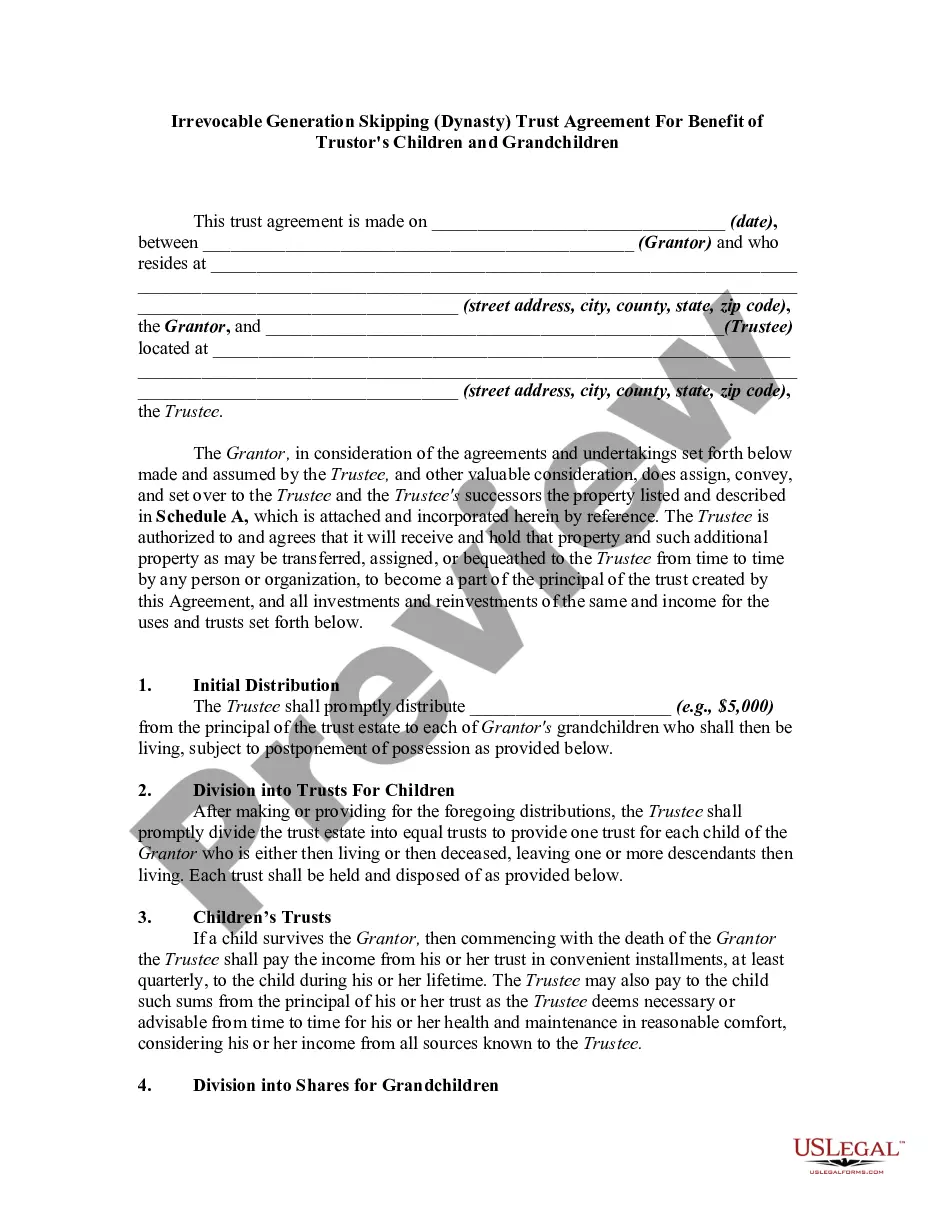
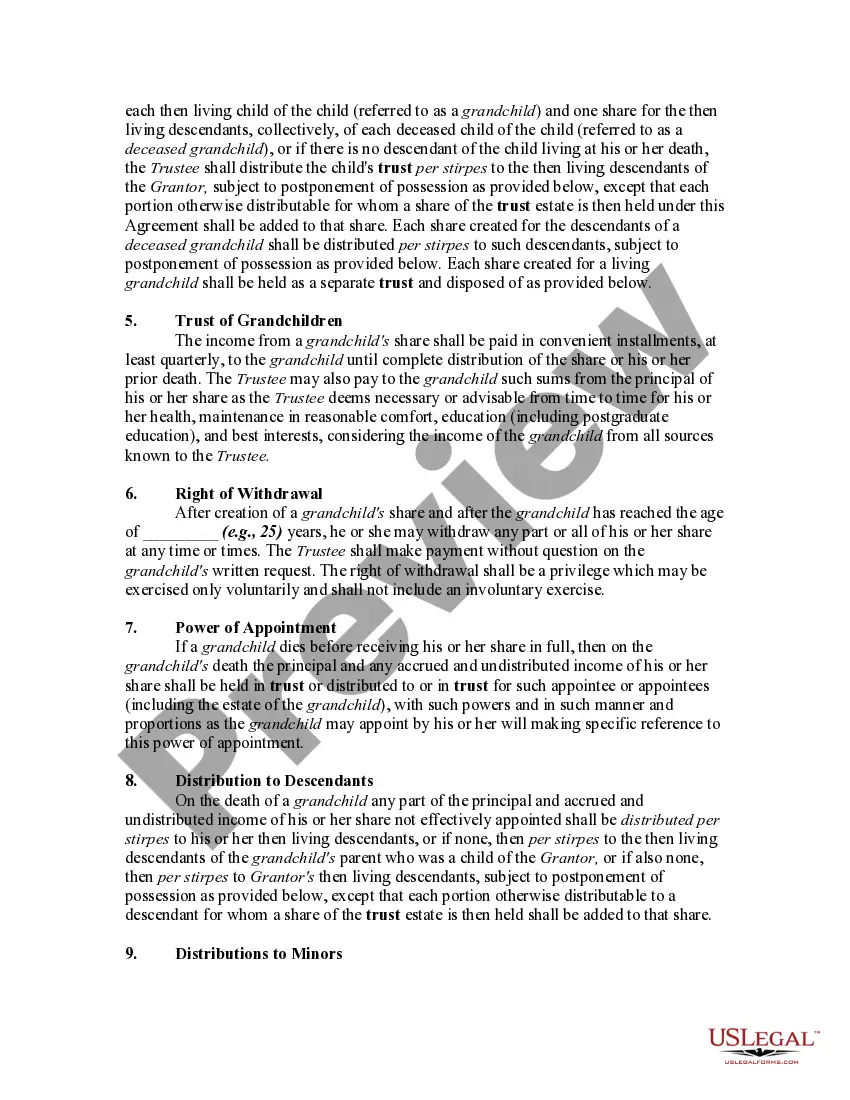
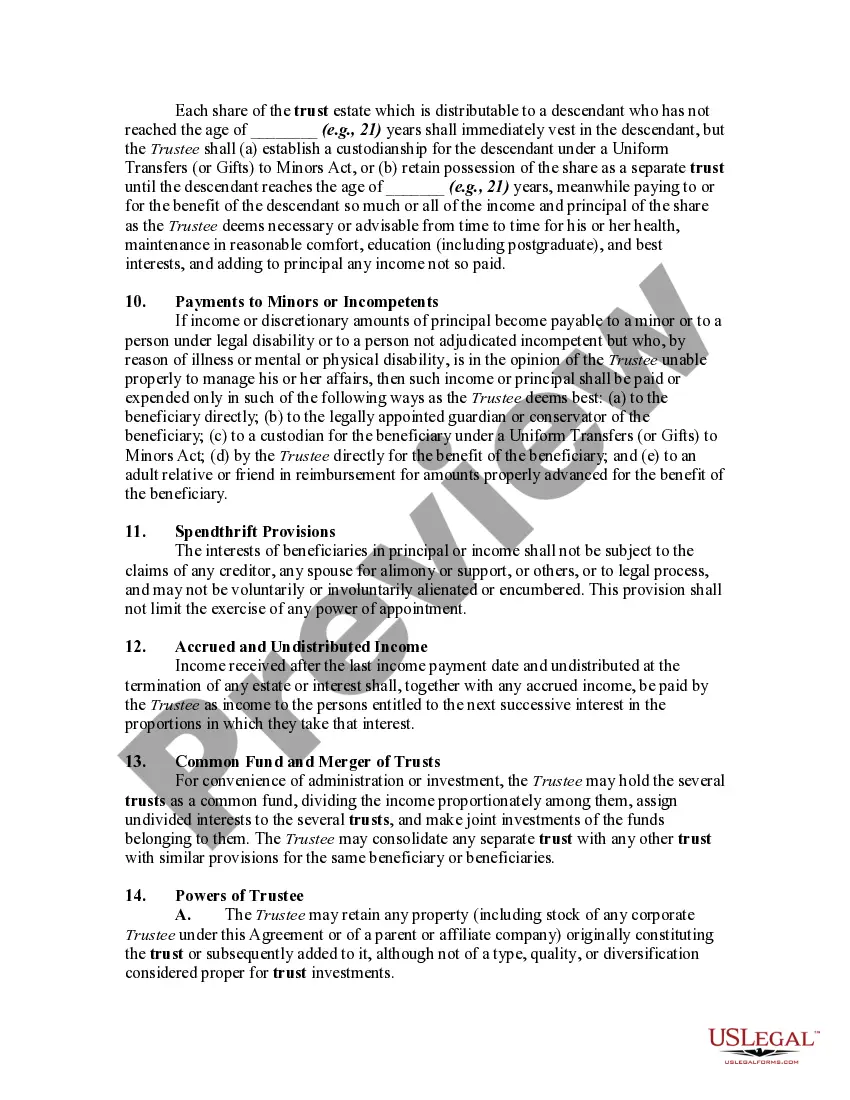
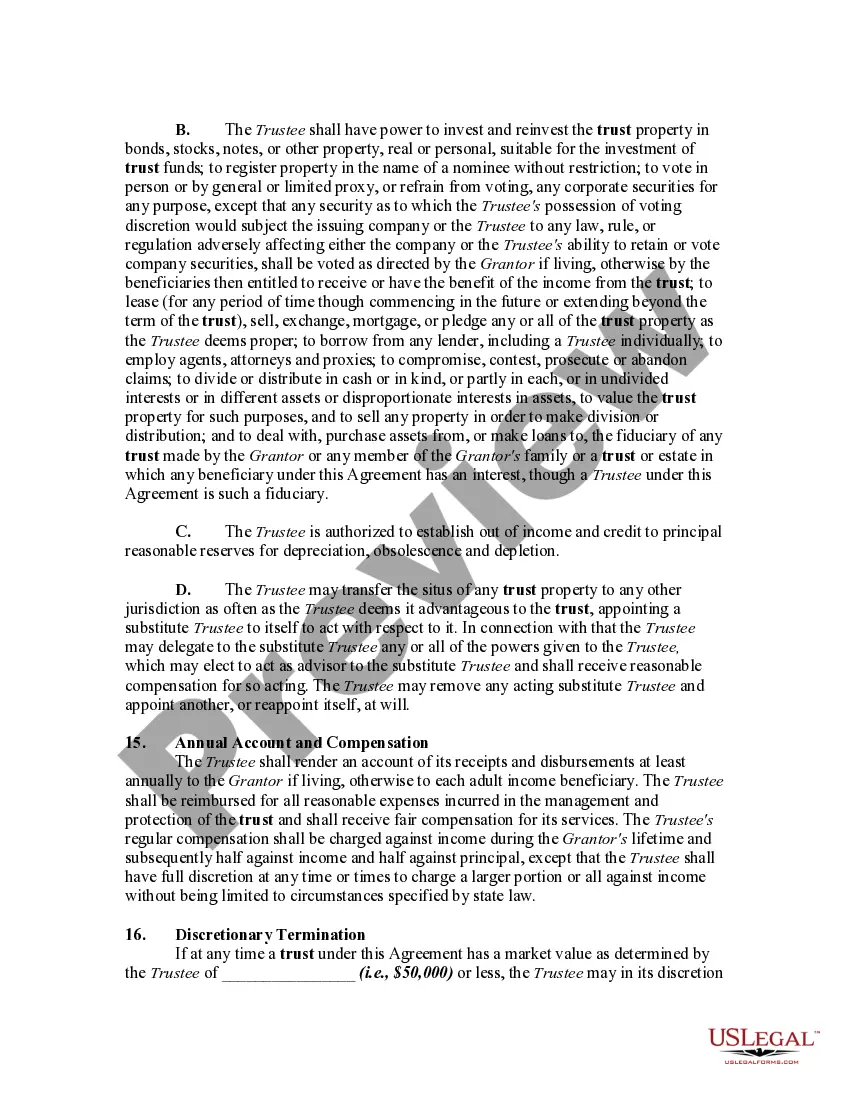
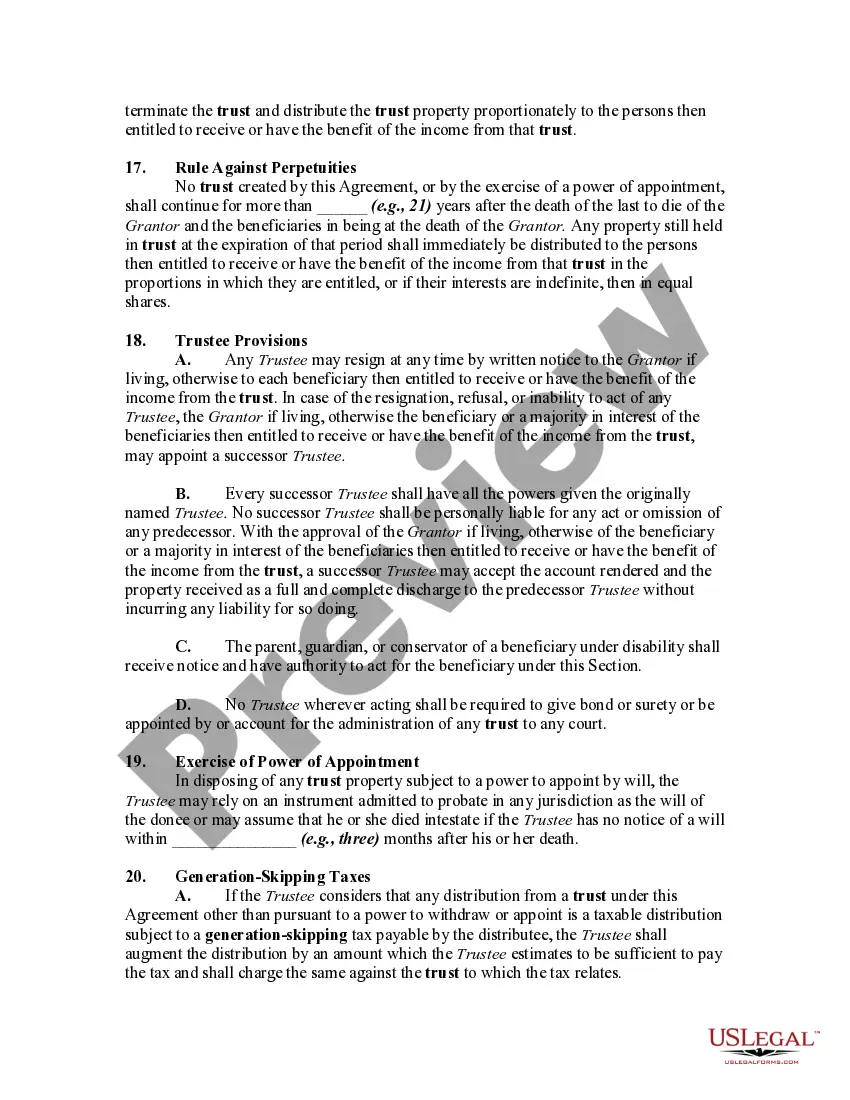
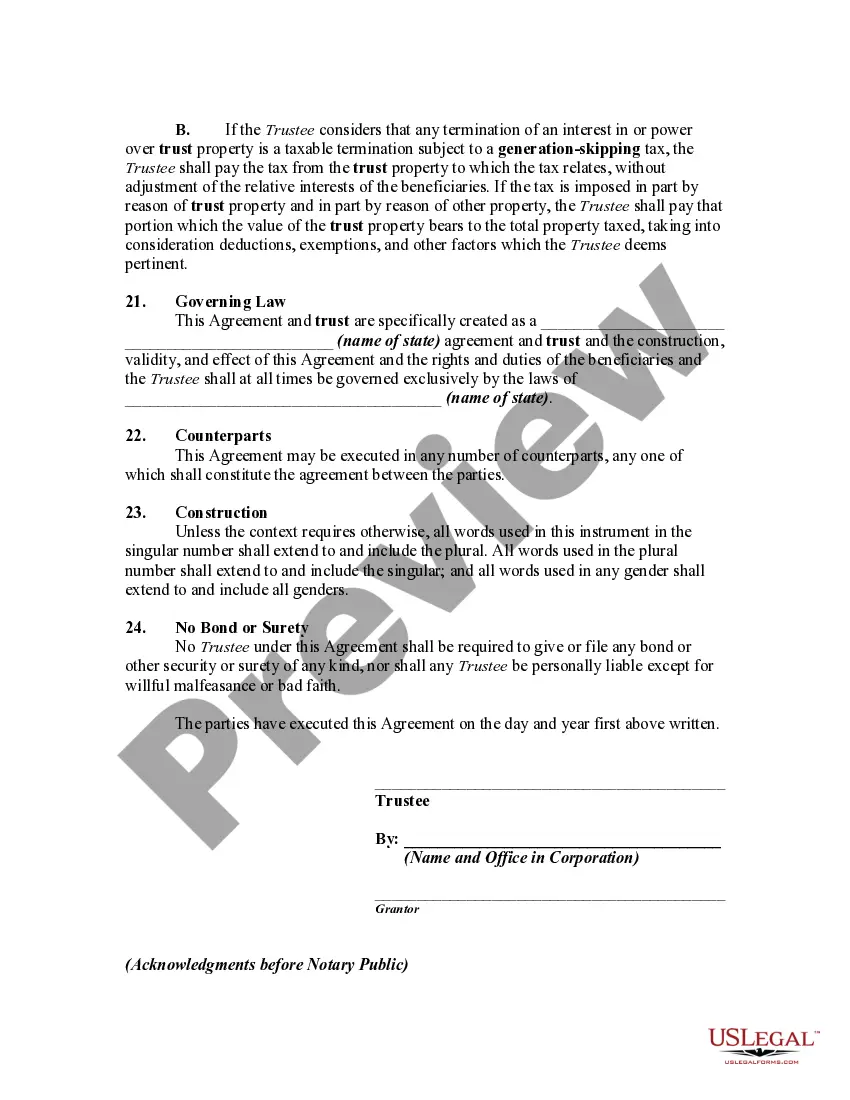
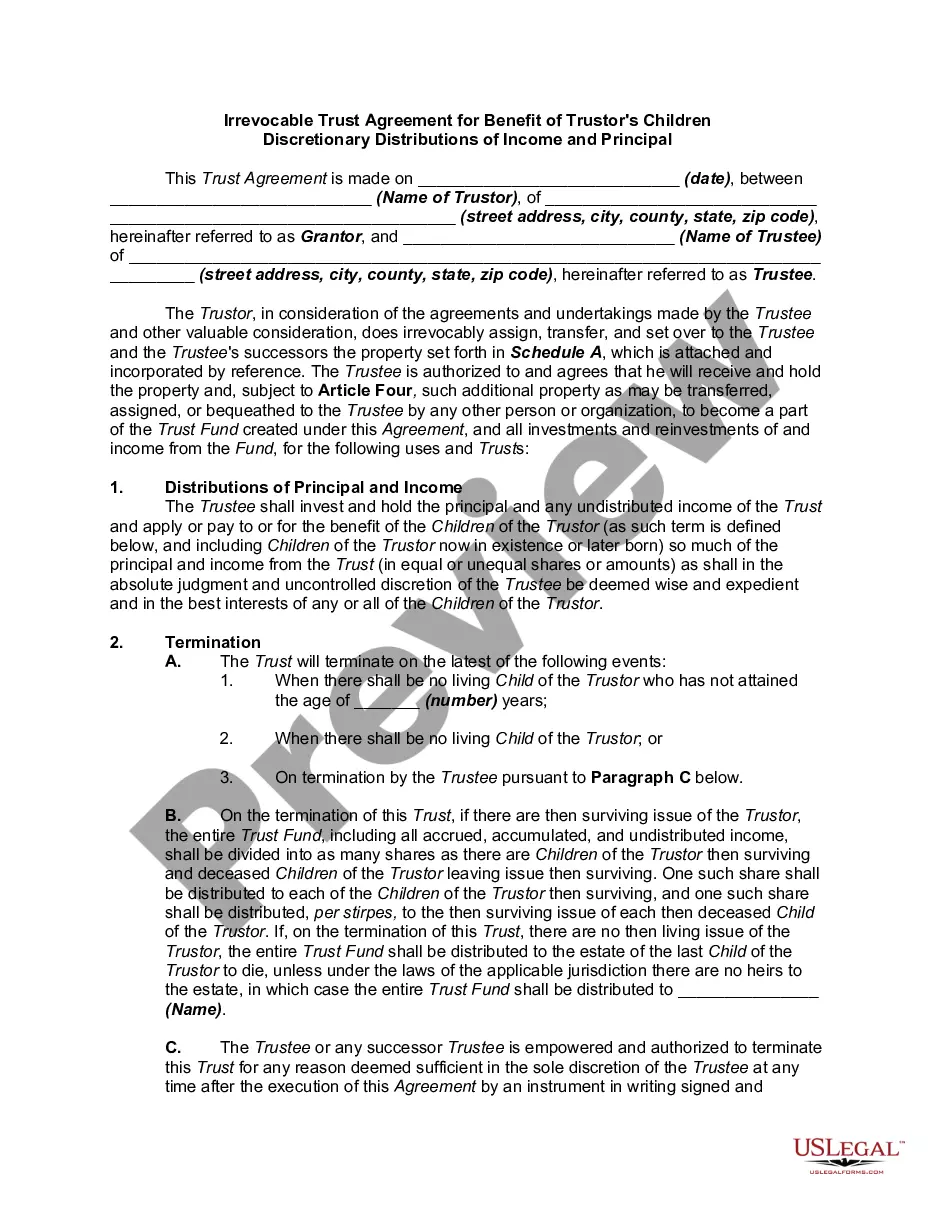
How to fill out Irrevocable Generation Skipping Or Dynasty Trust Agreement For Benefit Of Trustor's Children And Grandchildren?
- If you are a returning user, log in to your account to access your desired form template. Ensure your subscription is active; if it has expired, renew it based on your chosen payment plan.
- For first-time users, preview the form description to verify that you have selected the right document that matches your requirements and complies with local jurisdiction regulations.
- In case you need another template, utilize the search feature above to find a more suitable option that aligns with your needs.
- Purchase the required document by clicking the Buy Now button and selecting a subscription plan that fits your preferences. Registration is mandatory to access the extensive library.
- Complete your transaction by entering your credit card details or utilizing your PayPal account to pay for the subscription.
- Once your purchase is complete, download the form and save it to your device. You can also find it later in the My Forms section of your profile.
US Legal Forms equips users with over 85,000 fillable legal templates, which makes attaining accurate and compliant documentation straightforward.
Start your journey with US Legal Forms today, and ensure your estate is protected with the right tools at your fingertips.
Form popularity
FAQ
States such as South Dakota, Nevada, and Wyoming are often considered the best for establishing dynasty trusts due to their favorable trust laws. These states allow for longer duration without taxing the trust and offer strong asset protection features. If you're interested in exploring the benefits of dynasty trusts with the United States, considering these states could greatly enhance your estate planning strategy.
Not all states allow for the establishment of dynasty trusts. Some states, like South Dakota and Nevada, embrace laws that permit these long-lasting trusts, while others impose restrictions or have expiration limits. When planning your estate, exploring the opportunities with dynasty trusts with the United States is crucial to ensure compliance with local laws.
Typically, the grantor of the dynasty trust maintains certain tax responsibilities during their lifetime. After the grantor passes, beneficiaries may incur taxes on distributions received from the trust. It's important to consult with a tax advisor familiar with dynasty trusts with the United States to understand specific tax implications for your situation.
While dynasty trusts can provide long-term asset protection and tax benefits, they also have disadvantages. One main concern is the potential complexity in administration, as these trusts can be cumbersome to manage over generations. Additionally, some states may impose regulations limiting the length of trust duration, which could impact estate planning strategies. Therefore, understanding the nuances of dynasty trusts with the United States is essential before establishing one.
A dynasty trust can last for multiple generations, depending on state law. In some states, there is no set time limit, allowing the trust to continue until the assets benefit the intended heirs fully. This long duration helps maintain family wealth while providing continuous support to beneficiaries. To understand the specifics further, consulting with a legal expert is advisable.
While dynasty trusts offer many advantages, they also come with challenges. One concern is the complexity of managing these trusts over generations, which can lead to misunderstandings among beneficiaries. Additionally, there may be tax implications or regulatory changes that could affect trust operations. Using a reliable platform like uslegalforms can help you navigate these complexities effectively.
Structuring a dynasty trust with the United States involves several key steps. First, define your objectives and consider the beneficiaries' needs. Next, work with a qualified attorney to draft the trust document to ensure compliance with state laws. Finally, fund the trust appropriately to ensure it meets your long-term financial goals.
Indeed, dynasty trusts are legal in the United States, provided they comply with state laws. These trusts serve as a powerful tool for wealth preservation and can last for multiple generations. They enable individuals to pass down wealth while minimizing tax liabilities. If you're considering setting one up, be sure to consult a knowledgeable attorney.
Yes, dynasty trusts with the United States are still legal and widely used. They offer incredible benefits, such as minimizing estate taxes and preserving wealth for future generations. Many states have updated their laws to support these trusts, making them a viable option for long-term financial planning. It's crucial to consult with a legal expert to navigate state-specific regulations.
When considering dynasty trusts with the United States, a few states stand out. South Dakota, Nevada, and Delaware are often regarded as the best options due to their favorable laws. These states allow for longer trust durations and provide strong asset protection benefits. Additionally, they have established legal frameworks that support dynasty trusts effectively.