Motion To Dispense With Mediation
Description
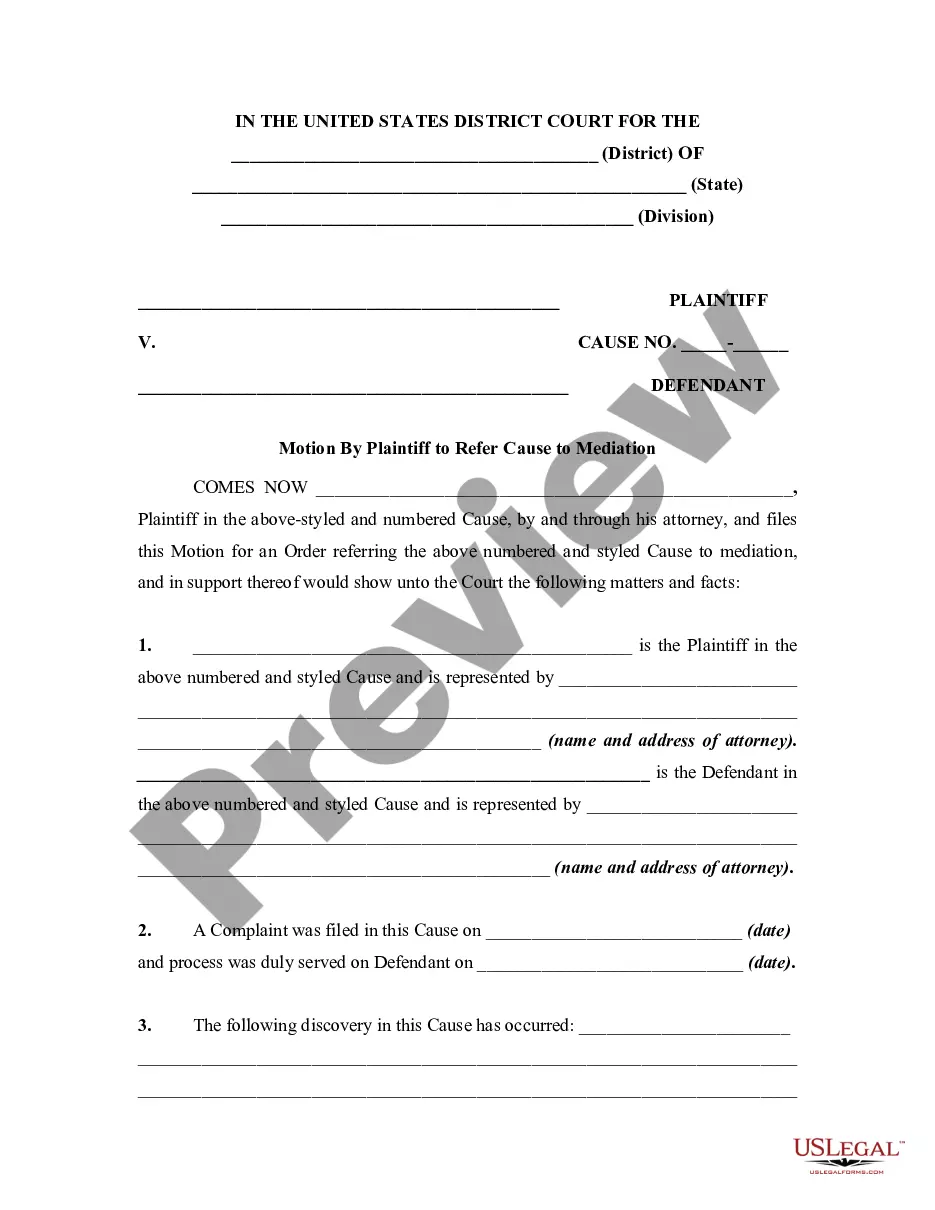
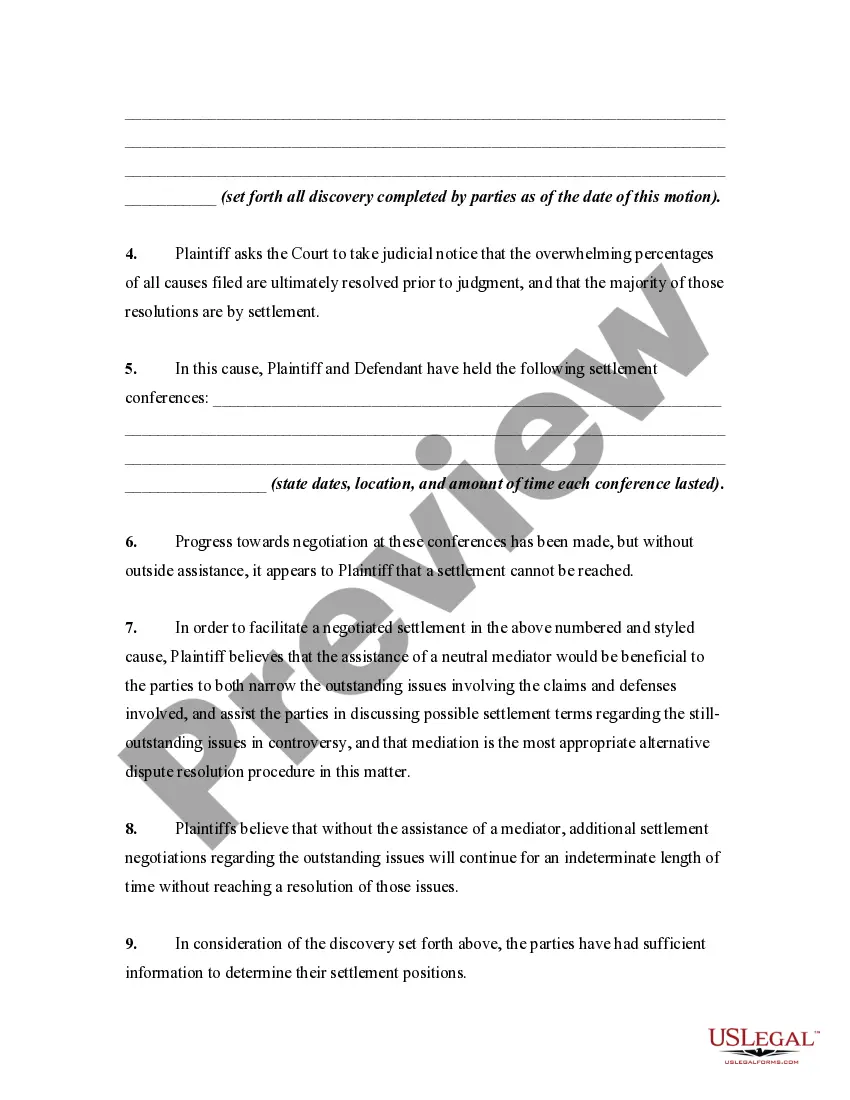
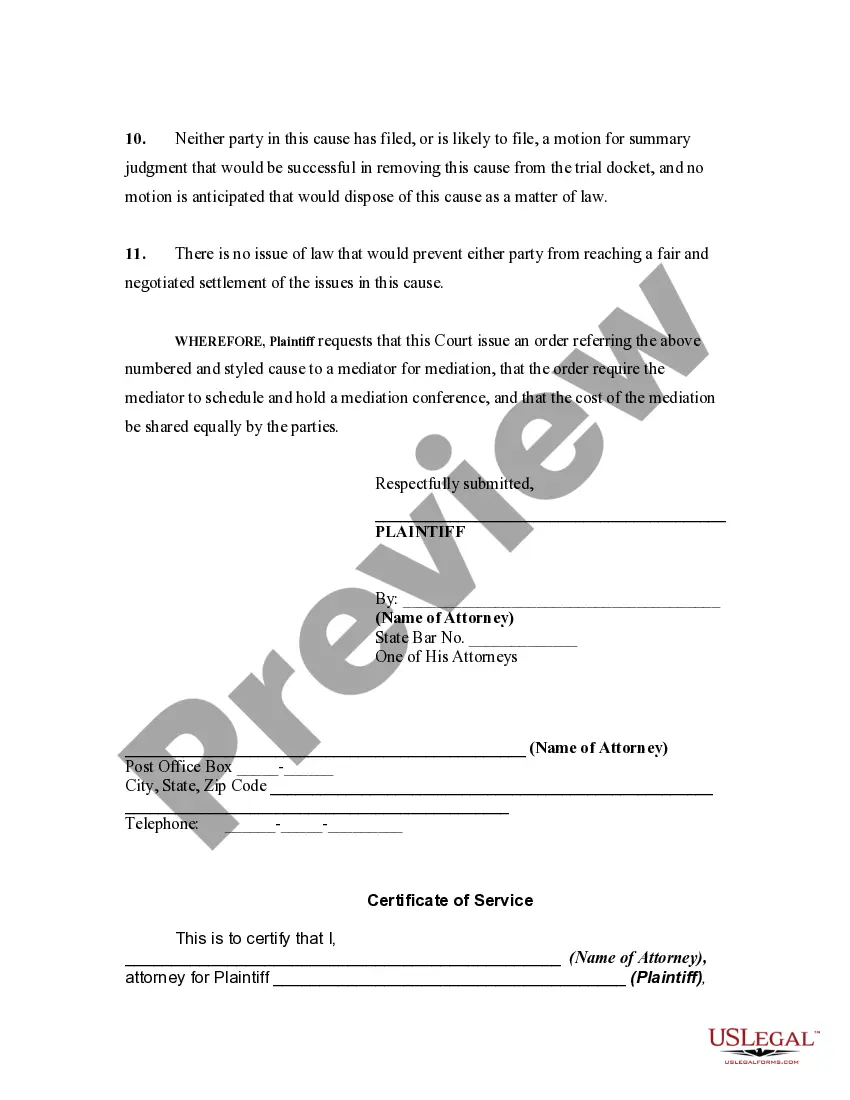
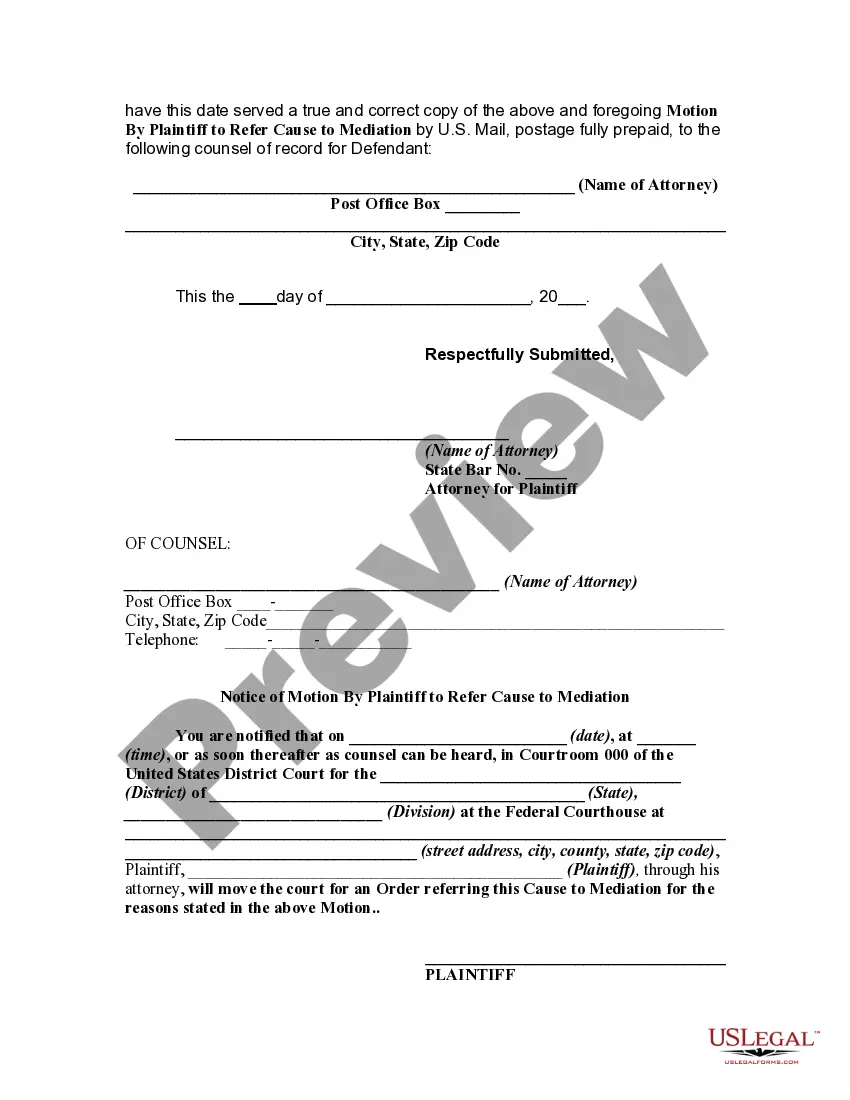

Get your form ready online
Our built-in tools help you complete, sign, share, and store your documents in one place.
Make edits, fill in missing information, and update formatting in US Legal Forms—just like you would in MS Word.
Download a copy, print it, send it by email, or mail it via USPS—whatever works best for your next step.
Sign and collect signatures with our SignNow integration. Send to multiple recipients, set reminders, and more. Go Premium to unlock E-Sign.
If this form requires notarization, complete it online through a secure video call—no need to meet a notary in person or wait for an appointment.
We protect your documents and personal data by following strict security and privacy standards.

Make edits, fill in missing information, and update formatting in US Legal Forms—just like you would in MS Word.

Download a copy, print it, send it by email, or mail it via USPS—whatever works best for your next step.

Sign and collect signatures with our SignNow integration. Send to multiple recipients, set reminders, and more. Go Premium to unlock E-Sign.

If this form requires notarization, complete it online through a secure video call—no need to meet a notary in person or wait for an appointment.

We protect your documents and personal data by following strict security and privacy standards.
Looking for another form?
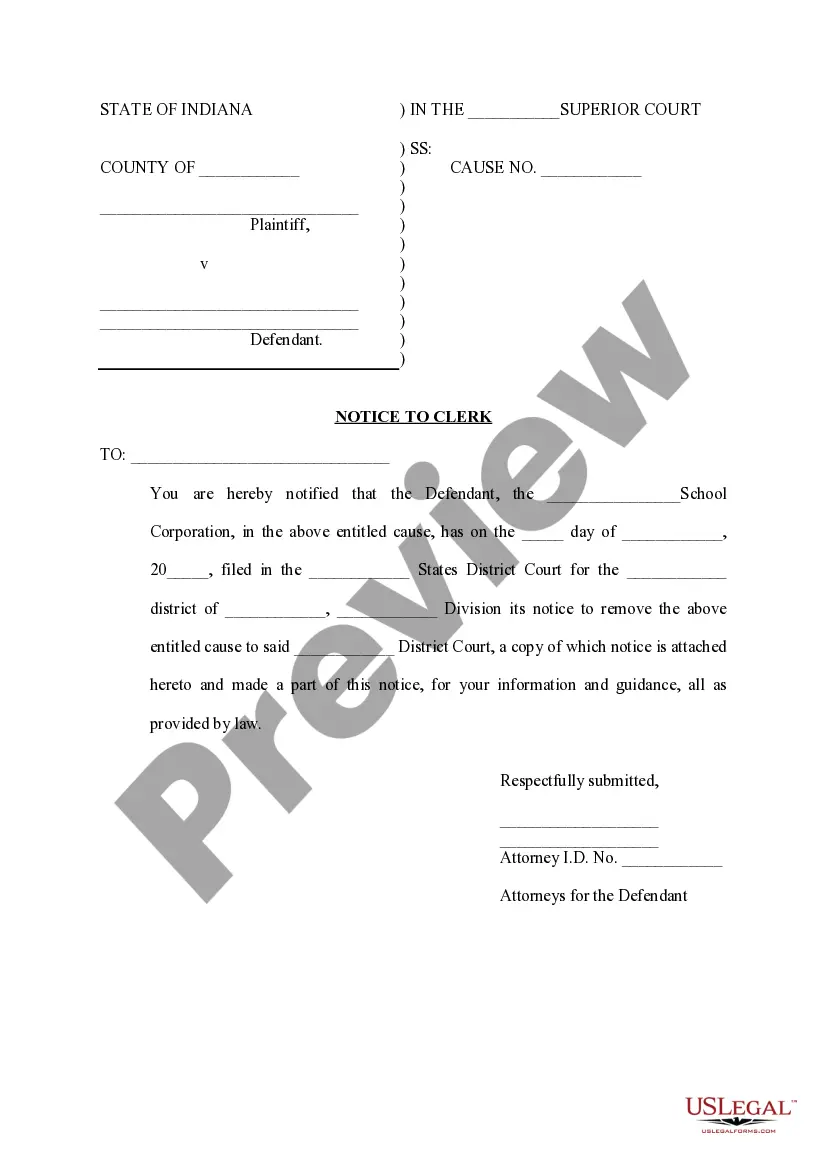







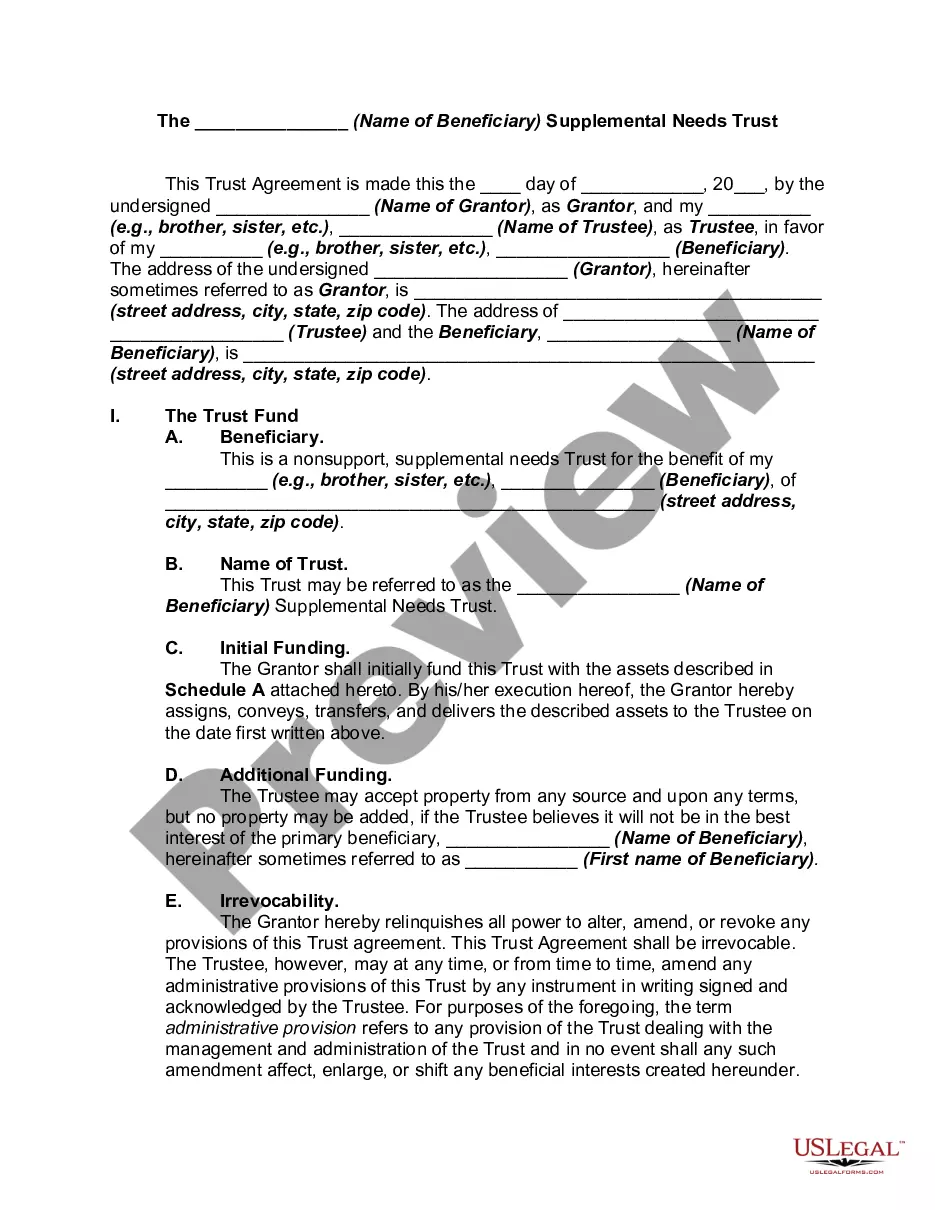

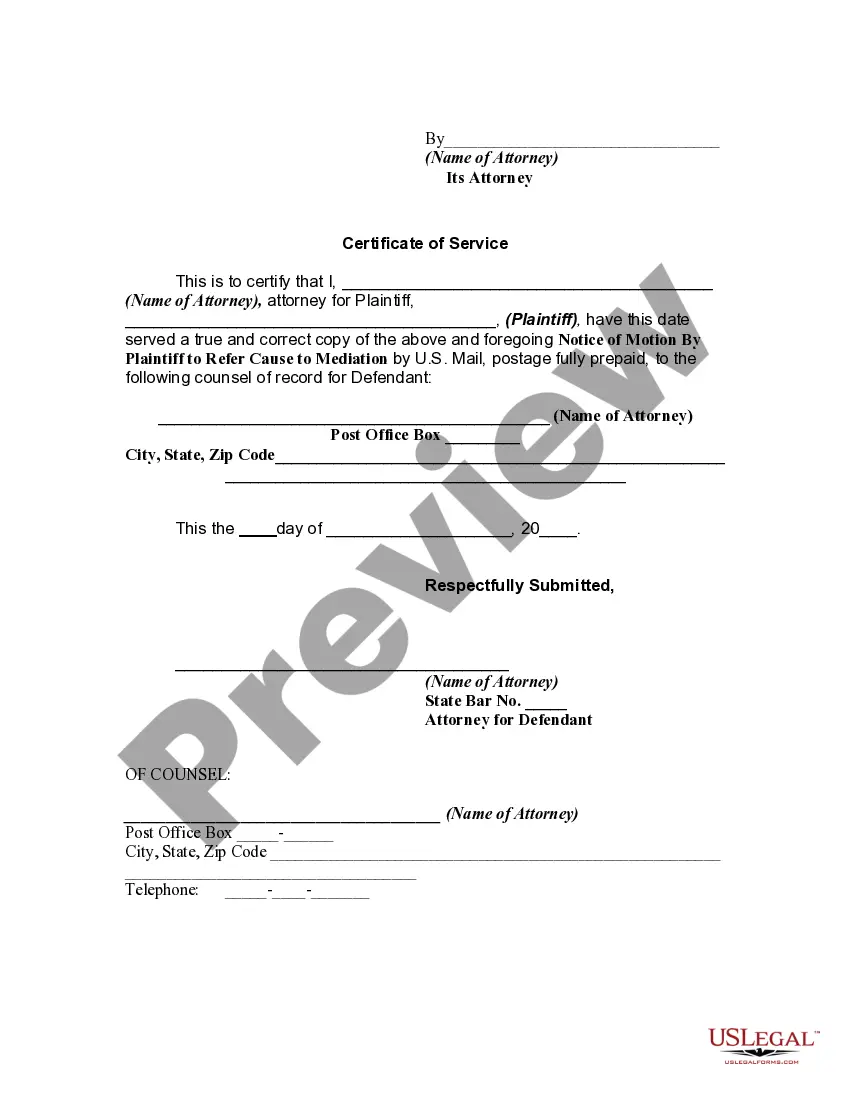
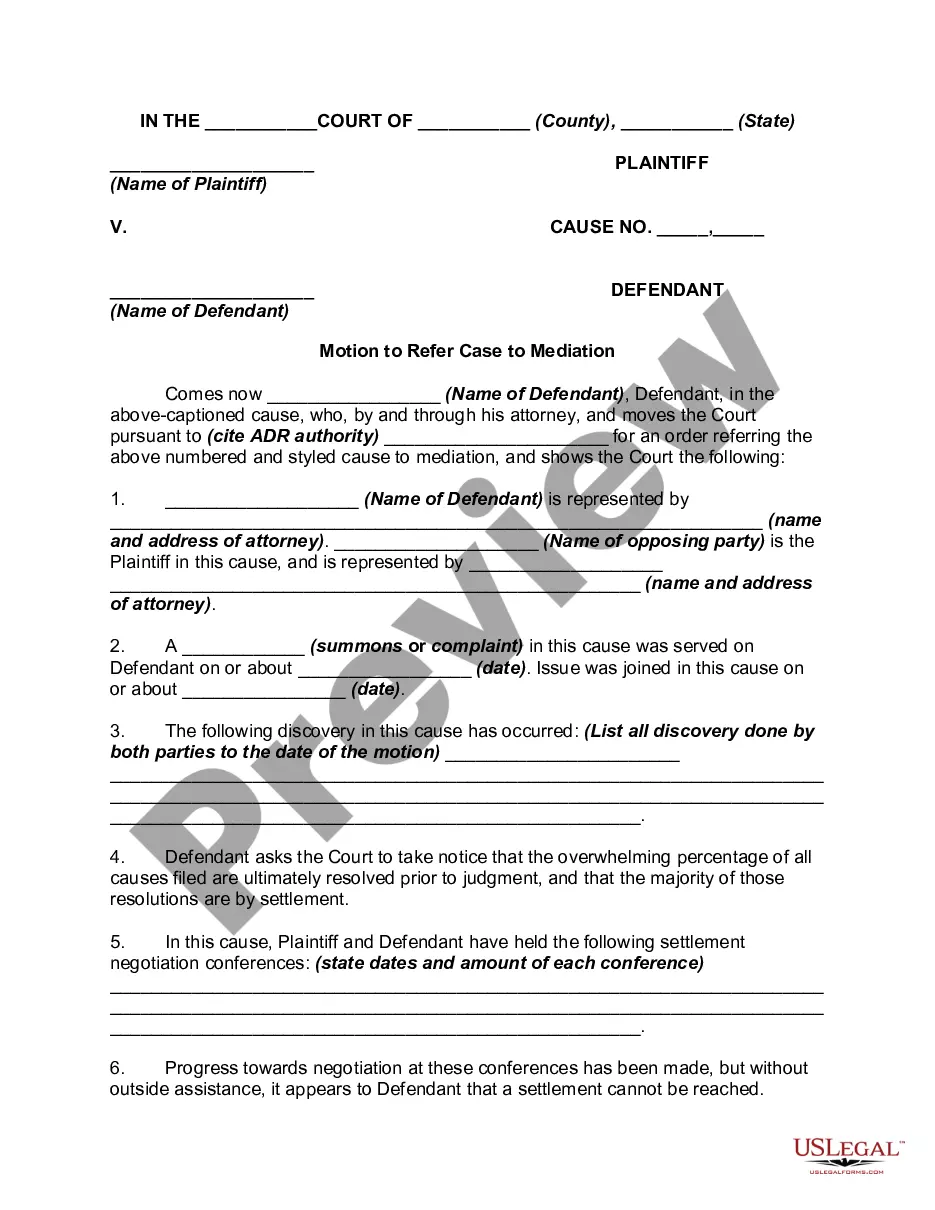
How to fill out Motion By Plaintiff To Refer Cause To Mediation?
It’s clear that you cannot instantly become a legal expert, nor can you comprehend how to swiftly create a Motion To Dispense With Mediation without possessing a specific skill set.
Assembling legal documents is a lengthy endeavor that necessitates certain training and expertise. So why not entrust the preparation of the Motion To Dispense With Mediation to qualified professionals.
With US Legal Forms, one of the most extensive libraries of legal templates, you can locate everything from court documents to templates for office correspondence.
If you need a different form, start your search afresh.
Create a complimentary account and select a subscription plan to buy the form. Click Buy now. Once the payment is finished, you can acquire the Motion To Dispense With Mediation, fill it out, print it, and send or mail it to the appropriate individuals or organizations.
- We understand how important compliance with federal and local regulations is.
- That’s why, on our site, all forms are tailored to location-specific and current standards.
- To begin, visit our website and obtain the form you require within minutes.
- Identify the document you seek using the search feature at the top of the page.
- Preview it (if available) and consult the accompanying description to determine if the Motion To Dispense With Mediation suits your needs.
Form popularity
FAQ
Mediation is not a good idea when there is a significant power imbalance between the parties or when one party is not willing to negotiate. Additionally, cases involving domestic violence or other serious issues often require legal intervention rather than mediation. In such scenarios, a motion to dispense with mediation can be essential to ensure a fair and just outcome in court.
When a case is referred to mediation, it means that both parties are encouraged to resolve their disputes with the help of a neutral mediator. This referral often aims to avoid lengthy court procedures and to promote settlement. However, if mediation does not lead to a satisfactory resolution, you may consider filing a motion to dispense with mediation to pursue further legal actions.
Disadvantages to mediation include the lack of legally binding outcomes unless both parties reach an agreement. Moreover, if one party is unwilling to collaborate, the mediation can become futile. Therefore, in some instances, you might find it beneficial to file a motion to dispense with mediation and directly proceed through litigation.
A serious drawback to court mediation is that it may not always protect the interests of both parties, particularly in high-stakes disputes. Furthermore, mediation relies on the voluntary cooperation of parties, which may not always be forthcoming. In situations where mediation fails, filing a motion to dispense with mediation can ensure that the case is heard in court.
Some common problems of mediation include power imbalances between parties and the potential for ineffective communication. Not all disputes are suitable for mediation, especially when one party is unwilling to compromise. In such cases, a motion to dispense with mediation can help resolve the conflict through the courts more appropriately.
Mediation can lead to unsatisfactory outcomes if both parties are not committed to finding common ground. Additionally, it may delay the resolution process if one party is not engaged. The motion to dispense with mediation can sometimes be necessary if mediation is unproductive, allowing the case to move forward more efficiently.
Filling out a notice of motion requires clarity and precision to ensure that your request is understood. Start by clearly stating your intention to file a motion to dispense with mediation, as this sets the tone for your notification. Make sure to include essential details such as your name, the court's name, and the specific reasons for your request. If you need assistance, consider using platforms like USLegalForms, where you can find templates and resources to simplify the process.
In mediation, it is important to focus on clear communication and express your needs and feelings without escalating tensions. You should avoid blaming or attacking the other party, as this can lead to a breakdown in dialogue. Additionally, you may want to consider discussing your desire to file a motion to dispense with mediation if you feel that it is unproductive. Remember, mediation should be about finding common ground, so keep your approach constructive.
Mediation often provides a less adversarial and more flexible way to resolve disputes, saving time and legal fees. However, if mediation fails to reach a satisfactory agreement, you may opt to file a motion to dispense with mediation and go to trial. Each situation is unique, so consider the specific circumstances of your case when deciding which route to take.
Yes, a judge can order mediation as part of the legal process. This usually occurs to encourage parties to resolve their disputes without going to trial. If mediation does not lead to a resolution, you can explore options such as filing a motion to dispense with mediation for further legal proceedings.