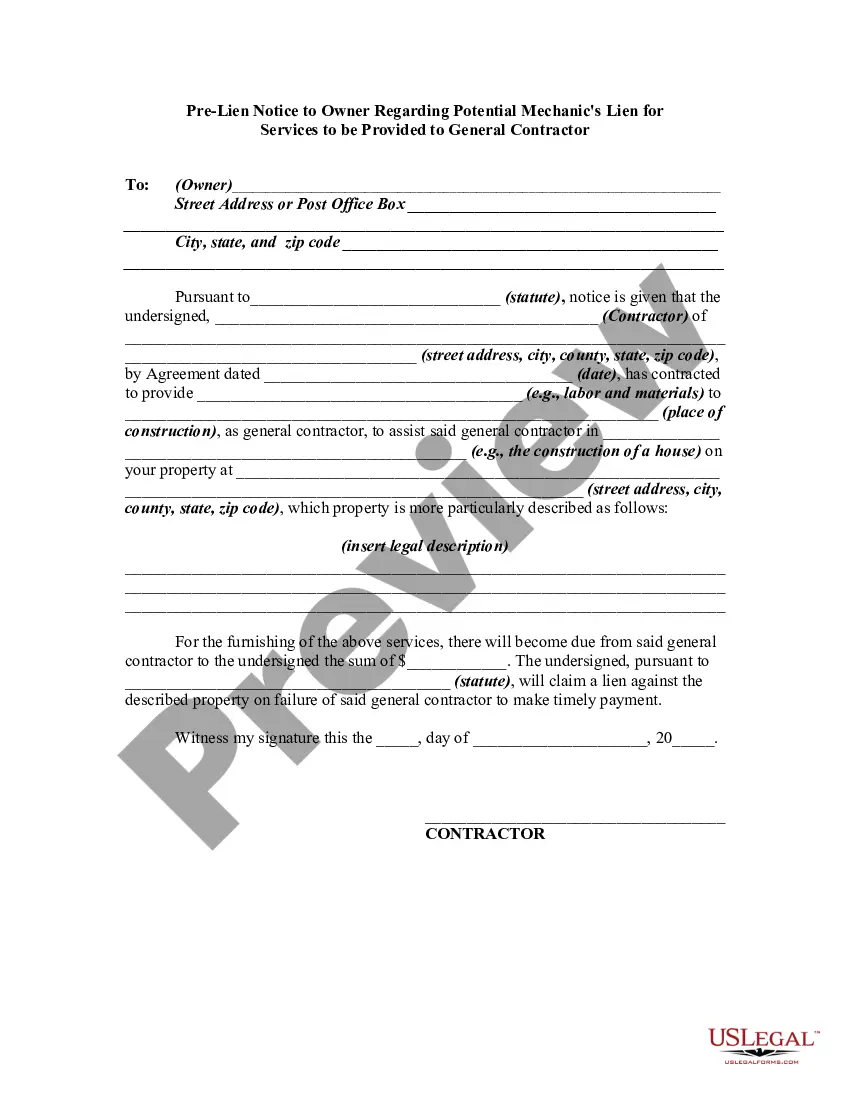
Notice Lien Contractor With Nonpayment
Description
Get your form ready online
Our built-in tools help you complete, sign, share, and store your documents in one place.
Make edits, fill in missing information, and update formatting in US Legal Forms—just like you would in MS Word.
Download a copy, print it, send it by email, or mail it via USPS—whatever works best for your next step.
Sign and collect signatures with our SignNow integration. Send to multiple recipients, set reminders, and more. Go Premium to unlock E-Sign.
If this form requires notarization, complete it online through a secure video call—no need to meet a notary in person or wait for an appointment.
We protect your documents and personal data by following strict security and privacy standards.

Make edits, fill in missing information, and update formatting in US Legal Forms—just like you would in MS Word.

Download a copy, print it, send it by email, or mail it via USPS—whatever works best for your next step.

Sign and collect signatures with our SignNow integration. Send to multiple recipients, set reminders, and more. Go Premium to unlock E-Sign.

If this form requires notarization, complete it online through a secure video call—no need to meet a notary in person or wait for an appointment.

We protect your documents and personal data by following strict security and privacy standards.
Looking for another form?






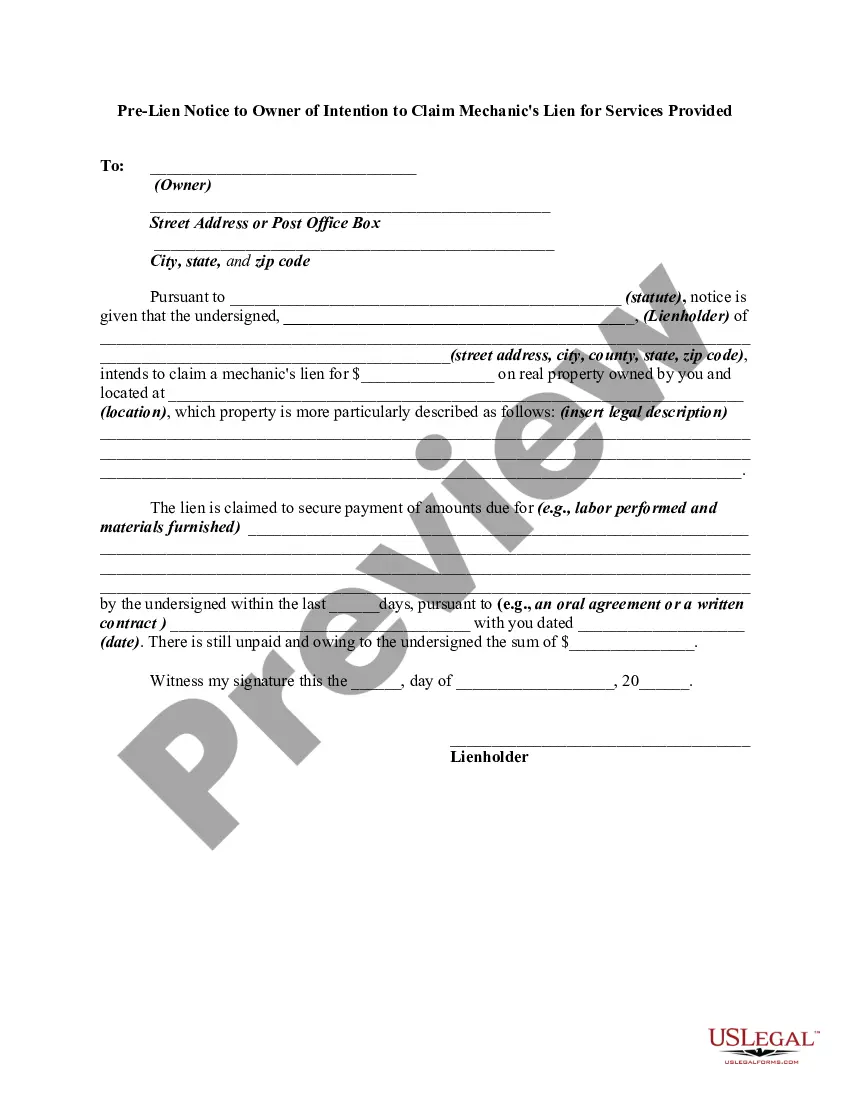
How to fill out Pre-Lien Notice To Owner Regarding Potential Mechanic's Lien For Services To Be Provided To General Contractor?
- Log in to your US Legal Forms account if you are an existing user. Ensure your subscription is active; renew it if necessary.
- For first-time users, browse the extensive library of over 85,000 legal forms. Preview relevant templates to find one that suits your nonpayment situation.
- Use the Search function to refine your options if needed. Ensure the template complies with your local jurisdiction's requirements.
- Purchase the selected document by clicking the Buy Now button. Choose a subscription plan and create an account if not previously registered.
- Complete your purchase using a credit card or PayPal. Make sure to keep confirmation of your payment.
- Download the completed form and save it on your device. Access it anytime via the My Forms section of your profile to ensure you are prepared.
By following these steps, you can effectively notify a contractor of their nonpayment and protect your rights as a property owner. US Legal Forms simplifies this process, offering a robust collection of templates and expert assistance.
Start your journey toward securing payments today by visiting US Legal Forms and browsing our extensive library.
Form popularity
FAQ
In Minnesota, the rules for liens are specific and require contractors to follow a legal process for filing. Contractors must provide a notice to the property owner prior to filing, ensuring that owners have the chance to resolve payment disputes. Additionally, liens must be filed within a certain timeframe to be enforceable. For an effortless experience in navigating these regulations, consider using US Legal Forms, where you can find the necessary templates and guidelines for managing lien issues effectively.
While it might be possible for a lien to be placed on your property without your immediate knowledge, laws generally mandate notification procedures. Contractors must typically inform property owners of any intent to place a lien due to nonpayment. Understanding these legal frameworks can help you stay informed and proactive in managing your property. For comprehensive guidance and to ensure you're protected, visit US Legal Forms for key resources.
Generally, a lien cannot be placed on a property without notification to the property owner. Laws require that contractors inform owners of their intent to file a lien, which ensures transparency and provides the owner an opportunity to address the payment issue. This process protects both parties and maintains fairness in financial dealings. To learn more about your rights and responsibilities, you can explore resources available on US Legal Forms.
A notice of intent to lien in New York is a formal document that a contractor files to protect their right to claim a lien against a property due to nonpayment. By issuing this notice, the contractor notifies the property owner of potential legal action if payment is not received promptly. This process serves as a crucial step in resolving disputes over unpaid bills. For further assistance, consider using US Legal Forms to access the necessary templates for filing a notice lien contractor with nonpayment.
A lien is enforceable when it follows the stipulated legal procedures and includes the necessary documentation. Key factors include timely filing, accurate information about the debtor and property, and adherence to state-specific requirements. If nonpayment occurs, using a Notice lien contractor with nonpayment can establish a contractor’s right to secure payment and protect their financial interests.
In Nebraska, construction liens remain effective for a period of three years after the last work was performed or materials were provided. However, to enforce a lien, a contractor must file a lawsuit within that timeframe. If you find yourself needing to pursue a lien for nonpayment, filing a Notice lien contractor with nonpayment on time is crucial for protecting your rights.
To complete a construction lien waiver, gather details such as the project name, property address, and the parties involved. Ensure you indicate the type of waiver, whether conditional or unconditional. It is also essential to specify the amount being waived or withheld. Using a reliable platform like UsLegalForms can simplify this process and ensure accuracy.
In Illinois, lien laws protect contractors and suppliers who provide labor or materials for construction projects. If a contractor faces nonpayment, they can file a Notice lien contractor with nonpayment to secure their right to payment. This process involves submitting the lien within a specific timeframe after work completion or nonpayment. Knowing these laws helps ensure you navigate the construction process effectively.
Yes, liens do expire in Virginia. Typically, a lien is valid for a specific period, often up to five years, unless renewed properly. It's important to monitor your lien status and understand the implications of the Notice lien contractor with nonpayment to maintain your legal rights.
Yes, you can file a lien without a written contract in Virginia, provided you have supplied labor or materials for the property. However, having a written agreement strengthens your position and clarifies the terms of your arrangement. If you face nonpayment, consider using the Notice lien contractor with nonpayment to facilitate your claims.