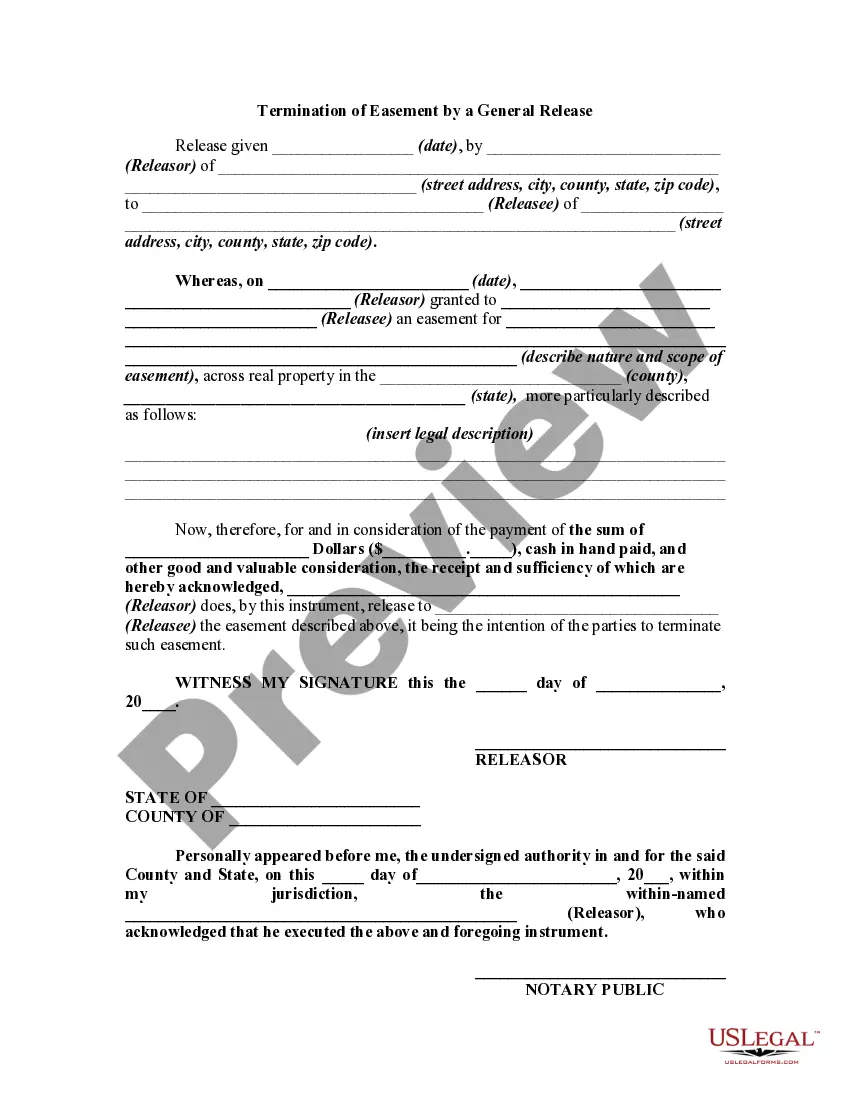
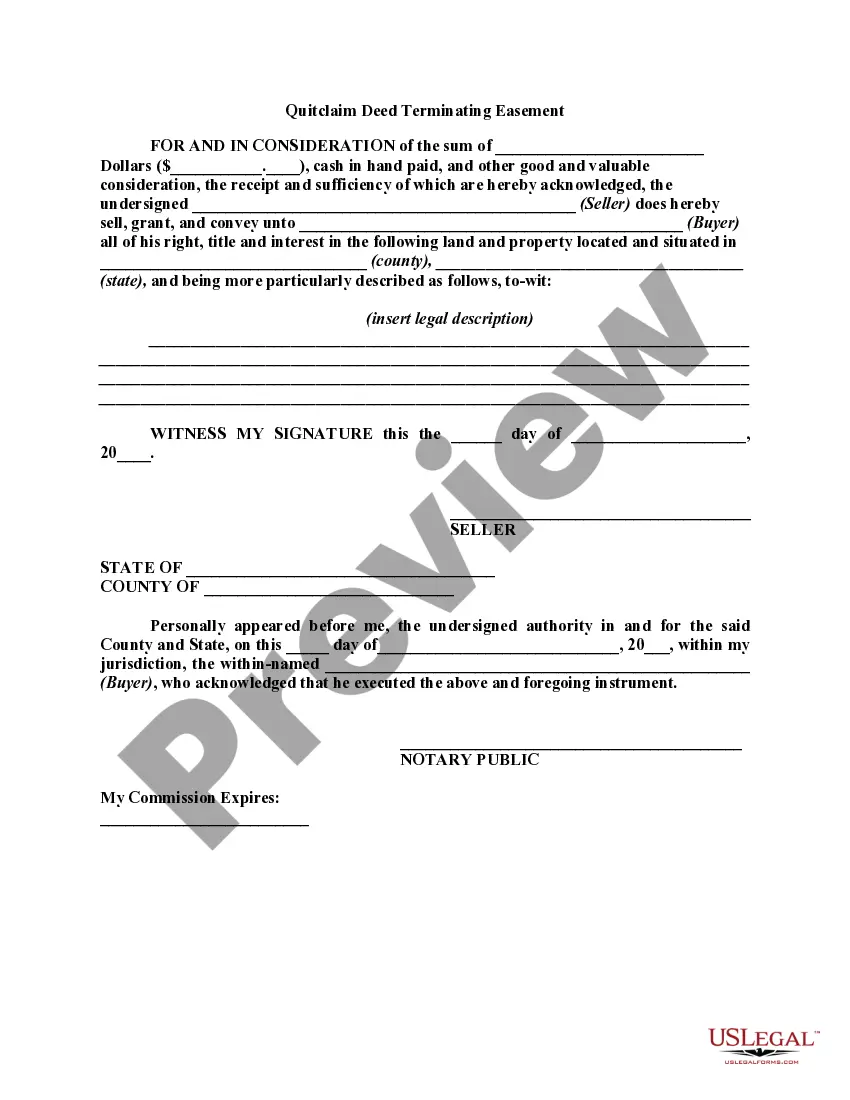
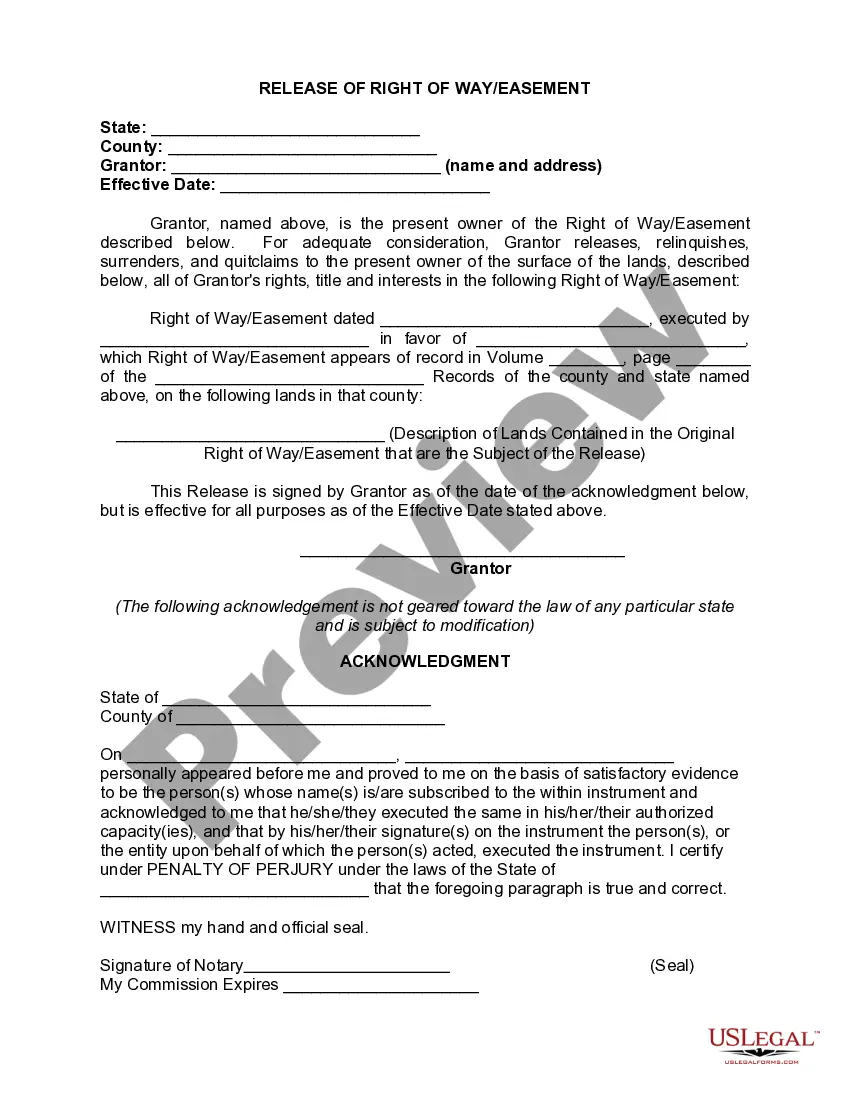
Termination Easement Form With Two Points
Description

Get your form ready online
Our built-in tools help you complete, sign, share, and store your documents in one place.
Make edits, fill in missing information, and update formatting in US Legal Forms—just like you would in MS Word.
Download a copy, print it, send it by email, or mail it via USPS—whatever works best for your next step.
Sign and collect signatures with our SignNow integration. Send to multiple recipients, set reminders, and more. Go Premium to unlock E-Sign.
If this form requires notarization, complete it online through a secure video call—no need to meet a notary in person or wait for an appointment.
We protect your documents and personal data by following strict security and privacy standards.

Make edits, fill in missing information, and update formatting in US Legal Forms—just like you would in MS Word.

Download a copy, print it, send it by email, or mail it via USPS—whatever works best for your next step.

Sign and collect signatures with our SignNow integration. Send to multiple recipients, set reminders, and more. Go Premium to unlock E-Sign.

If this form requires notarization, complete it online through a secure video call—no need to meet a notary in person or wait for an appointment.

We protect your documents and personal data by following strict security and privacy standards.
Looking for another form?







How to fill out Terminating Or Termination Of Easement By A General Release?
It’s well-known that you cannot become a legal authority overnight, nor can you swiftly master how to draft a Termination Easement Form With Two Points without having an expert background.
Drafting legal documents is a lengthy process that demands a particular education and expertise. So why not entrust the creation of the Termination Easement Form With Two Points to professionals.
With US Legal Forms, one of the most extensive legal document databases, you can find everything from court documents to templates for internal business communication.
You can regain access to your documents from the My documents section at any time. If you’re an existing user, you can simply Log In and find and download the template from the same section.
Regardless of the purpose of your forms—whether they are financial, legal, or personal—our platform has you covered. Try US Legal Forms today!
- Identify the document you require using the search function at the top of the page.
- Preview it (if this option is available) and review the supporting description to ascertain whether the Termination Easement Form With Two Points is what you need.
- Initiate your search again if you require a different document.
- Sign up for a free account and select a subscription plan to acquire the template.
- Click Buy now. Once the payment is completed, you can obtain the Termination Easement Form With Two Points, complete it, print it, and send or mail it to the necessary recipients or organizations.
Form popularity
FAQ
As noted above, the registering party of a TREL is the dominant tenement owner (it has the benefit of the easement, so the dominant tenement owner is the right party to release it (with the consent of other parties that take title through the dominant tenement owner ? i.e., chargees and lessees).
An easement may terminate for numerous reasons. The most common include: impossibility of purpose, merger, elimination of necessity, abandonment, adverse possession, eminent domain, and the express terms of the easement itself.
An Easement grants use of a part of property, but does not transfer interest. As such, the original property owner is still responsible for the taxes on the part of the property. Maintenance of the easement is usually the responsibility of the property owner.
These methods of termination are abandonment, merger, prescription, end of necessity, demolition or destruction, marketable title statutes, misuse, estoppel, and death of the holder of an easement in gross.
An easement can be terminated if the easement is occupied in a way that prevents the easement holder from using it, adverse, hostile, open and notorious, continuous for the statutory period. If the necessity or stated conditions cease to exist the easement can be terminated.