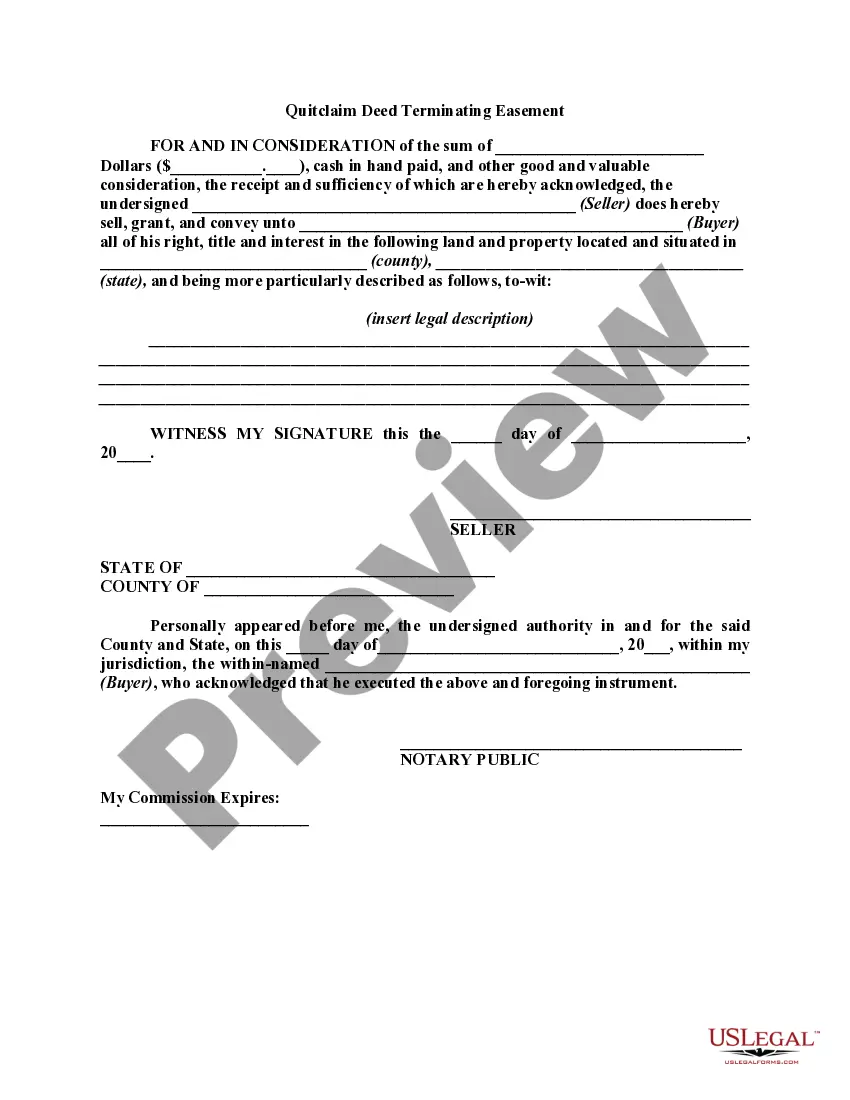
Warranty Deed Vs Quit Claim Format
Description
Get your form ready online
Our built-in tools help you complete, sign, share, and store your documents in one place.
Make edits, fill in missing information, and update formatting in US Legal Forms—just like you would in MS Word.
Download a copy, print it, send it by email, or mail it via USPS—whatever works best for your next step.
Sign and collect signatures with our SignNow integration. Send to multiple recipients, set reminders, and more. Go Premium to unlock E-Sign.
If this form requires notarization, complete it online through a secure video call—no need to meet a notary in person or wait for an appointment.
We protect your documents and personal data by following strict security and privacy standards.

Make edits, fill in missing information, and update formatting in US Legal Forms—just like you would in MS Word.

Download a copy, print it, send it by email, or mail it via USPS—whatever works best for your next step.

Sign and collect signatures with our SignNow integration. Send to multiple recipients, set reminders, and more. Go Premium to unlock E-Sign.

If this form requires notarization, complete it online through a secure video call—no need to meet a notary in person or wait for an appointment.

We protect your documents and personal data by following strict security and privacy standards.
Looking for another form?










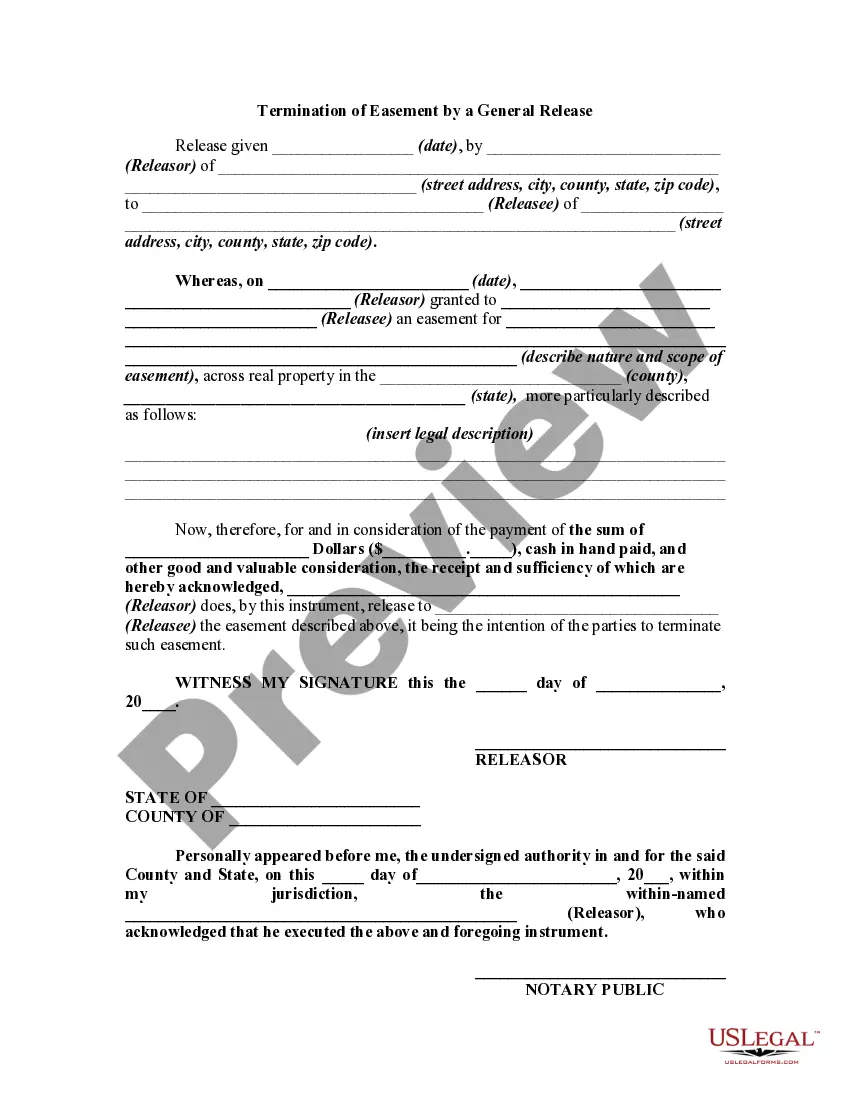
How to fill out Quitclaim Deed Termination Or Terminating Easement?
Handling legal documents and protocols can be a lengthy addition to your day.
Warranty Deed versus Quit Claim Format and similar forms usually require you to find them and comprehend the most effective way to fill them out accurately.
Thus, whether you are managing financial, legal, or personal issues, having an extensive and user-friendly digital library of forms readily available will greatly assist you.
US Legal Forms is the premier online platform for legal templates, providing over 85,000 state-specific documents along with various resources that will aid you in swiftly completing your paperwork.
Is this your first time using US Legal Forms? Sign up and create an account in a few minutes to gain access to the form library and Warranty Deed versus Quit Claim Format. After that, follow the steps below to finalize your form.
- Explore the collection of relevant documents available to you with a simple click.
- US Legal Forms offers state- and county-specific forms readily available for download at any time.
- Protect your document management processes with a quality service that enables you to prepare any form in just a few minutes without additional or hidden costs.
- Simply Log In to your account, locate Warranty Deed versus Quit Claim Format, and obtain it instantly from the My documents section.
- You can also access forms you have downloaded previously.
Form popularity
FAQ
No, a quitclaim deed is not the same as a property deed in a broader sense. A property deed is a general term that refers to any legal document that conveys ownership of a property, while a quitclaim deed is a specific type of property deed that transfers interest without any guarantees. Understanding the nuances of the warranty deed vs quit claim format can help you choose the appropriate deed for your needs.
A quitclaim deed does not necessarily override a warranty deed; rather, it depends on the circumstances surrounding the property transfer. If a quitclaim deed is executed after a warranty deed, it may affect the title but does not invalidate the warranty deed. To understand how these documents interact, it is important to review the specific details of each case. Familiarizing yourself with the warranty deed vs quit claim format can help clarify these interactions.
Yes, you can write your own quitclaim deed, but it is essential to follow your state’s legal requirements for such documents. While it may seem straightforward, errors or omissions can lead to significant issues down the line. To ensure your document meets all necessary legal standards, consider using platforms like US Legal Forms, which provide templates and guidance for creating valid quitclaim deeds. This ensures you navigate the warranty deed vs quit claim format correctly.
When considering property transfers, a warranty deed is generally a more secure option than a quitclaim deed. A warranty deed provides legal assurances regarding the title, which protects the buyer from potential disputes. If you seek to ensure your investment is secure, opting for a warranty deed is advisable over a quitclaim deed. Understanding the warranty deed vs quit claim format can guide you in making the right choice for your real estate needs.
No, a warranty deed is not the same as a quitclaim deed. While a warranty deed provides assurances about the title and protects the buyer, a quitclaim deed offers no such guarantees. This distinction is vital for anyone involved in real estate, as it can significantly affect ownership rights and future claims. Exploring the warranty deed vs quit claim format can help clarify these important differences.
The main difference between a warranty deed and a quitclaim deed lies in the level of protection they provide to the buyer. A warranty deed guarantees that the seller holds clear title to the property and will defend against any future claims. In contrast, a quitclaim deed simply transfers whatever interest the seller has in the property, with no warranties or guarantees. Therefore, understanding the warranty deed vs quit claim format is crucial for anyone looking to engage in property transactions.
You can obtain a quit claim deed form from various sources, including online legal services, local government offices, or legal stationery stores. If you prefer a reliable option, consider using the US Legal Forms platform, which offers a wide range of customizable forms, including both warranty deed and quit claim formats. This ensures that you have the correct and legally compliant document for your needs. Additionally, using a reputable service can help you avoid common mistakes that could arise from using incorrect forms.
Filling out a warranty deed form involves a few straightforward steps. First, include the names of both the grantor and grantee, ensuring you spell them correctly. Next, provide a clear legal description of the property being transferred, which is essential for identifying the location and boundaries. Finally, sign and date the document in front of a notary public to validate it. Understanding the warranty deed vs quit claim format can help you choose the right option for your property transfer needs.
In most cases, a warranty deed is better than a quit claim deed for buyers concerned about potential title issues. The warranty deed offers full protection and assures the buyer of a clear title, while a quit claim deed carries more risk due to the lack of guarantees. However, the choice between these two types of deeds depends on the specific situation and needs of the parties involved. For clarity on the warranty deed vs quit claim format, consider consulting resources from US Legal Forms, which can provide valuable insights and assistance.
The strongest form of deed is generally considered to be the warranty deed. This type of deed provides a guarantee that the grantor holds clear title to the property and has the right to sell it. It also protects the buyer against any future claims on the property, making it a safer choice for most transactions. When comparing the warranty deed vs quit claim format, the warranty deed stands out for its security and assurance.