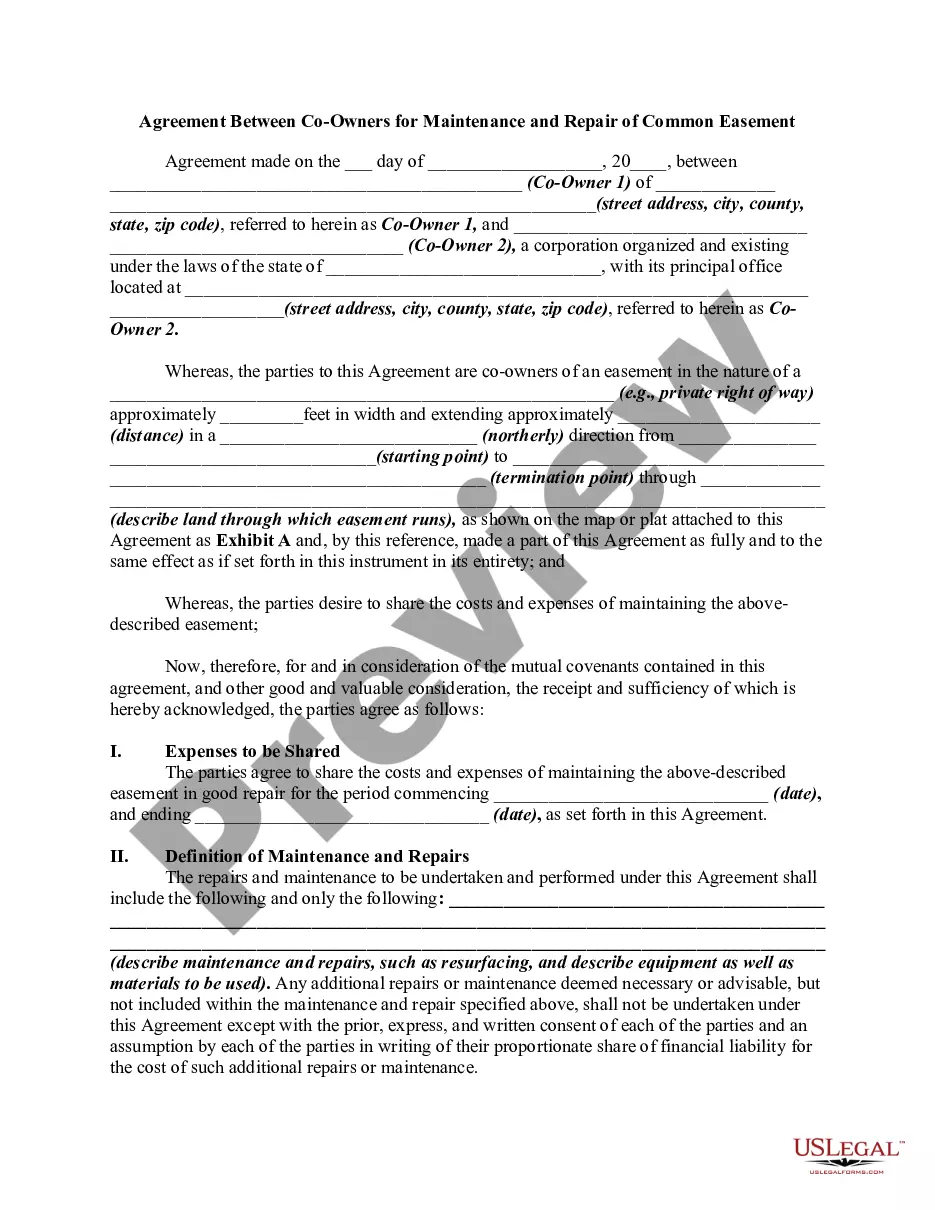
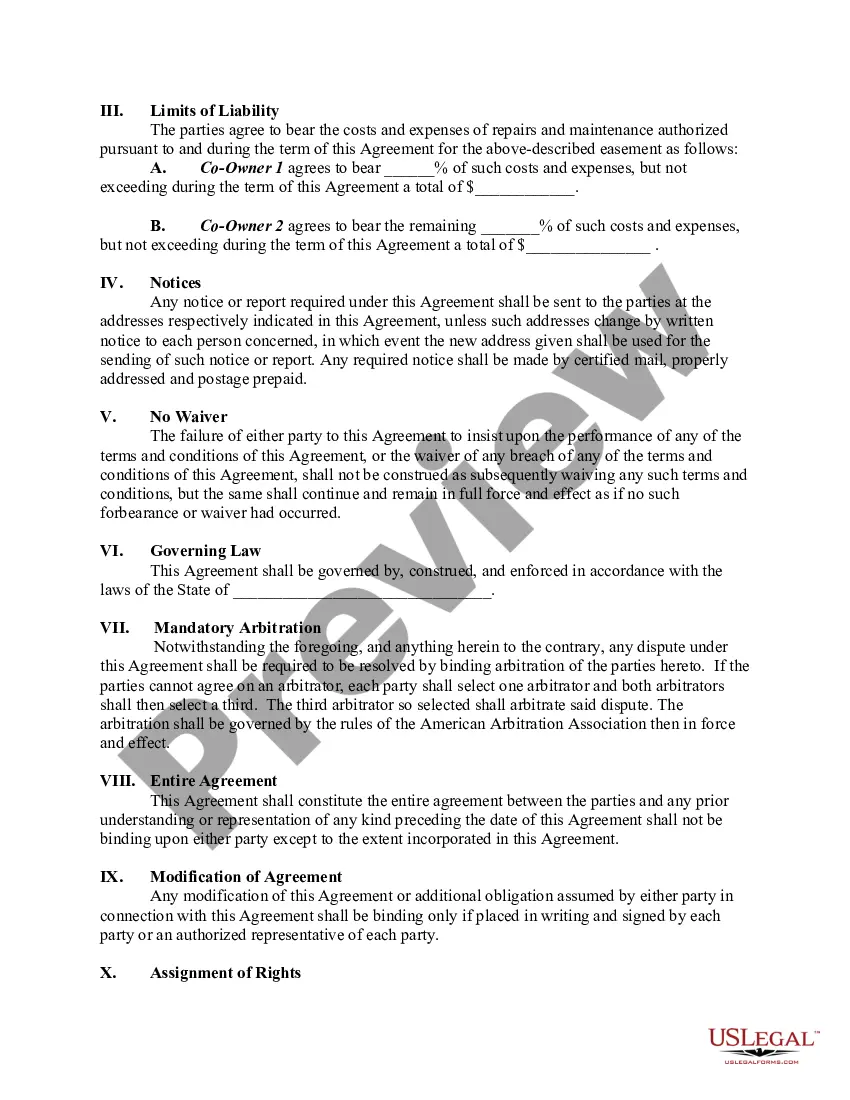
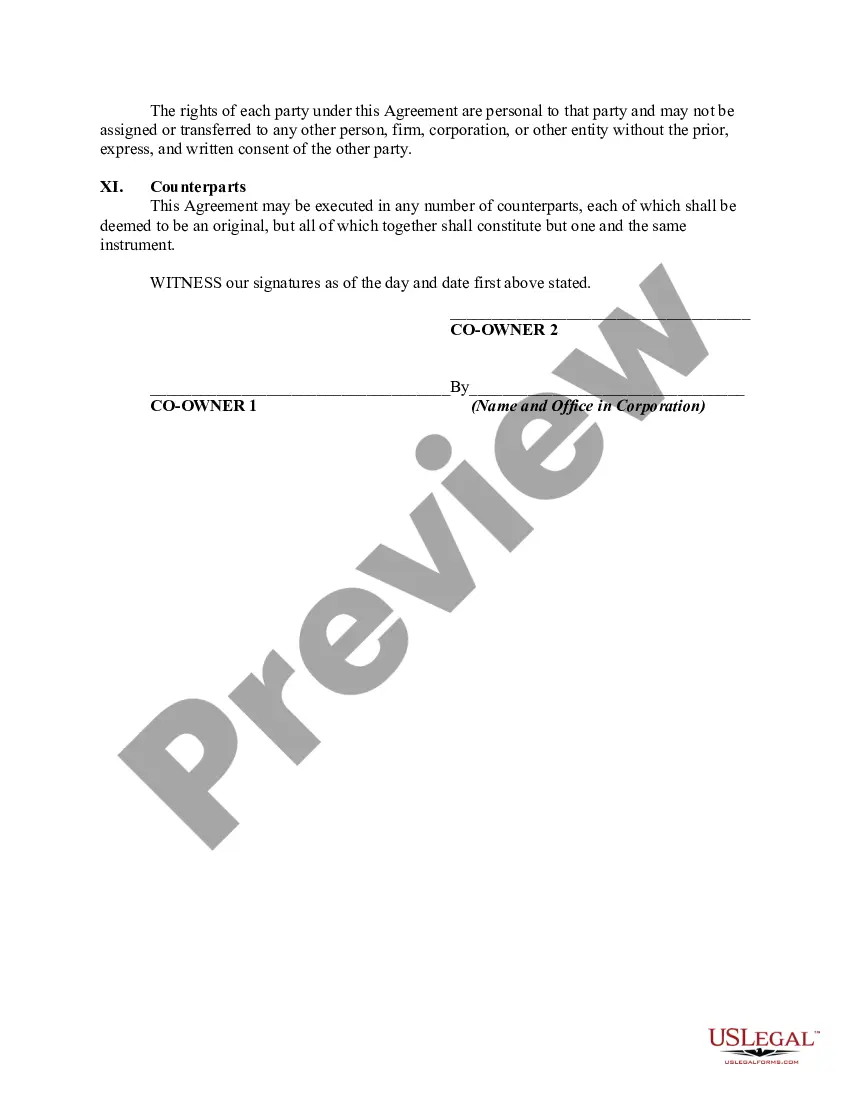
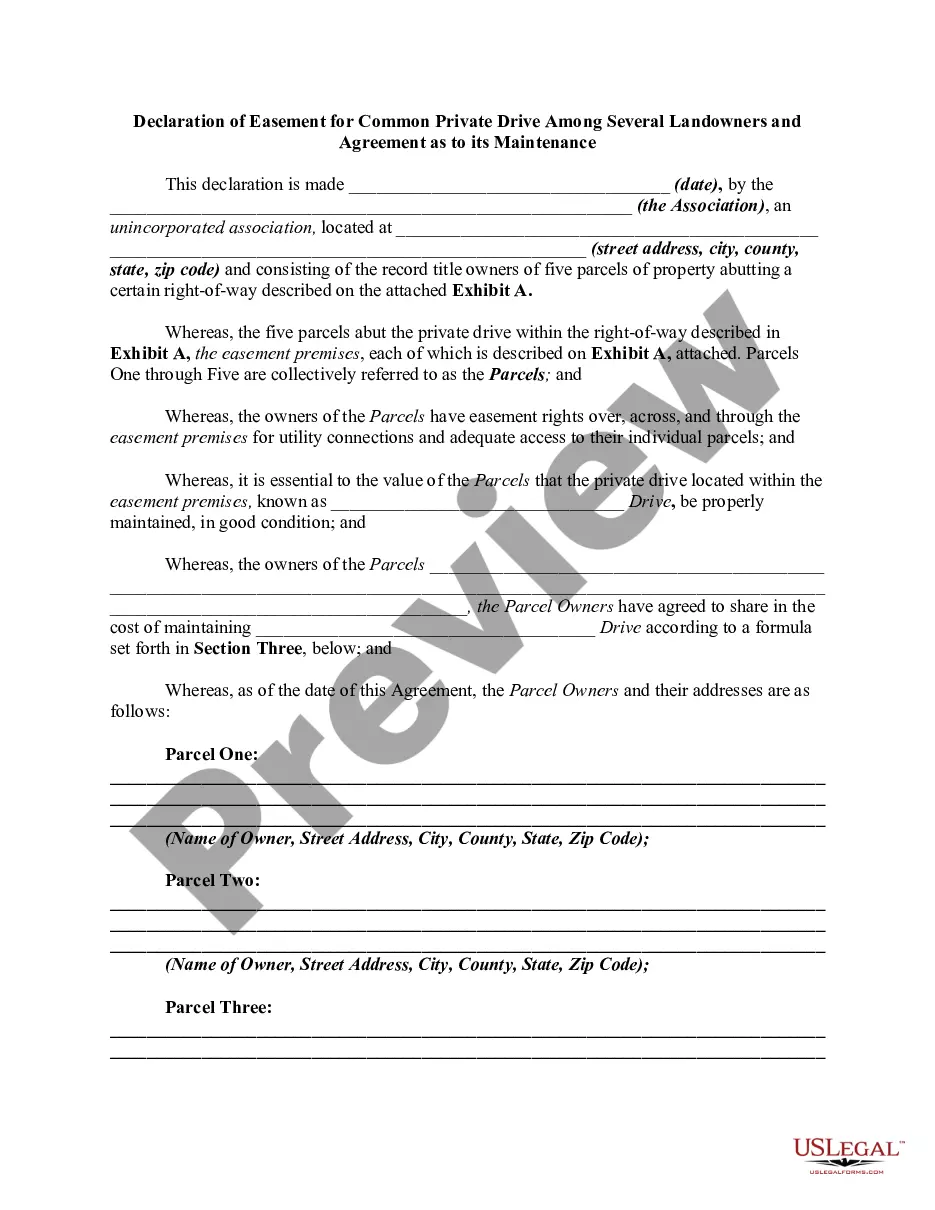
Maintenance Easement Agreement With City
Description
Get your form ready online
Our built-in tools help you complete, sign, share, and store your documents in one place.
Make edits, fill in missing information, and update formatting in US Legal Forms—just like you would in MS Word.
Download a copy, print it, send it by email, or mail it via USPS—whatever works best for your next step.
Sign and collect signatures with our SignNow integration. Send to multiple recipients, set reminders, and more. Go Premium to unlock E-Sign.
If this form requires notarization, complete it online through a secure video call—no need to meet a notary in person or wait for an appointment.
We protect your documents and personal data by following strict security and privacy standards.

Make edits, fill in missing information, and update formatting in US Legal Forms—just like you would in MS Word.

Download a copy, print it, send it by email, or mail it via USPS—whatever works best for your next step.

Sign and collect signatures with our SignNow integration. Send to multiple recipients, set reminders, and more. Go Premium to unlock E-Sign.

If this form requires notarization, complete it online through a secure video call—no need to meet a notary in person or wait for an appointment.

We protect your documents and personal data by following strict security and privacy standards.
Looking for another form?
How to fill out Agreement Between Co-Owners For Maintenance And Repair Of Common Easement?
Engaging with legal documents and processes can be a lengthy addition to your entire day.
Maintenance Easement Agreement With City and similar forms typically require you to seek them out and determine the best method to fill them out correctly.
Therefore, if you are managing financial, legal, or personal issues, utilizing a thorough and user-friendly online directory of forms will be highly beneficial.
US Legal Forms is the leading online platform for legal templates, providing over 85,000 state-specific forms along with a variety of tools to facilitate your paperwork tasks effortlessly.
Is this your first time using US Legal Forms? Register and create an account in a matter of minutes to gain access to the form library and Maintenance Easement Agreement With City. Then, follow the instructions below to fill out your form.
- Explore the directory of pertinent documents available to you with just a click.
- US Legal Forms offers state- and county-specific forms that are accessible anytime for download.
- Protect your document management processes by utilizing a quality service that enables you to prepare any form within minutes without additional or concealed charges.
- Simply Log In to your account, find Maintenance Easement Agreement With City, and obtain it instantly from the My documents tab.
- You can also access previously downloaded documents.
Form popularity
FAQ
Drafting an easement agreement requires clarity and attention to detail. Start by defining the purpose of the easement, whether it’s for utility access, drainage, or another function. Your maintenance easement agreement with the city should specify the rights granted, obligations for maintenance, and any compensation details. Using a platform like US Legal Forms can simplify this process, providing you with templates and guidance tailored to your specific needs.
In Florida, easements are governed by specific statutes and case law that outline rights and responsibilities. Generally, a maintenance easement agreement with the city is legally enforceable and protects the interests of both the property owner and the municipality. This agreement should clearly outline the terms of use, maintenance responsibilities, and duration. Understanding these laws can help you navigate any disputes or questions regarding your easement rights.
Utility easements on your property generally belong to the utility companies that benefit from them. When you grant a maintenance easement agreement with the city, you essentially permit these companies to access and maintain their infrastructure. It's important to check your property documents to identify which companies have easements and what rights they possess. Contacting the local city office can clarify any questions regarding ownership and responsibilities associated with these easements.
In Alabama, the responsibility for maintaining an easement often falls to the property owner who benefits from it. Typically, this means that if you hold a maintenance easement agreement with the city, maintaining the easement infrastructure, like roads or utility lines, becomes your duty. However, certain agreements may stipulate shared responsibilities or specific obligations on the city's part. Therefore, reviewing your maintenance easement agreement with the city is crucial to understand your duties and rights.
The three main types of easements include easements by necessity, easements by prescription, and easements by grant. Easements by necessity arise when landlocked property requires access to a public road. Easements by prescription occur when a party uses another's land openly over time. Finally, easements by grant are established through a formal agreement, often best documented in a maintenance easement agreement with the city. Understanding these types can help you make informed decisions.
In Georgia, the responsibility for maintaining an easement typically falls on the party benefiting from it. This means that if you hold the easement rights, you must ensure it is properly maintained. However, the property owner may also have some obligations, especially if specified in a maintenance easement agreement with the city. Being clear about these duties can prevent disputes.
The rules surrounding easements can vary by state but generally include provisions for use, maintenance, and access. An easement must serve a legitimate purpose and cannot overly burden the property owner. These rules play a vital role in the creation and management of a maintenance easement agreement with the city. Being informed on these regulations can help avoid conflicts.
Easement law in Georgia governs how property rights are used and shared. It outlines the specific rights granted to a party for a particular purpose, such as accessing land or utilities. Understanding these laws can help in drafting a maintenance easement agreement with the city. Clear guidelines ensure that both landowners and users of the easement understand their rights and obligations.
When it comes to liability for damage on an easement, the responsibility usually lies with the party that holds rights to the easement. If that party causes harm, they may need to repair the damage. However, if the easement is improperly maintained, the property owner may also hold some responsibility. Engaging in a maintenance easement agreement with the city can clarify these responsibilities.
In Minnesota, maintenance easement agreements with city allow property owners to use a designated area for specified purposes while protecting the rights of the landowner. Easements are typically recorded to ensure public notice of the rights granted. It's crucial to understand the local laws governing easements, as they dictate how they function and what obligations are involved.