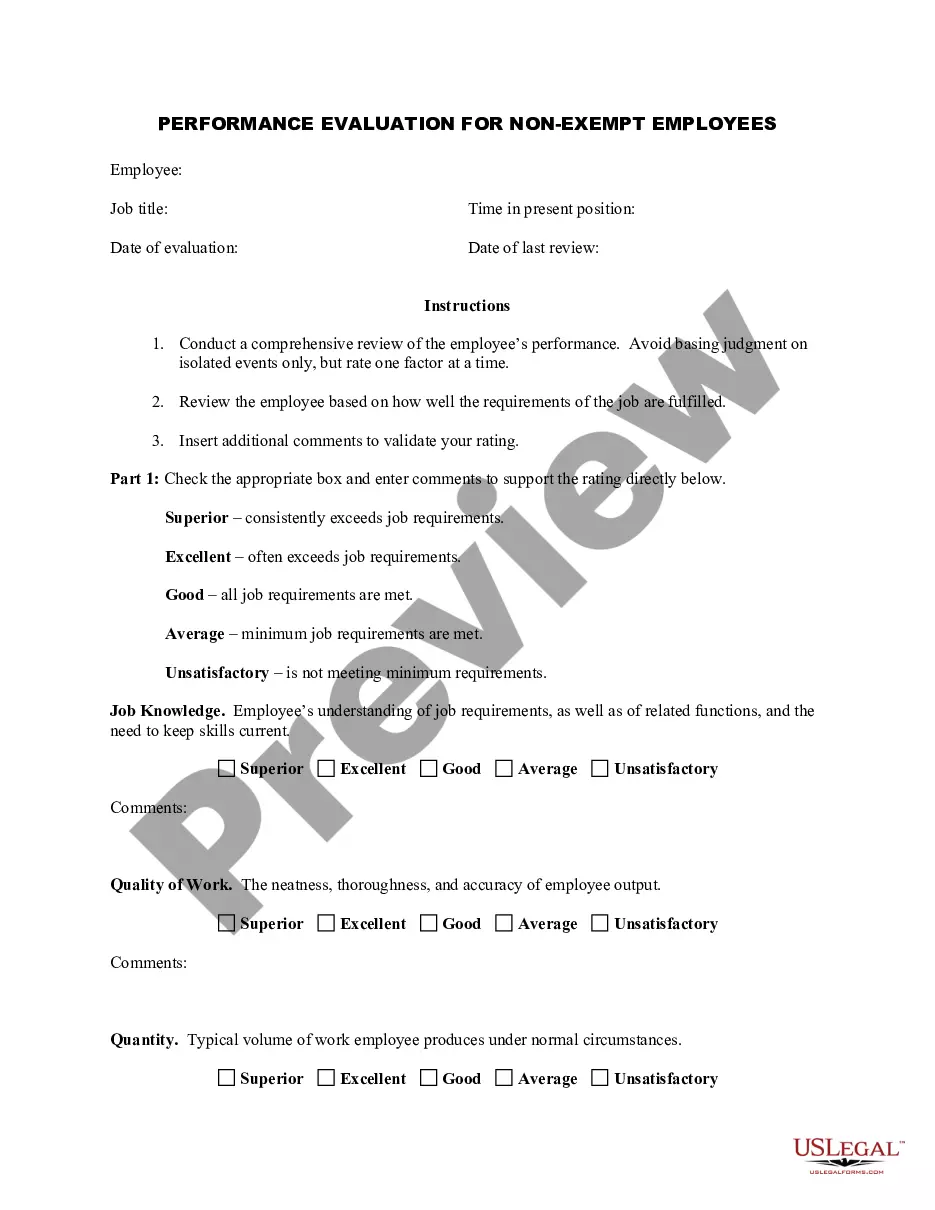
Virginia Springing Power of Attorney
Overview of this form
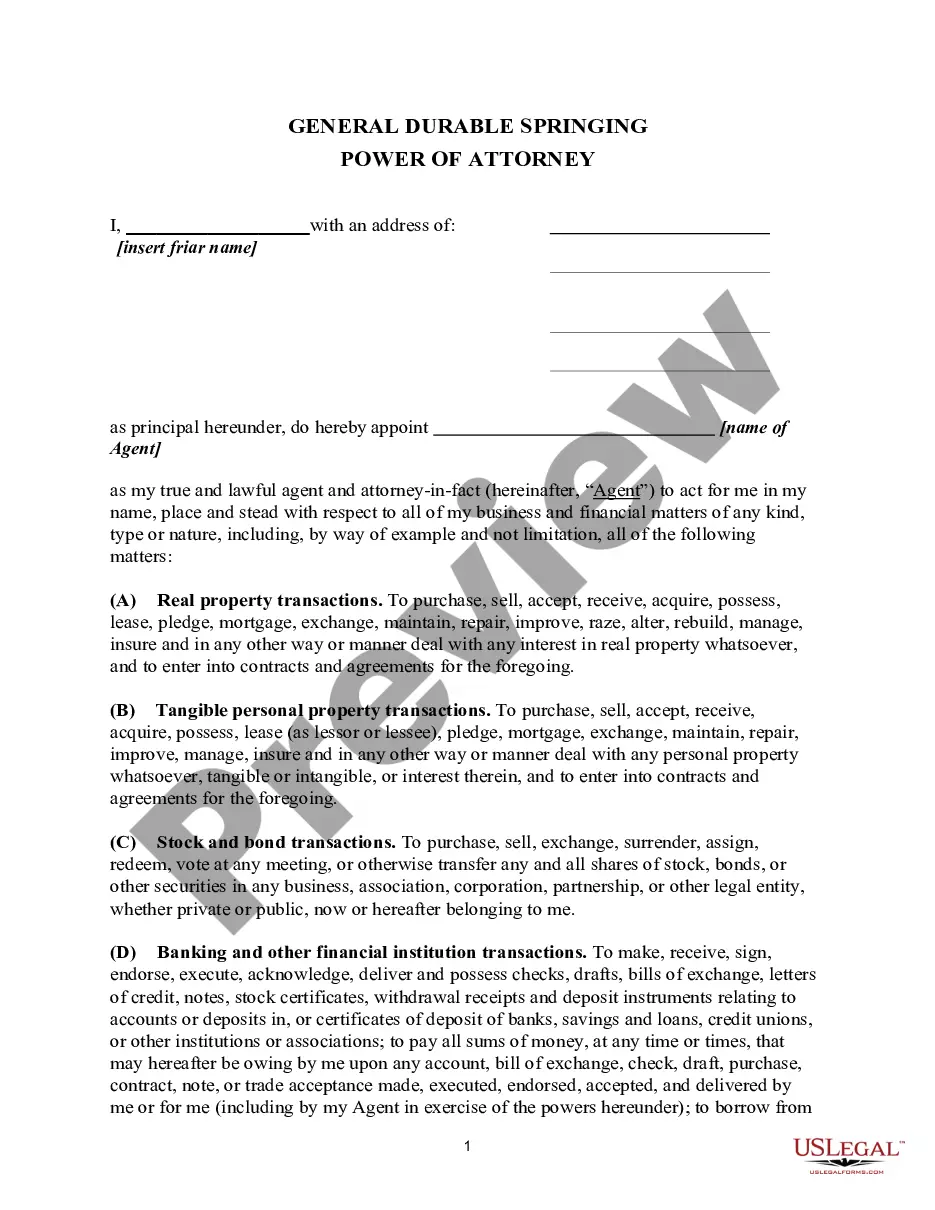
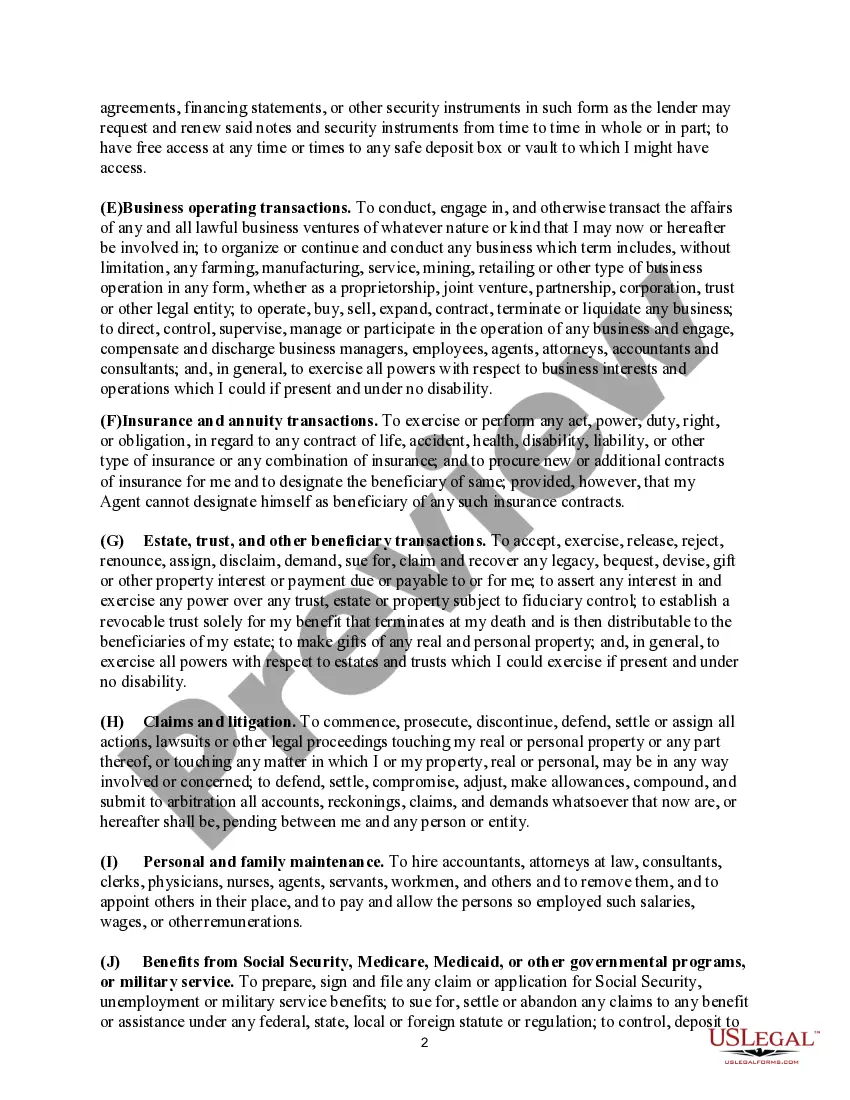
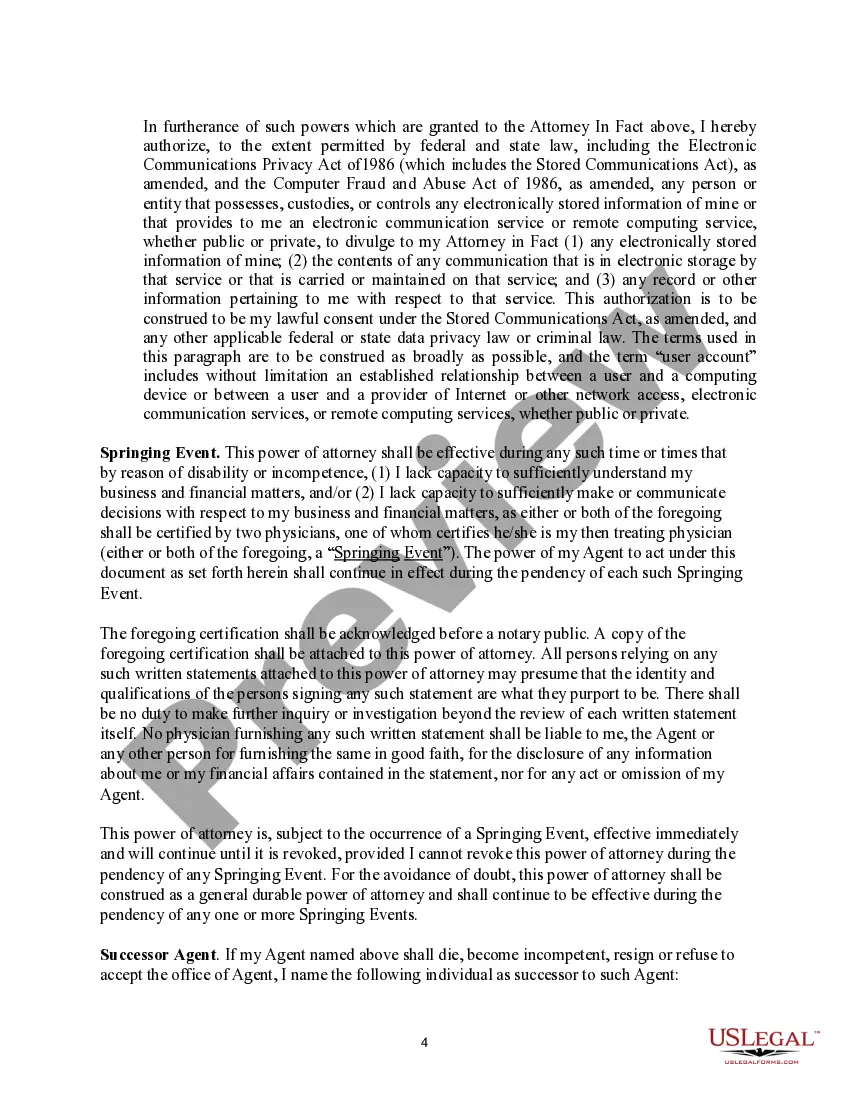
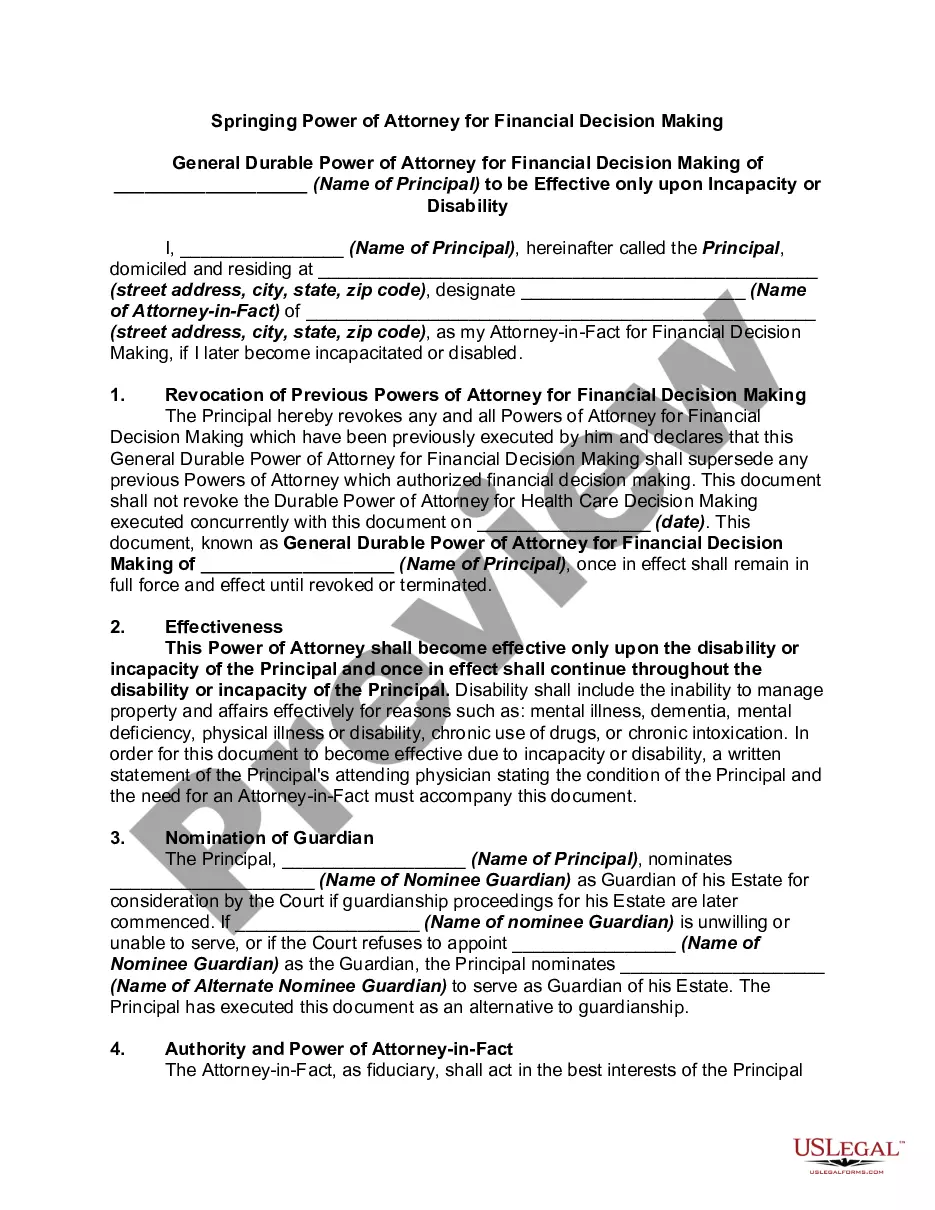
A springing power of attorney is a legal document that becomes effective only after a specified event occurs, such as when the principal is declared incapacitated by a doctor. This form allows the appointed agent to manage financial and business matters on behalf of the principal but can only be activated under the conditions outlined in the document. Unlike a regular durable power of attorney, a springing power of attorney remains dormant until the designated triggering event occurs, providing a tailored approach to empowering your agent if you become unable to make decisions.
Form components explained
- Identification of the principal and agent
- Definition of the springing event that activates the power
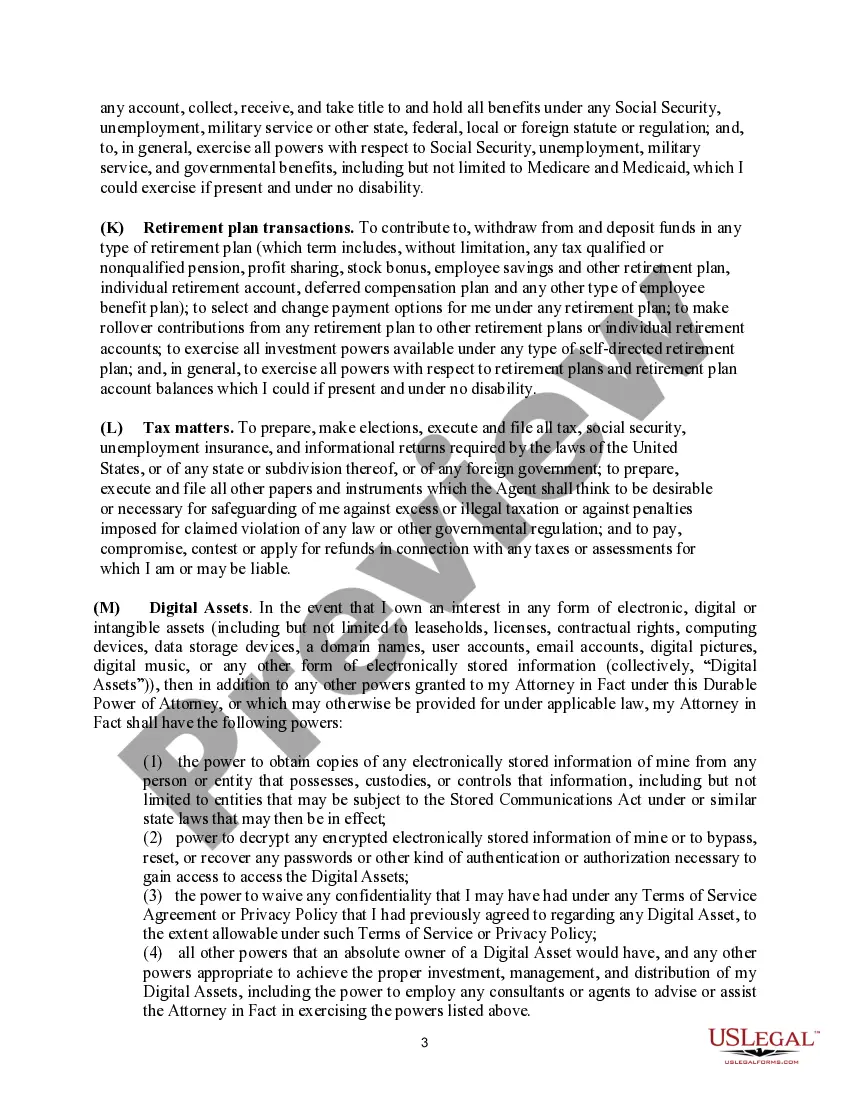
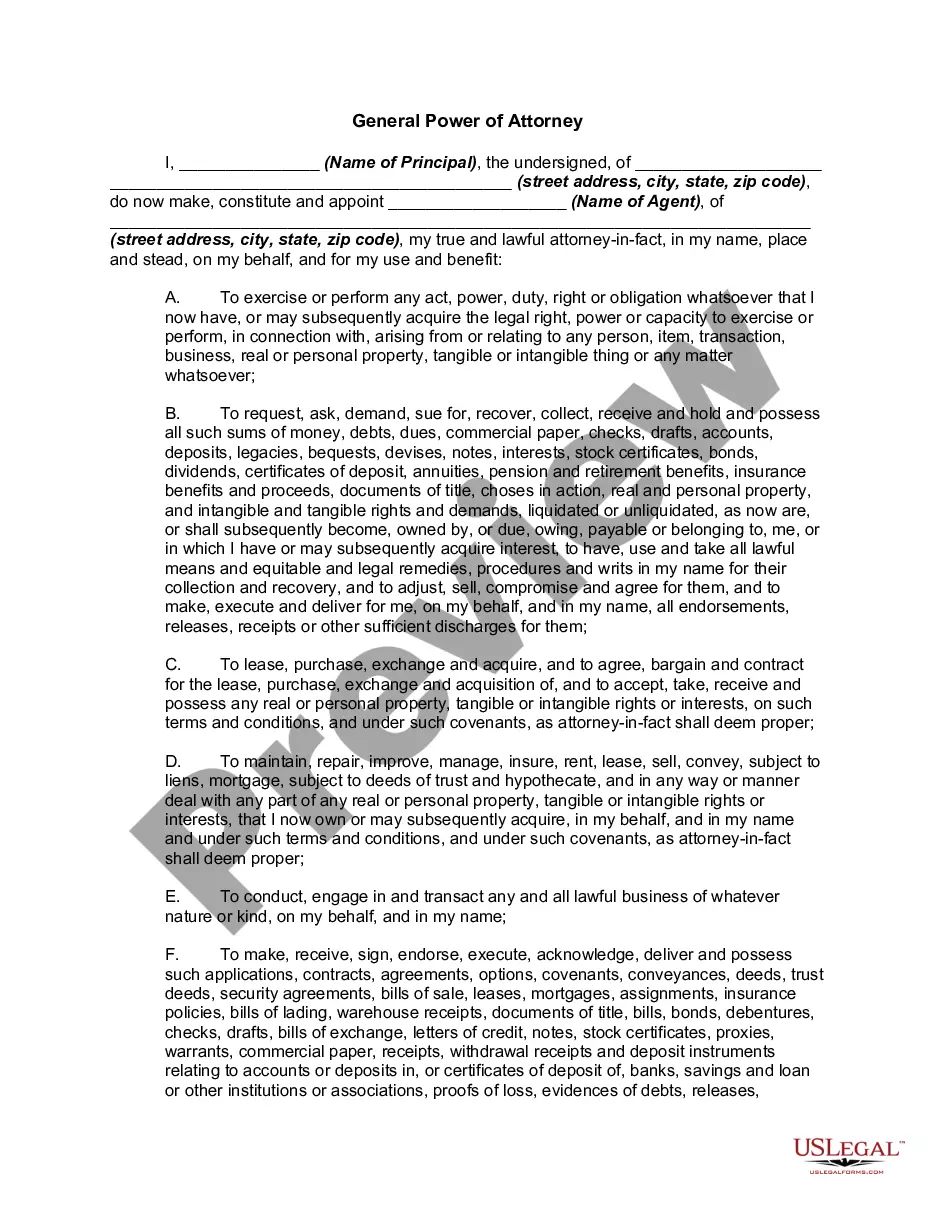
- Authority granted to the agent over various financial and business matters
- Provisions for successor agents
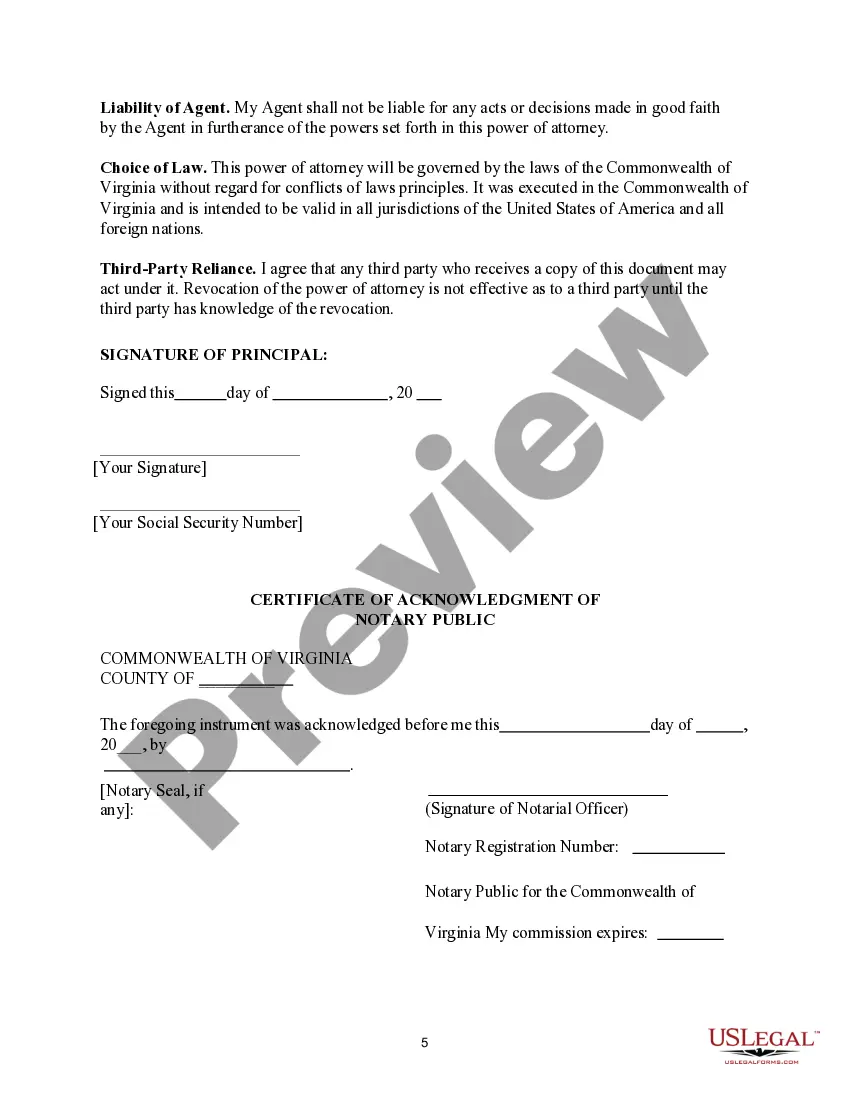
- Legal disclaimers and limitations on agent liability
- Notarization requirements and certificate of acknowledgment
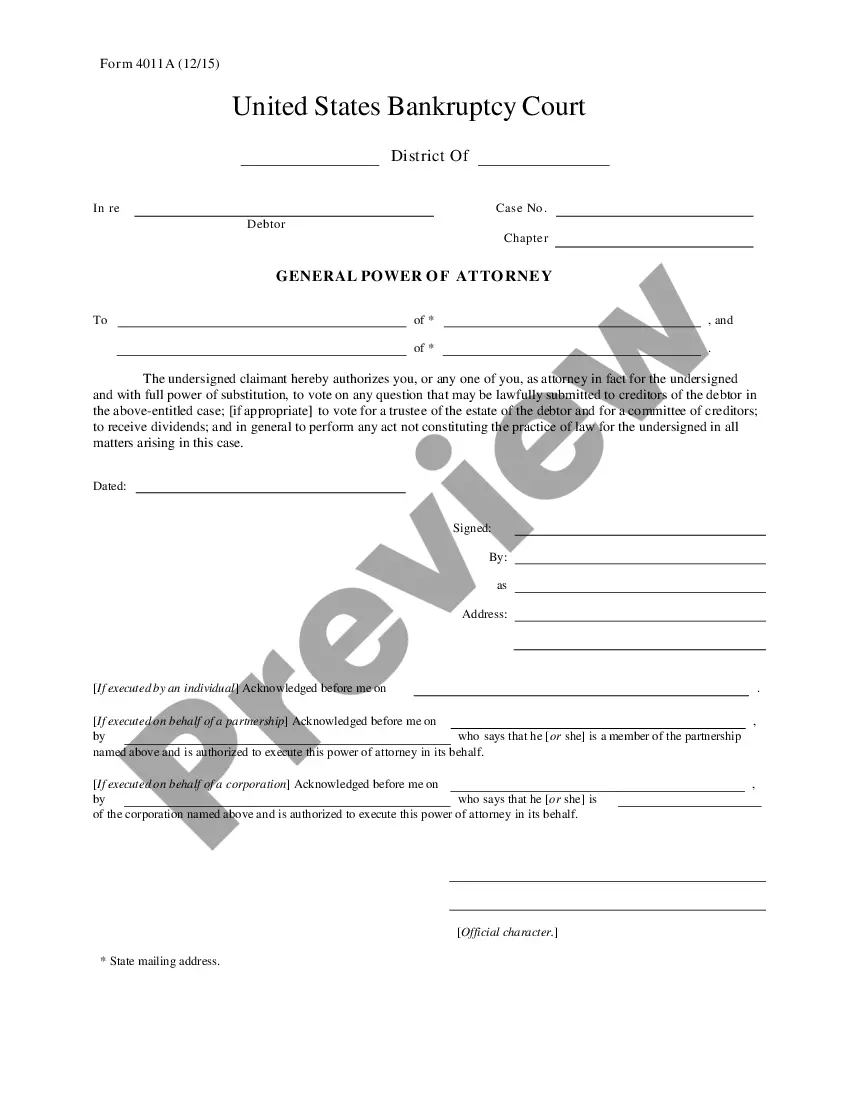
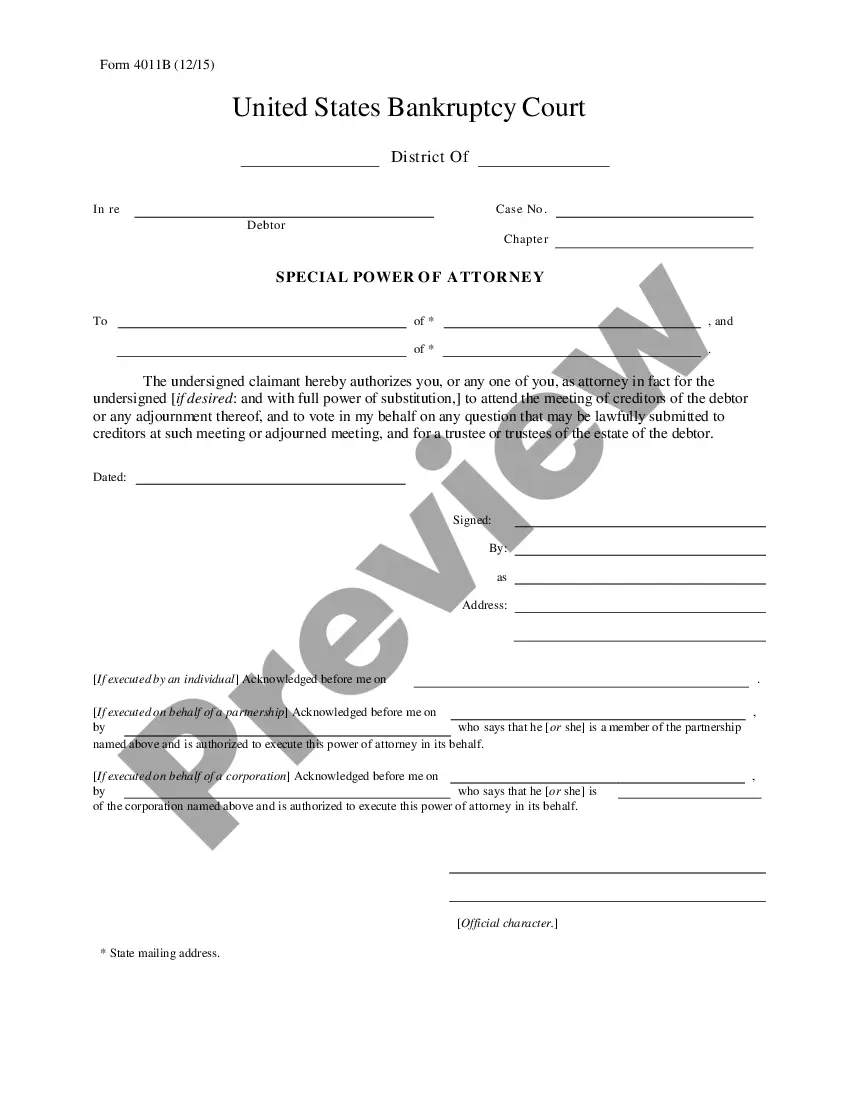
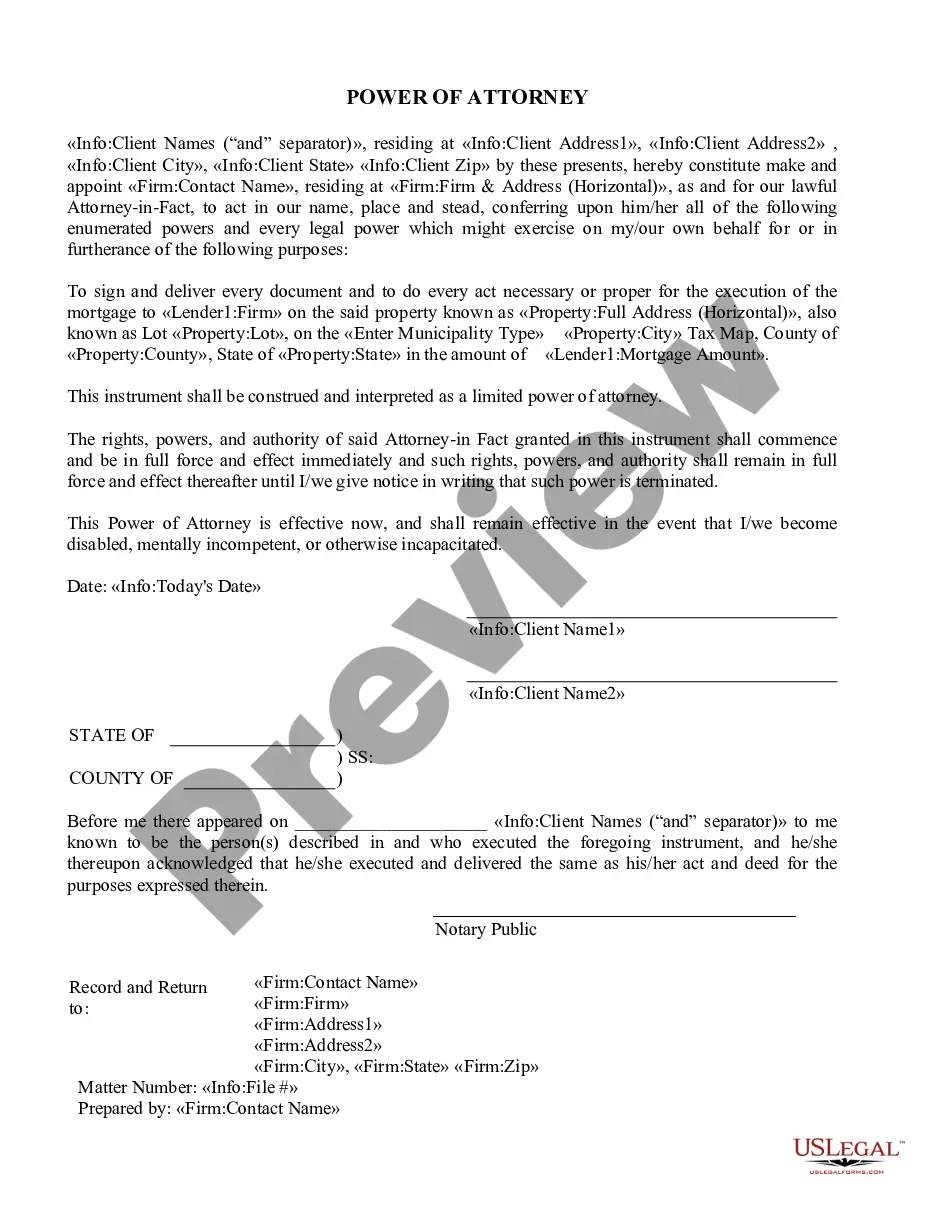
Situations where this form applies
This form is typically used when individuals want to establish legal authority for someone else to act on their behalf in financial and business matters only if they become incapacitated. Scenarios might include setting up care for aging parents or planning for potential future health issues where decision-making capacity could be compromised. It ensures that your financial interests are handled according to your wishes during times when you cannot manage them yourself.
Who can use this document
- Individuals planning for potential incapacitation
- People concerned about who will handle their finances during health crises
- Those who want to ensure their financial matters are managed by a trusted person
- Anyone looking to create a customized power of attorney suited to their personal situation
How to prepare this document
- Identify yourself as the principal and provide your address.
- Name the agent who will act on your behalf.
- Clearly define the conditions that will activate the power (the springing event).
- Specify the scope of authority granted to the agent, including any specific limits.
- Sign the form in the presence of a notary public and have them acknowledge the document.
Notarization guidance
Yes, this form must be notarized to be legally valid. The notarization serves to affirm the identities of the parties involved and ensures the document's integrity. US Legal Forms offers integrated online notarization, allowing you to securely complete the process via a video call with a licensed notary, 24/7, without the need to travel.
Get your form ready online
Our built-in tools help you complete, sign, share, and store your documents in one place.
Make edits, fill in missing information, and update formatting in US Legal Forms—just like you would in MS Word.
Download a copy, print it, send it by email, or mail it via USPS—whatever works best for your next step.
Sign and collect signatures with our SignNow integration. Send to multiple recipients, set reminders, and more. Go Premium to unlock E-Sign.
If this form requires notarization, complete it online through a secure video call—no need to meet a notary in person or wait for an appointment.
We protect your documents and personal data by following strict security and privacy standards.

Make edits, fill in missing information, and update formatting in US Legal Forms—just like you would in MS Word.

Download a copy, print it, send it by email, or mail it via USPS—whatever works best for your next step.

Sign and collect signatures with our SignNow integration. Send to multiple recipients, set reminders, and more. Go Premium to unlock E-Sign.

If this form requires notarization, complete it online through a secure video call—no need to meet a notary in person or wait for an appointment.

We protect your documents and personal data by following strict security and privacy standards.
Common mistakes to avoid
- Failing to clearly define the springing event leading to activation.
- Not including a successor agent in case the primary agent cannot act.
- Neglecting to have the document properly notarized before use.
- Using vague language that leaves room for misinterpretation of the authority granted.
Why complete this form online
- Convenience of completing the form at your own pace from any location.
- Editable templates that allow customization to fit your specific needs.
- Reliable access to templates drafted by licensed attorneys.
- Immediate availability for downloading and printing.
Looking for another form?
Form popularity
FAQ
The lawyer has asked you to sign for them, above their name and position title at the end of the letter. You write 'p. p' in the signature space and sign your name after it. This validates the letter, in informing the reader the letter has been signed on behalf of the lawyer with authorisation.
Revoke Your Current Power of Attorney. To change or cancel your current power of attorney, you should complete a formal, written revocation. Notify Your Power of Attorney. Once you complete your revocation, notify your agent of the cancellation in writing. Notify Relevant Third Parties. Execute a New Power of Attorney.
After the principal's name, write by and then sign your own name. Under or after the signature line, indicate your status as POA by including any of the following identifiers: as POA, as Agent, as Attorney in Fact or as Power of Attorney.
The revocation should include your name, a statement that you are of sound mind, and your wish to revoke the power of attorney. You should also specify the date the original power of attorney was executed and the person selected as your agent.
Below your own name is where you make it clear that you have the authority to sign on the principal's behalf. To indicate that you've been given power of attorney for signing authority, write attorney-in-fact under your name. Other variations are also acceptable to write out, like POA, or power of attorney.
A POA used for real estate purposes may need to be recorded: Virginia Code § 64.2- 1603 provides that in order to be recordable a POA shall satisfy the requirements of A§ 55-106. Recordation requirements as set forth in Virginia Code A§ 17.1-223 may require the surnames of the Principal and Agent be capitalized and
Most states do not require a POA to be in writing in order to be effective, except in specific cases established by statute.As a result, most POAs can be executed electronically with or without authorization under the eCommerce laws, since there is no writing or signature requirement to begin with.
Until an attorney-in-fact's powers are properly revoked, they can continue to legally act for the principal. To cancel a Power of Attorney, the principal can create a document called a Revocation of Power of Attorney or create a new Power of Attorney that indicates the previous Power of Attorney is revoked.
Signing as a Power of Attorney You can sign the person's name first, then follow it with "by your name under POA." Or, you can sign your own name first, then identify yourself as "attorney-in-fact for the person's name for whom you are attorney-in-fact.