Civil Lawsuit Action With Theft
Description
Get your form ready online
Our built-in tools help you complete, sign, share, and store your documents in one place.
Make edits, fill in missing information, and update formatting in US Legal Forms—just like you would in MS Word.
Download a copy, print it, send it by email, or mail it via USPS—whatever works best for your next step.
Sign and collect signatures with our SignNow integration. Send to multiple recipients, set reminders, and more. Go Premium to unlock E-Sign.
If this form requires notarization, complete it online through a secure video call—no need to meet a notary in person or wait for an appointment.
We protect your documents and personal data by following strict security and privacy standards.

Make edits, fill in missing information, and update formatting in US Legal Forms—just like you would in MS Word.

Download a copy, print it, send it by email, or mail it via USPS—whatever works best for your next step.

Sign and collect signatures with our SignNow integration. Send to multiple recipients, set reminders, and more. Go Premium to unlock E-Sign.

If this form requires notarization, complete it online through a secure video call—no need to meet a notary in person or wait for an appointment.

We protect your documents and personal data by following strict security and privacy standards.
Looking for another form?






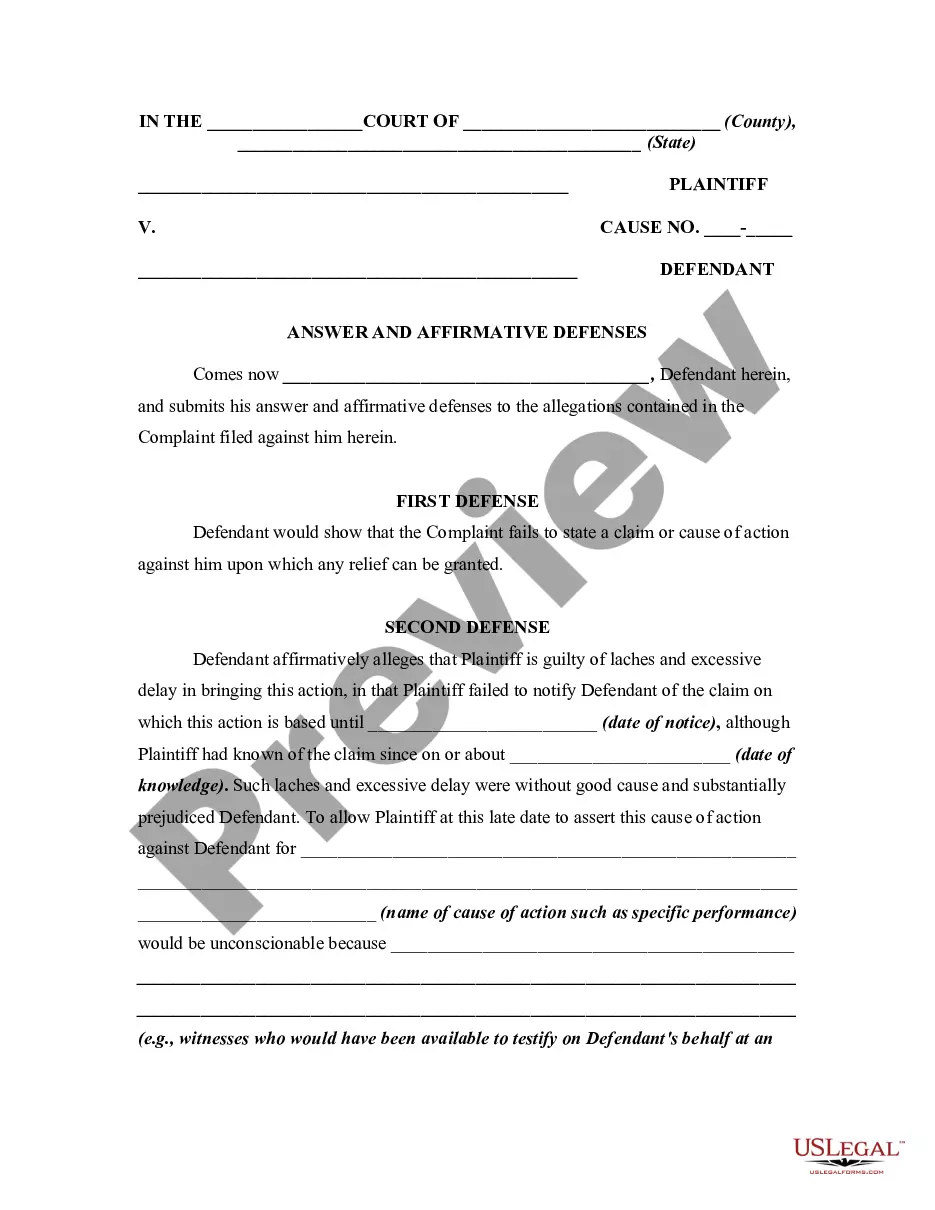
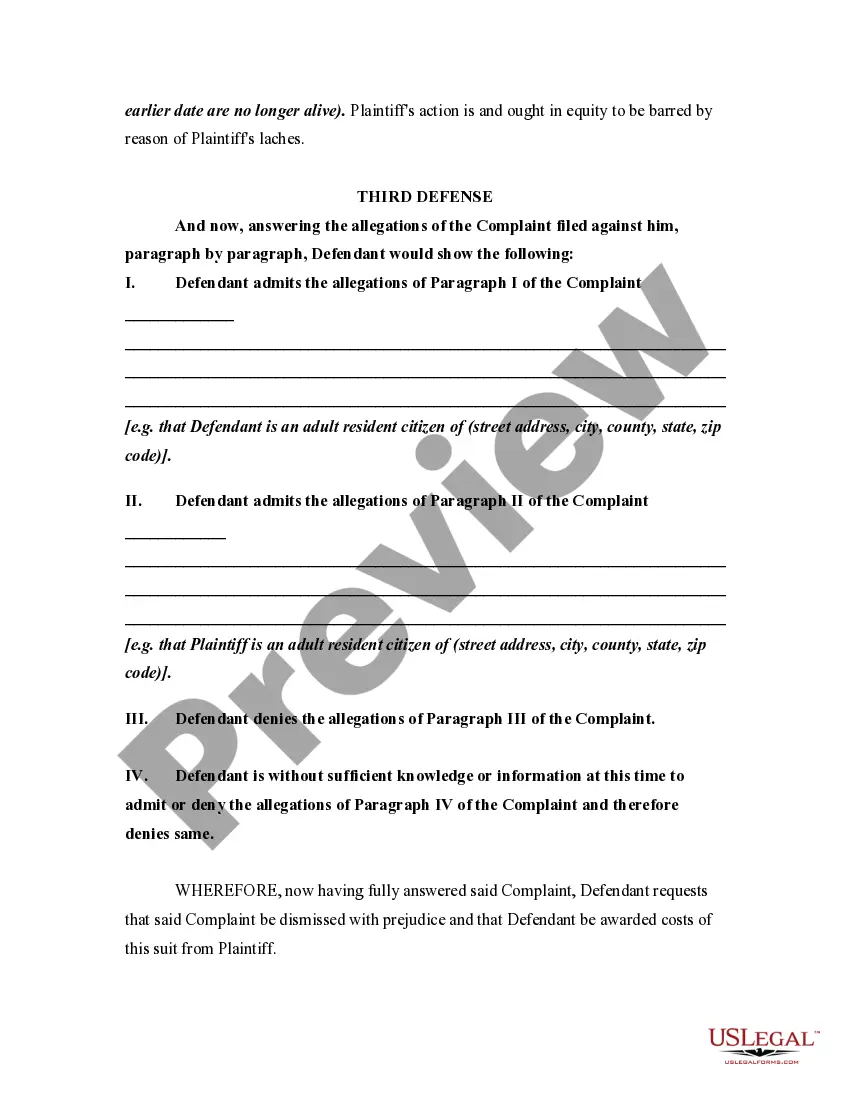
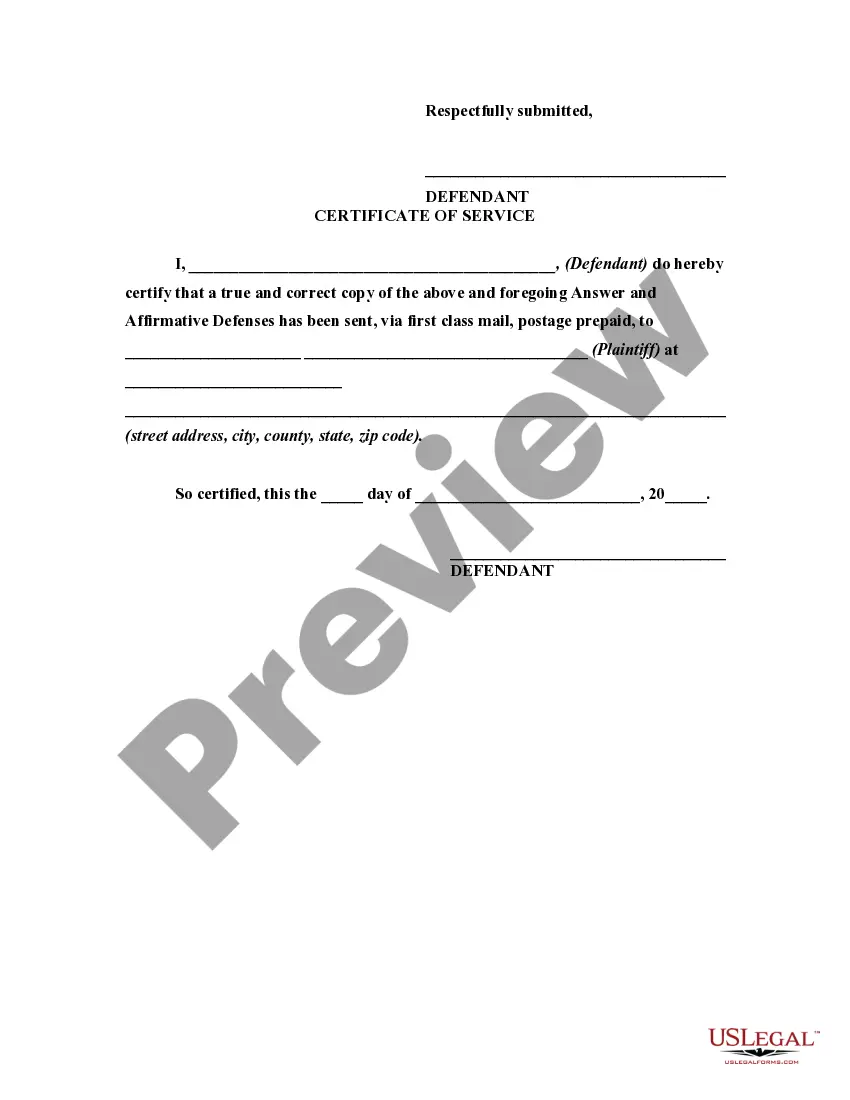
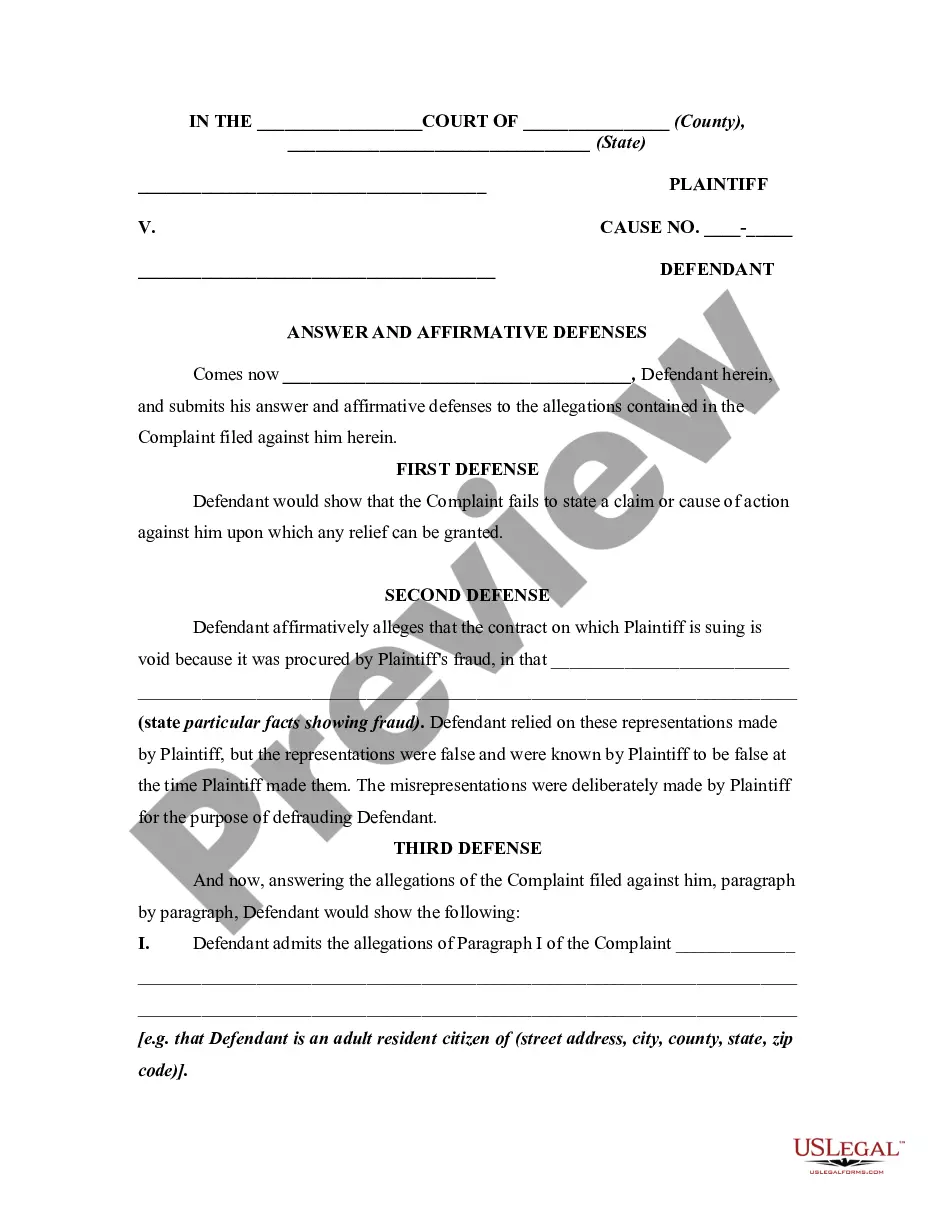
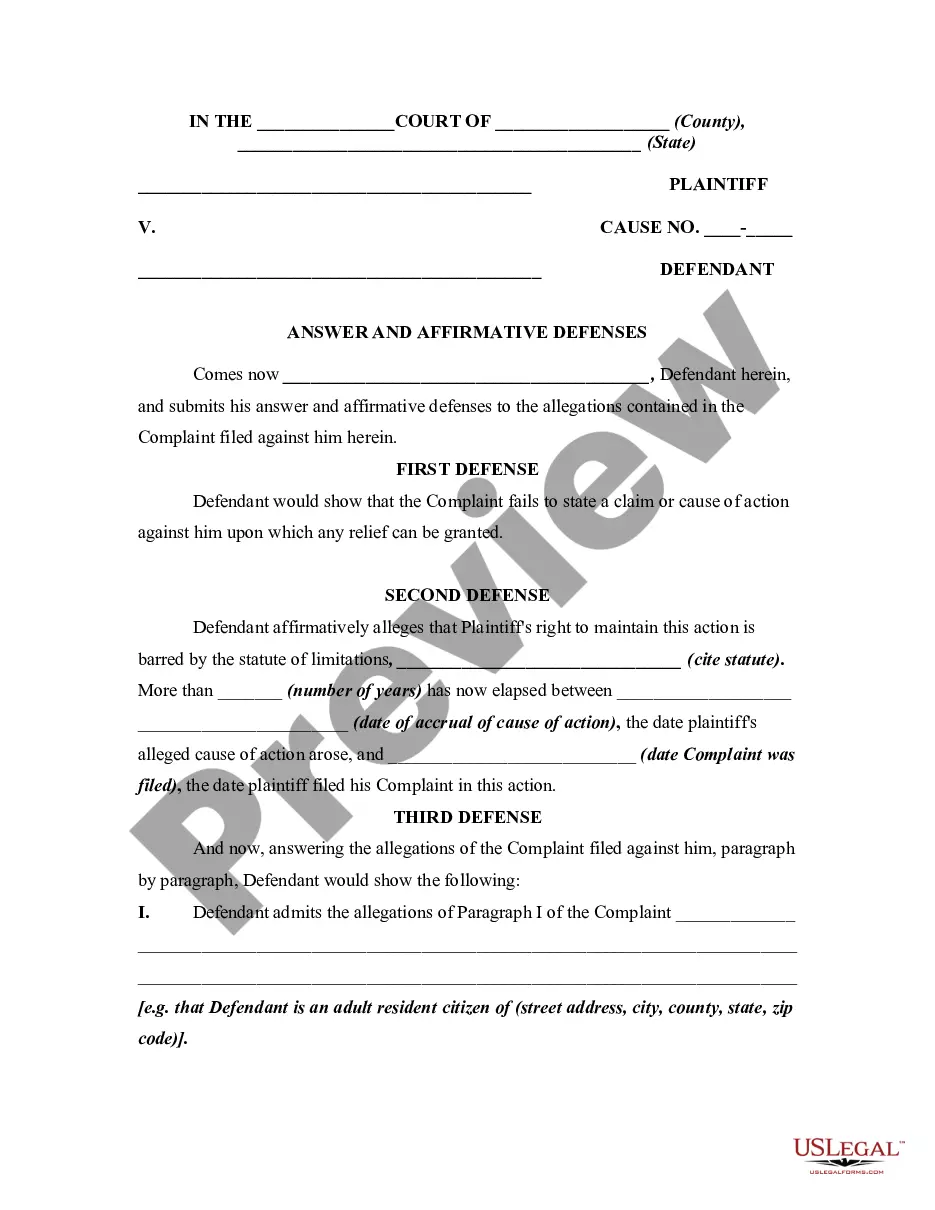
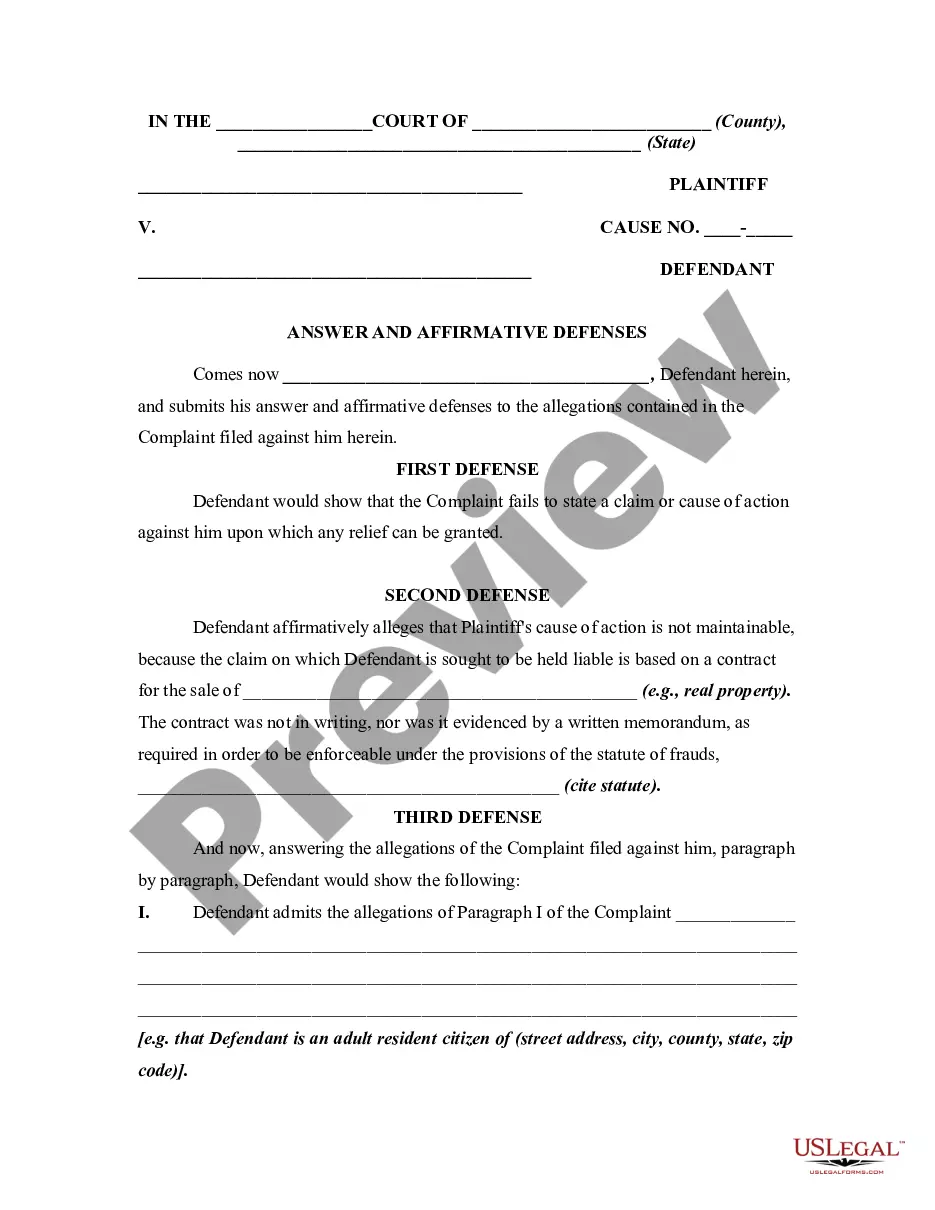
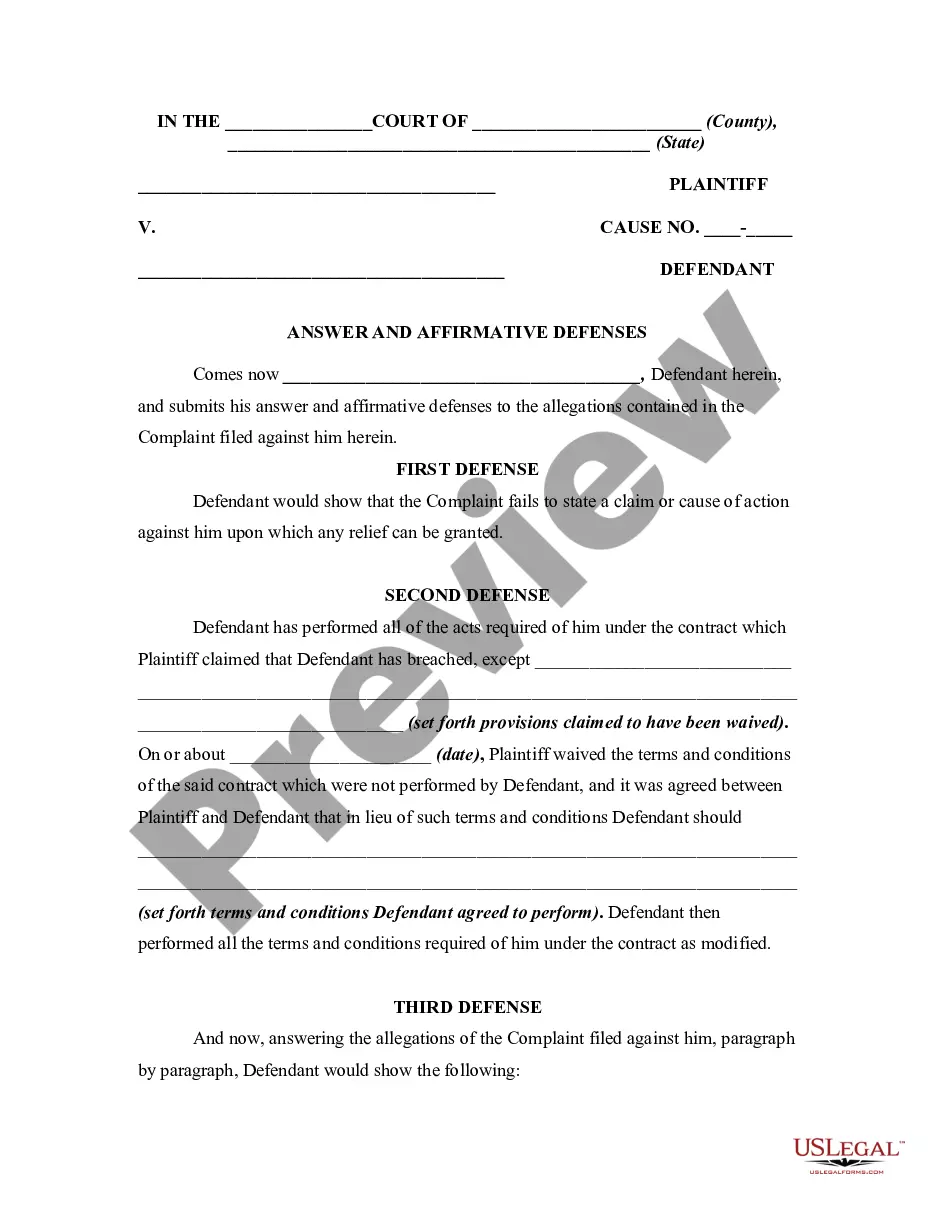
How to fill out Answer By Defendant In A Civil Lawsuit Alleging The Affirmative Defense Of The Cause Of Action Being Barred By Laches?
- For returning users, log in to your account and select the form template you need. Ensure your subscription is active; if not, consider renewing it based on your plan.
- If you’re new to the service, start by reviewing the preview mode and descriptions of the forms. Confirm that the form matches your specific needs and complies with local jurisdiction.
- Utilize the search function to find additional templates if necessary. If you encounter discrepancies, look for the right form that addresses your requirements.
- Select your desired document by clicking the Buy Now button, and choose a subscription plan that suits you. An account registration is mandatory to access their extensive library.
- Complete the purchase by entering your payment details, using either a credit card or PayPal account.
- Download the completed form to your device. You can access it anytime through the My Forms section of your profile.
US Legal Forms stands out with its robust collection of legal documents—providing more options than most competitors at similar costs. With over 85,000 editable forms, users can easily find the right documentation for their legal concerns.
In conclusion, leveraging US Legal Forms can streamline your civil lawsuit action with theft. Take control of your legal journey—visit their site today and start drafting your documents with confidence.
Form popularity
FAQ
The largest amount you can claim in small claims court varies by state, often ranging from $2,500 to $10,000. For a civil lawsuit action with theft, ensure your claim falls within this limit. If your claim exceeds the small claims cap, you may need to consider filing in a higher court. USLegalForms can help you determine the right court and prepare your case effectively.
In civil court, there typically is no strict limit on the amount you can sue for regarding a civil lawsuit action with theft. However, some jurisdictions may set limits for specific types of cases. Always consider your claim's validity and ensure you have adequate evidence to support your requested amount. Using resources from USLegalForms can strengthen your position.
When pursuing a civil lawsuit action with theft, the amount you can sue for varies based on the type of claim and state laws. Generally, there is no cap on the total damages in civil court, but practical limits do exist. You must assess the value of your stolen property and any additional damages you seek. If you need help with documentation and processes, USLegalForms offers resources to guide you.
To accuse someone of stealing, you need to provide concrete proof that demonstrates the theft occurred. This may include eyewitness accounts, security camera footage, or receipts showing the absence of stolen items. Additionally, maintaining detailed records of the value of your stolen property will strengthen your civil lawsuit action with theft. Using US Legal Forms can assist you in organizing your evidence and ensuring you present a solid case.
Yes, you can pursue a civil lawsuit action with theft if someone has stolen from you. This type of lawsuit allows you to seek compensation for your losses caused by the theft. It is important to document the details of the theft and gather evidence to support your claim. Consulting with legal professionals or using platforms like US Legal Forms can help you understand your options and navigate the legal process.
Yes, you can sue someone in civil court for theft under a civil lawsuit action with theft. This allows you to seek monetary compensation for your losses. Engaging a platform like US Legal Forms can help you navigate the complexities of filing a lawsuit and understanding your rights.
A civil crime is generally a wrongdoing that causes harm to an individual rather than society as a whole. Examples include breach of contract, defamation, and theft. If you're exploring options after experiencing theft, understanding civil crime can guide your pursuit of a civil lawsuit action with theft.
Stealing is classified as both a criminal offense and a civil wrong. Criminal cases focus on punishing the thief through fines or imprisonment, while civil cases aim to recover losses for the victim. If you have suffered from theft, pursuing a civil lawsuit action with theft can be an effective way to seek restitution.
The civil side of theft is called a civil action for conversion or sometimes simply a theft claim. This allows the victim to file a lawsuit to recover financial damages. In a civil lawsuit action with theft, the emphasis is on restoring the victim's losses, rather than punishing the wrongdoer.
The civil term for stealing is often referred to as conversion. In a civil lawsuit action with theft, conversion addresses situations where someone unlawfully takes or uses another person's property. Understanding this term can help clarify the grounds for your legal claim.