Civil Action For Damages
Description
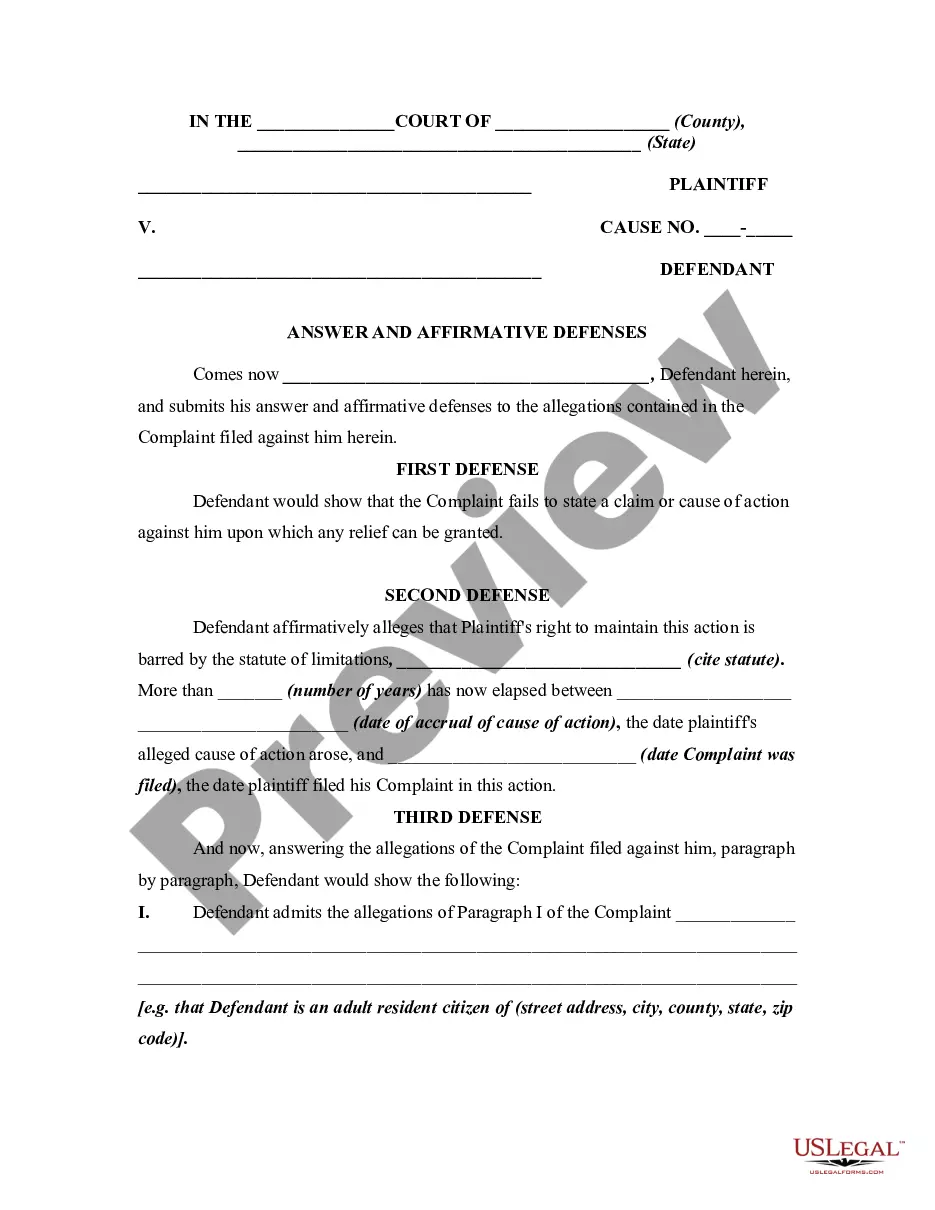
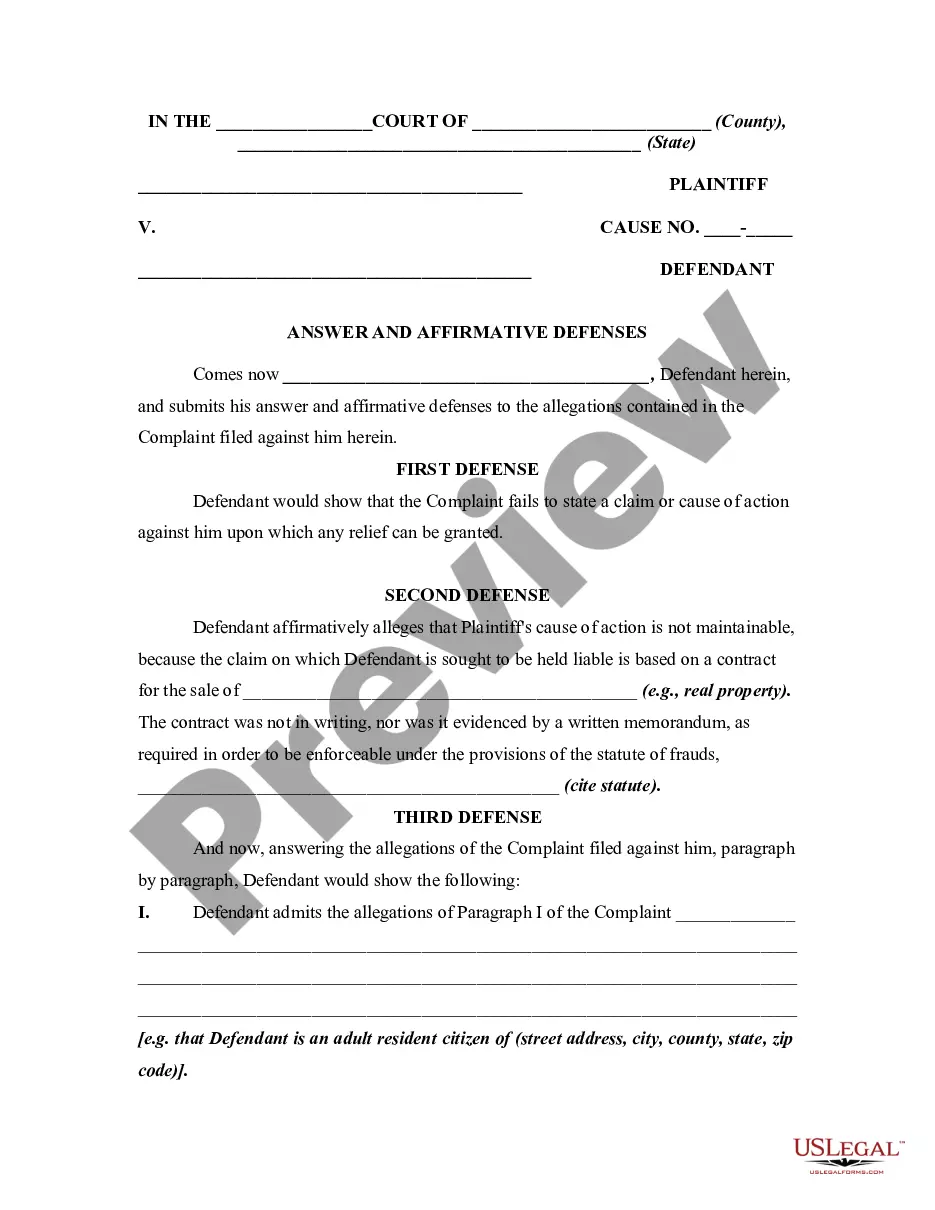
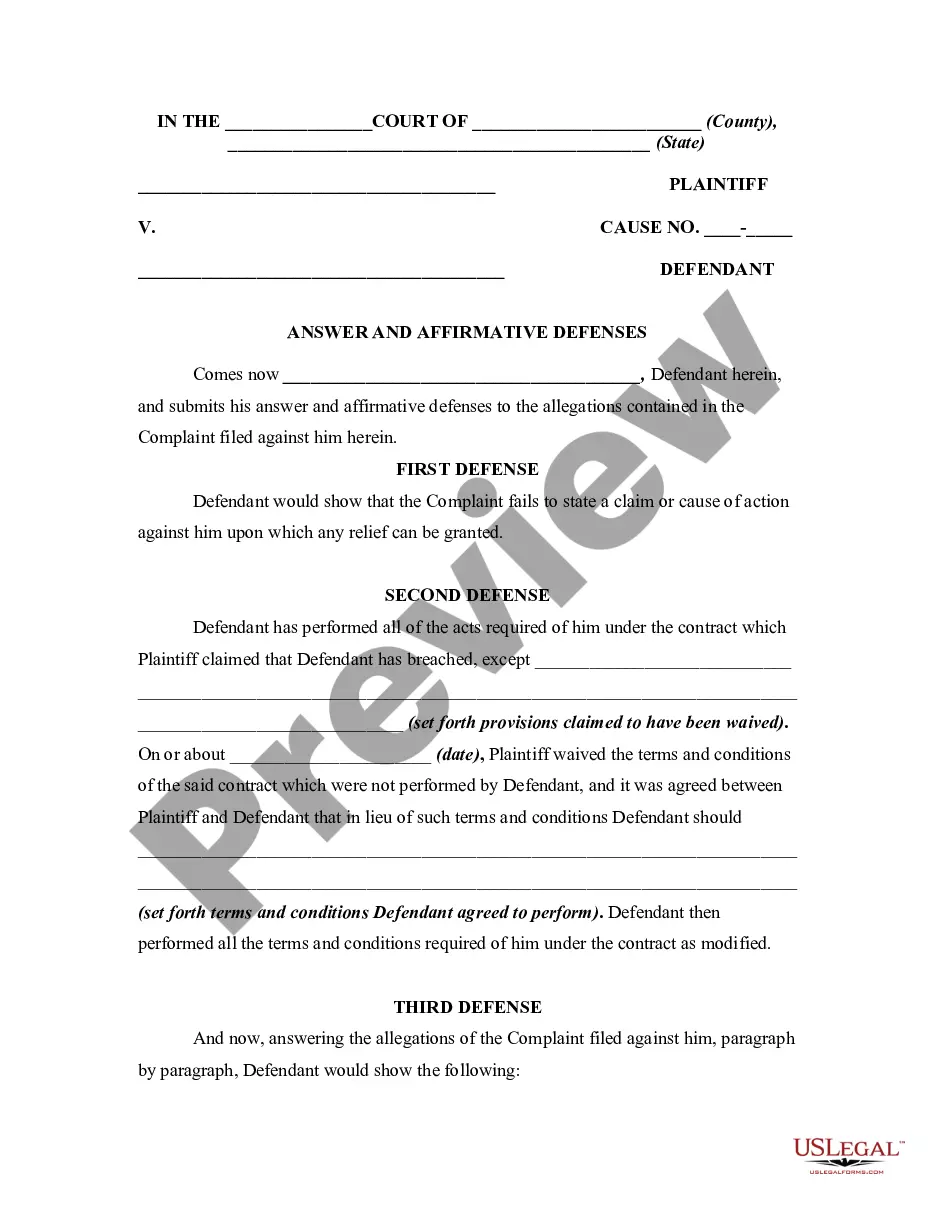
Get your form ready online
Our built-in tools help you complete, sign, share, and store your documents in one place.
Make edits, fill in missing information, and update formatting in US Legal Forms—just like you would in MS Word.
Download a copy, print it, send it by email, or mail it via USPS—whatever works best for your next step.
Sign and collect signatures with our SignNow integration. Send to multiple recipients, set reminders, and more. Go Premium to unlock E-Sign.
If this form requires notarization, complete it online through a secure video call—no need to meet a notary in person or wait for an appointment.
We protect your documents and personal data by following strict security and privacy standards.

Make edits, fill in missing information, and update formatting in US Legal Forms—just like you would in MS Word.

Download a copy, print it, send it by email, or mail it via USPS—whatever works best for your next step.

Sign and collect signatures with our SignNow integration. Send to multiple recipients, set reminders, and more. Go Premium to unlock E-Sign.

If this form requires notarization, complete it online through a secure video call—no need to meet a notary in person or wait for an appointment.

We protect your documents and personal data by following strict security and privacy standards.
Looking for another form?







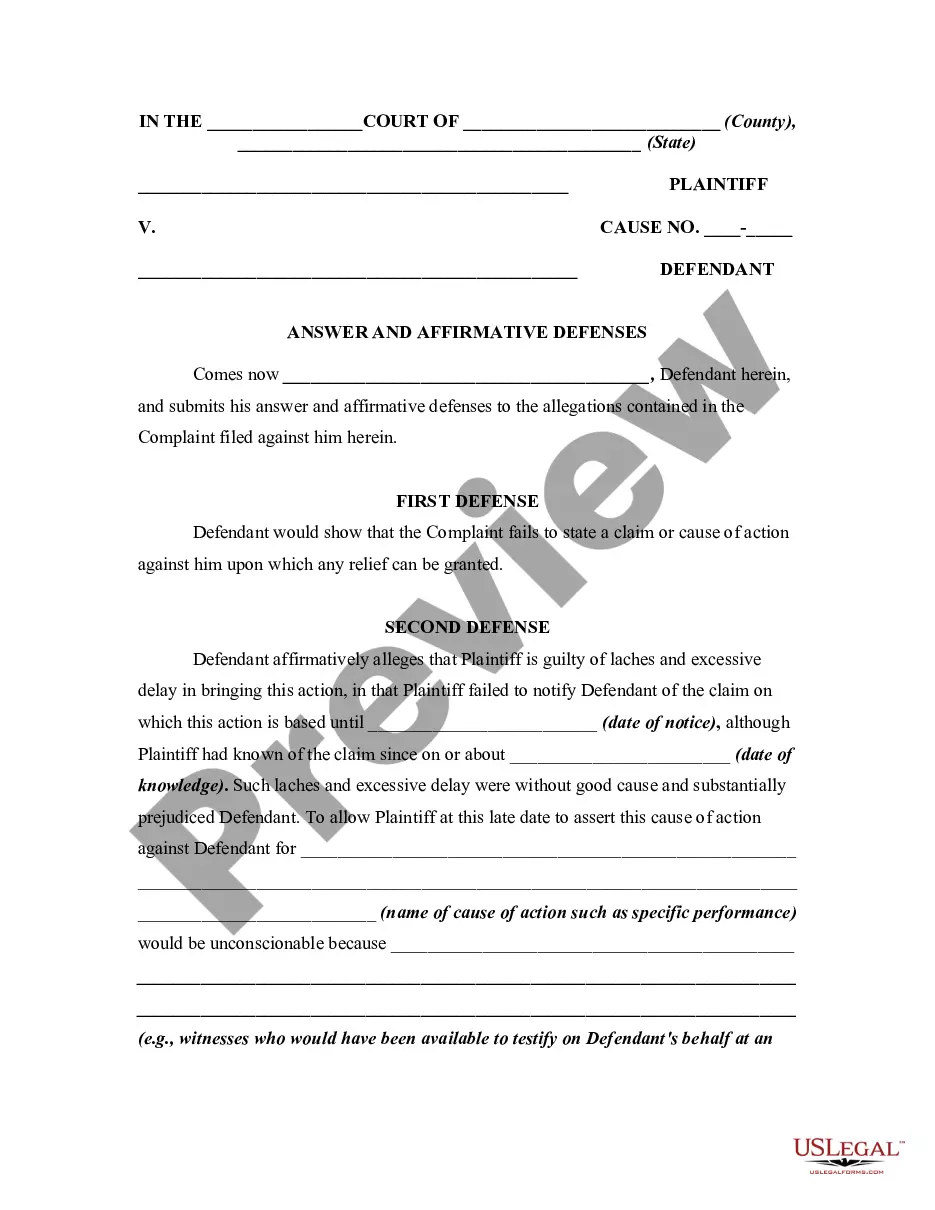
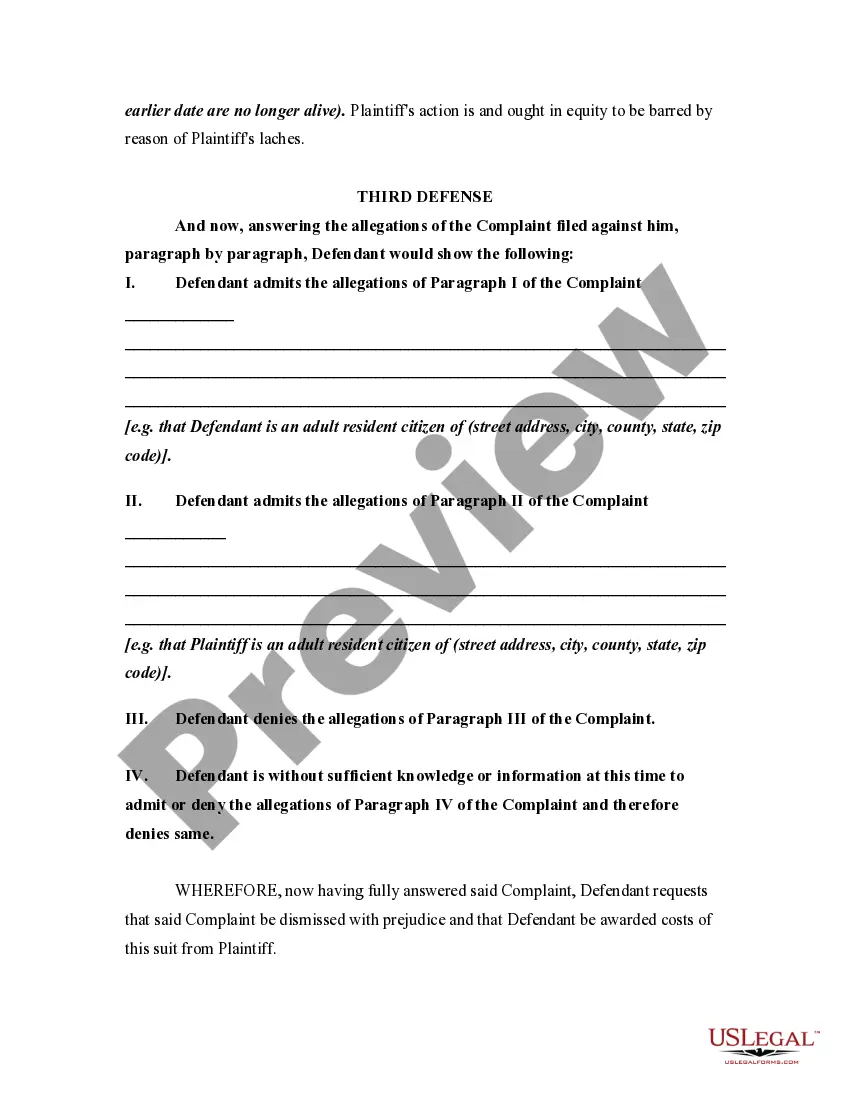
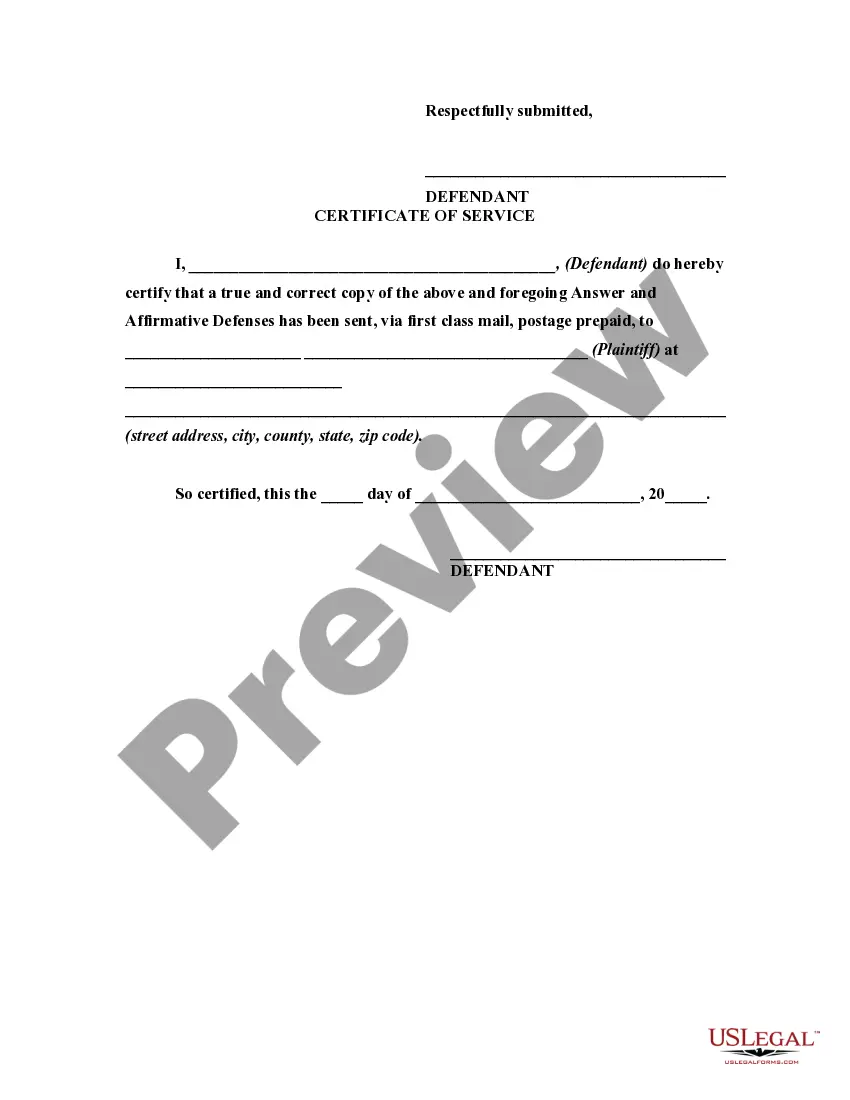
How to fill out Answer By Defendant In A Civil Lawsuit Alleging The Affirmative Defense Of The Cause Of Action Being Barred By Laches?
- Log in to your existing US Legal Forms account to retrieve your desired form by clicking the Download button. Ensure your subscription is active; if it has lapsed, renew it as per your payment plan.
- If you are using our service for the first time, begin by exploring the Preview mode and read the form description to confirm its suitability for your needs and local jurisdiction.
- If the selected template does not meet your requirements, utilize the Search feature to locate a more applicable form.
- Purchase the selected document by clicking on the Buy Now option and choose an appropriate subscription plan. You will need to register an account for full access.
- Complete the payment process by entering your credit card information or using your PayPal account for subscription fees.
- Download the completed form to your device, allowing you to access it anytime via the My Forms section in your profile.
By following these steps, you can efficiently navigate the complexities of preparing for a civil action for damages. US Legal Forms not only provides a vast collection of over 85,000 forms but also offers access to premium experts for any assistance you might need.
Start today by visiting US Legal Forms to unlock the power of seamless legal documentation!
Form popularity
FAQ
A clear example of a civil action is a personal injury lawsuit, such as when someone is injured in a car accident due to another driver's negligence. The injured party may file a civil action for damages to seek compensation for medical bills, lost wages, and pain and suffering. This illustrates how civil actions serve as a tool for individuals to receive redress for their grievances. Utilizing platforms like US Legal Forms can simplify the process of initiating your civil action for damages.
In civil cases, the determination of damages usually falls to a judge or jury. They evaluate the evidence presented and decide how much, if any, compensation should be awarded to the injured party. This process aims to fairly reflect the loss or harm suffered, ensuring that the outcome meets legal standards. Understanding how damages are decided can assist you in preparing for civil action for damages.
A civil cause of action encompasses a range of situations where an individual or business seeks legal remedy through the courts. This can include disputes over contracts, negligence that leads to injury, or cases of defamation. In essence, if someone believes their rights have been violated and seeks damages, it typically falls under a civil action for damages. Recognizing these scenarios can empower individuals to pursue justice effectively.
Civil causes of action refer to legal claims that individuals or entities file in court to seek compensation for damages. These actions arise from disputes where one party believes another has wronged them, resulting in harm. Common civil actions for damages include personal injury claims, property damage cases, and contract disputes. Understanding civil causes of action can help you navigate the complexities of your legal rights and options.
The civil responsibility for damages caused requires individuals or entities to compensate those harmed due to their actions or negligence. This principle upholds the idea that everyone should be responsible for the foreseeable consequences of their actions. If a party fails to meet this responsibility, they may face a civil action for damages, leading to potential court-ordered compensation. Understanding these responsibilities can guide individuals and businesses in avoiding legal disputes.
An example of civil action includes a personal injury lawsuit, where an individual sues another party for damages arising from an accident. In this scenario, the injured party seeks compensation for medical expenses, lost income, and pain and suffering. Civil actions can also encompass contract disputes, property damage claims, and product liability cases. Each of these scenarios demonstrates how a civil action for damages aims to rectify a wrong.
A legal action for damages involves a lawsuit where an individual seeks compensation for losses caused by another party's wrongful actions. It typically entails filing a claim and providing evidence to support the damages claimed. Such actions can vary in complexity, but they play an essential role in the civil justice system. Using platforms like US Legal Forms can help streamline the process of pursuing a civil action for damages.
The three types of civil damages are special, general, and punitive damages. Special damages refer to quantifiable losses, such as medical expenses or lost wages. General damages cover non-economic harm, including emotional distress or loss of enjoyment of life. Finally, punitive damages aim to punish the wrongdoer in a civil action for damages, establishing a strong deterrent effect.
The three primary types of damages include compensatory, punitive, and nominal damages. Compensatory damages aim to reimburse the injured party for actual losses or harm. Punitive damages serve to punish the wrongdoer and deter similar behavior in the future. Nominal damages recognize that a legal wrong occurred, even if no actual financial loss happened, and often accompany a civil action for damages.
Writing up a civil lawsuit involves creating a formal complaint detailing your claims against the defendant. Begin with a clear statement of jurisdiction followed by the facts of your case, the legal basis for your claims, and the relief sought. Utilizing legal resources or platforms like US Legal Forms can simplify this process, ensuring your civil action for damages is properly structured.