Statute Of Frauds Requirements
Description
Get your form ready online
Our built-in tools help you complete, sign, share, and store your documents in one place.
Make edits, fill in missing information, and update formatting in US Legal Forms—just like you would in MS Word.
Download a copy, print it, send it by email, or mail it via USPS—whatever works best for your next step.
Sign and collect signatures with our SignNow integration. Send to multiple recipients, set reminders, and more. Go Premium to unlock E-Sign.
If this form requires notarization, complete it online through a secure video call—no need to meet a notary in person or wait for an appointment.
We protect your documents and personal data by following strict security and privacy standards.

Make edits, fill in missing information, and update formatting in US Legal Forms—just like you would in MS Word.

Download a copy, print it, send it by email, or mail it via USPS—whatever works best for your next step.

Sign and collect signatures with our SignNow integration. Send to multiple recipients, set reminders, and more. Go Premium to unlock E-Sign.

If this form requires notarization, complete it online through a secure video call—no need to meet a notary in person or wait for an appointment.

We protect your documents and personal data by following strict security and privacy standards.
Looking for another form?







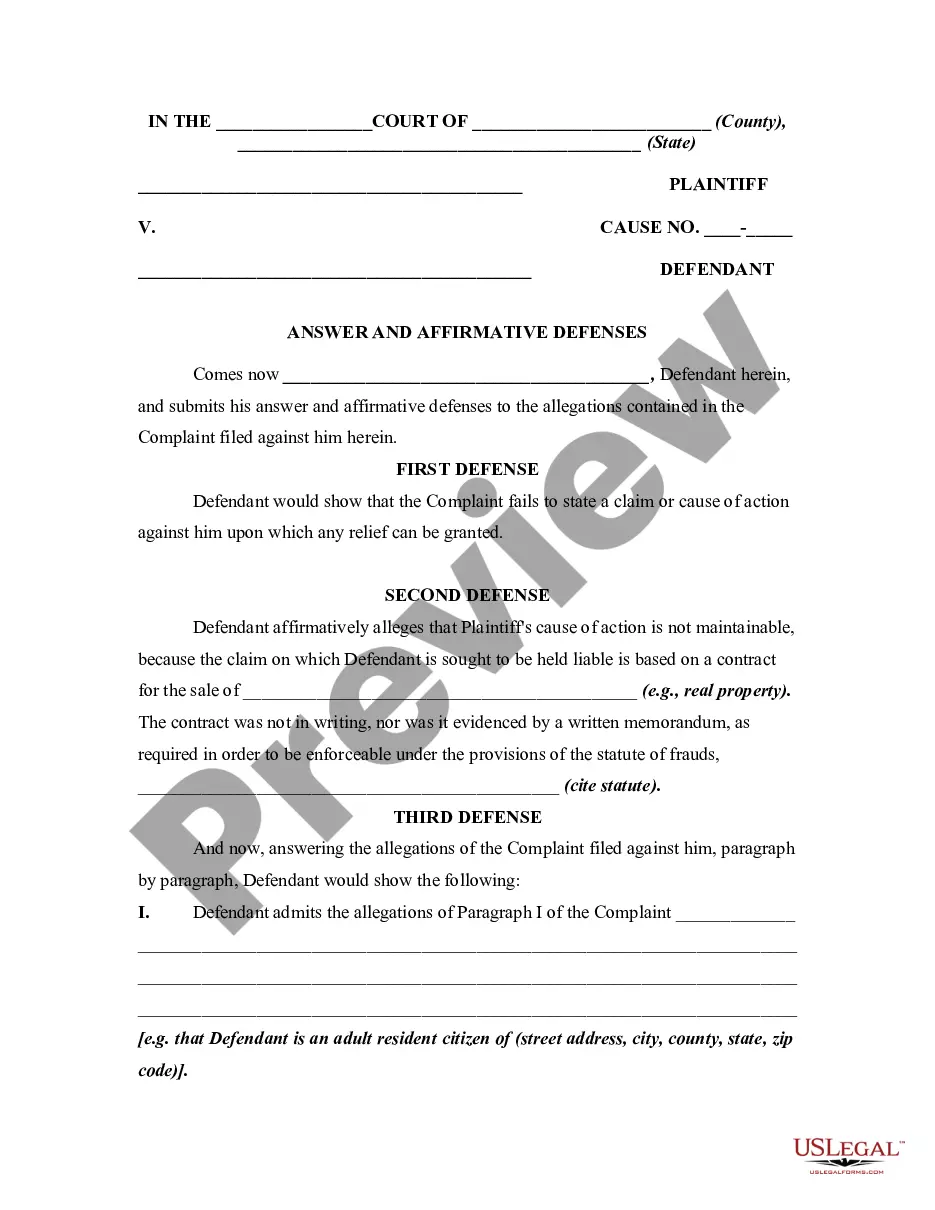
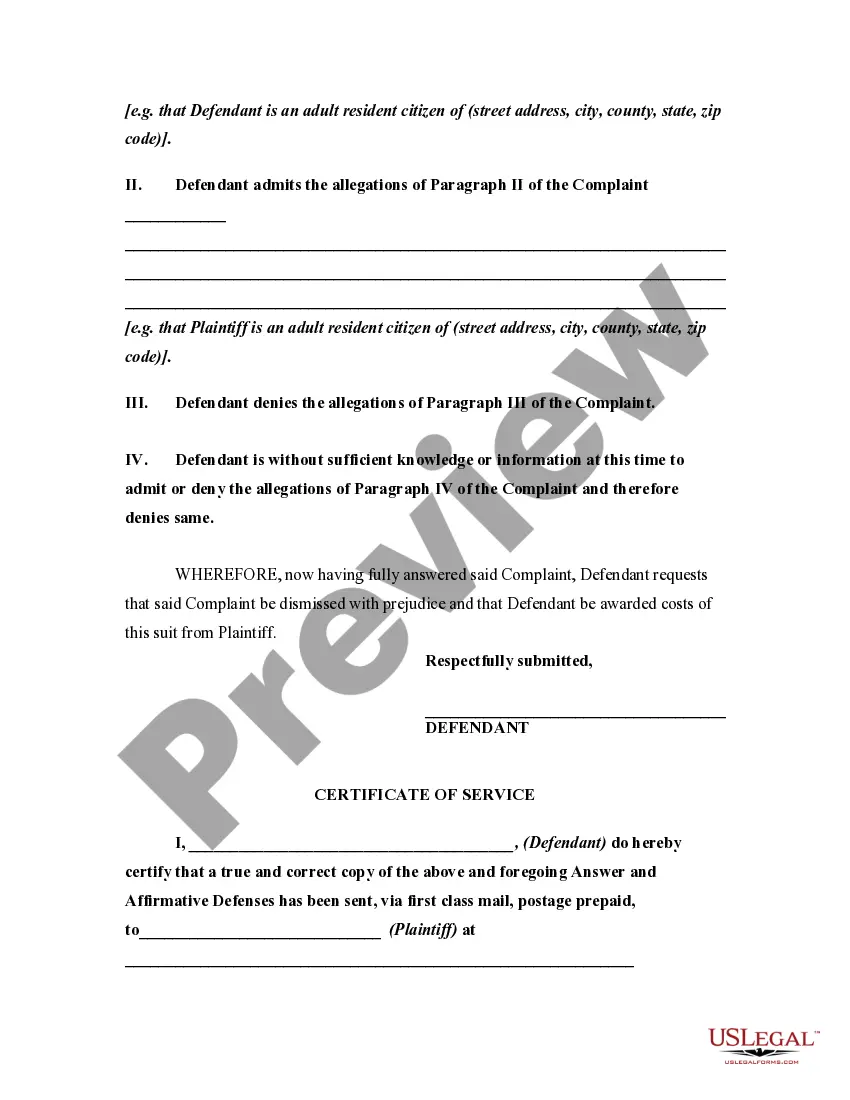
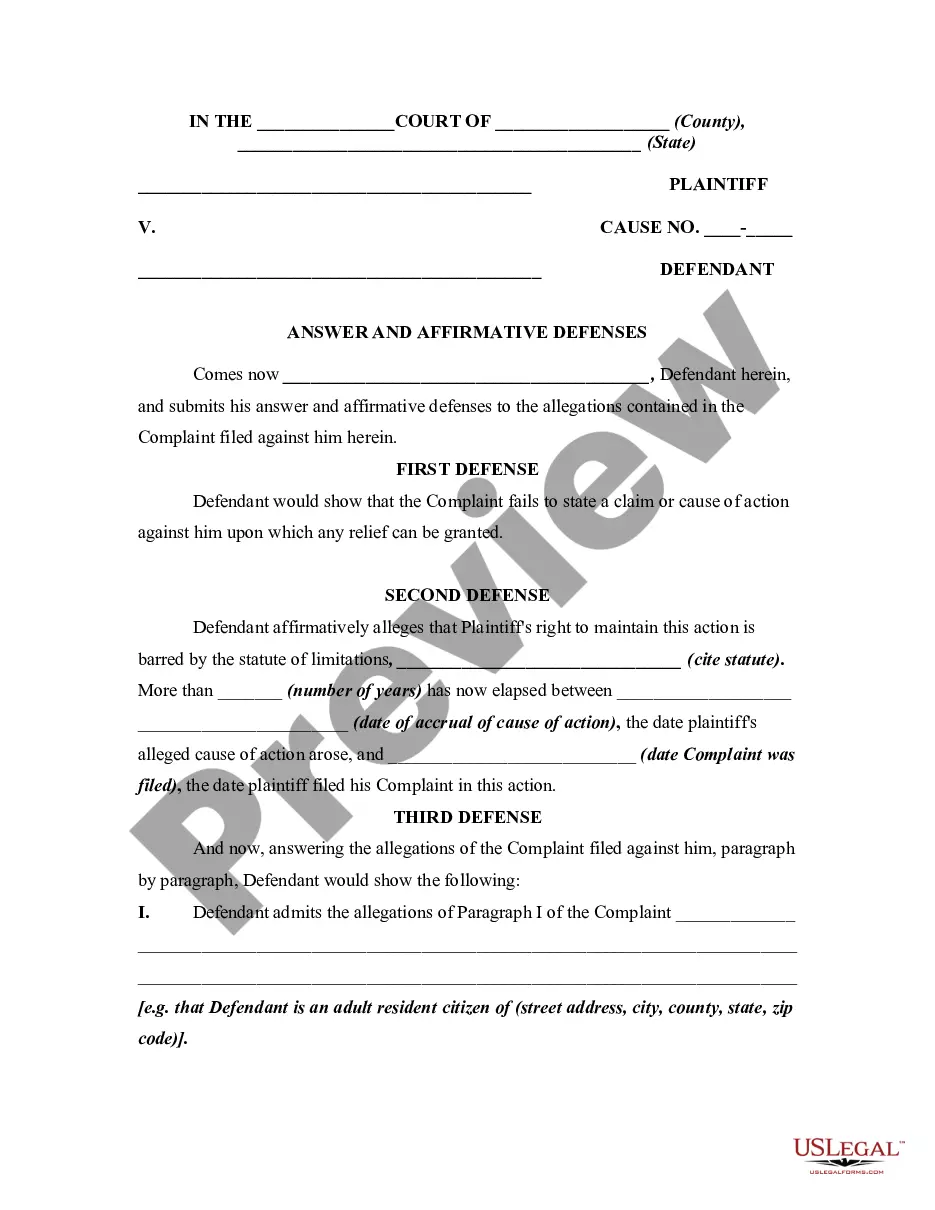
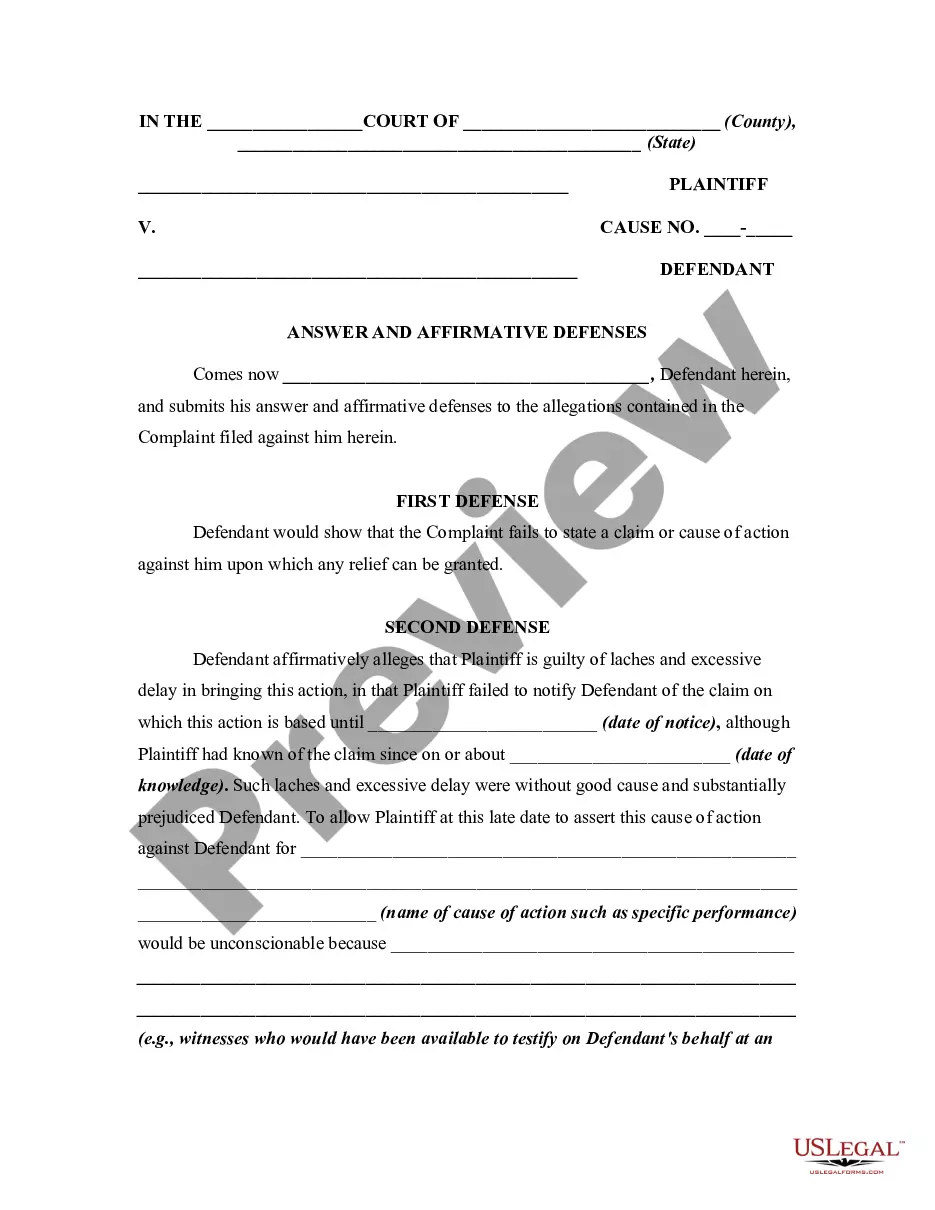
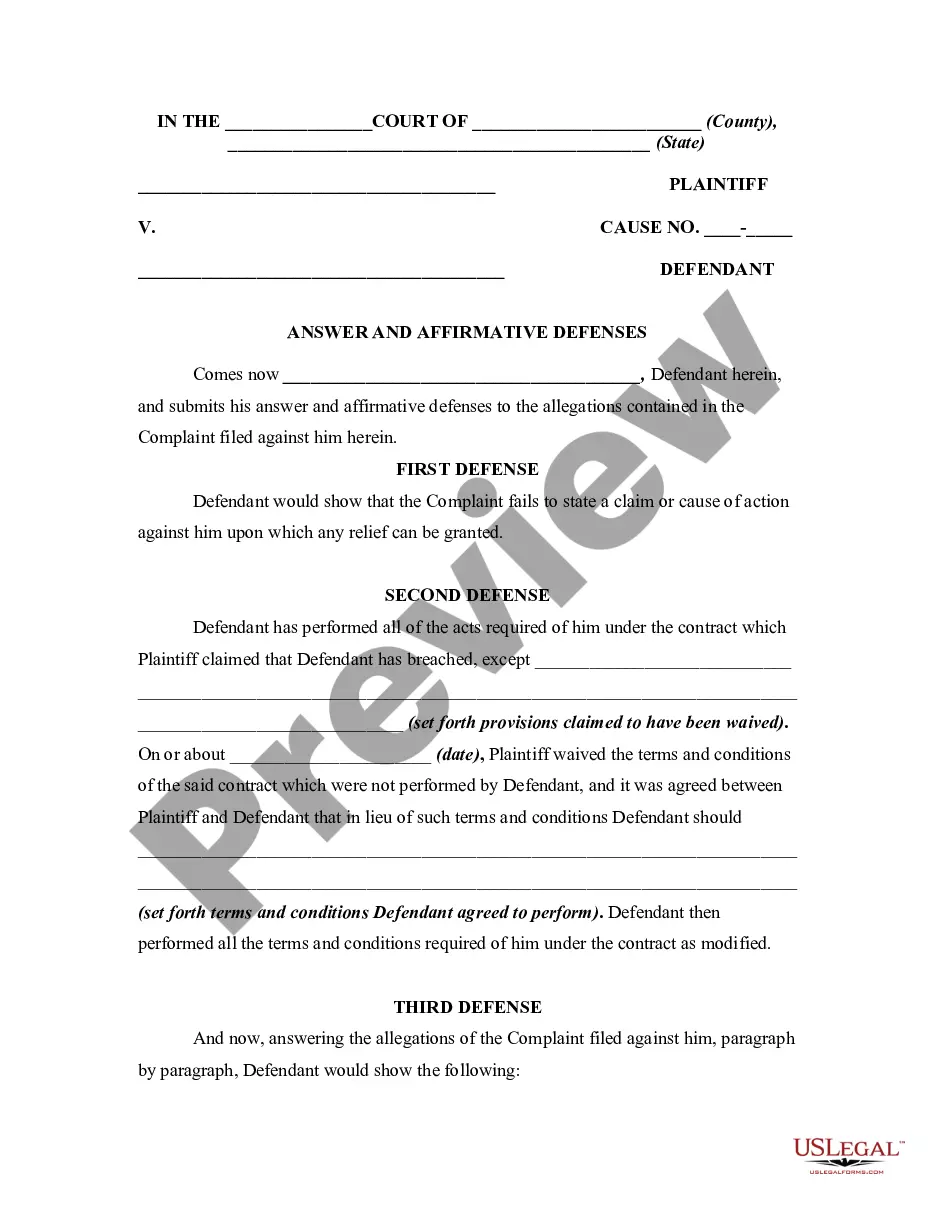
How to fill out Answer By Defendant In A Civil Lawsuit Alleging The Affirmative Defense Of The Cause Of Action Being Barred By The Appropriate Statute Of Frauds?
The Statute of Frauds Criteria you observe on this webpage is a reusable legal framework crafted by experienced attorneys in accordance with national and local laws.
For over 25 years, US Legal Forms has assisted individuals, entities, and lawyers with more than 85,000 validated, state-specific documents for any business and personal circumstance. It's the fastest, simplest, and most trustworthy method to acquire the paperwork you require, as the service ensures high-level data security and anti-malware safeguards.
Register for US Legal Forms to have authentic legal templates for all of life's situations readily available.
- Search for the document you require and examine it.
- Browse the file you searched and preview it or verify the form description to ensure it meets your objectives. If it does not, use the search feature to locate the correct one. Click Buy Now when you have discovered the template you need.
- Register and Log In.
- Choose the pricing package that fits your needs and create an account. Utilize PayPal or a credit card for a swift payment. If you already possess an account, Log In and review your subscription to continue.
- Acquire the editable template.
- Select the format you desire for your Statute of Frauds Criteria (PDF, Word, RTF) and download the sample to your device.
- Complete and sign the document.
- Print the template to fill it out manually. Alternatively, use an online multi-functional PDF editor to swiftly and accurately complete and sign your form with a legally-binding electronic signature.
- Download your documents once more.
- Utilize the same document again whenever necessary. Open the My documents tab in your profile to redownload any previously obtained forms.
Form popularity
FAQ
Yes, there are exceptions to the writing requirement under the Statute of Frauds. For instance, if a party has partially performed their obligations under the contract, that performance may validate the agreement even without written documentation. Additionally, certain types of contracts, such as those involving admission in court or promissory estoppel, can bypass the typical writing requirements.
A contract typically has four parts: the preamble, recitals, terms, and execution. The preamble introduces the parties involved, while recitals provide background information. The terms outline the specific obligations of each party, and execution includes signatures verifying agreement. Understanding these components can simplify compliance with Statute of Frauds requirements, especially when using platforms like USLegalForms.
Basic Doctrine of Statute of Frauds: The ?Statute of Frauds? requires that certain types of contracts be written and signed by all parties in order to be considered binding and enforceable.
The Statute of Frauds can be satisfied by any signed writing that (1) reasonably identifies the subject matter of the contract, (2) is sufficient to indicate that a contract exists, and (3) states with reasonable certainty the material terms of the contract.
Exceptions to the Statute of Frauds For example, if one party orally agrees to manufacture 1,000 t-shirts for another party for a specified price, and has manufactured and delivered 500 of the shirts, then a court will order the other party to pay for the 500 shirts already received.
The UCC includes a statute of frauds, which is a state law that generally requires certain contracts to be in writing and signed by the parties in order to be enforceable. The UCC requires contracts to be in writing in these limited situations: Contracts for the sale of goods worth $500 or more.
Sometimes, even though a contract falls within a statute of frauds, it can be enforced without meeting the two requirements. These exceptions are admission, performance, and promissory estoppel.