Answer Of Defendant Sample
Description
Get your form ready online
Our built-in tools help you complete, sign, share, and store your documents in one place.
Make edits, fill in missing information, and update formatting in US Legal Forms—just like you would in MS Word.
Download a copy, print it, send it by email, or mail it via USPS—whatever works best for your next step.
Sign and collect signatures with our SignNow integration. Send to multiple recipients, set reminders, and more. Go Premium to unlock E-Sign.
If this form requires notarization, complete it online through a secure video call—no need to meet a notary in person or wait for an appointment.
We protect your documents and personal data by following strict security and privacy standards.

Make edits, fill in missing information, and update formatting in US Legal Forms—just like you would in MS Word.

Download a copy, print it, send it by email, or mail it via USPS—whatever works best for your next step.

Sign and collect signatures with our SignNow integration. Send to multiple recipients, set reminders, and more. Go Premium to unlock E-Sign.

If this form requires notarization, complete it online through a secure video call—no need to meet a notary in person or wait for an appointment.

We protect your documents and personal data by following strict security and privacy standards.
Looking for another form?

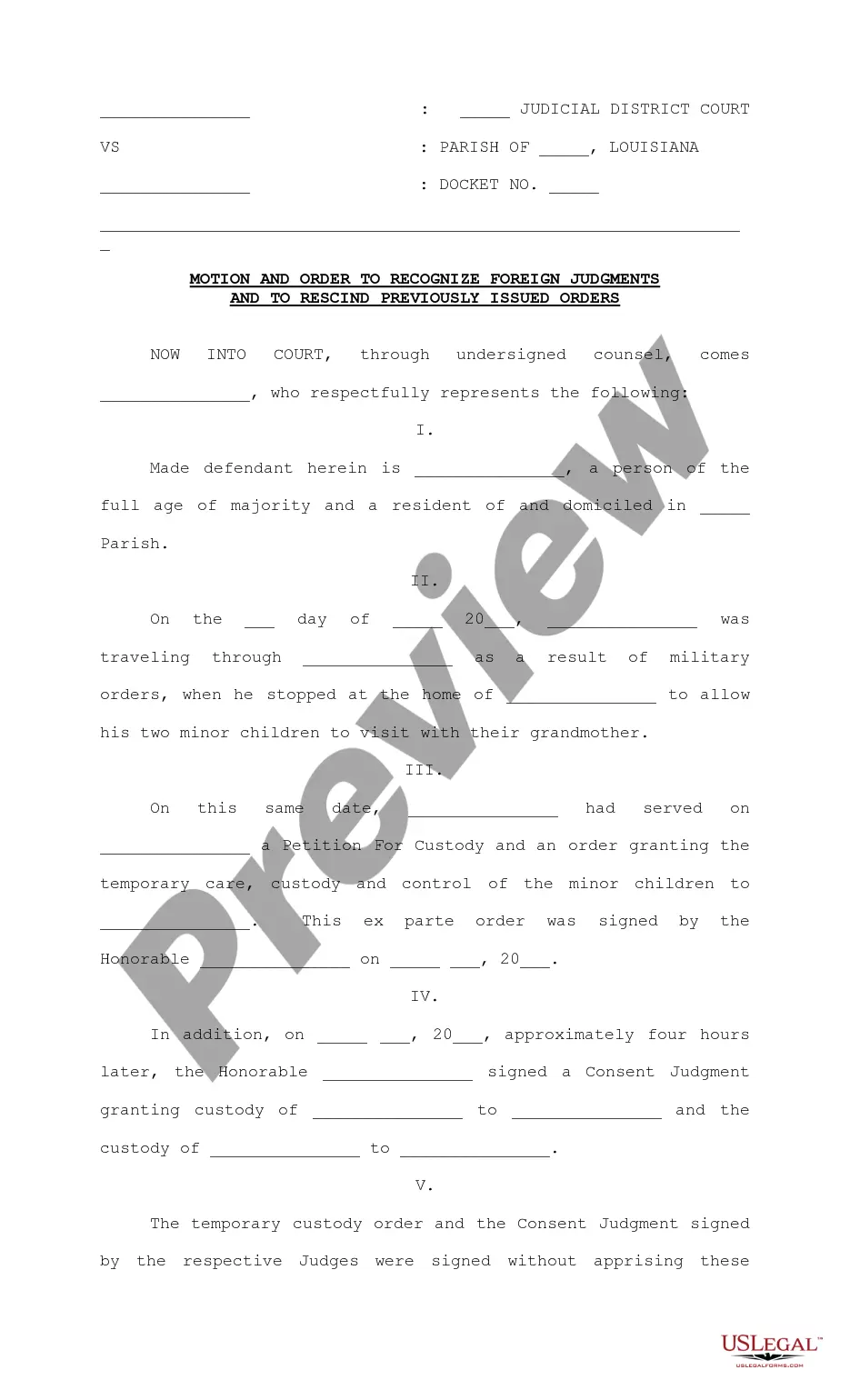







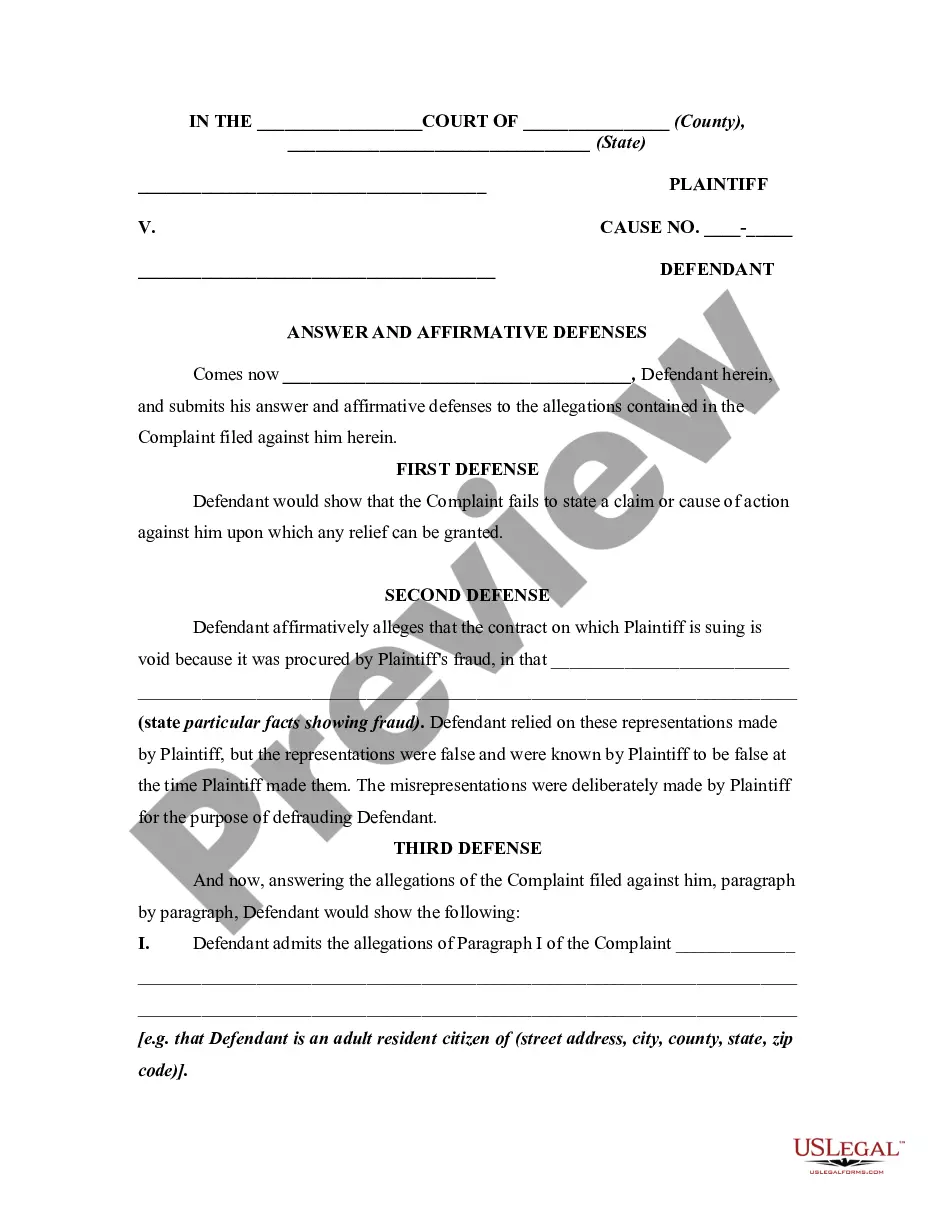
How to fill out Answer By Defendant In A Civil Lawsuit Alleging The Affirmative Defense Of Fraud?
- If you're a returning user, start by logging in to your US Legal Forms account to access your previous forms. Ensure your subscription is active; renew it if necessary.
- For first-time users, begin by searching for 'Answer of defendant sample' in the extensive online library that houses over 85,000 legal tools tailored to various jurisdictions.
- Preview the selected form and review the description. It's crucial to confirm that it meets your specific legal requirements.
- If needed, use the search function to find a different template that better suits your situation.
- Once you've found the correct form, click the 'Buy Now' button and select an appropriate subscription plan. You will need to create an account to unlock full access.
- Complete your purchase through a secure method, entering your payment details via credit card or PayPal.
- After processing your payment, download the template and save it to your device. You can always revisit the 'My Forms' section of your account to access it later.
In conclusion, US Legal Forms simplifies the process of obtaining legal documents like the 'Answer of defendant sample' with its extensive form library and user-friendly services. With a robust selection and access to expert assistance, you can ensure your legal documents are completed accurately.
Start your journey towards legal clarity today by visiting US Legal Forms and explore the resources available!
Form popularity
FAQ
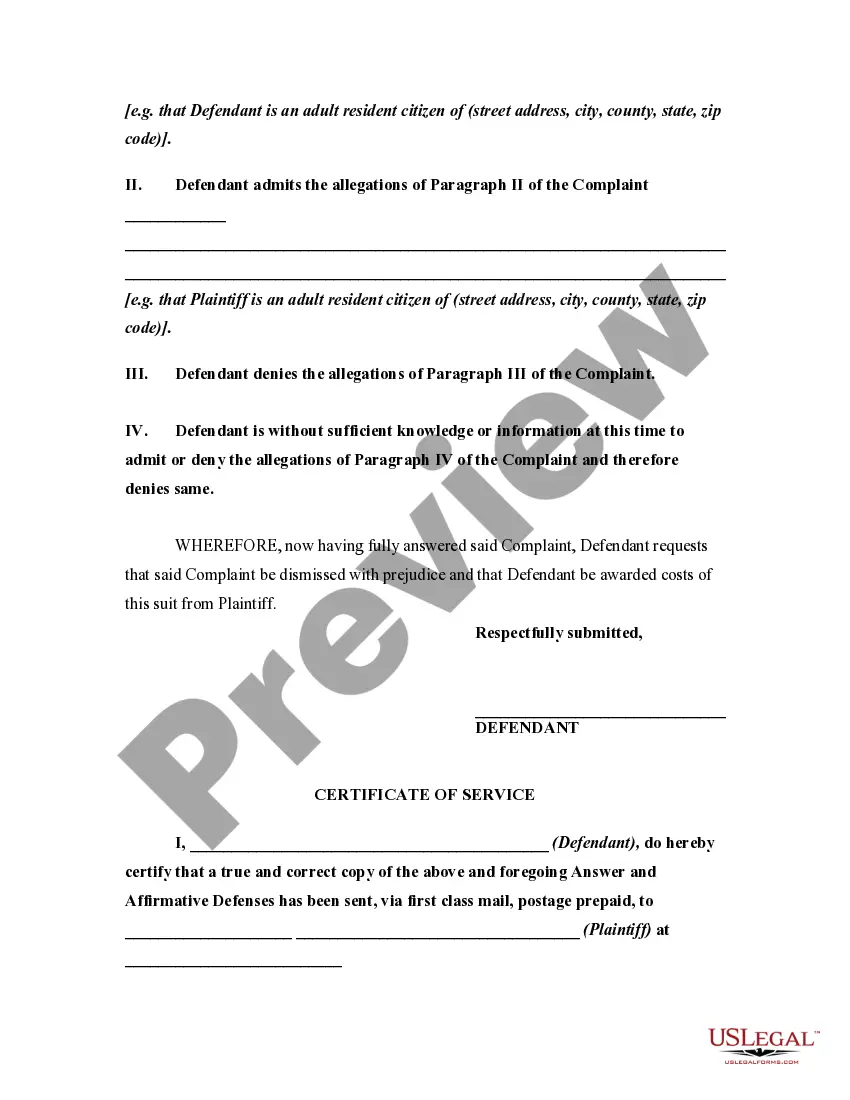
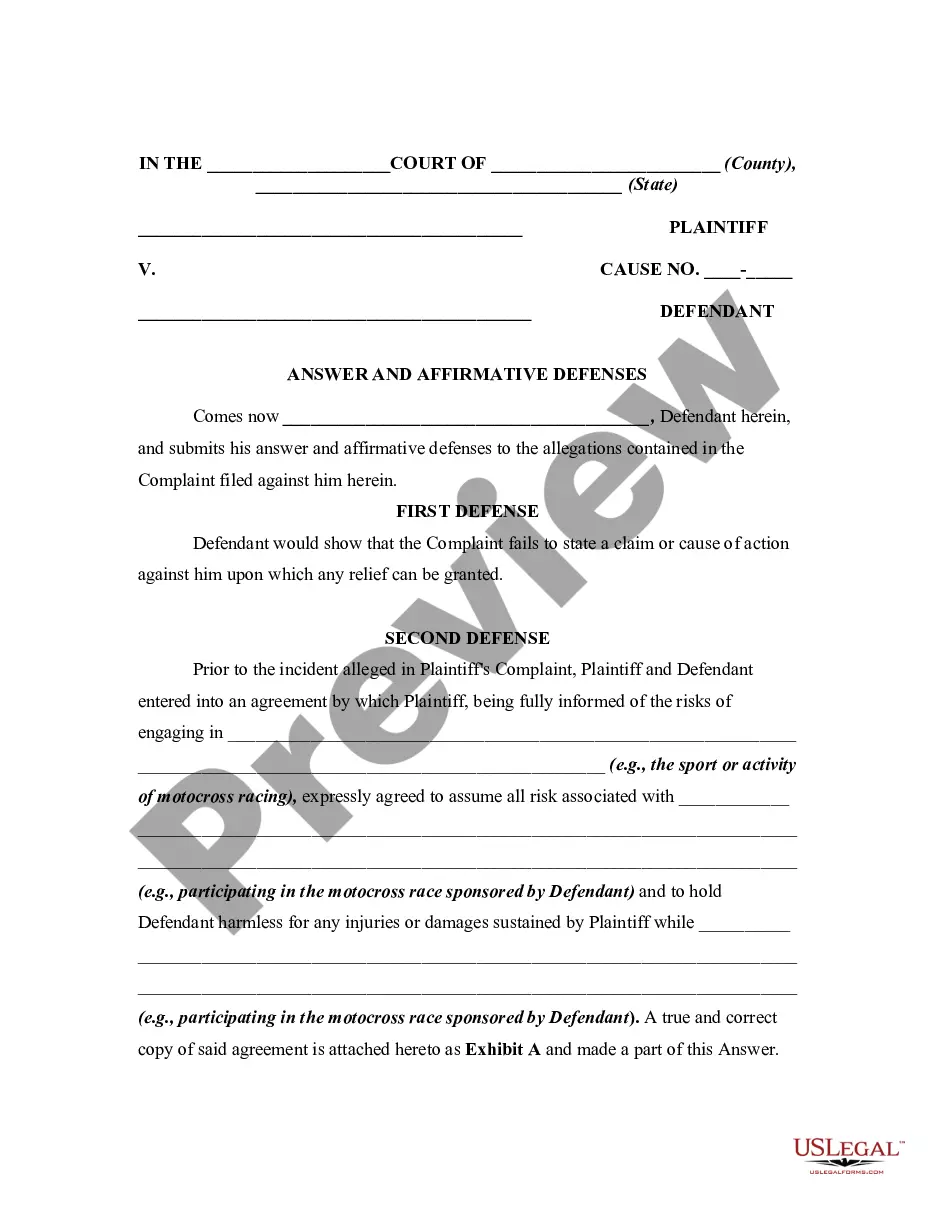
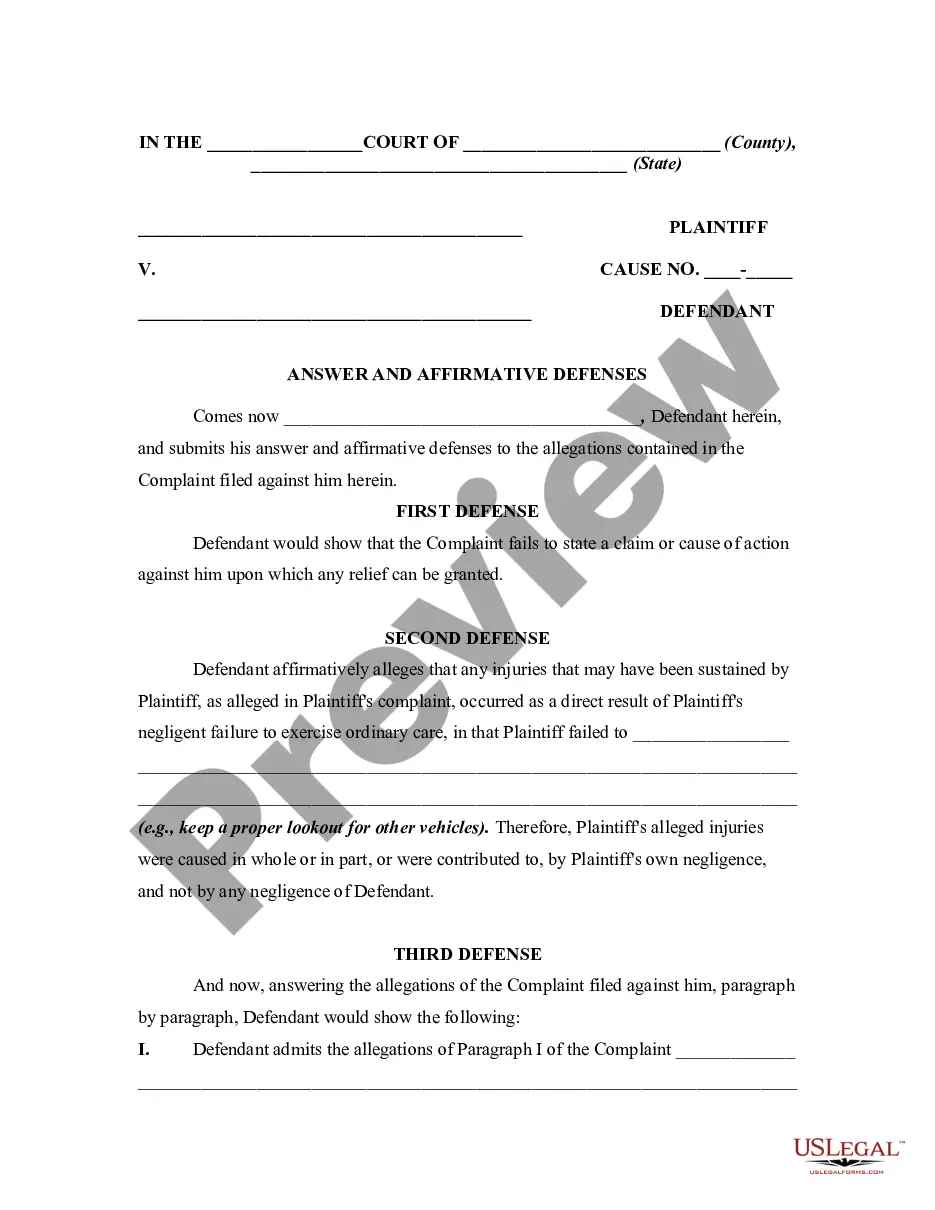
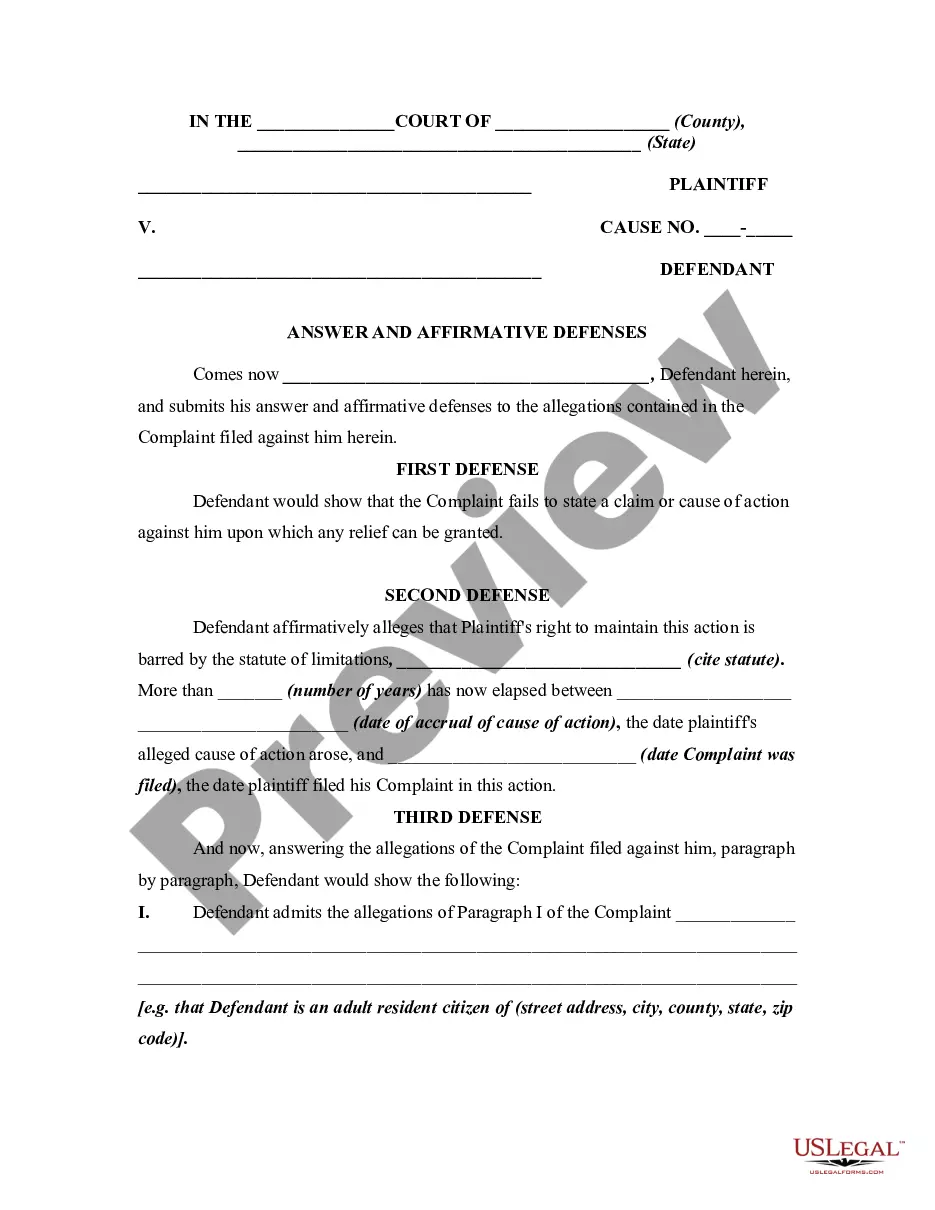
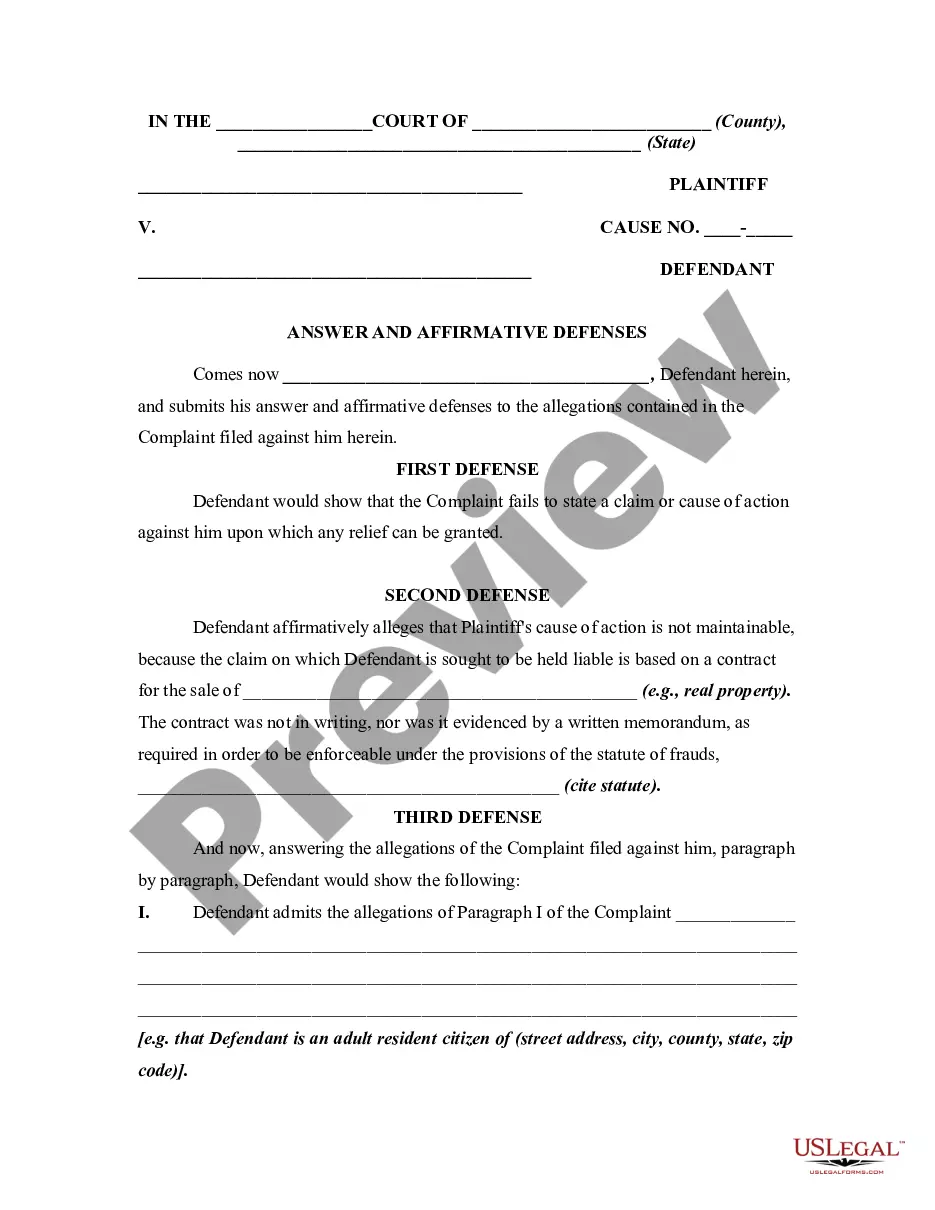
The defendant's answer is a legal document that replies to a plaintiff's complaint or summons in a lawsuit. This document is where the defendant can present their case, state defenses, and challenge the plaintiff's claims. Reviewing an answer of defendant sample can help clarify how to articulate your arguments and make your answer robust.
When you receive a summons, your answer must address the allegations made by the plaintiff within a specific timeframe. It's important to follow the court's instructions and format your response according to legal standards. By using an answer of defendant sample, you can simplify this process and ensure you meet all legal requirements.
A legal answer is a formal document that responds to the allegations presented in a complaint. To write an effective answer, you should admit, deny, or state that you lack sufficient knowledge regarding each claim. Consider looking at an answer of defendant sample to see how to structure your document and adequately present your case.
Writing a written response to the court involves outlining your defense and addressing the claims made by the plaintiff. It is essential to be clear and concise, ensuring that you include all relevant facts and legal arguments. Utilizing an answer of defendant sample can provide a helpful framework for creating your response effectively.
In legal terms, the plaintiff is the person or party who brings a case against another in a court of law, while the defendant is the person or party accused of wrongdoing. Understanding these roles is crucial in any legal proceeding. If you are the defendant, knowing how to formulate an answer of defendant sample can greatly benefit your case.
To write a legal response, focus on clarity and thoroughness. Start by translating the claims into sections you can address directly, and remain factual. An 'Answer of defendant sample' can provide a framework that enhances your understanding and approach to writing a legal response.
Writing a legal response involves addressing the claims made directly, stating your objections, and providing any supporting evidence. It must be clear and in the correct format according to court expectations. For assistance, refer to an 'Answer of defendant sample' to strengthen your legal writing.
To write a letter of response to a court summons, you must detail your stance on the allegations presented. It’s important to be factual and avoid emotional language. Using an 'Answer of defendant sample' can clarify how to structure your letter and ensure you cover all necessary points.
When writing a response letter to the court, clearly state your case and point out the relevant laws. Be concise and respectful in your tone. A well-structured 'Answer of defendant sample' can greatly assist you in formulating a strong and persuasive response.
To write a written response to a summons, you need to acknowledge the complaint and provide your defense. It’s essential to follow the legal formatting rules and deadlines. An 'Answer of defendant sample' can be a valuable tool, offering insights on how to organize your response effectively.