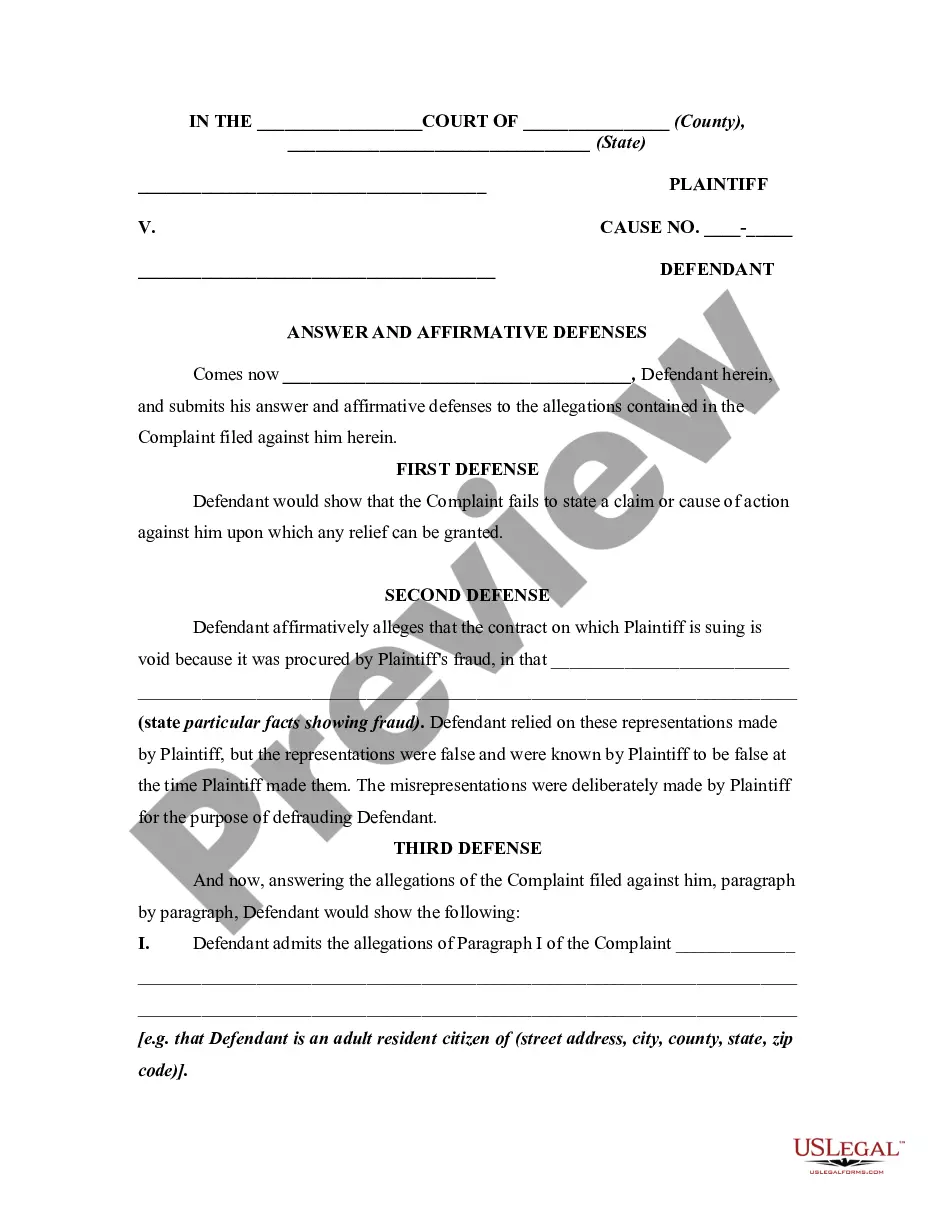
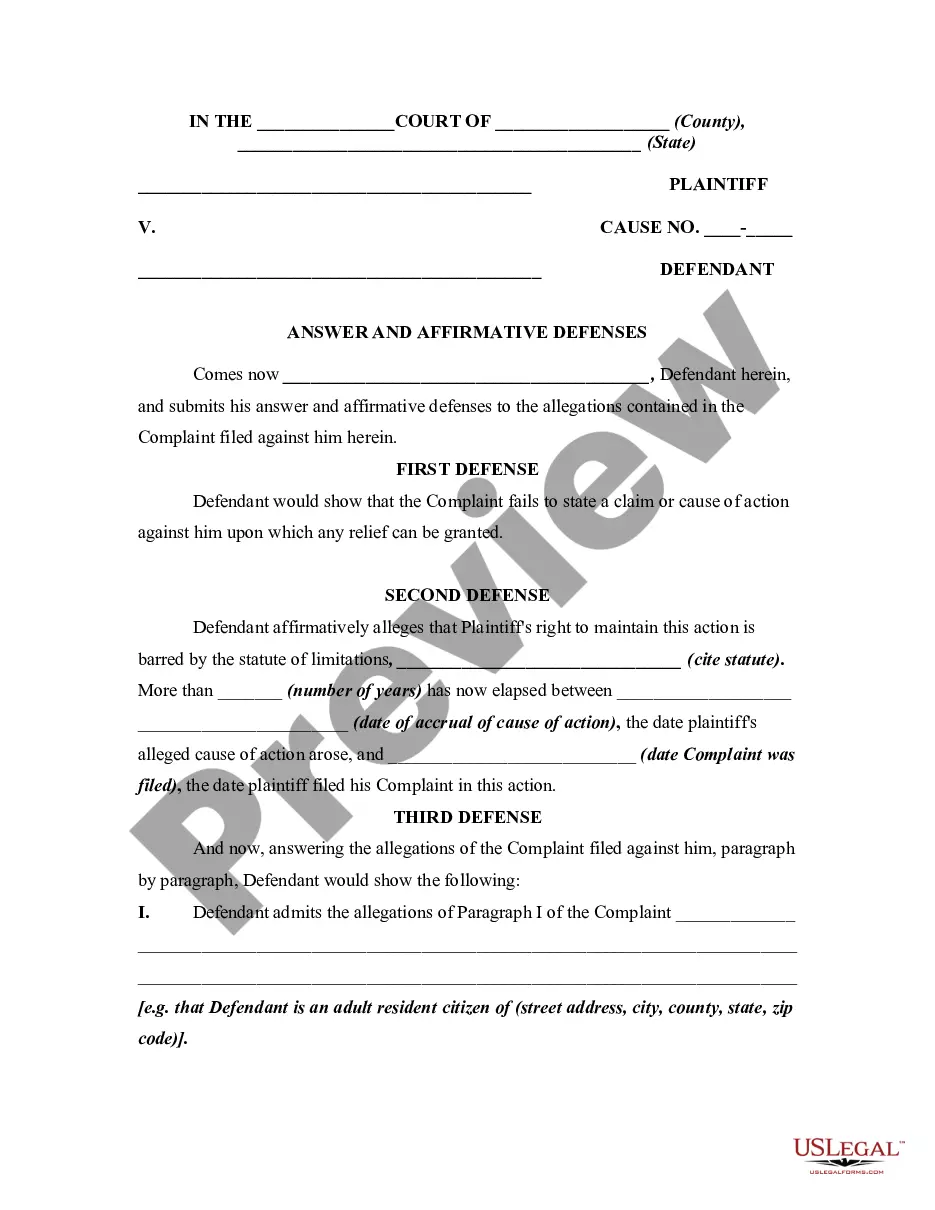
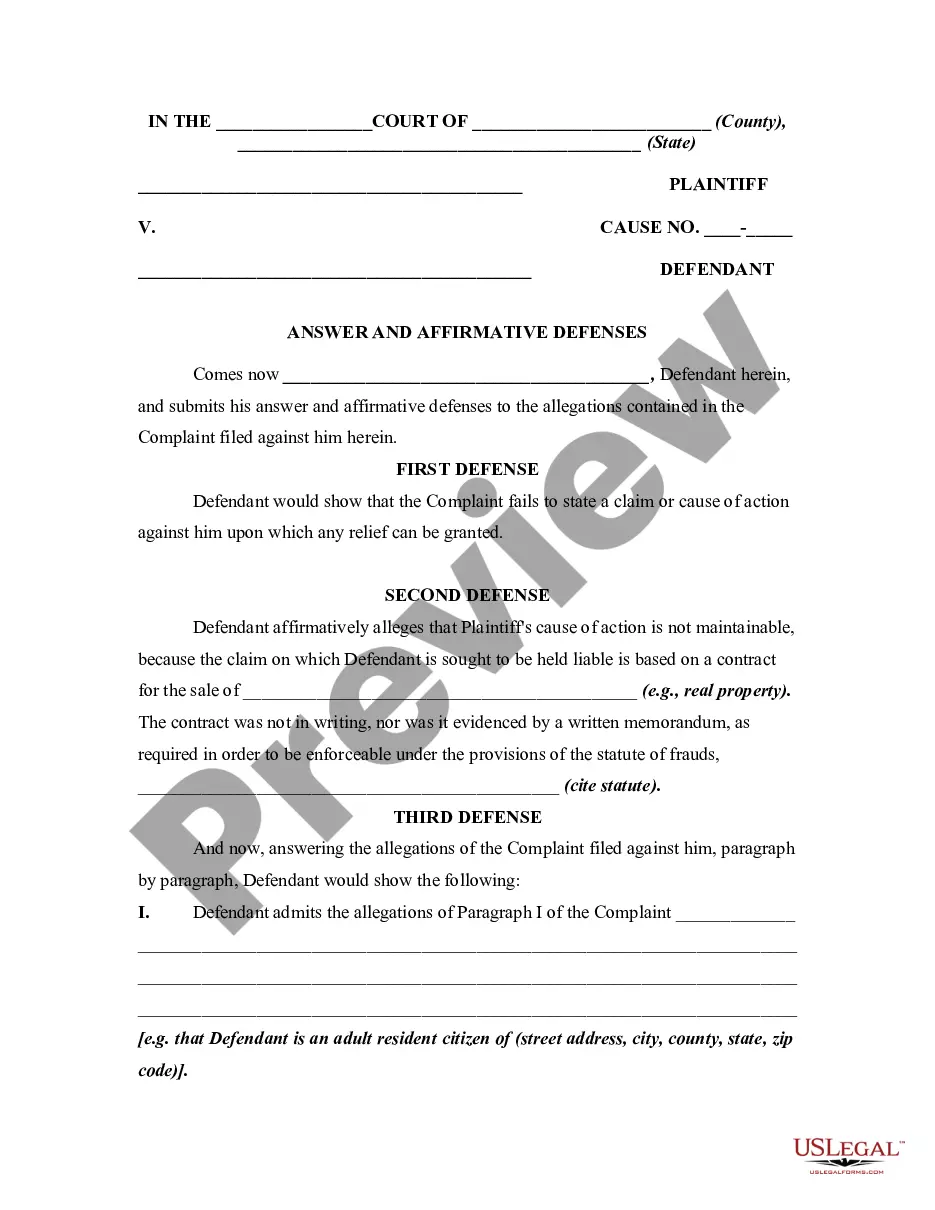
Defendant Civil Lawsuit Format
Description
Get your form ready online
Our built-in tools help you complete, sign, share, and store your documents in one place.
Make edits, fill in missing information, and update formatting in US Legal Forms—just like you would in MS Word.
Download a copy, print it, send it by email, or mail it via USPS—whatever works best for your next step.
Sign and collect signatures with our SignNow integration. Send to multiple recipients, set reminders, and more. Go Premium to unlock E-Sign.
If this form requires notarization, complete it online through a secure video call—no need to meet a notary in person or wait for an appointment.
We protect your documents and personal data by following strict security and privacy standards.

Make edits, fill in missing information, and update formatting in US Legal Forms—just like you would in MS Word.

Download a copy, print it, send it by email, or mail it via USPS—whatever works best for your next step.

Sign and collect signatures with our SignNow integration. Send to multiple recipients, set reminders, and more. Go Premium to unlock E-Sign.

If this form requires notarization, complete it online through a secure video call—no need to meet a notary in person or wait for an appointment.

We protect your documents and personal data by following strict security and privacy standards.
Looking for another form?







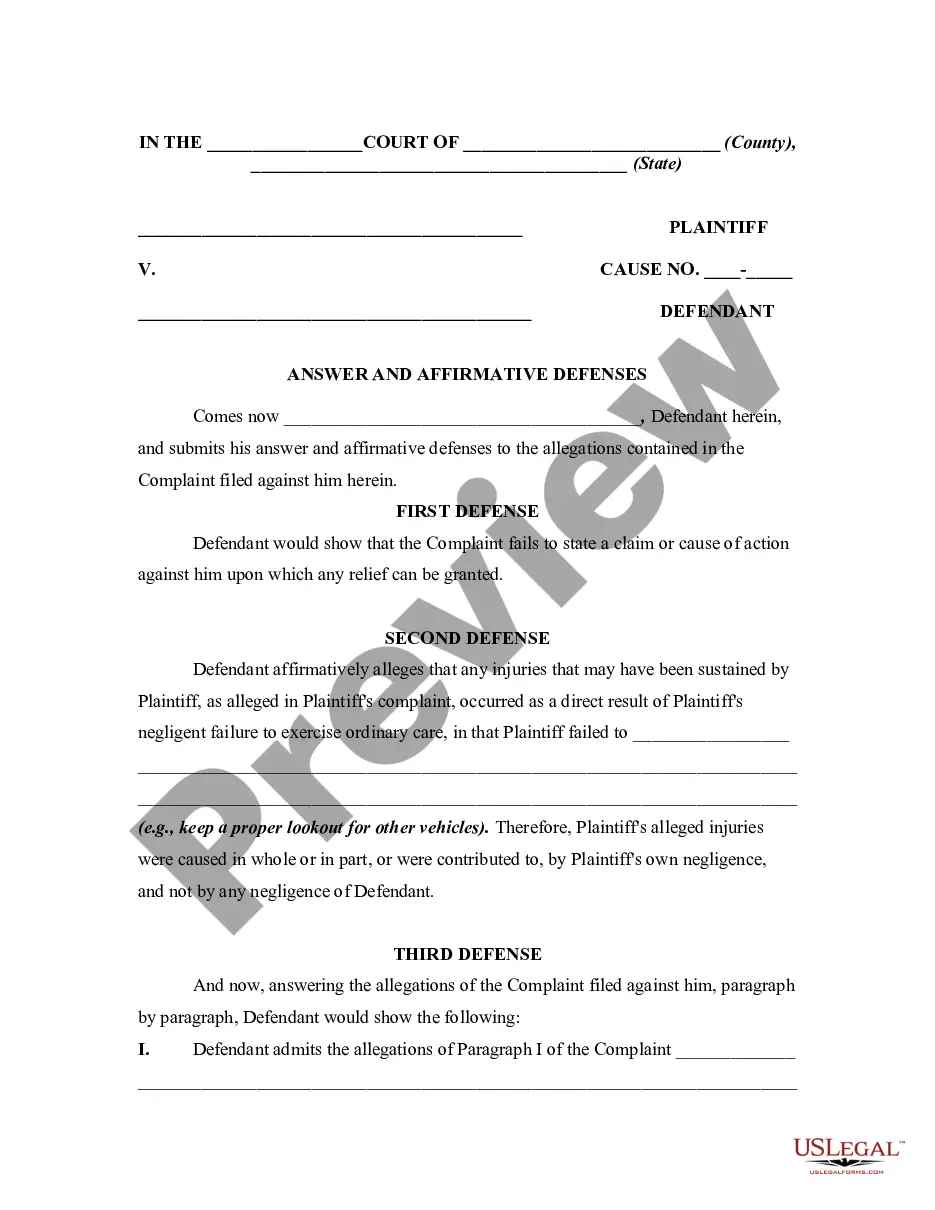
How to fill out Answer By Defendant In A Civil Lawsuit Alleging The Affirmative Defense Of Contributory Negligence?
It’s clear that you can’t become a legal expert instantly, nor can you master how to swiftly create a Defendant Civil Lawsuit Format without possessing a specialized skill set.
Compiling legal documents is a labor-intensive process that demands specific training and expertise. So why not entrust the crafting of the Defendant Civil Lawsuit Format to the professionals.
With US Legal Forms, featuring one of the most extensive collections of legal documents, you can access everything from court filings to blueprints for internal corporate communication.
You can re-access your documents from the My documents section at any time. If you’re a returning customer, you can simply Log In, and find and download the template from the same section.
Regardless of the intent behind your documents—be it for financial and legal matters, or personal use—our website has you covered. Give US Legal Forms a try today!
- Locate the document you need using the search feature at the top of the website.
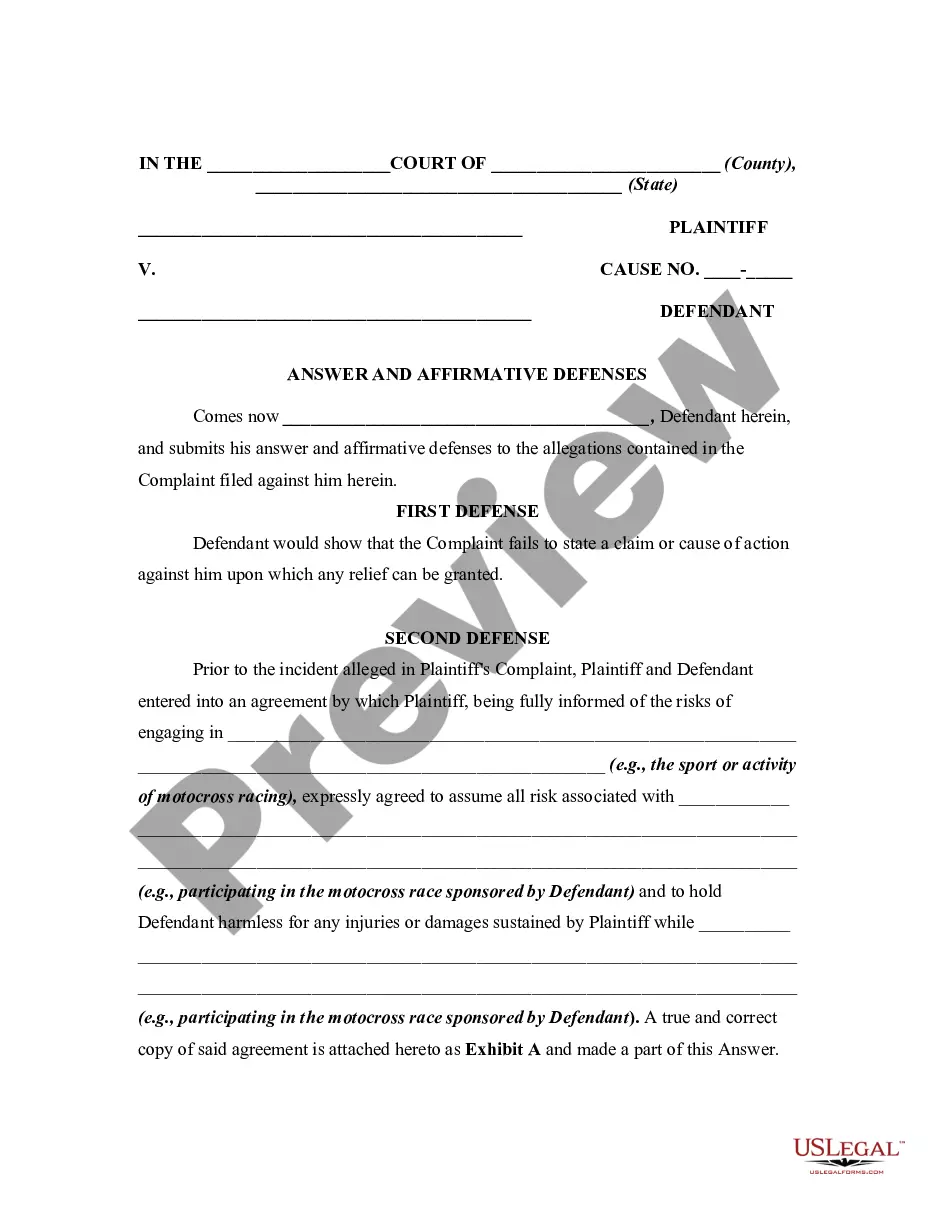
- Examine it (if this option is available) and review the accompanying description to see if the Defendant Civil Lawsuit Format fits your needs.
- Restart your search if you require another template.
- Establish a free account and select a subscription plan to purchase the template.
- Click Buy now. Once the payment is processed, you can obtain the Defendant Civil Lawsuit Format, complete it, print it, and send or mail it to the intended recipients.
Form popularity
FAQ
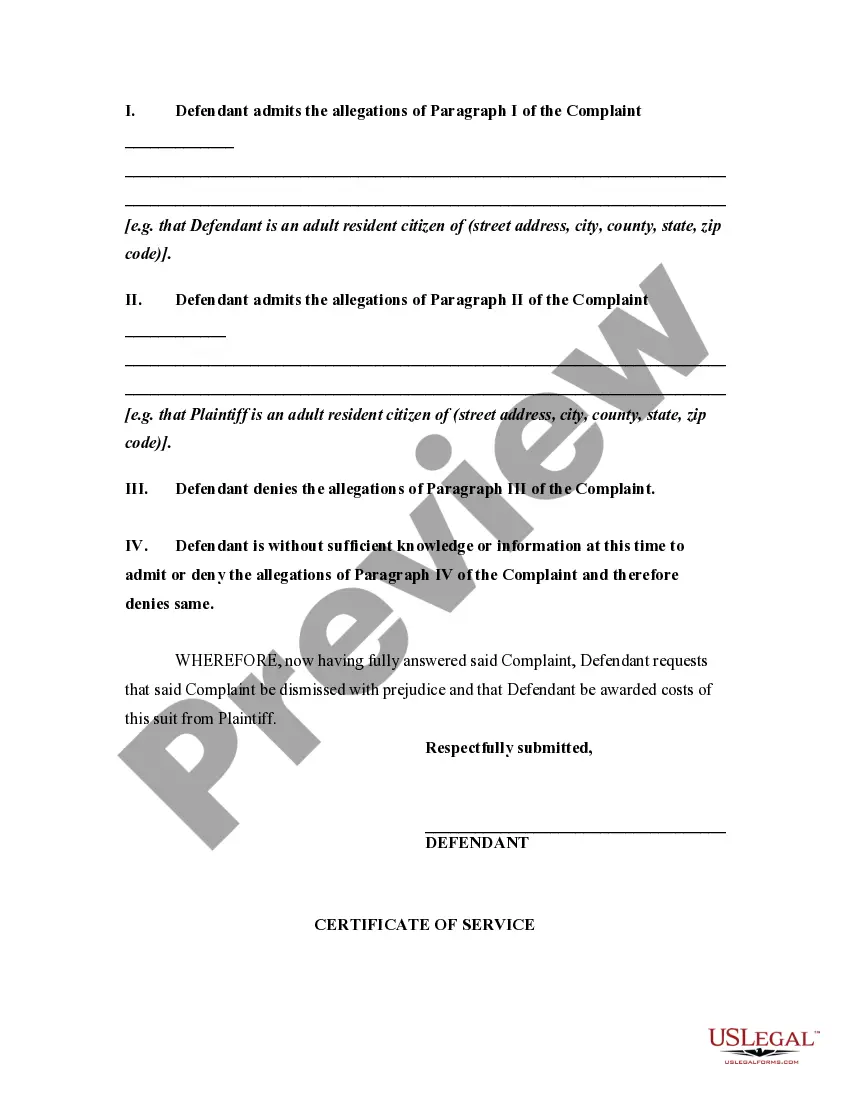
However, the most common response to a civil lawsuit is called an ?Answer? (some other name depending on the state). An Answer is a written document in which a defendant admits or denies the allegations in the plaintiff's complaint and sets forth the reasons why the defendant should not be liable.
Write and file an answer. The ?answer? is your written response to the claims made against you. You must file an answer with the court that issued the summons or citation. If you fail to answer, you could lose the case without ever having the opportunity to tell your side of the story.
In order to properly write a cause of action, several things must be included. The names of the Plaintiff and Defendant. The legal means by which the Plaintiff is bringing the lawsuit. Be sure to only include the facts, not opinions. ... Offer expert opinions and lay out the evidence. ... Request of relief.
Defendant, in criminal cases, is the person accused of the crime. In civil cases, the defendant is the person or entity that is being sued by the plaintiff. In certain types of actions, the defendant is called the respondent. However, the term respondent is usually used to designate the person responding to an appeal.
Plaintiff - The person who files the complaint in a civil lawsuit.