Answer Debt Collection Lawsuit Format
Description
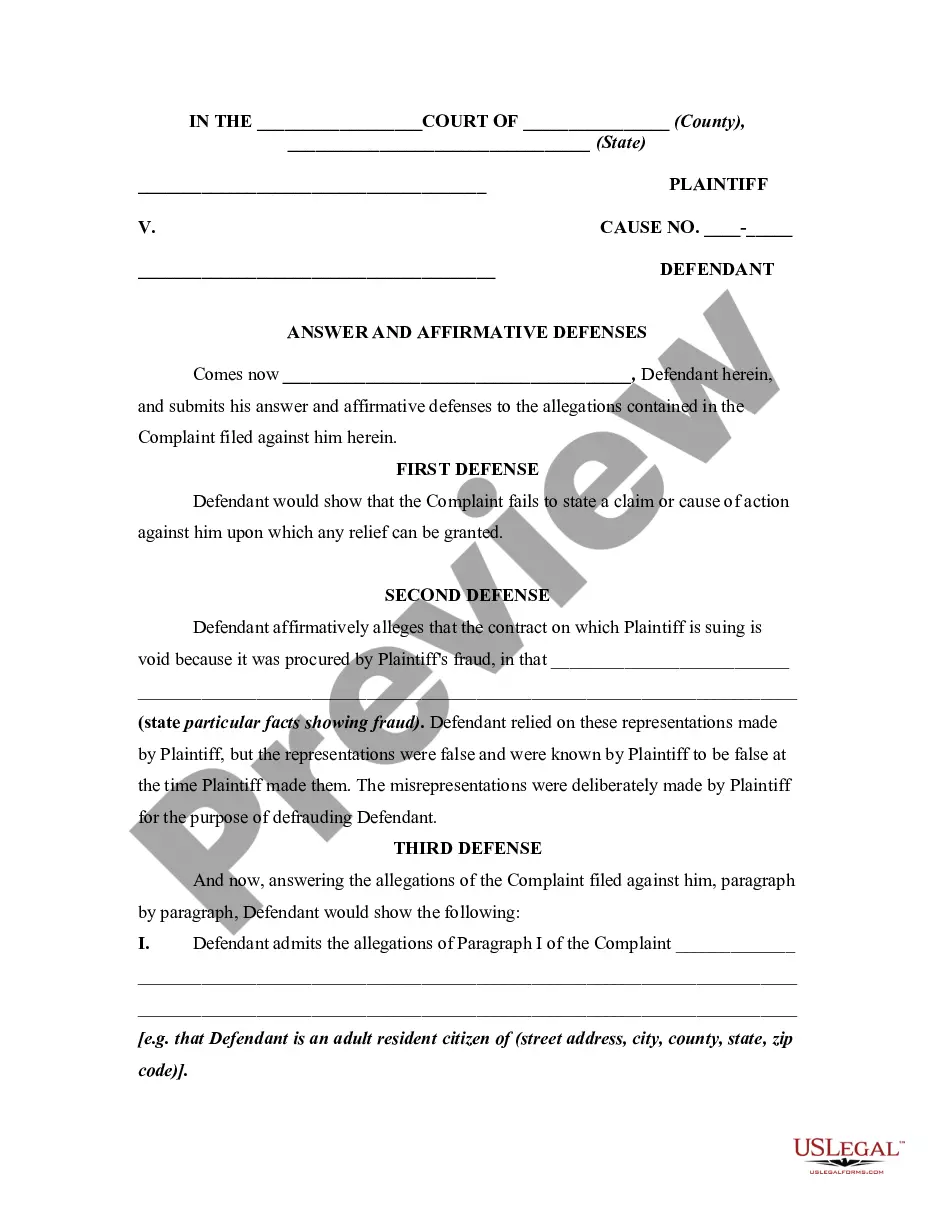
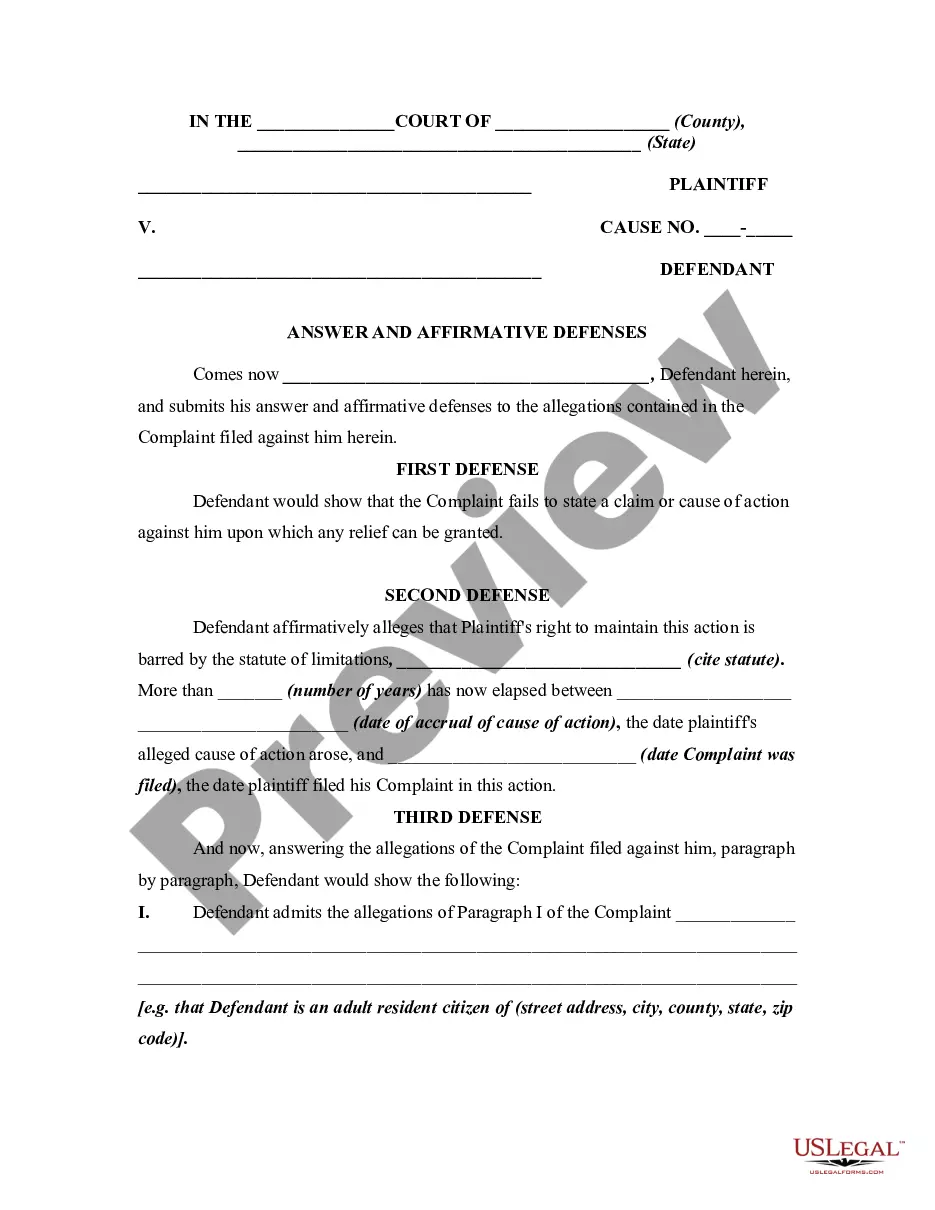
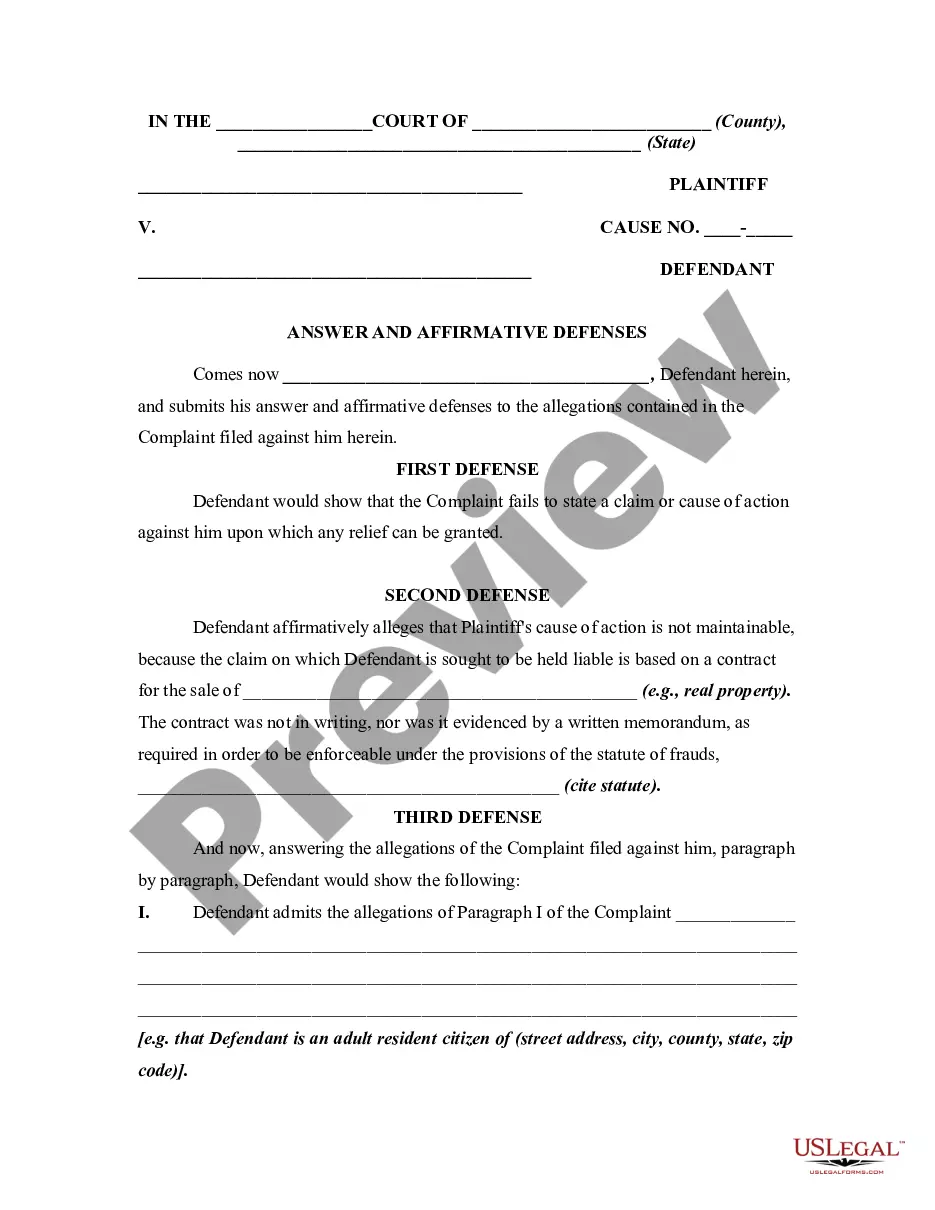
Get your form ready online
Our built-in tools help you complete, sign, share, and store your documents in one place.
Make edits, fill in missing information, and update formatting in US Legal Forms—just like you would in MS Word.
Download a copy, print it, send it by email, or mail it via USPS—whatever works best for your next step.
Sign and collect signatures with our SignNow integration. Send to multiple recipients, set reminders, and more. Go Premium to unlock E-Sign.
If this form requires notarization, complete it online through a secure video call—no need to meet a notary in person or wait for an appointment.
We protect your documents and personal data by following strict security and privacy standards.

Make edits, fill in missing information, and update formatting in US Legal Forms—just like you would in MS Word.

Download a copy, print it, send it by email, or mail it via USPS—whatever works best for your next step.

Sign and collect signatures with our SignNow integration. Send to multiple recipients, set reminders, and more. Go Premium to unlock E-Sign.

If this form requires notarization, complete it online through a secure video call—no need to meet a notary in person or wait for an appointment.

We protect your documents and personal data by following strict security and privacy standards.
Looking for another form?
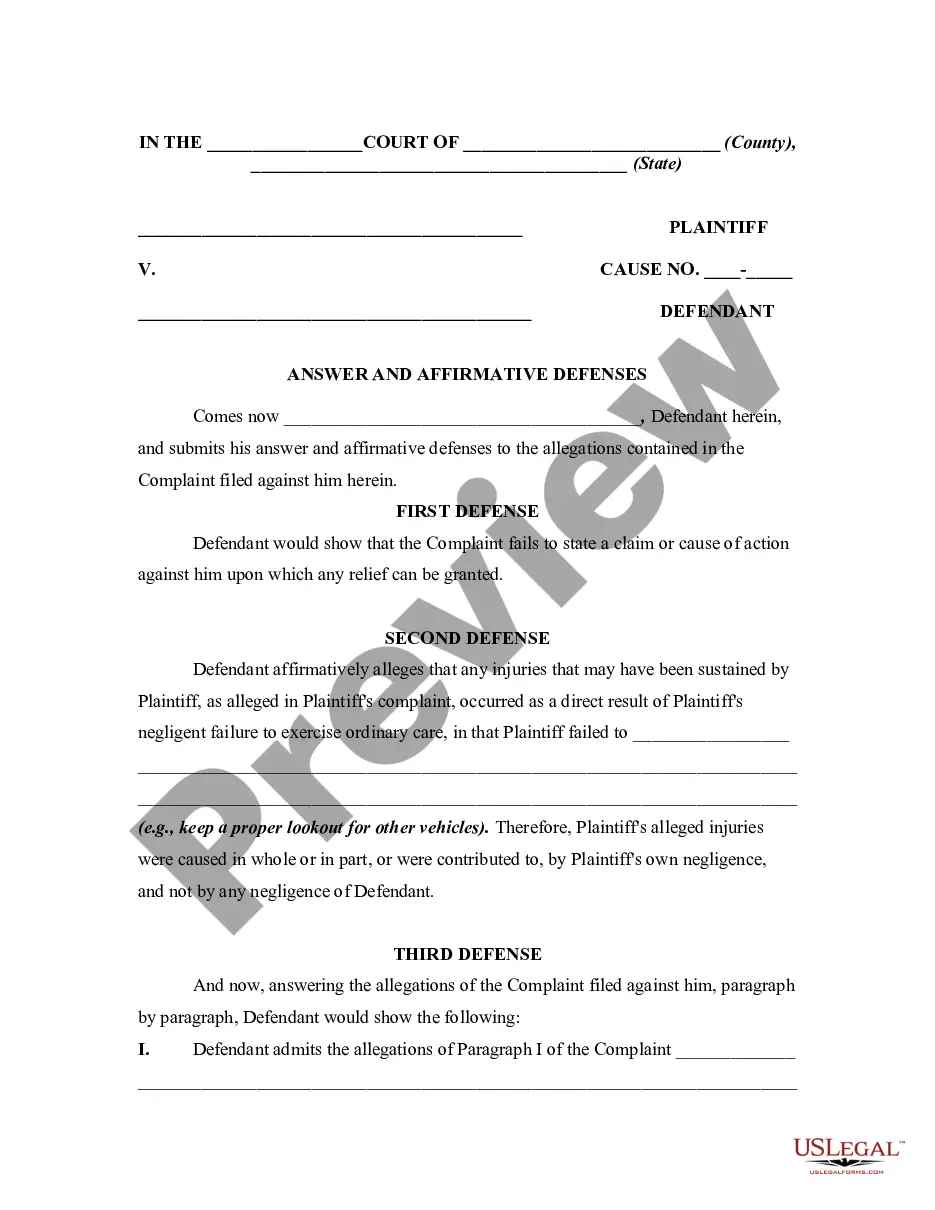
How to fill out Answer By Defendant In A Civil Lawsuit Alleging The Affirmative Defense Of Contributory Negligence?
Identifying a reliable source to obtain the latest and applicable legal templates is a significant part of navigating bureaucracy.
Securing the appropriate legal documents requires accuracy and diligence, which is why sourcing the Answer Debt Collection Lawsuit Format exclusively from trustworthy providers, such as US Legal Forms, is crucial.
Eliminate the complications associated with your legal documentation. Explore the extensive US Legal Forms catalog to discover legal templates, evaluate their relevance to your needs, and download them instantly.
- Utilize the library menu or search option to find your template.
- Access the form details to confirm it meets your state and regional specifications.
- View the form preview, if provided, to ensure the template is indeed the one you need.
- Return to your search to locate the proper document if the Answer Debt Collection Lawsuit Format does not meet your criteria.
- Once you are certain about the document’s applicability, download it.
- If you are an existing customer, click Log in to verify your identity and access your chosen templates in My documents.
- If you haven't created an account, click Buy now to obtain the form.
- Choose the pricing plan that suits your requirements.
- Continue with the registration to finalize your purchase.
- Complete your transaction by selecting a payment option (credit card or PayPal).
- Choose the file format for downloading the Answer Debt Collection Lawsuit Format.
- Once you have the form on your device, you can modify it using the editor or print it out to fill in manually.
Form popularity
FAQ
Your answer can be a handwritten letter to the court that says you do not agree with the lawsuit. Include your case (cause) number and mailing address and any defenses you may have to the lawsuit; for example, the amount they claim you owe is incorrect, the account isn't yours, or the debt is older than 4 years.
You contacted me by [phone/mail], on [date] and identified the debt as [any information they gave you about the debt]. I do not have any responsibility for the debt you're trying to collect. If you have good reason to believe that I am responsible for this debt, mail me the documents that make you believe that.
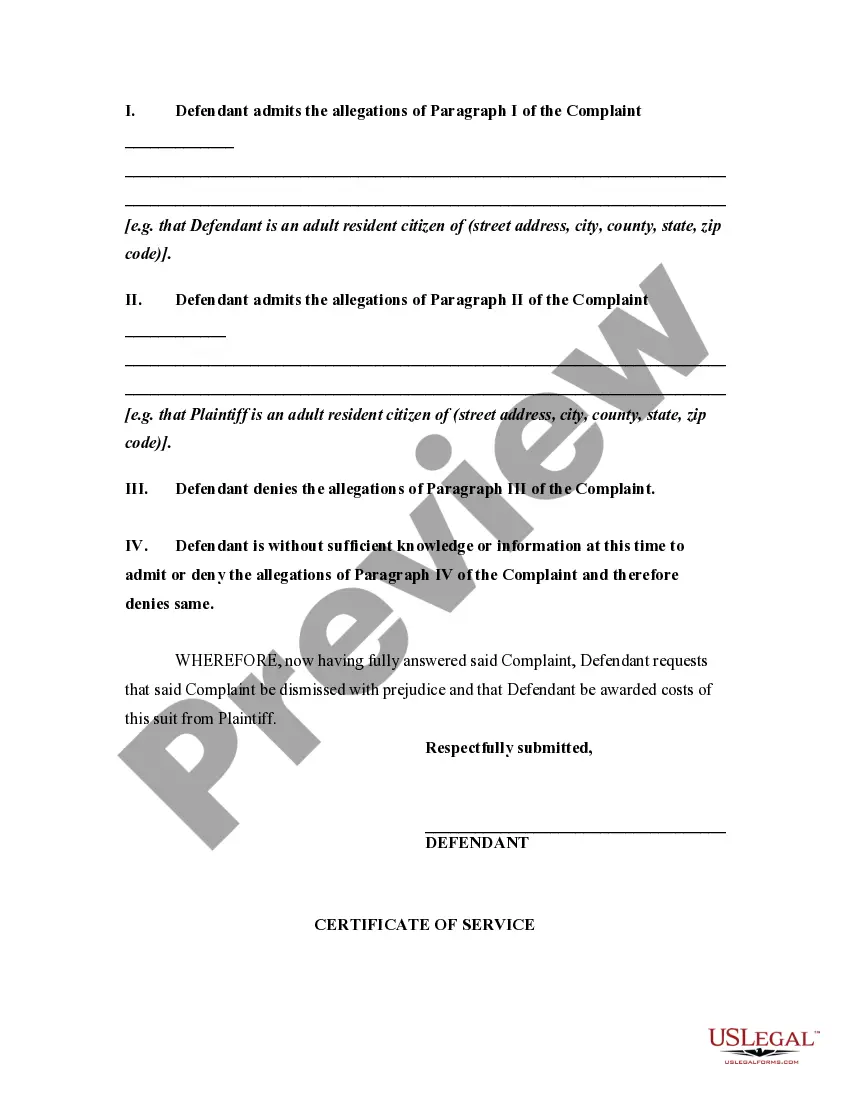
As a rule of thumb, lawyers advise you to deny, deny, deny. Let the plaintiff prove your responsibility for the debt. Include your affirmative defenses: These are reasons why you think the plaintiff is wrong to sue you. Assert your affirmative defenses for each paragraph.
This is done by putting your request in writing and sending it to the court and to the plaintiff. Once you have been served with the citation, you have 14 days to file an answer, which is your response to your lawsuit. You must give your answer to the court and also send it to the plaintiff.
In a Nutshell It's important to respond to (or answer) the lawsuit. You do this by filing official paperwork with the court. Be sure to address every point in the complaint, raise any defenses you have, and file the paperwork within the time frame provided.