Response To Lawsuit Letter Sample
Description
Get your form ready online
Our built-in tools help you complete, sign, share, and store your documents in one place.
Make edits, fill in missing information, and update formatting in US Legal Forms—just like you would in MS Word.
Download a copy, print it, send it by email, or mail it via USPS—whatever works best for your next step.
Sign and collect signatures with our SignNow integration. Send to multiple recipients, set reminders, and more. Go Premium to unlock E-Sign.
If this form requires notarization, complete it online through a secure video call—no need to meet a notary in person or wait for an appointment.
We protect your documents and personal data by following strict security and privacy standards.

Make edits, fill in missing information, and update formatting in US Legal Forms—just like you would in MS Word.

Download a copy, print it, send it by email, or mail it via USPS—whatever works best for your next step.

Sign and collect signatures with our SignNow integration. Send to multiple recipients, set reminders, and more. Go Premium to unlock E-Sign.

If this form requires notarization, complete it online through a secure video call—no need to meet a notary in person or wait for an appointment.

We protect your documents and personal data by following strict security and privacy standards.
Looking for another form?

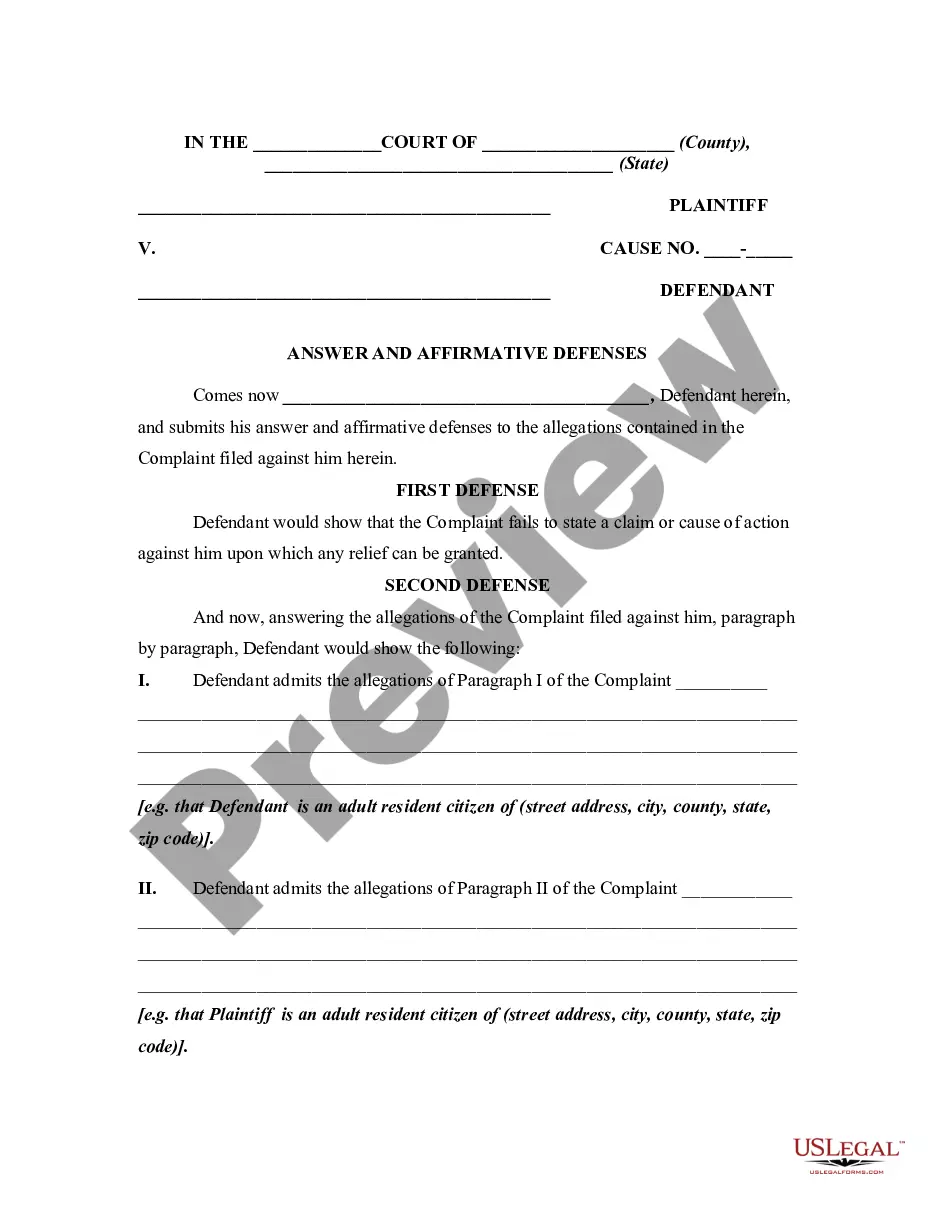
How to fill out General Form Of An Answer By Defendant In A Civil Lawsuit?
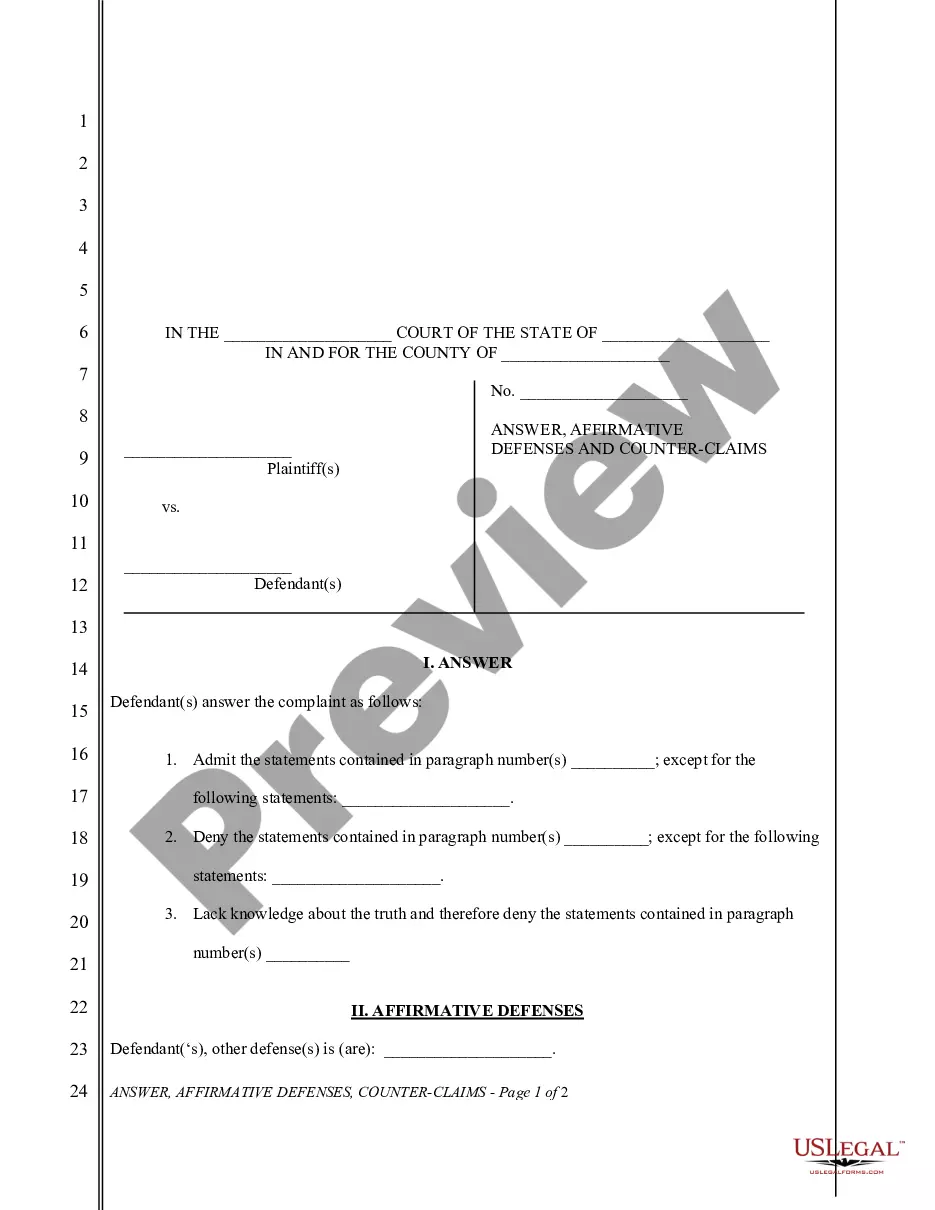
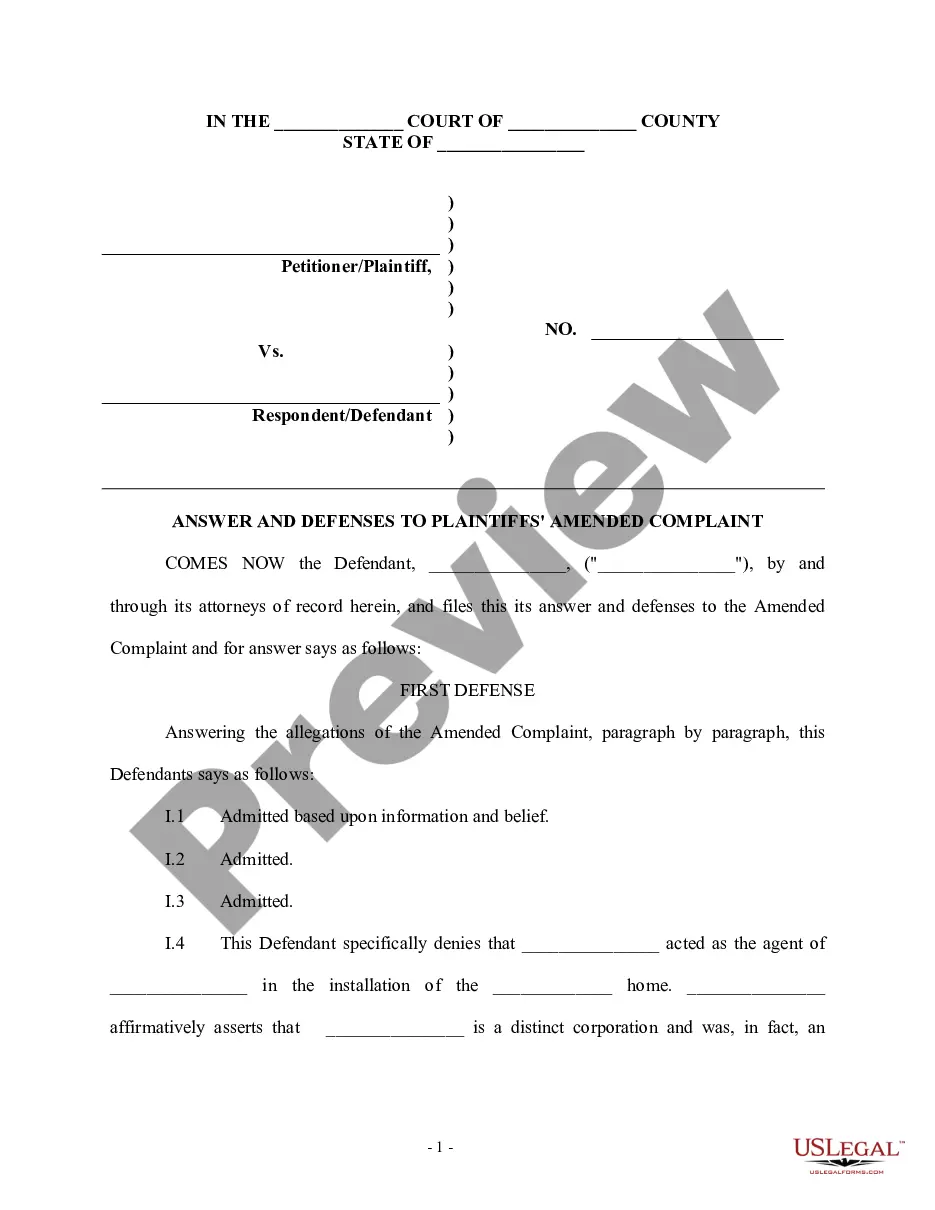
Finding a go-to place to take the most recent and appropriate legal samples is half the struggle of handling bureaucracy. Discovering the right legal files needs accuracy and attention to detail, which is why it is crucial to take samples of Response To Lawsuit Letter Sample only from reliable sources, like US Legal Forms. A wrong template will waste your time and hold off the situation you are in. With US Legal Forms, you have very little to be concerned about. You can access and view all the details concerning the document’s use and relevance for the situation and in your state or region.
Consider the following steps to finish your Response To Lawsuit Letter Sample:
- Use the catalog navigation or search field to locate your sample.
- Open the form’s description to check if it matches the requirements of your state and county.
- Open the form preview, if there is one, to ensure the form is the one you are searching for.
- Go back to the search and look for the appropriate template if the Response To Lawsuit Letter Sample does not fit your requirements.
- When you are positive regarding the form’s relevance, download it.
- When you are an authorized customer, click Log in to authenticate and gain access to your selected forms in My Forms.
- If you do not have an account yet, click Buy now to get the template.
- Choose the pricing plan that suits your requirements.
- Proceed to the registration to finalize your purchase.
- Finalize your purchase by selecting a payment method (credit card or PayPal).
- Choose the document format for downloading Response To Lawsuit Letter Sample.
- Once you have the form on your gadget, you can change it with the editor or print it and complete it manually.
Remove the headache that comes with your legal documentation. Check out the comprehensive US Legal Forms collection where you can find legal samples, check their relevance to your situation, and download them immediately.
Form popularity
FAQ
Your response should cover every paragraph in the complaint and whether you admit or deny each point raised. If you can't remember whether part of the complaint is correct, it may be safer to deny it and avoid relying on your memory. For each point that you admit or deny, include a brief reason why.
If you do not agree with your lawyer's advice, let them know, and listen to their explanation. If you aren't satisfied with the answers, ask another lawyer for a second opinion. You may also consider hiring another lawyer, although that may delay the resolution of your case.
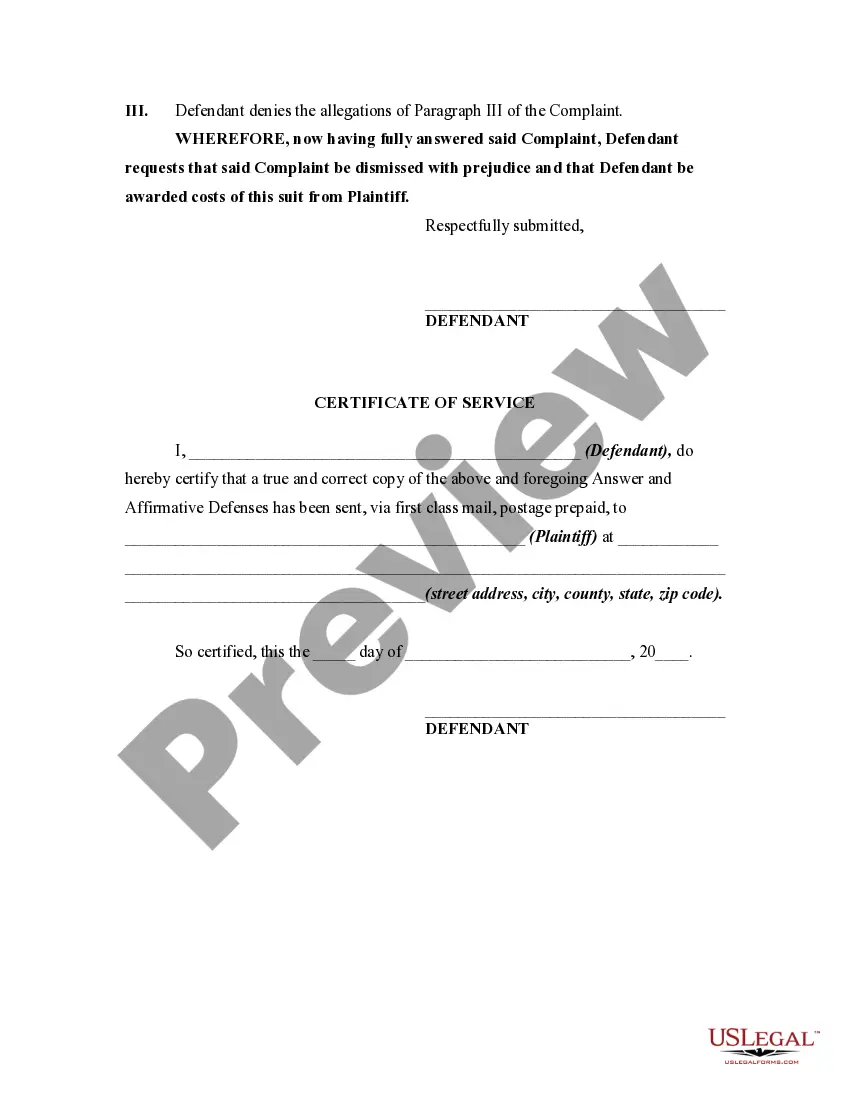
In law, an answer refers to a defendant's first formal written statement to a plaintiff's initial petition or complaint. This opening written statement will admit or deny the allegations, or demand more information about the claims of wrongdoing.
In Civil Law, an ?answer? is the first formal response given by the defense to a complaint filed with the court by the plaintiff. This opening written statement will admit or deny the allegations, or demand more information about the claims of wrongdoing.
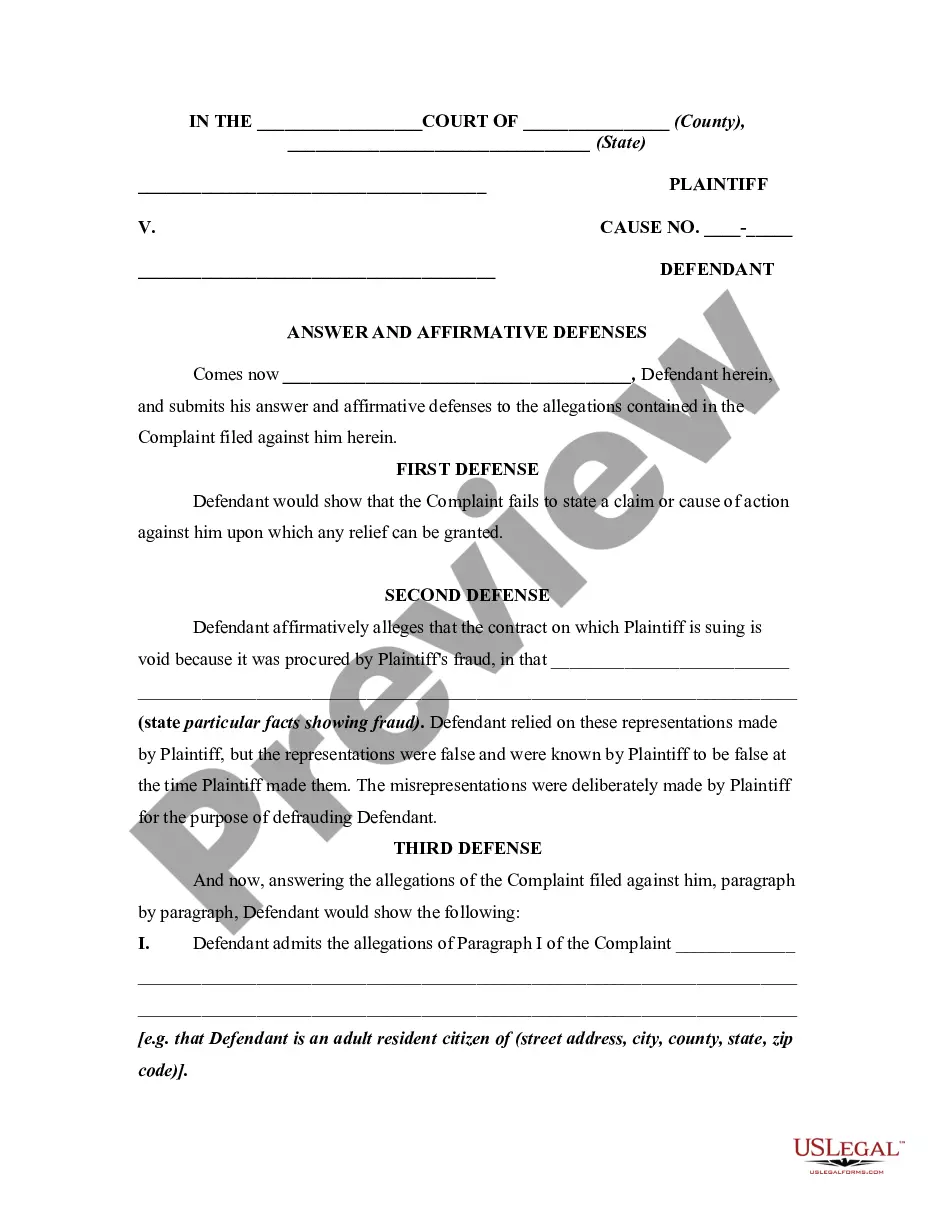
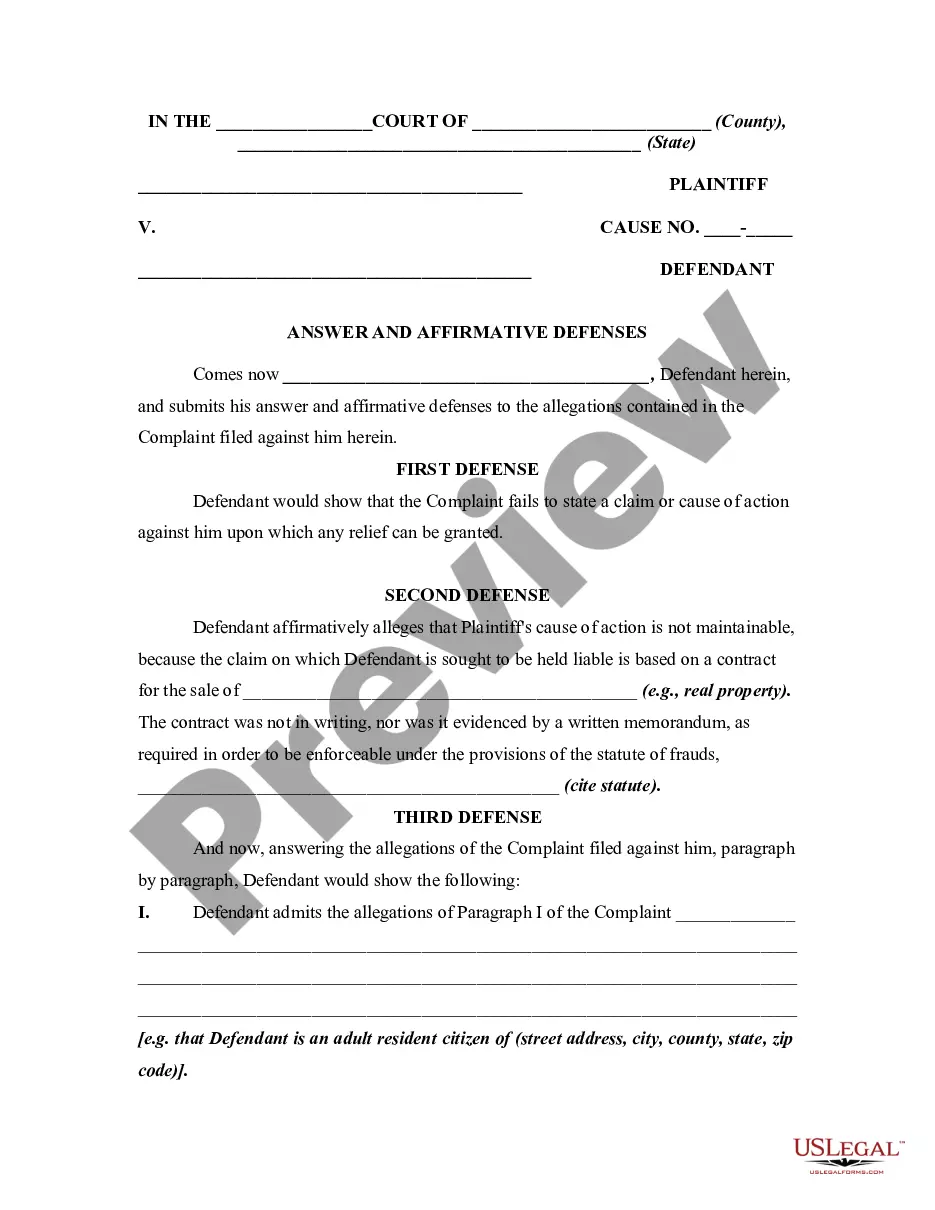
Affirmative defense?Examples On [Date], after making the contract and the alleged breach, and before this action was commenced, defendant paid to the plaintiff the sum of [specify amount], which was accepted by the plaintiff in full satisfaction and discharge of the damages claimed in the petition.