Answer Civil Template With Formulas
Description
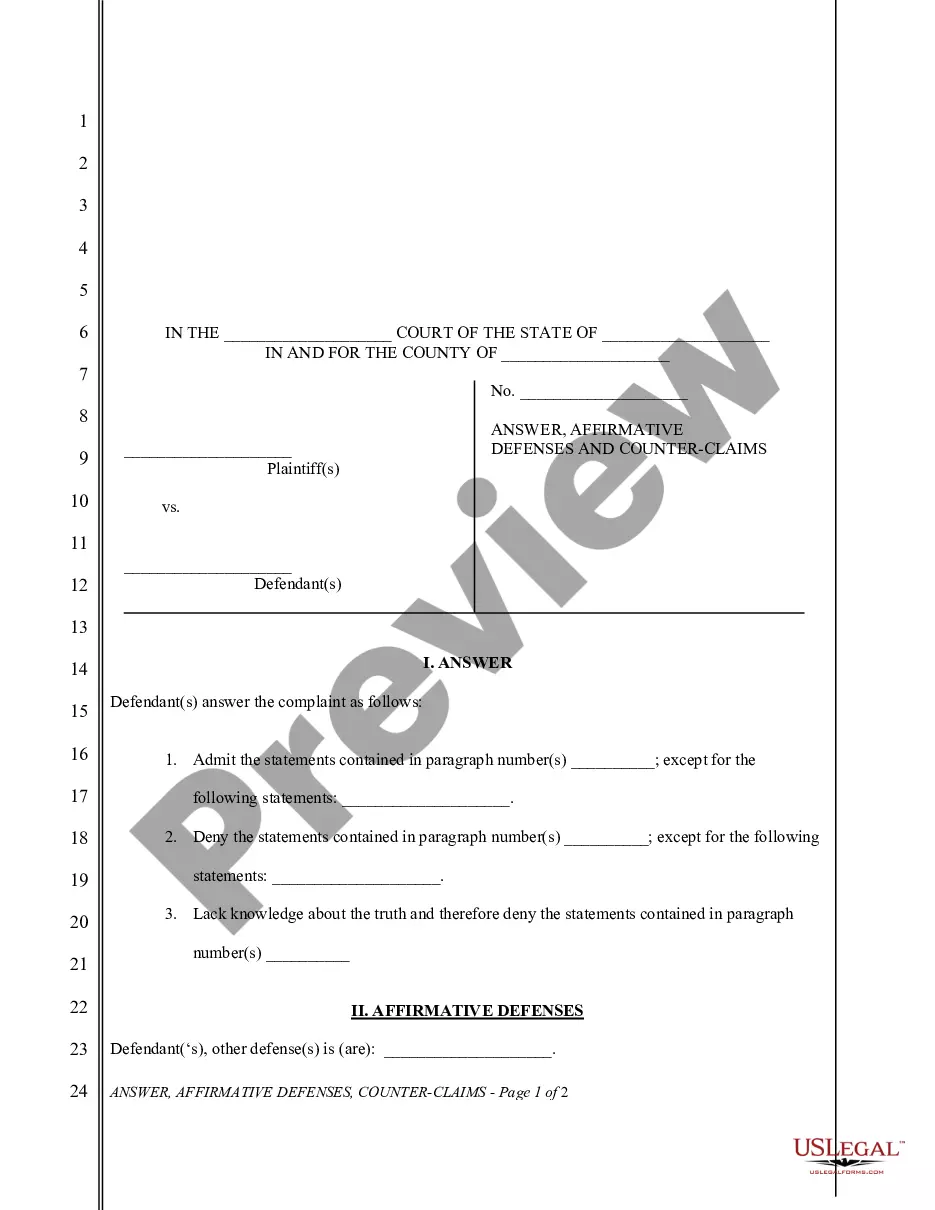
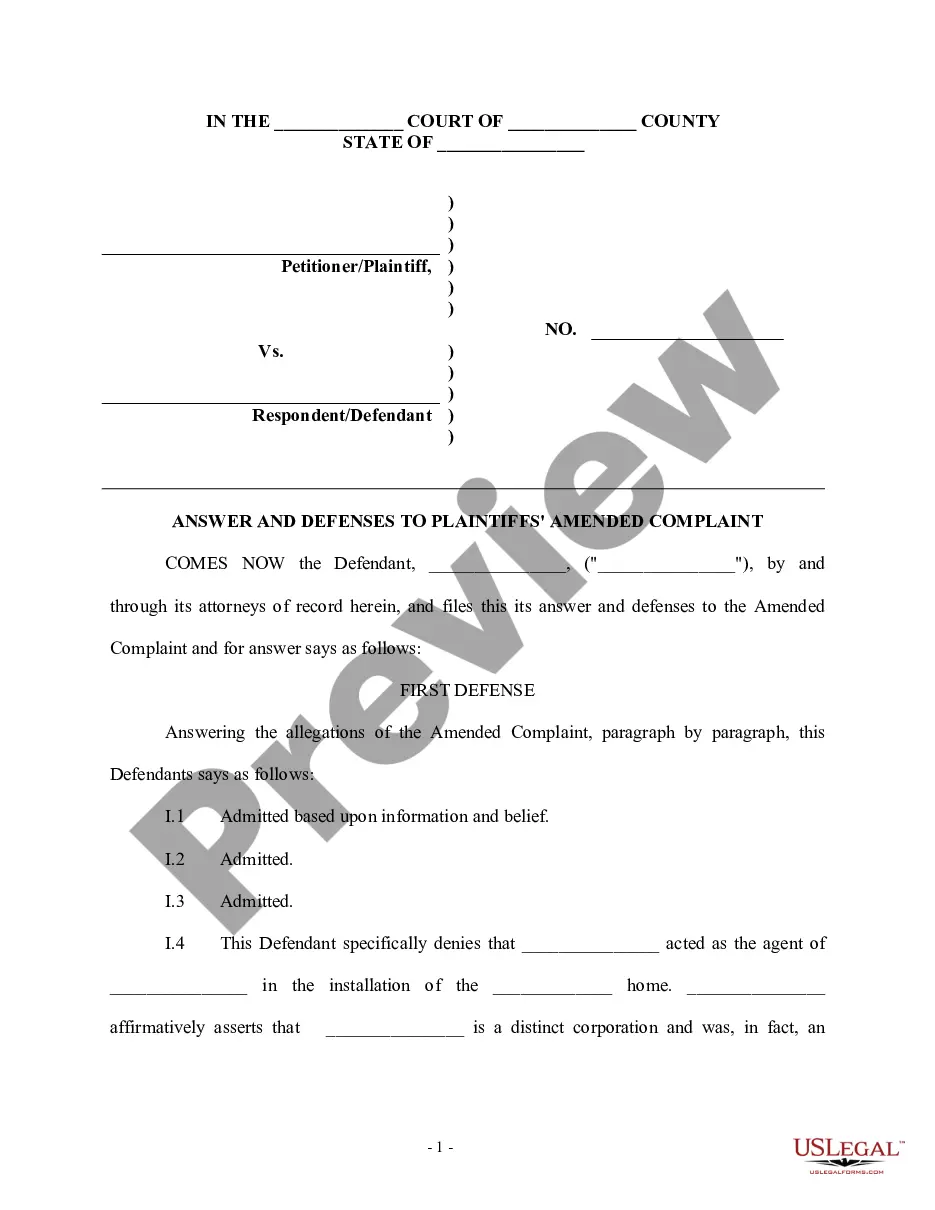
Get your form ready online
Our built-in tools help you complete, sign, share, and store your documents in one place.
Make edits, fill in missing information, and update formatting in US Legal Forms—just like you would in MS Word.
Download a copy, print it, send it by email, or mail it via USPS—whatever works best for your next step.
Sign and collect signatures with our SignNow integration. Send to multiple recipients, set reminders, and more. Go Premium to unlock E-Sign.
If this form requires notarization, complete it online through a secure video call—no need to meet a notary in person or wait for an appointment.
We protect your documents and personal data by following strict security and privacy standards.

Make edits, fill in missing information, and update formatting in US Legal Forms—just like you would in MS Word.

Download a copy, print it, send it by email, or mail it via USPS—whatever works best for your next step.

Sign and collect signatures with our SignNow integration. Send to multiple recipients, set reminders, and more. Go Premium to unlock E-Sign.

If this form requires notarization, complete it online through a secure video call—no need to meet a notary in person or wait for an appointment.

We protect your documents and personal data by following strict security and privacy standards.
Looking for another form?

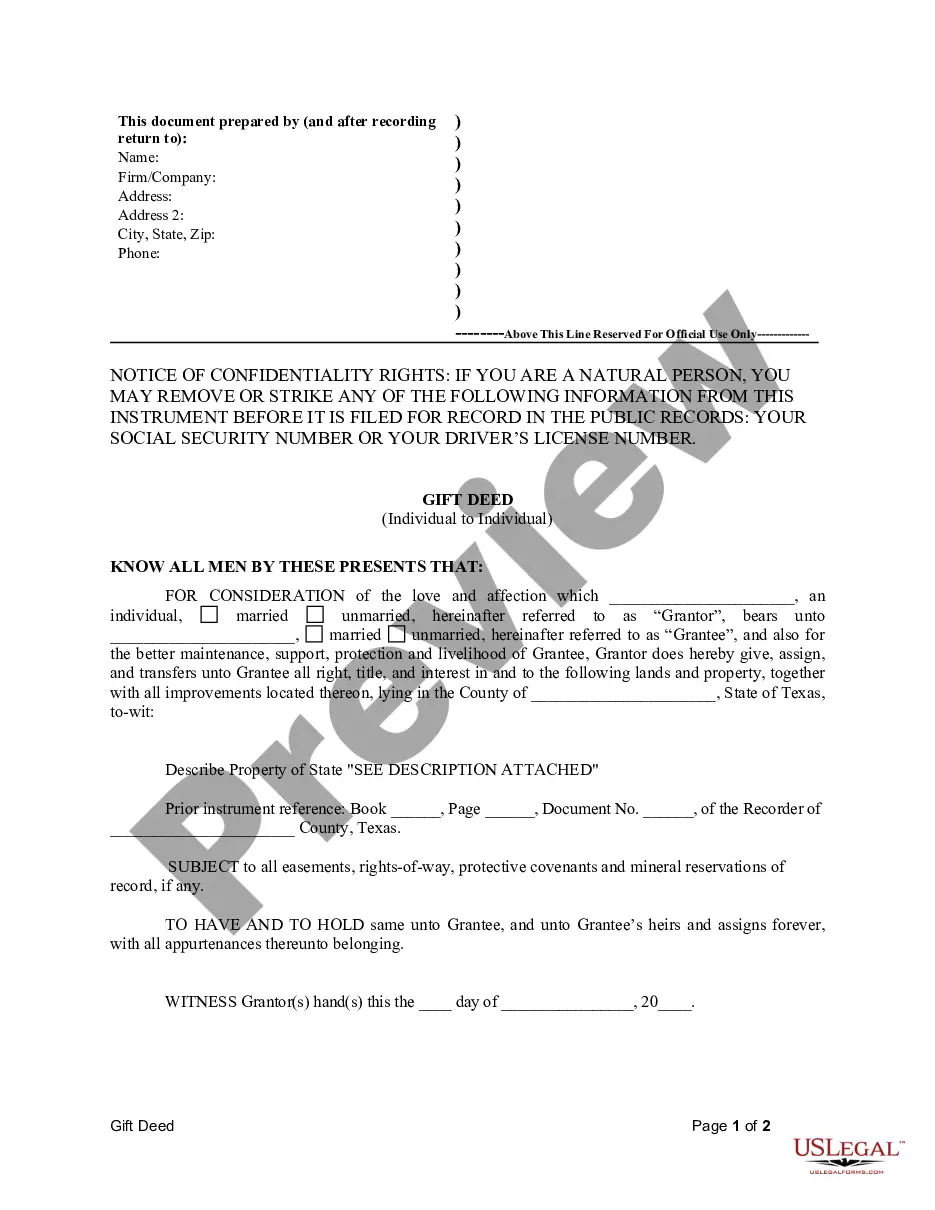







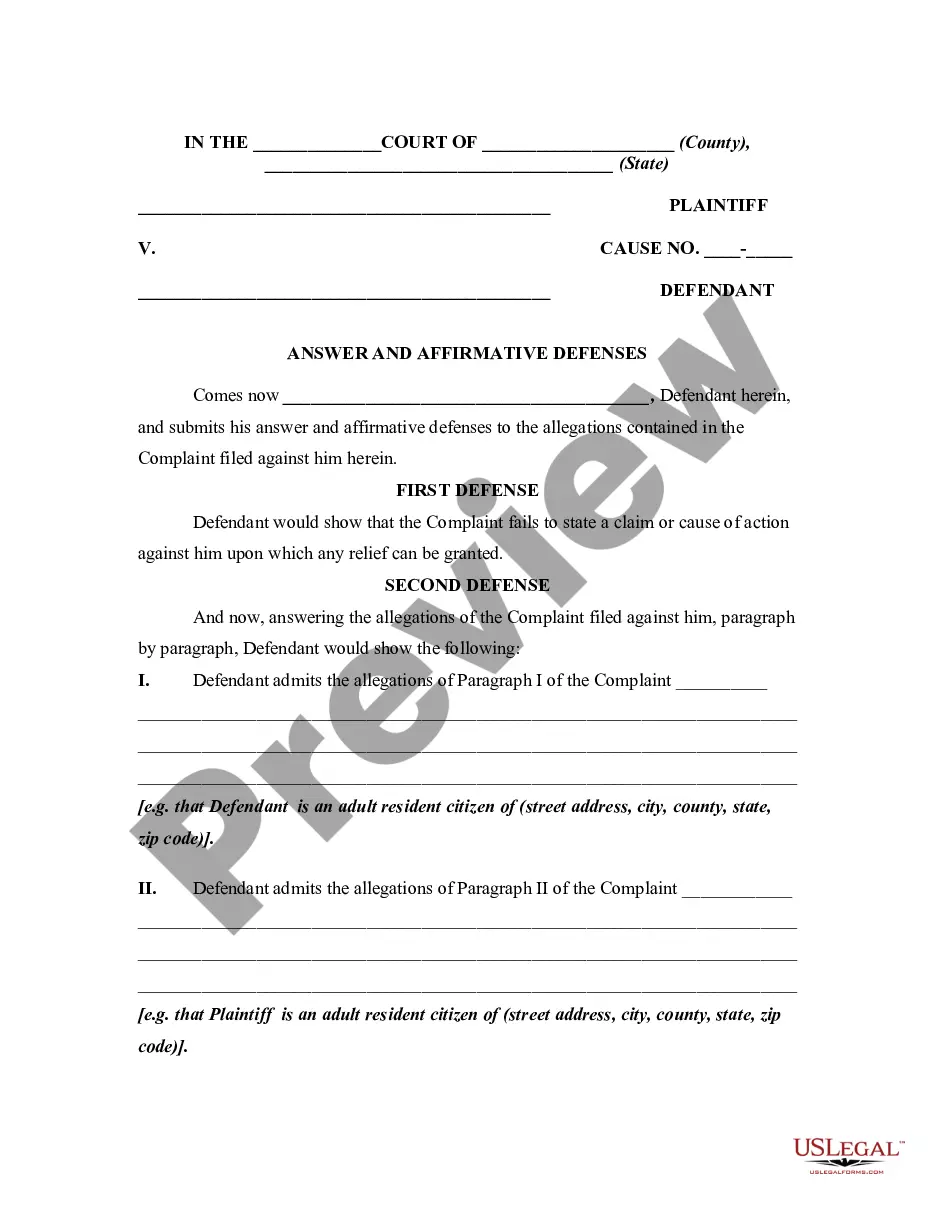
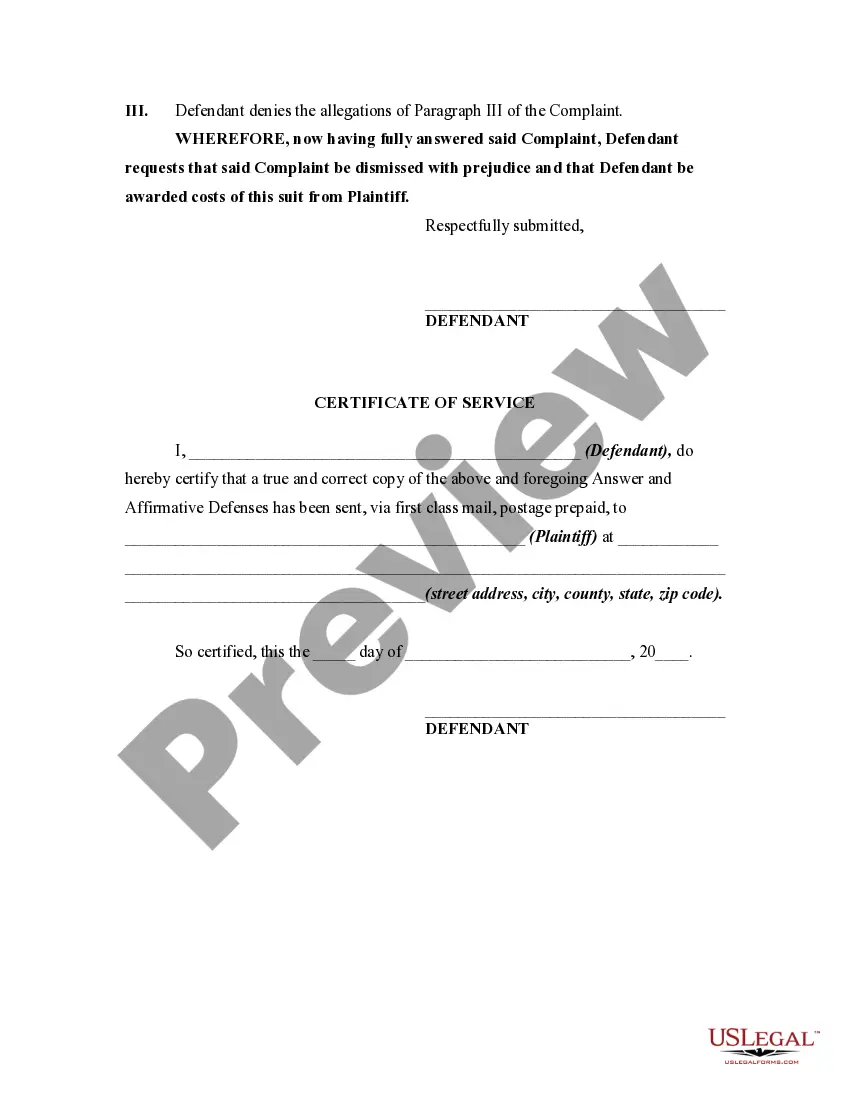
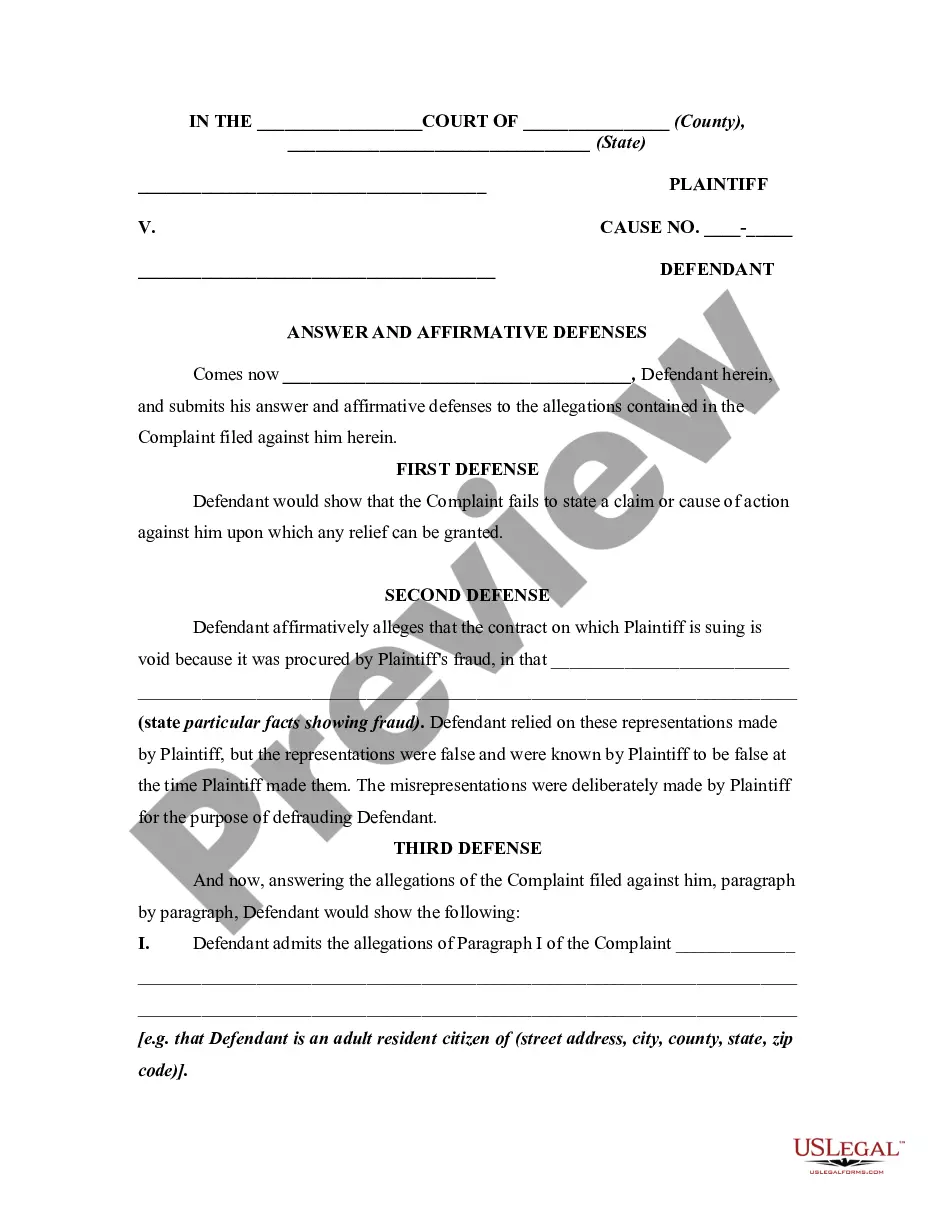
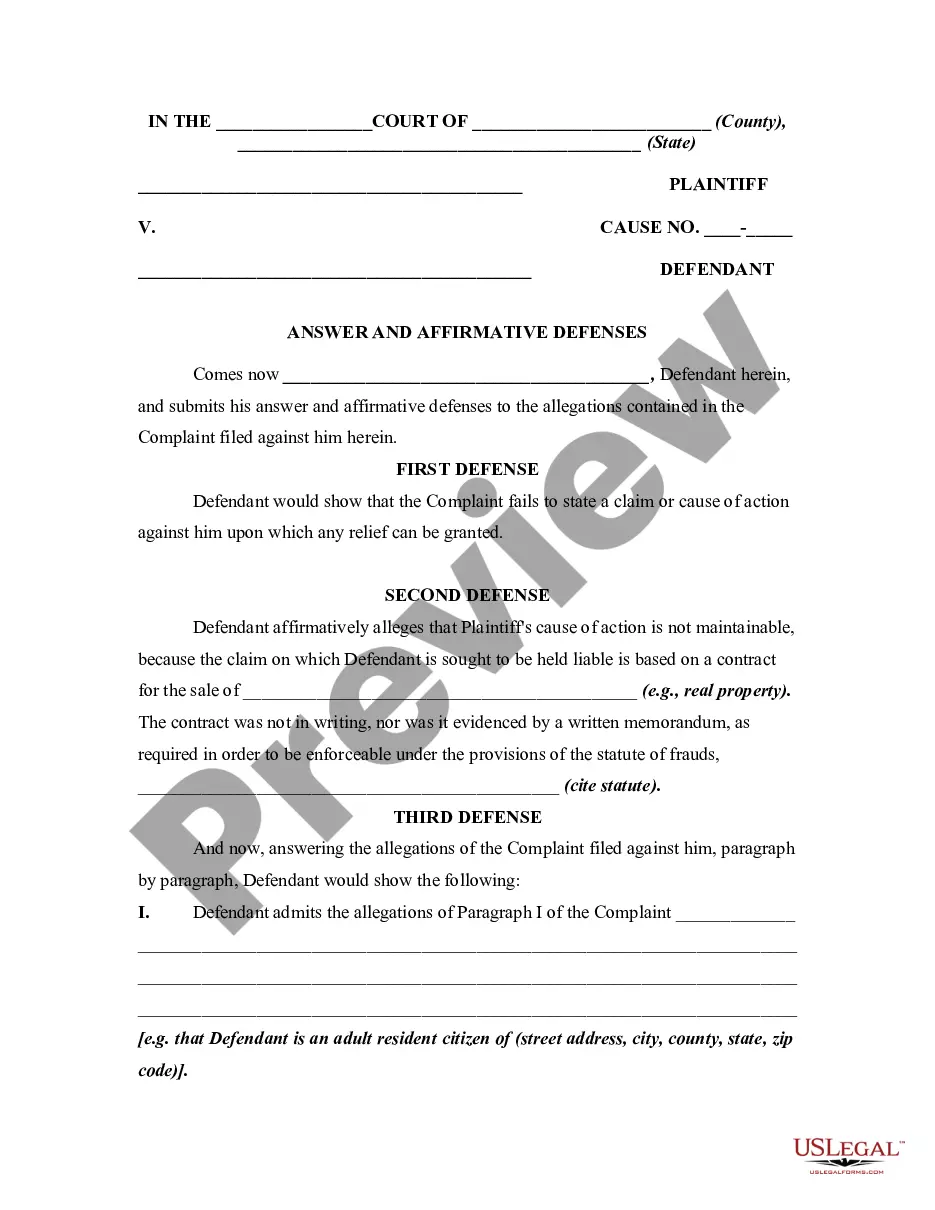
How to fill out General Form Of An Answer By Defendant In A Civil Lawsuit?
Managing legal documents can be overwhelming, even for seasoned professionals.
If you are looking for an Answer Civil Template With Formulas and cannot find the time to search for the right and current version, the process can be stressful.
US Legal Forms caters to all your needs, from personal to business documentation, all in one location.
Utilize advanced tools to complete and manage your Answer Civil Template With Formulas.
Here are the steps to follow after locating the form you need: Confirm it is the correct document by previewing it and reviewing its details. Ensure that the template is valid in your state or county. Click Buy Now when you are ready. Choose a monthly subscription plan. Locate the format you require, and Download, complete, eSign, print, and send your document. Benefit from the US Legal Forms online library, supported by 25 years of experience and reliability. Streamline your document management into a smooth and user-friendly process today.
- Explore a valuable resource library of articles, guides, and materials relevant to your situation and requirements.
- Save time and effort searching for the documents you need by using US Legal Forms' sophisticated search and Preview tool to obtain Answer Civil Template With Formulas.
- If you have a monthly subscription, Log In to your US Legal Forms account, search for the form, and retrieve it.
- Check your My documents tab to review the documents you have previously downloaded and manage your folders as desired.
- If you are new to US Legal Forms, create an account and gain unlimited access to all the benefits of the library.
- A robust web form library can be transformative for anyone wanting to handle these issues effectively.
- US Legal Forms is a leading provider of online legal documents, offering over 85,000 state-specific legal templates available at your convenience.
- With US Legal Forms, you can access forms tailored to specific states or counties.
Form popularity
FAQ
Overview Step 1: Calculate your deadline to respond. Step 2: Evaluate your options. Step 3: Prepare a response. Step 4: File your response with the court. Step 5: Give plaintiff a copy of your response. Step 6: Know what to expect next.
Go to the courthouse address listed at the top of the Complaint you were served with. At the courthouse, file the forms by giving the original and the 2 copies of the Answer and Proof of Service to the clerk.
It is a formal written statement that addresses the allegations made by the plaintiff and either admits or denies them. Example: If a person is sued for breach of contract, they would file a responsive pleading that either admits to breaching the contract or denies the allegations made by the plaintiff.
You must fill out an Answer, serve the plaintiff, and file your Answer form with the court. Generally, this is due within 30 days after you were served. If you don't, the plaintiff can ask for a default. If there's a default, the court won't let you file an Answer and can decide the case without you.
When drafting an answer, one must: (1) follow the local, state, and federal court rules; (2) research the legal claims in the adversary's complaint; (3) respond to the adversary's factual allegations; and (4) assert affirmative defenses, counterclaims, cross-claims, or third-party claims, if applicable.