Adverse Possession By State Without A Will
Description
Get your form ready online
Our built-in tools help you complete, sign, share, and store your documents in one place.
Make edits, fill in missing information, and update formatting in US Legal Forms—just like you would in MS Word.
Download a copy, print it, send it by email, or mail it via USPS—whatever works best for your next step.
Sign and collect signatures with our SignNow integration. Send to multiple recipients, set reminders, and more. Go Premium to unlock E-Sign.
If this form requires notarization, complete it online through a secure video call—no need to meet a notary in person or wait for an appointment.
We protect your documents and personal data by following strict security and privacy standards.
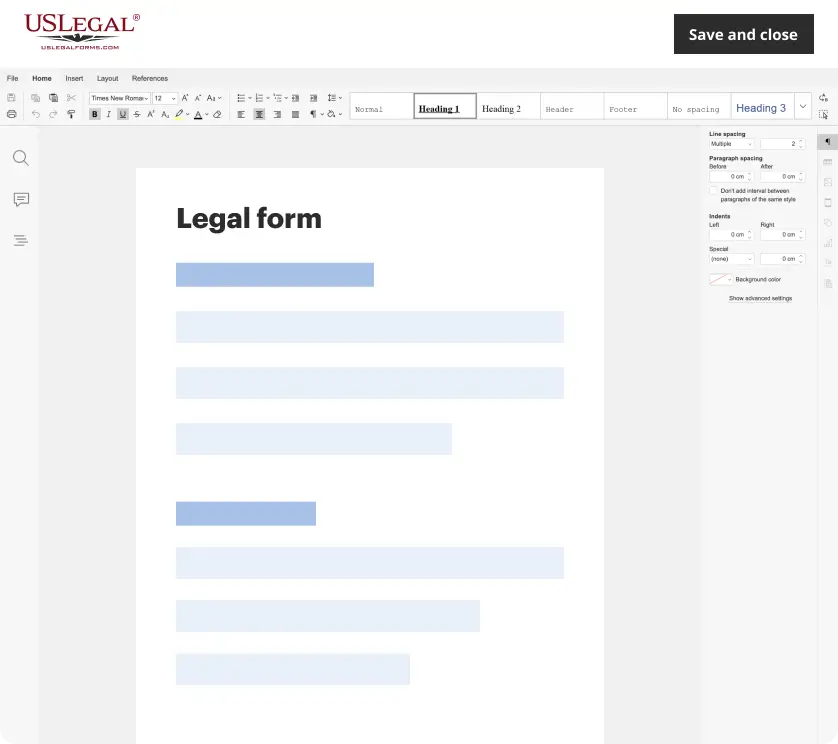
Make edits, fill in missing information, and update formatting in US Legal Forms—just like you would in MS Word.
Download a copy, print it, send it by email, or mail it via USPS—whatever works best for your next step.
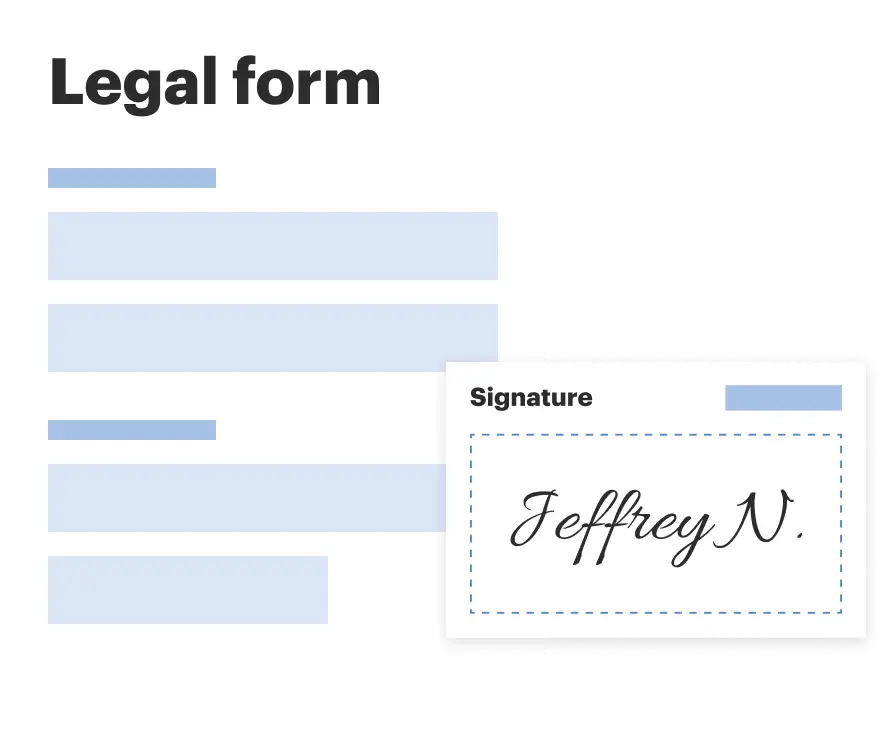
Sign and collect signatures with our SignNow integration. Send to multiple recipients, set reminders, and more. Go Premium to unlock E-Sign.
If this form requires notarization, complete it online through a secure video call—no need to meet a notary in person or wait for an appointment.
We protect your documents and personal data by following strict security and privacy standards.
Looking for another form?

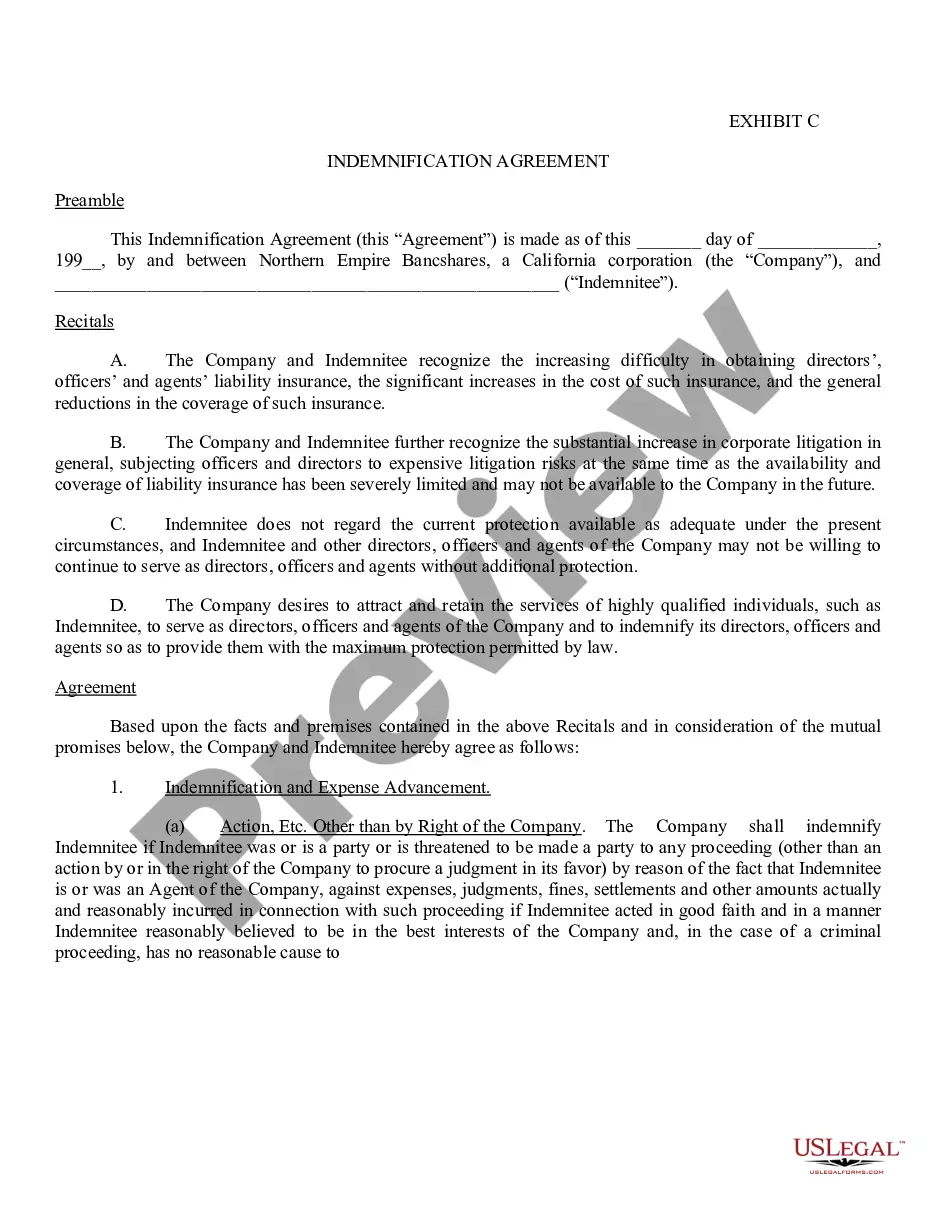
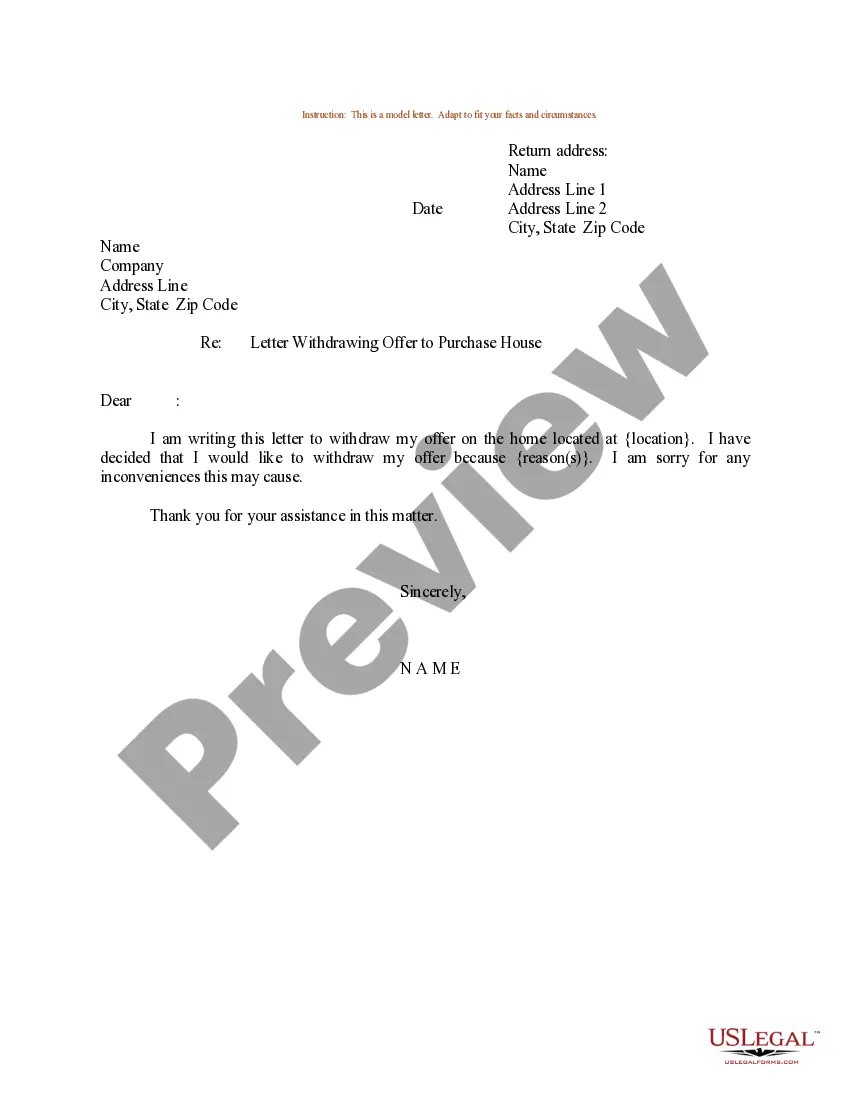
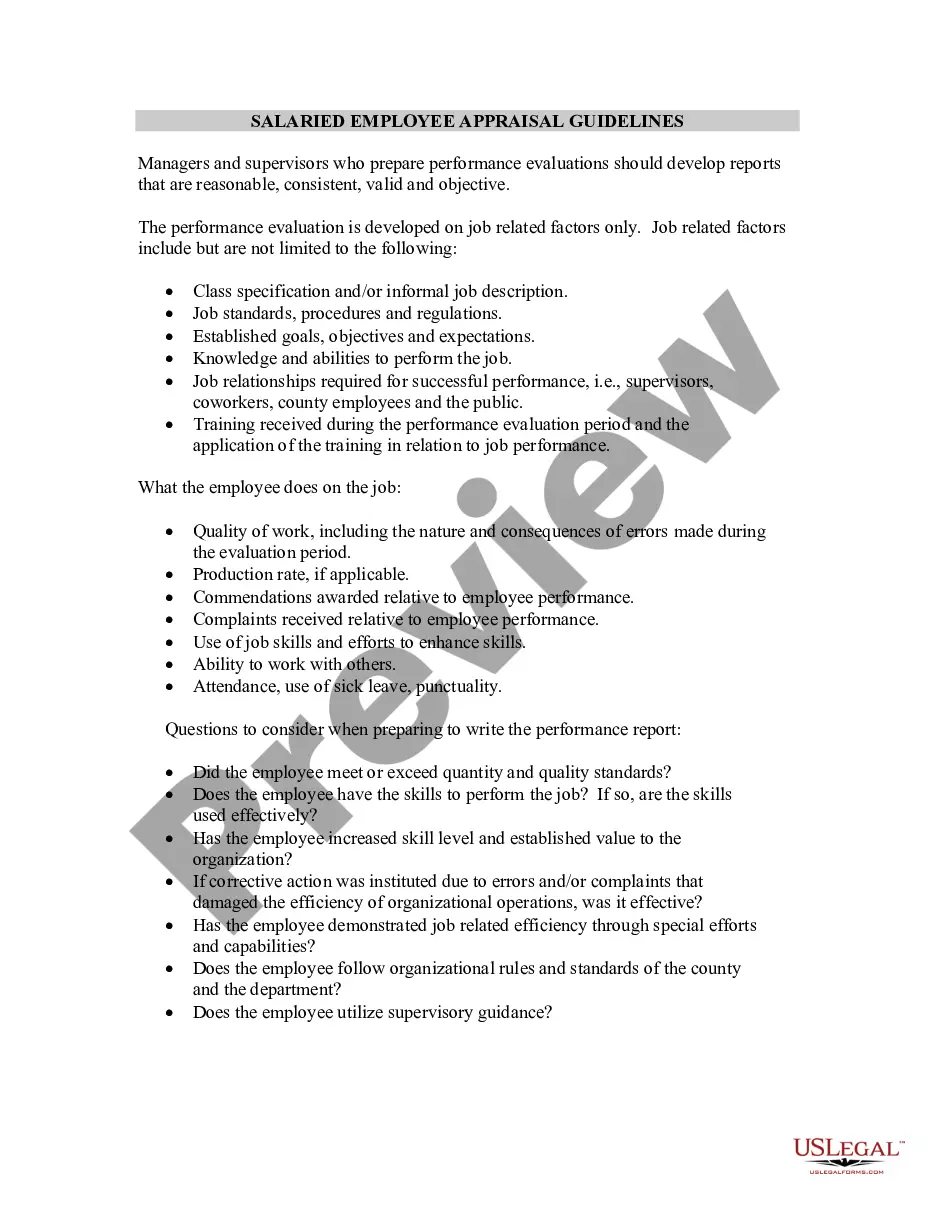
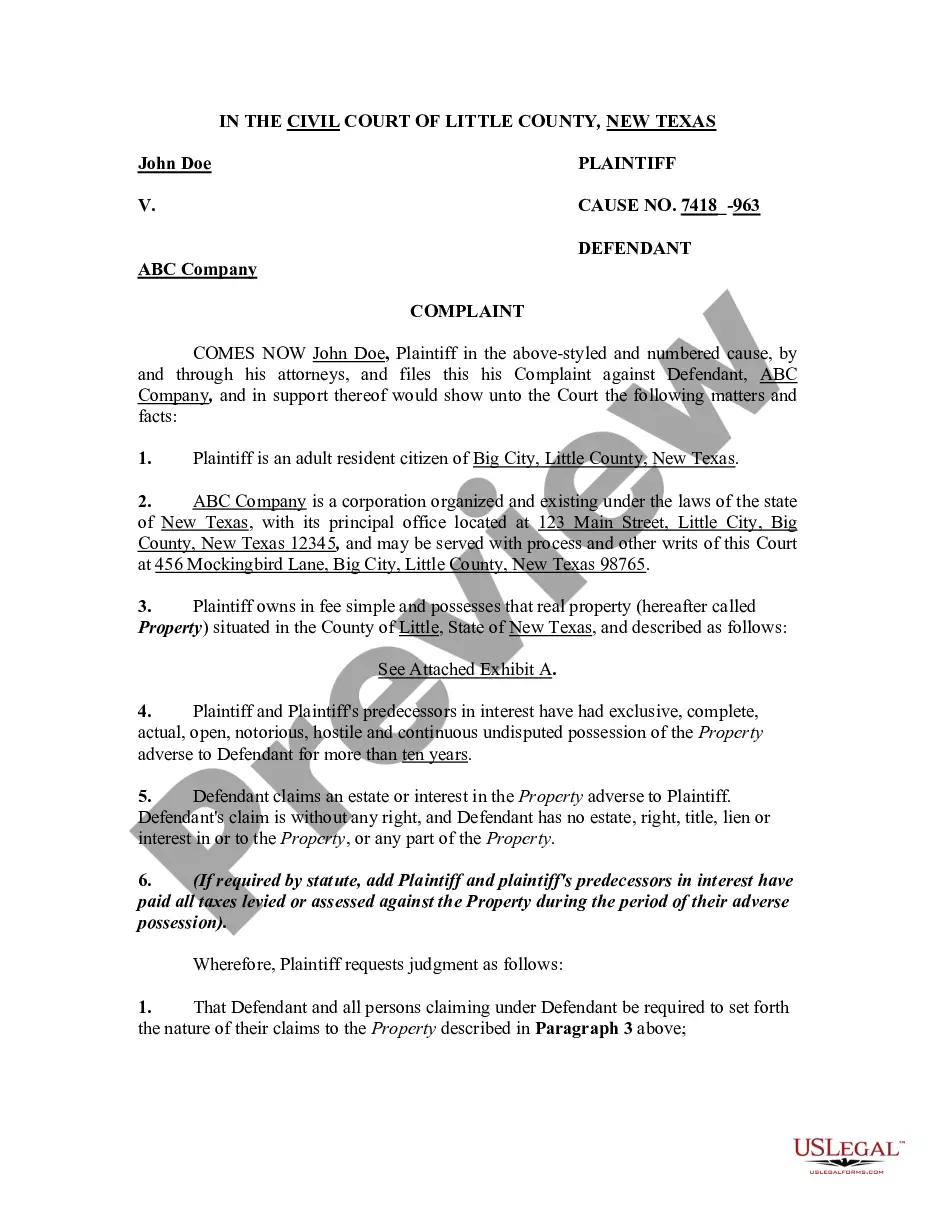
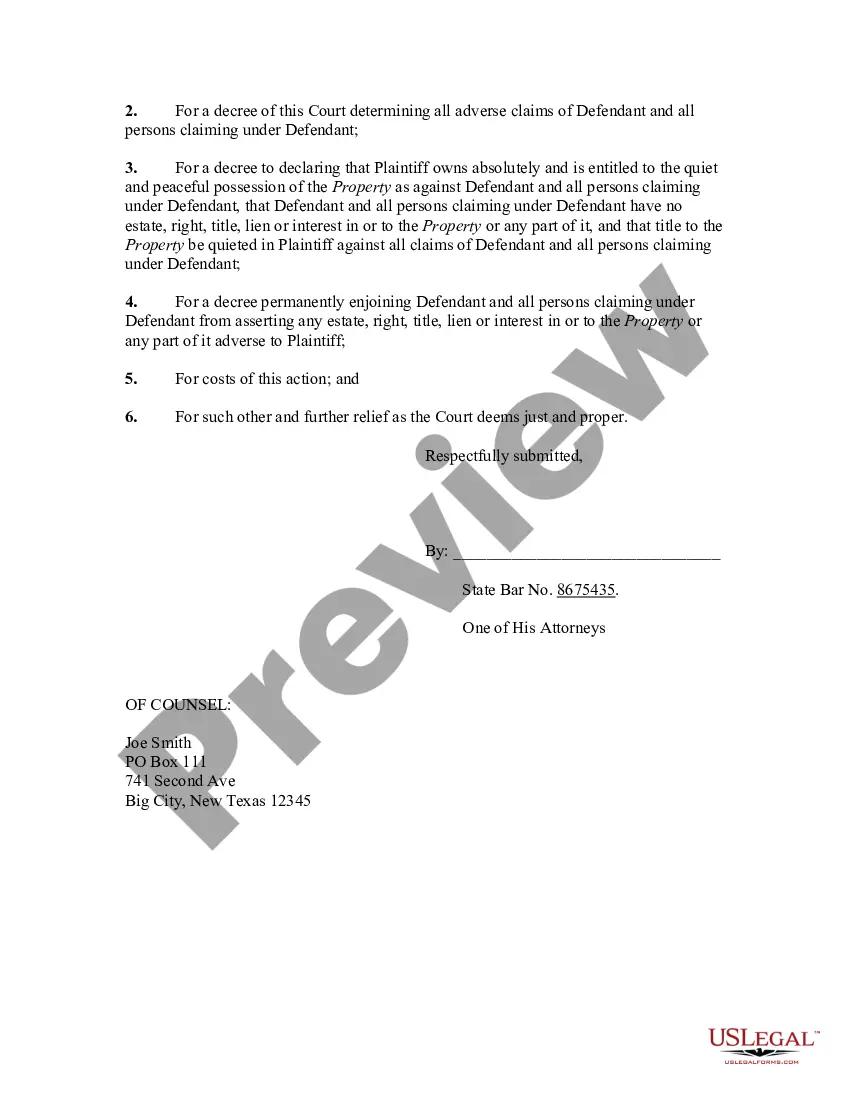
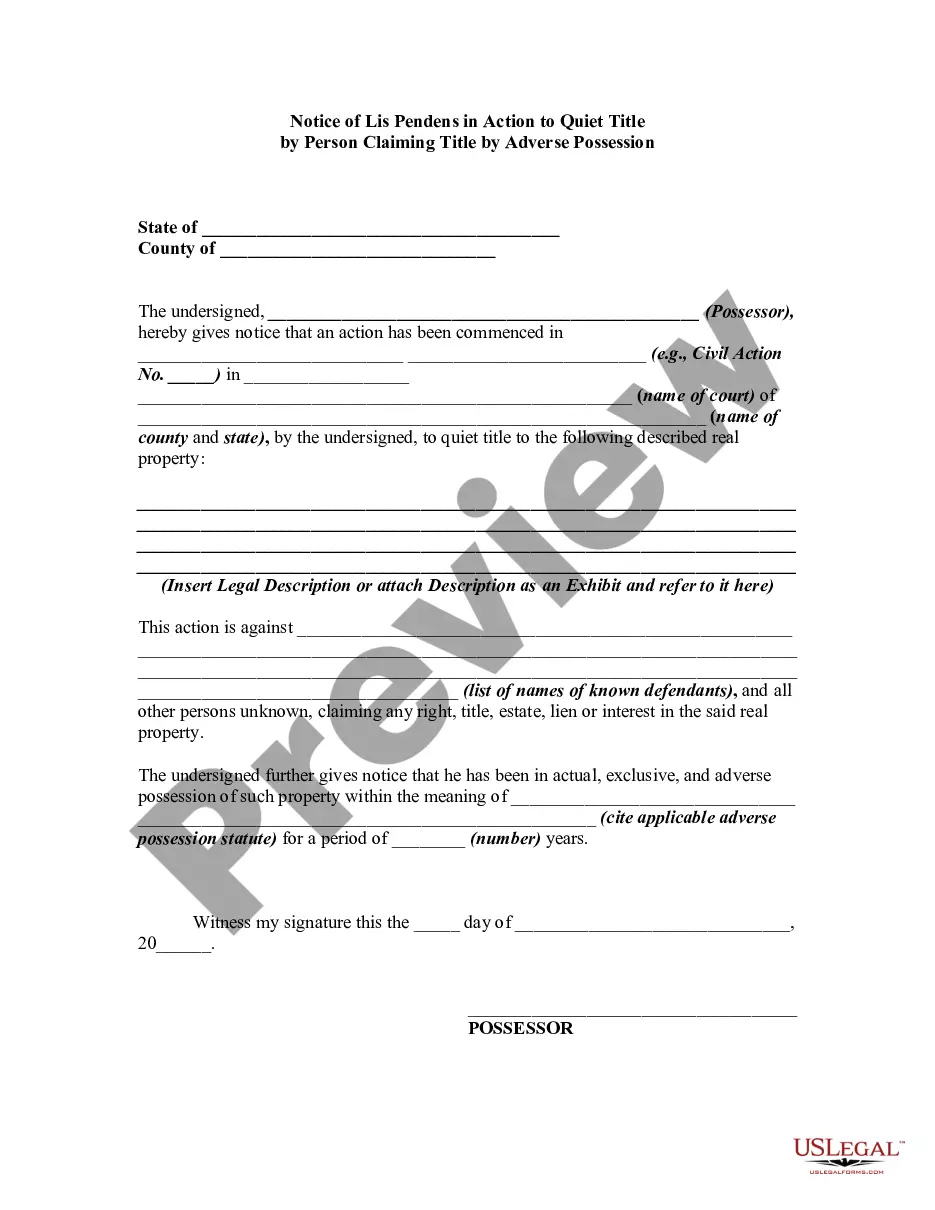
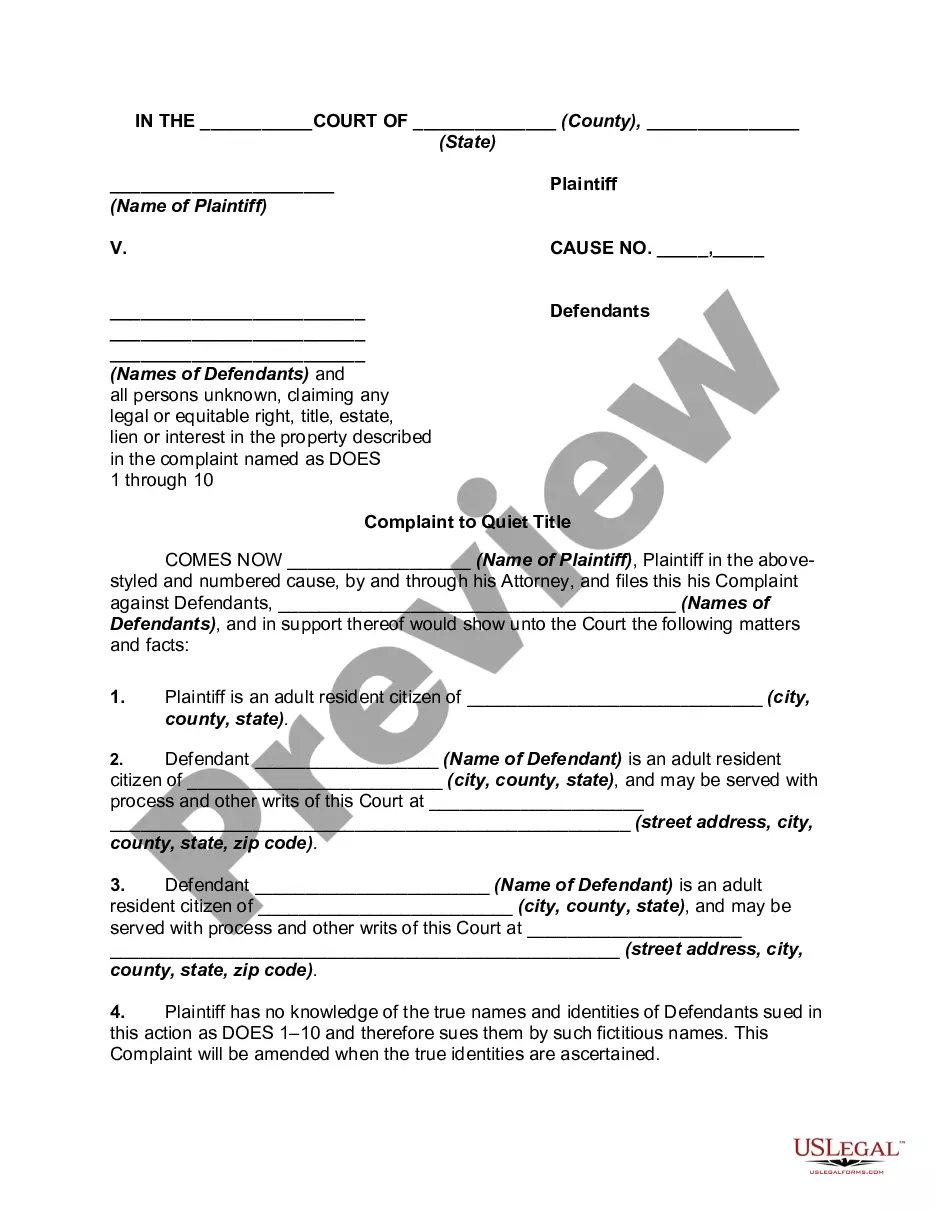
How to fill out Complaint To Quiet Title By Person Claiming Adverse Possession - Squatters Rights?
It’s a well-known fact that you cannot instantly become a legal authority, nor can you swiftly understand how to prepare Adverse Possession By State Without A Will without a professional background.
Crafting legal documents is a lengthy process necessitating specialized education and expertise.
So why not entrust the development of the Adverse Possession By State Without A Will to the professionals.
You can regain access to your documents from the My documents tab whenever you wish. If you are an existing client, you can simply Log In, and locate and download the template from the same tab.
Regardless of the intention behind your forms—be it financial, legal, or personal—our website has everything you need. Experience US Legal Forms today!
- Find the document you require using the search bar located at the top of the page.
- Preview it (if this option is available) and review the accompanying description to determine if Adverse Possession By State Without A Will is what you are looking for.
- If you need another form, start your search anew.
- Create a free account and select a subscription plan to acquire the form.
- Click Buy now. Once the payment is processed, you can download the Adverse Possession By State Without A Will, fill it out, print it, and send or mail it to the designated parties or organizations.
Form popularity
FAQ
After the judgment is signed by the judge, it must be filed with the court clerk. This is called ?entering? the judgment. (NRCP 58(c); JCRCP 58(c).) Once the judgment is entered, a notice of that entry must be mailed to all parties in the case and filed with the court clerk.
A judgment remains in effect in Nevada for six years, and can be renewed forever. Executing a judgment allows a creditor to garnish your wages or attach your bank account or other property.
You will need to attach an exemplified copy of the Judgment to the application. You can get an exemplified copy of the Judgment from the court that issued the Judgment. Keep in mind that an exemplified copy is different from a certified copy and may take longer to receive from the issuing court.
For a non-reciprocating territory, a foreign judgment may be enforced by filing a new suit in an Indian court within a period of three years as specified under the Limitation Act, 1963, commencing from the date on which the judgment was passed by the foreign court.
In British Columbia, the Supreme Court of British Columbia is the only Court with the jurisdiction to hear an application for registration of a foreign judgement. Once the judgement is registered, the foreign judgement may be enforced as though it was a domestic judgement of the Supreme Court of British Columbia.
Procedures for enforcement Once a judgment is recognized, the Canadian court will issue a certified copy of the foreign judgment for enforcement. The judgment creditor can then follow the provincial rules to execute the judgment against the debtor's assets as if it were a domestic Canadian judgment.
Options to enforce a court judgment First, prepare and file your court order. ... Next, write and ask the debtor to pay you. ... You can schedule a kind of enforcement hearing with the court. ... You can get an order to seize and sell the debtor's personal property. ... You can get a garnishing order. ... You can ask for a default hearing.
All foreign judgments must be recognized before they can be enforced. However, in certain circumstances (for example, for the purposes of a res judicata argument), it may be sufficient to recognize a judgment without enforcing it. In order to enforce a judgment, the Canadian court must first recognize it.