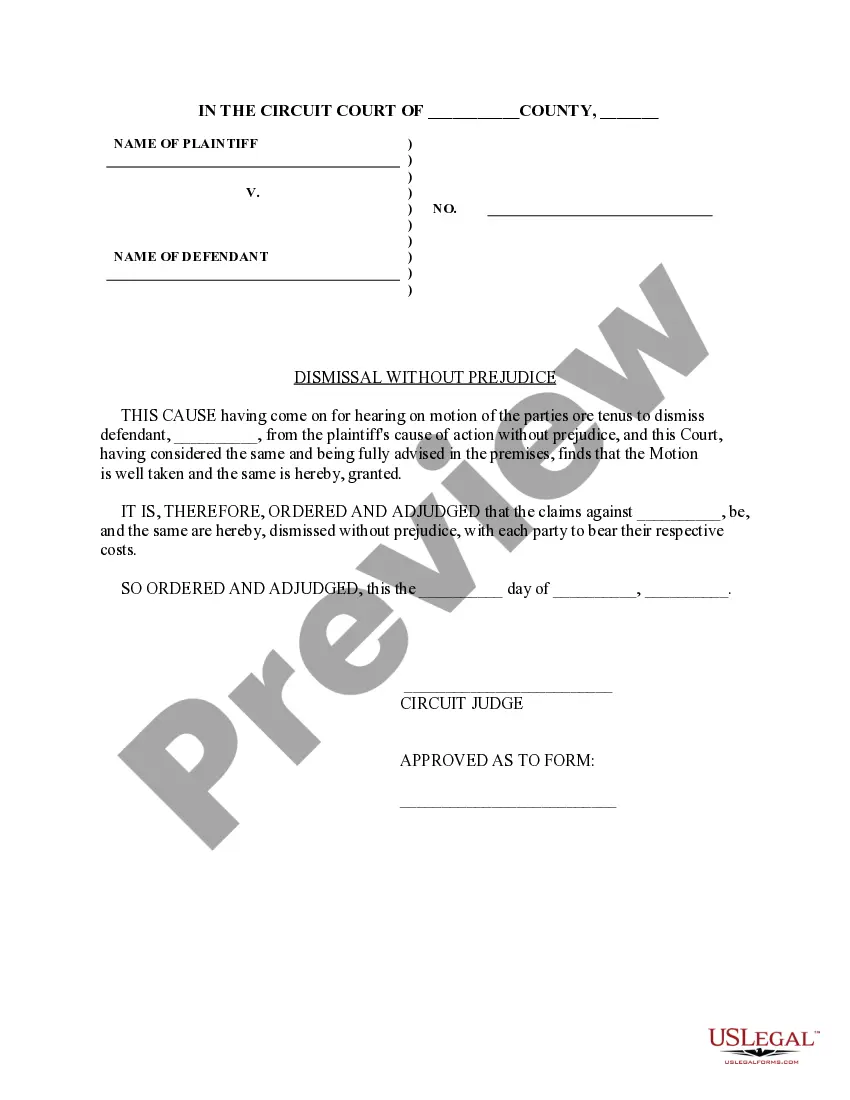
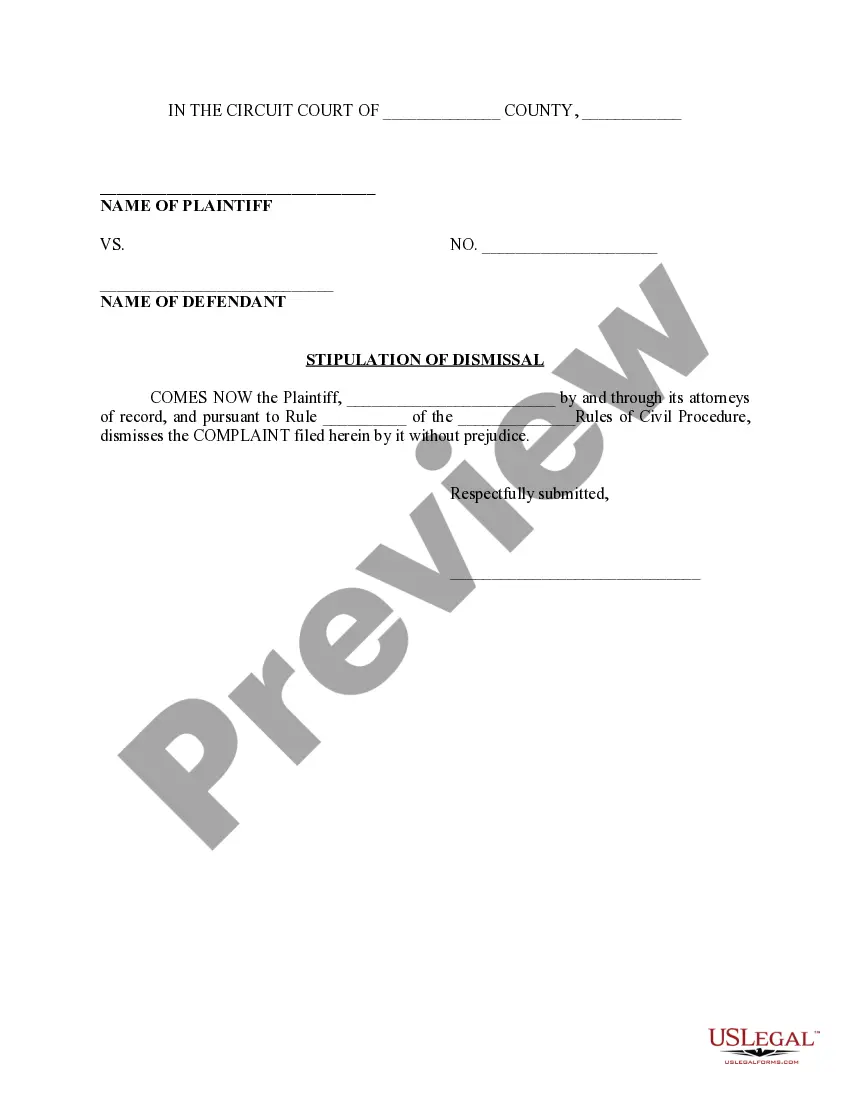
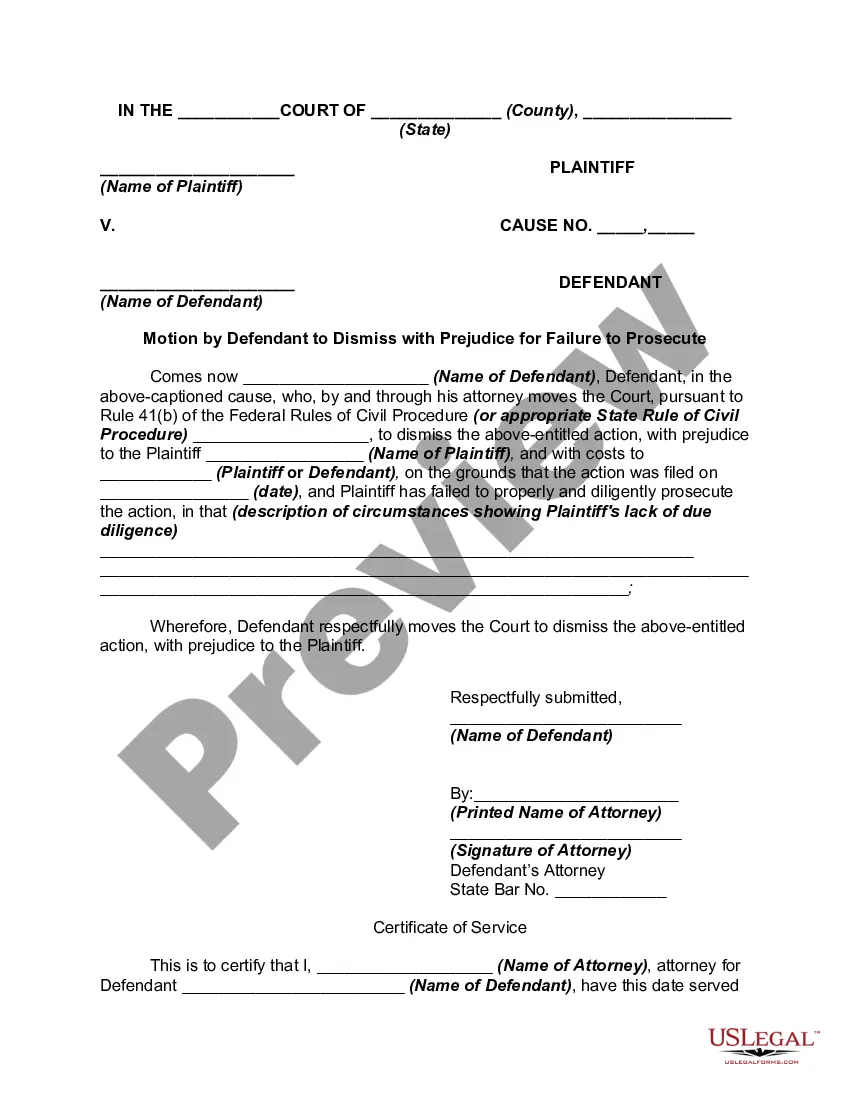
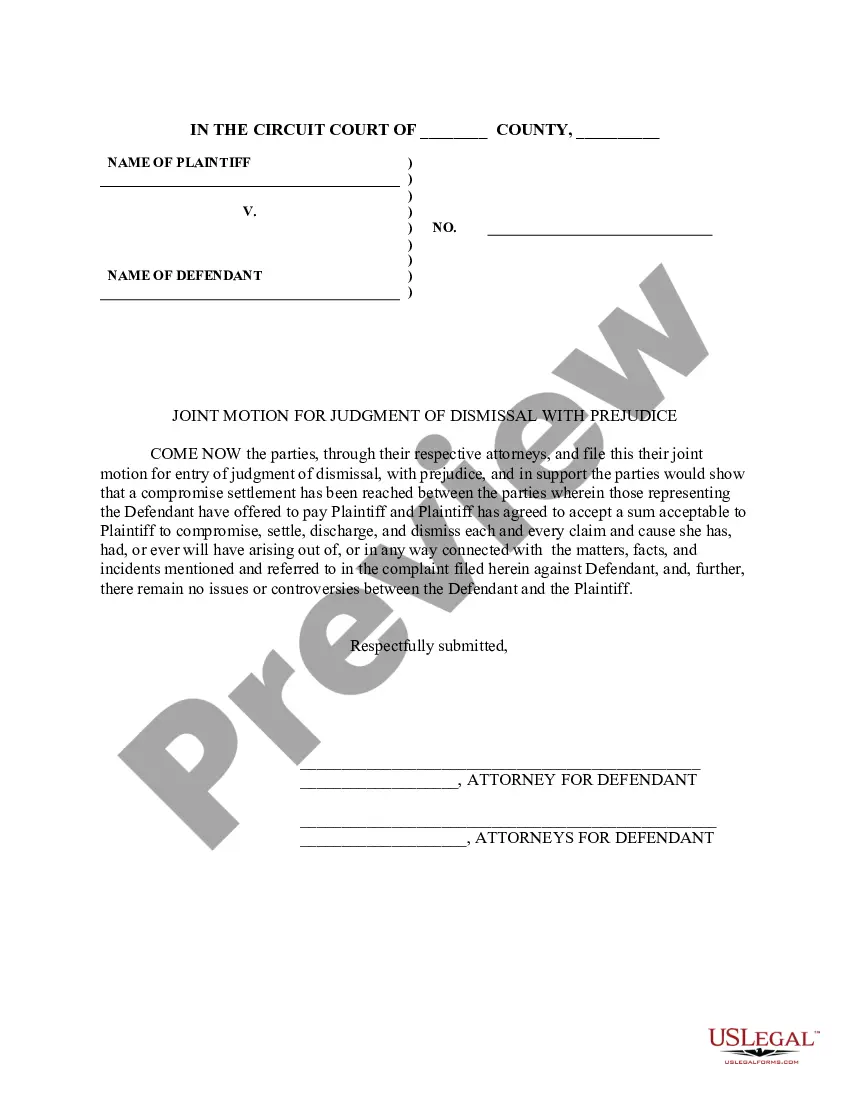
Civil Suit Dismissed With Prejudice
Description
Get your form ready online
Our built-in tools help you complete, sign, share, and store your documents in one place.
Make edits, fill in missing information, and update formatting in US Legal Forms—just like you would in MS Word.
Download a copy, print it, send it by email, or mail it via USPS—whatever works best for your next step.
Sign and collect signatures with our SignNow integration. Send to multiple recipients, set reminders, and more. Go Premium to unlock E-Sign.
If this form requires notarization, complete it online through a secure video call—no need to meet a notary in person or wait for an appointment.
We protect your documents and personal data by following strict security and privacy standards.

Make edits, fill in missing information, and update formatting in US Legal Forms—just like you would in MS Word.

Download a copy, print it, send it by email, or mail it via USPS—whatever works best for your next step.

Sign and collect signatures with our SignNow integration. Send to multiple recipients, set reminders, and more. Go Premium to unlock E-Sign.

If this form requires notarization, complete it online through a secure video call—no need to meet a notary in person or wait for an appointment.

We protect your documents and personal data by following strict security and privacy standards.
Looking for another form?






How to fill out Dismissal Without Prejudice?
Obtaining legal document samples that adhere to federal and state regulations is crucial, and the internet provides numerous alternatives to choose from.
However, what’s the benefit in spending time searching for the appropriate Civil Suit Dismissed With Prejudice template online if the US Legal Forms digital library already has such documents compiled in one location.
US Legal Forms is the largest online legal repository with over 85,000 fillable templates created by attorneys for any professional and personal circumstance.
Review the template using the Preview feature or through the text description to ensure it meets your needs.
- They are simple to navigate with all documents organized by state and intended use.
- Our specialists keep track of legislative changes, so you can always be assured your form is current and compliant when obtaining a Civil Suit Dismissed With Prejudice from our site.
- Acquiring a Civil Suit Dismissed With Prejudice is straightforward and fast for both existing and new users.
- If you already have an account with an active subscription, Log In and download the document sample you require in the appropriate format.
- If you are new to our site, follow the instructions below.
Form popularity
FAQ
A civil suit can be dismissed on several grounds, such as lack of jurisdiction, failure to state a claim, or procedural errors. When a civil suit is dismissed with prejudice, it means the case cannot be refiled. This often happens when the court finds that the issues have been fully resolved or that the plaintiff has repeatedly failed to present a valid claim. Understanding the reasons for dismissal can help you navigate your legal options, and platforms like USLegalForms offer valuable resources to assist you.
To fill out the CIV 110 form, start by providing the case information, including the court's name and the case number. Then, indicate the specific relief you seek, such as a civil suit dismissed with prejudice. Ensure all sections are completed accurately, as incomplete forms can delay your case. You can also find helpful templates and guidance on platforms like US Legal Forms, which simplify the form-filling process.
A civil suit dismissed with prejudice means the case is permanently closed, preventing the plaintiff from filing again on the same issue. For instance, if a plaintiff sues for breach of contract but fails to provide sufficient evidence, the court may dismiss the case with prejudice. This dismissal indicates that the plaintiff cannot bring this claim back to court, ensuring finality in legal proceedings. Understanding this concept can help you navigate the complexities of civil litigation.
Your case may have been dismissed with prejudice due to various factors such as procedural errors, failure to provide sufficient evidence, or non-compliance with court rules. The court may determine that the issues are too significant to allow for a retrial of the same matter. It's essential to understand the specific reasons behind the dismissal to address any legal concerns. Platforms like US Legal Forms can help you analyze your case and explore potential next steps.
When a civil case is dismissed with prejudice, it means the court has made a final decision on the matter, and the plaintiff cannot bring the same claim again. This dismissal signifies that the case is closed, often due to lack of evidence or failure to comply with legal procedures. Understanding this concept is crucial for anyone involved in a civil suit. For further insights, US Legal Forms can assist you in navigating the implications of such a dismissal.
In general, a dismissal without prejudice allows a plaintiff to refile the case later, while a dismissal with prejudice does not. Therefore, it is usually more favorable to avoid a dismissal with prejudice if you believe your case has merit. Ultimately, the best outcome depends on the specifics of your situation and legal strategy. Consulting with a legal expert can help clarify your best course of action.
Yes, a dismissal with prejudice does affect your legal record. It indicates that the case has been permanently resolved and cannot be refiled. This dismissal may have implications for future legal actions or claims you wish to pursue. To navigate these complexities, consider utilizing platforms like US Legal Forms, which can provide guidance on your legal options.
A civil case may be dismissed with prejudice for several reasons, such as a failure to state a valid claim or when the plaintiff repeatedly fails to comply with court orders. This decision prevents the plaintiff from bringing the same claim again in the future. Essentially, the court concludes that the case lacks merit. Understanding why your civil suit was dismissed with prejudice can help you avoid similar pitfalls in the future.