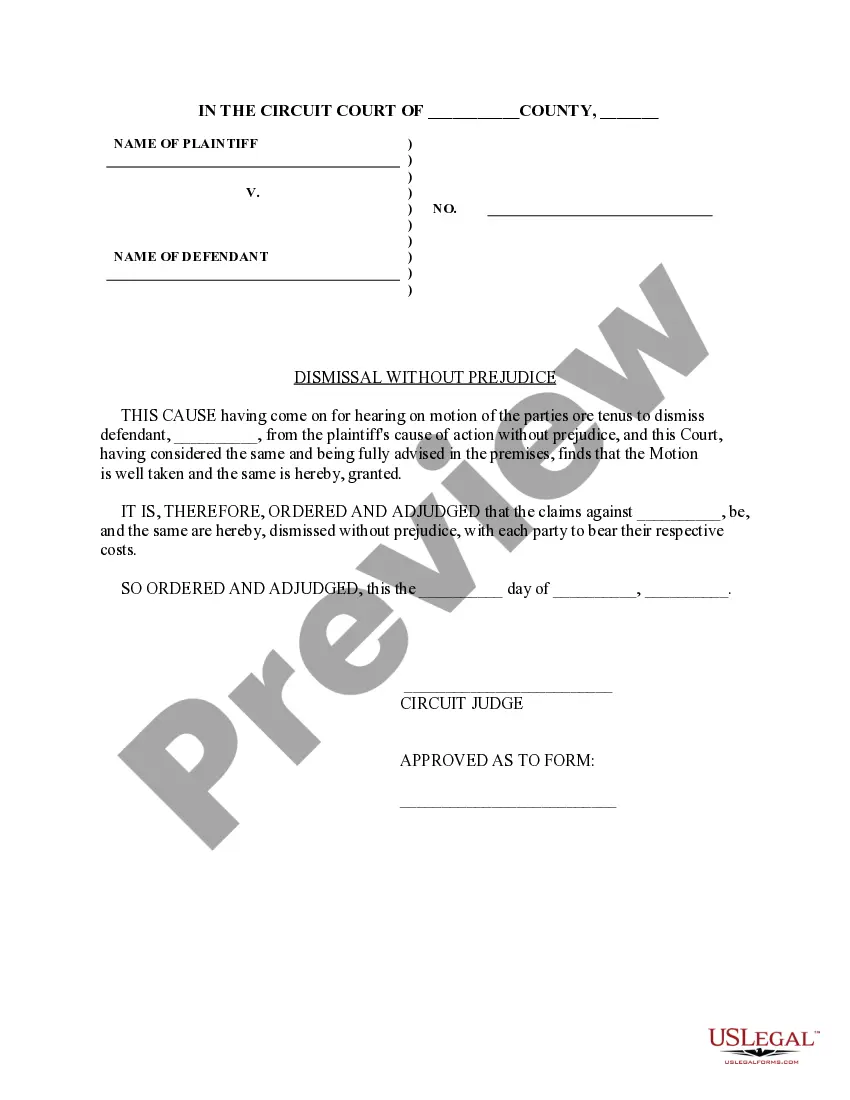
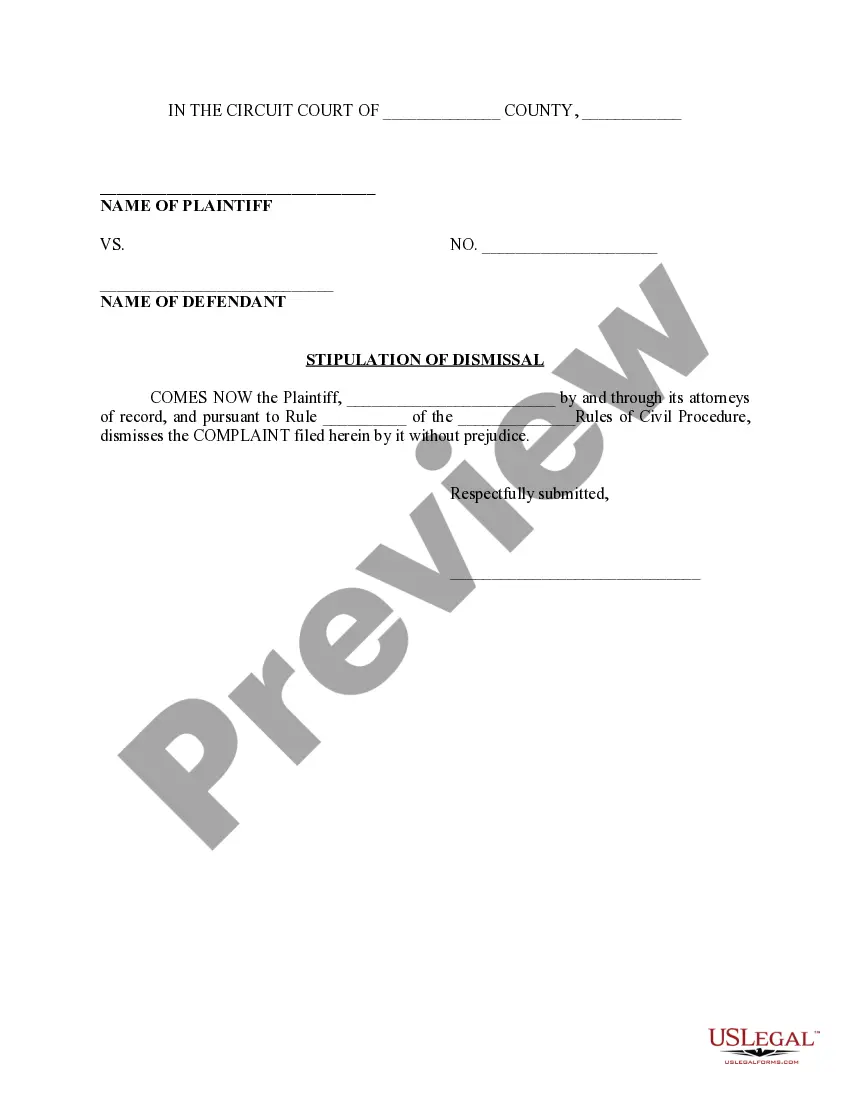
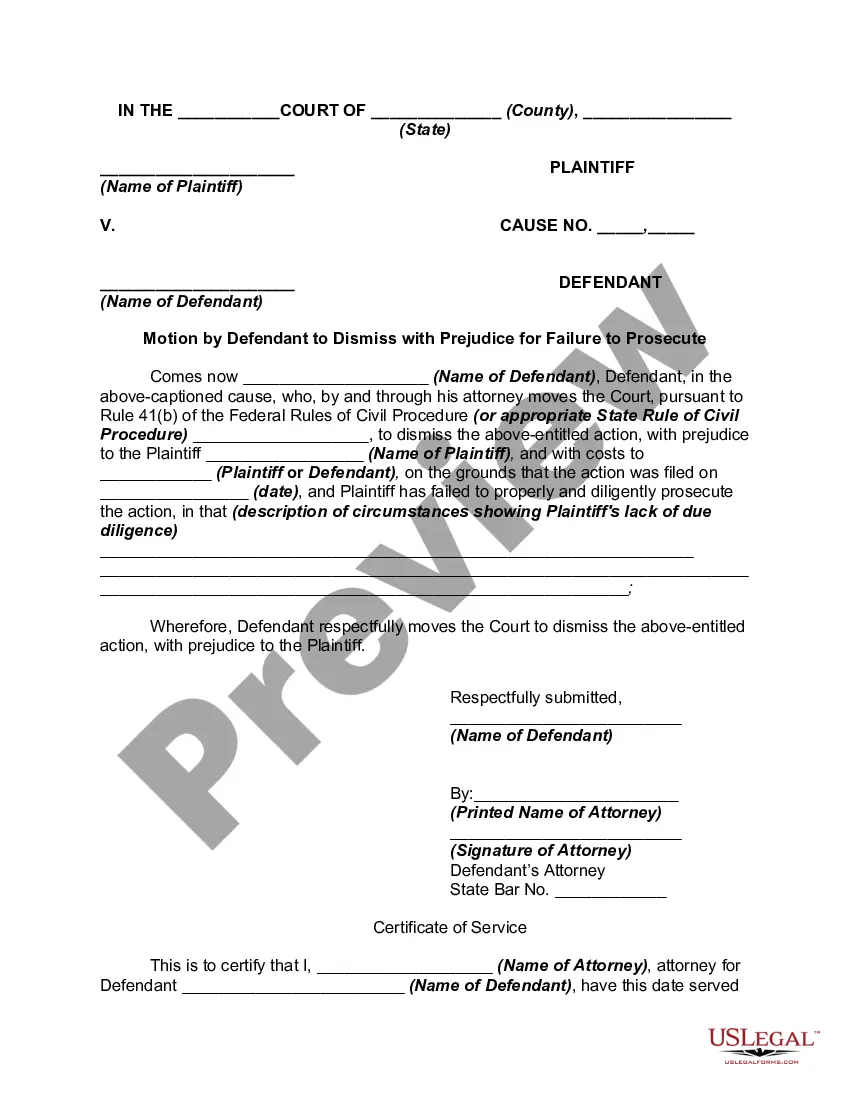
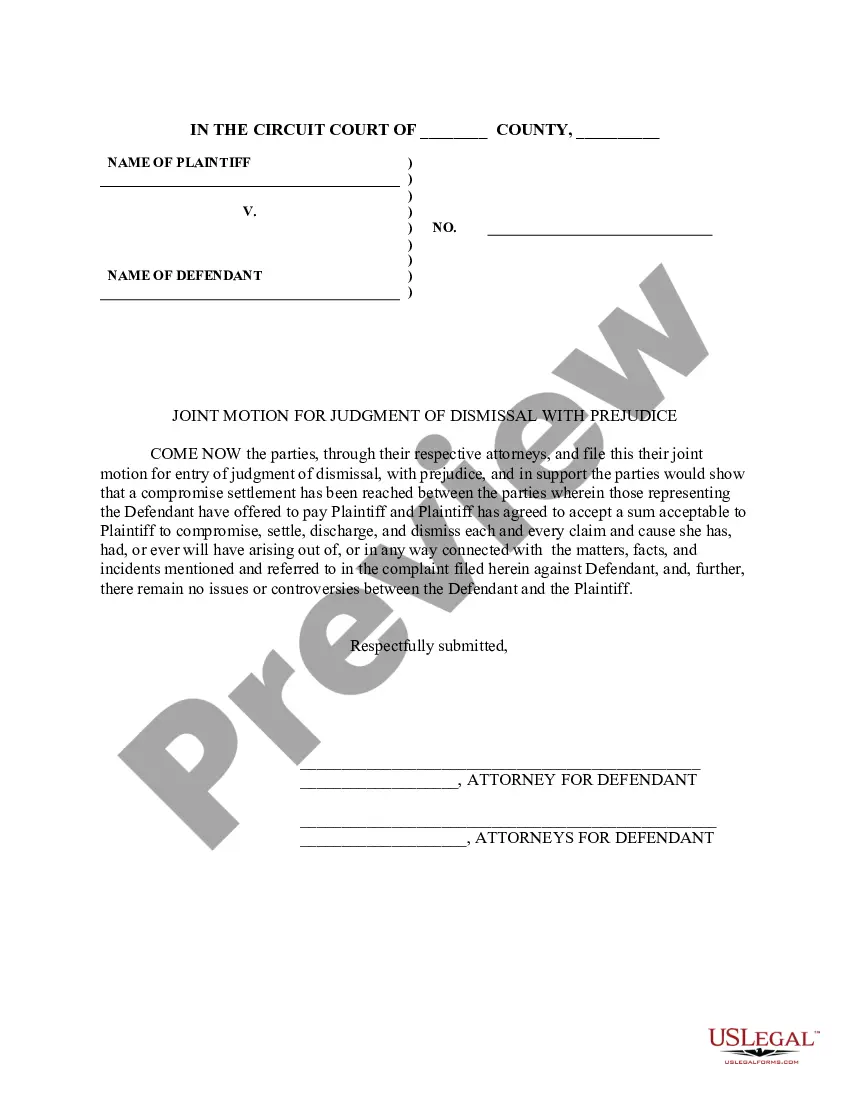
Civil Dismissal Without Prejudice
Description
Get your form ready online
Our built-in tools help you complete, sign, share, and store your documents in one place.
Make edits, fill in missing information, and update formatting in US Legal Forms—just like you would in MS Word.
Download a copy, print it, send it by email, or mail it via USPS—whatever works best for your next step.
Sign and collect signatures with our SignNow integration. Send to multiple recipients, set reminders, and more. Go Premium to unlock E-Sign.
If this form requires notarization, complete it online through a secure video call—no need to meet a notary in person or wait for an appointment.
We protect your documents and personal data by following strict security and privacy standards.

Make edits, fill in missing information, and update formatting in US Legal Forms—just like you would in MS Word.

Download a copy, print it, send it by email, or mail it via USPS—whatever works best for your next step.

Sign and collect signatures with our SignNow integration. Send to multiple recipients, set reminders, and more. Go Premium to unlock E-Sign.

If this form requires notarization, complete it online through a secure video call—no need to meet a notary in person or wait for an appointment.

We protect your documents and personal data by following strict security and privacy standards.
Looking for another form?







How to fill out Dismissal Without Prejudice?
The Civil Dismissal Without Prejudice you observe on this site is a versatile legal template created by experienced attorneys in accordance with federal and state laws.
For over 25 years, US Legal Forms has supplied individuals, businesses, and lawyers with more than 85,000 authenticated, state-specific forms for any business and personal situation. It’s the fastest, simplest, and most reliable way to acquire the documents you require, as the service ensures the utmost level of data security and anti-malware safeguards.
Re-download your documents whenever necessary. Utilize the same document again when needed. Access the My documents tab in your profile to re-download any previously purchased forms. Register for US Legal Forms to have verified legal templates for all of life’s situations at your fingertips.
- Examine the document you require and assess it.
- Browse through the file you searched and preview it or review the form description to confirm it meets your requirements. If it does not, utilize the search bar to locate the appropriate one. Click Buy Now when you’ve identified the template you need.
- Choose a subscription plan and Log In. Select the pricing plan that fits you and sign up for an account. Use PayPal or a credit card for quick payment. If you already possess an account, Log In and inspect your subscription to continue.
- Obtain the editable template. Select the format you desire for your Civil Dismissal Without Prejudice (PDF, Word, RTF) and save the document on your device.
- Complete and sign the documents. Print the template to fill it out by hand. Alternatively, utilize an online multifunctional PDF editor to swiftly and accurately fill out and sign your form with a valid signature.
Form popularity
FAQ
If your case was dismissed without prejudice, it means you have the option to refile in the future. This dismissal indicates that the court did not make a final decision on the merits of your case. You still retain your legal rights and can address any issues that led to the dismissal. Platforms like USLegalForms can assist you in navigating the complexities of refiling effectively.
A case may be dismissed without prejudice for several reasons, including the need for additional evidence or the desire to correct procedural mistakes. This type of dismissal allows plaintiffs the opportunity to refine their claims and present a stronger case later. Additionally, parties may seek dismissal to explore settlement options without risking their rights. Understanding these motivations can inform your approach to legal challenges.
You should consider including 'without prejudice' in your case dismissal when you want to preserve the right to refile. This phrase indicates that you do not intend to waive your claims, allowing for future legal action if necessary. It's essential to communicate your intentions clearly to avoid misunderstandings. Consulting a legal expert can provide guidance on the best timing for such a designation.
A suit can be dismissed on various grounds, including lack of jurisdiction, failure to state a claim, or procedural errors. A civil dismissal without prejudice allows for potential resubmission, should the plaintiff address the reasons behind the dismissal. Additionally, parties may agree to a dismissal for efficiency or settlement purposes. Understanding these grounds can enhance your legal strategy.
Typically, a civil dismissal without prejudice does not appear on standard background checks. These checks often focus on convictions and finalized judgments rather than dismissed cases. However, some comprehensive checks might reveal details about civil cases, including dismissals. It's wise to understand the scope of any background check relevant to your situation.
A civil dismissal without prejudice generally offers flexibility to the plaintiff. It allows the option to refile the case later, which can be beneficial if new evidence or arguments arise. However, it may also indicate weaknesses in the case, prompting strategic consideration. Users should evaluate their specific situation and consult a legal professional for tailored advice.
?With prejudice? means that you cannot re-file your case ever. ?Without prejudice? means that you can re-file your case at a later date (as long as you are still within the statute of limitations).
Reasons for dismissal without prejudice The parties came to an agreement and the plaintiff wants to end the case. The person the plaintiff sued paid you the money he or she owed you. The plaintiff cannot locate the defendant to serve him or her, but wants to reserve the right to sue at a later date.
Under Federal Rules of Civil Procedure Rule 41(b), the default rule is that a dismissal is considered an ?adjudication on the merits,? and therefore with prejudice. Contrast with dismissal without prejudice, where the plaintiff may subsequently bring their claim in another court.
A court may allow a plaintiff to voluntarily withdraw from the suit through a Rule 41(a) dismissal without prejudice if the plaintiff would suffer hardship from continuing the suit. Also, under Rule 37(b)(2), a court may dismiss without prejudice to sanction a party acting in bad faith.