Copyright Rights To Music
Description
Get your form ready online
Our built-in tools help you complete, sign, share, and store your documents in one place.
Make edits, fill in missing information, and update formatting in US Legal Forms—just like you would in MS Word.
Download a copy, print it, send it by email, or mail it via USPS—whatever works best for your next step.
Sign and collect signatures with our SignNow integration. Send to multiple recipients, set reminders, and more. Go Premium to unlock E-Sign.
If this form requires notarization, complete it online through a secure video call—no need to meet a notary in person or wait for an appointment.
We protect your documents and personal data by following strict security and privacy standards.

Make edits, fill in missing information, and update formatting in US Legal Forms—just like you would in MS Word.

Download a copy, print it, send it by email, or mail it via USPS—whatever works best for your next step.

Sign and collect signatures with our SignNow integration. Send to multiple recipients, set reminders, and more. Go Premium to unlock E-Sign.

If this form requires notarization, complete it online through a secure video call—no need to meet a notary in person or wait for an appointment.

We protect your documents and personal data by following strict security and privacy standards.
Looking for another form?




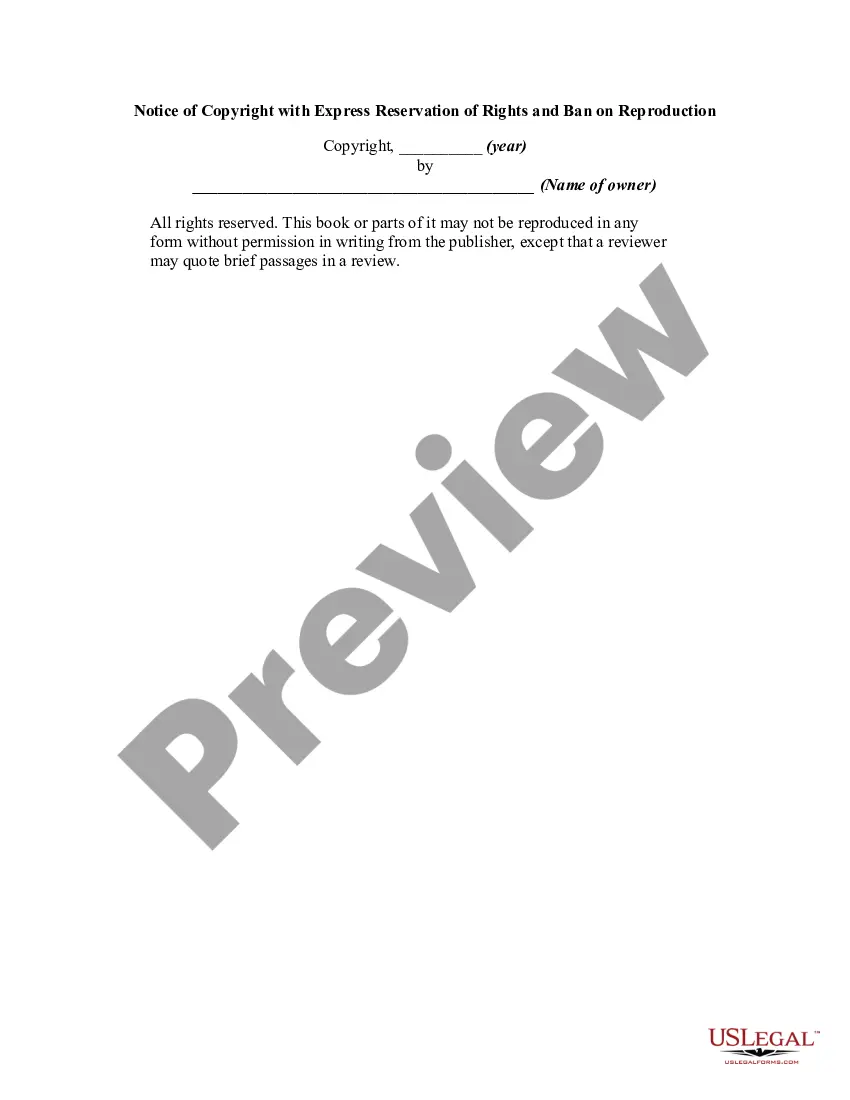
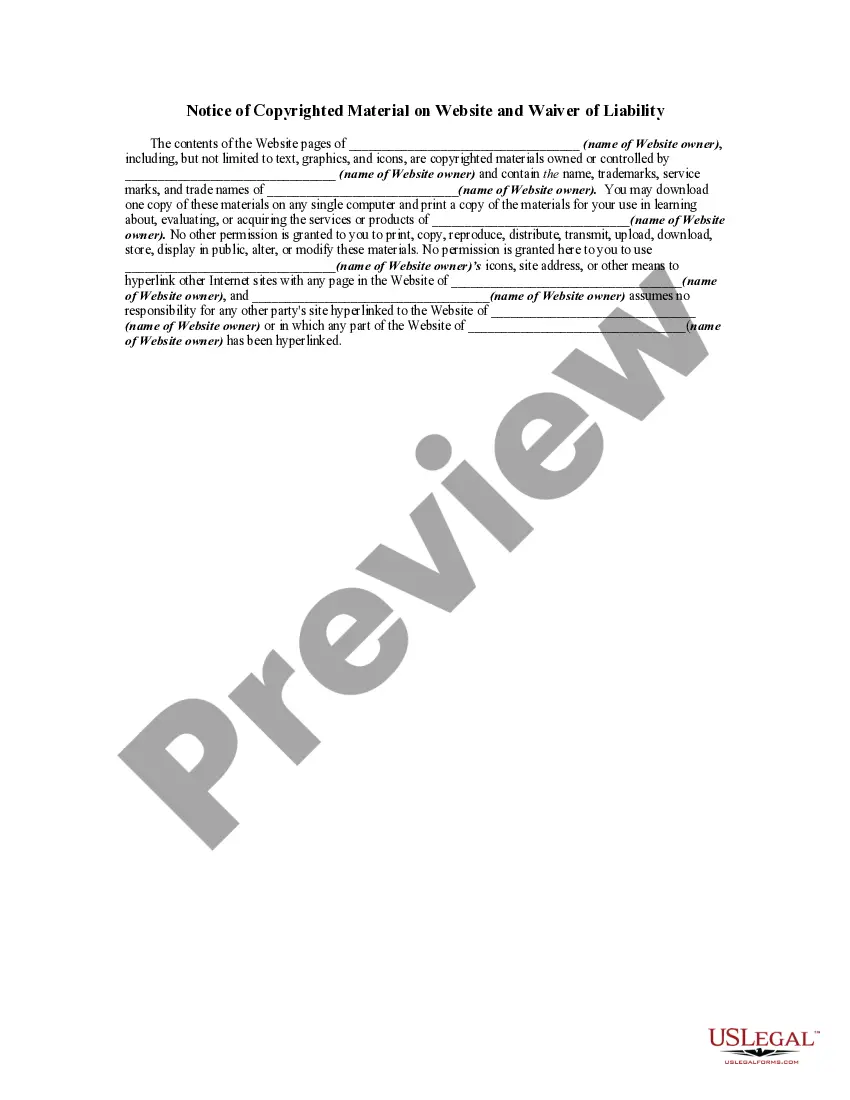
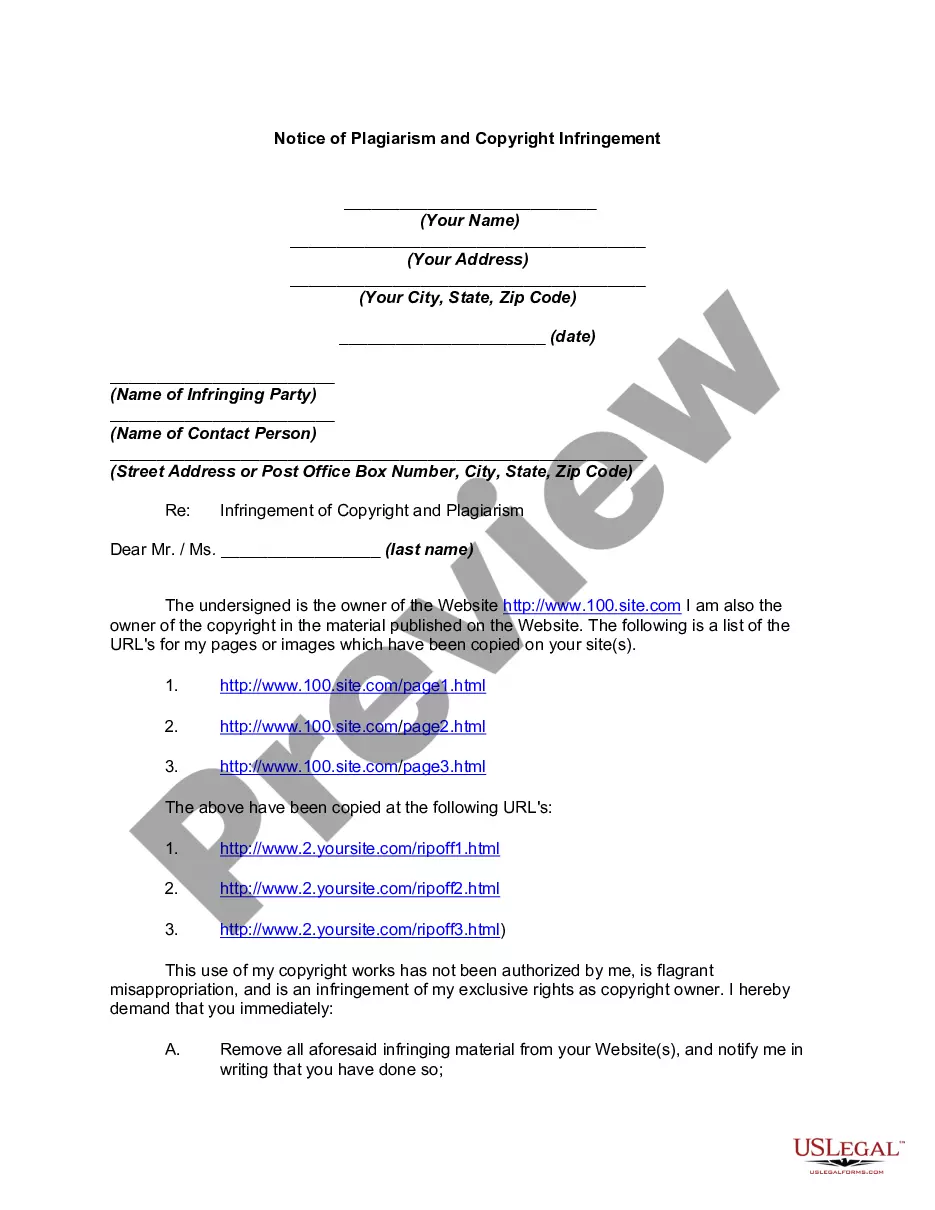
How to fill out Notice Of Copyright With Express Reservation Of Rights And Ban On Reproduction?
What is the most reliable platform to acquire the Copyright Rights To Music and other updated forms of legal documents? US Legal Forms is the solution!
It's the most extensive collection of legal forms for any situation. Each template is expertly composed and verified for adherence to federal and local standards. They are categorized by area and jurisdiction, making it simple to find what you need.
US Legal Forms is an ideal choice for anyone needing to manage legal documents. Premium users can enjoy additional benefits as they can fill out and authorize previously saved documents electronically at any point within the built-in PDF editing tool. Explore it today!
- Experienced users of the site just need to Log In to the platform, confirm the validity of their subscription, and click the Download button adjacent to the Copyright Rights To Music to secure it.
- Once saved, the template is accessible for future reference within the My documents section of your account.
- If you haven't yet created an account with our library, follow these steps to obtain one.
- Form compliance verification. Before obtaining any template, ensure that it meets your usage requirements and complies with the laws of your state or county. Review the form description and utilize the Preview if available.
Form popularity
FAQ
To get copyright for your music, you should register your work with the U.S. Copyright Office. This formal registration not only provides legal protection but also establishes your ownership of the music. Using US Legal's resources can guide you through the registration process and ensure you understand your copyright rights to music. This step is vital for artists wanting to protect their original creations.
Requesting music rights involves contacting the copyright owner and detailing how you plan to use the music. It is essential to include specific information, like the project’s scope and duration, to facilitate the negotiation process. Utilizing services like US Legal can streamline this process by providing necessary forms and legal insight. Clear communication can lead to obtaining the copyright rights to music more efficiently.
To get copyright permission for music, you need to reach out to the copyright holder, which could be the artist, producer, or a music publisher. You should clearly state your intended use for the music and negotiate the terms of use. Platforms like US Legal can provide templates and guidance for requesting copyright rights to music effectively. Ensuring you have permission protects you from potential legal issues.
Music copyright for works created before 1978 can last for a maximum of 95 years, including the possibility of renewal. Initially, these copyrights lasted for 28 years, with the chance to extend them for another 67 years. Understanding these timeframes is crucial for anyone working with copyright rights to music, and USLegalForms offers guidance to help clarify these legal aspects.
Yes, songs created before 1978 are typically still protected by copyright laws in the United States. For those songs, copyright protection depends on whether they were published and if the copyright was renewed. Many such works remain under copyright, impacting how you can use or distribute them.
To avoid copyright issues, you can create your own original music, use music that is in the public domain, or select tracks with an appropriate Creative Commons license. Additionally, platforms like USLegalForms provide resources and templates that can help you navigate copyright rights to music, ensuring your compliance with legal requirements.
Copyright rights to music created before 1978 generally lasted for 28 years from the publication date. After this initial period, copyright owners could renew their rights for an additional 67 years. This means that works published prior to 1978 could remain protected for up to 95 years in total under copyright law.
Yes, you can file your own copyright for your music, protecting your copyright rights to music. The process is straightforward, and you can do it online through the U.S. Copyright Office. However, you might consider using platforms like US Legal Forms to guide you through the paperwork, ensuring correctness and saving time.
To copyright your music rights, create your piece and automatically gain copyright upon its creation. However, for better protection, consider registering with the U.S. Copyright Office. This registration strengthens your copyright rights to music and is advisable if you plan to commercialize your work.
When writing a letter to request copyright, clearly state your intent and detail the work you want to copyright. Include your name, address, and the type of work, followed by a request for registration. This letter is part of the process to secure your copyright rights to music.