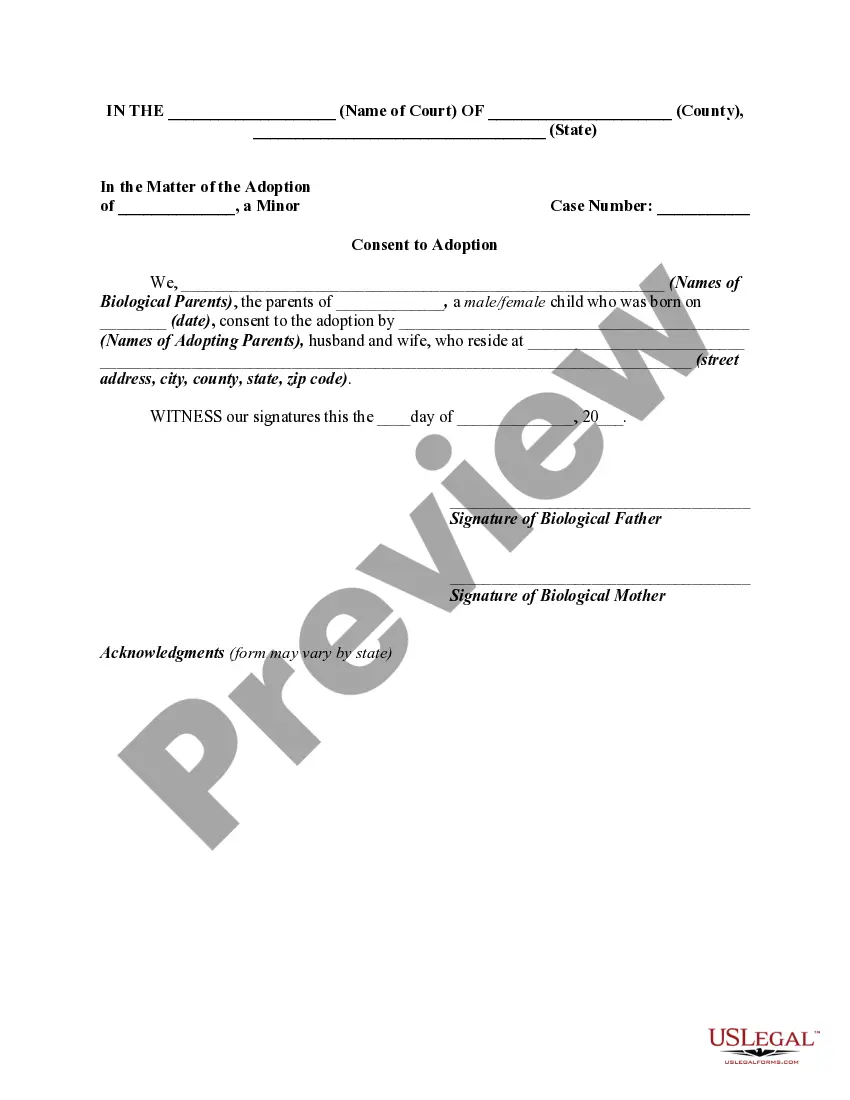
Biological Child For
Description
Get your form ready online
Our built-in tools help you complete, sign, share, and store your documents in one place.
Make edits, fill in missing information, and update formatting in US Legal Forms—just like you would in MS Word.
Download a copy, print it, send it by email, or mail it via USPS—whatever works best for your next step.
Sign and collect signatures with our SignNow integration. Send to multiple recipients, set reminders, and more. Go Premium to unlock E-Sign.
If this form requires notarization, complete it online through a secure video call—no need to meet a notary in person or wait for an appointment.
We protect your documents and personal data by following strict security and privacy standards.

Make edits, fill in missing information, and update formatting in US Legal Forms—just like you would in MS Word.

Download a copy, print it, send it by email, or mail it via USPS—whatever works best for your next step.

Sign and collect signatures with our SignNow integration. Send to multiple recipients, set reminders, and more. Go Premium to unlock E-Sign.

If this form requires notarization, complete it online through a secure video call—no need to meet a notary in person or wait for an appointment.

We protect your documents and personal data by following strict security and privacy standards.
Looking for another form?






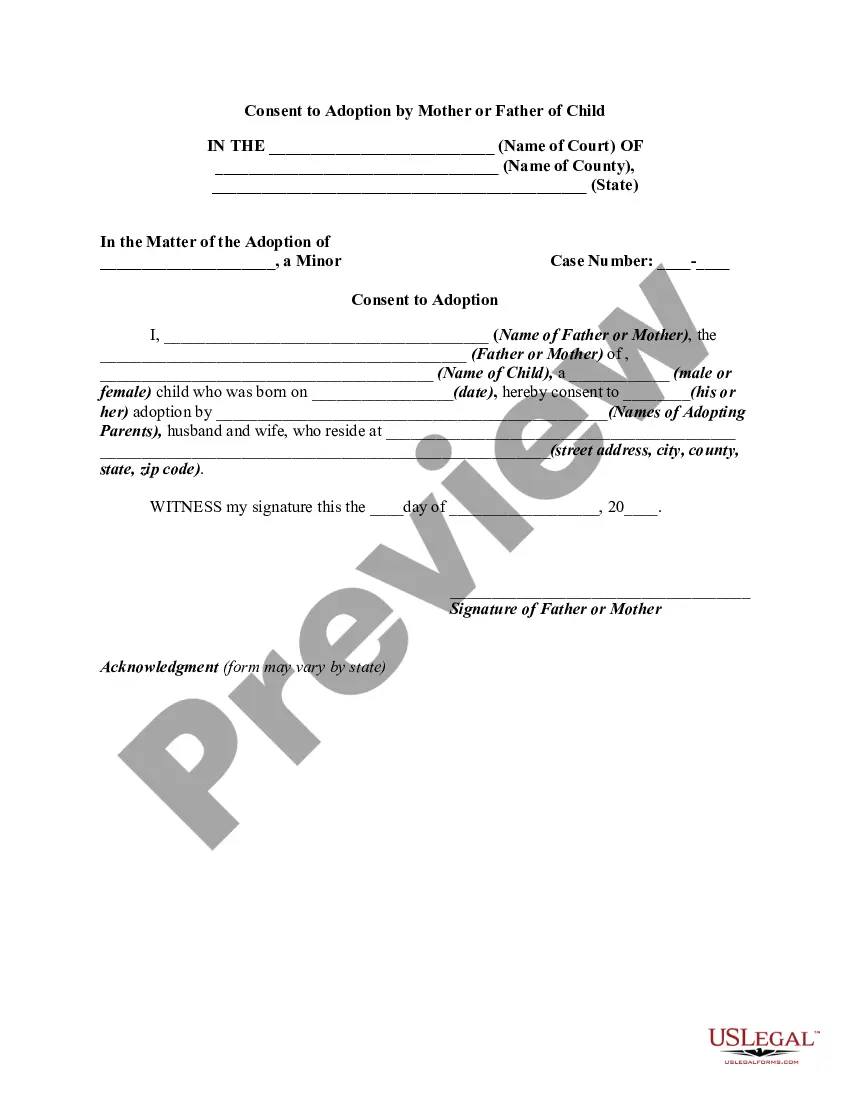
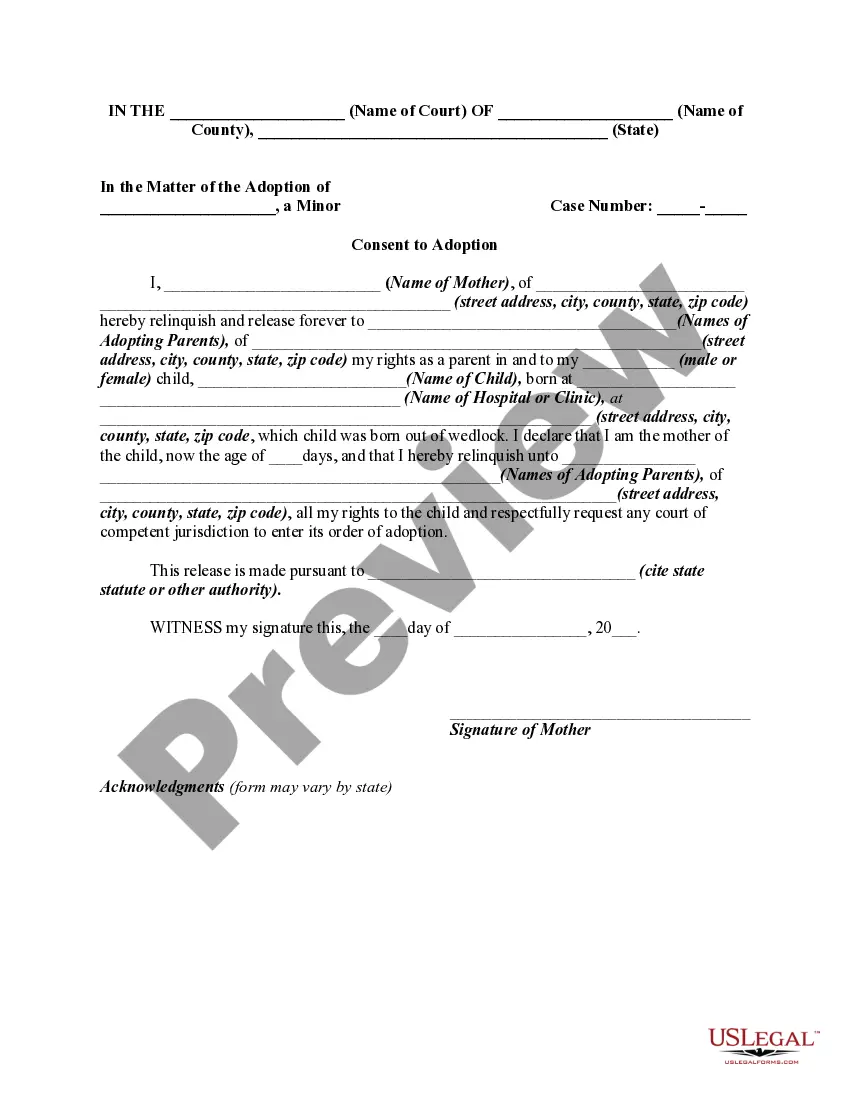
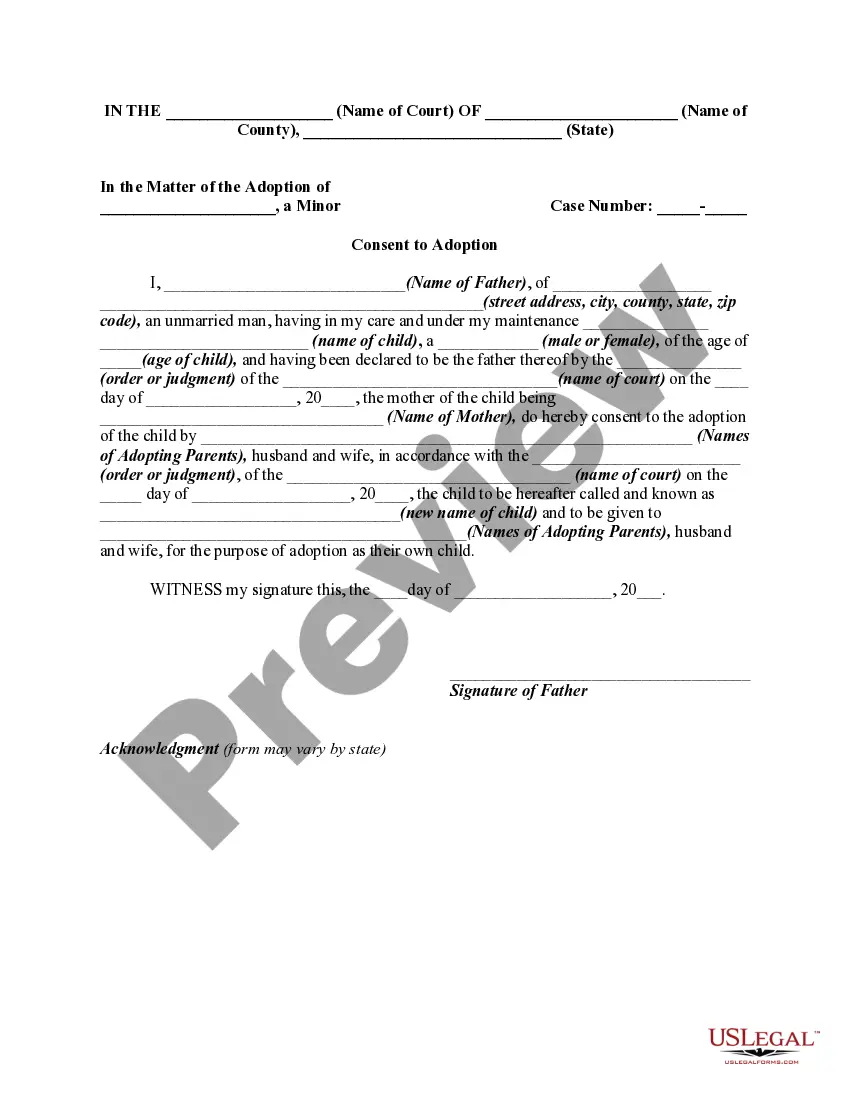
How to fill out Consent To Adoption By Biological Parents Of Child?
Whether for business purposes or for individual affairs, everyone has to deal with legal situations at some point in their life. Completing legal documents demands careful attention, starting with selecting the proper form sample. For example, when you choose a wrong edition of the Biological Child For, it will be rejected when you submit it. It is therefore important to get a trustworthy source of legal papers like US Legal Forms.
If you need to get a Biological Child For sample, follow these simple steps:
- Find the template you need by utilizing the search field or catalog navigation.
- Examine the form’s description to ensure it matches your case, state, and region.
- Click on the form’s preview to view it.
- If it is the incorrect form, get back to the search function to locate the Biological Child For sample you need.
- Get the template if it meets your needs.
- If you have a US Legal Forms profile, just click Log in to gain access to previously saved templates in My Forms.
- In the event you do not have an account yet, you can download the form by clicking Buy now.
- Pick the appropriate pricing option.
- Complete the profile registration form.
- Pick your payment method: use a credit card or PayPal account.
- Pick the file format you want and download the Biological Child For.
- After it is downloaded, you are able to fill out the form by using editing software or print it and complete it manually.
With a vast US Legal Forms catalog at hand, you do not need to spend time seeking for the appropriate template across the web. Make use of the library’s easy navigation to get the proper template for any situation.
Form popularity
FAQ
A biological child is a boy or girl who is born to their parents naturally, without any medical assistance. This means that the child is genetically related to their mother and father. It is different from an adopted child, who becomes the son or daughter of a parent or parents through legal adoption.
Your child won't share your DNA. One of the biggest differences between biological and adoptive parenting? The fact that adopted children are not genetically related to their parents.
The best approach is to be honest with your children. Introduce the idea of adoption early on by discussing what adoption is and asking them how they feel about it. Once things in your adoption plan start moving along, you can start talking about the possibility of adding a new sibling to the family.
If possible tell the child when he/she is young so that they grow up knowing. This helps the knowledge to be less dramatic. You also need to think about whom else needs to know. Try to avoid asking your child to keep this information secret, as this may cause him/her to feel guilty and ashamed.
In decades past, advice on when to start talking to your child about adoption varied significantly. Today, most experts recommend telling children they are adopted when they first come home with you, even if that means just starting to tell the story to your infant child.