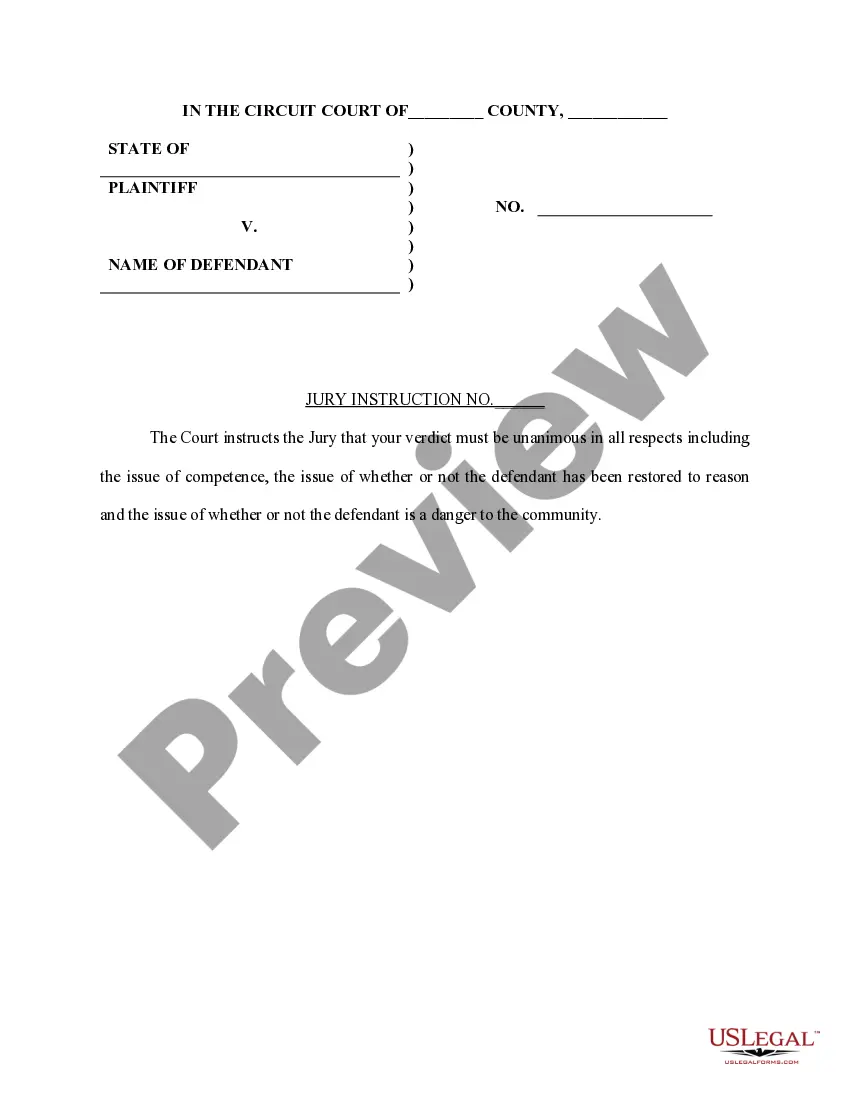
Difference Between Majority Verdict And Unanimous Verdict
Description
Get your form ready online
Our built-in tools help you complete, sign, share, and store your documents in one place.
Make edits, fill in missing information, and update formatting in US Legal Forms—just like you would in MS Word.
Download a copy, print it, send it by email, or mail it via USPS—whatever works best for your next step.
Sign and collect signatures with our SignNow integration. Send to multiple recipients, set reminders, and more. Go Premium to unlock E-Sign.
If this form requires notarization, complete it online through a secure video call—no need to meet a notary in person or wait for an appointment.
We protect your documents and personal data by following strict security and privacy standards.

Make edits, fill in missing information, and update formatting in US Legal Forms—just like you would in MS Word.

Download a copy, print it, send it by email, or mail it via USPS—whatever works best for your next step.

Sign and collect signatures with our SignNow integration. Send to multiple recipients, set reminders, and more. Go Premium to unlock E-Sign.

If this form requires notarization, complete it online through a secure video call—no need to meet a notary in person or wait for an appointment.

We protect your documents and personal data by following strict security and privacy standards.
Looking for another form?
How to fill out Competence - Unanimous Verdict?
Managing legal paperwork can be daunting, even for the most seasoned professionals.
When you are looking for a Distinction Between Majority Verdict and Unanimous Verdict and don't have the opportunity to invest in finding the accurate and up-to-date version, the tasks can be challenging.
Access a library of articles, guides, and resources related to your situation and requirements.
Save time and effort searching for the documents you need, and use US Legal Forms' sophisticated search and Preview feature to find the Distinction Between Majority Verdict and Unanimous Verdict and download it.
Select Buy Now when you are prepared. Choose a monthly subscription plan. Select the format you prefer, and Download, fill out, sign, print, and deliver your paperwork. Take advantage of the US Legal Forms online catalog, backed by 25 years of experience and trustworthiness. Simplify your daily document management into a seamless and user-friendly process today.
- If you hold a subscription, Log In to your US Legal Forms account, find the document, and download it.
- Check your My documents section to see the documents you have previously downloaded and manage your folders as you wish.
- If this is your initial experience with US Legal Forms, create an account and gain unrestricted access to all the platform's advantages.
- Here are the steps to follow after obtaining the document you need.
- Verify that this is the correct form by previewing it and reviewing its description.
- Make sure the sample is valid in your state or region.
- Access state- or region-specific legal and business documents.
- US Legal Forms addresses any needs you might have, ranging from personal to commercial paperwork, in one location.
- Utilize advanced tools to complete and handle your Distinction Between Majority Verdict and Unanimous Verdict.
Form popularity
FAQ
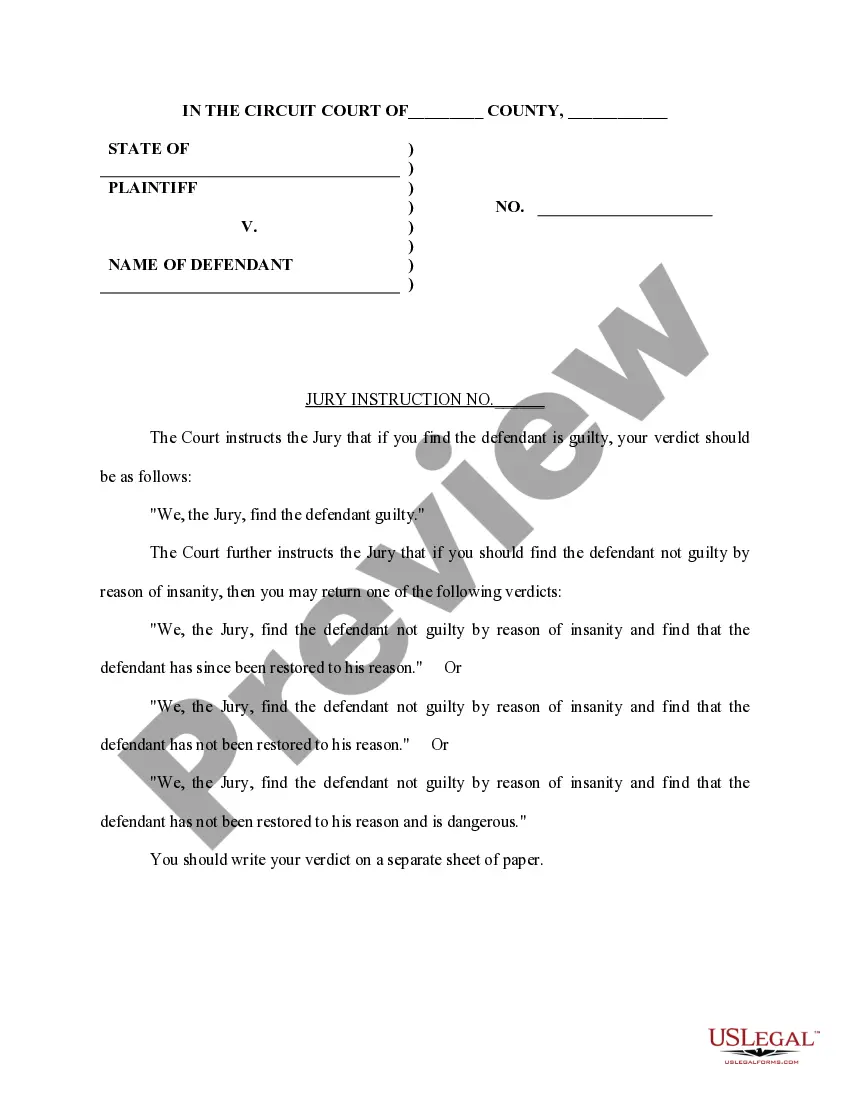
The finding of guilty or not guilty by a jury requires a unanimous verdict. That is, all 12 jurors must be in agreement. All 12 members of the jury had to have reached the same conclusion concerning the accused's guilt beyond a reasonable doubt before a conviction could be returned.
In state courts, whether a jury needs to be unanimous depends on the state and the type of trial. For criminal trials, nearly every state requires the jury to produce a unanimous verdict. For civil trials, almost one-third of states only require a majority for a verdict.
United States, 333 U.S. 740, 748 (1948) ( Unanimity in jury verdicts is required where the Sixth and Seventh Amendments apply. In criminal cases this requirement of unanimity extends to all issues?character or degree of the crime, guilt and punishment?which are left to the jury. ); Maxwell v.
United States, 333 U.S. 740, 748 (1948) ( Unanimity in jury verdicts is required where the Sixth and Seventh Amendments apply. In criminal cases this requirement of unanimity extends to all issues?character or degree of the crime, guilt and punishment?which are left to the jury. ); Maxwell v.
A verdict of a jury that is reached by a majority. Majority verdicts can be taken in both criminal and civil cases. In criminal cases the verdict need not be unanimous if there are no fewer than 11 jurors and 10 of them agree on the verdict or if there are 10 jurors and 9 of them agree on the verdict.