Bond Reaction
Description
Get your form ready online
Our built-in tools help you complete, sign, share, and store your documents in one place.
Make edits, fill in missing information, and update formatting in US Legal Forms—just like you would in MS Word.
Download a copy, print it, send it by email, or mail it via USPS—whatever works best for your next step.
Sign and collect signatures with our SignNow integration. Send to multiple recipients, set reminders, and more. Go Premium to unlock E-Sign.
If this form requires notarization, complete it online through a secure video call—no need to meet a notary in person or wait for an appointment.
We protect your documents and personal data by following strict security and privacy standards.

Make edits, fill in missing information, and update formatting in US Legal Forms—just like you would in MS Word.

Download a copy, print it, send it by email, or mail it via USPS—whatever works best for your next step.

Sign and collect signatures with our SignNow integration. Send to multiple recipients, set reminders, and more. Go Premium to unlock E-Sign.

If this form requires notarization, complete it online through a secure video call—no need to meet a notary in person or wait for an appointment.

We protect your documents and personal data by following strict security and privacy standards.
Looking for another form?



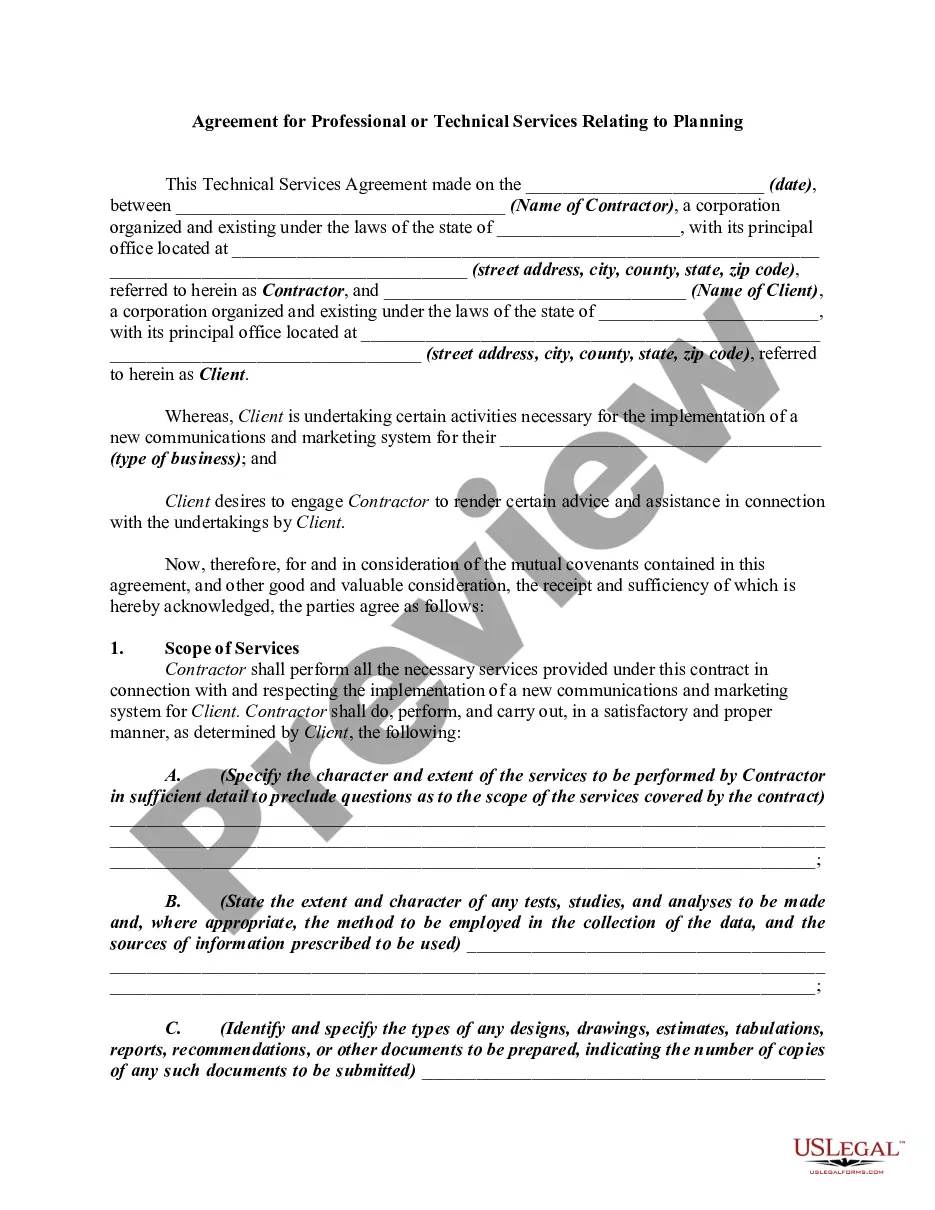
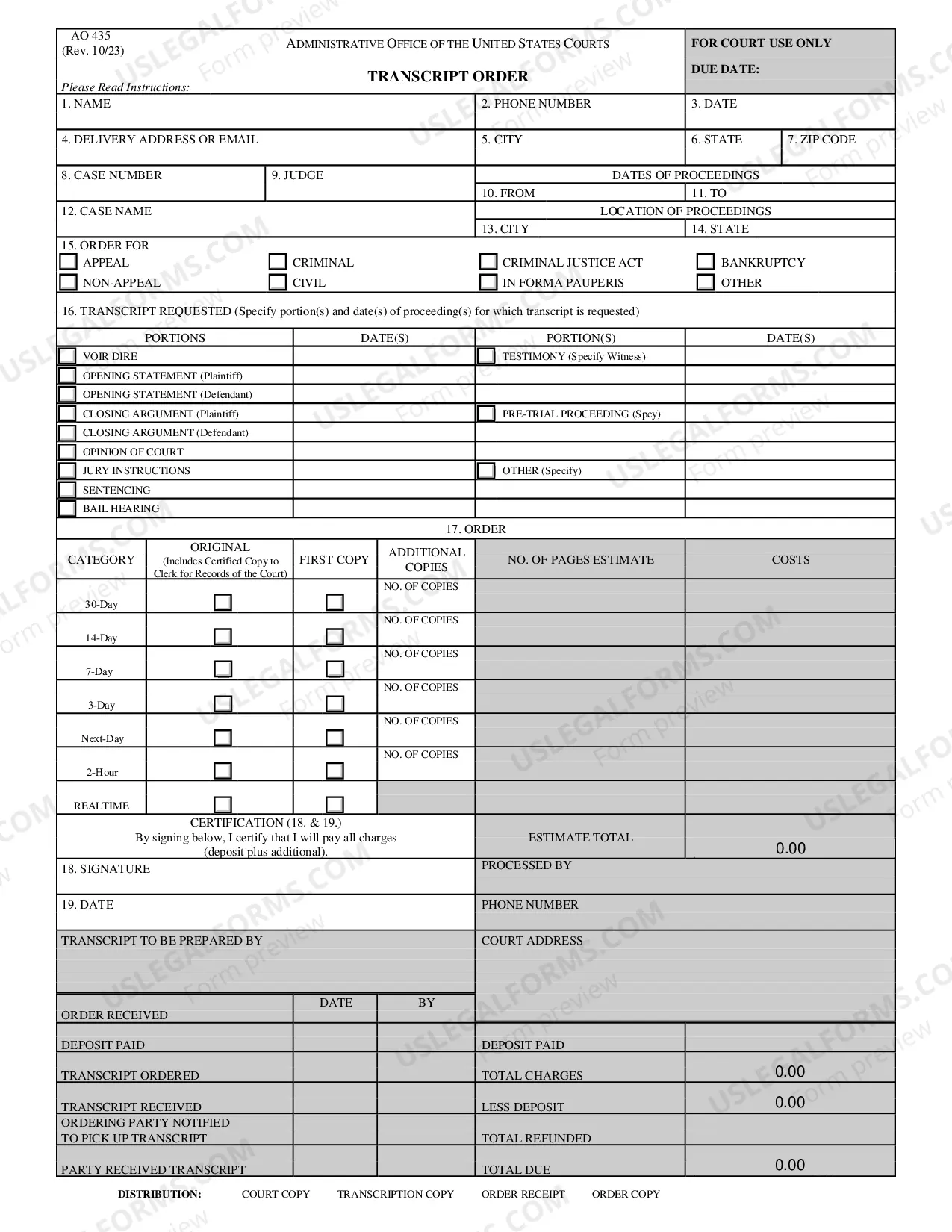

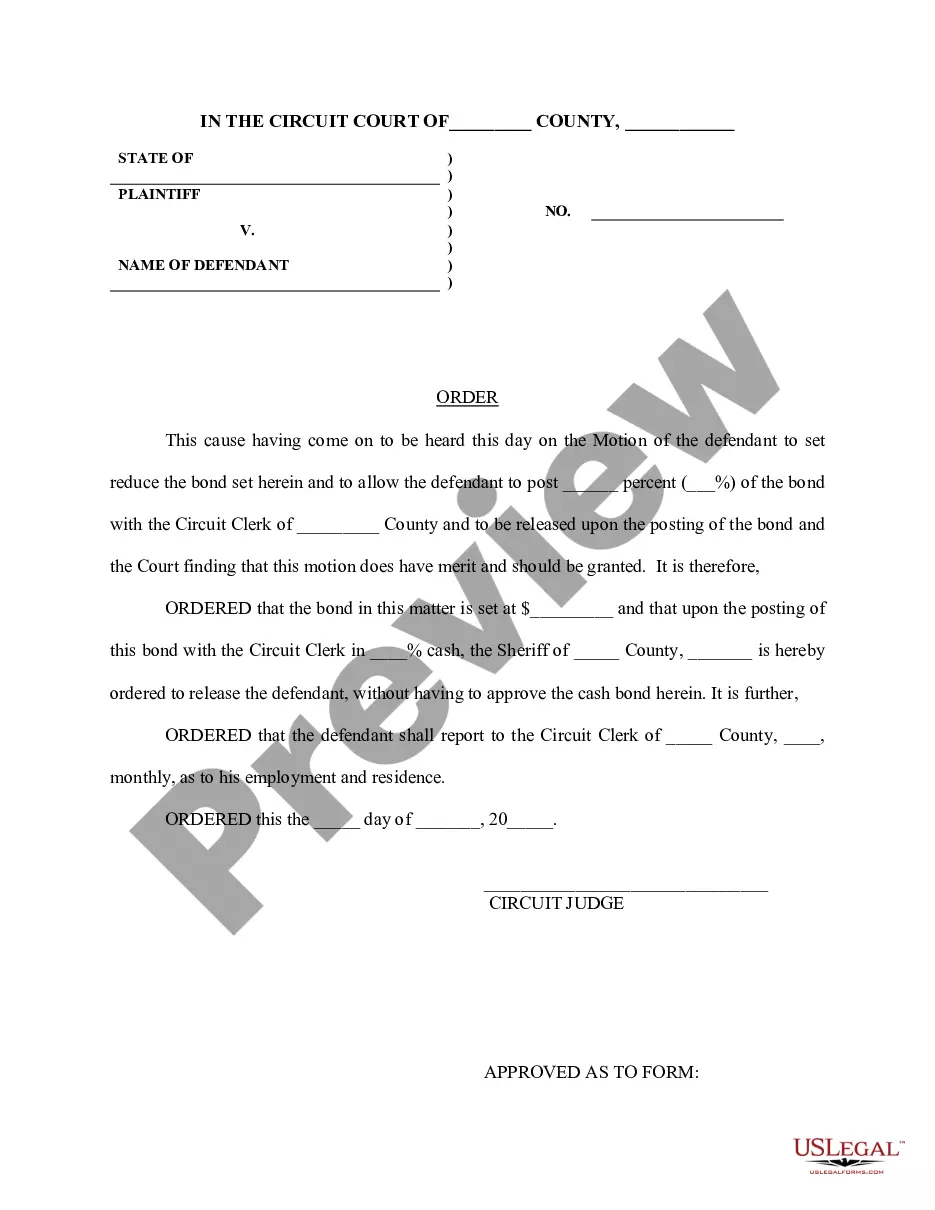
How to fill out Order To Reduce Bond?
- If you are a returning user, log into your account to download the required form. Ensure your subscription is active; if it's not, renew it as per your payment plan.
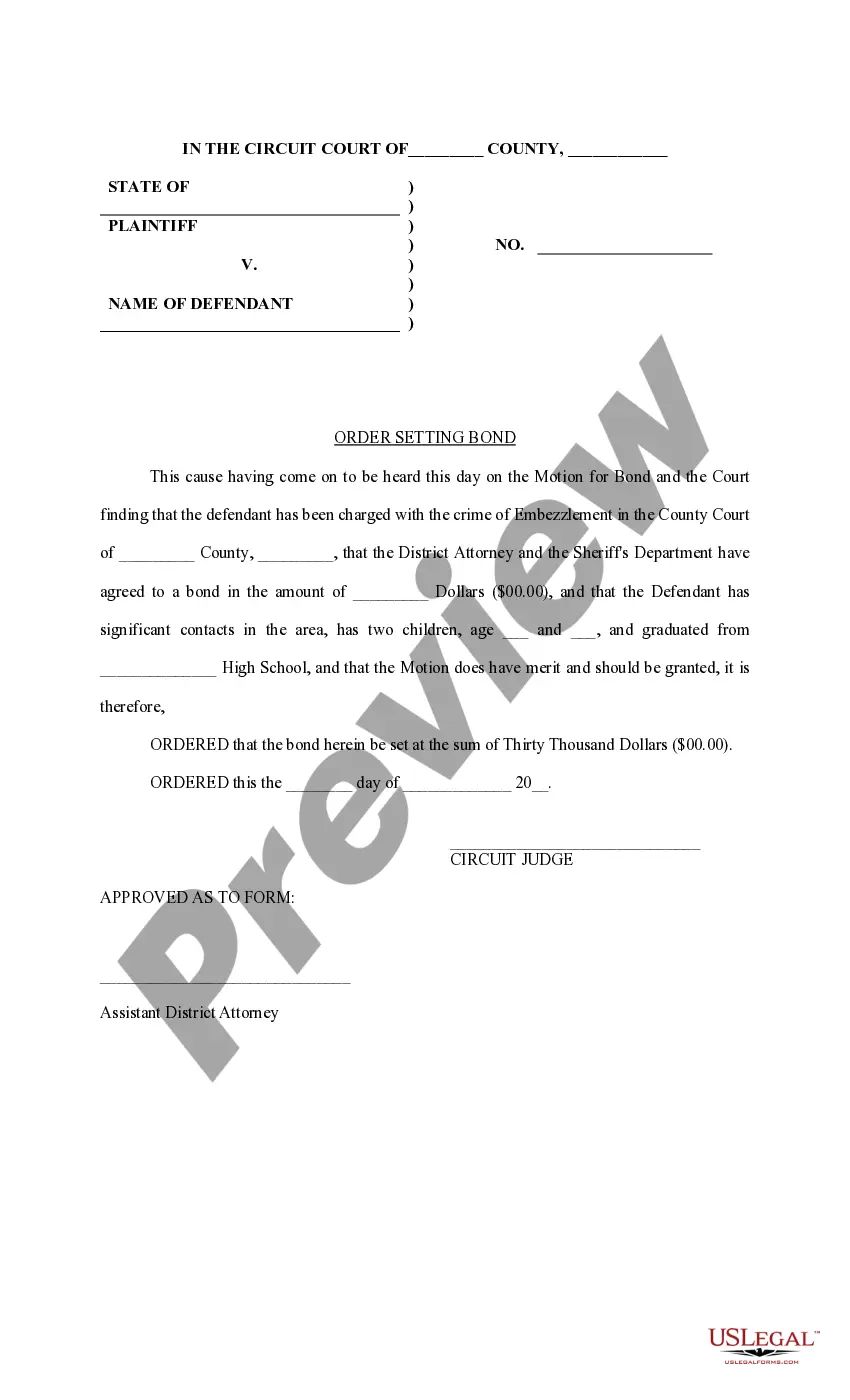
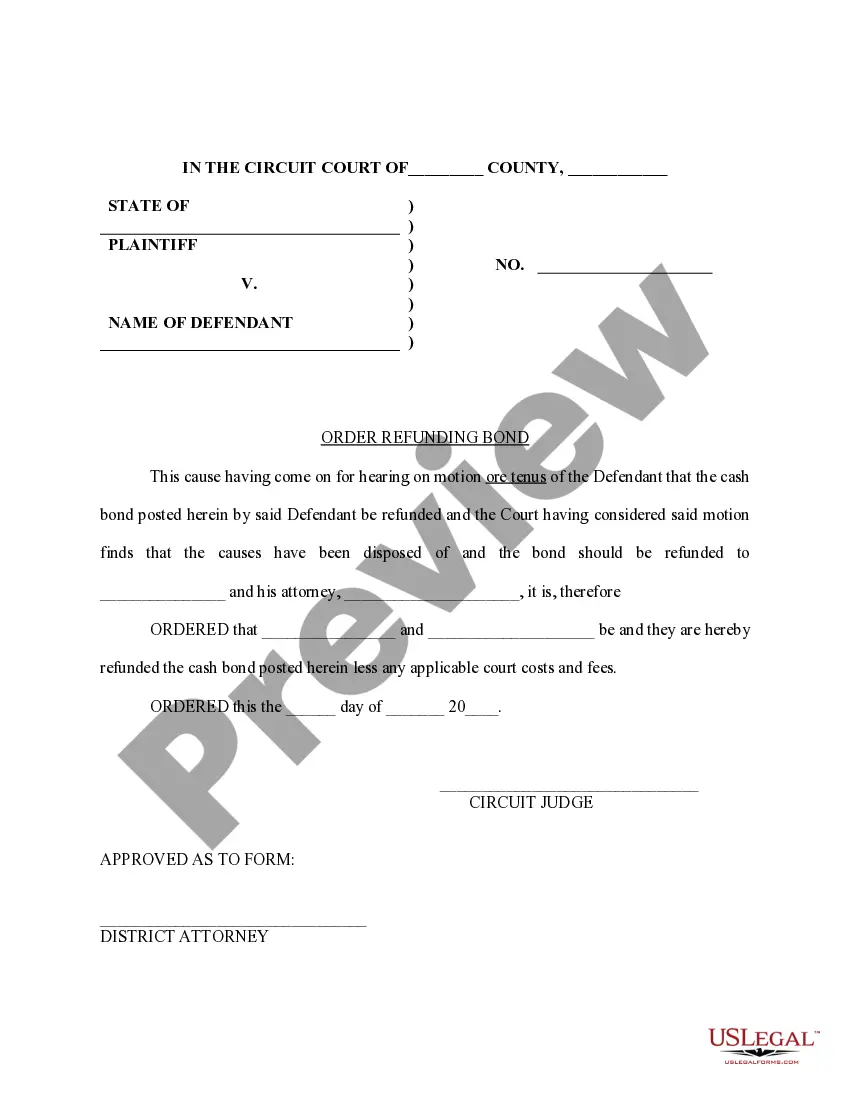
- For first-time users, start by reviewing the Preview mode and form description. Make certain the selected form meets your requirements and adheres to local jurisdiction standards.
- If you need another template, utilize the Search tab at the top of the page for better options. Once you find the suitable form, proceed to the next step.
- Purchase your document by clicking the Buy Now button and selecting your desired subscription plan. An account registration is necessary to access the full library.
- Complete the payment using your credit card or PayPal. After successful payment, download your form and save it on your device for easy access.
- To revisit your forms later, head to the My Forms section of your profile at any time.
In conclusion, US Legal Forms simplifies the process of obtaining legal documents, such as those needed for bond reactions. With its extensive library and user-friendly features, your legal needs are just a few clicks away.
Get started today and experience the convenience of US Legal Forms for all your legal documentation needs.
Form popularity
FAQ
Breaking bonds requires understanding the specific obligations and provisions set by the bond agreement. You will likely need to submit a formal notice or request, accompanied by relevant documentation that explains your situation. Additionally, fulfilling any legal requirements dictated by your jurisdiction is crucial. US Legal Forms can assist you in ensuring that you meet all necessary requirements for a smooth bond reaction.
To break a bond, you need several key components: an understanding of the bond's terms, necessary documentation, and possibly a valid reason that aligns with those terms. This could involve submitting forms, signing agreements, or obtaining permissions from other parties involved. The US Legal Forms platform provides the essential legal resources that can help you prepare the necessary paperwork for an effective bond reaction.
Breaking a bond involves a series of steps that must be followed carefully. First, review the bond terms to understand any conditions that apply. Next, gather all required documents and submit your request, ensuring you comply with local laws. Using US Legal Forms can support you by offering resources and forms to streamline this process effectively, guiding you through each step of the bond reaction.
To break a bond, you typically need to provide sufficient justification or fulfill specific requirements outlined in the bond agreement. This often includes documentation or formal requests that explain your intentions. Depending on the terms, including notifying the bonded party or obtaining their consent may be necessary. Utilizing a platform like US Legal Forms can simplify this process by providing the required templates and guidance.
Bond breaking is an endothermic process, meaning it requires the absorption of energy. When bonds break, energy must be supplied to overcome the attraction between atoms. This concept is crucial when considering energy changes during chemical reactions, and it is relevant for those dealing with legal aspects of chemical properties, which you can explore through US Legal Forms.
Bonds in a chemical reaction are the connections that hold atoms together in molecules. During a reaction, these bonds can break and reform, leading to the creation of new substances. Learning about these bonds is vital for understanding reaction mechanisms, which is food for thought for legal professionals regarding chemical products used. US Legal Forms can assist in drafting the necessary legal documents.
Bonding, in simple terms, is the way atoms stick together to form molecules. This process involves either sharing or transferring electrons between atoms, creating stability. Understanding bonding helps navigate various legal issues related to chemical handling, and US Legal Forms offers resources to assist in this area.
Yes, bonding is indeed a reaction, as it involves the formation and breaking of bonds between atoms. This process is essential in chemical reactions and significantly impacts the nature of the substances involved. If you're interested in the legalities of chemical reactions, the US Legal Forms platform can provide the necessary documents to ensure compliance and safety.
A covalent bond reaction involves the sharing of electron pairs between atoms. This type of bond reaction is fundamental to the structure of many organic compounds, influencing their behavior and stability. By understanding covalent bond reactions, users can better navigate the legal aspects of chemical usage and regulations available through US Legal Forms.
A bond reaction is a chemical process involving the breaking and forming of bonds between atoms. This reaction plays a crucial role in the transformation of substances, affecting how they interact and change. Recognizing bond reactions offers insight into various chemical reactions and is beneficial for anyone exploring legal forms related to chemical safety and liability.