Vehicle Storage Waiver Form Format
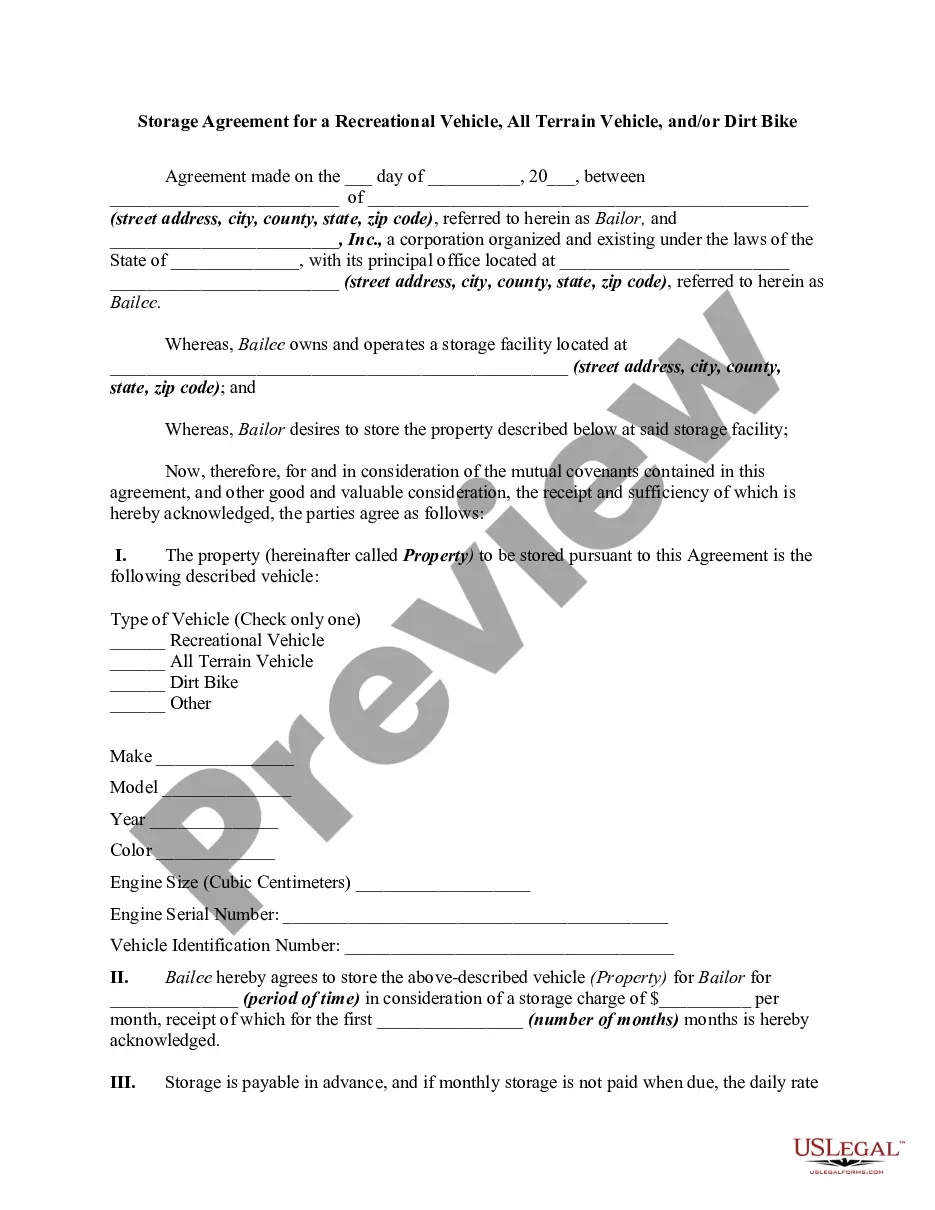
Description
Get your form ready online
Our built-in tools help you complete, sign, share, and store your documents in one place.
Make edits, fill in missing information, and update formatting in US Legal Forms—just like you would in MS Word.
Download a copy, print it, send it by email, or mail it via USPS—whatever works best for your next step.
Sign and collect signatures with our SignNow integration. Send to multiple recipients, set reminders, and more. Go Premium to unlock E-Sign.
If this form requires notarization, complete it online through a secure video call—no need to meet a notary in person or wait for an appointment.
We protect your documents and personal data by following strict security and privacy standards.

Make edits, fill in missing information, and update formatting in US Legal Forms—just like you would in MS Word.

Download a copy, print it, send it by email, or mail it via USPS—whatever works best for your next step.

Sign and collect signatures with our SignNow integration. Send to multiple recipients, set reminders, and more. Go Premium to unlock E-Sign.

If this form requires notarization, complete it online through a secure video call—no need to meet a notary in person or wait for an appointment.

We protect your documents and personal data by following strict security and privacy standards.
Looking for another form?
How to fill out Storage Agreement For A Recreational Vehicle, All Terrain Vehicle, And / Or Dirt Bike?
Whether for commercial reasons or for private issues, everyone must handle legal matters at some stage in their life.
Filling out legal documents necessitates meticulous attention, starting from selecting the correct form template.
Complete the account registration form, choose your payment method: use a credit card or PayPal account, select the file format you desire and download the Vehicle Storage Waiver Form Template. Once saved, you can fill out the form using editing software or print it and complete it manually. With an extensive US Legal Forms catalog available, you do not need to waste time searching for the suitable template online. Utilize the library’s easy navigation to find the right template for any circumstance.
- For instance, if you select an incorrect version of a Vehicle Storage Waiver Form Template, it will be declined once submitted.
- Thus, it is vital to have a trustworthy source of legal documents like US Legal Forms.
- If you need to acquire a Vehicle Storage Waiver Form Template sample, follow these straightforward steps.
- Locate the template you require using the search bar or catalog navigation.
- Review the form’s details to ensure it aligns with your circumstances, state, and county.
- Click on the form’s preview to examine it.
- If it is the wrong document, return to the search feature to find the Vehicle Storage Waiver Form Template sample you need.
- Download the file if it meets your requirements.
- If you possess a US Legal Forms account, simply click Log in to access previously saved documents in My documents.
- If you do not have an account yet, you can download the form by clicking Buy now.
- Select the correct pricing option.
Form popularity
FAQ
Key Takeaways On How To Write A Waiver Choose a waiver template. Determine the type of activity or service. State the purpose of the waiver. Identify the risks. Include a title. Include customer information. Include waiver terms. Include a statement of understanding.
Examples of waivers include the waiving of parental rights, waiving liability, tangible goods waivers, and waivers for grounds of inadmissibility. Waivers are common when finalizing lawsuits, as one party does not want the other pursuing them after a settlement is transferred.
Waiver forms are a type of legal protection used by businesses to reduce their liability and risk. This type of agreement between a business and its customers is used to document that all parties are aware of potential risks in certain situations.
?I am voluntarily participating in this Activity. I understand that there are risks associated with my participation in this Activity, such as physical and/or psychological injury, pain, suffering, illness, disfigurement, temporary or permanent disability, death or economic loss.
Liability waivers can be used to protect against liability claims or suits for damages from injuries that were determined to be caused by the negligent acts of an organization, like a local Little League program.