Retail Store Rent Based Format
Description
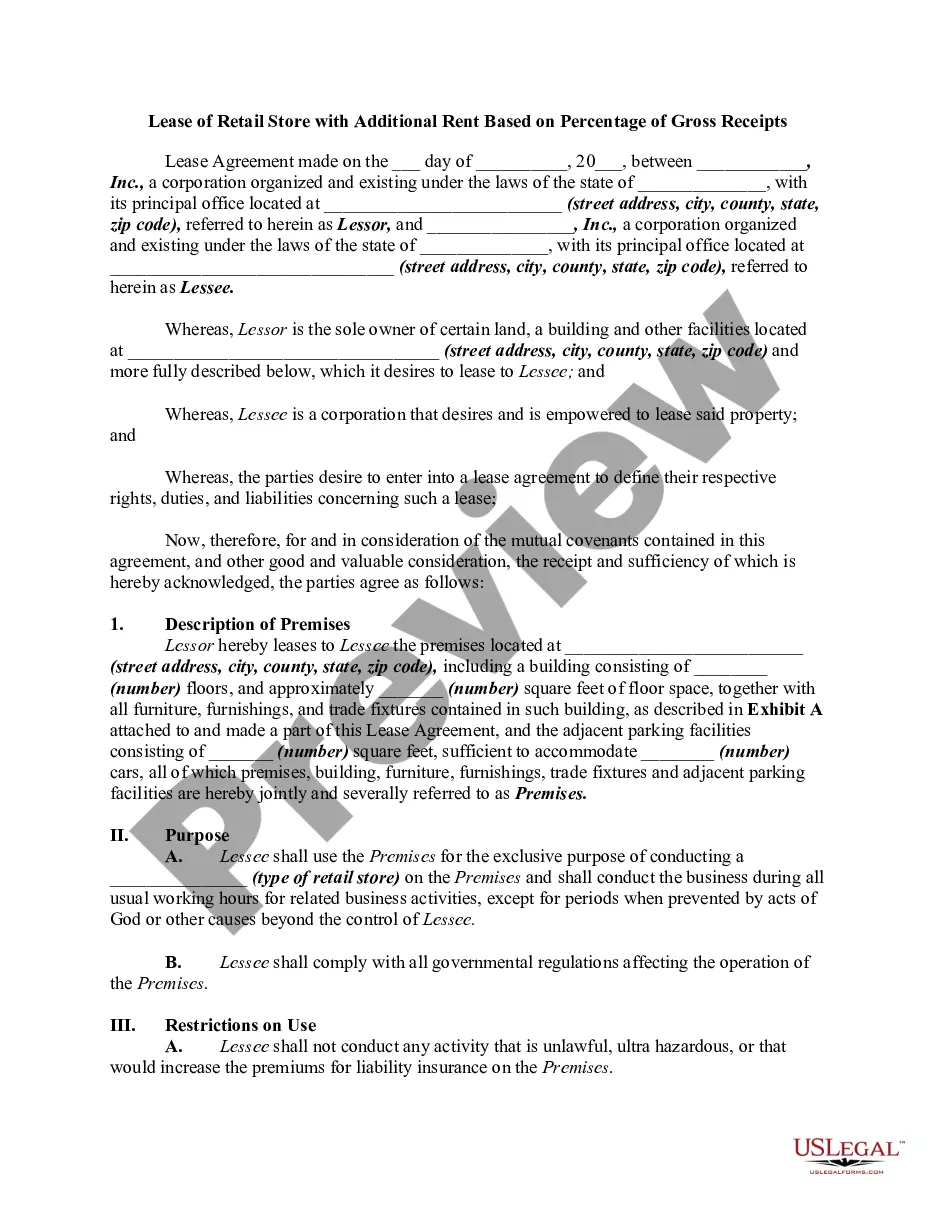
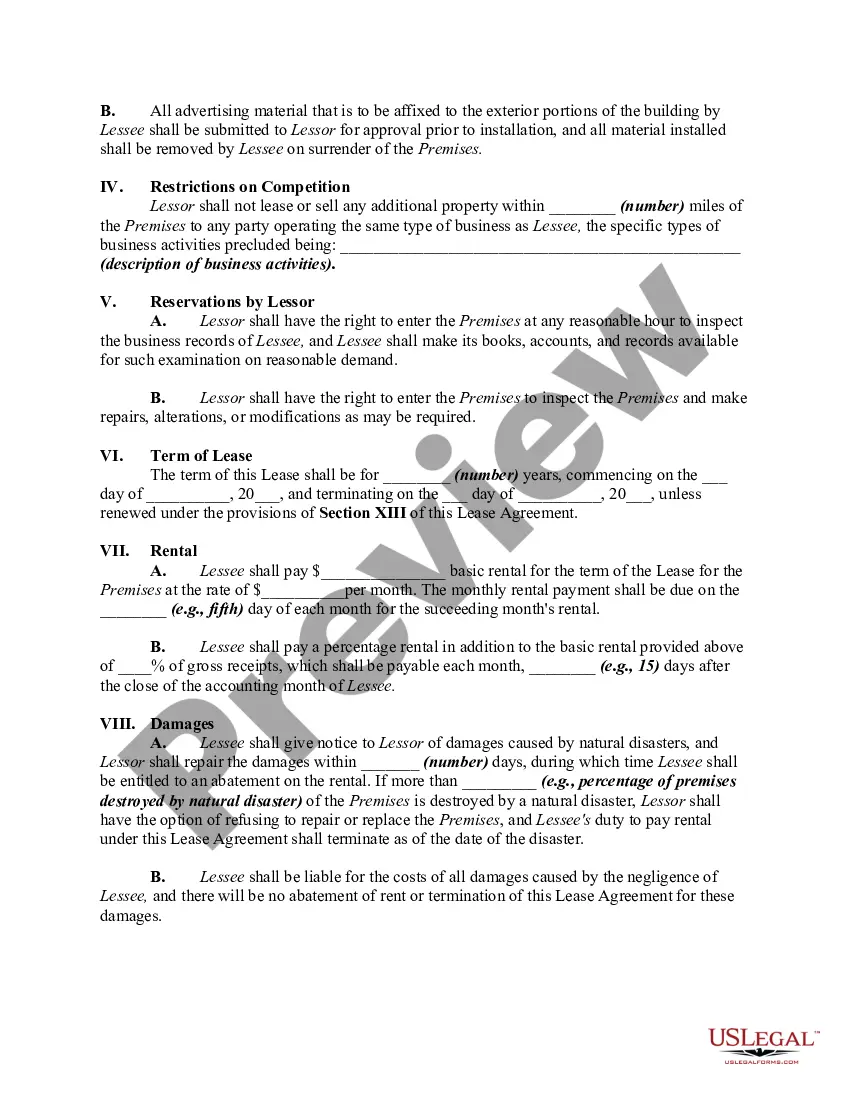
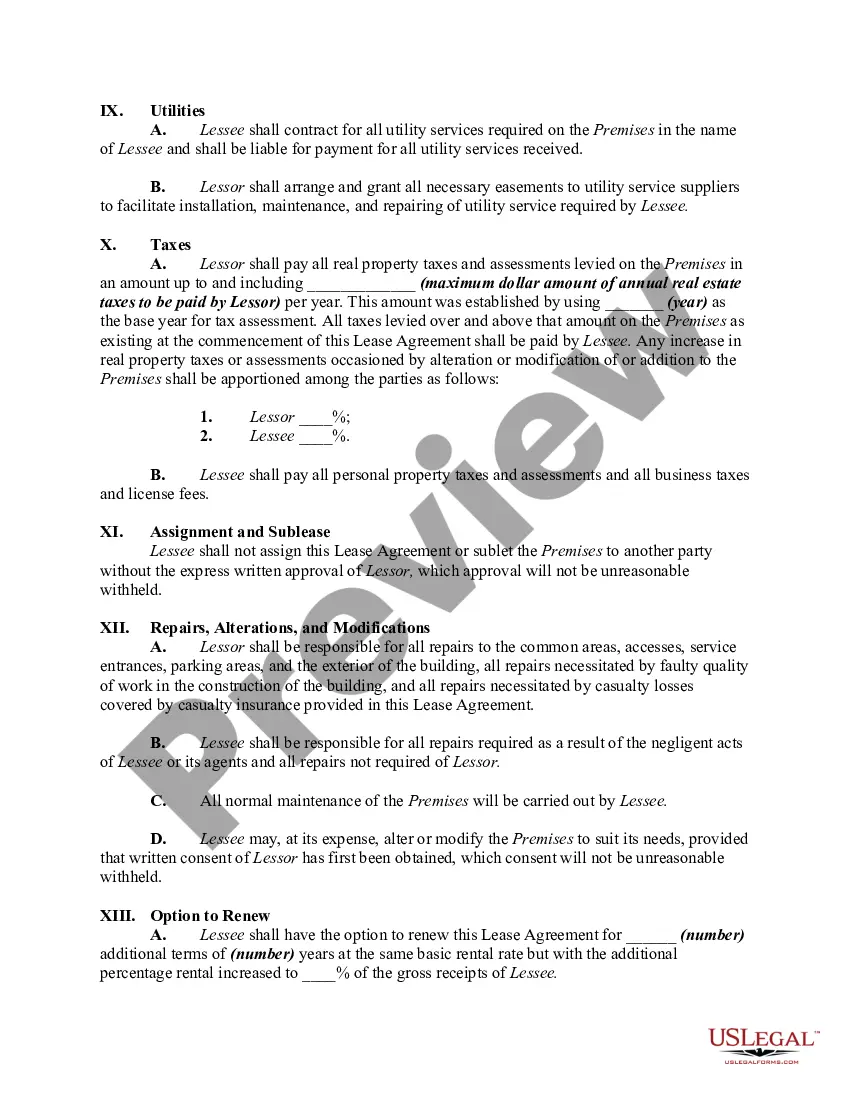
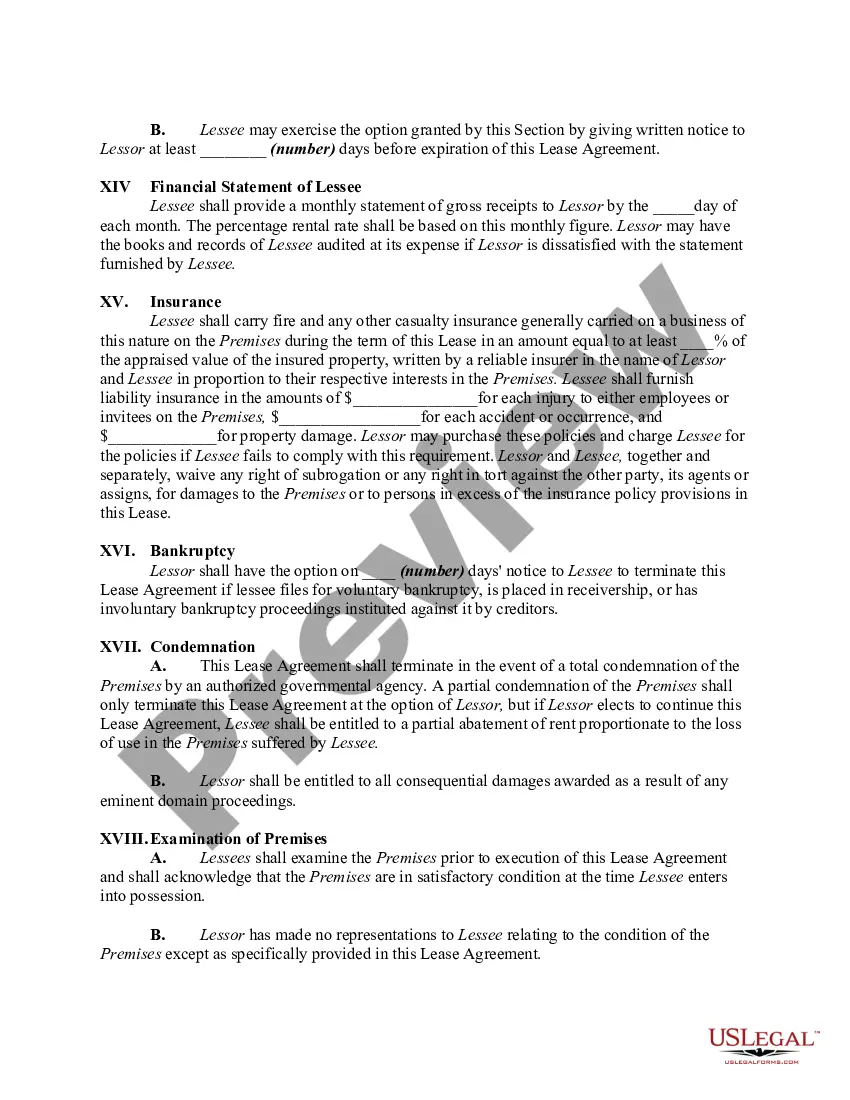
Get your form ready online
Our built-in tools help you complete, sign, share, and store your documents in one place.
Make edits, fill in missing information, and update formatting in US Legal Forms—just like you would in MS Word.
Download a copy, print it, send it by email, or mail it via USPS—whatever works best for your next step.
Sign and collect signatures with our SignNow integration. Send to multiple recipients, set reminders, and more. Go Premium to unlock E-Sign.
If this form requires notarization, complete it online through a secure video call—no need to meet a notary in person or wait for an appointment.
We protect your documents and personal data by following strict security and privacy standards.

Make edits, fill in missing information, and update formatting in US Legal Forms—just like you would in MS Word.

Download a copy, print it, send it by email, or mail it via USPS—whatever works best for your next step.

Sign and collect signatures with our SignNow integration. Send to multiple recipients, set reminders, and more. Go Premium to unlock E-Sign.

If this form requires notarization, complete it online through a secure video call—no need to meet a notary in person or wait for an appointment.

We protect your documents and personal data by following strict security and privacy standards.
Looking for another form?





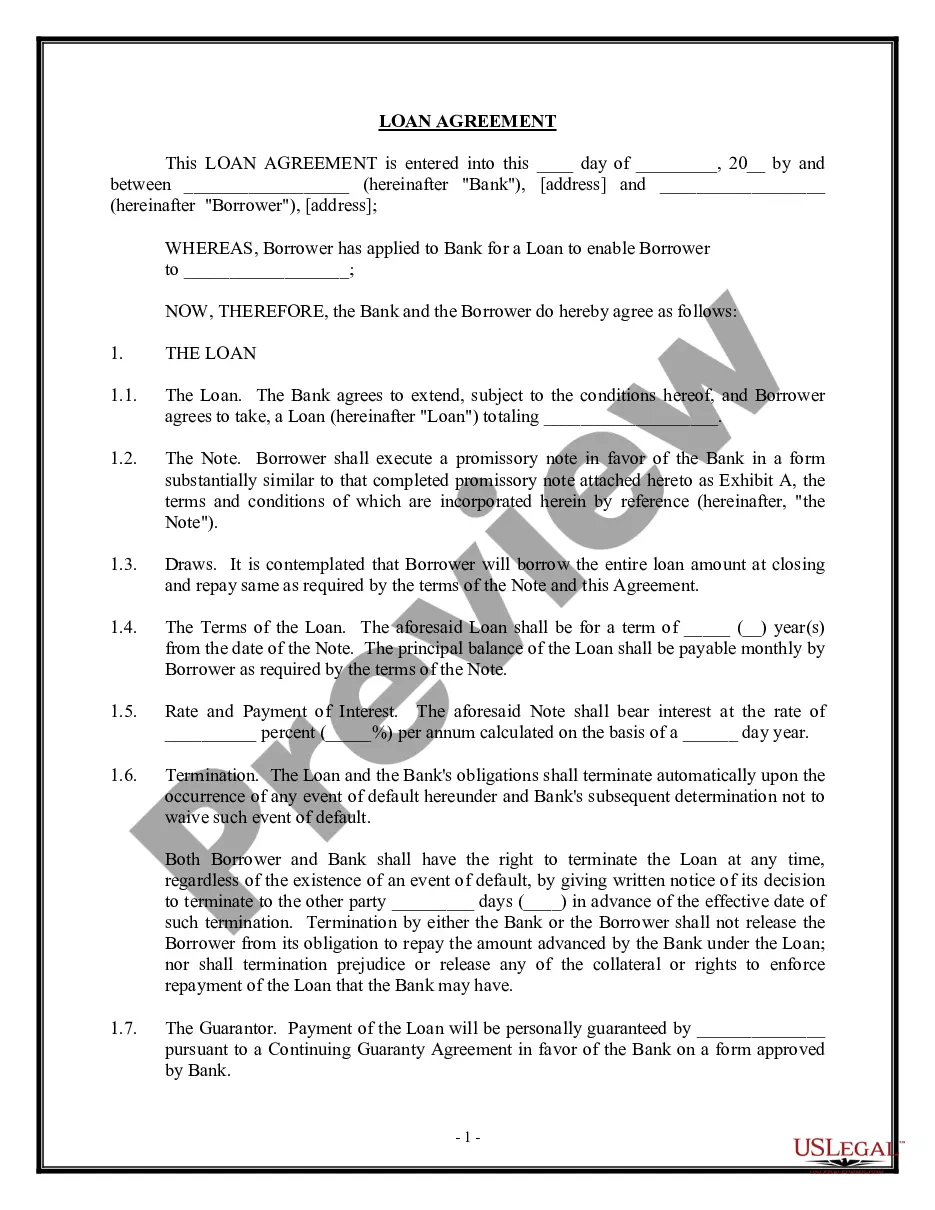



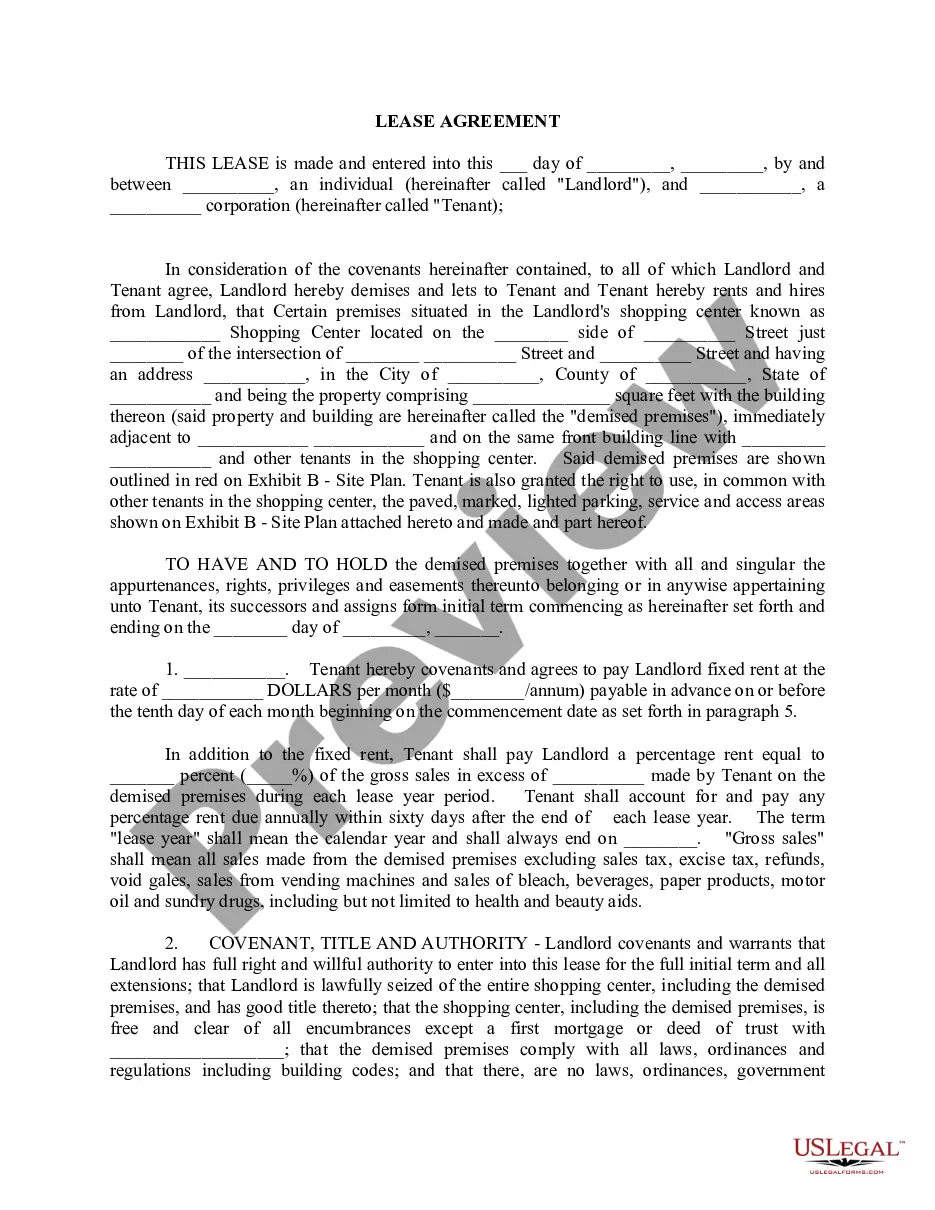
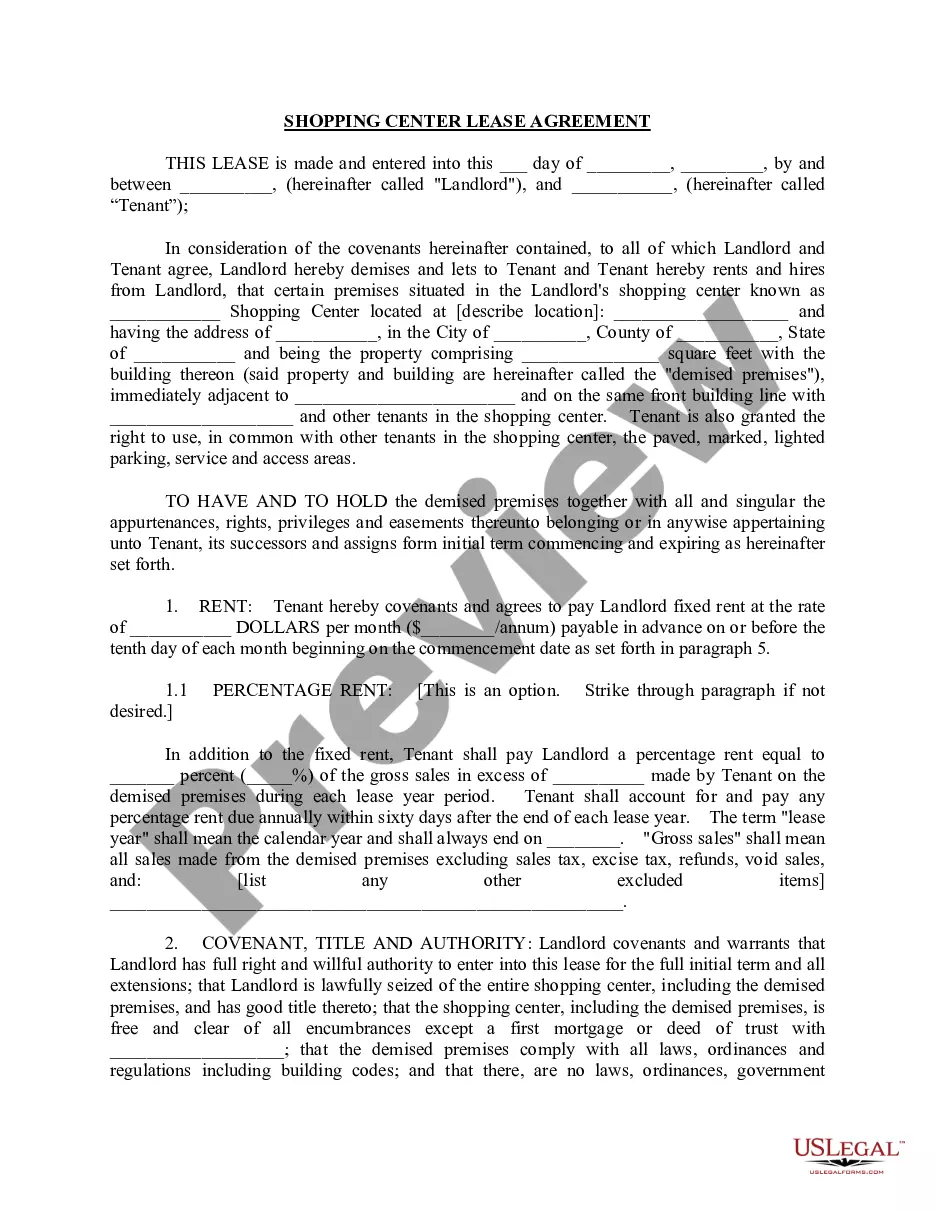
How to fill out Lease Of Retail Store With Additional Rent Based On Percentage Of Gross Receipts - Real Estate?
It’s clear that you cannot transform into a legal authority instantly, nor can you swiftly familiarize yourself with drafting a Retail Store Rent Based Format without a particular background.
Assembling legal documents is a labor-intensive endeavor demanding specialized training and expertise.
So why not entrust the creation of the Retail Store Rent Based Format to the professionals.
Preview it (if this option is available) and review the accompanying description to ascertain if the Retail Store Rent Based Format meets your needs.
Register for a complimentary account and select a subscription plan to acquire the template.
- With US Legal Forms, one of the most comprehensive legal template collections, you can locate anything from court documents to templates for internal corporate correspondence.
- We recognize how crucial it is to comply with federal and state regulations.
- That’s why, on our site, all forms are location-specific and current.
- Here’s how to begin with our platform and obtain the document you need in just a few minutes.
- Search for the form you require using the bar at the top of the page.
Form popularity
FAQ
A popular standard for budgeting rent is to follow the 30% rule, where you spend a maximum of 30% of your monthly income before taxes (your gross income) on your rent. This has been a rule of thumb since 1981, when the government found that people who spent over 30% of their income on housing were "cost-burdened."
Common Rent-to-Revenue Ratios by Industry Use these benchmarks to determine if your business can afford renting a commercial property: Retail stores: 5% to 10% Restaurants: 6% to 10% Law firms: 15%
For office leases, this rate is often quoted on a square foot per year basis, meaning that a 10,000-square-foot tenant paying a base rate of $20 per square foot will be paying $200,000 a year in base rent.
In this structure, your rent escalates by a set percentage. So, if you have a $30 per square foot lease with 3 percent annual increase, it would go up to $30.90 in the next year, then $31.83 the year after that.
For example, the original tenant might have put holes in the wall to make a new passageway or undertaken other major work on the property. At the end of the lease, the new tenant must fix those issues and return the property to the condition that it was in at the start of the lease.