State Court Jury Withdrawal
Description
Get your form ready online
Our built-in tools help you complete, sign, share, and store your documents in one place.
Make edits, fill in missing information, and update formatting in US Legal Forms—just like you would in MS Word.
Download a copy, print it, send it by email, or mail it via USPS—whatever works best for your next step.
Sign and collect signatures with our SignNow integration. Send to multiple recipients, set reminders, and more. Go Premium to unlock E-Sign.
If this form requires notarization, complete it online through a secure video call—no need to meet a notary in person or wait for an appointment.
We protect your documents and personal data by following strict security and privacy standards.

Make edits, fill in missing information, and update formatting in US Legal Forms—just like you would in MS Word.

Download a copy, print it, send it by email, or mail it via USPS—whatever works best for your next step.

Sign and collect signatures with our SignNow integration. Send to multiple recipients, set reminders, and more. Go Premium to unlock E-Sign.

If this form requires notarization, complete it online through a secure video call—no need to meet a notary in person or wait for an appointment.

We protect your documents and personal data by following strict security and privacy standards.
Looking for another form?


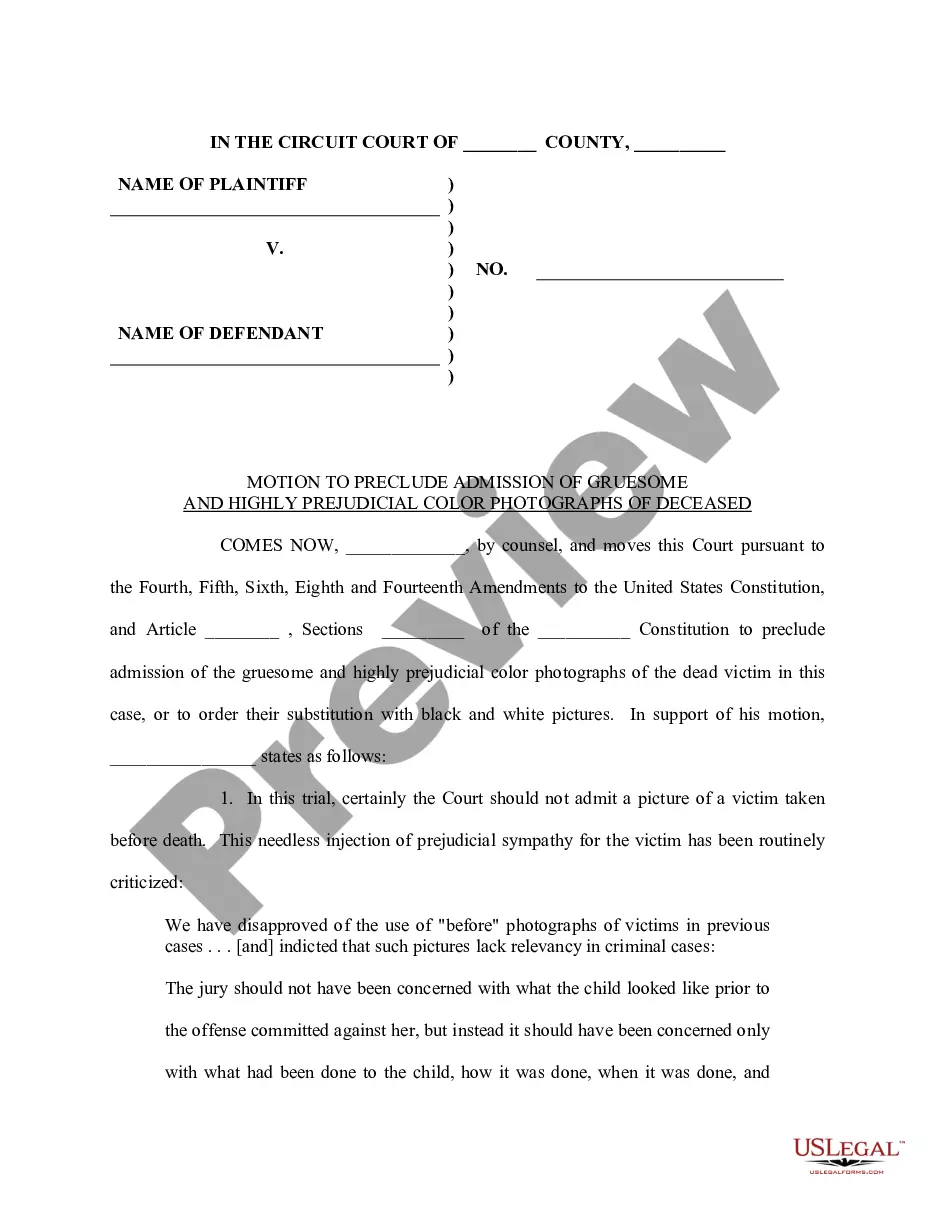
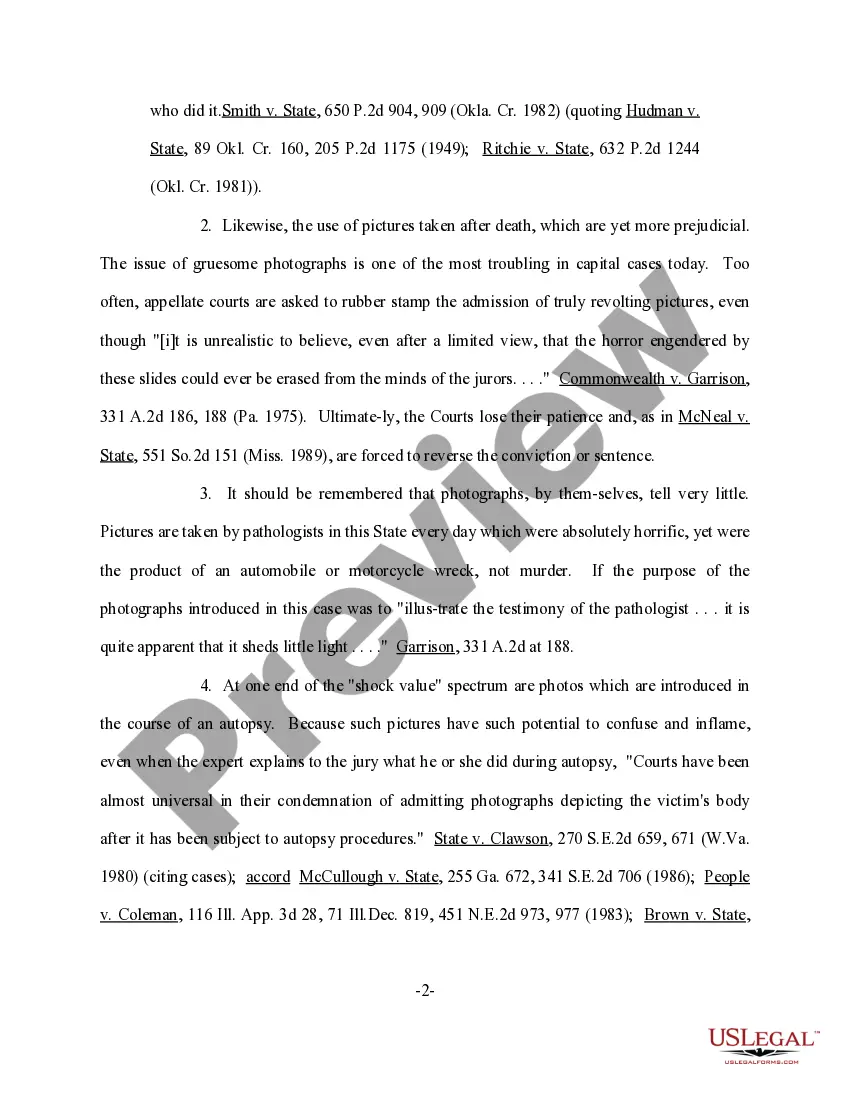
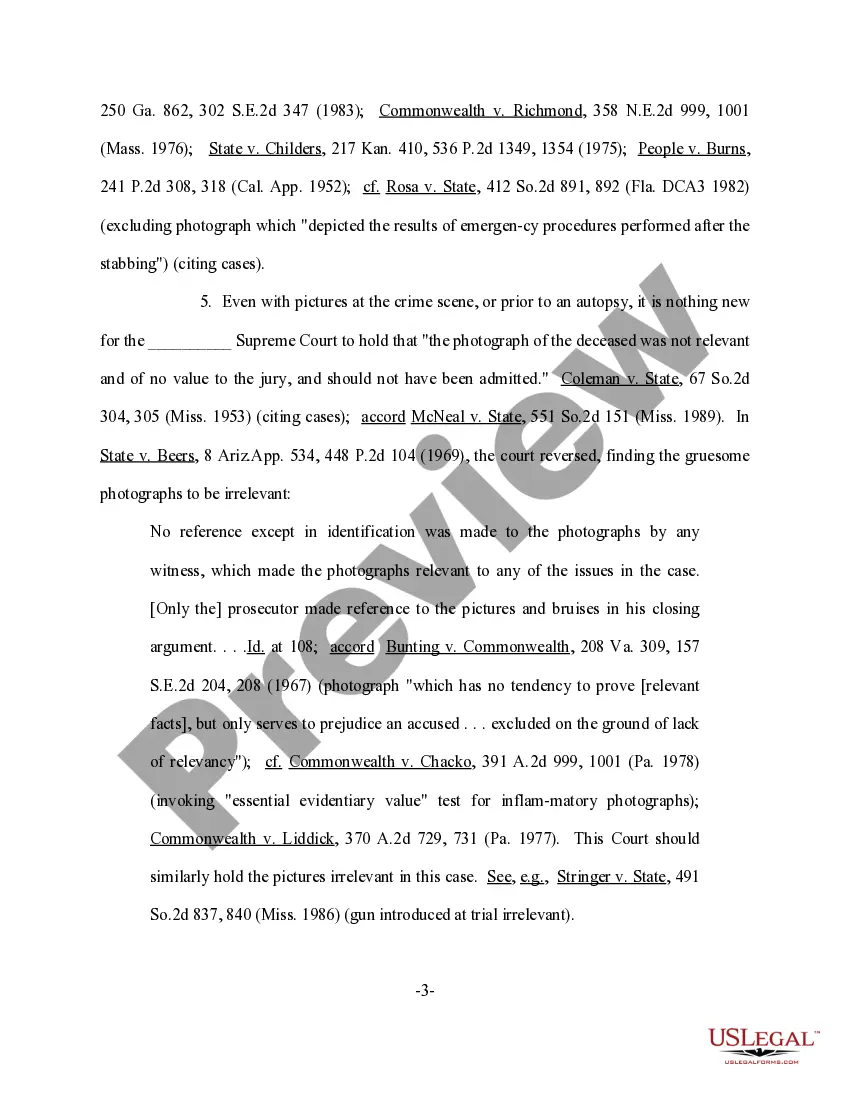
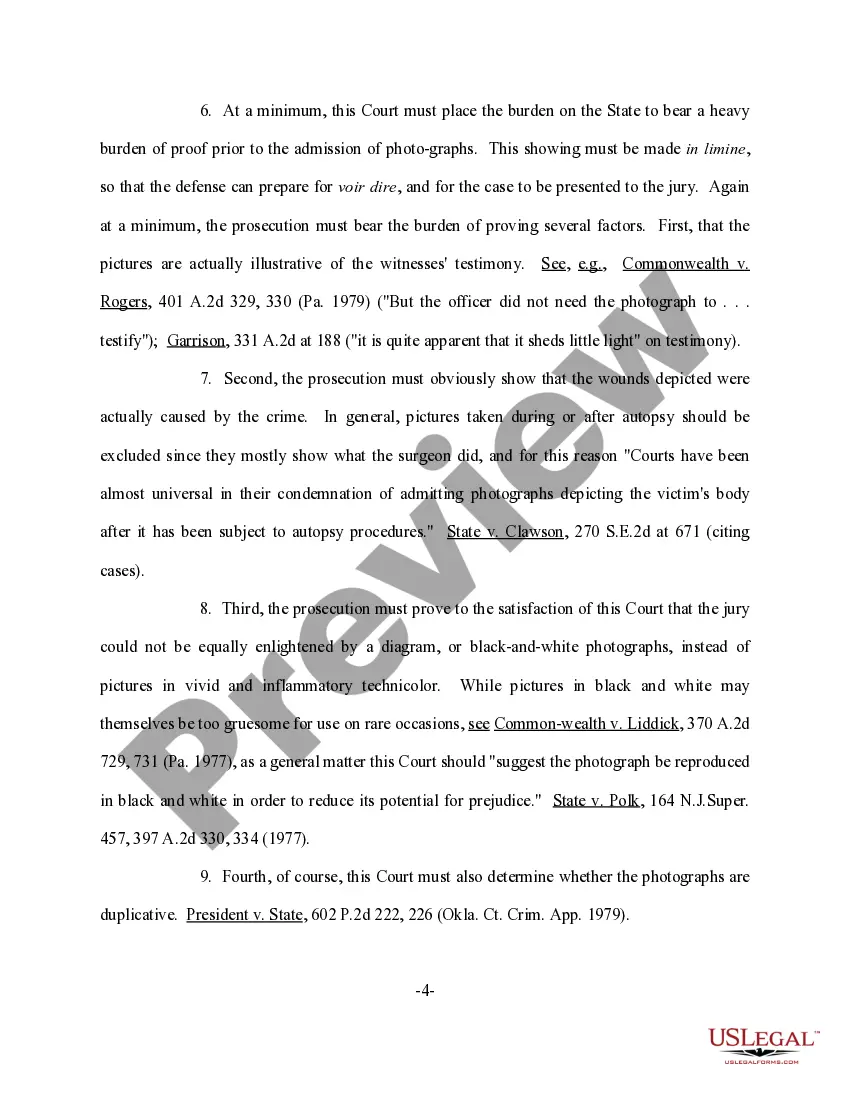
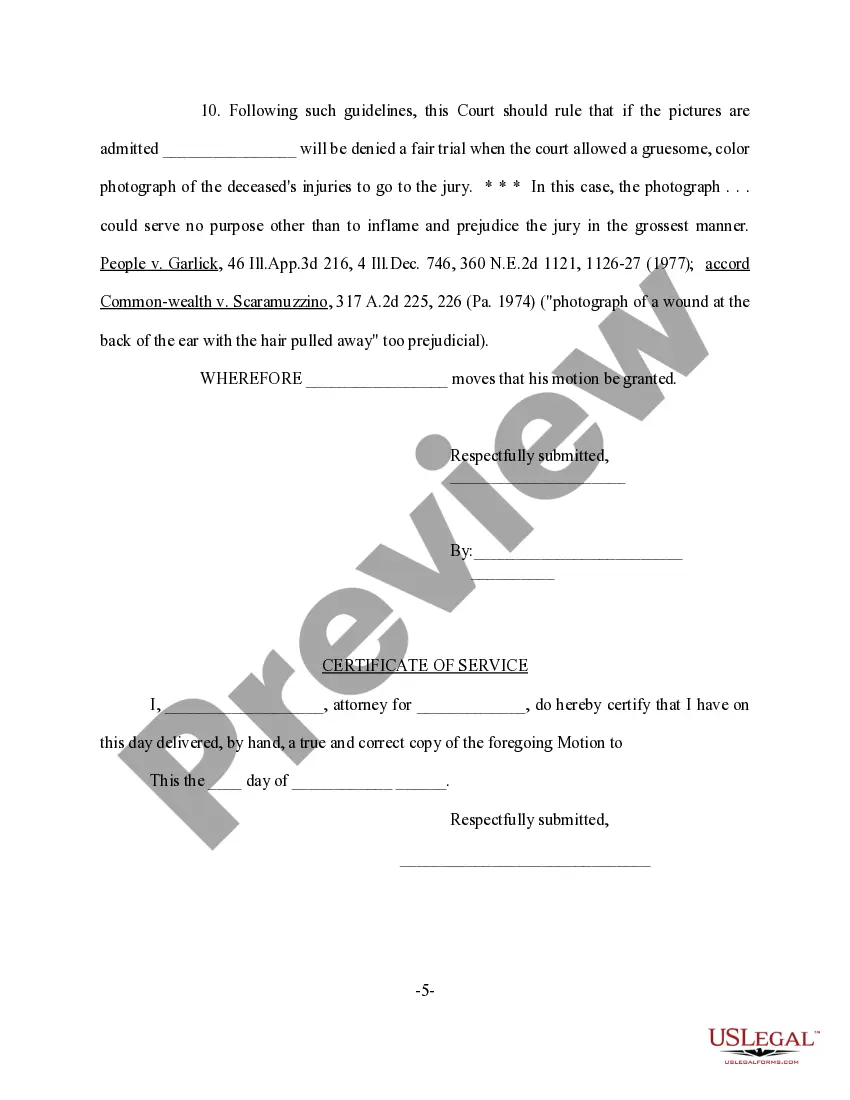
How to fill out Motion To Preclude Admission Of Gruesome And Highly Prejudicial Color Photographs Of Deceased?
Regardless of whether for corporate requirements or personal affairs, everyone must confront legal circumstances at some stage of their existence.
Filling out legal documents necessitates meticulous focus, starting from selecting the correct template example.
With an extensive US Legal Forms library at your disposal, you won't have to waste time searching for the correct template all over the web. Leverage the library’s straightforward navigation to discover the suitable form for any situation.
- Locate the template you require by utilizing the search bar or catalog browsing.
- Review the form’s details to confirm it aligns with your circumstance, state, and locality.
- Select the form’s preview to inspect it.
- If it is not the correct document, return to the search feature to find the State Court Jury Withdrawal template you are seeking.
- Obtain the template if it meets your specifications.
- If you possess a US Legal Forms account, simply click Log in to access previously stored documents in My documents.
- Should you not have an account yet, you can acquire the form by clicking Buy now.
- Choose the appropriate pricing option.
- Complete the registration form for your profile.
- Select your payment option: a credit card or PayPal account can be used.
- Choose the desired file format and download the State Court Jury Withdrawal.
- Once saved, you can complete the form using editing software or print it and finish it by hand.
Form popularity
FAQ
If a credit bureau has made a mistake on your report ? if you don't recognize the account or a paid account shows as unpaid, for example ? gather documentation supporting your case. Then, file a dispute by using the credit bureau's online process, by phone or by mail. The bureau has 30 days to respond.
Rhode Island Statute Of Limitations Creditors in Rhode Island have ten years to sue you for an unpaid loan, promissory note, or credit card. A creditor can still call and send you bills even after the statute of limitations has expired.
A Letter Before Action (LBA) is a formal letter that requests the payment of a debt to your business and warns of the imminent issue of a court claim. An LBA sets out what is owed to your business from a debtor and provides a set time period ? usually 7 days ? in which to pay.
To dispute collections, send a letter to the debt collector within 30 days requesting proof of the debt and asking not to report it to the credit agency until the dispute is resolved. Keep a copy of the letter and any correspondence. Seek legal help if needed.
While debt validation requests can be a useful tool, they are not effective at resolving the issue. In most cases, creditors and collection agencies are able to provide the necessary documentation to prove the validity of the debt.
Dispute in writing, and include any evidence that supports your claims (such as copies of cancelled checks showing you paid the debt or a police report in the case of identity theft). If the debt collector knows that you don't owe the money, it should not try to collect the debt.
A debt dispute letter demands that the collection agency demonstrate that you do indeed owe the debt and can provide detailed information and documents to prove the amount owed. Federal law says that after receiving written notice of a debt, consumers have a 30-day window to respond with a debt dispute letter.
You should dispute a debt if you believe you don't owe it or the information and amount is incorrect. While you can submit your dispute at any time, sending it in writing within 30 days of receiving a validation notice, which can be your initial communication with the debt collector.