Court Case Hearing With Supreme
Description
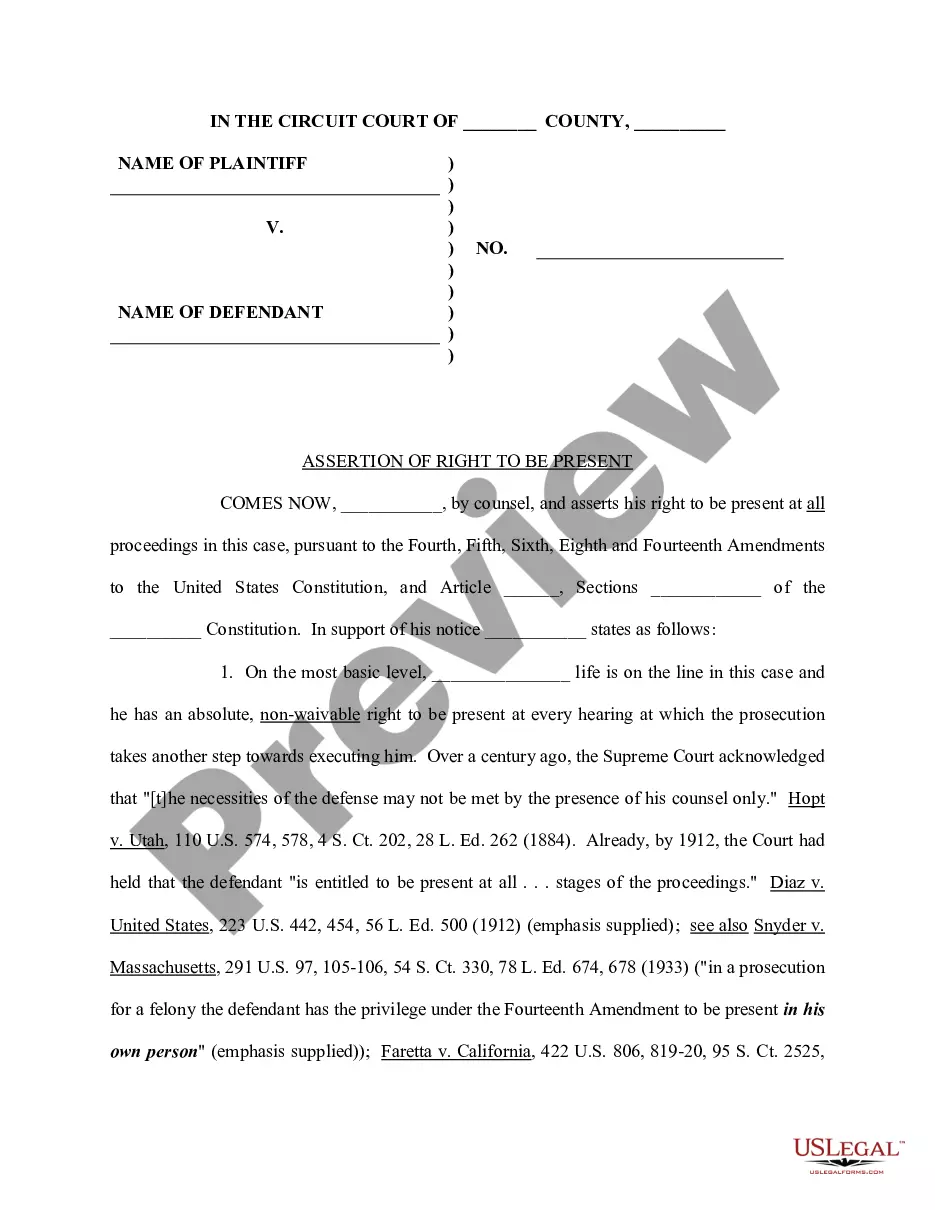
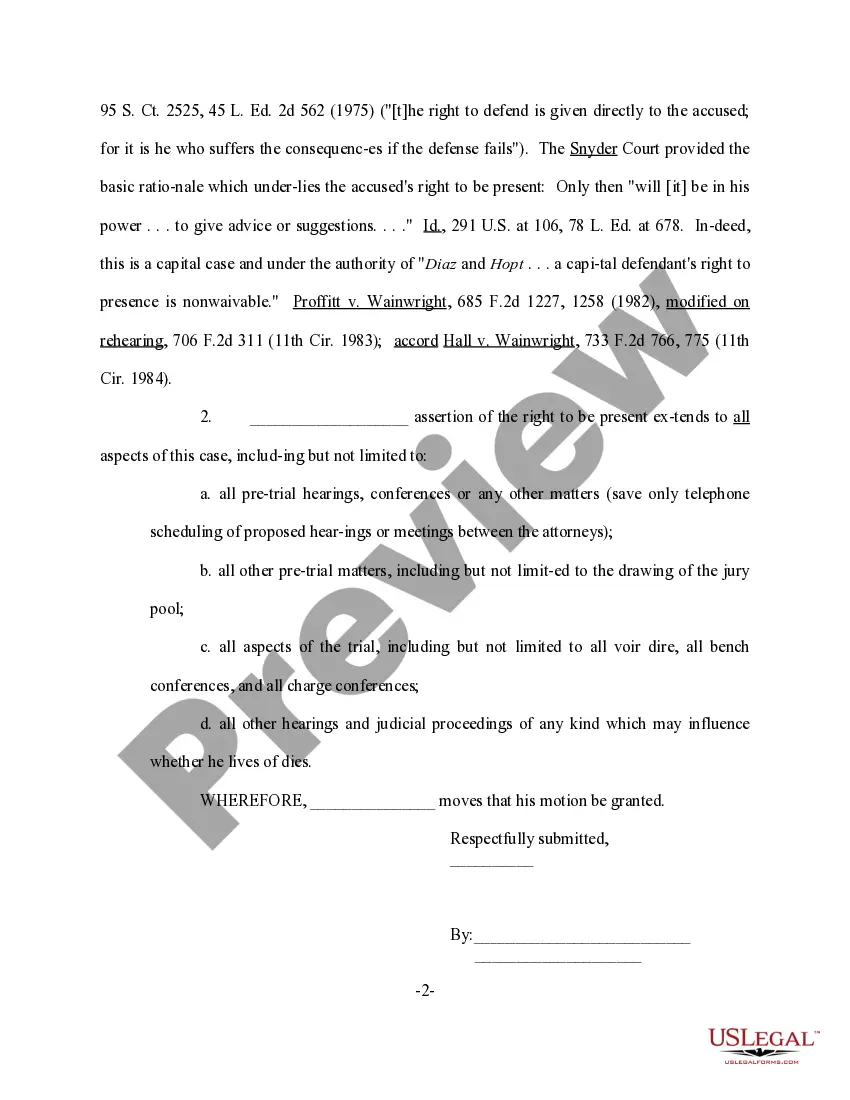




How to fill out Assertion Of Right To Be Present?
Legal administration can be overwhelming, even for the most informed professionals.
If you are seeking a Court Case Hearing With Supreme and lack the availability to diligently search for the accurate and current version, the procedures can be stressful.
Utilize innovative tools to fill out and manage your Court Case Hearing With Supreme.
Access a library of articles, guidelines, and manuals that are relevant to your situation and needs.
Confirm that this is the correct form by previewing it and reviewing its details.
- Save time and energy in your search for the required documents, and take advantage of US Legal Forms' advanced search and Review tool to find Court Case Hearing With Supreme.
- If you have an account, Log In to US Legal Forms, search for the form you need, and obtain it.
- Check your My documents section to view previously saved documents and manage your folders as desired.
- If you are new to US Legal Forms, create an account for unlimited access to the full range of platform benefits.
- Here are the steps to follow after you find the form you require.
- A comprehensive web form repository could be a significant advantage for anyone who aims to manage these circumstances effectively.
- US Legal Forms is a leading provider in online legal documents, boasting over 85,000 state-specific legal forms accessible whenever you need.
- With US Legal Forms, you can easily find documents tailored to your requirements.
Form popularity
FAQ
Yes, anyone can attend a court case hearing with the Supreme Court, provided there is space available. Public access allows citizens to witness the legal process in action. If you're interested in a specific case, arrive early to ensure a seat, as spaces can fill up quickly during high-profile hearings.
For individuals wishing to attend a court case hearing with the Supreme Court, it's essential to check the Court's schedule in advance. Hearings are open to the public, which means you can observe how cases are argued. Preparing for your visit by reviewing case briefs and understanding the legal arguments can enhance your experience.
A court case hearing with the Supreme Court generally requires that the case involve significant federal or constitutional issues. Moreover, the Court tends to select cases that have resulted in conflicting rulings among various federal or state courts. Understanding these qualifications can help you determine if your case is suitable for consideration.
To encourage the Supreme Court to hear your case, it’s vital to frame your arguments around issues of broad public interest. Highlight unique aspects of your legal situation that could impact future law or public policy. Consulting with experienced legal professionals, such as those at uslegalforms, can provide guidance on how to effectively present your case to maximize your chances.
To secure a court case hearing with the Supreme Court, you must first submit a petition for a writ of certiorari. This document requests the Court to review your case and must demonstrate significant legal issues. It’s essential to present compelling arguments supported by legal precedent, as only a few cases are granted a hearing each term.
Getting a court case hearing with the Supreme Court is challenging due to the limited number of cases they accept each year. Only a small percentage of petitions make it through their strict selection process. The Court typically prioritizes cases that have national significance or those that resolve conflicting decisions among lower courts, making the path to a hearing quite competitive.
Briefing a Supreme Court case entails summarizing the key facts, issues, legal arguments, and rulings in a concise manner. A well-structured brief will help you understand the case's core elements and prepare for discussions or presentations. Using resources like uslegalforms can aid you in crafting an effective brief that highlights critical aspects relevant to the court case hearing with supreme.
To write Supreme Court cases effectively, focus on thorough research and clear argumentation. Include all relevant facts and assess previous rulings that relate to your case, showcasing how they apply. It's vital to express your legal reasoning clearly, as this can significantly impact the outcome during a court case hearing with supreme.
Filling a Supreme Court vacancy involves several steps, beginning with the president nominating a candidate. The nominee then undergoes a thorough vetting process, followed by Senate hearings and a confirmation vote. The entire process demonstrates the importance of ensuring qualified individuals to participate in court case hearing with supreme.
To submit a case to the Supreme Court, you typically begin by filing a petition for a writ of certiorari. This petition must comply with specific formatting rules and deadlines, detailing the legal issues and why the case merits the court's review. Engaging a legal professional can enhance your chances of success during this court case hearing with supreme.