Court Case Hearing For Protection Order
Description
Get your form ready online
Our built-in tools help you complete, sign, share, and store your documents in one place.
Make edits, fill in missing information, and update formatting in US Legal Forms—just like you would in MS Word.
Download a copy, print it, send it by email, or mail it via USPS—whatever works best for your next step.
Sign and collect signatures with our SignNow integration. Send to multiple recipients, set reminders, and more. Go Premium to unlock E-Sign.
If this form requires notarization, complete it online through a secure video call—no need to meet a notary in person or wait for an appointment.
We protect your documents and personal data by following strict security and privacy standards.

Make edits, fill in missing information, and update formatting in US Legal Forms—just like you would in MS Word.

Download a copy, print it, send it by email, or mail it via USPS—whatever works best for your next step.

Sign and collect signatures with our SignNow integration. Send to multiple recipients, set reminders, and more. Go Premium to unlock E-Sign.

If this form requires notarization, complete it online through a secure video call—no need to meet a notary in person or wait for an appointment.

We protect your documents and personal data by following strict security and privacy standards.
Looking for another form?



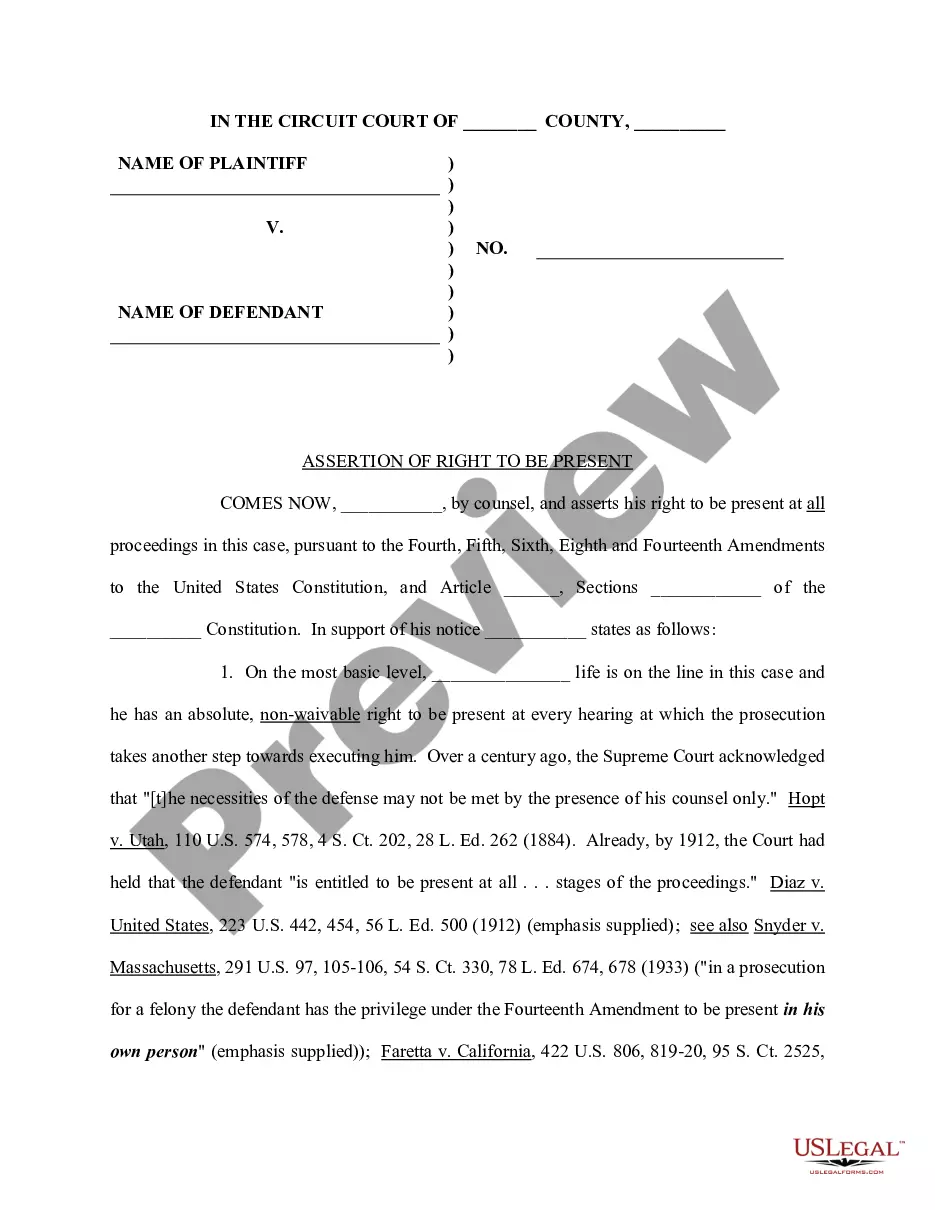
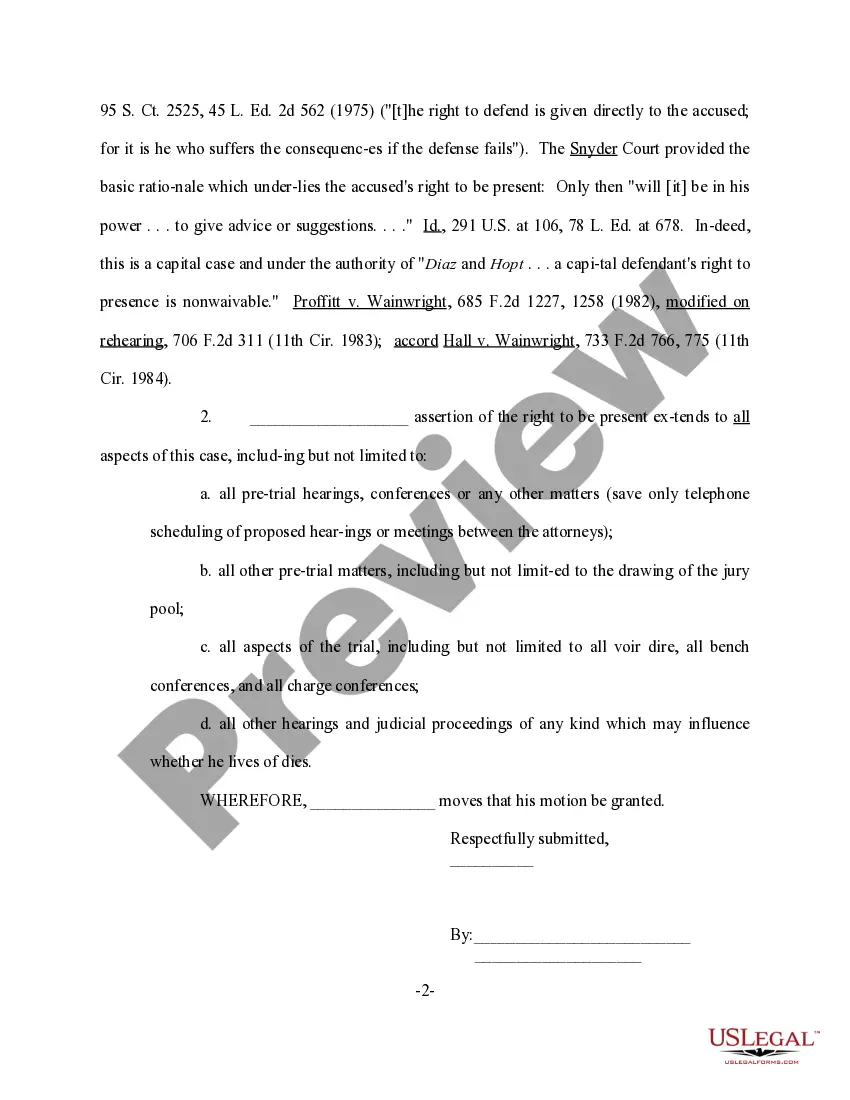
How to fill out Assertion Of Right To Be Present?
The Court Case Hearing For Protection Order you see on this page is a versatile formal template created by expert attorneys in accordance with federal and state laws.
For over 25 years, US Legal Forms has been offering individuals, corporations, and legal professionals more than 85,000 authenticated, state-specific documents for any business and personal situation. It’s the fastest, most direct, and most dependable way to secure the paperwork you require, as the service ensures the utmost level of data privacy and anti-malware safeguards.
Choose the format you desire for your Court Case Hearing For Protection Order (PDF, DOCX, RTF) and download the example to your device.
- Search for the document you require and examine it.
- Browse through the file you entered and preview it or review the form details to confirm it meets your requirements. If it does not, use the search function to find the appropriate one. Click Buy Now when you have identified the template you need.
- Select a membership and Log In.
- Pick the pricing option that fits you and create an account. Use PayPal or a credit card for a swift payment. If you already possess an account, Log In and verify your subscription to proceed.
- Acquire the editable template.
Form popularity
FAQ
During a court case hearing for protection order, you will likely be asked to explain your reasons for seeking the order of protection. The judge may inquire about specific incidents that prompted your request, including any threats or harmful behavior. Prepare to provide evidence and witness accounts if available. Understanding these aspects can help you present your case effectively.
To request a court case hearing for protection order, you must file a motion with the court. This motion outlines your reasons for seeking the hearing and should include any relevant evidence. Ensure you submit your paperwork to the correct court and follow their procedures. If you're unsure about the process, platforms like uslegalforms can guide you in preparing the necessary documents.
Court case hearings for protection orders generally take anywhere from 30 minutes to several hours, depending on the complexity of the case. Simple cases with clear evidence may conclude quickly, while more complicated situations could take longer. Planning and preparation can help you make the most of the time allotted during the hearing.
A judge may deny a protection order if the evidence presented does not convincingly demonstrate a threat or fear of harm. Additionally, if the judge believes that the petitioner has not made a strong enough case, they may decide against issuing the order. Successful presentation during your court case hearing for protection order is crucial to avoid denial.
In Arizona, the burden of proof in a court case hearing for protection order lies with the petitioner, the person requesting the order. They must demonstrate that they have a reasonable fear of harm. Clear evidence of threats or previous incidents could satisfy this requirement.
To beat a protection order at a court case hearing for protection order, it is essential to present a solid defense. This may involve providing evidence that contradicts the claims made against you or showing that the allegations are exaggerated. Working with a legal expert can help you navigate this process effectively.
A judge may dismiss a protective order if there is insufficient evidence to justify the need for protection. Additionally, if the court believes that the allegations are not credible or the situation does not warrant intervention, it may dismiss the case. Always provide a strong case during your court case hearing for protection order to avoid dismissal.
At a court case hearing for protection order, you should clearly state your reasons for seeking the order. Focus on specific incidents that demonstrate the need for protection and support your statements with facts. It's important to remain calm and respectful while presenting your case to ensure the judge understands your situation.
You should file your protective order as soon as you feel you need legal protection, following any incidents of harm or threats. Delaying your filing can complicate your court case hearing for protection order. If you feel unsafe, act promptly to ensure your rights and wellbeing are protected; legal platforms like US Legal Forms can assist you in this process.
When attending a court case hearing for protection order, it’s crucial to articulate your situation clearly. Share specific incidents that illustrate your need for protection, and refer to any supporting evidence you have. Stay focused on your safety and the reasons why the court should grant the order.