Warehouse Policy Sample For Vitamins
Description
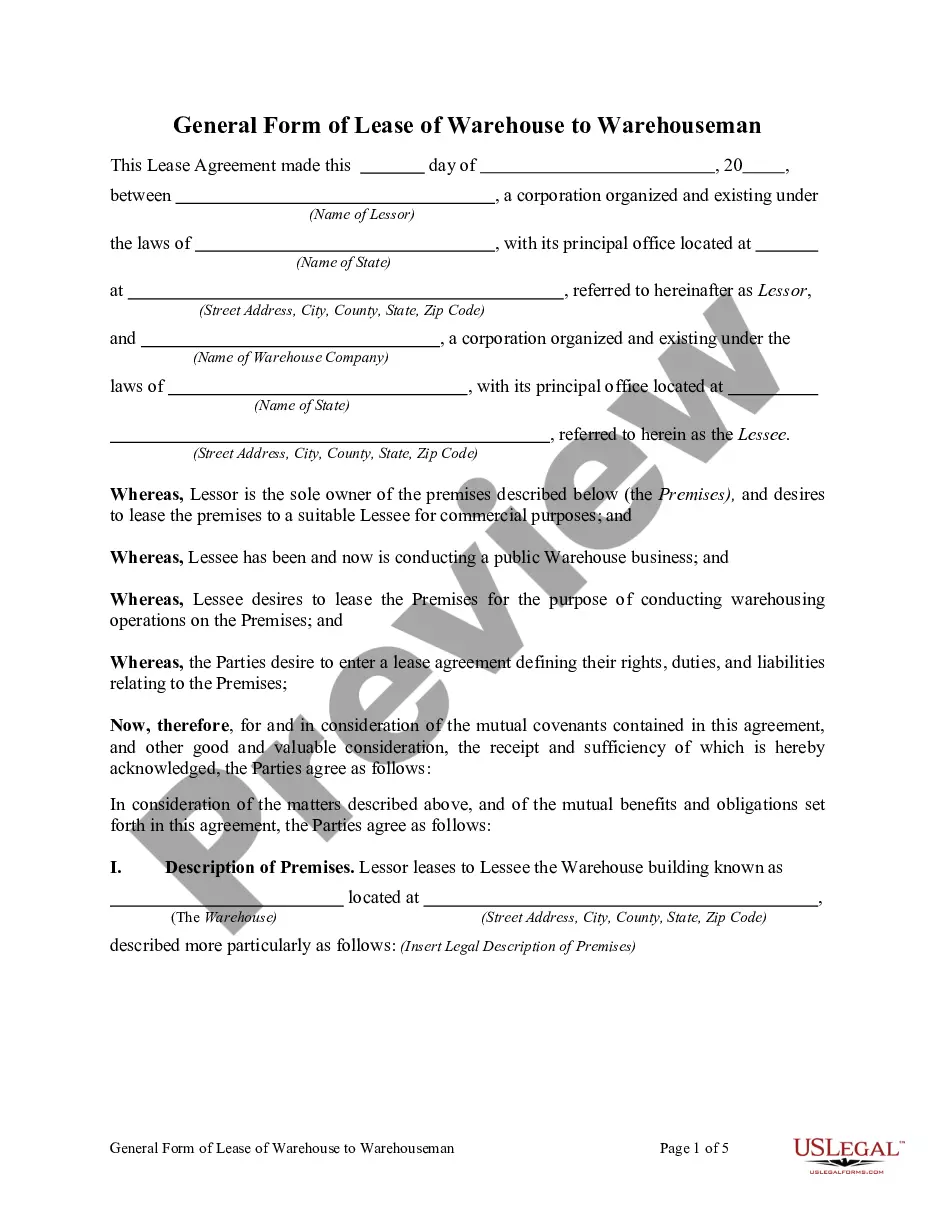
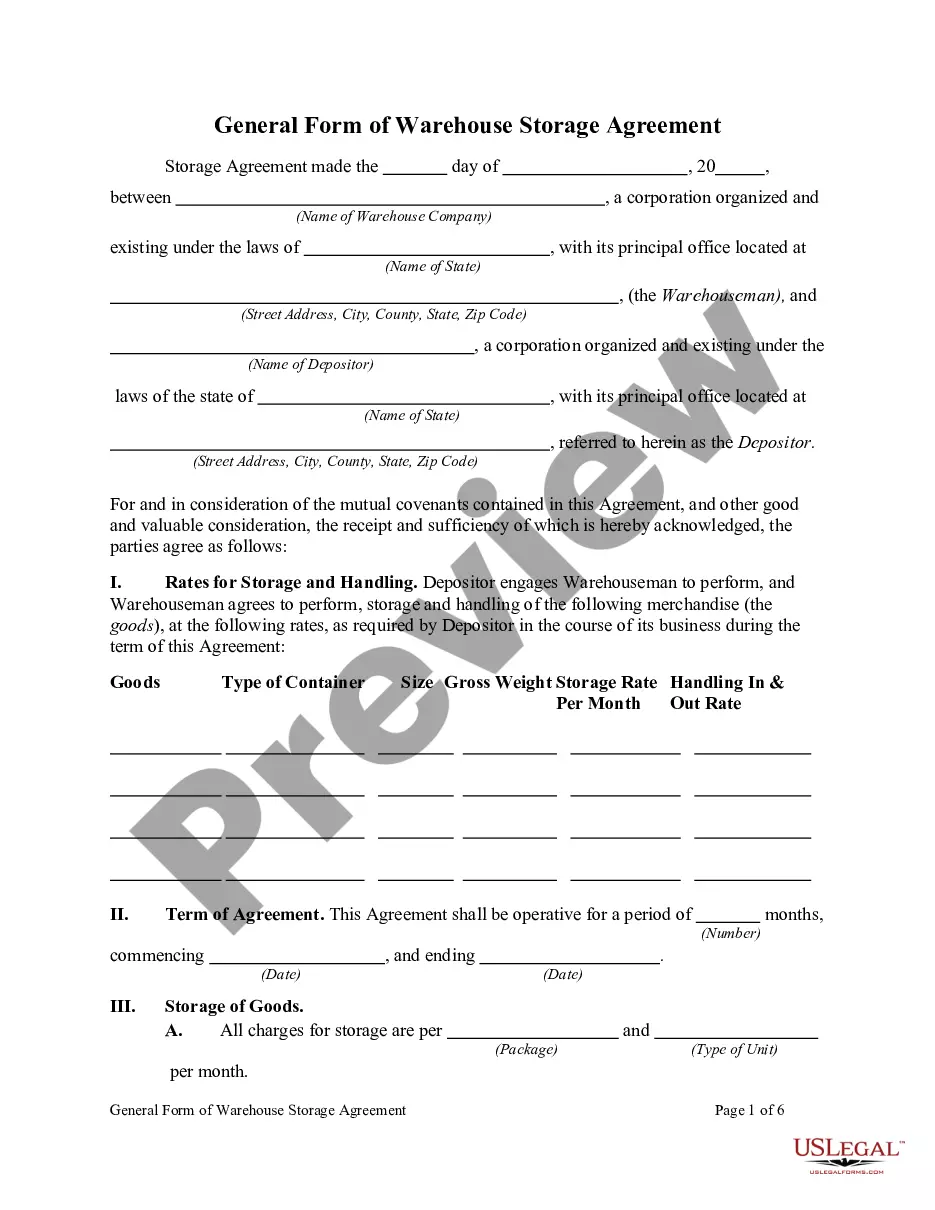
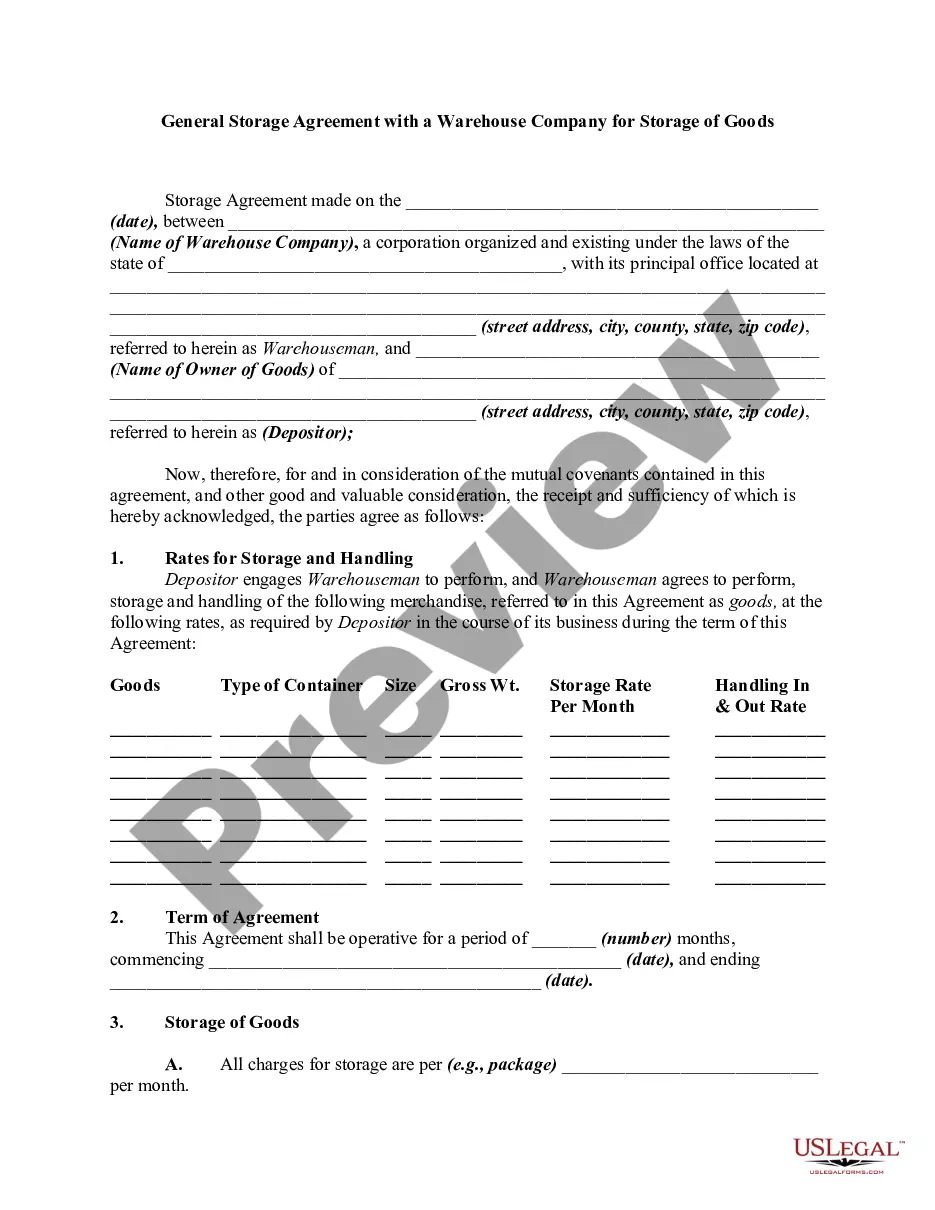
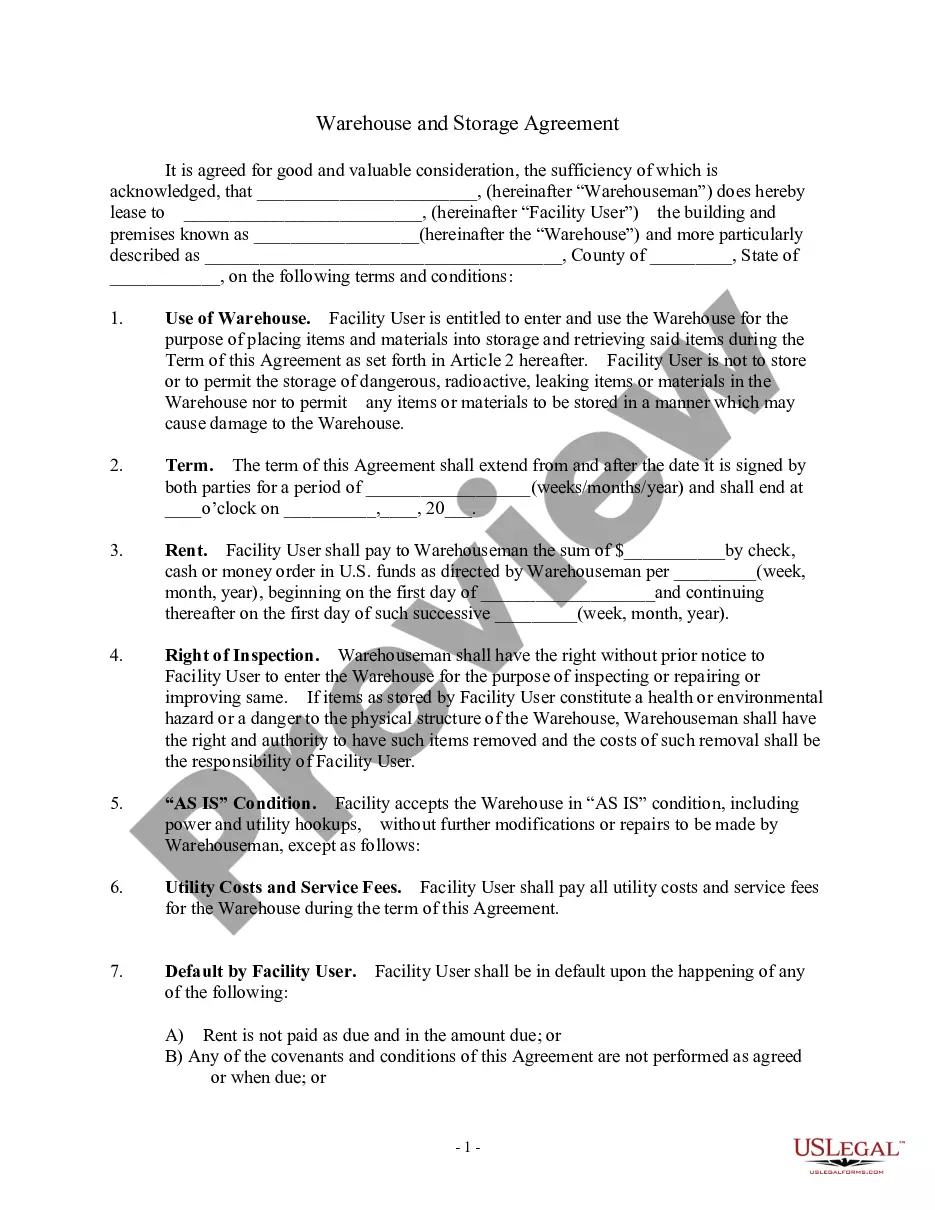
Get your form ready online
Our built-in tools help you complete, sign, share, and store your documents in one place.
Make edits, fill in missing information, and update formatting in US Legal Forms—just like you would in MS Word.
Download a copy, print it, send it by email, or mail it via USPS—whatever works best for your next step.
Sign and collect signatures with our SignNow integration. Send to multiple recipients, set reminders, and more. Go Premium to unlock E-Sign.
If this form requires notarization, complete it online through a secure video call—no need to meet a notary in person or wait for an appointment.
We protect your documents and personal data by following strict security and privacy standards.

Make edits, fill in missing information, and update formatting in US Legal Forms—just like you would in MS Word.

Download a copy, print it, send it by email, or mail it via USPS—whatever works best for your next step.

Sign and collect signatures with our SignNow integration. Send to multiple recipients, set reminders, and more. Go Premium to unlock E-Sign.

If this form requires notarization, complete it online through a secure video call—no need to meet a notary in person or wait for an appointment.

We protect your documents and personal data by following strict security and privacy standards.
Looking for another form?




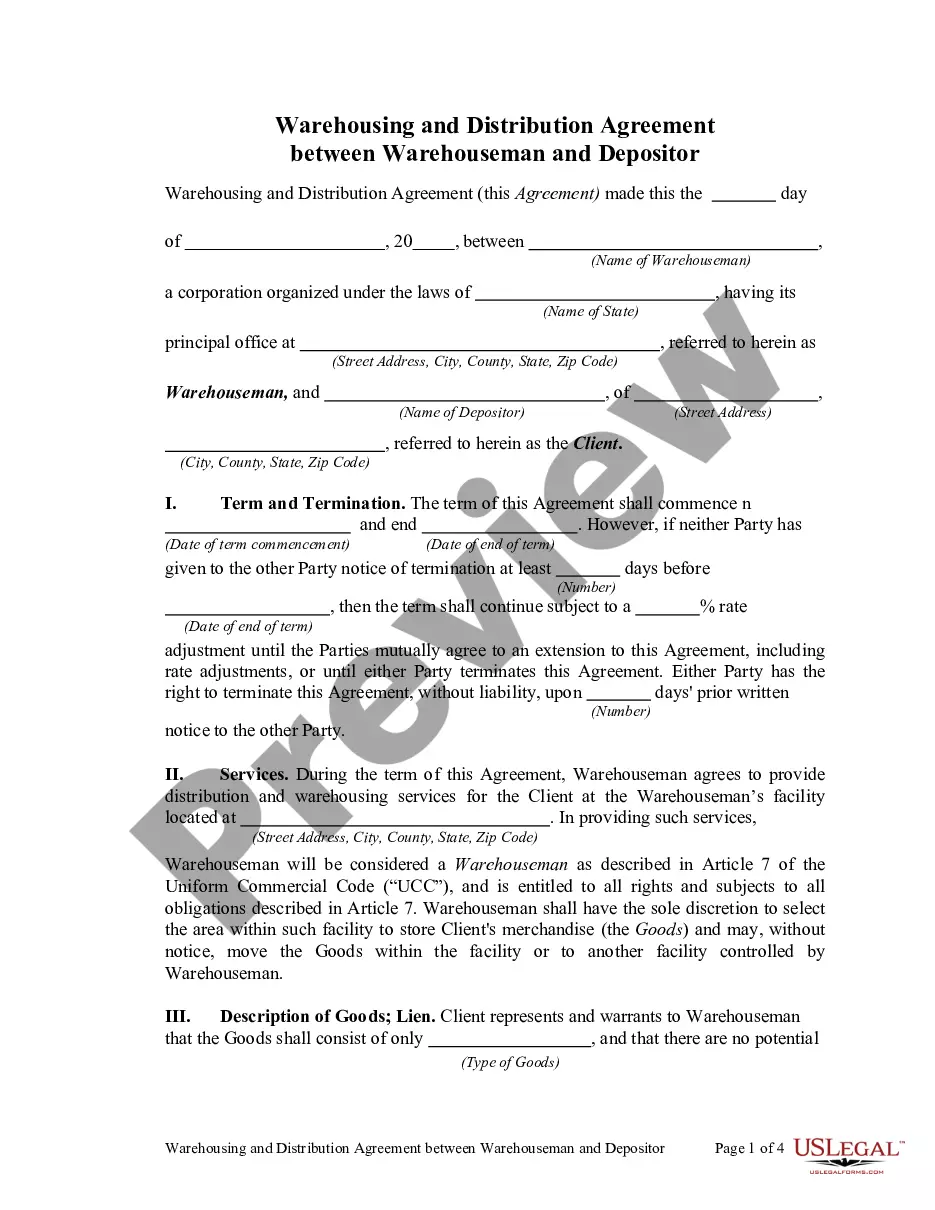
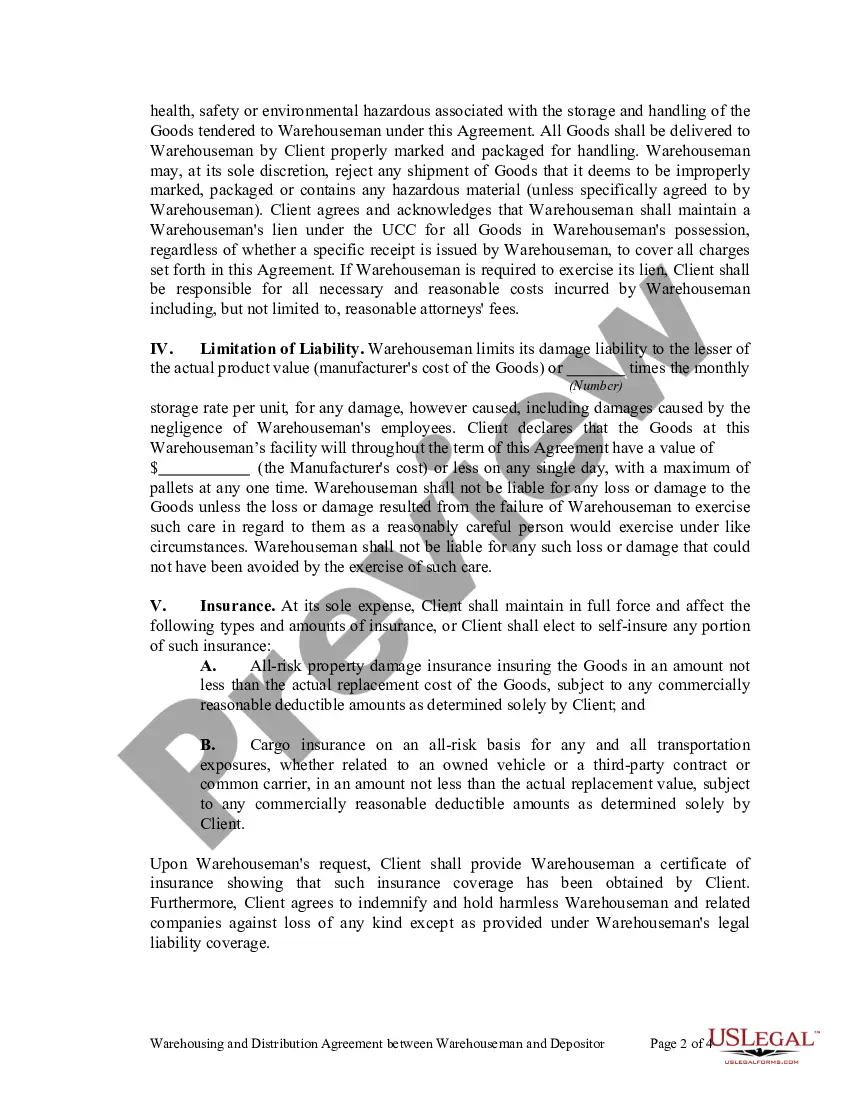
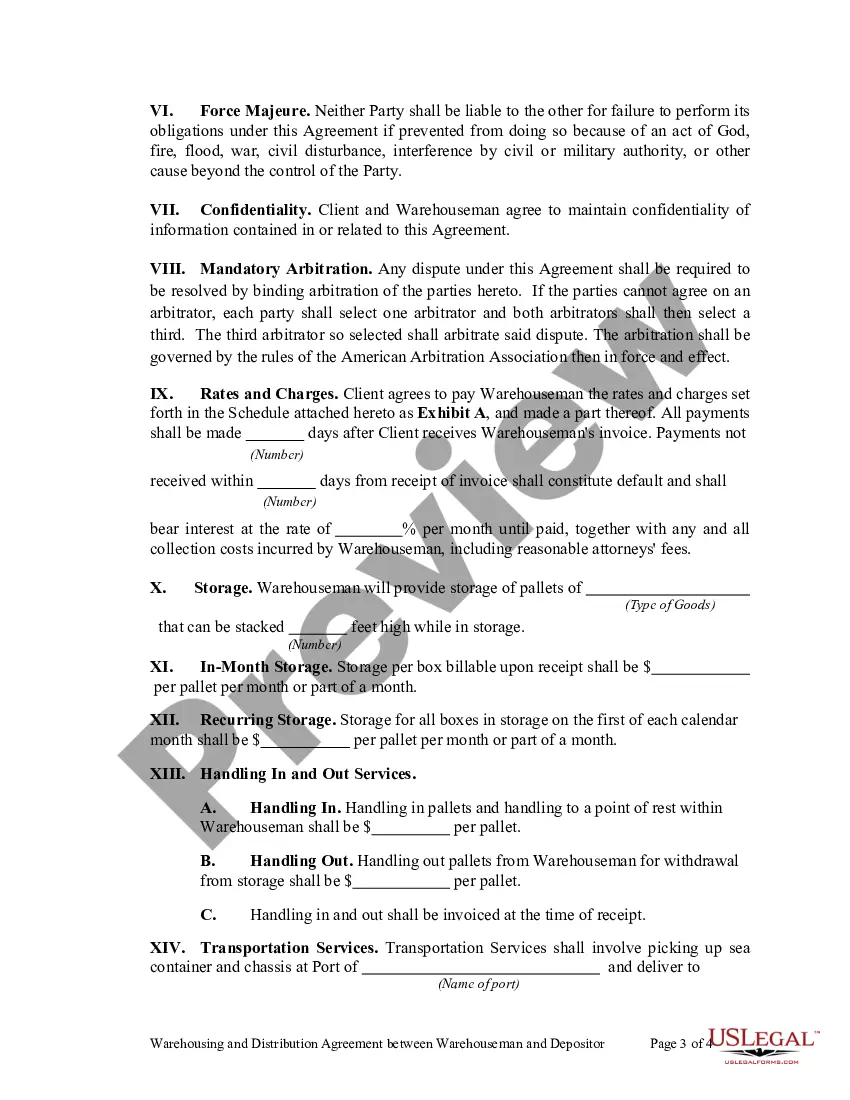
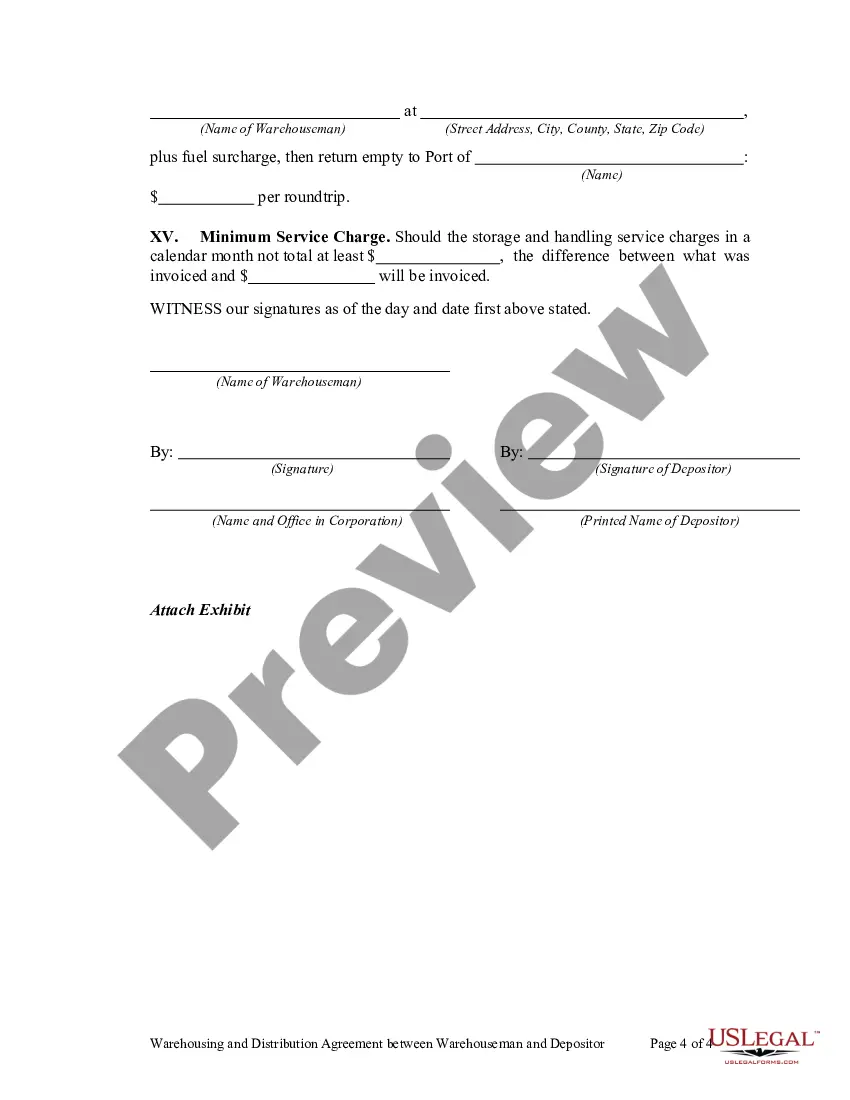
How to fill out Warehousing And Distribution Agreement Between Warehouseman And Depositor?
The Warehouse Policy Example For Vitamins displayed on this page is a reusable legal framework created by experienced attorneys in accordance with federal and local regulations.
For over 25 years, US Legal Forms has offered individuals, enterprises, and legal experts more than 85,000 authenticated, state-specific documents for every business and personal circumstance. It's the quickest, easiest, and most dependable method to acquire the documentation you require, as the service ensures bank-level data protection and anti-malware safeguards.
Subscribe to US Legal Forms to have verified legal templates for every scenario in life at your fingertips.
- Search for the document you require and examine it. Browse through the file you looked for and preview it or review the form description to confirm it meets your needs. If it doesn't, use the search feature to locate the correct one. Click Purchase Now once you have identified the template you need.
- Create an account and sign in. Choose the pricing plan that fits your needs and set up an account. Use PayPal or a credit card to make a swift payment. If you already possess an account, sign in and check your subscription to continue.
- Obtain the editable template. Select the format you prefer for your Warehouse Policy Example For Vitamins (PDF, Word, RTF) and download the sample onto your device.
- Fill out and sign the documentation. Print the template to complete it manually. Alternatively, use an online versatile PDF editor to swiftly and accurately fill in and sign your form with a legally-binding electronic signature.
- Download your documents once more. Utilize the same document again whenever necessary. Access the My documents section in your profile to redownload any previously downloaded forms.
Form popularity
FAQ
Seek for labels that indicate third-party testing or certifications, as these highlight the product's safety and purity. Specifically, check for seals from recognized organizations that require adherence to rigorous quality standards. This diligence aligns with the principles outlined in a Warehouse policy sample for vitamins, enhancing consumer confidence.
It should have ample natural light and nicely ventilated. Ideally it should have minimum 10% to 15% of natural light. Turbo vents are must for natural air circulation and ventilation. It should have a facility to mount crane, as many modern warehouse requires cranes for material movement.
From handling major and minor warehouse operations such as inspection, procurement, acceptance, put-away, picking, packing, order assembly, and shipping, a warehouse management system (WMS) helps in directing or validating every step by recording and capturing inventory movement.
An international warehouse is a strategically positioned facility in a foreign country that stores and distributes goods for global trade.
Warehouse standards are a set standard of regulations that are put in place by OSHA and other regulatory agencies. Though OSHA doesn't specify exact warehouse requirements, they do state that every employer should provide a workplace free from recognized hazards and offer solutions as laid out in this pocket guide.
Regardless of the product, every warehouse moves things, stores them, keeps track of them, and sends them out. Those four functions result in our four essential categories of equipment: storage, material handling, packing and shipping, and barcode equipment.