Child Custody County Without Court
Description

Get your form ready online
Our built-in tools help you complete, sign, share, and store your documents in one place.
Make edits, fill in missing information, and update formatting in US Legal Forms—just like you would in MS Word.
Download a copy, print it, send it by email, or mail it via USPS—whatever works best for your next step.
Sign and collect signatures with our SignNow integration. Send to multiple recipients, set reminders, and more. Go Premium to unlock E-Sign.
If this form requires notarization, complete it online through a secure video call—no need to meet a notary in person or wait for an appointment.
We protect your documents and personal data by following strict security and privacy standards.

Make edits, fill in missing information, and update formatting in US Legal Forms—just like you would in MS Word.

Download a copy, print it, send it by email, or mail it via USPS—whatever works best for your next step.

Sign and collect signatures with our SignNow integration. Send to multiple recipients, set reminders, and more. Go Premium to unlock E-Sign.

If this form requires notarization, complete it online through a secure video call—no need to meet a notary in person or wait for an appointment.

We protect your documents and personal data by following strict security and privacy standards.
Looking for another form?










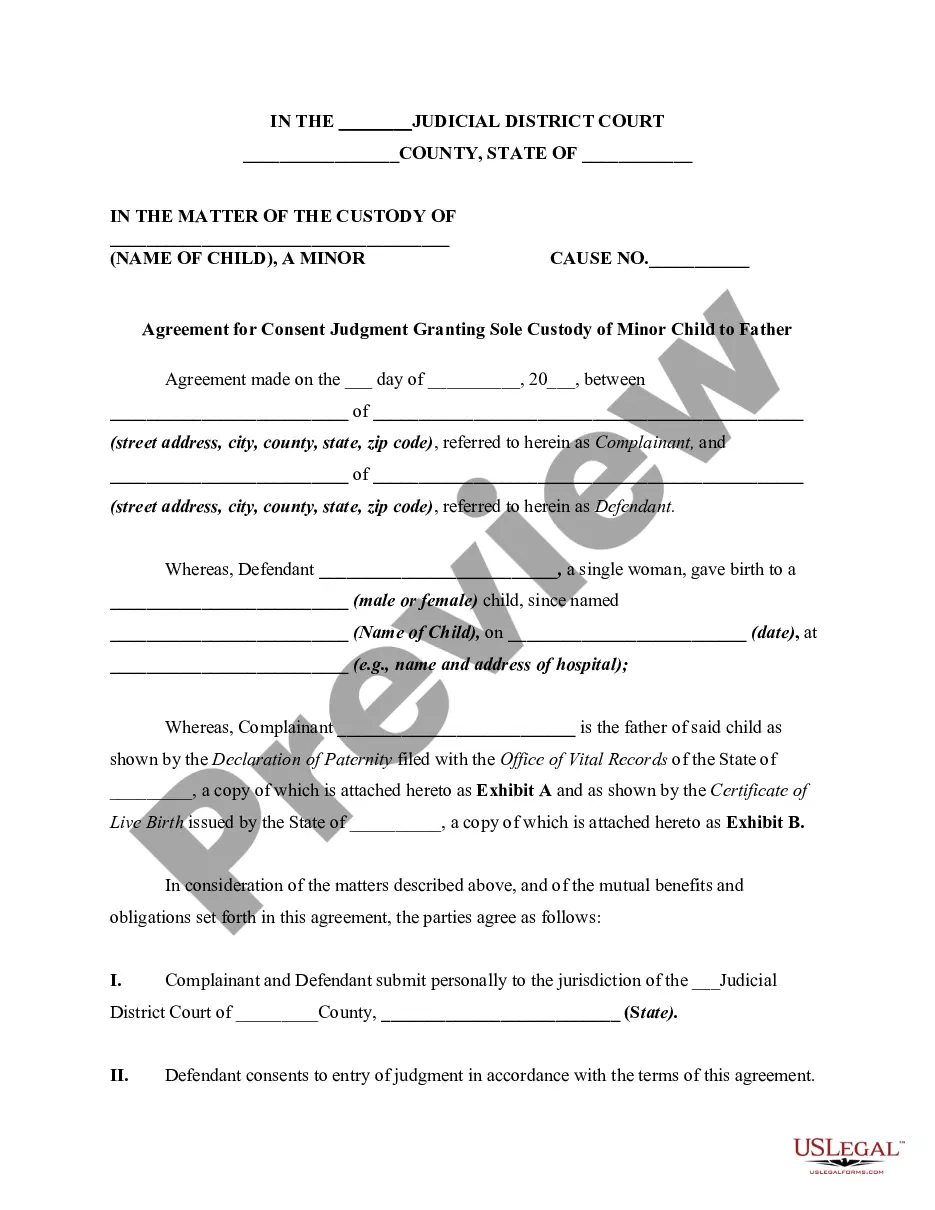
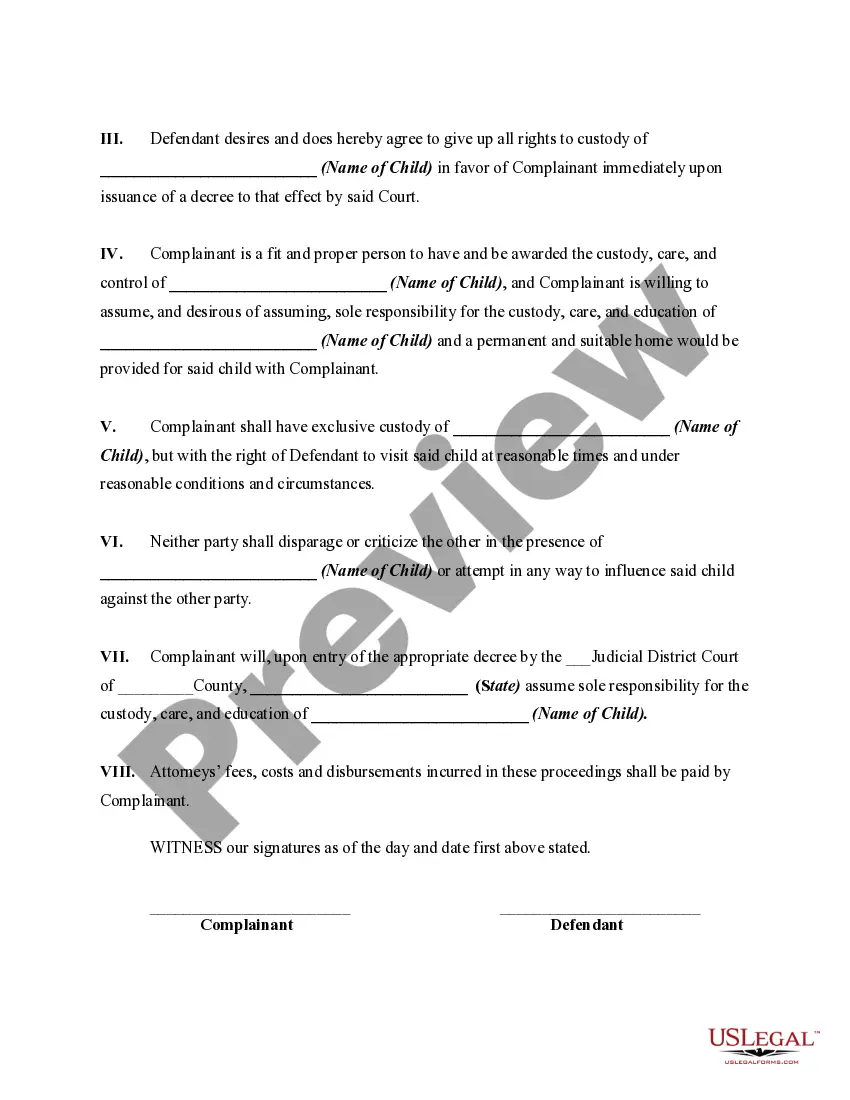
How to fill out Agreement For Consent Judgment Granting Sole Custody Of Minor Child To Father?
It’s clear that you cannot transform into a legal expert instantly, nor can you swiftly learn how to draft Child Custody County Without Court without possessing a specific skill set.
Formulating legal documents is a lengthy process that demands specialized training and expertise. So why not entrust the creation of the Child Custody County Without Court to the professionals.
With US Legal Forms, one of the most extensive legal template collections, you can find everything from court documents to templates for internal business communication.
You can regain access to your documents from the My documents section at any time. If you’re a current client, you can simply Log In, and locate and download the template from the same section.
Regardless of the intent behind your documents—be it financial and legal or personal—our platform has you covered. Try US Legal Forms today!
- Identify the form you require using the search bar at the top of the page.
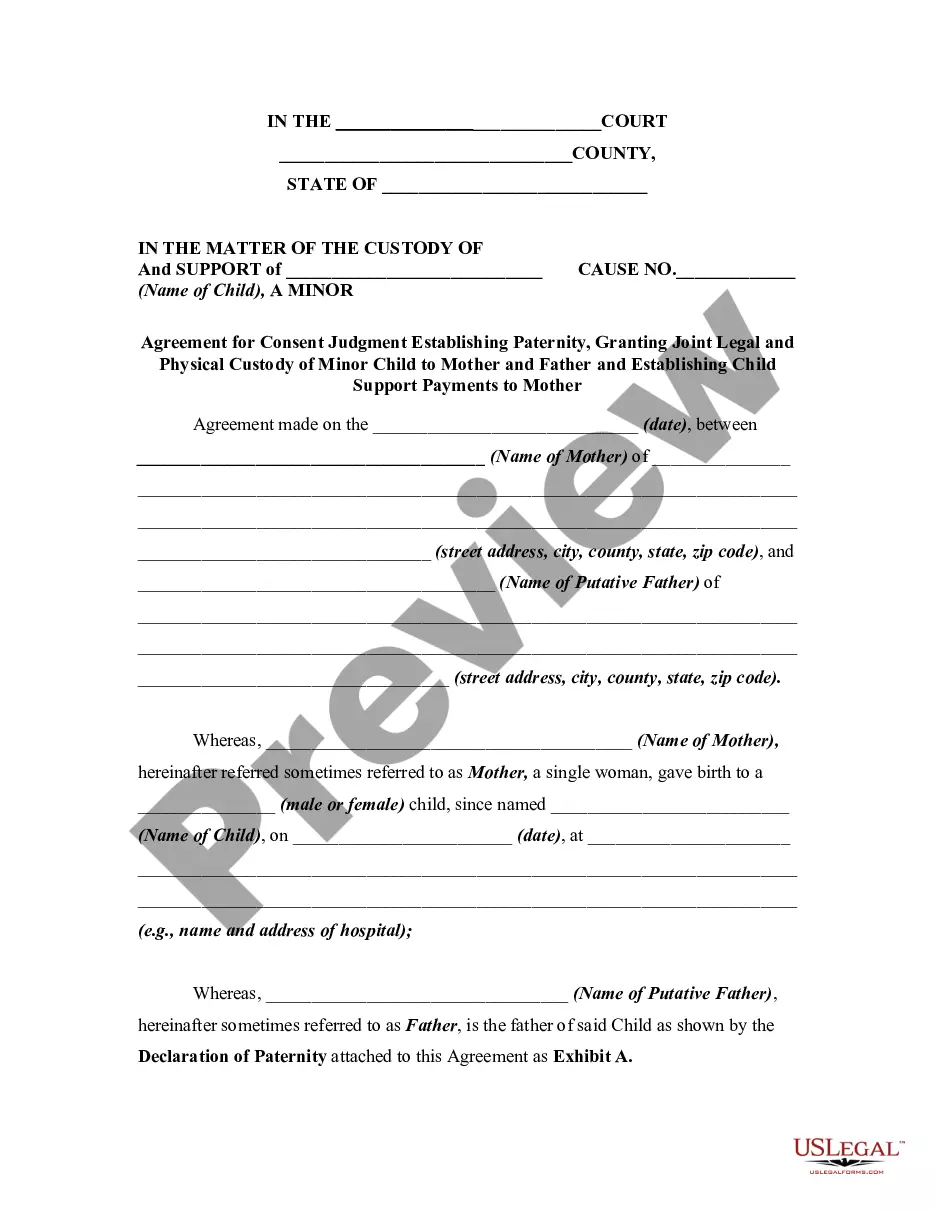
- Preview it (if this option is available) and review the accompanying description to determine whether Child Custody County Without Court is what you need.
- Restart your search if you require a different template.
- Sign up for a free account and choose a subscription plan to purchase the form.
- Click Buy now. Once the payment is completed, you can download the Child Custody County Without Court, complete it, print it, and send or mail it to the appropriate individuals or organizations.
Form popularity
FAQ
Most experts recommend that co-parents with toddlers use the 2-2-3 schedule. This schedule minimizes the time a toddler spends apart from either co-parent. In addition, this consistency provides the stability young children need and allows them to form meaningful relationships with both parents.
You need a court order if you wish to move with your child against the other parent's will. For that, you should submit an application to the family court for sole custody or demand to determine your child's whereabouts unilaterally.
Under the current laws, the court may grant custody to either parent, depending on the child's best interests. In cases where the child is of a tender age, custody is generally granted to the mother. However, as the child grows older, the court may consider the child's preference in deciding custody.
At 12 years old, your child can have a say in who they would prefer to live with going forward. This measure is sometimes called ?teenage discretion.? The idea is that a child can make logical decisions about how much time they want to spend with each parent.
The designated parent receives child maintenance to spend the money on the child. Generally speaking, the child must be a minor to be entitled to child maintenance. But children who are over 18 years old and are still in their first professional training or at university also receive child maintenance.