Nominee Trust Definition With The
Description
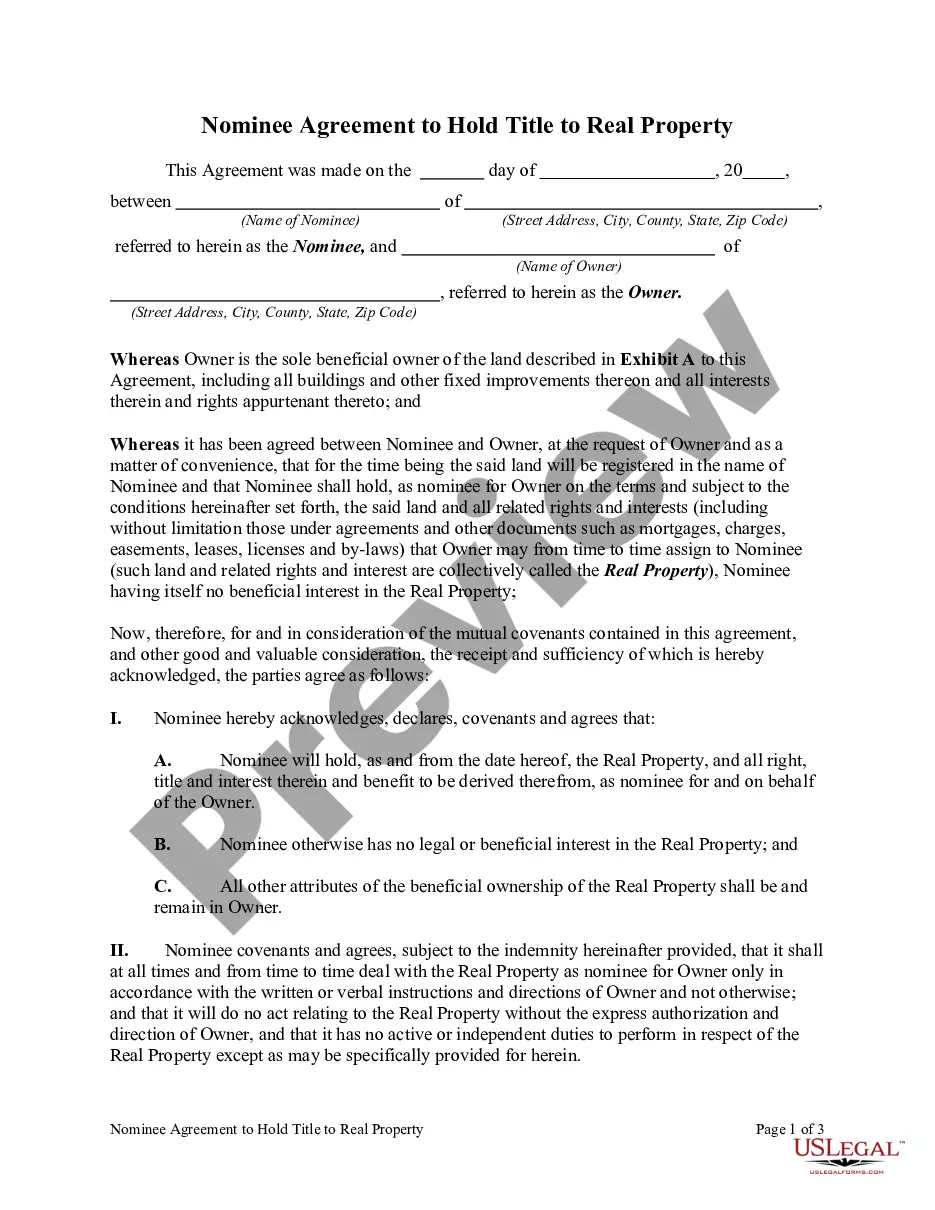
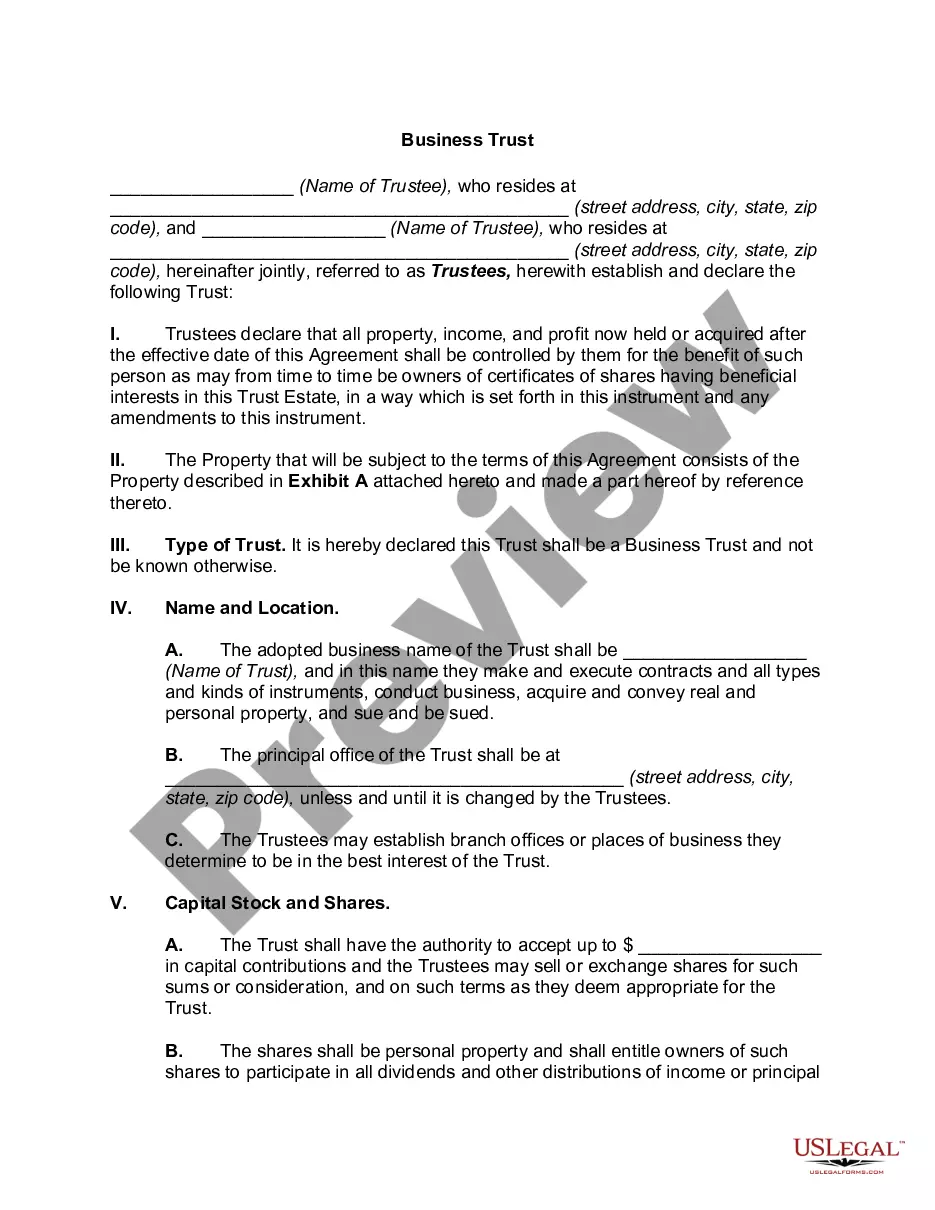
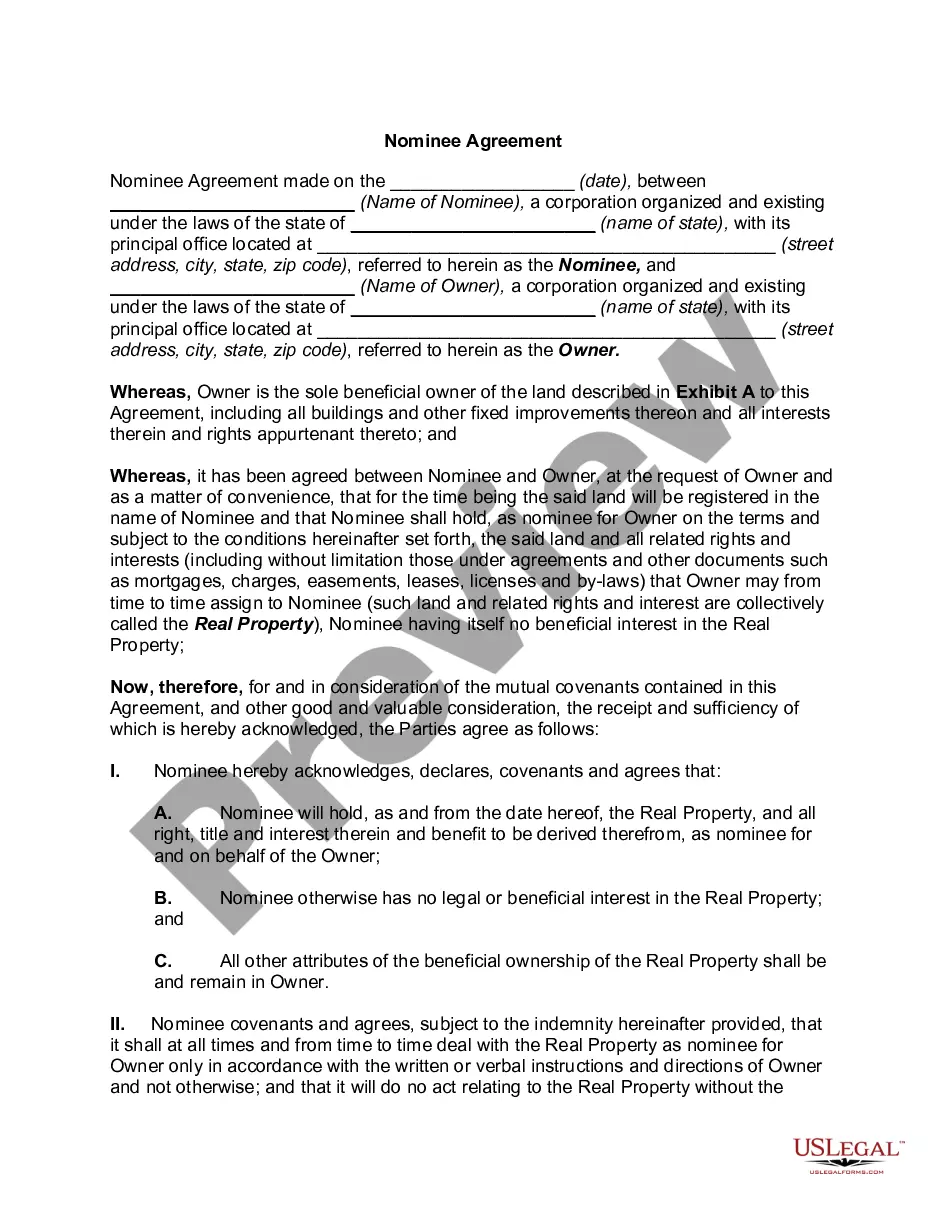

Get your form ready online
Our built-in tools help you complete, sign, share, and store your documents in one place.
Make edits, fill in missing information, and update formatting in US Legal Forms—just like you would in MS Word.
Download a copy, print it, send it by email, or mail it via USPS—whatever works best for your next step.
Sign and collect signatures with our SignNow integration. Send to multiple recipients, set reminders, and more. Go Premium to unlock E-Sign.
If this form requires notarization, complete it online through a secure video call—no need to meet a notary in person or wait for an appointment.
We protect your documents and personal data by following strict security and privacy standards.

Make edits, fill in missing information, and update formatting in US Legal Forms—just like you would in MS Word.

Download a copy, print it, send it by email, or mail it via USPS—whatever works best for your next step.

Sign and collect signatures with our SignNow integration. Send to multiple recipients, set reminders, and more. Go Premium to unlock E-Sign.

If this form requires notarization, complete it online through a secure video call—no need to meet a notary in person or wait for an appointment.

We protect your documents and personal data by following strict security and privacy standards.
Looking for another form?




How to fill out Nominee Trust?
Creating legal documents from scratch can be occasionally daunting. Certain cases may require extensive research and substantial financial investment.
If you're looking for a simpler and more economical method of producing Nominee Trust Definition With The or any other documents without navigating complicated procedures, US Legal Forms is always ready to assist you.
Our online catalog of over 85,000 current legal forms covers nearly every aspect of your financial, legal, and personal matters. With just a few clicks, you can quickly obtain state- and county-specific forms meticulously prepared for you by our legal experts.
Utilize our website whenever you require trustworthy and dependable services where you can swiftly locate and download the Nominee Trust Definition With The. If you're familiar with our services and have already created an account, simply Log In to your account, find the form, and download it immediately or re-download it later in the My documents section.
Ensure the template you select aligns with your state's and county's regulations. Select the appropriate subscription plan to purchase the Nominee Trust Definition With The. Download the document, then complete, verify, and print it out. US Legal Forms boasts an impeccable reputation and over 25 years of experience. Join us today and simplify document preparation into a seamless process!
- Don’t have an account? No worries.
- Creating one is quick and easy, allowing you to explore the library.
- However, before proceeding to download Nominee Trust Definition With The, adhere to these suggestions.
- Examine the document preview and descriptions to ensure you are accessing the correct document.
Form popularity
FAQ
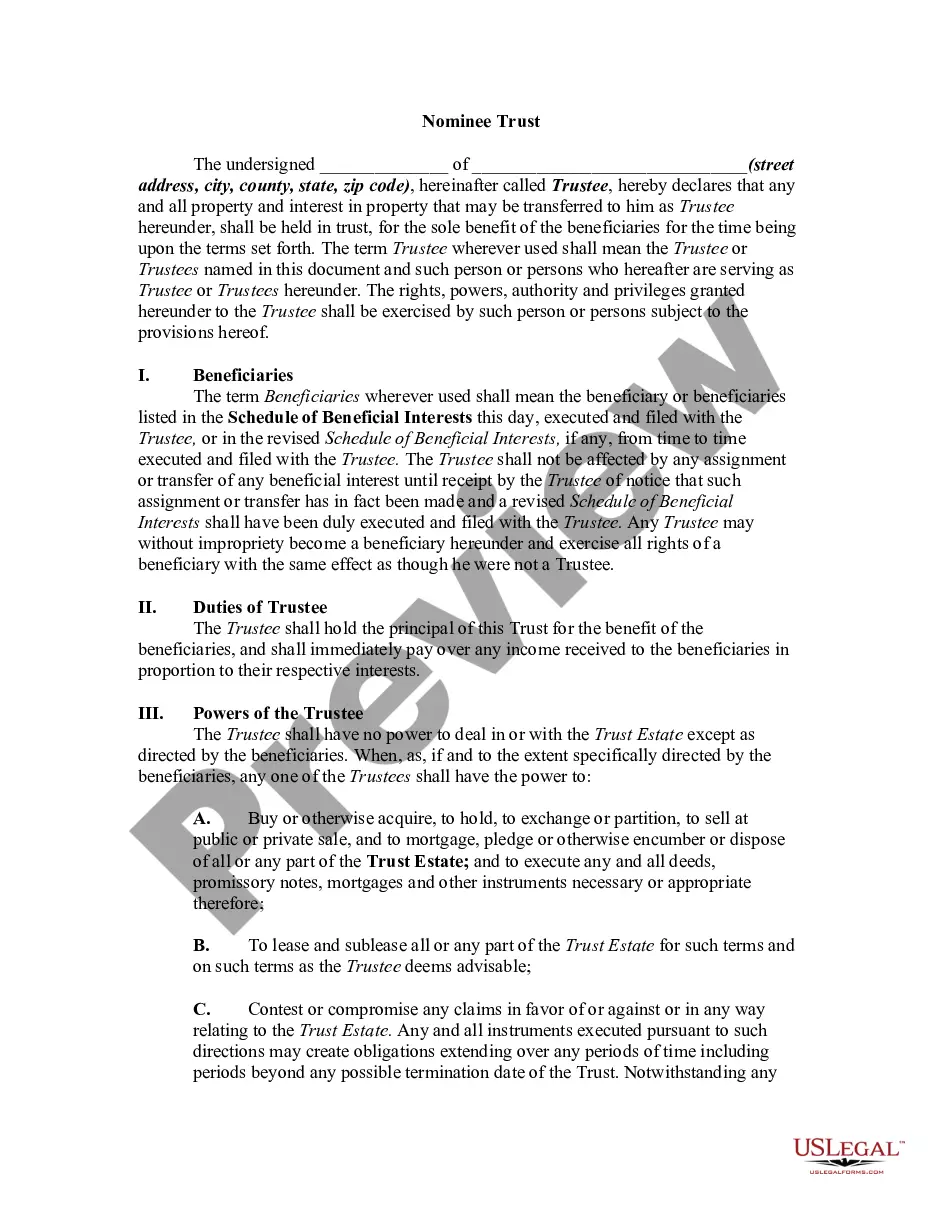
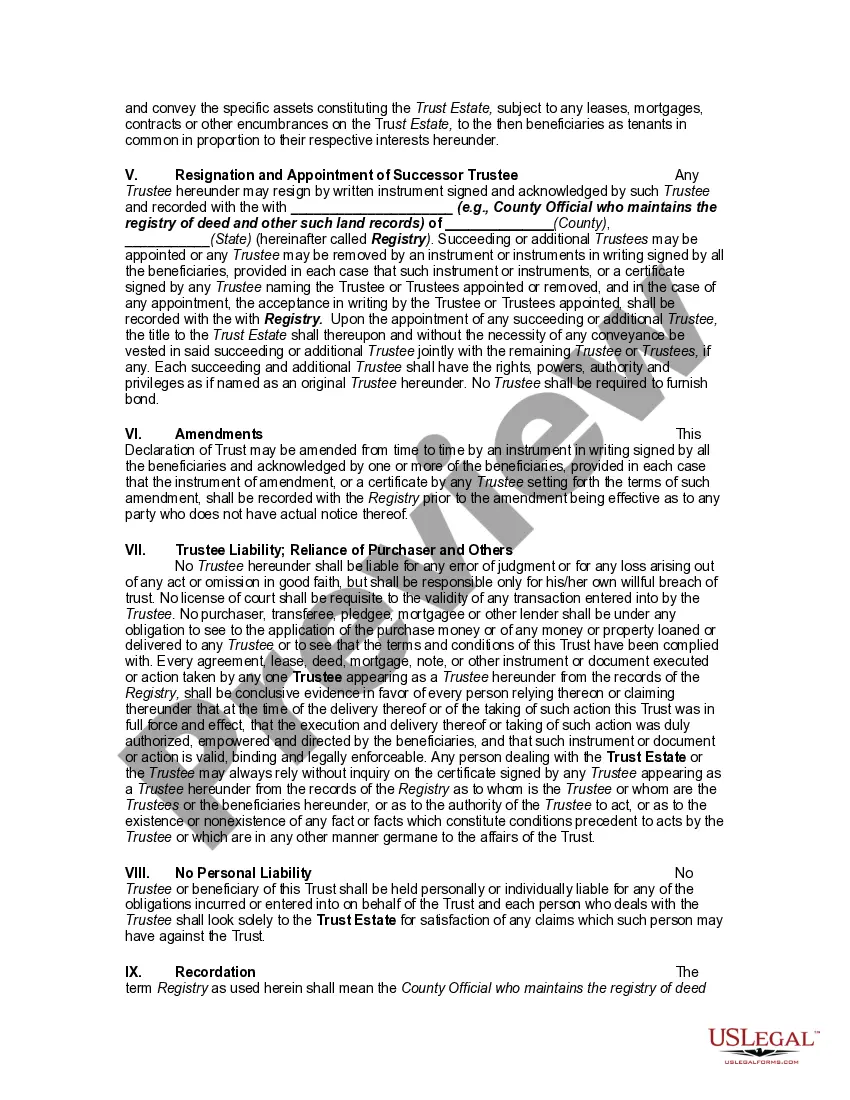
A nominee trust is a legal arrangement whereby a person, termed the settlor, appoints another person, termed the "nominee" or "trustee", to be the owner of the legal title to some property.
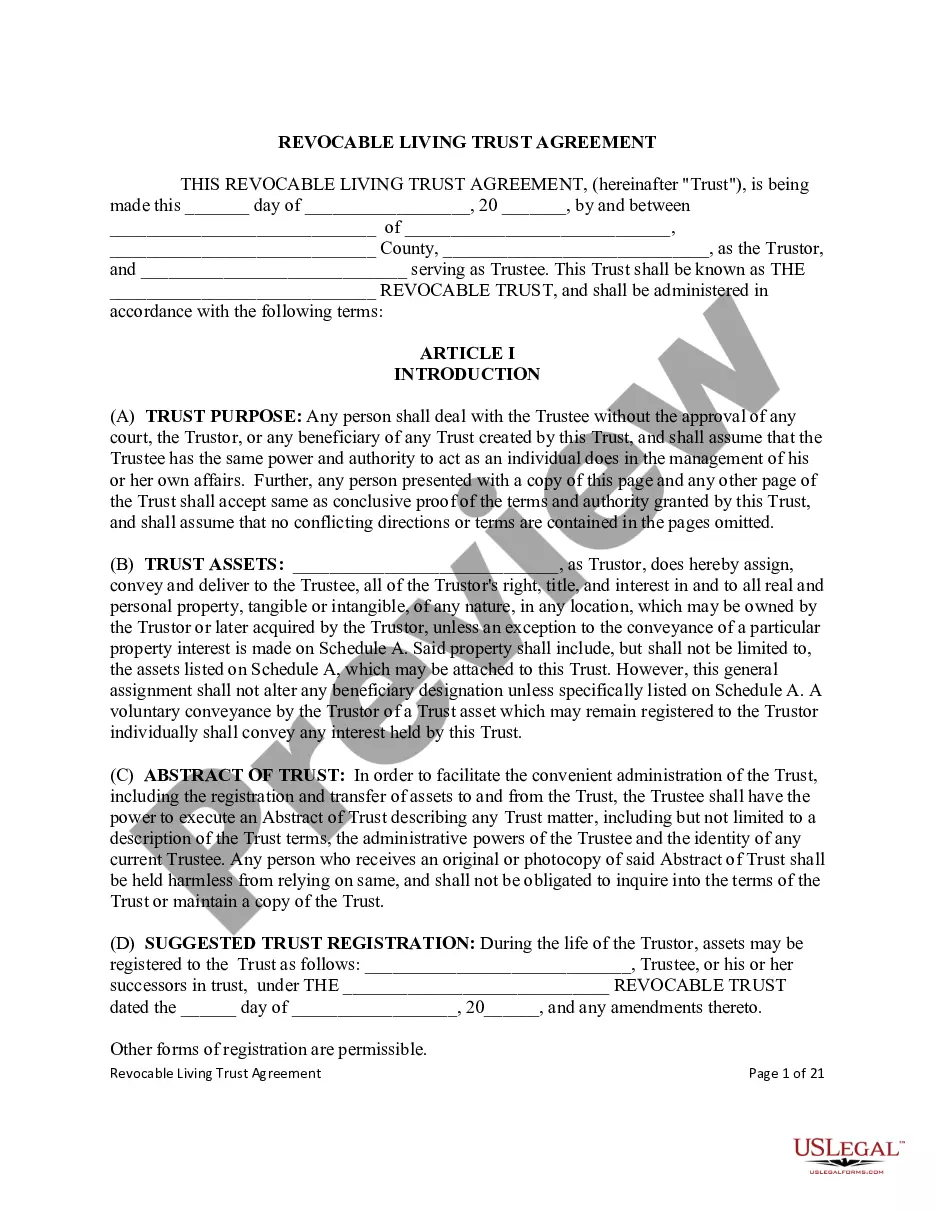
Living trusts, Totten trusts, and nominee trusts are the main types of revocable trusts. They can be revoked, amended, or terminated by the trust grantor, the person who creates the trust, any time before his or her death.
The trustee may have to file a return if the trust meets any of these: The trustee or beneficiary (non-contingent) is a California resident. The trust has income from a California source.
A nominee trust is typically established to hold title to real estate and is disregarded for federal income tax purposes (i.e., a separate return, such as a 1041, is not required).
Unlike a real trust, where the power and duty to appropriately control the trust property lies with the trustee, in a nominee trust the beneficiaries actually retain all decision-making power. In fact, the trustee is really just an agent of the beneficiaries, who essentially act as the principal.