Auction Examples
Description
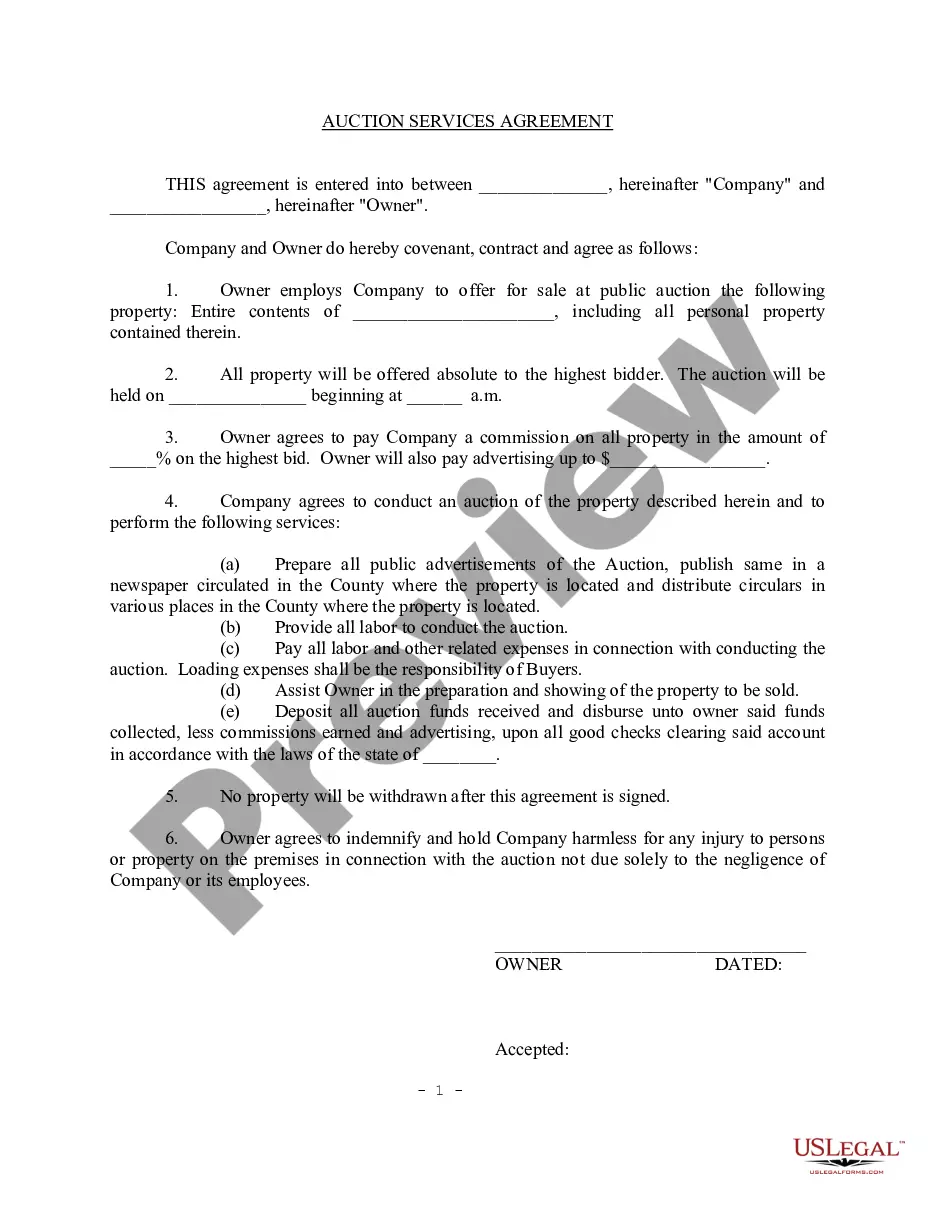
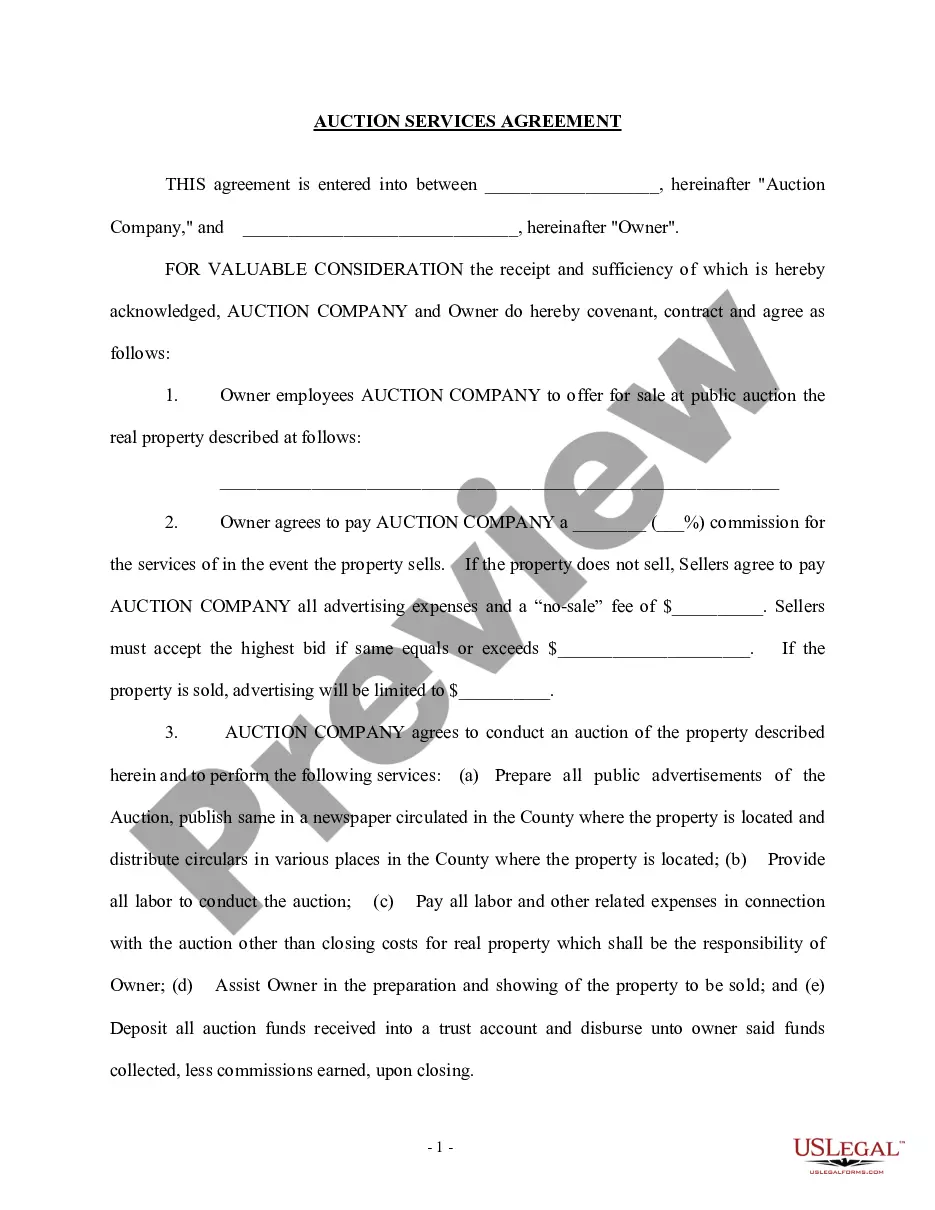
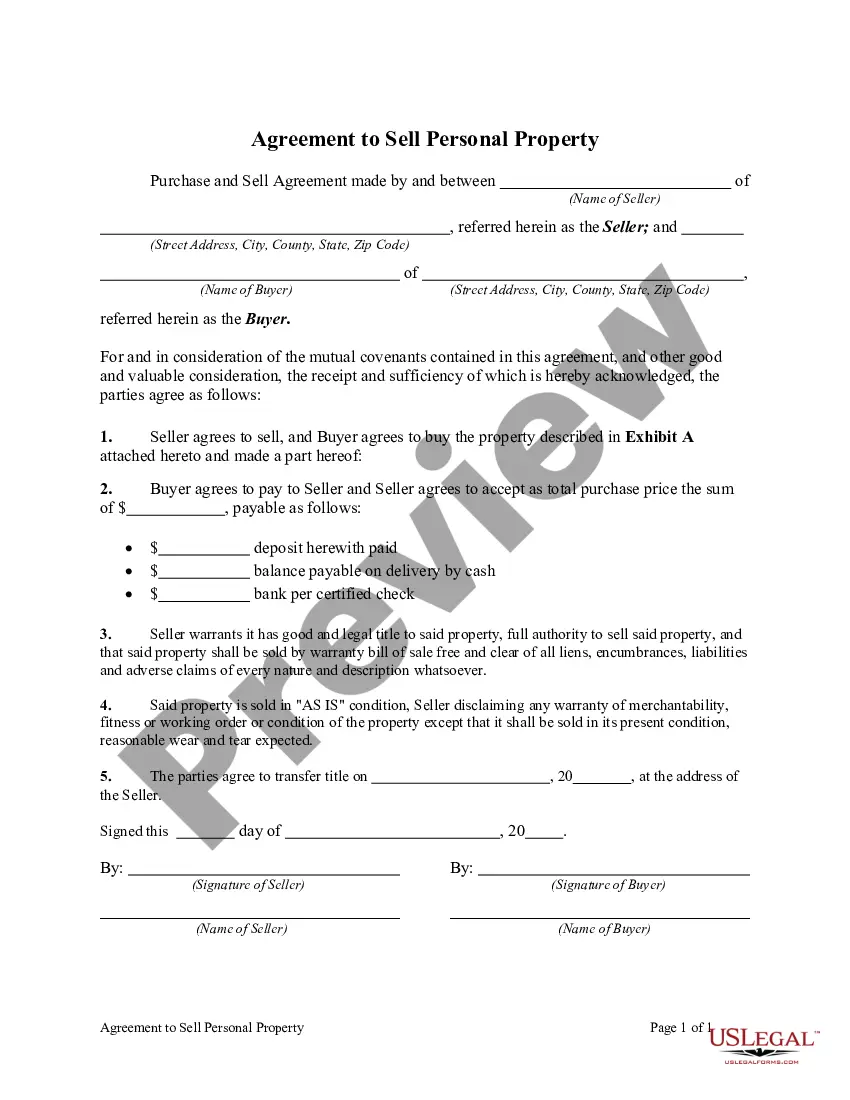
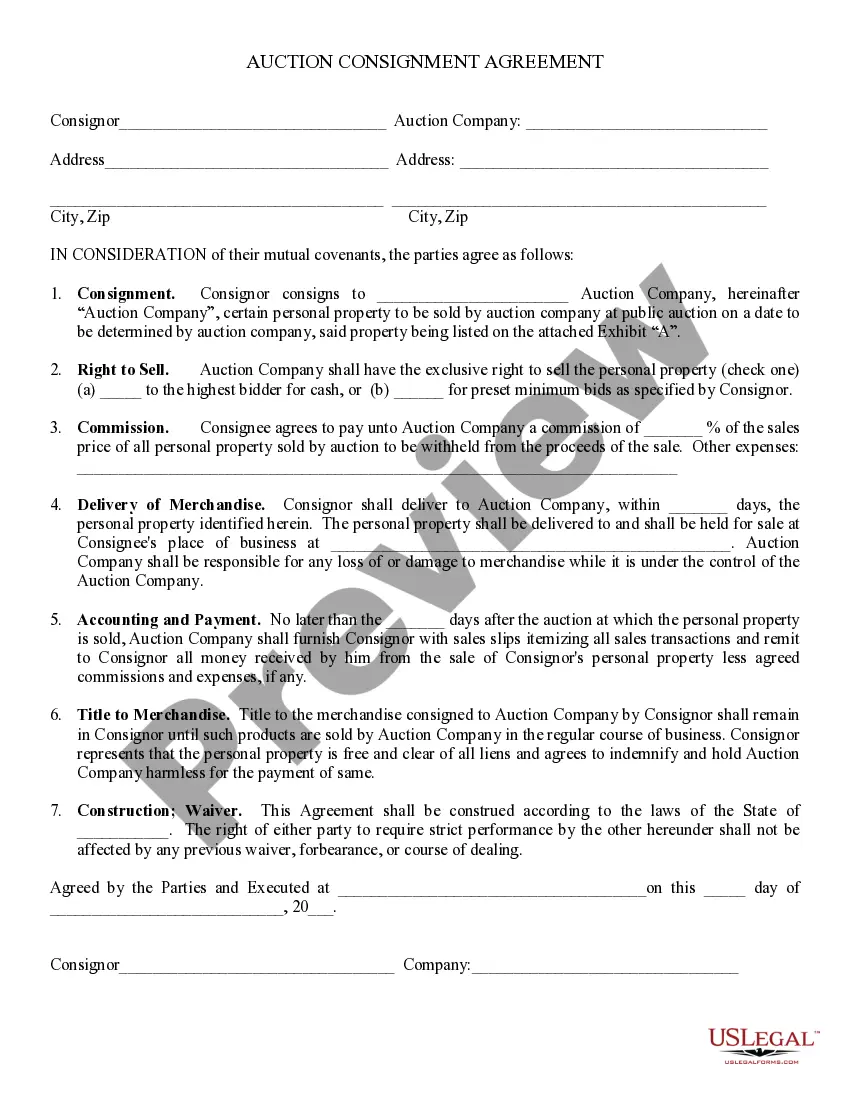
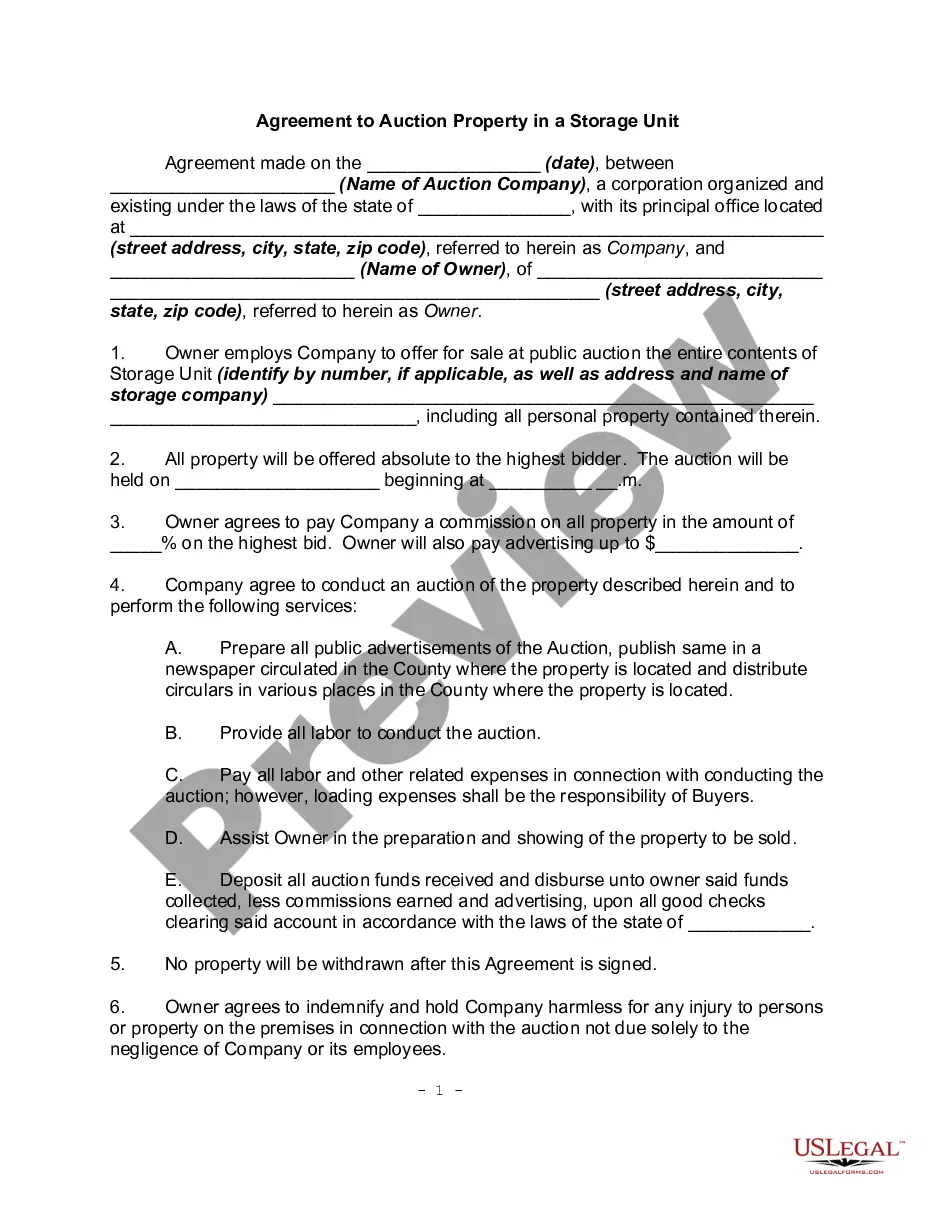
Get your form ready online
Our built-in tools help you complete, sign, share, and store your documents in one place.
Make edits, fill in missing information, and update formatting in US Legal Forms—just like you would in MS Word.
Download a copy, print it, send it by email, or mail it via USPS—whatever works best for your next step.
Sign and collect signatures with our SignNow integration. Send to multiple recipients, set reminders, and more. Go Premium to unlock E-Sign.
If this form requires notarization, complete it online through a secure video call—no need to meet a notary in person or wait for an appointment.
We protect your documents and personal data by following strict security and privacy standards.

Make edits, fill in missing information, and update formatting in US Legal Forms—just like you would in MS Word.

Download a copy, print it, send it by email, or mail it via USPS—whatever works best for your next step.

Sign and collect signatures with our SignNow integration. Send to multiple recipients, set reminders, and more. Go Premium to unlock E-Sign.

If this form requires notarization, complete it online through a secure video call—no need to meet a notary in person or wait for an appointment.

We protect your documents and personal data by following strict security and privacy standards.
Looking for another form?



How to fill out Auction Of Personal Property Agreement?
Obtaining a reliable source for the latest and suitable legal templates is a significant part of dealing with bureaucracy. Selecting the appropriate legal documents necessitates precision and carefulness, which is why it is vital to source Auction Examples exclusively from trustworthy providers, such as US Legal Forms. An incorrect template will squander your time and delay your current situation. With US Legal Forms, you have minimal concerns. You can access and verify all details about the document’s application and pertinence for your situation and in your state or region.
Consider the following steps to finalize your Auction Examples.
Remove the hassle that comes with your legal documentation. Browse the comprehensive US Legal Forms catalog where you can discover legal templates, verify their relevance to your situation, and download them instantly.
- Utilize the catalog navigation or search bar to find your template.
- Review the form’s description to ascertain if it meets the requirements of your state and locality.
- View the form preview, if available, to ensure the form is indeed what you are looking for.
- Return to the search if the Auction Examples does not fulfill your needs.
- If you are confident about the form’s applicability, download it.
- If you are a registered user, click Log in to verify your identity and access your selected forms in My documents.
- If you do not yet have an account, click Buy now to acquire the form.
- Choose the pricing plan that best suits your needs.
- Proceed to the registration to finalize your purchase.
- Complete your purchase by selecting a payment method (credit card or PayPal).
- Select the document format for downloading Auction Examples.
- After you have the form on your device, you can modify it using the editor or print it out and fill it in manually.
Form popularity
FAQ
The 3 minute rule in auction operates similarly to the 10 minute rule, but it applies to a shorter time frame. If a bid is placed within three minutes of the auction's end, the closing time is extended by another three minutes. This rule helps maintain excitement and engagement among bidders. Exploring various auction examples can illustrate how this rule enhances the bidding experience.
The 10 minute rule at auction allows for a final extension of bidding time if bids are placed within the last ten minutes of the auction. This rule ensures that all interested bidders have a fair chance to participate. It encourages competitive bidding and can result in higher final prices. Familiarizing yourself with auction examples can help you see how this rule impacts bidding dynamics.
An example of an auction can be found in charity events where items like artwork or experiences are sold to the highest bidder. These auctions often create excitement and community involvement. You can also see auctions in real estate, where properties are sold to the highest bidder. Researching various auction examples can help you understand the diverse applications of this selling method.
When crafting an auction item description, focus on clarity and detail. Start with a catchy title that highlights the item’s main features. Include specifics like size, condition, and any unique qualities that set it apart. Use auction examples to inspire your description, ensuring it captures potential bidders' attention and encourages them to place bids.
Auctioneers use specific phrases to engage bidders and create a lively atmosphere. Common terms include 'going once, going twice, sold!' which signals the closing of a bid. Additionally, they may use auction examples to demonstrate how bidding works or to encourage more competitive offers. Familiarizing yourself with these phrases can enhance your auction experience.
Describing an auction requires clarity and excitement to draw in potential bidders. Start by explaining the type of auction, whether it's live or online, and mention the items up for bid. Incorporate auction examples to showcase the variety and appeal of the items. This helps create a vivid picture of what participants can expect.
When writing a fundraiser description sample, focus on the purpose and goals of the event. Clearly explain what the funds will support and why it matters. Use compelling auction examples to illustrate the impact of donations, making the message relatable and inspiring. This approach encourages more people to contribute to your cause.
Writing effective descriptions for auction items is crucial for attracting bidders. Start by clearly identifying the item and highlighting its unique features. Include details such as condition, size, and any relevant history. Use auction examples to guide your descriptions, ensuring they are clear and engaging to potential buyers.
The most common auction format is the English auction. In this type of auction, bidders openly place increasing bids until no one is willing to bid higher. It’s widely used for various items, from art to real estate. Auction examples of English auctions can be seen at charity events and online platforms.