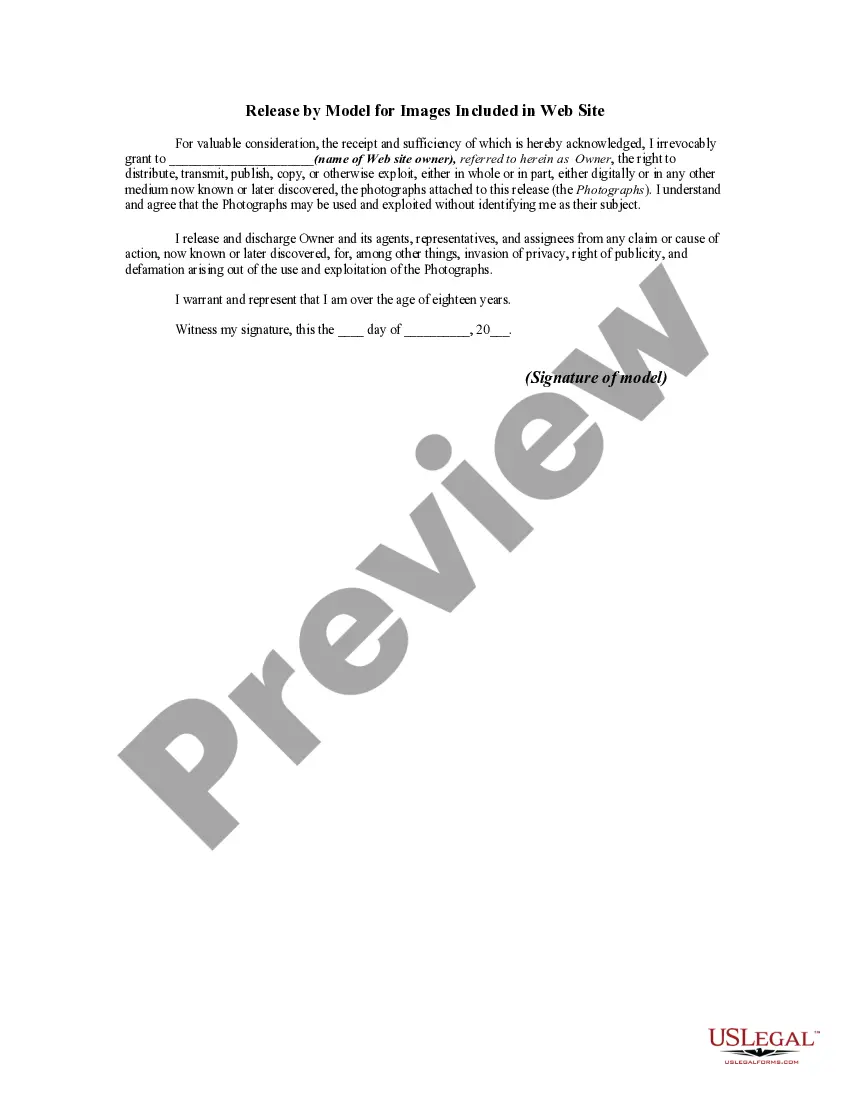
Invasion Transmit Privacy Without Permission
Description
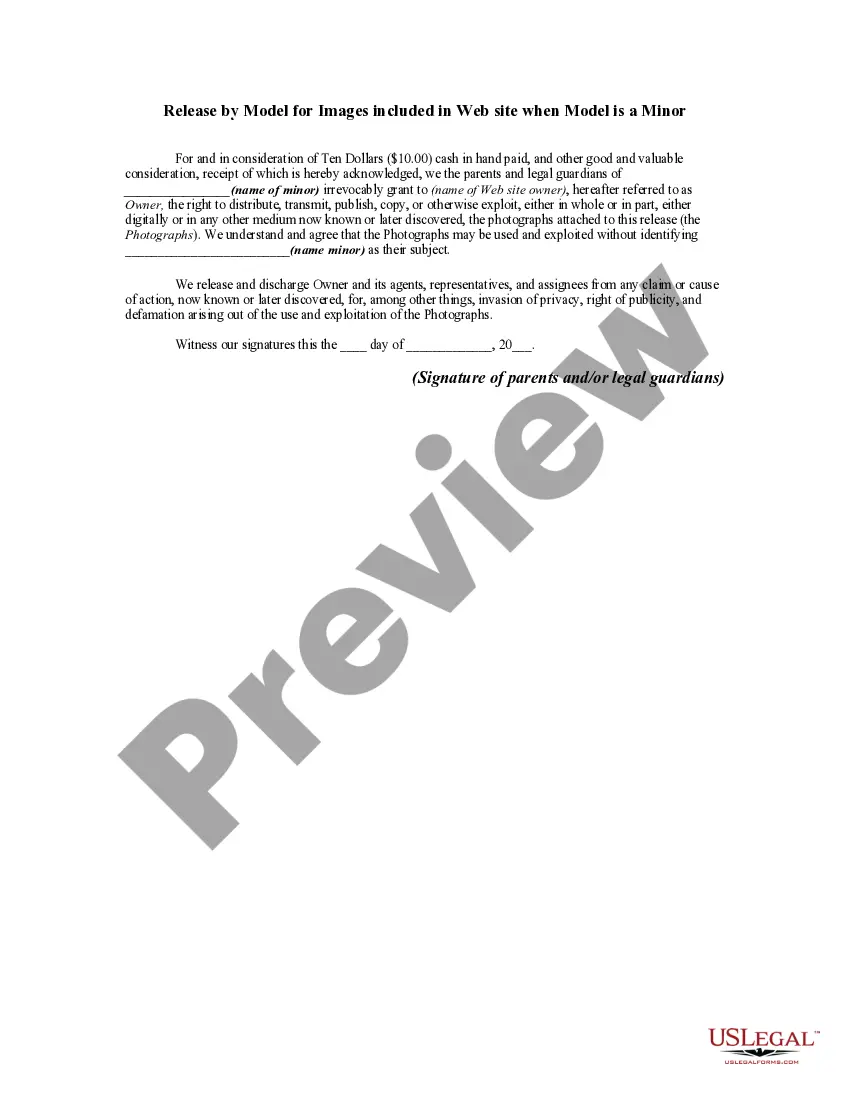
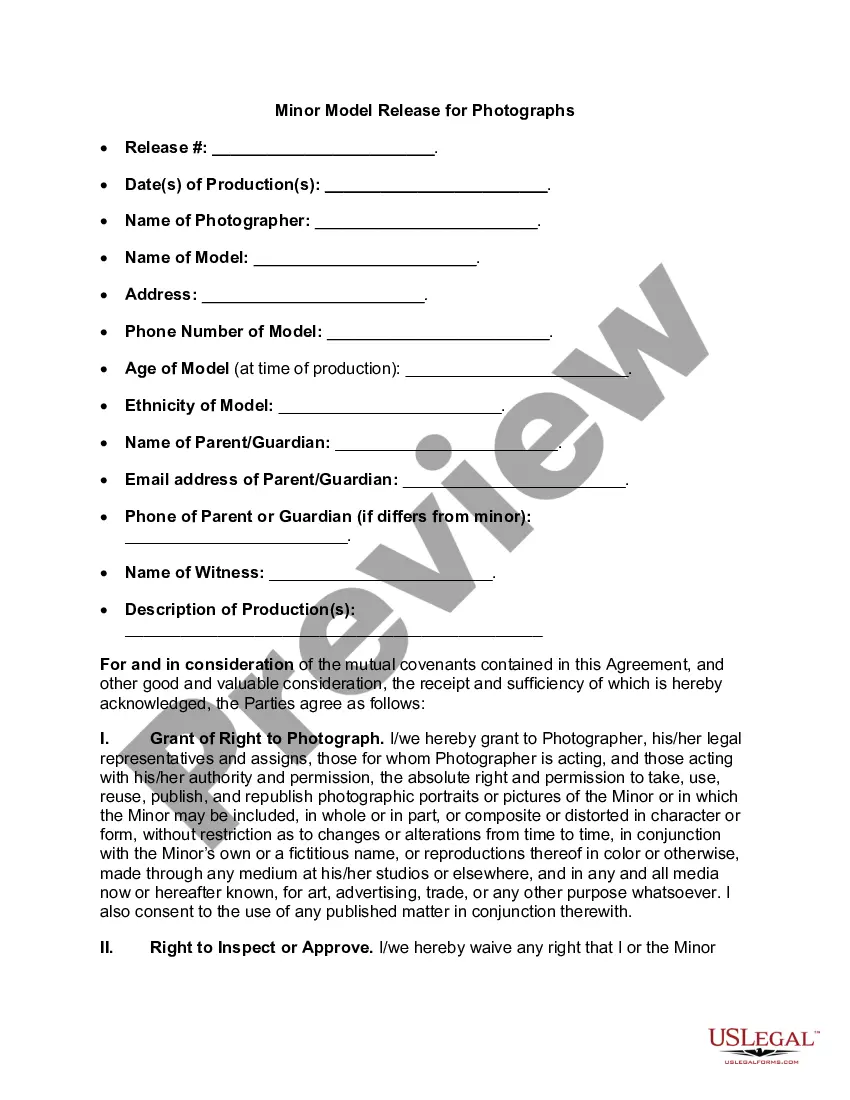


How to fill out Release By Model For Images Included In Web Site?
Managing legal documents and processes can be a lengthy addition to your overall day.
Invasion Transmit Privacy Without Permission and similar forms typically require you to search for them and comprehend how to fill them out accurately.
Thus, if you are handling financial, legal, or personal affairs, utilizing a comprehensive and user-friendly online library of forms when necessary will greatly assist.
US Legal Forms is the leading online platform for legal templates, providing over 85,000 state-specific forms and a variety of resources to help you complete your documents swiftly.
Is it your first time using US Legal Forms? Sign up and create your account in just a few minutes to access the form library and Invasion Transmit Privacy Without Permission. Then, follow the steps below to complete your form: Ensure you have identified the correct form using the Review feature and reading the form description. Choose Buy Now when prepared, and select the subscription plan that suits you best. Click Download then complete, sign, and print the form. US Legal Forms has twenty-five years of experience assisting clients with their legal documents. Find the form you need today and streamline any process effortlessly.
- Explore the collection of relevant documents available to you with just one click.
- US Legal Forms supplies state- and county-specific forms accessible at any time for download.
- Protect your document management processes with a premium service that enables you to assemble any form in a few minutes without additional or hidden charges.
- Simply Log In to your account, locate Invasion Transmit Privacy Without Permission and obtain it immediately within the My documents section.
- You can also access previously downloaded forms.
Form popularity
FAQ
To prove invasion of privacy, you need to demonstrate that your personal information was disclosed without your consent. This may involve gathering evidence such as witness statements, documentation of the unauthorized disclosure, or instances of harm caused by the violation. Establishing a clear connection between the act and the infringement on your rights is crucial. If you face challenges, consider using platforms like US Legal Forms to find resources that can assist you in navigating the complexities of invasion transmit privacy without permission.
An invasion of privacy occurs when someone's personal space or information is violated without their consent. This can include unauthorized surveillance, sharing private information, or publicizing personal details without permission. Essentially, if someone transmits your private information without your permission, it qualifies as an invasion of privacy. Understanding these nuances can help you recognize and address issues related to invasion transmit privacy without permission.
Yes, invading someone's privacy is often illegal and can lead to serious legal consequences. Laws vary by state, but generally, actions that transmit privacy without permission are subject to civil lawsuits or criminal charges. If you feel your privacy has been violated, it is wise to consult with legal professionals or resources like US Legal Forms for assistance in pursuing justice.
Invasion of privacy occurs when someone intentionally intrudes upon your personal life without permission. This can happen through unauthorized surveillance, sharing private information, or even through online actions. If you believe someone has invaded your privacy, it is essential to document the incidents. Consider seeking guidance from platforms like US Legal Forms to understand your options and protect your rights.
Winning an invasion of privacy case requires establishing that the invasion transmit privacy without permission has occurred and demonstrating the damages you have suffered as a result. You will need to present compelling evidence, including documentation and witness accounts, to support your claims. Engaging with a legal expert can help streamline this process and enhance your chances of success. UsLegalForms offers various legal resources and templates to aid you in building a strong case.
The four acts that typically qualify as an invasion of privacy include intrusion upon seclusion, appropriation of name or likeness, public disclosure of private facts, and false light. Each of these actions constitutes a breach of personal privacy, particularly when they involve invasion transmit privacy without permission. Understanding these acts can be crucial in identifying if your rights have been violated. Legal resources from UsLegalForms can provide guidance on how to navigate these issues effectively.
To prove invasion of privacy, you must demonstrate that someone has invaded your personal space or information without your consent. This often involves showing that the invasion transmit privacy without permission occurred through unauthorized actions, such as surveillance or sharing private details. Documentation, witness testimonies, and clear evidence can strengthen your case. Utilizing platforms like UsLegalForms can help you gather the necessary legal documents to support your claim.