Testamentary Special Needs Trust With Life Insurance
Description
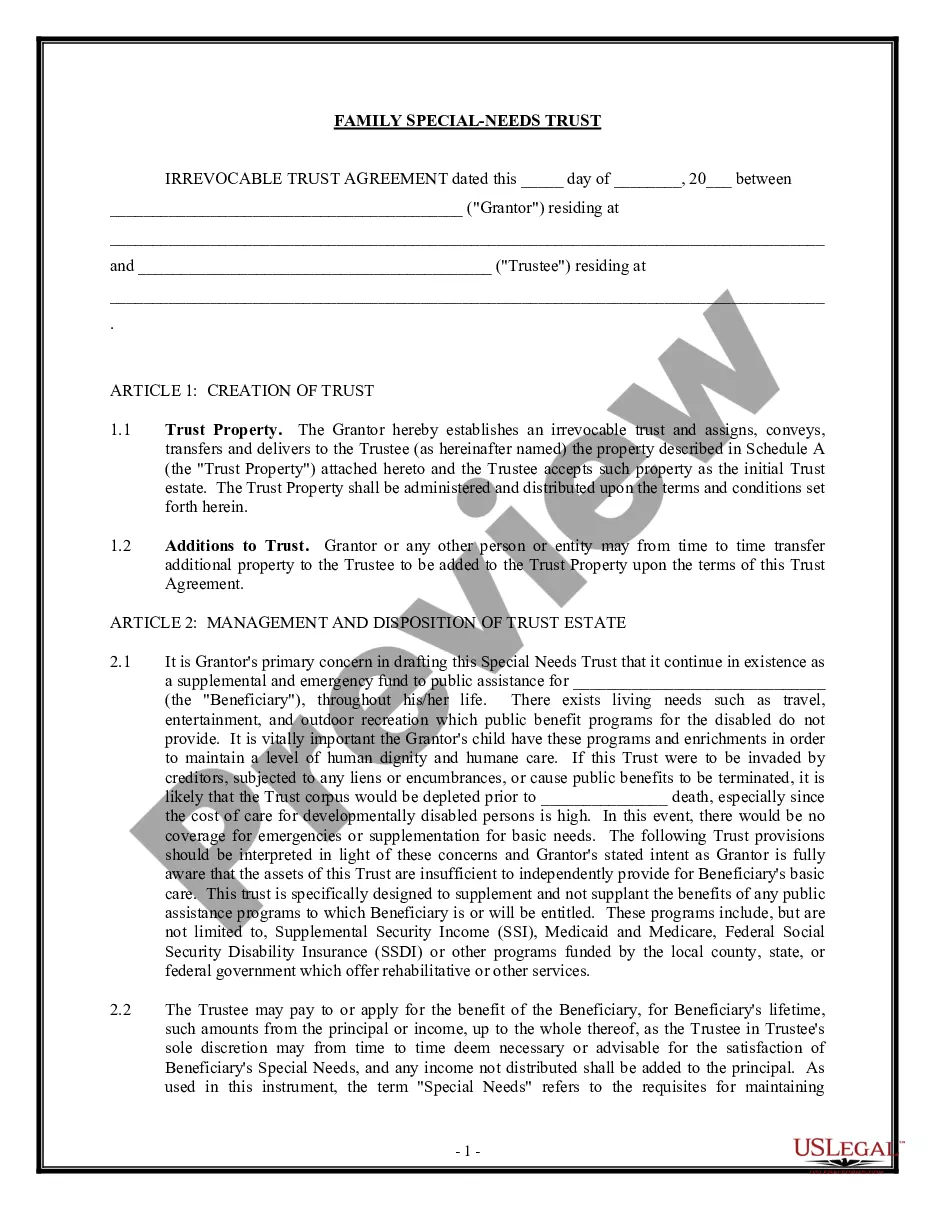
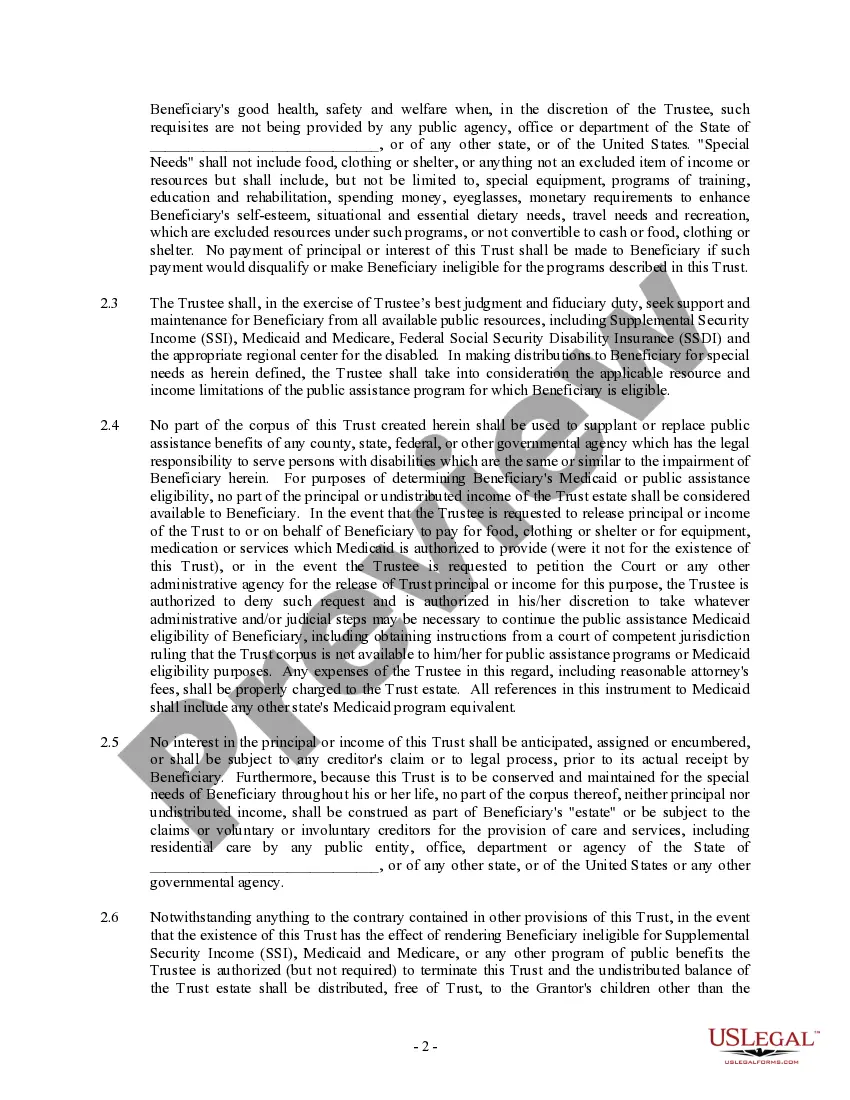
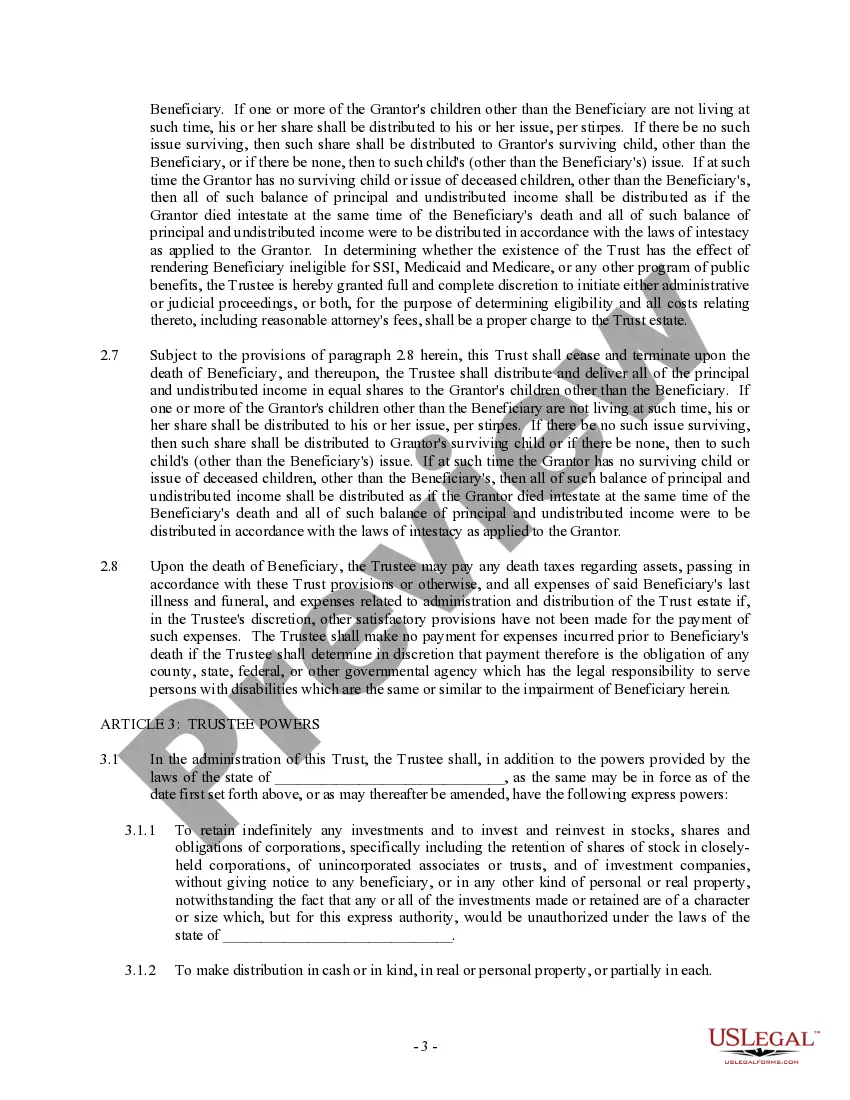
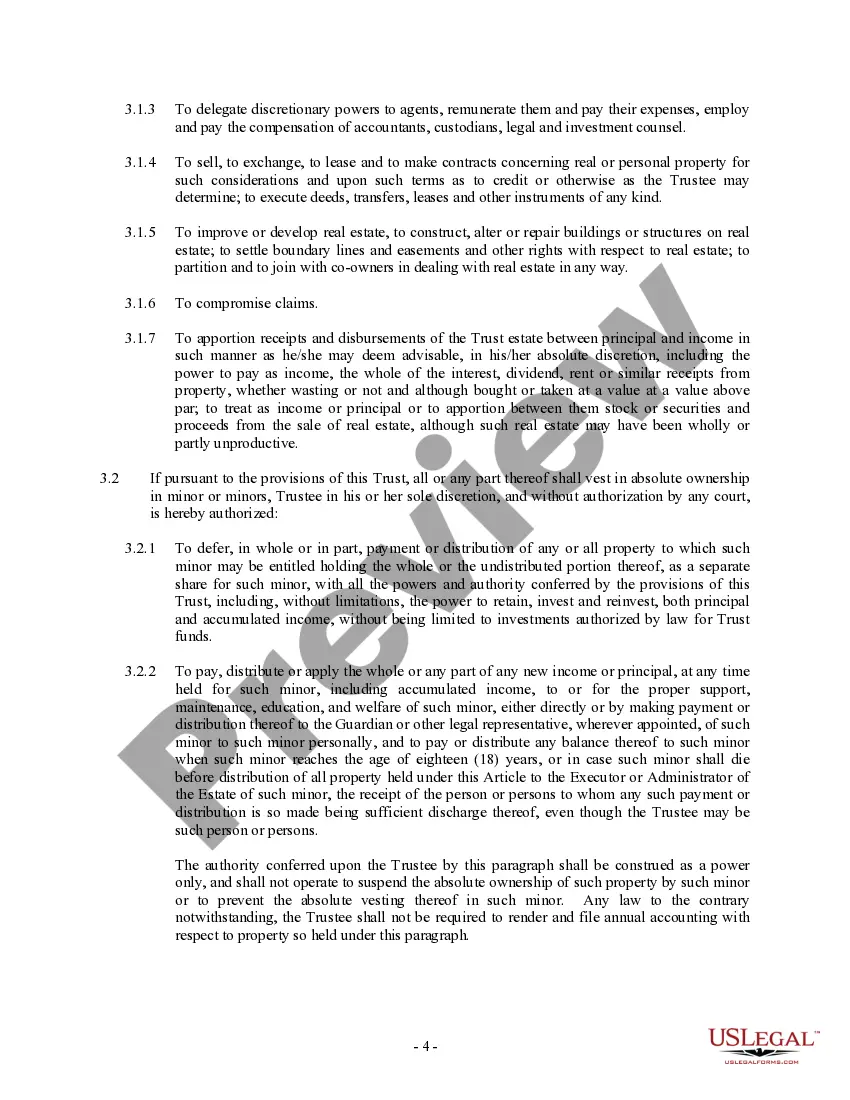
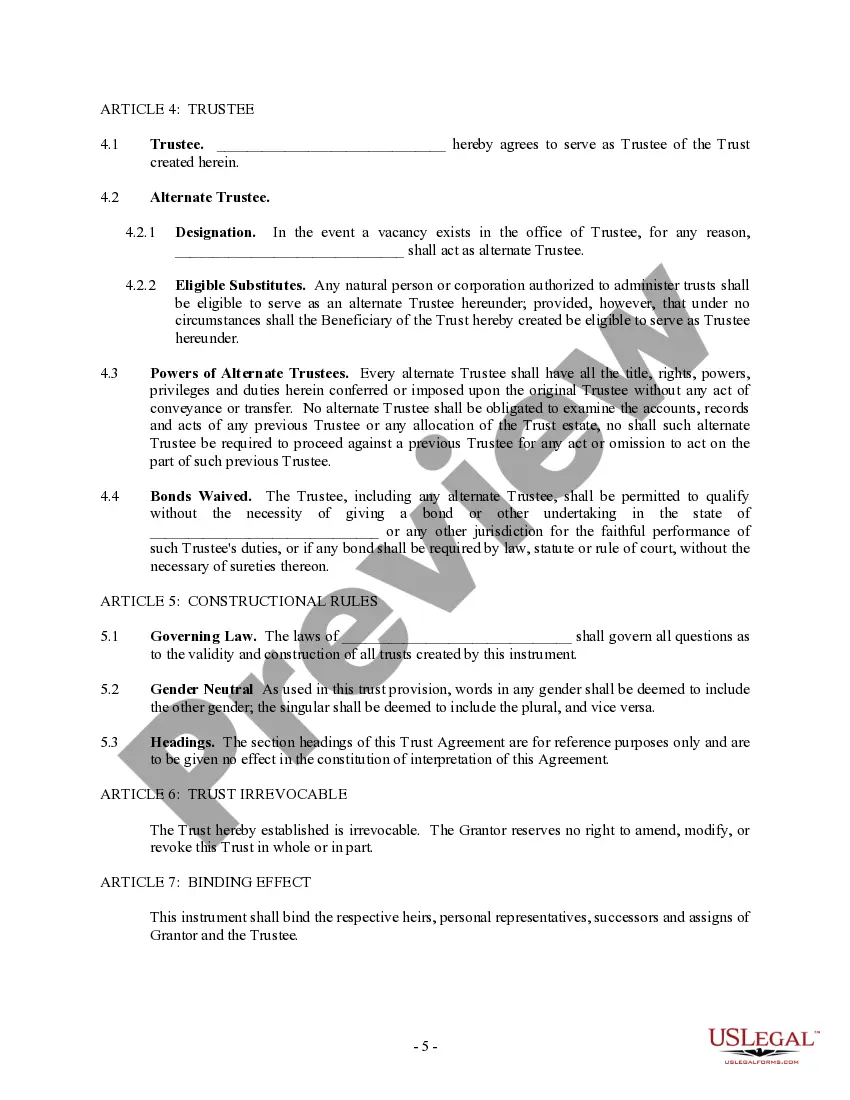
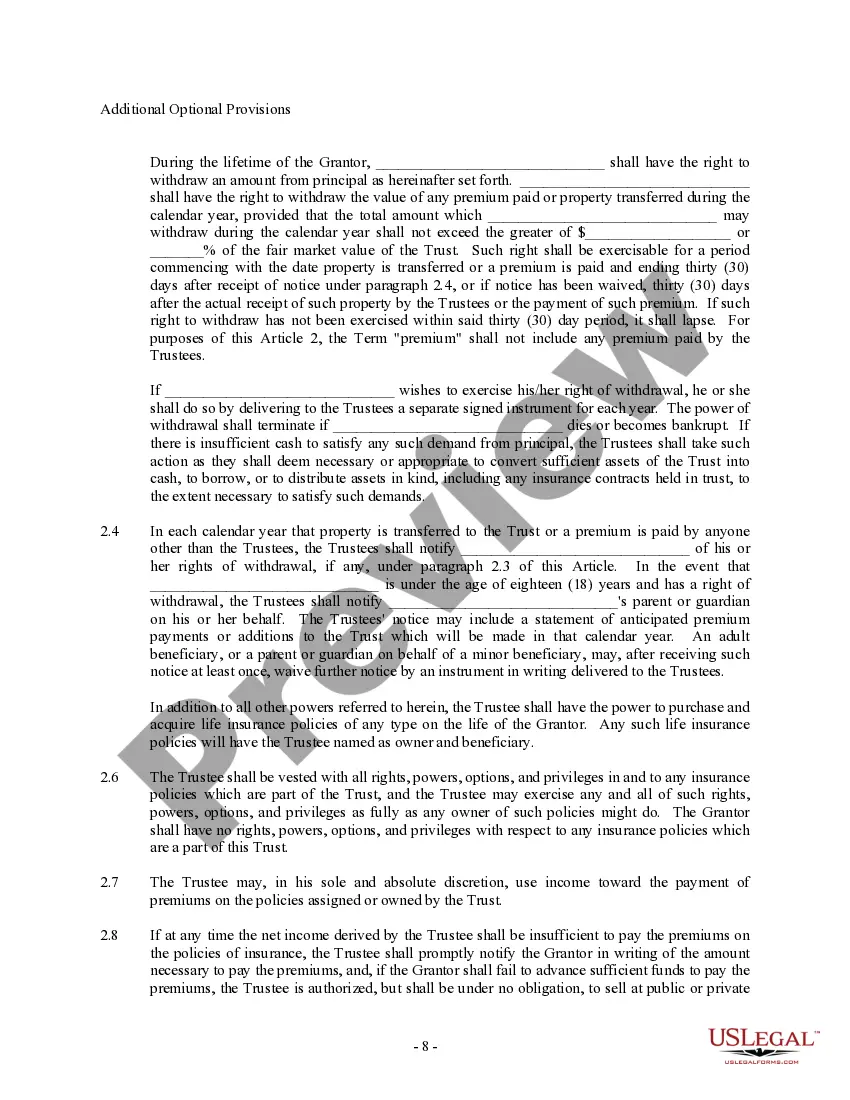
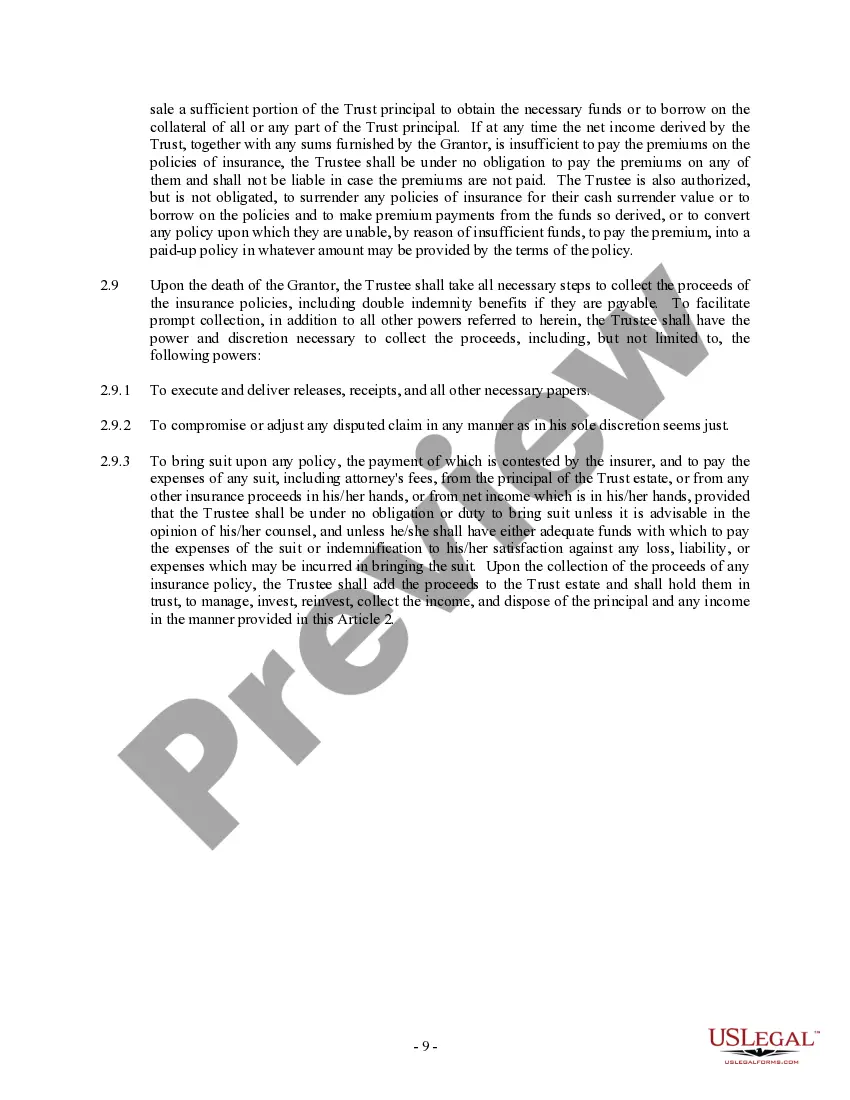
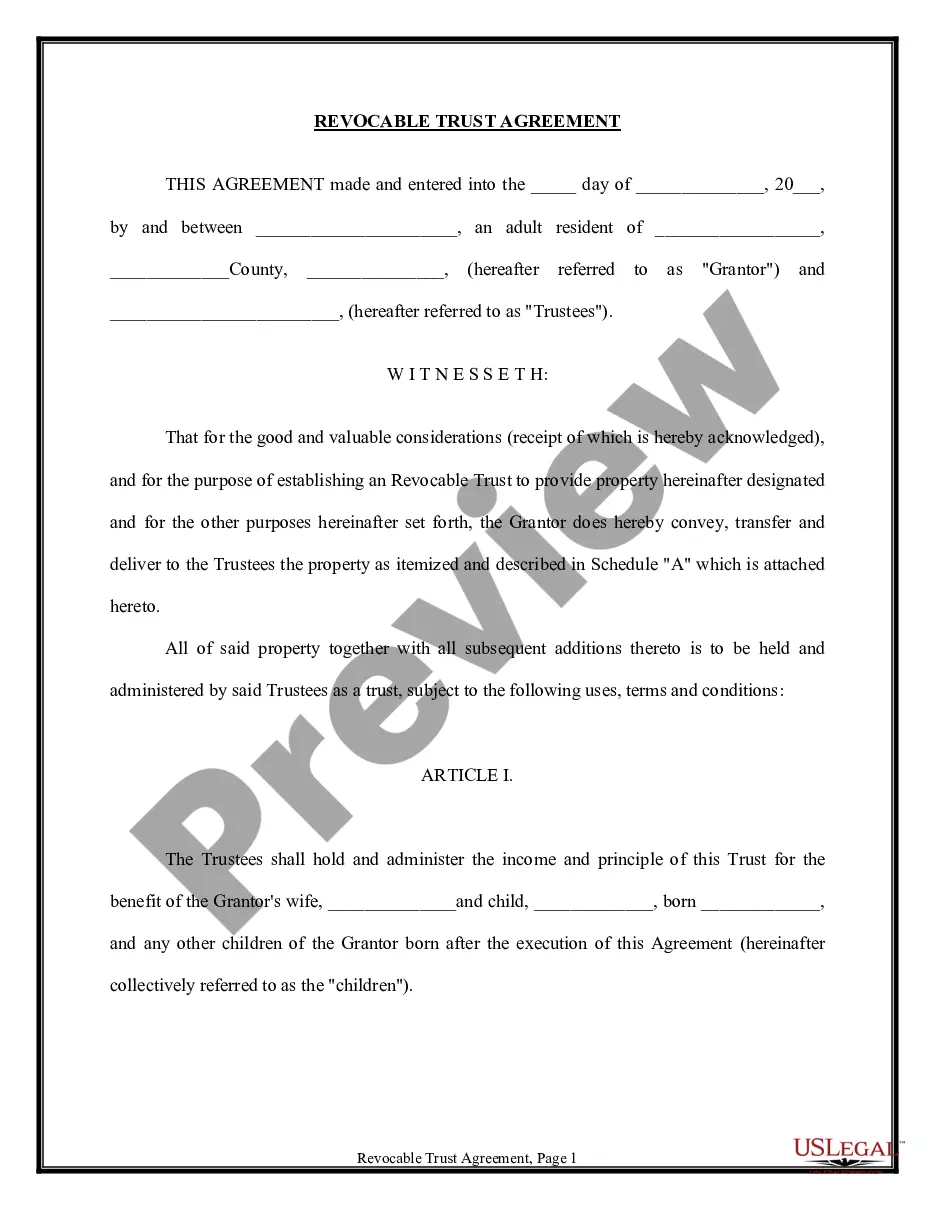
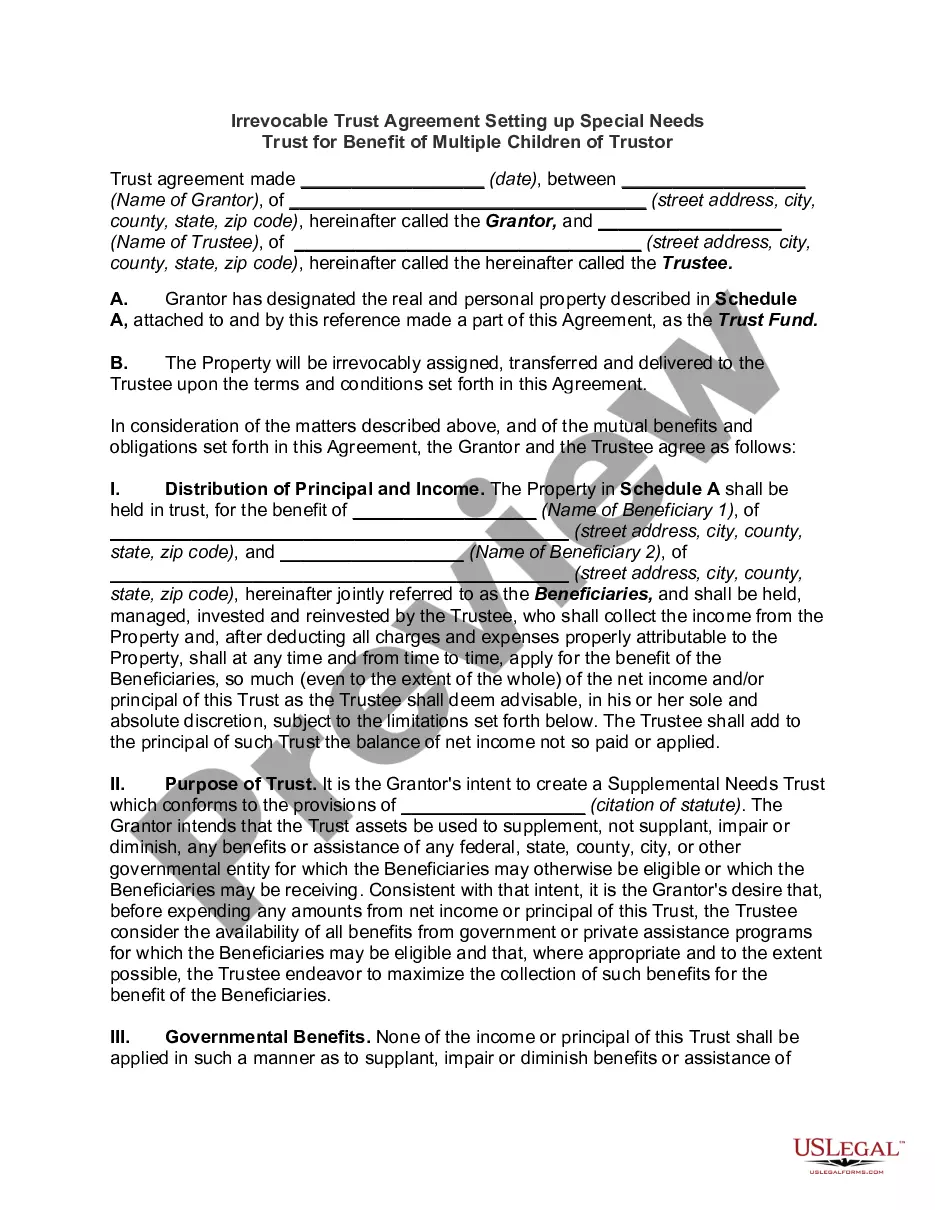
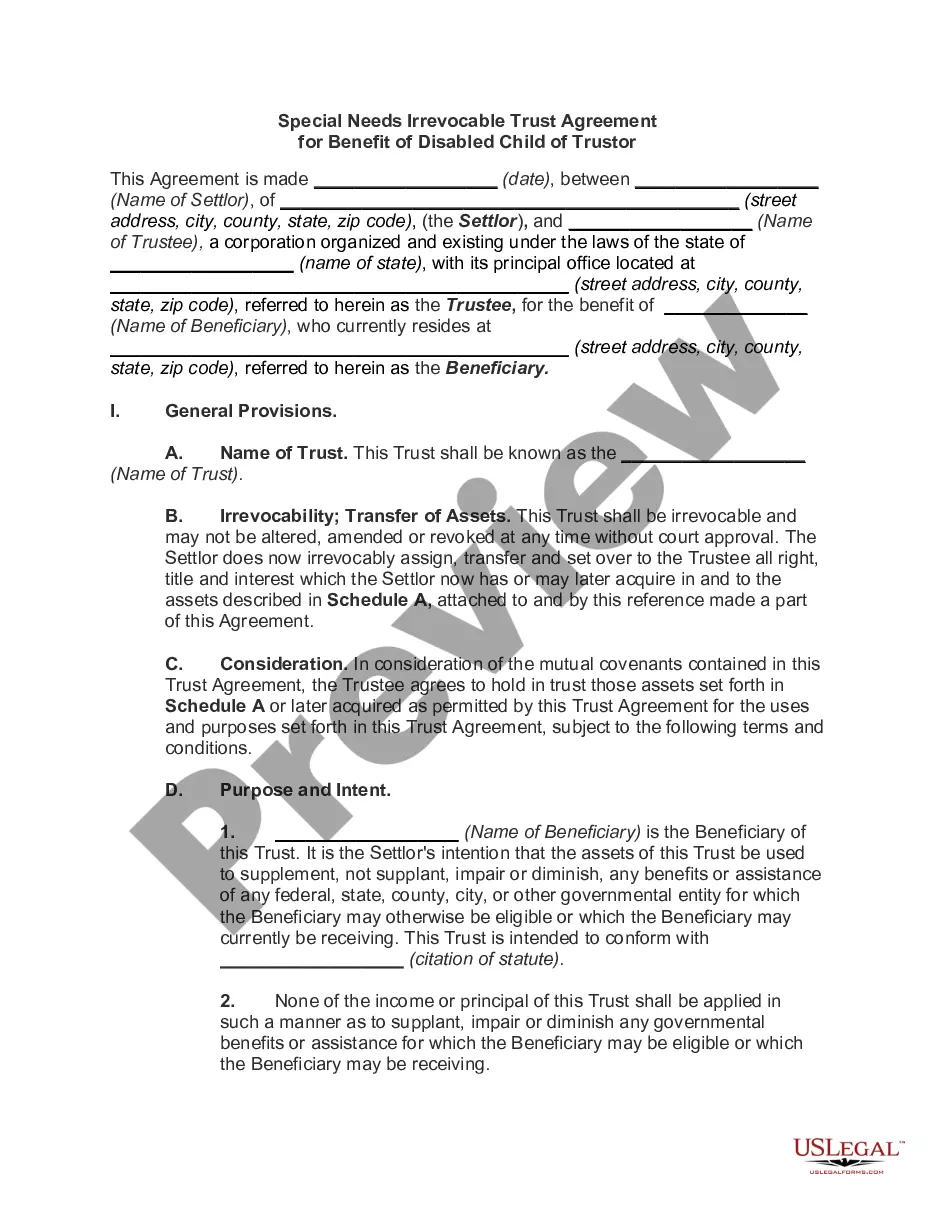
Get your form ready online
Our built-in tools help you complete, sign, share, and store your documents in one place.
Make edits, fill in missing information, and update formatting in US Legal Forms—just like you would in MS Word.
Download a copy, print it, send it by email, or mail it via USPS—whatever works best for your next step.
Sign and collect signatures with our SignNow integration. Send to multiple recipients, set reminders, and more. Go Premium to unlock E-Sign.
If this form requires notarization, complete it online through a secure video call—no need to meet a notary in person or wait for an appointment.
We protect your documents and personal data by following strict security and privacy standards.

Make edits, fill in missing information, and update formatting in US Legal Forms—just like you would in MS Word.

Download a copy, print it, send it by email, or mail it via USPS—whatever works best for your next step.

Sign and collect signatures with our SignNow integration. Send to multiple recipients, set reminders, and more. Go Premium to unlock E-Sign.

If this form requires notarization, complete it online through a secure video call—no need to meet a notary in person or wait for an appointment.

We protect your documents and personal data by following strict security and privacy standards.
Looking for another form?




How to fill out Trust Agreement - Family Special Needs?
Dealing with legal paperwork and processes can be an extensive addition to your daily schedule.
Testamentary Special Needs Trust With Life Insurance and similar documents often necessitate that you locate them and comprehend how to fill them out accurately.
As a result, whether you are managing financial, legal, or personal issues, utilizing a thorough and practical online directory of forms at your disposal will significantly help.
US Legal Forms is the premier online platform for legal templates, providing over 85,000 state-specific documents along with multiple resources to help you complete your paperwork easily.
Simply Log In to your account, locate Testamentary Special Needs Trust With Life Insurance, and download it immediately from the My documents section. You can also access forms you have previously downloaded.
- Explore the array of relevant documents available to you with just one click.
- US Legal Forms offers state- and county-specific forms accessible at any time for download.
- Protect your document management tasks with a high-quality service that enables you to prepare any form within minutes with no extra or hidden charges.
Form popularity
FAQ
If you are struggling with debt and debt collectors, Farmer & Morris Law, PLLC can help. As soon as you use the 11-word phrase ?please cease and desist all calls and contact with me immediately? to stop the harassment, call us for a free consultation about what you can do to resolve your debt problems for good.
You can sue the debt collector for violating the FDCPA. If you sue under the FDCPA and win, the debt collector must generally pay your attorney's fees and may also have to pay you damages. If you're having trouble with debt collection, you can submit a complaint with the CFPB.
Debt collectors have a certain number of years they can sue you and win to collect a debt. It's called the statute of limitations and it usually begins when you fail to make a payment on a debt. In South Dakota, the statute of limitations is six years.
The truth is that there are no magic words to stop a debt collector from collecting the debt. In case you are wondering what the 11 word phrase to stop debt collectors is supposed to be its ?Please cease and desist all calls and contact with me immediately.?
You have the right to send what's referred to as a ?drop dead letter. '' It's a cease-and-desist motion that will prevent the collector from contacting you again about the debt. Be aware that you still owe the money, and you can be sued for the debt.
Don't provide personal or sensitive financial information Never give out or confirm personal or sensitive financial information ? such as your bank account, credit card, or full Social Security number ? unless you know the company or person you are talking with is a real debt collector.
The Fair Debt Collection Practices Act was signed into law by President Jimmy Carter on September 20, 1977. The act prohibits certain debt collection practices, and requires debt collectors to identify themselves when communicating with a consumer and to validate the debt at the consumer's request.
In the new changes to Regulation F, the frequency at which a collections agency can contact a consumer has changed. This change, presented in Section 1006.14B21A, addresses telephone call frequency and restricts agencies to contacting a consumer seven times within seven consecutive days.