3rd Party Special Needs Trust Form For Colorado

Description
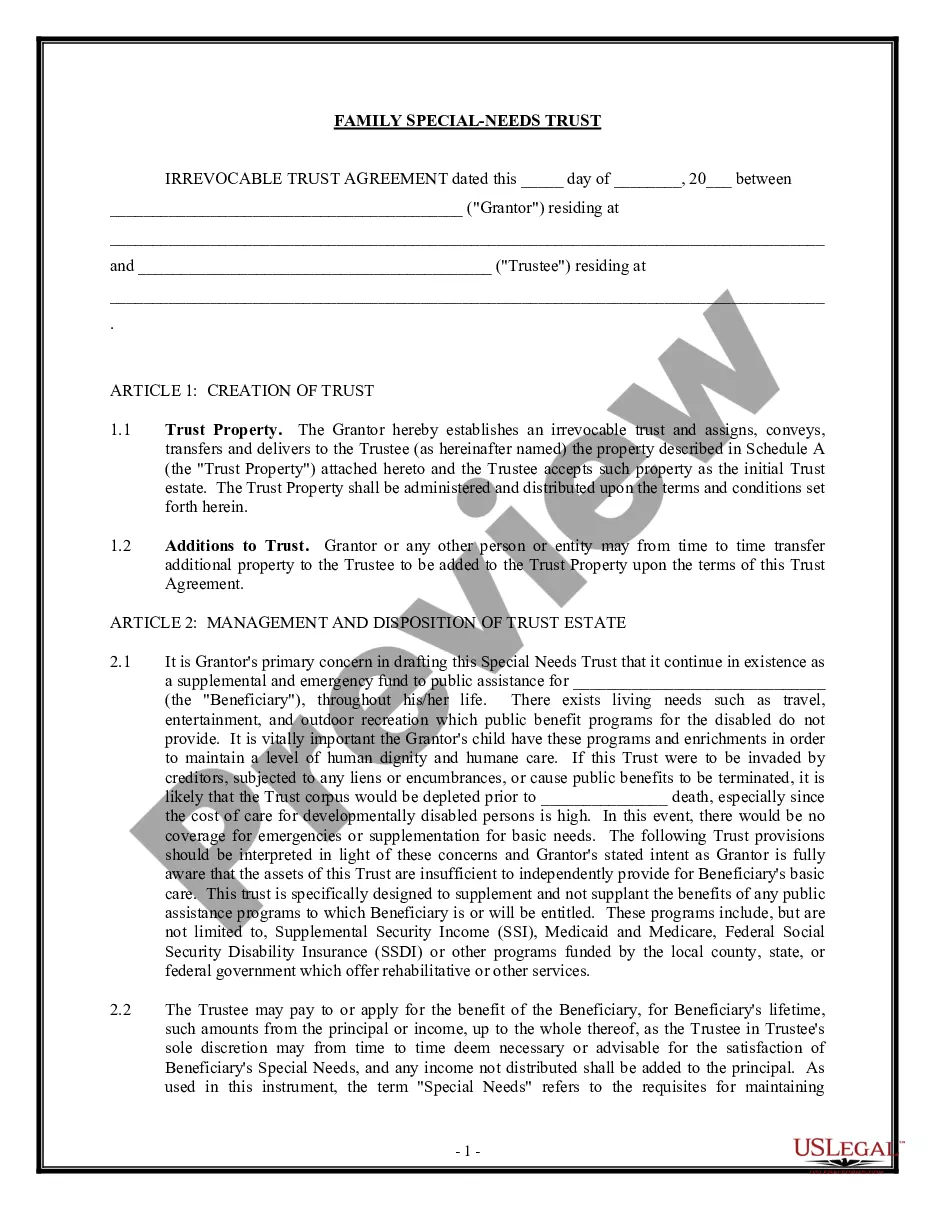
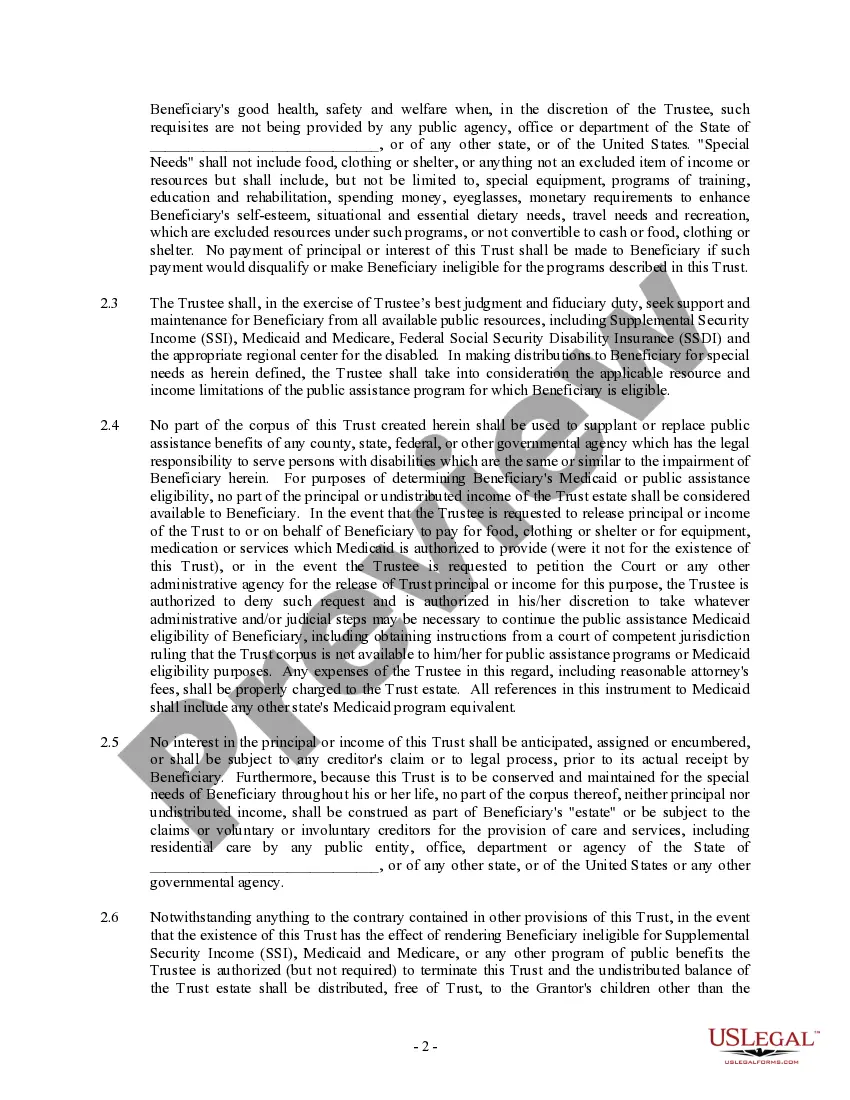
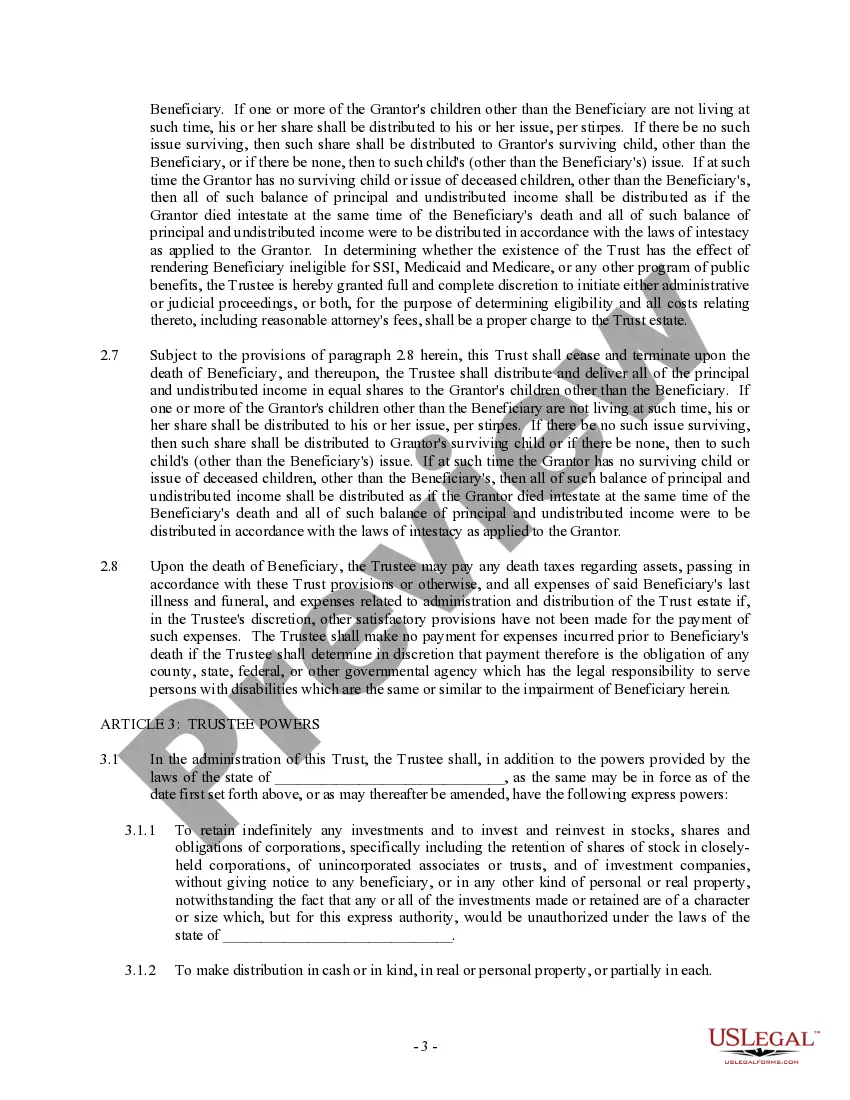
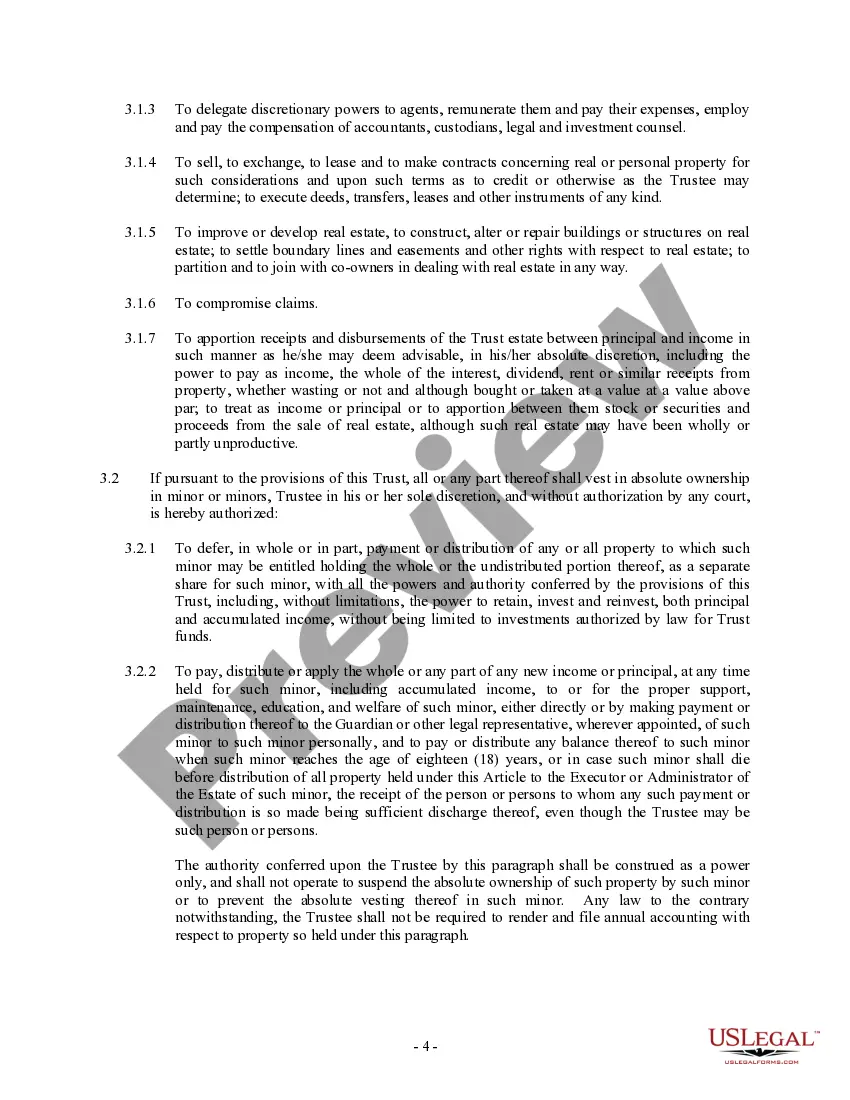
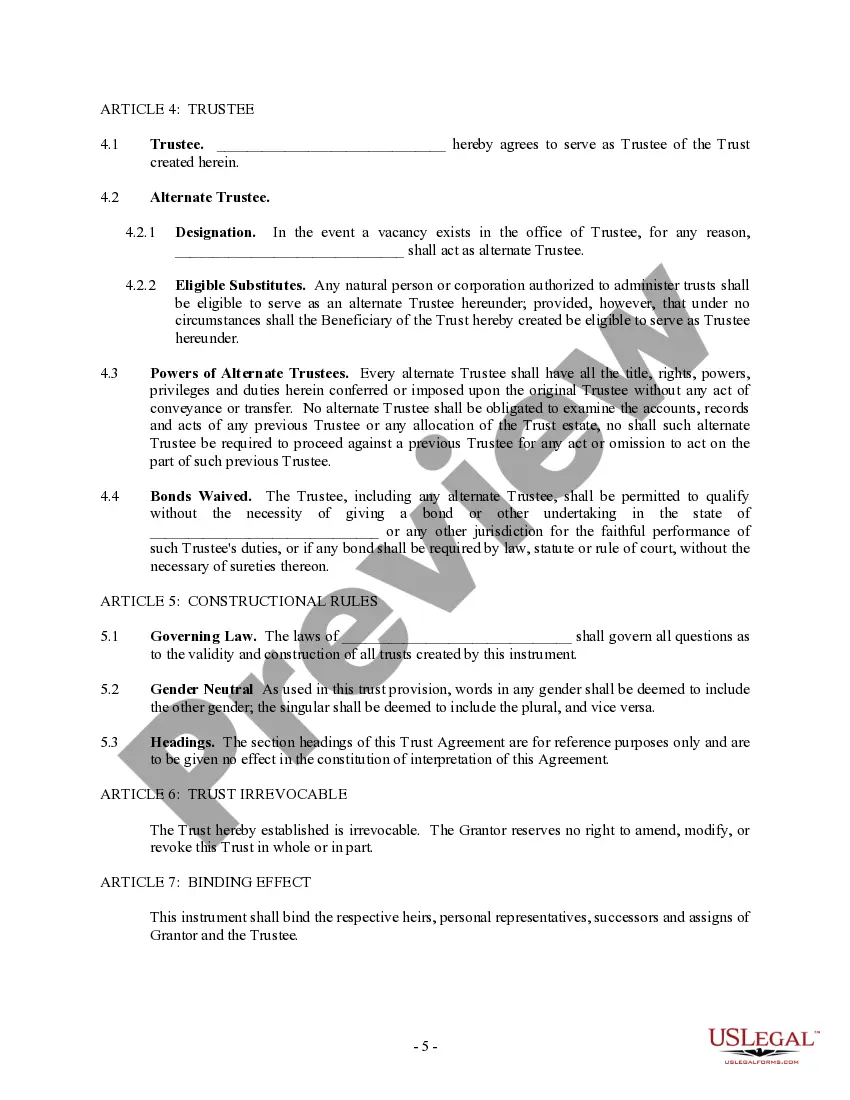
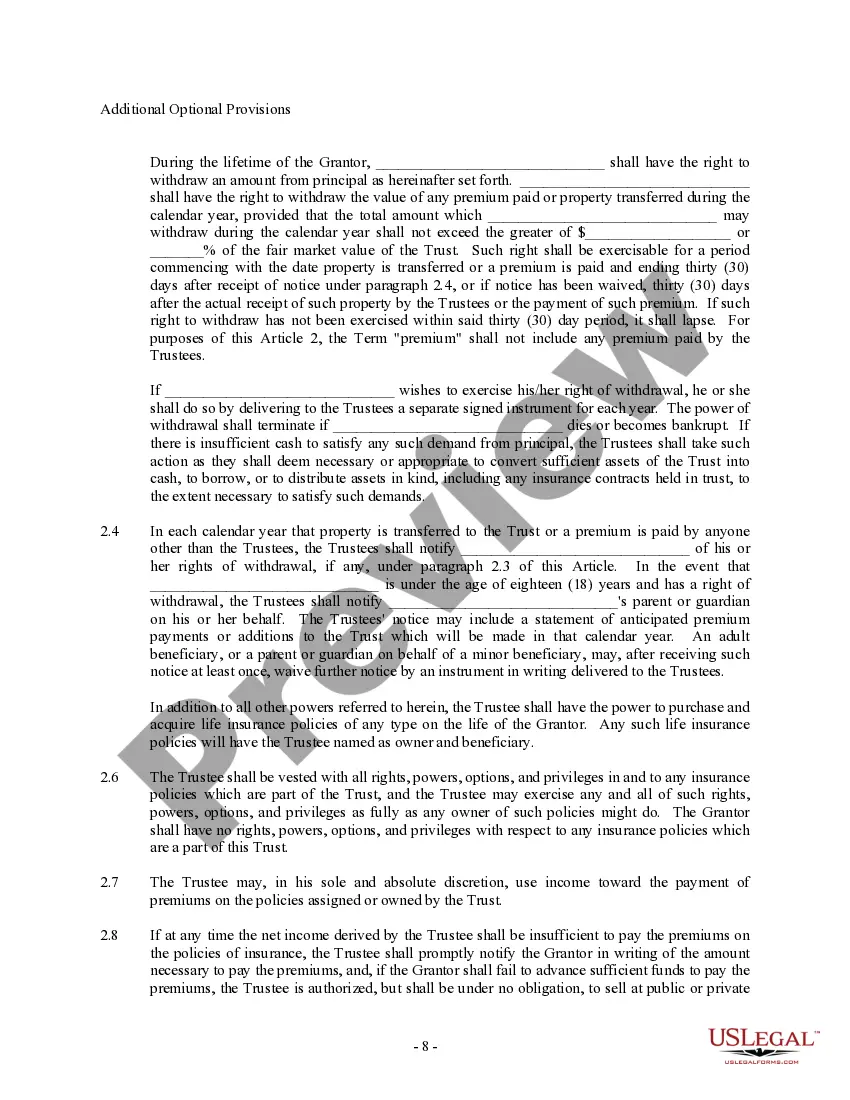
Get your form ready online
Our built-in tools help you complete, sign, share, and store your documents in one place.
Make edits, fill in missing information, and update formatting in US Legal Forms—just like you would in MS Word.
Download a copy, print it, send it by email, or mail it via USPS—whatever works best for your next step.
Sign and collect signatures with our SignNow integration. Send to multiple recipients, set reminders, and more. Go Premium to unlock E-Sign.
If this form requires notarization, complete it online through a secure video call—no need to meet a notary in person or wait for an appointment.
We protect your documents and personal data by following strict security and privacy standards.

Make edits, fill in missing information, and update formatting in US Legal Forms—just like you would in MS Word.

Download a copy, print it, send it by email, or mail it via USPS—whatever works best for your next step.

Sign and collect signatures with our SignNow integration. Send to multiple recipients, set reminders, and more. Go Premium to unlock E-Sign.

If this form requires notarization, complete it online through a secure video call—no need to meet a notary in person or wait for an appointment.

We protect your documents and personal data by following strict security and privacy standards.
Looking for another form?

How to fill out Trust Agreement - Family Special Needs?
Legal administration can be exasperating, even for the most adept professionals.
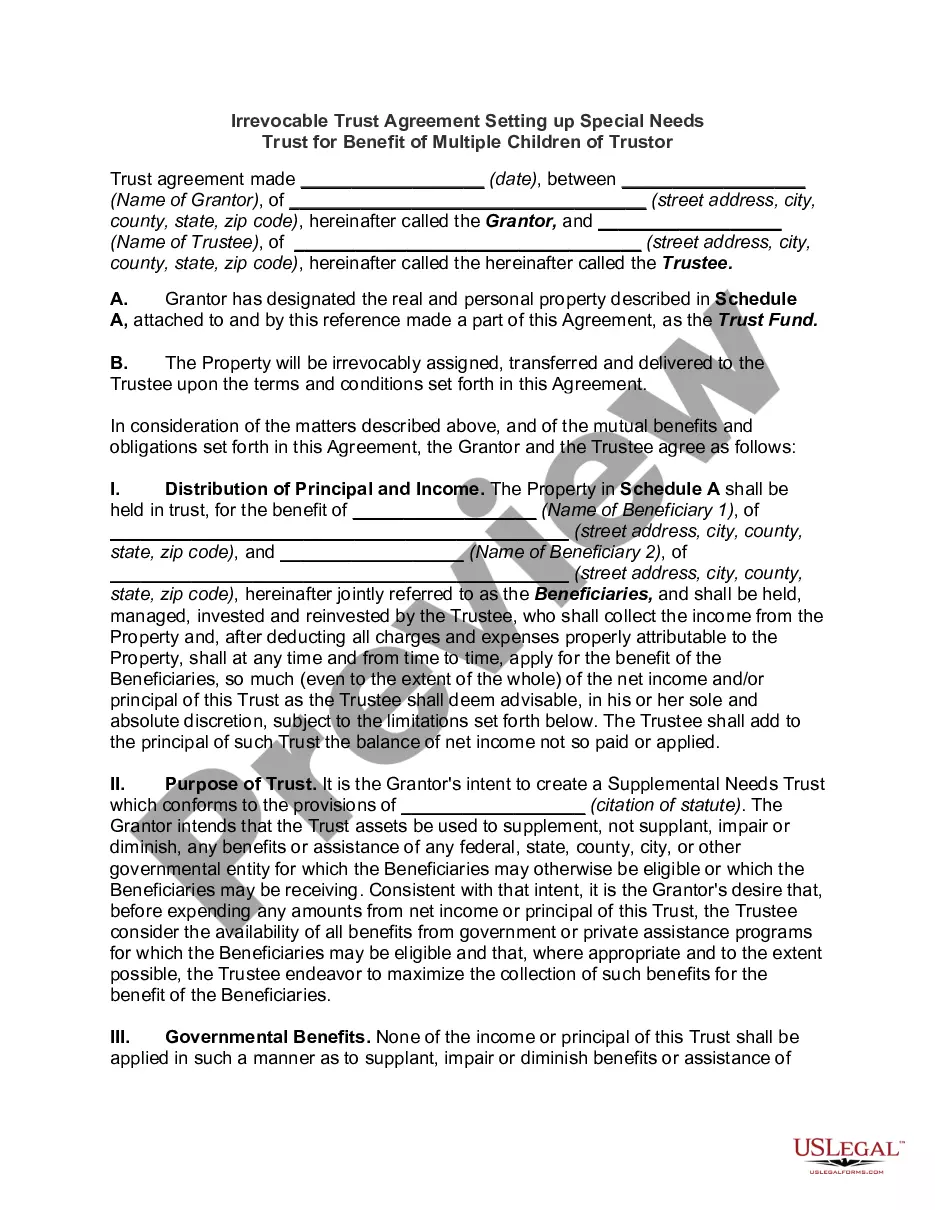
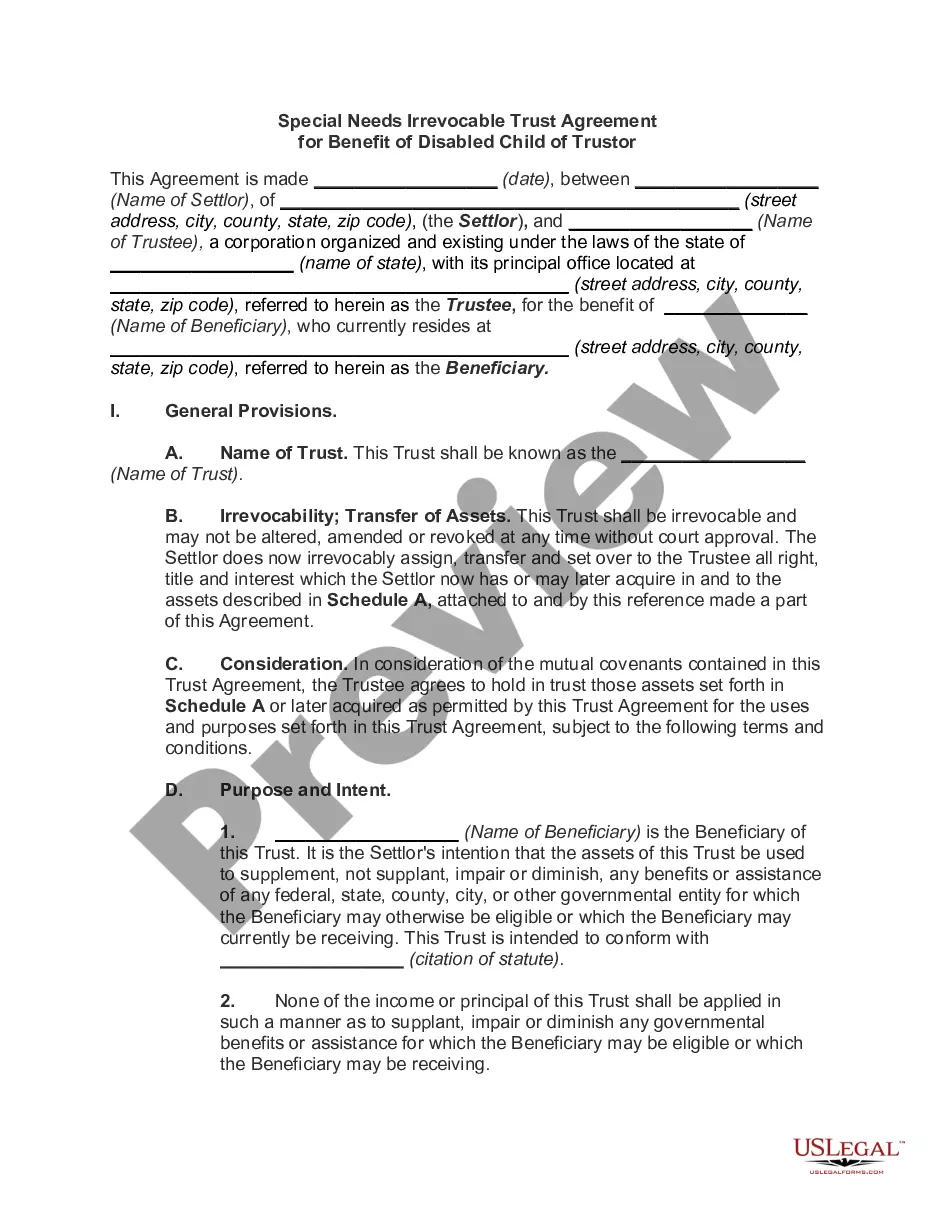
When you are searching for a 3rd Party Special Needs Trust Form For Colorado and don’t have the opportunity to invest time in finding the accurate and current version, the procedures can be challenging.
US Legal Forms accommodates any needs you may have, ranging from personal to business documents, all in one location.
Utilize advanced tools to fill out and handle your 3rd Party Special Needs Trust Form For Colorado.
Here are the actions to take after finding the form you need: Confirm it is the correct form by previewing it and reviewing its details. Ensure that the template is accepted in your state or county. Click Buy Now when you are ready. Select a monthly subscription plan. Choose the format you need, and Download, complete, sign, print, and submit your documents. Enjoy the US Legal Forms online repository, backed by 25 years of experience and reliability. Transform your routine document management into a seamless and user-friendly experience today.
- Access a valuable repository of articles, guides, and resources pertinent to your situation and requirements.
- Conserve time and effort in searching for the documents you require, and use US Legal Forms’ sophisticated search and Review tool to obtain 3rd Party Special Needs Trust Form For Colorado.
- If you hold a monthly subscription, Log In to your US Legal Forms account, locate the form, and obtain it.
- Examine your My documents section to view the documents you have previously downloaded and to organize your files as needed.
- If this is your first experience with US Legal Forms, create a free account and gain unlimited access to all the features of the library.
- A robust online form repository could be a transformative tool for anyone aiming to manage these matters efficiently.
- US Legal Forms stands as a frontrunner in digital legal documents, offering more than 85,000 state-specific legal forms at any moment.
- With US Legal Forms, you can access localized legal and business documents.
Form popularity
FAQ
In these circumstances, the Form 1041 is very simple to complete. The trustee will check the box on Form 1041 indicating that the trust is a grantor trust and provide some general information about the trust (name, address, tax identification number, and the date the trust was established).
Third-Party Special Needs Trusts are established using assets from someone other than the individual living with disabilities. Typically established by a loved one while living or through specific language in a living will specifically designating funds to be placed into a Third-Party Trust.
Trusts generally are considered separate taxable entities for income tax purposes and the trustee must file an income tax return for the trust.
Third-Party Funded Trusts: A third party funded special needs trust is a trust which contains assets belonging to someone other than the beneficiary, such as a parent or other relative. These types of trust are typically established under the last will and testament of the parent.
If you name yourself trustee, you'll need someone to serve as the successor trustee for when you die. This will be the person to distribute your property after you've died, so make sure you trust the person. Create the trust document: You can do it yourself with an online program or get the help of a professional.