Claims Accidental For Theft
Description
Get your form ready online
Our built-in tools help you complete, sign, share, and store your documents in one place.
Make edits, fill in missing information, and update formatting in US Legal Forms—just like you would in MS Word.
Download a copy, print it, send it by email, or mail it via USPS—whatever works best for your next step.
Sign and collect signatures with our SignNow integration. Send to multiple recipients, set reminders, and more. Go Premium to unlock E-Sign.
If this form requires notarization, complete it online through a secure video call—no need to meet a notary in person or wait for an appointment.
We protect your documents and personal data by following strict security and privacy standards.

Make edits, fill in missing information, and update formatting in US Legal Forms—just like you would in MS Word.

Download a copy, print it, send it by email, or mail it via USPS—whatever works best for your next step.

Sign and collect signatures with our SignNow integration. Send to multiple recipients, set reminders, and more. Go Premium to unlock E-Sign.

If this form requires notarization, complete it online through a secure video call—no need to meet a notary in person or wait for an appointment.

We protect your documents and personal data by following strict security and privacy standards.
Looking for another form?








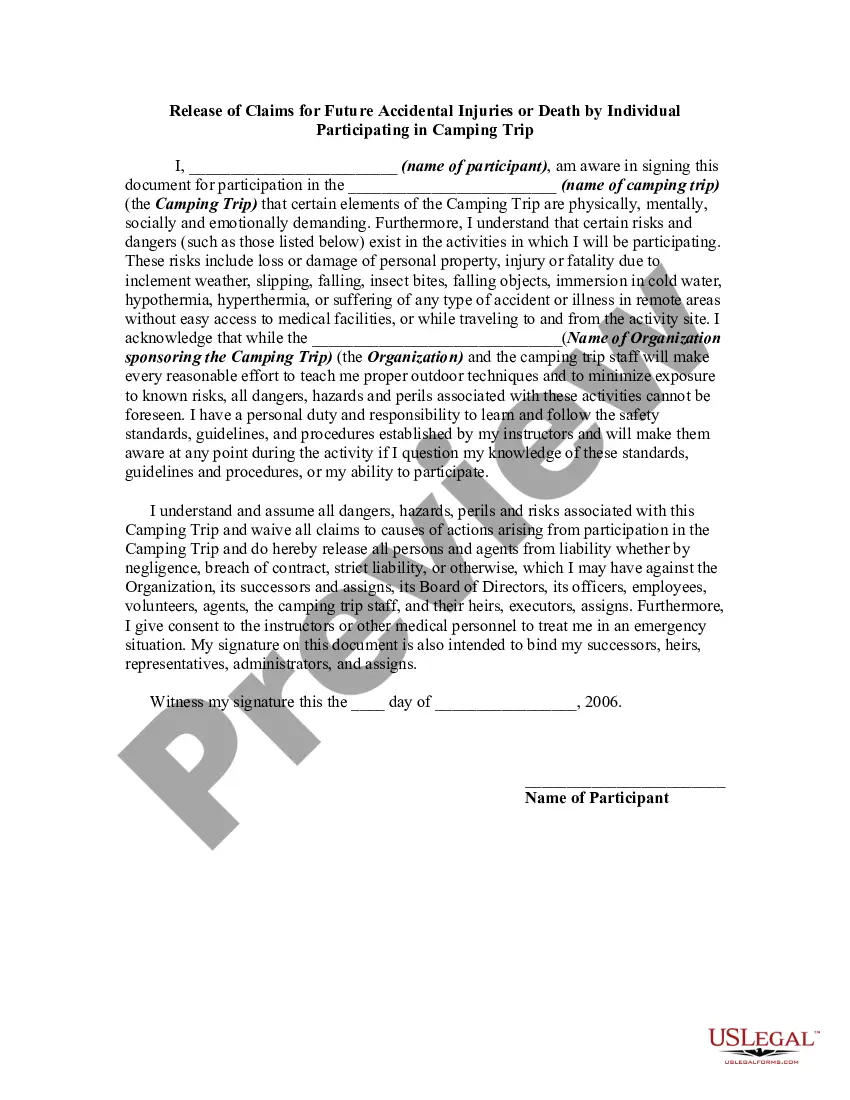
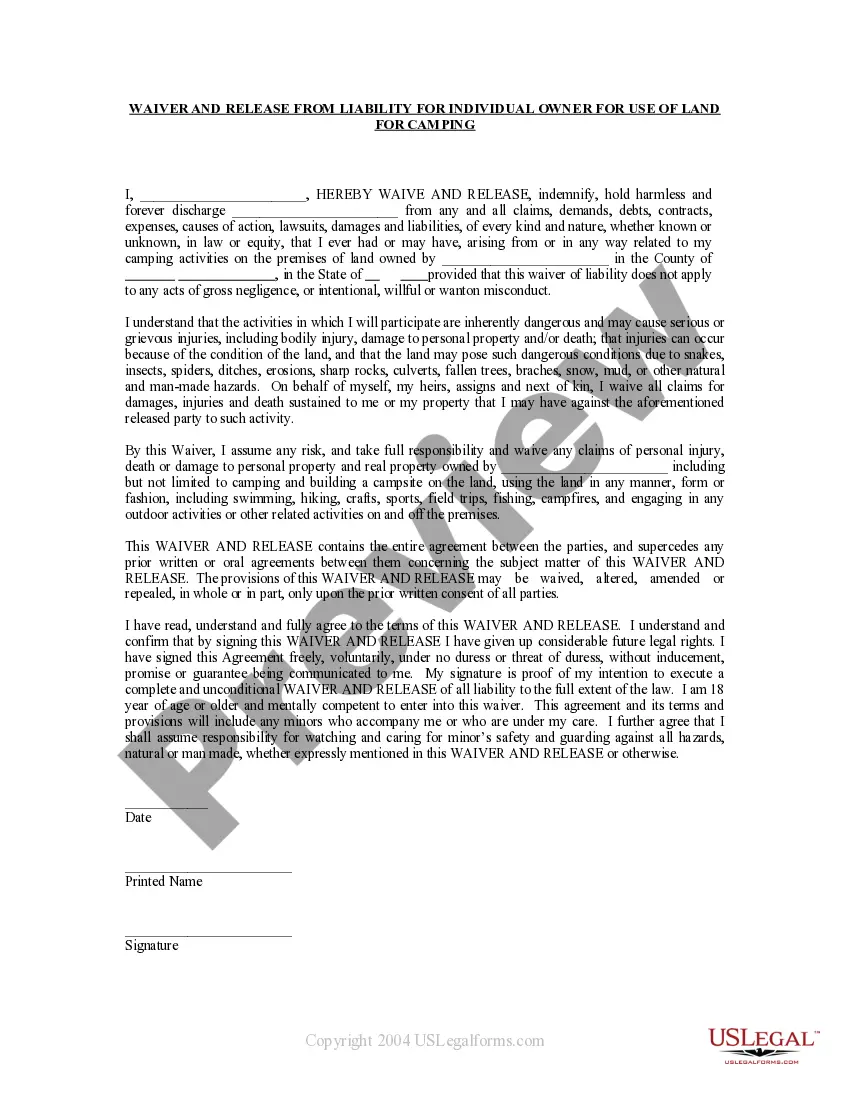
How to fill out Release Of Claims For Future Accidental Injuries Or Death By Individual Participating In Camping Trip?
- If you're an existing user, log into your account to retrieve your needed form template by clicking on the Download button. Ensure that your subscription is active; if not, renew it based on your chosen plan.
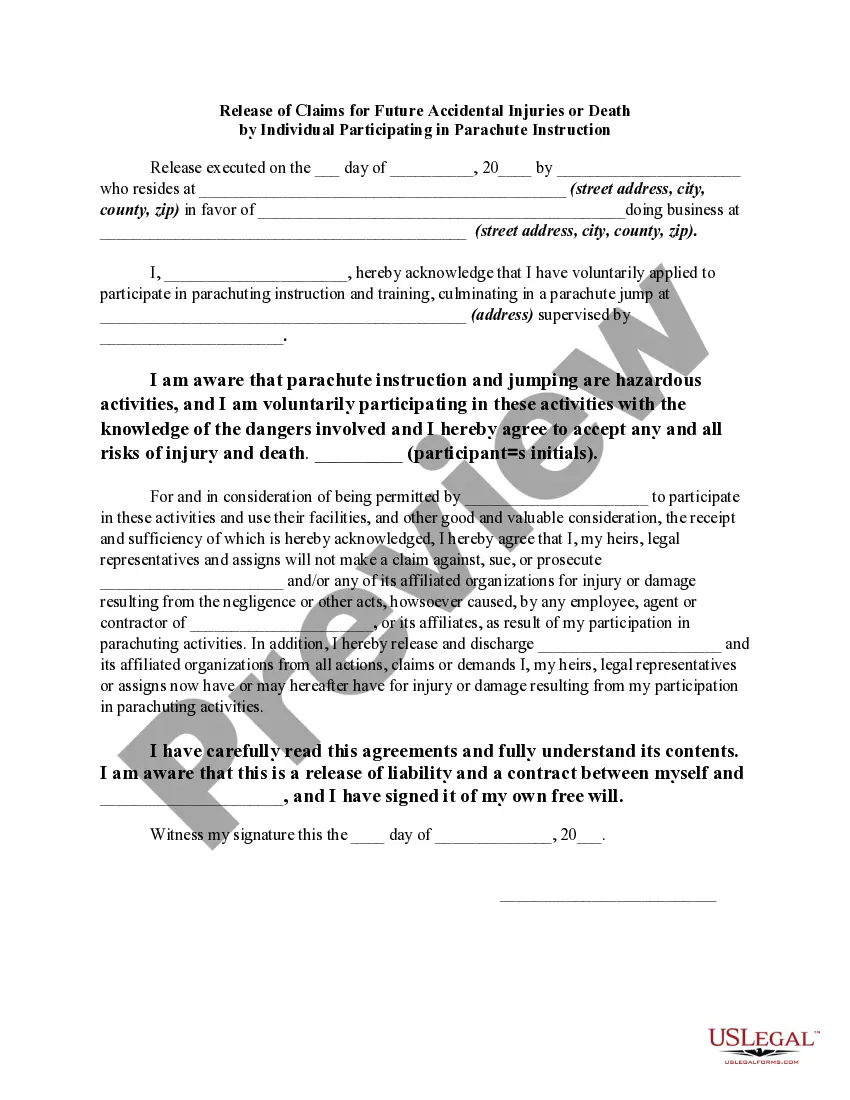
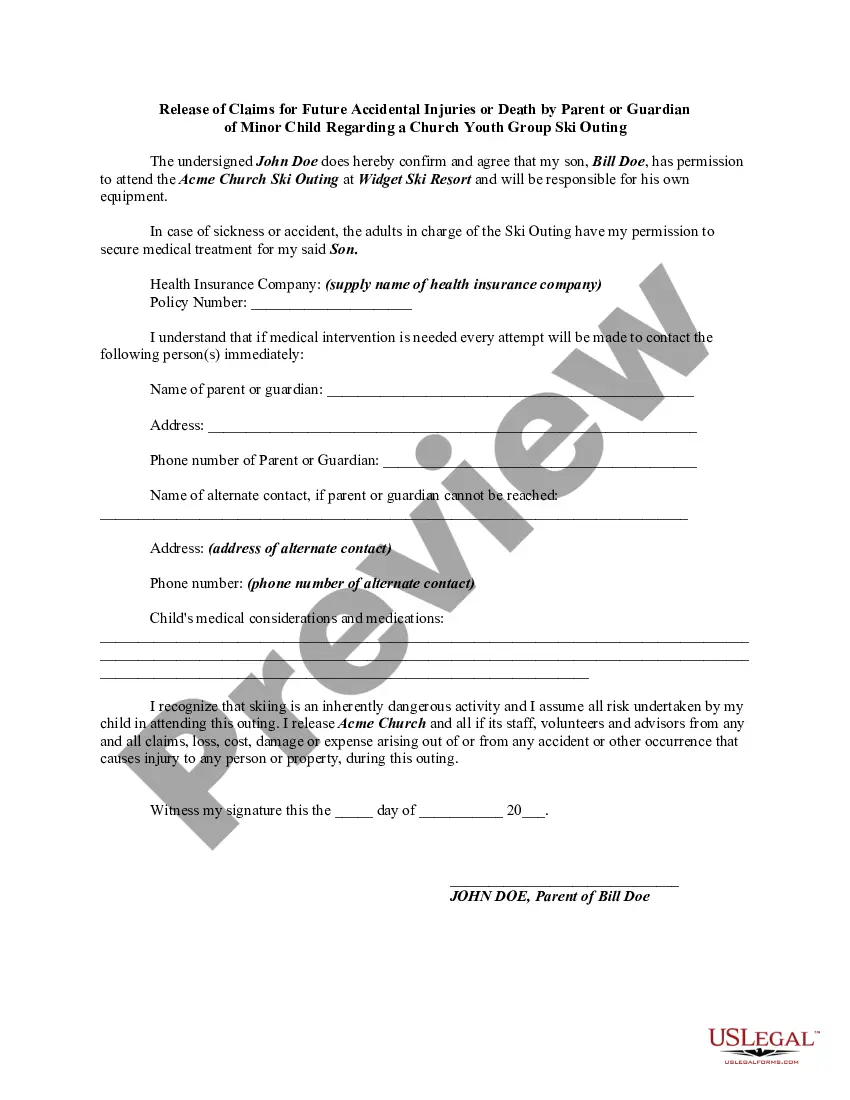
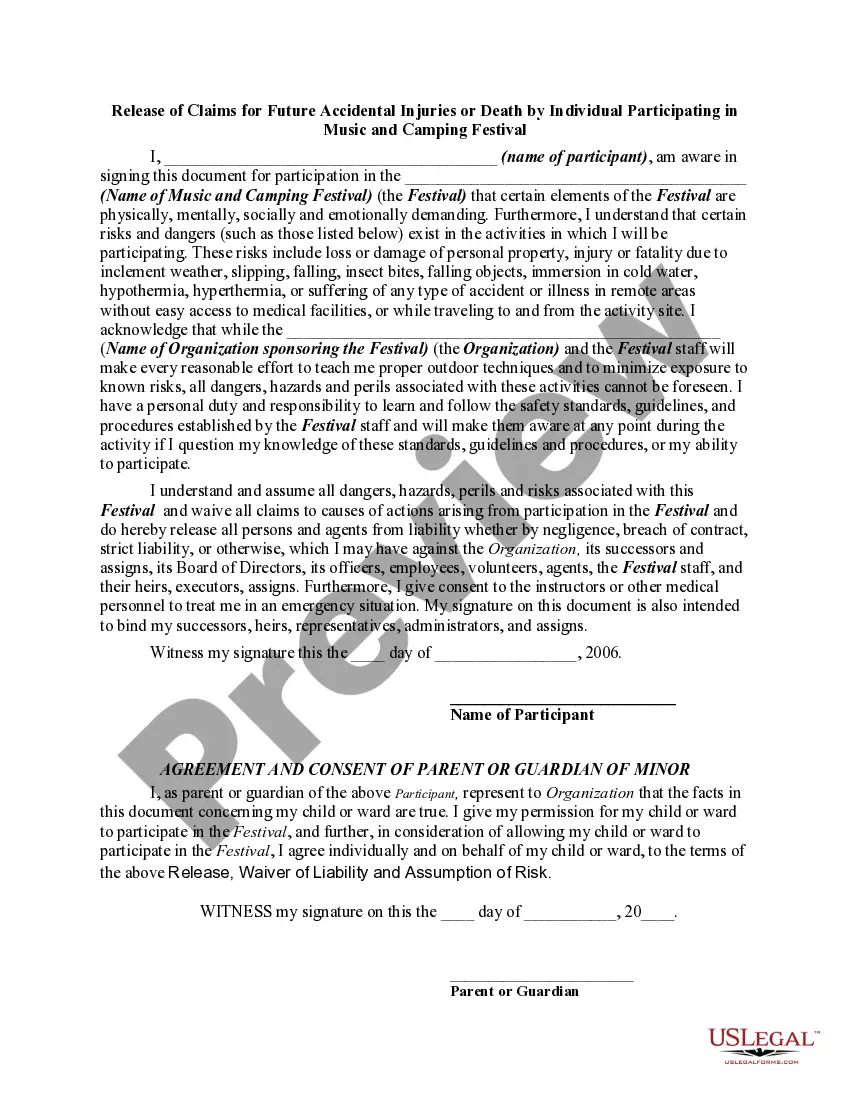
- For new users, start by checking the Preview mode and form description to confirm you’ve selected the correct form for your jurisdiction.
- If you need a different template, use the Search tab to find the appropriate forms that suit your requirements.
- Once you find the right document, click the Buy Now button and select your preferred subscription plan, creating an account for full access to our resources.
- Complete your purchase with your credit card or PayPal to secure your subscription.
- Download the template to your device, allowing you to complete it and access it anytime under the My Forms section of your profile.
In conclusion, US Legal Forms desires to empower you with the tools needed to handle legal documentation easily and effectively. With our vast collection and expert assistance, you're never alone in this process.
Start today by exploring our library and take the first step toward securing your legal needs!
Form popularity
FAQ
Filing a claims accidental for theft is not always necessary for every incident. You should evaluate the value of the stolen items against your deductible and determine if filing a claim makes financial sense. Sometimes, it might be more beneficial to handle smaller losses out of pocket to avoid premium increases. Consider consulting with professionals at uslegalforms for advice on the best steps to take regarding your particular situation.
Filing a claims accidental for theft can lead to an increase in your car insurance premiums, depending on your insurer's policies and your driving history. Many companies view claims as a risk factor, which may result in higher rates. However, every situation is unique, and you should discuss this possibility with your insurance agent. If you're concerned about this, exploring options or shopping around can help you find a policy that suits your needs.
The time frame for filing a claim after an accident can vary by state and insurance policy, often ranging from a few days to several years. It’s essential to file claims as soon as possible to avoid complications. Check your insurance policy for specific deadlines and ensure you adhere to them. This is particularly relevant for claims accidental for theft, where timing is crucial.
To claim an accidental claim, you start by contacting your insurance provider to initiate the process. Collect all relevant information, including documentation of the incident and costs incurred. Clearly explain the context of your claims accidental for theft, as accuracy is crucial. Your insurer will guide you through the necessary steps to complete the claim.
After an accident, avoid making statements that could unintentionally admit fault or minimize your situation. Stick to the facts without speculating or expressing opinions. Additionally, do not disclose your coverage or policy limits prematurely. Keeping these pointers in mind can help when filing claims accidental for theft.
Accidental damage typically does not cover theft unless specified in your policy. It generally pertains to damages caused unintentionally, while theft involves the unauthorized taking of property. Always review your policy details to understand the coverage limitations. Claims accidental for theft must be filed separately with specific guidelines.
If you are not at fault, you can file a claim through your own insurance or the other party’s insurer. Gather evidence, such as photos and witness information, to support your case. Once you report the claim, the insurer will investigate and determine the compensation owed to you. This is especially useful when navigating claims accidental for theft.
To claim an accidental claim, first gather all pertinent documentation related to the incident. This includes receipts, photos, and any witness statements. Contact your insurance provider to initiate the claim, providing them with the necessary details. It’s essential to communicate clearly about the context of your claims accidental for theft to ensure proper handling.
Various claims can lead to increased premiums, including those related to accidents, theft, or liability. Theft claims, particularly in the context of claims accidental for theft, often result in noticeable increases. Each insurance company has different criteria for what impacts rates; therefore, it’s wise to review your policy and claim history. Consulting resources like UsLegalForms can help you navigate these scenarios confidently.
Typically, filing a theft claim leads to higher insurance rates, as it signifies you may be at increased risk for future claims. Insurers often evaluate your history to determine how to adjust your premium. Understanding claims accidental for theft is essential, as not all theft claims carry the same weight. Reach out to your insurer to know how a specific claim could affect you.