Accident Whiplash
Description
Get your form ready online
Our built-in tools help you complete, sign, share, and store your documents in one place.
Make edits, fill in missing information, and update formatting in US Legal Forms—just like you would in MS Word.
Download a copy, print it, send it by email, or mail it via USPS—whatever works best for your next step.
Sign and collect signatures with our SignNow integration. Send to multiple recipients, set reminders, and more. Go Premium to unlock E-Sign.
If this form requires notarization, complete it online through a secure video call—no need to meet a notary in person or wait for an appointment.
We protect your documents and personal data by following strict security and privacy standards.

Make edits, fill in missing information, and update formatting in US Legal Forms—just like you would in MS Word.

Download a copy, print it, send it by email, or mail it via USPS—whatever works best for your next step.

Sign and collect signatures with our SignNow integration. Send to multiple recipients, set reminders, and more. Go Premium to unlock E-Sign.

If this form requires notarization, complete it online through a secure video call—no need to meet a notary in person or wait for an appointment.

We protect your documents and personal data by following strict security and privacy standards.
Looking for another form?







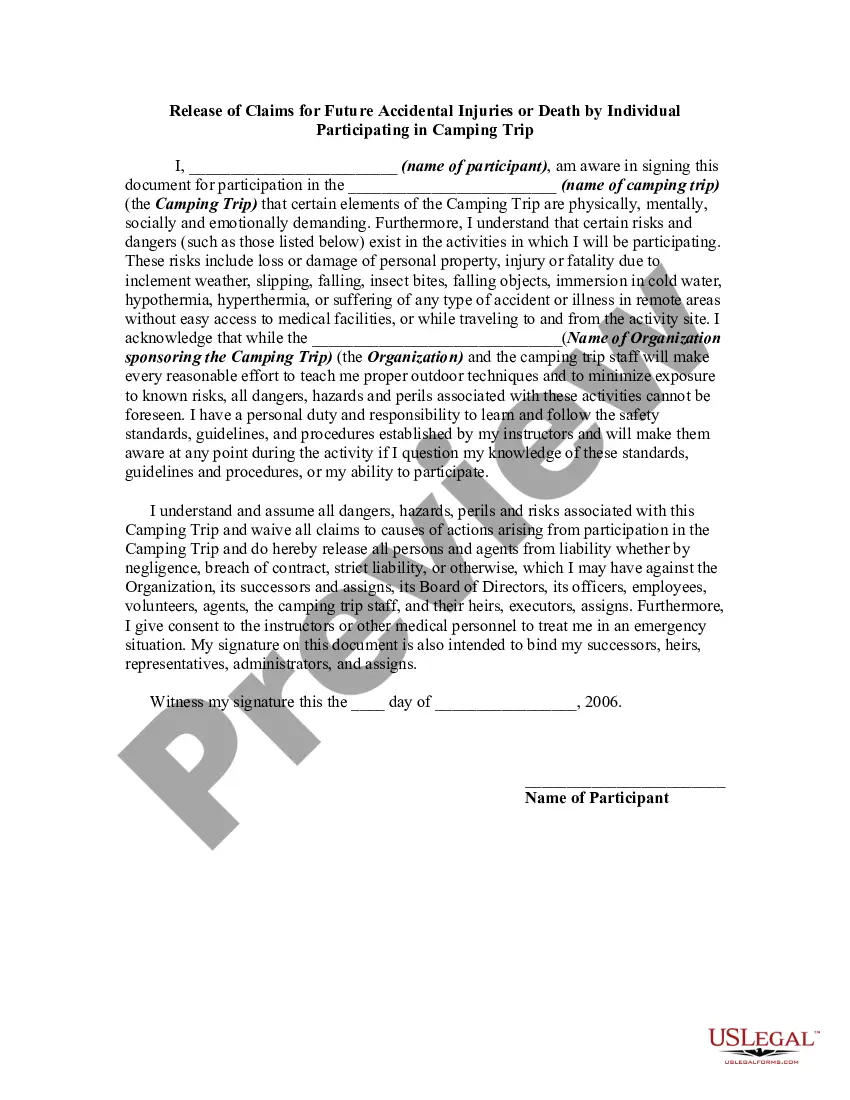
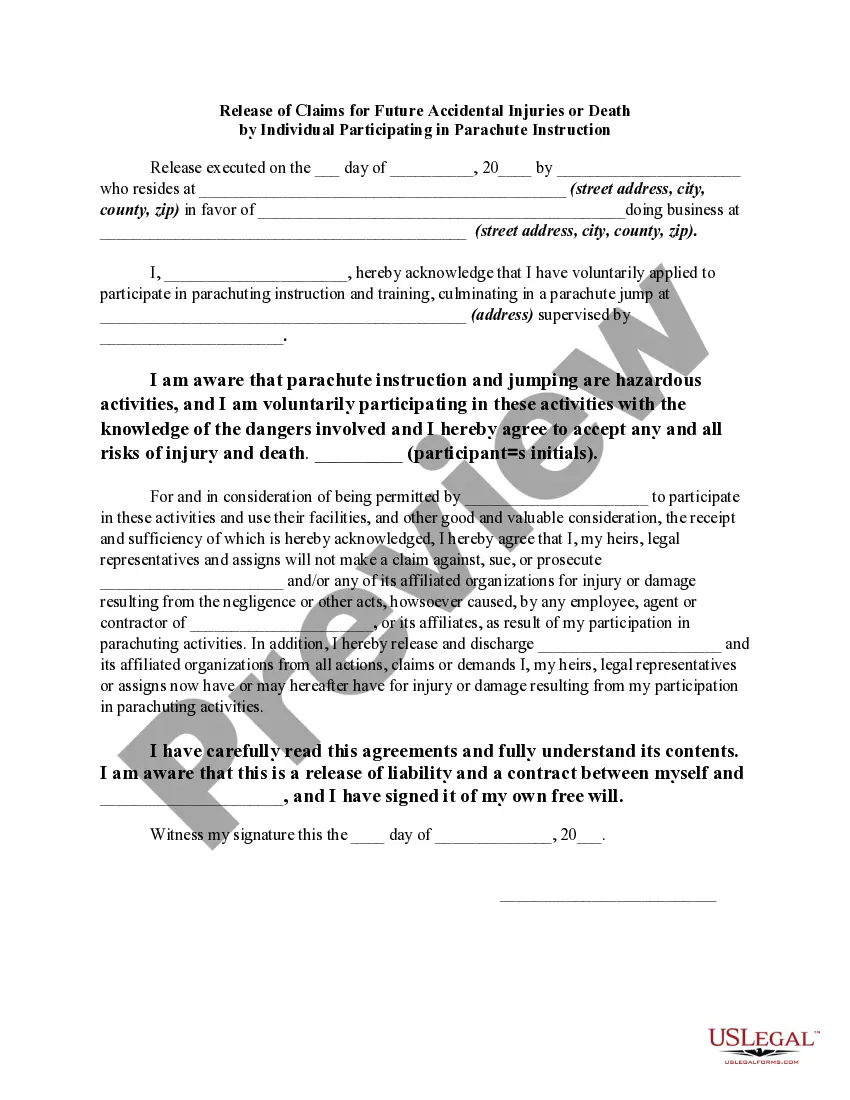
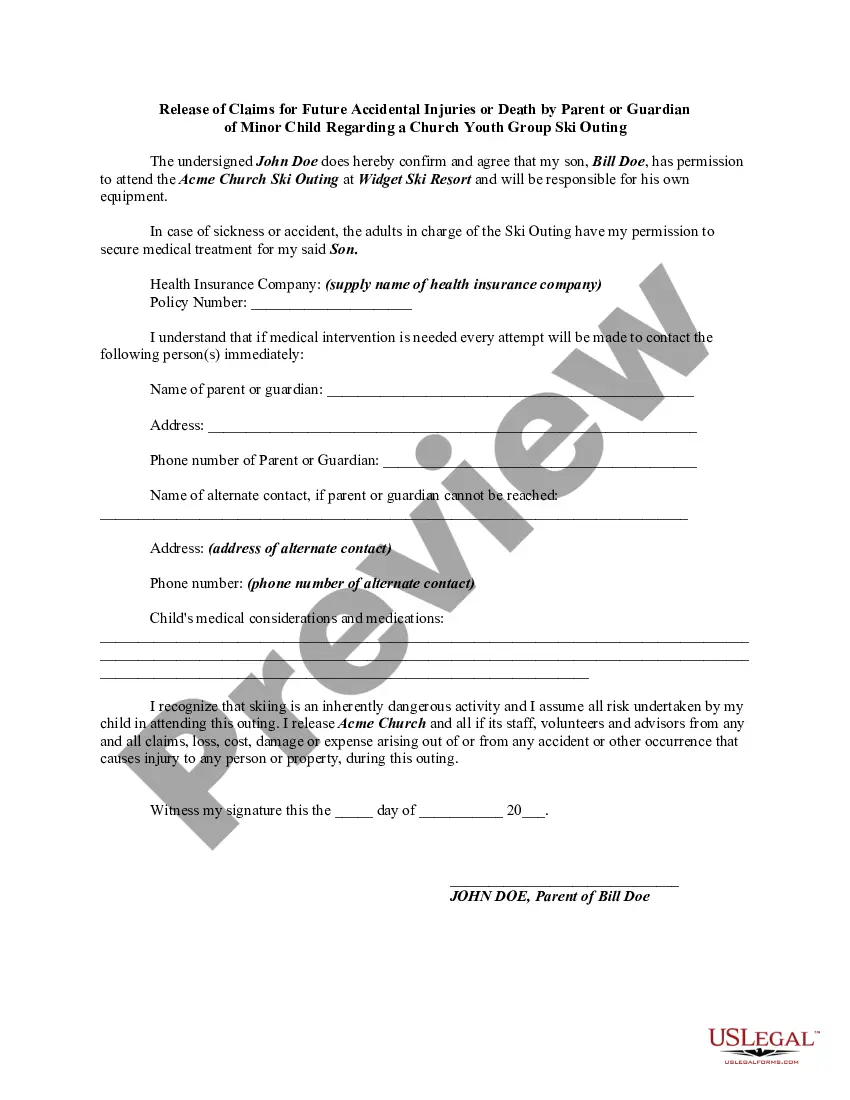
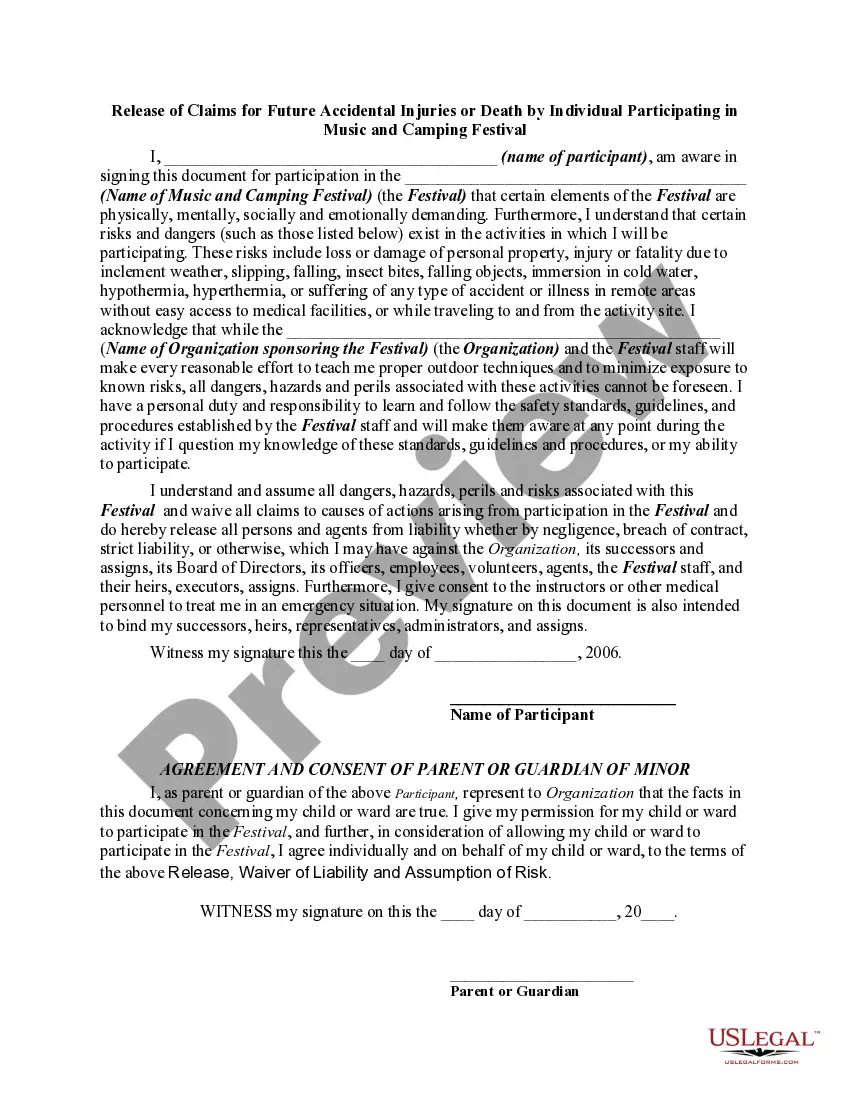
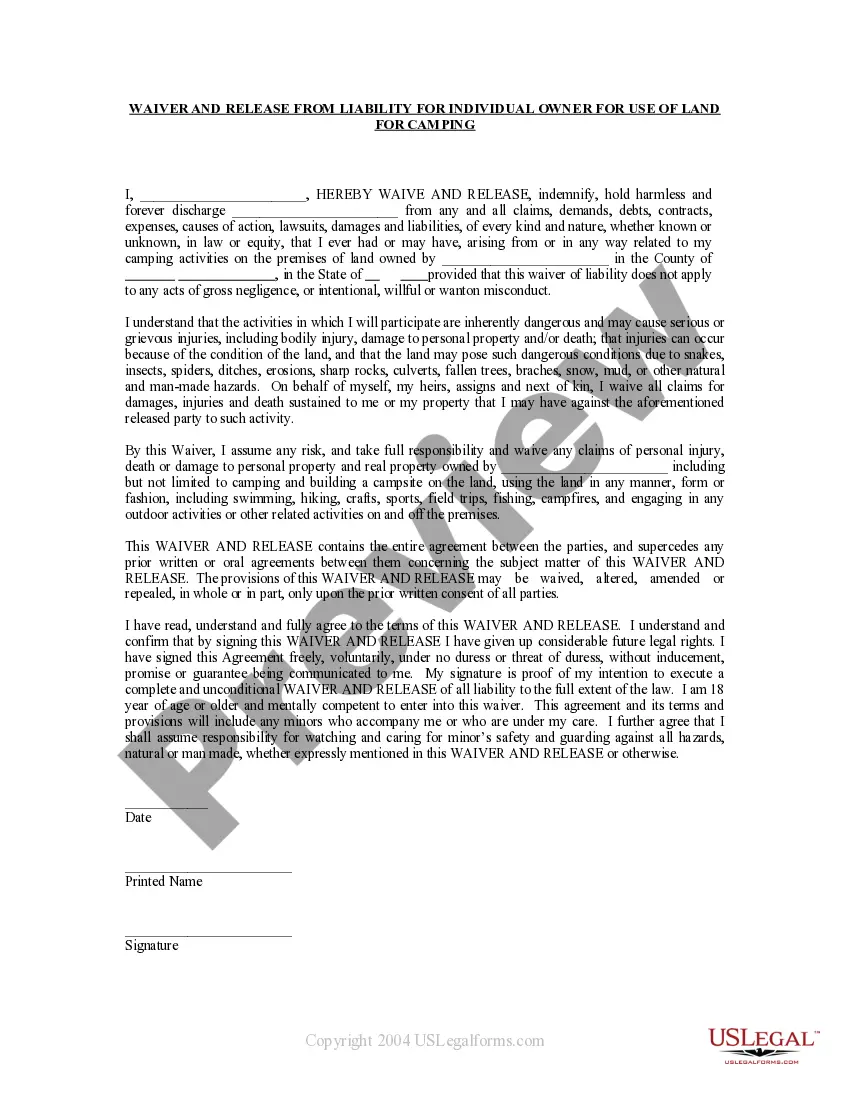
How to fill out Release Of Claims For Future Accidental Injuries Or Death By Individual Participating In Camping Trip?
- Log in to your US Legal Forms account if you are a returning user. Ensure your subscription is active; if not, renew it based on your chosen payment plan.
- For first-time users, start by browsing the extensive online library. Use the Preview mode to review the form descriptions to confirm they align with your needs and meet local jurisdiction requirements.
- If needed, utilize the Search tab to find additional templates that may be more suitable for your situation. Make sure the alternative meets your criteria.
- Select the appropriate document by clicking the 'Buy Now' button. Choose the subscription plan that fits your requirements and create an account to access all features.
- Finalize your purchase by entering your credit card details or opting to use your PayPal account for easy payment.
- Download your completed form directly to your device. You can access it anytime in the 'My Forms' section of your profile.
Using US Legal Forms empowers you to effectively manage your accident whiplash claims with a vast array of resources at your disposal.
Don't let the complexities of legal forms overwhelm you. Start your journey with US Legal Forms today and take control of your legal documentation!
Form popularity
FAQ
Whiplash can occur from relatively minor impacts, such as a low-speed rear-end collision. It isn't always about the force of the accident but also how your body reacts to the sudden movement. Many people experience whiplash symptoms even after what seems like a minor bump. Understanding this can be crucial when considering a claim for accident whiplash; consulting resources from US Legal Forms can equip you with helpful insights.
Claiming accident whiplash can vary in difficulty depending on several factors such as the severity of your injury and available evidence. Some individuals find the process straightforward, while others may face challenges. Seeking legal support and using platforms like US Legal Forms can simplify your journey. This way, you can navigate the claim process more efficiently and confidently.
To support your accident whiplash claim, you will need medical documentation, including diagnosis and treatment details. Additionally, photographs of the accident scene can help illustrate the impact. Witness statements may also strengthen your case. Using US Legal Forms can help you collect and organize this evidence effectively, increasing your likelihood of a successful claim.
Winning a claim for accident whiplash often involves proving that your injury occurred as a direct result of the accident. You need to demonstrate that the other party was at fault and show documentations, like medical records and witness statements. Gathering strong evidence enhances your chances of success. Utilizing resources available on platforms like US Legal Forms can provide guidance throughout the process.
The severity of whiplash doesn't need to be extreme for you to file a claim. Even mild to moderate cases that cause pain and disrupt your daily activities can qualify for compensation. If you experience symptoms such as headaches, neck pain, or limited range of motion, consider seeking advice on pursuing a claim. Remember, it's essential to document your experiences to support your case effectively.
Yes, you can file an accident whiplash claim if you sustained these injuries due to someone else's negligence. The process often involves submitting documentation to insurance companies or civil courts. It's advisable to gather all relevant information about the incident and consult with a legal expert to navigate the complexities of your claim. This step can increase your chances of a successful outcome.
The amount a victim may receive for an accident whiplash claim can vary widely based on individual circumstances, including the severity of the injury and impact on daily life. Generally, compensation can range from a few thousand to tens of thousands of dollars. It's essential to consult with professionals who understand personal injury claims to determine a fair estimate tailored to your situation. This will help you pursue the best outcome.
Yes, claiming for accident whiplash can be worthwhile, especially if your injuries affect your daily life and causing medical expenses. Many victims often underestimate the long-term effects of whiplash, which may include chronic pain or discomfort. Pursuing a claim can help cover your medical bills, lost wages, and other related costs. Consider working with a legal resource to better understand your situation.
To support your accident whiplash claim, gather documentation such as medical records, accident reports, and photographs of the incident scene. Ensure you keep detailed notes about your symptoms and treatment progress. Additionally, witness statements can help corroborate your account of the accident. This evidence will strengthen your case and improve your chances of receiving compensation.
When making a claim for accident whiplash, it's essential to communicate clearly and concisely about your injury and the accident circumstances. Describe the symptoms you experienced after the incident, the treatment you received, and how your injury affects your daily life. Clear communication will help convey the validity of your claim.